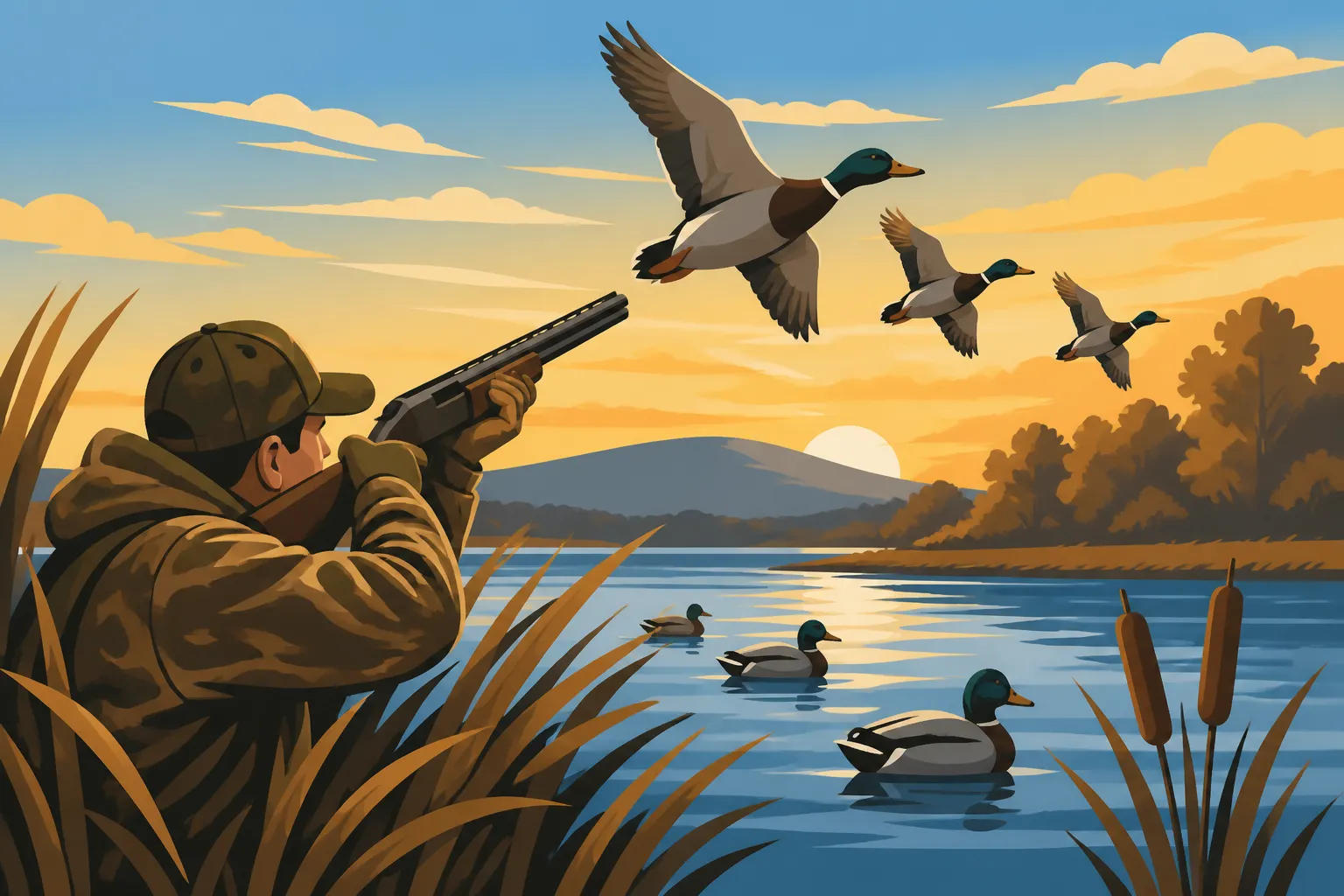
Waterfowl Hunting Kentucky Lakes and Rivers
There's nothing quite like the sound of wings beating overhead as the sun begins to peek over the horizon, but for many hunters, chasing waterfowl in Kentucky can feel like trying to solve a complex puzzle. With vast lakes, winding rivers, and countless sloughs, knowing where to go, what to bring, and how to effectively set up can be overwhelming, especially when the birds seem to have a mind of their own. This comprehensive guide is designed to cut through the confusion, offering practical, in-depth advice on successfully hunting ducks and geese across Kentucky's diverse waterways.
Understanding Kentucky's Waterfowl Landscape
Kentucky isn't just a deer hunter's paradise; it's a critical stopover and wintering ground for millions of migratory waterfowl. Our unique position, coupled with an abundance of diverse aquatic habitats, makes it a prime destination for hunters willing to put in the work. Understanding this landscape is the first step toward consistent success.
The Mississippi Flyway Connection
Kentucky's importance to waterfowl hunting stems directly from its location smack dab in the middle of the mighty Mississippi Flyway. This isn't just a line on a map; it's a living, breathing aerial highway that funnels ducks, geese, and other migratory birds from their northern breeding grounds all the way down to their southern wintering areas. Think of it like a major interstate for birds, and Kentucky is one of the biggest, most attractive rest stops.
As cold fronts push down from Canada and the northern states, wave after wave of waterfowl descends upon Kentucky. We're talking about everything from the common mallard and wood duck to formidable Canada geese, agile green-winged teal, and even elusive diver ducks like scaup and canvasbacks. The timing of these migrations, often discussed in detail in guides like Kentucky Waterfowl Migration Timing, dictates when specific species become more prevalent, and it directly influences the hunting opportunities we see throughout the season. This constant influx means that even if local birds get wary, new ones are often just a cold snap away.
The Mississippi Flyway doesn't just bring birds through; it also supports significant numbers of resident birds that breed and stay within the state. These local populations, combined with the migratory traffic, create a vibrant and dynamic waterfowl hunting environment. However, it also means hunters need to be adaptable, as bird behavior can change drastically between early season residents and late-season, hard-hunted migrants.
Major Waterfowl Hubs: Lakes and Rivers
When we talk about waterfowl hunting in Kentucky, certain names come up again and again because they are simply magnets for birds. The vast waters of Kentucky Lake and Lake Barkley, for instance, form one of the most critical wintering areas in the entire flyway. These massive reservoirs, connected by a canal and part of the Land Between the Lakes National Recreation Area, offer extensive open water, flooded timber, and agricultural fields that draw incredible numbers of ducks and geese. They're often considered premier destinations for Hunting Land Between the Lakes Waterfowl, offering diverse opportunities from diver hunting on the main lake to puddle duck hunting in sheltered bays and flooded backwaters.
Beyond these colossal lakes, Kentucky is crisscrossed by major river systems that act as vital arteries for waterfowl. The Ohio River, forming our northern border, is a major migration corridor, with countless backwaters, sloughs, and islands providing secluded resting and feeding areas. Farther inland, the Green River and its tributaries, particularly in the western Kentucky coalfield regions, create expansive bottomland habitats, including some of our most productive Wildlife Management Areas (WMAs) like Sloughs WMA, which is renowned for its flooded timber and agricultural impoundments. Smaller rivers like the Tradewater and Rough River also offer fantastic jump-shooting and secluded blind opportunities, especially for those willing to explore.
Each of these hubs presents its own unique challenges and rewards. Kentucky Lake and Barkley often mean dealing with large expanses of water and potentially strong winds, requiring robust equipment and careful planning. The Ohio River, with its barge traffic and fluctuating water levels, demands an understanding of river dynamics. The smaller river systems and WMAs often provide more intimate, timber-focused hunts, but also come with greater hunting pressure. Knowing these nuances is key to selecting the right location for your hunting style and the current conditions.
Habitat Diversity: From Open Water to Flooded Timber
Kentucky's waterfowl appeal isn't just about the sheer volume of water; it's about the incredible diversity of habitats available, which caters to every type of duck and goose. This habitat mosaic is what makes our state so productive and why hunters can pursue different strategies depending on where they set up.
On one end of the spectrum, you have the expansive open waters of Kentucky Lake, Lake Barkley, and the larger stretches of the Ohio River. These areas are prime for diver ducks—scaup, canvasbacks, redheads, and buffleheads—which prefer deep water for feeding and resting. Hunting these areas requires specialized tactics, often involving large spreads of diver decoys and durable boats capable of handling choppy conditions. It's a completely different game than hunting puddle ducks, demanding different gear and a robust understanding of how divers behave on big water, as highlighted in guides focusing on Hunting Kentucky Lake Diver Ducks.
Then you have the flooded timber and backwater sloughs that are iconic to western Kentucky, particularly within WMAs like Sloughs and Peabody. These areas, often characterized by standing timber partially submerged by seasonal flooding or managed impoundments, are mallard magnets. The birds feel safe in the timber, seeking acorns and other natural foods. Hunting here means navigating dense woods in a small boat, setting up in the shadows, and mastering subtle calling techniques. It's an intimate, often quiet hunt, a stark contrast to the vastness of the open lakes. These timbered areas are critical for birds seeking shelter from wind and hunting pressure.
Finally, we can't forget the agricultural fields that surround many of our water bodies. Cut corn, bean stubble, and winter wheat fields draw immense numbers of Canada geese, specklebellies, and even mallards and pintails looking for waste grain. Field hunting requires layout blinds or strategically placed pit blinds, full-body decoys, and specific calling strategies. The key here is excellent scouting, finding where the birds are actively feeding, and setting up to intercept them. This blend of environments ensures that whether you prefer a boat hunt on big water, a stealthy wade into flooded woods, or a comfortable sit in a field blind, Kentucky offers a place for you to pursue your passion.
Essential Gear for Kentucky Waterfowlers
Success in waterfowl hunting in Kentucky is often a direct result of having the right tools for the job. Our diverse hunting environments, from vast open lakes to flooded timber and muddy river bottoms, demand specific gear choices. Skimping on the essentials can quickly turn an exciting hunt into a frustrating, or even dangerous, ordeal.
Shotguns and Ammunition
When it comes to shotguns for Kentucky waterfowl, the 12-gauge is, without a doubt, the reigning champion. Its versatility allows for a wide range of shot sizes and loads, making it suitable for everything from close-range wood ducks in the timber to high-flying geese over a field. However, don't overlook the 20-gauge, especially for younger hunters or those who prefer a lighter, faster-swinging gun. With modern tungsten loads, a 20-gauge can be surprisingly effective. The key is to match your shotgun and choke to the specific hunting scenario you anticipate. For ducks decoying tight in flooded timber, a modified or improved cylinder choke is often perfect. For longer shots at geese or diver ducks on open water, a full or improved modified choke might be more appropriate.
Ammunition choice is equally critical, and it always starts with remembering that non-toxic shot is mandatory for all waterfowl hunting throughout Kentucky. Steel shot is the most common and affordable option, but its lighter weight and lower density mean you might need to go up a shot size or two compared to lead. For example, if you'd normally use 3-shot lead for ducks, you might opt for 2-shot or even 1-shot steel. More premium options like bismuth and tungsten are denser than steel, offering better energy retention and tighter patterns. Tungsten, in particular, delivers incredible knockdown power, making a 20-gauge perform like a 12-gauge, but it comes at a significantly higher price point. Understanding different Waterfowl Loads for Kentucky Lake Divers might influence your choice, especially when hunting larger, tougher birds in open water where longer shots are common. Always pattern your shotgun with your chosen ammunition and choke combination before the season to ensure you know its effective range.
Decoys and Spreads
Decoys are your silent partners in the field, and a well-thought-out spread is often the difference between a slow day and a successful one. For most Kentucky puddle duck hunting, especially for mallards and wood ducks, a spread of 1-2 dozen realistic mallard and wood duck decoys will do the trick. Mixing in a few pintails or teal can add realism. On the large lakes where diver ducks are the target, you'll need a much larger spread, often 3-5 dozen diver decoys (scaup, canvasback, redhead) spread on long lines to mimic a raft of feeding birds. For geese, full-body decoys are incredibly effective, though silhouettes and shell decoys can work, especially when combined with a few full-bodies to add depth.
The strategy behind your decoy spread changes dramatically with the environment. In flooded timber, a small, natural-looking spread of 6-12 decoys, often placed in a natural opening or "kill hole," is usually best. The goal isn't to draw birds from a mile away but to finish them cleanly once they commit. On open water, large U or J-shaped spreads are popular for guiding birds into a landing zone. For field hunting, creating a loose family group of goose decoys with a designated landing zone is key. Don't underestimate the power of motion decoys, like spinning wing decoys or jerk strings. On calm days, a little movement can make your spread come alive, often drawing the attention of passing birds that might otherwise ignore static decoys. However, always be aware of local regulations regarding motion decoys, as rules can vary.
Blinds, Boats, and Waders
Kentucky's varied waterfowl habitats demand a diverse approach to concealment and access. For field hunting, a good layout blind is indispensable. Brands like Avery and Banded offer comfortable, low-profile blinds that disappear into cut fields, allowing you to hide effectively while waiting for geese or ducks to commit. For more permanent setups or often-hunted public ground, a well-constructed pit blind can offer superior concealment and comfort. In flooded timber or river backwaters, natural concealment is often best, but a portable blind made of camo netting or natural vegetation can provide that extra edge.
Accessing these prime hunting spots frequently requires a boat. For large lakes and rivers, a sturdy john boat (16-18 feet) with a reliable outboard is a must, capable of handling potential waves and carrying a substantial load of decoys and gear. Smaller marsh boats or even canoes are perfect for navigating shallow sloughs, flooded timber, or skinny creeks, often propelled by an electric trolling motor or a push pole. Speaking of push poles, they are invaluable for silent maneuvering in shallow, vegetation-choked waters where an outboard might be too loud or impractical.
Finally, a quality pair of waders is non-negotiable for most Kentucky waterfowl hunts. Chest waders are the most versatile, keeping you dry and warm in anything from shallow flooded fields to deeper sloughs, allowing you to set decoys, retrieve birds, and move within your hunting area. Neoprene waders offer excellent insulation for cold weather, while breathable waders are more comfortable for warmer early-season hunts. For specific situations, like just wading into a creek bank for jump-shooting, hip boots might suffice, but for general Kentucky waterfowl hunting, chest waders are the way to go. You'll find a detailed comparison useful for choosing between Chest Waders Versus Hip Boots for Flooded Timber depending on the specific conditions you'll face.
Navigating Kentucky's Waterfowl Regulations
The world of waterfowl hunting regulations can feel like a labyrinth, with federal, state, and even WMA-specific rules creating layers of complexity. However, understanding and adhering to these rules isn't just about avoiding a hefty fine; it's about being a responsible hunter and ensuring the sustainability of the resource. Let's break down the essentials.
Licenses, Permits, and HIP Certification
Before you even think about loading your shotgun, you need to ensure you're legally equipped to hunt waterfowl in Kentucky. This starts with a valid Kentucky Hunting License. Residents and non-residents alike must purchase one, and the Kentucky Department of Fish and Wildlife Resources (KDFWR) offers various options, including annual licenses and even a multi-year Sportsman's License bundle that covers many activities.
Beyond the basic hunting license, waterfowl hunters in Kentucky have a few extra requirements. You'll need a Kentucky Migratory Bird Permit, an inexpensive add-on that helps the state track hunter participation and harvest data. Crucially, you also need to purchase a Federal Duck Stamp. This stamp, issued by the U.S. Fish and Wildlife Service, is a vital part of waterfowl conservation, with 98% of the proceeds going directly to acquire and protect wetland habitats across the country. And finally, every migratory bird hunter in Kentucky, regardless of age, must obtain their Harvest Information Program (HIP) certification. This certification is free but mandatory and involves answering a few questions about your past migratory bird hunting success, allowing wildlife agencies to collect crucial data. Getting your Kentucky Migratory Bird Certification is a quick online process, but it's easy to forget if you're not used to it. Ensure all these are squared away well before opening day.
Season Dates and Bag Limits
Kentucky's waterfowl seasons are typically structured to align with migration patterns and population management goals, often featuring split seasons to maximize hunting opportunities. The KDFWR divides the state into different zones for ducks and geese, each with slightly different opening and closing dates and bag limits. For instance, the Western Zone, which includes the major lakes and rivers, often has different dates than the Northeast or Pennyroyal zones. It's imperative to consult the official KDFWR Hunting & Trapping Guide each year, as dates and rules can shift. You'll want to specifically look into the Kentucky Duck and Goose Zone Rules to confirm where your preferred hunting spot falls.
Bag limits are equally critical and can be species-specific, sometimes even including sex-specific restrictions. For example, the daily limit for mallards might be four, but only two of those can be hens. Wood ducks, pintails, canvasbacks, and various other species all have their own specific limits. Canada geese usually have a more generous bag limit, while less common species like white-fronted geese (specklebellies) or snow geese have separate, often higher, limits. Exceeding a bag limit, even accidentally, is a serious violation. So, it's not enough to just know the overall duck limit; you need to be able to identify your birds in flight and on the water and keep a mental tally throughout your hunt. Pay close attention to these details, especially when hunting a mixed bag of species.
Legal Shooting Hours and Public Land Access
Legal shooting hours for waterfowl in Kentucky are straightforward: half an hour before sunrise to sunset. This means setting your alarm extra early to ensure you're in your blind, decoys set, and ready to go before the legal opening time. Conversely, you must stop shooting immediately at sunset. A common frustration is birds flying right at legal shooting light, but knowing and respecting these boundaries is essential.
Accessing hunting grounds is another critical piece of the puzzle. While Kentucky has a lot of private land, there are ample opportunities on public land, including Wildlife Management Areas (WMAs), National Forests, and National Recreation Areas like Land Between the Lakes. However, public lands often come with their own set of specific regulations, which can include restrictions on ATVs, camping, or even the type of blind you can use. Some WMAs may require a quota hunt drawing for certain blinds or areas, or have specific restrictions on boat motors or even shot sizes. Always check the individual WMA's regulations before you hunt, as these can supersede general statewide rules. The KDFWR's online map portal or apps like GoHunt can be invaluable resources for identifying public access points and understanding specific WMA rules. For all your public land pursuits, knowing Kentucky Public Land Hunting Hours is paramount, as different areas sometimes have specific entry and exit times, although generally the half-hour before sunrise to sunset rule applies to shooting.
Scouting and Location Strategies
You can have the best gear and the most dialed-in calling routine, but if you're not where the birds want to be, you're just practicing. Effective scouting is the backbone of successful waterfowl hunting in Kentucky. It's about becoming a detective, piecing together clues from the landscape, the weather, and the birds themselves to predict their movements.
Reading the Water and Sky
Waterfowl are creatures of habit, but those habits are heavily influenced by environmental factors. Learning to "read the water and sky" means understanding these influences. Flyways, for example, are not always straight lines. Ducks and geese will follow natural contours like river bends, timber lines, and open water channels. Identifying these natural travel corridors is crucial. Often, birds will stage or "roost" on large, undisturbed bodies of water overnight, then fly out to feeding grounds (fields, shallow flooded timber, rich sloughs) at dawn and dusk. Understanding these patterns allows you to intercept them between their roost and feed.
Weather plays an enormous role. Cold fronts pushing down from the north often signal a fresh push of migratory birds into Kentucky. Strong winds can influence flight patterns, often causing birds to fly lower and seek shelter in more protected areas, making for excellent timber or sheltered slough hunting. Rain and snow can also concentrate birds, pushing them into specific feeding areas or causing them to seek shelter. A calm, blue-sky day might mean birds raft up on open water and are less likely to respond to calling, whereas a cloudy, windy day often means more active birds. Observing these conditions and understanding their impact on bird behavior is a skill honed over many seasons, but it starts with paying attention and keeping a hunting log.
Utilizing Technology for Scouting
In today's hunting world, technology can be a massive advantage for scouting, helping you save valuable time and legwork. Satellite imagery, available through apps like GoHunt or onX Hunt, allows you to "scout from your couch." You can identify potential roosting areas, feeding fields, and most importantly, the flight paths between them. Look for hidden pockets of water, flooded timber, or secluded sloughs that might not be visible from a road. These aerial maps can help you find overlooked spots, especially on public land where pressure is high. You might even find where deer move, which could lead to finding Scrape Lines Along a Logging Road if you switch your focus after duck season.
Beyond satellite imagery, weather apps provide detailed forecasts that are essential for predicting bird movement. Look not just at local weather, but at regional patterns to anticipate new pushes of birds. Online migration reports, often shared by state wildlife agencies or national conservation groups like Ducks Unlimited, can give you a broad overview of where birds are in the flyway. Some local communities or hunting forums even have real-time reports of bird numbers. Don't forget about trail cameras; while not typically used for waterfowl in the same way as deer, a well-placed camera overlooking a suspected field feeding area can confirm activity without disturbing the birds. This blend of remote digital scouting and on-the-ground investigation creates a powerful strategy.
Deciphering Waterfowl Sign
Just like with deer or turkey hunting, reading the "sign" left behind by waterfowl is crucial. When you're scouting, look for fresh droppings, which indicate recent activity. The color and consistency can even tell you what the birds have been eating. Feathers, particularly primary flight feathers, can confirm the presence of specific species. Tracks in mud or soft soil around water edges can also provide valuable clues about what kind of birds are using an area and how recently.
Beyond visible sign, listen. Early morning or late evening often provides clues about roosting locations or major flight paths as birds communicate. Pay attention to the sound of wings, distant quacks, or goose honks. Identifying active feeding areas is paramount. In fields, look for trampled crops, muddy patches, or scattered waste grain. In shallow water or flooded timber, observe disturbed water, muddy bottoms, or areas where vegetation has been pulled up. If you find a field with fresh goose droppings and scattered corn, you've hit the jackpot. If you find a patch of flooded timber with a muddy bottom and signs of ducks "tipping up" (bottoms-up feeding), you know they're actively working that area. All these subtle cues combine to paint a picture of where birds are spending their time and where they're likely to be when the season opens.
Effective Hunting Tactics for Different Environments
Kentucky's diverse waterfowl habitats demand a versatile hunter. What works on a vast open lake will fall flat in a flooded timber hole. Mastering these varied tactics is what separates the consistently successful waterfowlers from those who only catch birds on lucky days.
Flooded Timber and Backwater Sloughs
Hunting flooded timber is arguably one of the most iconic and rewarding waterfowl experiences in Kentucky. These areas, often found in the western part of the state in WMAs like Sloughs or within the Land Between the Lakes area, are mallard havens. The key here is subtlety and patience. Birds in the timber are often looking for protection from wind and hunting pressure, as well as natural food sources like acorns. When scouting, look for openings in the canopy, often called "pockets" or "holes," where birds can comfortably land. These are your prime setup locations.
Your calling strategy in flooded timber should be soft and convincing. Loud hail calls that work on open water will often scare birds away in the close confines of the woods. Instead, use soft greetings, feed calls, and subtle clucks and quacks. The goal is to reassure birds that the spot is safe and inviting, not to aggressively pull them in. Decoy spreads should be small and natural, typically 6-12 mallard and wood duck decoys, placed to mimic a few birds leisurely feeding. Leave a wide landing zone in the middle of your pocket. Concealment is paramount; birds will be dropping straight down into your lap, so use the natural timber as much as possible, blending your boat or blind seamlessly into the surroundings. Guides specifically focusing on Hunting Land Between the Lakes Flooded Timber often emphasize the importance of quiet entry and exit to avoid spooking birds that may already be in the area.
Open Water and Large Lakes
Hunting diver ducks on Kentucky's large open water bodies like Kentucky Lake and Lake Barkley is a completely different ballgame. Diver ducks—scaup, ringnecks, canvasbacks, redheads—are fast flyers that typically raft up in large groups in deeper water. The main challenge is getting their attention and providing a realistic landing zone on vast water. This requires a larger decoy spread, often 3 to 5 dozen, predominantly diver decoys. Setting these decoys on long lines or gang rigs allows for quick deployment and retrieval, which is essential when hunting big water. A common setup is a large U-shaped or J-shaped spread designed to funnel flying birds into your shooting zone.
Motion decoys, such as diver "jiggle" rigs or even simple jerk strings, can be incredibly effective on open water, adding life to your spread and catching the eye of high-flying birds. Flagging, using a silhouette of a duck or goose on a stick, can also draw attention from long distances. Concealment on open water typically involves using a layout boat blind or finding natural cover along points or islands. Safety is a huge concern on these large lakes; rough water can appear quickly, so a sturdy boat and appropriate safety gear (PFDs, anchor, rope) are non-negotiable. Knowing effective Hunting Kentucky Lake Diver Ducks tactics often involves understanding prevailing winds and how they influence diver movement and feeding habits.
River Systems and Creeks
Kentucky's myriad river systems and creeks offer diverse waterfowl hunting, from exhilarating jump-shooting to quiet blind setups. For smaller creeks and secluded river bends, jump-shooting can be incredibly productive, especially for wood ducks and mallards. This involves quietly floating or walking along the waterway, surprising birds around bends or in sheltered eddies. A fast-swinging shotgun and quick reflexes are key for this method. Stealth is paramount; wear natural camo, move slowly, and listen for the tell-tale splash of jumping birds.
For more stationary hunts on larger rivers like the Ohio or Green, look for backwater sloughs, quiet eddies, or islands that offer refuge from the main current and boat traffic. These spots can concentrate birds, especially during colder weather or periods of high pressure on the main river. Setting up a small spread of puddle duck decoys and utilizing natural cover for a blind is often effective. Portable blinds or even just camouflaged netting draped over natural vegetation can provide adequate concealment. Pay attention to water levels and current; rising or falling water can shift bird locations dramatically. A specific guide on Jump-Shooting a Kentucky Creek provides more detailed advice for this active hunting style.
Field Hunting for Geese and Puddle Ducks
While often associated with midwestern states, field hunting for geese and puddle ducks is a highly effective tactic in Kentucky, especially in the agricultural areas of western and central Kentucky. Cut cornfields, harvested bean fields, or planted winter wheat can be absolute magnets for large flocks of Canada geese, specklebellies, and even mallards and pintails that prefer feeding on waste grain. The key to field hunting is thorough scouting; you need to find the specific field the birds are using and set up directly in their flight path or feeding area.
Concealment is critical in open fields. Layout blinds are the go-to for field hunting, allowing hunters to lie flat and disappear into the stubble. For more permanent setups, a pit blind dug into a field can be incredibly effective. Decoy spreads for field geese are usually much larger than duck spreads, often 3 to 6 dozen full-body decoys, combined with some silhouettes or shells to create a realistic flock. Arrange them in loose family groups, leaving plenty of open space (your "kill hole") for birds to land. For puddle ducks in a field, a smaller spread of full-body mallard and pintail decoys works well. Calling for geese requires powerful, confident honks, clucks, and moans, often combined with flagging to get their attention from a distance. For more specific advice on setting up, check out Layout Blind Hunting a Cut Cornfield, which delves into effective decoy placement and concealment.
Safety, Ethics, and Conservation
Waterfowl hunting is a passion that carries with it significant responsibilities. Beyond the thrill of the hunt, every waterfowler has a duty to ensure safety for themselves and others, uphold ethical hunting practices, and actively contribute to the conservation efforts that make our sport possible. These aren't just rules; they're the foundational pillars of responsible hunting.
Waterfowl Hunting Safety Protocols
Waterfowl hunting often takes place in challenging conditions—cold weather, open water, and early morning darkness—all of which amplify safety risks. Boating safety is paramount. Always wear a U.S. Coast Guard-approved Personal Flotation Device (PFD), especially when navigating in the dark, in rough water, or when water temperatures are cold. Overloading a boat, driving too fast in unfamiliar waters, or failing to check weather forecasts can lead to tragic accidents. Carry all required safety equipment, including lights, an air horn, and extra paddles or a trolling motor.
Firearm safety, of course, is non-negotiable. Always treat every gun as if it's loaded. Keep your muzzle pointed in a safe direction, keep your finger off the trigger until ready to shoot, and be absolutely certain of your target and what's beyond it. When hunting from a boat or blind with multiple people, establish clear shooting lanes beforehand. Never swing on a bird if it means pointing your muzzle at a hunting partner. In cold weather, be vigilant about hypothermia. Dress in layers of appropriate clothing, and carry extra dry clothes in a waterproof bag. Have a plan in case someone falls in the water. These simple precautions can make the difference between a memorable day and a dangerous incident.
Ethical Hunting Practices
Ethics in waterfowl hunting extends beyond the legal requirements; it's about respecting the birds, the environment, and fellow hunters. One of the most critical ethical responsibilities is to make every reasonable effort to retrieve all downed birds. Wounded birds that aren't retrieved are wasted resources, and allowing them to escape is a disservice to the animal. This often means having a good retriever dog, or being willing to wade into cold water or thick cover to find a fallen bird. Don't take shots at birds that are beyond your effective range, even if you're tempted. It's better to pass on a shot than to wound a bird you can't recover.
Respecting private property is another cornerstone of ethical hunting. If you're hunting near private land, ensure you have explicit permission if there's any chance you might trespass, even to retrieve a downed bird. Avoid leaving trash, spent shells, or any other refuse in your hunting area. "Leave no trace" should be your mantra. Be courteous to other hunters; give them ample space, avoid sky-busting their birds, and if you arrive at a public spot already occupied, move on to another location. Being a good steward of the resource ensures that hunting opportunities remain available for future generations and upholds the positive image of hunters in the public eye.
Contributing to Conservation Efforts
Waterfowl hunting is inherently tied to conservation, and every hunter has a role to play. The purchase of your Federal Duck Stamp is arguably the most direct and impactful way you contribute. As mentioned before, almost all of the revenue from these stamps goes directly to wetland conservation, protecting critical habitats that benefit not only ducks and geese but countless other wildlife species. Consider purchasing more than one stamp each year if you can; it's a small price to pay for such a significant impact.
Beyond the duck stamp, consider supporting organizations like Ducks Unlimited (DU) or the Kentucky Waterfowlers Association. DU, for instance, has conserved millions of acres of wetlands across North America, directly benefiting the birds that migrate through Kentucky. These organizations actively work on habitat restoration, policy advocacy, and public education, all of which are vital for the future of waterfowl. Participating in clean-up efforts on public lands, volunteering for habitat projects, or even simply reporting bands from harvested birds all contribute to the larger conservation picture. Understanding the broader context of Kentucky Waterfowl Migration Timing and population dynamics helps reinforce the importance of these conservation efforts. By actively engaging in these efforts, you're not just a hunter; you're a vital part of the solution, ensuring healthy waterfowl populations and vibrant hunting traditions for years to come.
Advanced Tips for Consistent Success
Even with the right gear and a solid understanding of the regulations, waterfowl hunting can have its ups and downs. The difference between a hunter who consistently finds success and one who struggles often lies in their ability to adapt, refine their techniques, and think beyond the basics.
Adapting to Pressure and Weather Changes
Kentucky's public hunting lands, especially popular WMAs, can experience significant hunting pressure. Birds quickly learn to avoid obvious spots, fly higher, and become much warier. To combat this, learn to "hunt the quiet spots." This often means walking further, paddling deeper, or finding those overlooked pockets of habitat that other hunters ignore. Hunting mid-week instead of crowded weekends can also significantly increase your chances. Sometimes, finding ground others walk past means finding that hidden slough or an isolated patch of timber that only a diligent scout would discover.
Weather isn't static, and neither should your tactics be. A strong cold front can bring new birds, but it can also make existing birds behave differently. On days with high winds, birds will often fly lower and seek sheltered areas. This is when those timber holes or protected river bends really shine. On clear, calm days, birds might raft up on open water and be less responsive to calling. This is when large, realistic decoy spreads and minimal calling might be more effective. Learn to read the conditions and adjust your calling volume, decoy placement, and even your species focus. For instance, understanding Reading a Bottomland Slough for a Morning Flight will give you a major advantage when birds are seeking calm waters and less pressure. The most successful hunters are those who are flexible and willing to change their game plan on the fly.
Decoy Spreads for Specific Species and Situations
While a generic mallard spread will work some of the time, advanced hunters customize their decoy spreads for specific species and situations. If you're seeing a lot of green-winged teal or pintails, adding a few teal or pintail decoys to your spread can make it much more appealing to those birds. If you're targeting geese, mixing in a few mallard or pintail full-bodies can act as "confidence decoys," signaling to the wary geese that the area is safe.
Don't be afraid to experiment with your spread geometry. Instead of a simple J-hook, try a scattered "loafing" spread for wary birds in a field, or a compact "feeding" spread in shallow water. Incorporate natural elements into your spread by leaving open pockets for birds to land. Beyond just static decoys, consider different types of motion. Jerk strings, for instance, offer subtle, realistic movement for a few key decoys without the artificial feel of spinning wing decoys, which can sometimes spook heavily pressured birds. Understanding how birds react to different motion and spread types will add a whole new dimension to your hunting success.
Calling Mastery
Calling is an art form, and true mastery comes from extensive practice and the ability to "read" the birds and adjust your calls accordingly. It's not just about blowing a perfect hail call; it's about knowing when to call, how loud to call, and what to call. Start by mastering the basic calls for mallards and Canada geese – the hail call, greeting call, comeback call, and feed call. Once you're proficient, expand your repertoire to include wood duck squeals, pintail whistles, and specklebelly yodels if those species are common in your area.
The key is to listen to how birds respond. If they're cupping their wings and committing, ease off the calls. If they're flaring or not responding, try a different call or a different cadence. Sometimes, the "silent treatment" – using only your decoys – is the most effective approach for wary birds. Other times, aggressive calling is necessary to pull birds from a distance. Practice your calls year-round, not just before season. Pay attention to how real birds communicate and try to mimic those natural sounds. A truly skilled caller can bring birds within range even on tough days, turning a mediocre hunt into an unforgettable experience.
Disclaimer
Hunting is an inherently dangerous activity. Always prioritize safety, follow all laws and regulations, and respect wildlife and the environment. The information provided in this guide is for informational purposes only and should not be considered a substitute for official regulations, professional instruction, or personal judgment. Always consult the most current Kentucky Department of Fish and Wildlife Resources (KDFWR) hunting guide and local regulations before heading afield.