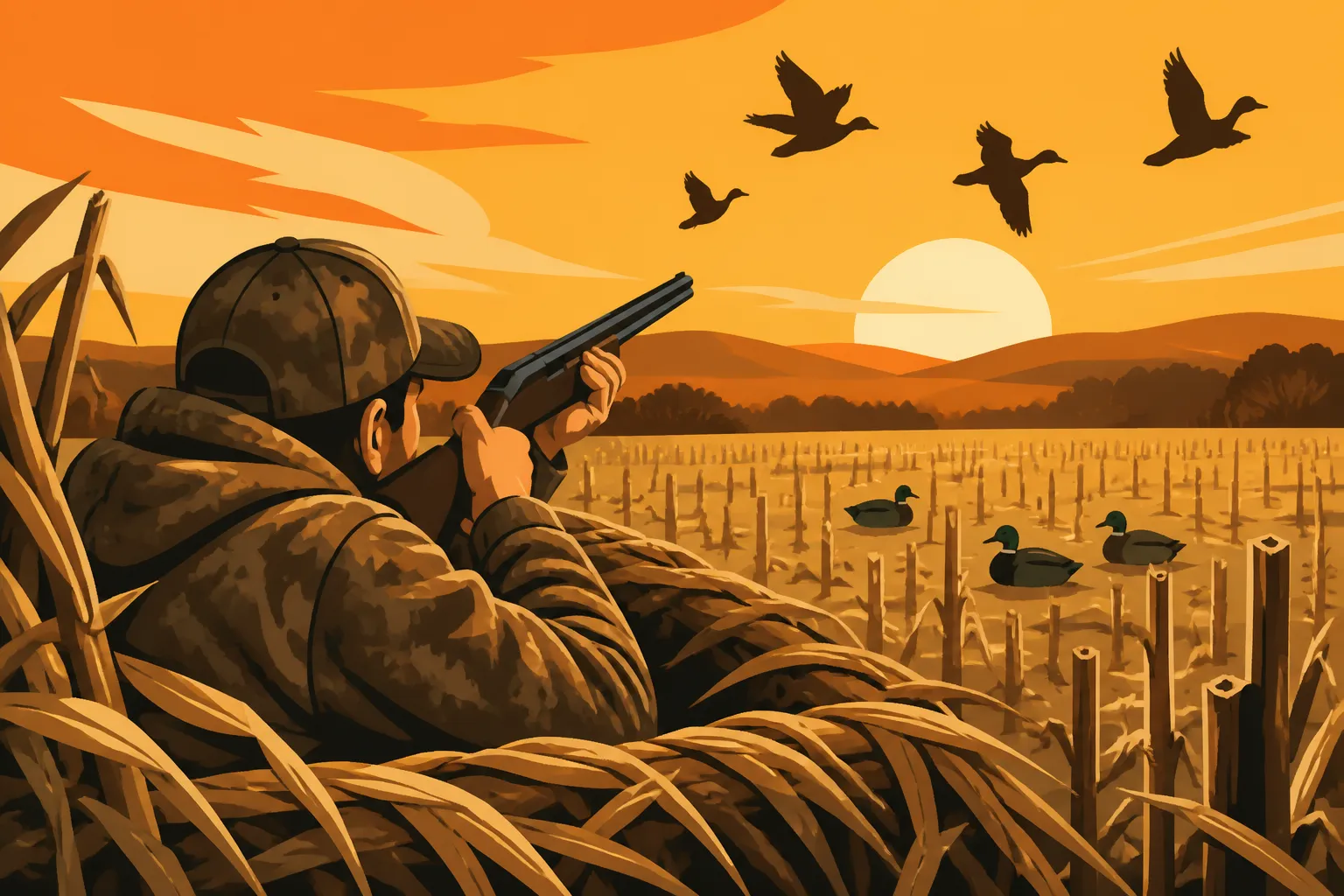
Layout Blind Hunting a Cut Cornfield
There’s nothing quite like the sight of a flock of geese or a group of mallards cupping their wings, preparing to commit to your spread in an open field. But let's be honest, trying to hide effectively in a wide-open cut cornfield can feel like a losing battle. Those birds have incredible eyesight, and if you're not perfectly concealed, they'll flare before you even get a chance. This comprehensive guide will walk you through the ins and outs of using layout blinds to disappear into the stubble, helping you bring more birds home from those challenging field hunts across Kentucky.
Why Layout Blinds are Essential for Cut Cornfields
Hunting waterfowl in cut cornfields offers some of the most exciting, in-your-face action you can imagine, but it also presents unique challenges. Unlike hunting in flooded timber or along riverbanks, there's often very little natural cover to hide a full-sized hunter or even a traditional pop-up blind. This is precisely where layout blinds shine, turning what seems like an impossible hiding situation into a tactical advantage.
The Concealment Challenge of Open Fields
Imagine yourself hunkered down behind a few sparse cornstalks or under a flimsy tarp in a vast, open field. That's a scenario many of us have faced, desperate to find any semblance of cover. The issue is, ducks and geese, especially those that have seen a few seasons, are masters of spotting anything out of place. A bump on the horizon, a strange shadow, or an unnatural outline is enough to send them sky-high, long before they're in range. Their vision is far superior to ours, allowing them to detect even the slightest anomaly from hundreds of yards away.
This inherent wariness means that any exposed skin, a brightly colored hat, or the sheen off your shotgun barrel can be a dead giveaway. You're essentially playing a game of cat and mouse where the "mice" can see much better than the "cats." Relying on minimal natural cover in a wide-open cut cornfield often leads to frustrating flaring birds and missed opportunities, eroding confidence faster than a Kentucky summer storm.
Blending into the Natural Environment
Layout blinds are specifically designed to address this concealment conundrum head-on. These low-profile shelters allow you to lie prone, becoming an integral part of the field itself. Modern layout blinds are typically camouflaged to mimic stubble, dirt, or dry grass, making you virtually invisible when properly brushed in. They often feature spring-loaded doors that pop open quickly when it's time to shoot, giving you a clear shot at incoming birds without fumbling around.
The beauty of a good layout blind lies in its ability to break up your human form. Instead of sticking out like a sore thumb, you become just another small mound in the field. This natural integration is crucial, especially when birds are circling high, scrutinizing every detail of your spread. Brands like Avery, Final Approach, and Rogers Sporting Goods offer blinds with durable fabrics and stubble straps, allowing hunters to add natural vegetation from the field itself to enhance their camouflage, effectively disappearing into the landscape.
Mobility and Flexibility for Changing Conditions
One of the often-overlooked advantages of layout blinds is their portability and adaptability. Unlike permanent pit blinds or heavy A-frame blinds, most layout blinds can be folded down and carried relatively easily. This mobility is a game-changer when you're pursuing migratory birds that might be feeding in different fields each day, or when the wind shifts unexpectedly, requiring a quick relocation. Kentucky weather is notoriously fickle, and being able to pick up and move your setup can mean the difference between a bust and a banner day.
For example, if you've scouted a cut cornfield near the Land Between the Lakes Waterfowl area and the birds are consistently working a specific corner, but then a strong northwest wind kicks up, you can quickly reposition your blinds to keep the wind at your back, ensuring birds finish properly. This flexibility also extends to hunting different types of fields – from short wheat stubble to tall cornstalks – as you can adapt your brushing-in techniques to match the specific environment, ensuring you're always properly hidden.
Strategic Placement and Setup of Your Layout Blind
Mastering the art of layout blind hunting isn't just about owning the right gear; it's about intelligent application. The most crucial elements are meticulous scouting and thoughtful setup. You can have the best blind on the market, but if it's placed poorly or stands out, your efforts will be in vain. Remember, the goal is to make the birds think there's nothing but empty field, just waiting for them to land.
Scouting the Field: Reading the Birds and the Terrain
Before you even think about setting up a layout blind, you need to understand the field you're hunting. This means dedicated scouting. Spend time observing where the ducks and geese are actually landing and feeding. Are they favoring a particular corner of the field? Is there a subtle rise in the terrain they seem to prefer? Are they working a specific flight path into the field? These observations are golden. Often, migratory birds will establish consistent patterns, especially in agricultural fields. Using mapping tools like GoHunt, you can identify key features, property lines, and potential entry/exit points that birds might be using.
Pay close attention to wind direction on your scout. Birds almost always land into the wind, much like an airplane. This means your blinds need to be positioned so the birds are landing in front of you, with the wind at their backs. Consider the sun's position throughout the morning or afternoon; you want the sun at your back, ideally, to help obscure your position and make it harder for birds to see you, while also giving you a clearer view of incoming birds. Look for any existing natural depressions or taller patches of stubble that can aid in concealment. Even a slight dip in the terrain can offer a significant advantage for a low-profile blind.
Brushing In Your Blind: Becoming Invisible
Once you've chosen your prime location, the real work begins: brushing in your blind. This step is non-negotiable and, frankly, where many hunters fall short. Simply laying a camouflaged blind in the middle of a field is often not enough. You need to gather natural materials from the immediate surroundings – corn stalks, stubble, weeds, dirt clods – and meticulously weave them into the stubble straps and over the blind itself. The more effort you put into this, the more invisible you'll become.
Start by placing a good layer of cornstalks or stubble under the edges of your blind to break up its outline from below. Then, systematically cover the entire blind, paying special attention to the head and foot ends, which tend to stick up more. Don't be afraid to overdo it slightly; it's better to be too brushed in than not enough. The goal is for your blind to look like a natural part of the cut cornfield, indistinguishable from the surrounding ground. If you step back and it still looks like a lump in the field, you haven't done enough. Remember, you want to mimic the texture and color variations of the field itself.
Facing the Wind and Sun: Optimizing Your Shot
Proper orientation of your layout blind is critical for both concealment and shot opportunity. As mentioned, waterfowl prefer to land into the wind. This means you should position your blind so that when birds approach for a landing, they are facing away from you, into the wind. This puts them in the ideal position for a shot, as their wings will be cupped and their speed will be reduced. It also means they're looking away from your shooting lane as they approach, giving you precious extra seconds to sit up and shoot.
Beyond the wind, consider the sun. Early morning and late afternoon hunts often mean dealing with direct sunlight. Ideally, you want the sun at your back, shining into the faces of the incoming birds. This creates a silhouette effect, making it harder for them to discern your blinds and any subtle movements. Conversely, if you're facing directly into the sun, birds will have an easier time spotting you, and you'll be squinting, making accurate shooting more challenging. Always think about how the birds will see your setup from their approach angle. This strategic thinking is part of what makes Scouting Kentucky Public Land Before Season so vital.
Decoy Spreads and Effective Calling for Cornfield Waterfowl
Once you're hidden, the next challenge is convincing those wary ducks and geese that your little patch of cut corn is the safest, most appealing spot in the county. This is where a well-thought-out decoy spread and realistic calling come into play. It's an art form, really, blending scientific understanding of bird behavior with a touch of creative flair.
Building a Realistic Spread: Geese, Ducks, and Combos
When hunting cut corn, you're primarily targeting Canada geese and various duck species, with mallards often being the most common duck visitors. Your decoy spread should reflect this. For geese, full-body field decoys or silhouette decoys are excellent choices. They offer a realistic profile and, when placed correctly, can create the illusion of a large feeding flock. Typically, goose spreads are arranged loosely, mimicking how geese naturally feed in a field – spread out, but with small family groups clustered together. Leave a landing zone directly in front of your blinds. For ducks, especially mallards, you can use shell decoys or full-body duck decoys mixed in with your goose spread. Ducks often feed closer together than geese, so tighter clusters can work.
A popular strategy is a "combo spread" – mixing both goose and duck decoys. This can be particularly effective in Kentucky, as both species often use the same fields. Place your goose decoys as the primary draw, creating a large, visible footprint, and then sprinkle in your duck decoys in the landing hole closer to your blinds. Motion decoys, like spinning wing ducks (mojo ducks) or flaggers, can add an incredible amount of realism, simulating active feeding and movement that catches the eye of passing birds. However, be mindful of over-using motion, especially on blue-sky days with pressured birds, as it can sometimes flare them. When Hunting Western Kentucky Bottomland Deer, you learn to read the nuances of the landscape, and that same principle applies to subtle adjustments in your decoy spread.
Here's a simple comparison of common decoy spread formations for cut cornfields:
| Spread Type | Description | Ideal for | Pros | Cons |
|---|---|---|---|---|
| "J" Hook/U-Shape | Decoys form a J or U, with the open end facing into the wind, funneling birds into the landing zone. | Ducks & Geese | Creates a clear landing zone; natural appearance; good for multiple blinds. | Requires more decoys; can be less effective if wind shifts significantly. |
| Family Groups | Small clusters of 3-6 decoys spread loosely across the field, mimicking natural feeding units. | Geese (primarily) | Highly realistic; less decoy intensive for smaller groups; good for wary birds. | Less defined landing zone; can be harder for distant birds to spot. |
| Loafing Area | A dense cluster of decoys, often with some "sleepers" or resting poses, suggesting a safe, relaxed spot. | Wary Geese | Conveys a sense of security; effective for birds that have been pressured. | Might not attract birds from long distances as effectively. |
| Modified X/V | Decoys form an X or V shape, with the point of the V or the intersection of the X near the blinds. | Ducks & Geese | Directs birds to a specific point; good visibility from above. | Can look unnatural if not spaced correctly. |
Honkers and Mallards: Calling Tactics for Cut Corn
Calling is your voice in the field, and it needs to be authentic to seal the deal. For Canada geese (often called "honkers"), a mix of deep "honks," excited "clucks," and contented "moans" can mimic a happy, feeding flock. Start with longer, attention-grabbing honks to pull distant birds, then transition to more subtle clucks and moans as they get closer. Don't overcall; let the birds tell you what they want. If they're locked up and coming, a few soft clucks are all you need. If they're hesitant, a burst of excited calling might just be the convincer.
For mallards, a classic series of "quacks" and "chuckles" is often sufficient. The "hail call" (a series of 5-7 loud, descending quacks) gets attention, while a softer "feeding chuckle" indicates contentment and safety once they're working your spread. Don't be afraid to experiment with other duck calls if you see different species. Pintail whistles or wigeon whistles can sometimes attract those particular birds. Just like with goose calling, read the birds. If they're reacting positively, keep doing what you're doing. If they're flaring or ignoring you, adjust your cadence, volume, or type of call. Proper calling, especially in conjunction with a great spread, can make all the difference, much like the detailed advice in Decoy Spreads for Kentucky Lake Divers for those diverse waterfowl species.
Adapting Your Approach to Bird Behavior
Waterfowl aren't robots; their behavior can change rapidly based on hunting pressure, weather, and time of season. What worked last week might not work today. This means you need to be observant and ready to adapt. If birds are flaring from your full-body decoys, try switching to a smaller spread of just silhouettes. If they're circling but not committing, try becoming completely silent with your calls, letting the decoys do the work. Or, conversely, try a more aggressive calling sequence.
Consider the time of year and hunting pressure. Early in the Kentucky Duck and Goose Zone Rules season, birds might be less wary, and you can get away with more. By late season, after they've been shot at extensively, they'll be incredibly wise, requiring meticulous concealment and subtle calling. Cold fronts can push new birds into the area, making them more responsive, while bluebird days can make them incredibly challenging. Always watch their reactions and be prepared to change your game plan on the fly. Sometimes, even a slight adjustment to the angle of your blinds or the density of your spread can turn a slow morning into a successful one.
Essential Gear and Logistics for a Successful Hunt
Beyond the layout blind itself, a successful cut cornfield hunt in Kentucky requires a host of other gear and careful logistical planning. From the right shotgun and ammunition to staying warm and safe, every detail contributes to a more enjoyable and productive experience.
Beyond the Blind: Shotguns, Ammo, and Warmth
Your shotgun is, of course, paramount. A reliable 12-gauge shotgun is the standard for waterfowl, capable of handling the heavier loads needed for geese and ducks. For ammunition, remember that Where Nontoxic Shot Is Required in Kentucky for all waterfowl hunting, so steel shot, bismuth, or tungsten-based alternatives are your go-to. Shot size will vary; BBs or 2s are good for geese, while 3s or 4s are common for ducks. Always pattern your shotgun with your chosen ammunition to ensure you have a dense, effective spread at typical shooting distances.
Staying warm and dry is absolutely crucial, especially during those frosty Kentucky mornings in December or January. Layering is key: start with a good moisture-wicking base layer, add insulating layers like fleece or wool, and top it off with a waterproof and windproof outer shell in camouflage patterns. Gloves, a warm hat (that doesn't stick out from your blind!), and insulated, waterproof boots are non-negotiable. Being cold and uncomfortable will inevitably lead to fidgeting, which can give away your position. A good Blind Bags and Cold-Weather Gear setup is essential, keeping your calls, extra shells, and a thermos of hot coffee within easy reach.
Working as a Team: Communication and Safety
Waterfowl hunting, especially with layout blinds, is often a team sport. Clear communication among your hunting partners is vital. Before the hunt, establish clear rules for calling the shot – who is the designated caller, and what is the signal? This avoids confusion and ensures everyone is ready at the same time, maximizing your chances for a clean shot. Hand signals can be invaluable when birds are close and talking is not an option. A simple raised hand to signal "get ready" and then a clear "take 'em!" is a common and effective method.
Safety, as always, is paramount. Always know where your hunting partners are located, especially when sitting up to shoot. Keep your firearms pointed in a safe direction. When picking up decoys or moving between spots, ensure your guns are unloaded. Respect property lines if you're hunting near private land, which can be easily identified with apps like GoHunt. Remember that Kentucky Migratory Bird Certification is required in addition to your state hunting license and federal duck stamp, so ensure all your paperwork is in order before heading afield.
Post-Hunt Care: Packing Up and Preservation
The hunt isn't over when the shooting stops. Proper post-hunt procedures ensure your gear lasts and your harvest is respected. After a successful morning or afternoon, take your time to pack up your decoys carefully. Rolling full-body decoys in a tarp can help keep them clean and prevent flocking from wearing off. Store them properly to avoid damage and entanglement. Ensure your layout blinds are thoroughly brushed out to prevent mold and mildew, especially after a wet hunt. Let them dry completely before storing them in a cool, dry place.
For your birds, quick and proper field dressing is important, especially on warmer days. This helps to cool the meat down and preserve its quality. Place birds in a cooler with ice, or in a game bag if temperatures are low enough. Handle them respectfully and adhere to all tagging and possession limits. Whether you're targeting geese during the Early Goose Season Tactics in Kentucky or late-season mallards, responsible hunter ethics always apply.
Disclaimer
Always consult the official Kentucky Department of Fish and Wildlife Resources (KDFWR) regulations before any hunting trip. Seasons, bag limits, and rules can change, and it is the hunter's responsibility to stay informed and compliant with all current laws.