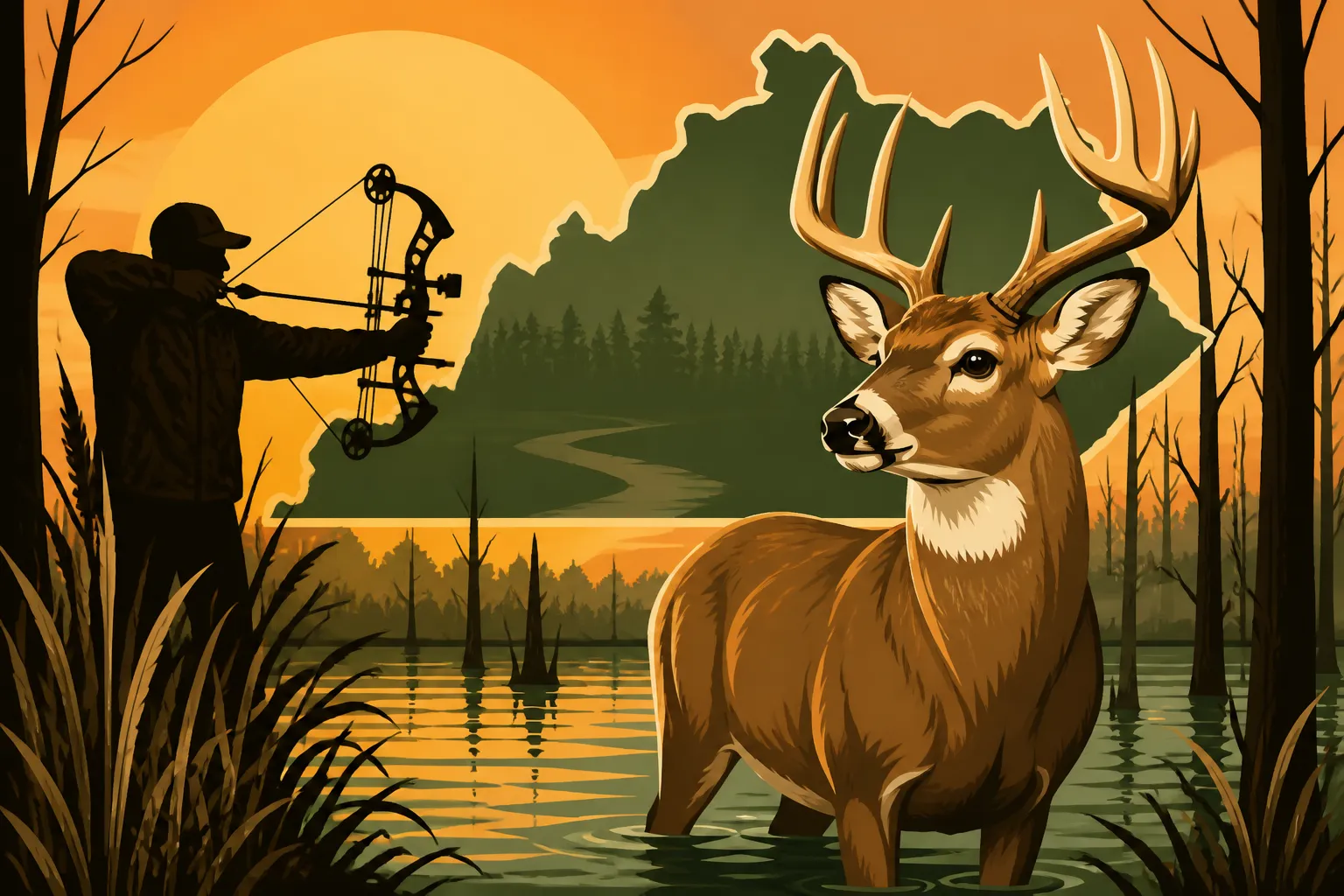
Hunting Western Kentucky Bottomland Deer
Hunting Western Kentucky bottomlands for deer can feel like staring at a giant, green, watery puzzle with no clear solution. The sheer scale, the dense cover, and the ever-present water make these areas incredibly intimidating, often leaving hunters feeling lost and frustrated when they can't pinpoint where the deer are. This comprehensive guide aims to demystify these unique hunting grounds, providing you with the strategies, tactics, and knowledge you need to consistently find and harvest whitetails in the challenging yet rewarding river bottoms and sloughs of Western Kentucky.
Understanding the Western Kentucky Bottomland Environment
The western part of our great Commonwealth presents a distinctly different hunting landscape compared to the rolling hills and mountain ridges of the east. Here, the land flattens out, carved and shaped by mighty rivers like the Ohio, Mississippi, Green, and Cumberland. These are dynamic ecosystems, constantly changing with the whims of rainfall and seasonal flooding, creating a paradise for deer but a complex challenge for hunters.
Topography and Hydrology Define Deer Movement
Unlike the clear elevation changes you'd find in the eastern half of the state, bottomland topography is subtle, yet profoundly impactful on deer movement. A mere foot or two of elevation can mean the difference between dry ground and standing water, creating critical travel corridors. You’ll find vast expanses of relatively flat terrain, interspersed with ancient oxbow lakes, winding sloughs, and countless small drainages that feed into larger rivers. These water features are often interconnected, especially after heavy rains, turning solid ground into a maze of islands and submerged timber. Deer are creatures of habit, and in these environments, their habits are dictated by the wetness underfoot. They will utilize the highest, driest ground available for bedding and travel, even if it's only slightly elevated. Looking for slight ridges or benches that run parallel to a major water body can reveal these preferred pathways. Think about how even a minor rise provides refuge from standing water, creating a natural highway through the swampy lowlands.
Key Habitat Features: Food and Cover are Intertwined
Western Kentucky bottomlands are incredibly fertile, boasting a rich mix of hardwood timber, agricultural fields, and thick, brushy undergrowth. This abundance means deer usually have plenty to eat and endless places to hide. Hardwood forests, especially those dominated by oaks, provide crucial mast crops like acorns in the fall, drawing deer in from surrounding areas. These areas are often adjacent to vast agricultural fields—corn, soybeans, and winter wheat—which become irresistible food sources as the seasons progress. The edges where these crop fields meet the dense timber are prime locations, offering both sustenance and security. Beyond the hardwoods and fields, you'll encounter impenetrable thickets of briars, honeysuckle, and young timber, often forming vast pockets of bedding cover. These thickets provide excellent thermal protection and escape cover, making them ideal places for mature bucks to spend their daylight hours. It's often where the thickest cover meets a reliable food source, perhaps a standing cornfield or a productive oak flat, that you'll find the most consistent deer activity. Don't forget those forgotten corners and abandoned farmsteads, too; they often revert to thick, thorny havens that offer unparalleled security.
Scouting Strategies for Bottomland Deer
Scouting in Western Kentucky bottomlands isn't just a pre-season activity; it's an ongoing process. The environment changes so rapidly with weather and water levels that what was a hotspot last week might be under three feet of water today. It requires a keen eye and a willingness to get your boots wet.
Pre-Season Aerial Reconnaissance
Before you ever set foot in the timber, spend significant time studying aerial maps. Tools like GoHunt's mapping features can be invaluable here. Look for subtle changes in elevation, identifying potential travel corridors or "islands" of dry ground. Pay close attention to the lines where agricultural fields meet timber, as well as the paths of sloughs, creeks, and old river channels. What appear as minor ditches on a contour map can be significant barriers or funnels for deer. You're looking for pinch points, old logging roads, and any feature that funnels deer movement. Identify areas where dense cover transitions into more open timber or fields – these are often prime ambush sites. Also, keep an eye out for anomalies like small woodlots surrounded by fields, or fingers of timber extending into open country. These are often overlooked by other hunters and can hold surprising numbers of deer. Don't just look at the current year's crops either; consider what might have been planted in previous seasons that could have impacted long-term deer patterns. For a deeper dive into map reading, you might find our guide on Reading Aerial Photos for Eastern Kentucky Deer helpful, even though the terrain is different, the principles of identifying key features remain.
Boots-on-the-Ground Sign Reading
There's no substitute for getting into the woods. Once you've identified potential areas from your maps, it's time for some boots-on-the-ground investigation. During the late winter and early spring, after the leaves have fallen but before new growth explodes, is an ideal time. Look for trails, especially those that appear well-worn and run along the slight rises you identified on your maps. Search for old rubs and scrapes, which can indicate historical buck activity. Pay attention to downed timber and thickets; these often serve as bedding areas. The challenge is often distinguishing between deer sign from weeks ago and fresh activity, especially in areas where standing water obscures tracks. Focus on transitions: where thickets meet open woods, where woods meet water, and where different timber types converge. Examine creek crossings and the edges of sloughs for tracks and droppings. Remember that during periods of high water, deer will congregate on whatever dry ground remains, making these temporary islands or elevated banks hotspots. Early season scouting, even during the summer, can reveal consistent food sources like certain fruit trees or early mast producers that draw deer in before the main acorn drop.
Hunting Tactics for Different Bottomland Scenarios
The diverse nature of Western Kentucky bottomlands means you can't rely on a single hunting strategy. Flexibility is key, adapting your approach to the specific features and conditions of the area you're hunting, as well as the time of year.
Field Edge and Transition Zone Hunting
Perhaps the most common and often effective tactic in bottomlands involves hunting the edges where agricultural fields meet timber. Deer will often stage in the woods just inside the field edge, waiting for dusk to move out and feed, or returning to bed at dawn. Setting up a treestand or ground blind along these transitions can be highly productive, especially during the early season or when a strong cold front pushes deer to feed aggressively. Look for funnels or pinch points along these edges where deer movement is concentrated. This could be a narrow strip of timber between two fields, a fence line, or a point of woods extending into a field. Consider wind direction carefully; bottomlands can have tricky thermals, especially near water. A good example is a standing cornfield adjacent to a thick bottomland swamp. Deer will bed in that swamp and hit the cornfield at last light. Placing a stand strategically between the two, perhaps along a subtle deer trail leading out of the swamp, could be dynamite. During the rut, these field edges become cruising lanes for bucks checking does. Understanding Hunting the Rut in Early November is crucial here, as bucks will be less cautious and more focused on finding receptive does, making them more visible.
Timber and Waterway Tactics
Deep in the bottomland timber, away from the immediate field edges, you’ll find another world. This often means hunting specific timber types or features along sloughs, creeks, and oxbows. Focus on areas with mature mast-producing trees if it's an acorn year, or look for natural travel corridors running parallel to waterways. Deer often use the banks of creeks and sloughs as natural travel routes, especially if the ground is slightly elevated. During the peak of the season, bucks will be cruising these waterways, looking for sign and checking for does. For instance, a bend in a creek that creates a small, dry point of land can be a perfect ambush site. Similarly, an old logging road that runs deep into the bottomland can act as a superhighway for deer. These roads offer easier travel than busting through thick undergrowth and are often paralleled by smaller deer trails just inside the timber, offering both concealment for the hunter and proximity to the deer's preferred travel. If you're considering a treestand, pay attention to Treestand Setups in Daniel Boone National Forest for general principles, adapting them to the unique characteristics of bottomland timber like tree species and canopy density.
Utilizing Natural Funnels and Bottlenecks
Bottomland environments, with their intricate network of waterways and subtle elevation changes, are absolutely rife with natural funnels and bottlenecks if you know how to spot them. These are critical areas where the landscape itself forces deer into predictable travel patterns. Think about narrow strips of dry ground between two sloughs, a small stand of mature timber surrounded by waterlogged woods, or a dense thicket that funnels deer along its edges. These are the places where deer are most likely to pass by a specific point. Using mapping applications from GoHunt can help you pinpoint these on a larger scale, and then boots-on-the-ground scouting confirms the actual deer sign. For example, a small, elevated ridge running through a vast cypress swamp creates a natural highway. Any deer moving through that swamp is likely to use that ridge. Setting up on the downwind side of such a funnel can be incredibly effective. Consider how Hunting a Funnel Between Two Hollows can be adapted: in bottomlands, "hollows" might be replaced by "sloughs" or "flooded areas," creating similar constricting pathways.
Dealing with Water and Weather in Bottomlands
Hunting Western Kentucky bottomlands means accepting that you're going to encounter water, sometimes a lot of it. The key isn't to avoid it entirely, but to understand how it impacts deer and to adapt your strategy accordingly.
Adapting to Changing Water Levels
River and creek levels are constantly fluctuating, especially during the fall and winter hunting seasons. Heavy rains upstream can cause rapid rises, flooding vast areas overnight. When water levels are high, deer will move to the highest available ground, often concentrating on smaller islands or elevated benches that might otherwise be overlooked. This can actually make them easier to locate, as their habitat shrinks. Conversely, during periods of drought, sloughs and oxbows might dry up, opening up new travel corridors or revealing previously hidden food sources on the exposed bottom. It's crucial to monitor local river gauges and weather forecasts. A rising river might mean you need to shift your focus to higher ground, while dropping water could open up new opportunities in areas that were recently inaccessible. Always have an exit strategy, especially if you're venturing deep into an area that could flood. It's not uncommon for hunters to find themselves unexpectedly stranded if they don't pay attention. The challenge of Hunting Western Kentucky Bottomland Deer is truly dynamic due to these water shifts.
Navigating and Staying Dry
Navigating wet bottomlands requires specialized gear and a cautious approach. Rubber boots are an absolute must, often hip boots or even chest waders depending on the conditions. Trust me, there's nothing worse than wet feet on a cold November morning. These lands are notoriously muddy, and a good pair of waterproof boots with excellent traction is paramount. You might find guidance in our discussion on Boots for Kentucky Hollows and Creek Bottoms, which highlights the importance of quality footwear in wet terrain. Wading through knee-deep water quietly takes practice; move slowly, testing the ground ahead. A walking stick can be invaluable for probing depth and stability. Consider using a small boat, canoe, or even a kayak to access remote areas, especially those cut off by sloughs or flooded timber. These waterways can offer silent entry and exit, allowing you to get into areas that receive less hunting pressure. When setting up a stand, bring a small piece of carpet or an insulated pad to stand on; it helps immensely with comfort and thermal regulation when your feet are already damp from the hike in.
Gear Considerations for Wet and Wild Hunting
The gear you choose for bottomland hunting can make or break your trip. It needs to be rugged, waterproof, and practical for navigating challenging terrain.
Essential Footwear and Outerwear
As mentioned, proper footwear is non-negotiable. Forget your fancy leather boots; in the bottomlands, you need rubber. Depending on the expected water depth, hip boots or chest waders will be your best friend. Look for insulated versions if you're hunting late season. Your outer layers also need to be seriously waterproof. A good rain jacket and pants that can withstand a full day of drizzle or a sudden downpour are essential. Prioritize quiet fabrics that won't rustle loudly when you move. Layering is always smart in Kentucky, as temperatures can swing wildly from morning to afternoon. Start with a moisture-wicking base layer, add insulating layers, and top it off with your waterproof outer shell. This allows you to adjust to changing conditions and activity levels. Don't forget waterproof gloves and a warm hat, as much of your body heat is lost through your extremities. For more on cold weather strategies, check out Cold-Weather Sitting Strategy in Kentucky.
Scent Control and Concealment
Deer in bottomlands, especially on public land, are often highly pressured. This makes meticulous Scent Control and Concealment more critical than ever. The dense cover can sometimes work in your favor, breaking up your outline, but deer often seem to have an uncanny ability to sniff out hunters. Use scent-eliminating sprays, wash your clothes in scent-free detergent, and store them in airtight containers. Play the wind religiously. In bottomlands, the wind can swirl unpredictably, especially in thick cover and near waterways. Always have multiple stand locations or ground blind options that allow you to hunt a variety of wind directions. Utilize natural cover like thick briar patches, downed logs, or the base of large trees for concealment. A good leafy suit or ghillie suit can be incredibly effective for ground hunting in these dense environments, allowing you to melt into the background. Remember, the deer's nose is their primary defense, so do everything you can to minimize your human odor.
Post-Harvest Logistics and Safety
Okay, you've done it! You've successfully connected with a bottomland buck. Now comes another significant challenge: getting that deer out of the often-remote, wet, and rugged terrain. This is where pre-planning truly pays off.
Recovery Challenges in Wet Terrain
Recovering a deer from a Western Kentucky bottomland can be a grueling task. Blood trails can be difficult to follow through leaf litter, mud, and standing water. If you make a marginal shot, giving the deer ample time before tracking is even more crucial here. When you do start tracking, move slowly and methodically, marking the last blood sign with flagging tape or brightly colored toilet paper. If you lose the trail, spread out and search in ever-widening circles. Consider using a quality headlamp with a red-light option if you're tracking after dark, as white light can wash out faint blood. Remember that deer, when wounded, often seek the densest cover, which means you might be pushing through briars and thickets. Having a buddy or two to help with the recovery is immensely beneficial, not just for the extra eyes but also for the heavy work of extraction. For tips on a similar environment, consult Tracking a Deer Through Kentucky Leaf Litter.
Field Dressing and Transport
Once you locate your deer, the work truly begins. Field dressing quickly is important, especially in warmer early season conditions, to cool the meat. If you're deep in a wet area, bringing a large tarp can be helpful to keep the carcass out of the mud while you work. The gutless method might be your best friend if you're a long way from an access point, allowing you to pack out the valuable meat in sections. If you're trying to drag a whole deer, a deer sled or a sturdy game cart can be invaluable, provided the terrain isn't too broken or muddy. However, many bottomland areas are simply too wet or brushy for a cart, making dragging or quartering your only options. Consider how much effort it will take to extract the deer before you even start hunting a particular spot. Sometimes, choosing a stand closer to an access point, even if it means slightly less optimal hunting, is worth it for the ease of recovery. Always have a plan for how you'll get the animal out before you release that arrow or pull the trigger. Knowing how to efficiently Butchering a Deer at Camp can save you a lot of headache back home.
Table: Western Kentucky Bottomland Feature Overview
| Feature | Description | Hunting Strategy | Key Considerations |
|---|---|---|---|
| River Bottoms | Low-lying areas directly adjacent to major rivers, subject to frequent flooding. | Focus on high ground, natural levees, and timbered islands. Hunt transition zones near fields. | Monitor river levels closely. High water concentrates deer. Access can be difficult. |
| Oxbow Lakes / Sloughs | Old river channels cut off from the main flow, often holding standing water. | Hunt edges for travel, especially where dry ground meets water. Look for crossings. | Can be muddy and thick. Excellent bedding cover. |
| Flooded Timber | Woodlands that become submerged, especially during wet seasons. | Hunt the edges of the floodline. Look for dry "islands" within the water. | Requires waders or boat access. Deer use these areas for refuge and escape. |
| Agricultural Field Edges | Where cultivated fields meet dense timber or thickets. | Set up on downwind side of travel corridors. Focus on dawn/dusk feeding. | High deer traffic. Pressured deer may be nocturnal. Wind is critical. |
| Thickets / Briar Patches | Dense, impenetrable vegetation providing excellent bedding and security cover. | Hunt edges, especially where they meet food sources or travel corridors. | Deer will bed deep inside. Difficult to penetrate quietly. |
Disclaimer
Hunting involves inherent risks, including but not limited to those associated with firearms, archery equipment, treestands, and outdoor conditions. Always prioritize safety, follow all Kentucky hunting regulations, and obtain proper licenses and permits. The information provided in this guide is for informational purposes only and should not replace professional guidance or personal judgment. Be aware of your surroundings, respect private property, and inform others of your hunting plans and location.