Kentucky Early Muzzleloader Tactics
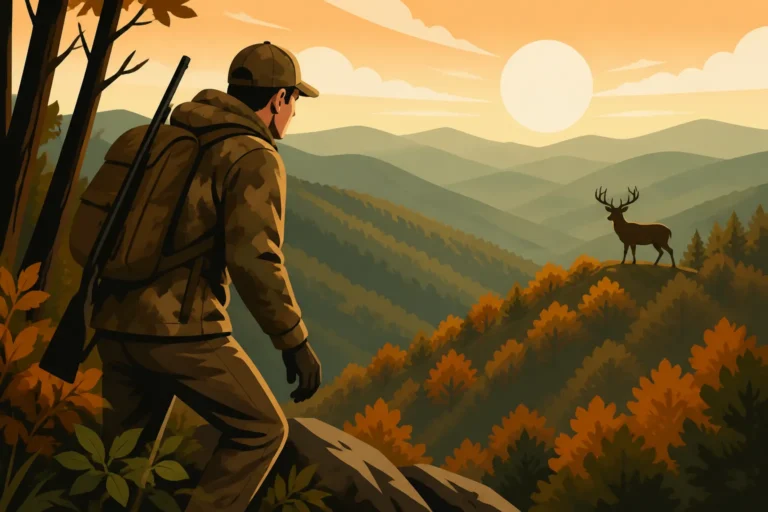
The early muzzleloader season in Kentucky offers a unique and often challenging window for deer hunters. It’s a time when summer patterns are fading, the leaves are starting to turn, but the full frenzy of the rut hasn't quite kicked in, leaving many hunters scratching their heads about where the deer have gone. This comprehensive guide is here to unravel the complexities of this specific hunting period, arming you with detailed tactics and insights to make your Kentucky early muzzleloader hunt a roaring success.
Understanding the Early Muzzleloader Window
Kentucky's early muzzleloader season presents a distinct set of circumstances that differ significantly from both the archery season preceding it and the modern gun season that follows. It's a bridge, if you will, between two very different worlds of deer hunting, and understanding its nuances is key to success.
Key Dates and Regulations
The early muzzleloader season typically falls in mid-October, a precious few days carved out where hunters can take to the woods with a primitive firearm before the landscape changes drastically with the full leaf drop and the influx of modern gun hunters. This timing is critical; it’s usually after the hottest days of summer have passed but often before a consistent cold snap settles in. Knowing the exact dates for your specific year is paramount, and you can usually find this information readily on the Kentucky Department of Fish and Wildlife Resources (KDFWR) website. It's not the same as the much colder, later season hunt, which calls for its own specific game plan, as detailed in our guide to Kentucky Late Muzzleloader Tactics.
Beyond the dates, it's absolutely vital to be intimately familiar with the specific regulations governing muzzleloader hunting. This includes legal firearms for deer hunting, ammunition requirements (like projectile type and powder restrictions), and harvest limits. Kentucky's deer management zone rules dictate how many deer you can harvest and whether they can be antlered or antlerless, so make sure you know which zone your chosen hunting grounds fall into. Don't assume anything; always double-check the current year's hunting guide to ensure you're in full compliance.
Deer Behavior in Early Fall
During the early muzzleloader season, deer are in a transitional phase. They’re moving away from their predictable summer feeding patterns centered around specific agricultural fields or lush green plots. Instead, they're beginning to focus heavily on fall mast crops, primarily acorns. If you can locate a good acorn crop, you've likely found a major deer magnet. White oaks are often preferred early on, followed by red oaks as the season progresses.
Bucks, while not yet fully engaged in the all-out rut, are starting to show signs of increased activity. They’re rubbing trees more aggressively, making scrapes, and beginning to spar with other bucks to establish dominance. You might see a younger buck chasing a doe here and there, but the serious seeking phase is still a couple of weeks off. This means they're still relatively concentrated around food sources, especially during low-light hours, but they're also beginning to patrol their territories more actively, which can be an opportunity if you know where to intercept them.
Scouting for Success in Early Muzzleloader
Successful early muzzleloader hunting isn't about luck; it's about preparation. Effective scouting, both before and during the season, is the bedrock upon which successful hunts are built.
Pre-Season Reconnaissance
Before the season even opens, dedicating time to thorough pre-season reconnaissance can give you a significant advantage. This means walking the property you plan to hunt, whether it's private land or public access like Daniel Boone National Forest. Look for primary food sources – those coveted white oak groves, abandoned apple orchards, or standing cornfields. Pay close attention to water sources, especially if it’s been a dry fall. Deer need water daily, and a reliable water source can be a major draw.
Beyond food and water, scout for bedding areas: thick cover, dense saplings, or steep hollows where deer feel secure. Connect these bedding areas to food sources by looking for well-worn trails. These trails, especially those along natural funnels like saddles, creek crossings, or breaks in thick cover, are prime ambush points. Tools like digital mapping platforms, such as those available through GoHunt, can be invaluable here. They allow you to study aerial photos, identify terrain features, and mark potential hotspots from the comfort of your home, saving you countless miles in the woods. Our guide on Scouting Kentucky Public Land Before Season delves deeper into these initial steps.
In-Season Adjustments and Sign Reading
Once the season starts, your scouting efforts don't stop. Deer behavior can change quickly due to hunting pressure, weather shifts, or new food sources becoming available. You need to be a detective in the woods. Fresh rubs, especially larger ones, indicate a buck is active in the area. Fresh scrapes, particularly those with an active "licking branch" above them, are like a buck's calling card, indicating he's checking for does.
Pay attention to subtle clues: fresh tracks in mud, deer droppings indicating recent feeding, or disturbed leaf litter. If you're not seeing deer where you expected, don't be afraid to move. A quick, quiet midday scout can reveal a new pattern. Using apps on your phone, perhaps even mapping layers from services like GoHunt, can help you quickly adjust your strategy and mark new sign while still being discreet. If you notice a fresh cutover attracting deer, it might be worth a quick, cautious move to set up downwind. The ability to read the woods and adapt on the fly is a hallmark of a successful early muzzleloader hunter.
Muzzleloader Setup and Gear Considerations
Choosing and preparing your muzzleloader properly is crucial for a season where every shot counts. Reliability, accuracy, and appropriate gear can make or break your hunt.
Choosing the Right Muzzleloader and Components
Kentucky's regulations for muzzleloaders are specific, generally allowing only cap-and-ball or flintlock muzzleloading rifles and pistols, as well as in-line muzzleloading rifles. For most modern hunters, an in-line muzzleloader offers the best combination of reliability and accuracy. Brands like CVA and Traditions are popular choices, offering models that are relatively easy to clean and maintain, which is a huge plus after a damp morning hunt.
| Muzzleloader Type | Pros | Cons | Ideal For |
|---|---|---|---|
| In-Line | High accuracy, ease of loading, modern ignition reliability, easier cleaning | Less "traditional" feel, can be heavier | Hunters prioritizing accuracy and reliability |
| Traditional Percussion (Cap & Ball) | Classic feel, simple mechanics, generally lighter | Can be less accurate than in-lines, slower reloading, less weather-resistant ignition | Enthusiasts of traditional hunting, shorter ranges |
| Flintlock | Most traditional, unique challenge | Requires significant skill, highly susceptible to moisture, slowest reloading | Purists seeking the ultimate primitive challenge |
When it comes to components, always use fresh powder and primers. Blackhorn 209 is a popular powder alternative to traditional black powder, offering cleaner burns and less fouling, making follow-up shots potentially more consistent. Pair it with appropriate sabots and projectiles designed for accuracy. Practicing with your chosen setup is non-negotiable. Knowing your rifle's capabilities at various ranges, especially within the typical shooting distances you expect to encounter in Kentucky’s timber or field edges, is far more important than any specific brand name.
Optics and Sighting In
While some hunters prefer open sights for a true primitive experience, a low-power scope (like a 1-4x or 2-7x) can dramatically increase accuracy and confidence, especially in the low-light conditions often encountered during legal shooting hours. In-line muzzleloaders allow for scope use, and a clear, fog-proof optic is invaluable.
Sighting in your muzzleloader isn't just about hitting the bullseye at 50 or 100 yards; it's about understanding your projectile's trajectory. Many hunters choose to sight in dead-on at 50 yards, which often means you'll still be within a vital zone hold at 100 yards with minimal drop. However, you need to know that for your specific load. Practice shooting from various field positions – offhand, kneeling, using a tree as a rest – because you won't always have a bench rest in the woods. Pay attention to how humidity and temperature affect your powder and projectile, as early fall conditions can vary.
Essential Field Gear
Beyond your muzzleloader, a few key pieces of gear are indispensable. A good set of binoculars, like a pair of 8x42s, will help you pick apart distant cover and identify deer in low light. A rangefinder is crucial for muzzleloader hunting, as projectile drop can be significant even at moderate distances, and you want to be precise. Don’t forget your basic field dressing knife, rubber gloves, and some game bags, especially if temperatures are still on the warmer side.
Given the early fall conditions, layering your clothing is a smart move. Mornings can be chilly, but midday can warm up considerably, making it easy to overheat if you’re not prepared to shed layers. Durable, quiet outerwear is always a must. And, of course, your Kentucky Hunting Licenses and What They Cost and deer permits must be on your person at all times, along with your hunter education card if required.
Hunting Strategies for Early Muzzleloader Deer
With your gear squared away and your scouting complete, it's time to talk about putting those muzzleloader tactics into action. This period requires a thoughtful approach, balancing aggressive pursuit with quiet patience.
Ambush Points: Food, Water, and Bedding
The early muzzleloader season is often a classic "food source" hunt. Deer, especially during the morning and late afternoon, are almost entirely focused on finding the best forage. Your primary strategy should revolve around ambushing deer as they move between bedding areas and these key food sources. This means setting up a stand or ground blind in locations that intercept deer as they leave thick cover to feed, or as they return to bed after a night of grazing.
Look for saddles along ridges, creek bottoms that act as travel corridors, or pinch points where thick cover forces deer into a narrow strip of woods. A well-placed treestand or ground blind in these areas can be deadly. When you're Hanging a Stand on an Eastern Kentucky Ridge, always consider the prevailing wind. With a muzzleloader, your effective range is shorter than a rifle, so getting the wind right to minimize scent dispersal is even more critical for those close-range shots. Pay attention to wind and thermals on a Kentucky ridge, as they can shift quickly.
Still-Hunting and Stalking
While ambushing from a stand is often the most productive method, the early muzzleloader season can also be ripe for still-hunting or stalking, especially if you're hunting dense timber or rolling terrain found throughout much of Kentucky. Still-hunting involves moving very slowly and deliberately, taking a few steps, then pausing for several minutes to observe your surroundings. This allows you to spot deer before they spot you, and capitalize on deer that may be bedded down or slowly feeding in thicker cover.
The key to successful still-hunting is patience and stealth. Use binoculars to scan ahead, look for horizontal lines in a vertical world, and pick apart shadows. Move into the wind, taking advantage of any natural cover to break up your silhouette. Stalking, a more active form of pursuit, can be effective once you've spotted a deer and need to close the distance for a shot. This requires careful attention to terrain, wind, and the deer's behavior, moving only when its head is down or it's otherwise distracted. It’s a challenging but incredibly rewarding way to hunt during this time, allowing you to cover more ground than a static stand hunter.
Calling and Decoying
While not as effective as during the peak rut, calling can still play a role in early muzzleloader success. Soft grunts and doe bleats can sometimes pique a buck's curiosity, especially if he's already on the move. Don't overdo it; a few subtle calls are usually more effective than aggressive sequences. During this pre-rut phase, rattling and grunting in Kentucky can occasionally pull in a curious younger buck, or even an older buck checking to see who’s making noise in his territory, but it's not a primary tactic like it would be in November.
Decoys are less common during early muzzleloader, primarily because bucks aren't in a full-blown fighting or breeding frenzy. However, a single doe decoy set up in a field edge or food plot can sometimes draw a passing buck's attention, making him pause long enough for a shot. If you do use a decoy, ensure it’s visible and positioned downwind of your setup, so any approaching deer will be broadside to you as they come in to investigate. Always be aware of other hunters when using decoys on public land, and ensure your blaze orange is visible when walking in and out.
Weather and Its Impact on Early Muzzleloader
Kentucky's weather in mid-October can be a mixed bag, swinging from Indian summer warmth to crisp, frosty mornings. How you adapt your tactics to these conditions is crucial.
Warm Weather Challenges
Warm weather, which is common during the early muzzleloader season, can pose several challenges. Deer activity tends to decrease during the warmer parts of the day, making early mornings and late evenings the prime hunting windows. During these times, deer will seek shade and move slower, often staying closer to dense cover and water sources. Hunting over water or in shaded, cool creek bottoms might be more productive than exposed field edges.
Another significant challenge of warm weather is meat care. If you successfully harvest a deer when temperatures are above 50°F, you need to field dress it immediately and get it cooled down as quickly as possible. This might mean having coolers filled with ice ready at your vehicle. Leaving a deer in warm temperatures for too long can spoil the meat, which is a devastating outcome after a successful hunt. Our guide on Field Dressing a Deer in Cold Weather offers great insights, but remember to adjust for the warmer conditions of early fall, prioritizing rapid cooling.
Cold Front Opportunities
Conversely, a sharp cold front rolling through Kentucky during the early muzzleloader season can be a game-changer. Cold weather often invigorates deer, increasing their activity levels as they instinctively prepare for the lean winter months. They’ll be more likely to be on their feet longer, seeking out those high-energy mast crops.
When a cold front hits, expect increased movement, especially in the afternoon. This is when bucks might feel more comfortable venturing out of thick cover earlier in the day. Pay attention to barometric pressure; a rising barometer after a front often correlates with increased deer movement. These conditions are ideal for being in your stand all day, if you can manage it, focusing on those transition areas between bedding and feeding, or even venturing into areas you might normally avoid during warmer spells.
Post-Shot and Recovery
Successfully taking a shot with a muzzleloader is only half the battle. Knowing how to track and recover your deer, especially with potentially less-than-ideal blood trails, is critical.
Tracking Best Practices
Muzzleloaders, particularly if you're using slower projectiles like round balls or heavier conical bullets, can sometimes produce different wound channels and exit holes compared to high-velocity modern rifles. This might mean a less robust blood trail. After the shot, remain still and listen. Did you hear the deer crash? How did it react? Did it mule kick, or run off with its tail tucked? These observations are vital clues.
Give the deer time. With a muzzleloader, it’s often best to wait at least 30 minutes to an hour for a well-hit deer, and 3-4 hours or even overnight for a questionable shot, assuming temperatures allow. When you begin tracking, move slowly, looking for splashes of blood, disturbed leaves, or broken branches. Mark your last known blood or sign with flagging tape. If you lose the trail, spread out and grid search, always looking ahead for any sign. Using tools like onX Hunt or even just your phone's GPS can help you mark your last point of contact and systematically search. If you’re having trouble, don’t hesitate to call a friend or even a local tracking dog service if available.
Field Care in Early Fall
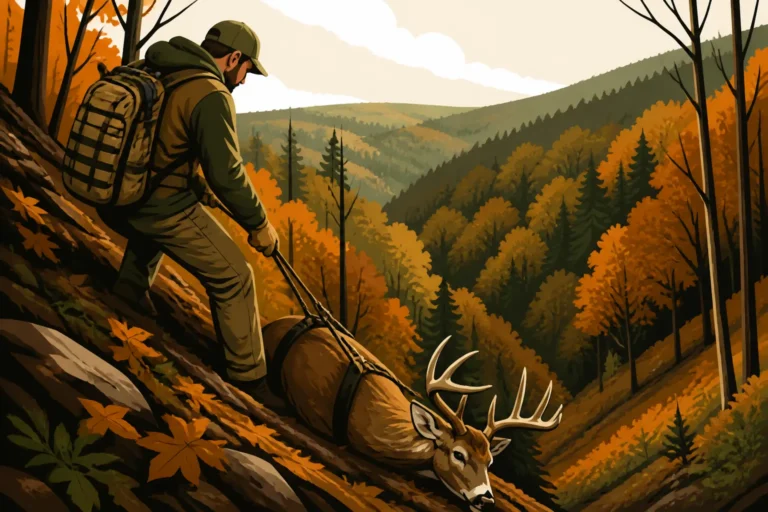
Once you've recovered your deer, immediate field care is crucial, especially in early fall. As mentioned before, warm temperatures can quickly lead to spoilage. Field dress the deer as soon as possible to begin the cooling process. Remove the entrails, and if you’re far from your vehicle, consider splitting the brisket and pelvis to allow for better airflow.
If you have a long drag ahead, or if you're in a remote area, consider boning out the deer to reduce weight. Game bags, ideally treated with a bug deterrent, can protect the meat from flies and dirt. Get the carcass, or the deboned meat, into a cooler with ice as quickly as possible. Layer ice over and around the meat, ensuring air circulation if possible. You can also hang the deer in a cool, shady spot if night temperatures drop significantly, but always prioritize cooling the meat down quickly. Finally, don't forget your legal obligation to report your deer harvest through the Kentucky Telecheck system, adhering to all Kentucky Deer Harvest Reporting Rules within the specified deadline.
Disclaimer
The information provided in this guide is for general informational purposes only and does not constitute legal advice. Hunting regulations and laws can change frequently. It is the responsibility of every hunter to consult the official Kentucky Department of Fish and Wildlife Resources (KDFWR) regulations and local ordinances before participating in any hunting activity. Always prioritize safety, ethical hunting practices, and respect for wildlife and private property.