Recovering a Deer From a Steep Hollow
There’s nothing quite like the rush of a successful shot on a Kentucky whitetail, but that soaring feeling can quickly turn to dread when you watch that deer vanish over a ridge and into a steep, gnarly hollow. The thought of recovering an animal from such unforgiving terrain can be intimidating, especially as daylight fades and the woods grow quiet. This comprehensive guide is here to walk you through the essential steps, gear, and tactics you’ll need to confidently track and recover your deer, even from the most challenging Kentucky hollows, ensuring your hard-earned harvest doesn't go to waste.
The Initial Challenge: Shot Placement and Tracking in Tough Terrain
Every hunter dreams of a deer dropping in its tracks or running a short distance before piling up in an open field. But the reality of hunting, especially in the rugged hills and hollers of Kentucky, often throws us curveballs. Deer can cover ground incredibly fast, and what looks like a perfect shot can sometimes lead to a challenging recovery.
The Heartbreak of a Marginal Hit
Let's be honest, even the most seasoned hunters can make a less-than-perfect shot. Maybe a branch deflected your arrow, or the deer twitched just as you squeezed the trigger. When you see your deer bound away and disappear into a steep hollow, that pit in your stomach tells you this might not be an easy recovery. It's a frustrating, deflating moment, but it’s crucial not to panic. The first step after any shot is patience. If you suspect a marginal hit, resist the urge to immediately jump up and chase. Give the deer time – at least an hour for a solid hit, and upwards of 4-6 hours, or even overnight, for a gut shot. Pushing a marginally hit deer can make it travel further, often deeper into those difficult hollows, making recovery exponentially harder.
Navigating Kentucky's Undulating Landscape
Kentucky's topography is beautiful, but it's no stranger to hunters. From the sprawling, rugged terrain of the Daniel Boone National Forest in Eastern Kentucky to the rolling hills and creek bottoms found across the state, steep hollows are a common feature. These areas are often characterized by sharp inclines and declines, loose leaf litter that makes finding blood a nightmare, slick rocks, and dense thickets of greenbrier and honeysuckle that seem designed to snag every piece of your gear. If your deer heads into one of these, you’re not just tracking; you’re embarking on a physical challenge. The dense canopy in these hollows also means less light, and the swirling wind can make it difficult to determine the deer's direction if you’re trying to use scent. Understanding these challenges from the outset will better prepare you for the task ahead. It’s not just about finding the deer; it’s about doing it safely and efficiently.
Essential Gear for Steep Hollow Recovery
Recovering a deer from a steep hollow isn't something you want to attempt unprepared. Having the right tools can make the difference between a successful, albeit strenuous, recovery and a lost animal. Think of this gear as your rescue kit for those "uh-oh" moments in the woods.
Lighting the Way: Headlamps and Flashlights
When you're tracking a deer that has gone into a hollow, especially as evening approaches, good lighting is non-negotiable. The dense canopy and steep sides mean sunlight fades quickly, and even during the day, the bottom of a deep hollow can be perpetually dim. A powerful, reliable headlamp is your best friend here. It frees up your hands for navigating treacherous terrain, pushing aside brush, and examining every leaf for a sign. Look for headlamps with a high lumen output (300+ lumens) and a long battery life. Consider carrying a spare headlamp or a robust handheld flashlight as a backup. There's nothing worse than your primary light dying just when you're on a promising blood trail in the darkest part of the woods. For more tips on this, check out our guide on Headlamps for Walking Out After Dark.
Navigation and Communication Tools
In a steep hollow, it's incredibly easy to get disoriented. The terrain can look uniform, and your mental map might quickly become useless. This is where modern navigation tools truly shine. A dedicated GPS unit or a reliable hunting app on your smartphone, like GoHunt, is invaluable. Use it to mark your stand location, the last known spot of blood, every significant sign you find, and, of course, the location of your downed animal. This creates a digital breadcrumb trail that can help you backtrack or guide others to your location. Many areas with deep hollows in Kentucky also suffer from notoriously poor cell service, making communication a challenge. If you're hunting with a partner, two-way radios are an absolute must. They allow you to stay in contact, coordinate your search efforts, and signal for help if needed, without relying on spotty cellular networks. Having a fully charged power bank for your phone is also a smart move, especially if you're relying on mapping applications.
Physical Aids and Safety Equipment
Beyond lighting and navigation, a few physical aids can save you immense effort and ensure your safety. A strong drag rope or harness is essential. Even if you plan on using a deer cart, a good rope is invaluable for getting the deer to a more accessible spot where the cart can be deployed. In truly steep, rugged areas, a game sled might be more practical than a wheeled cart, as it can slide over obstacles more easily. For your personal safety, invest in sturdy, waterproof boots with excellent ankle support and aggressive, non-slip soles. You’ll be traversing loose ground, wet leaves, and potentially muddy creek beds, so traction is critical. A first aid kit, especially for scrapes, cuts, and sprains, is also a wise addition to your pack when venturing into remote and challenging terrain. Don't forget, venturing into difficult areas requires caution, and sometimes, a little extra gear like a compact First Aid Kits for Remote Daniel Boone Forest Ground can make all the difference.
| Item | Primary Use in Steep Hollow Recovery | Notes |
|---|---|---|
| Headlamp | Hands-free illumination for tracking, especially at night. | Aim for high lumens (300+), long battery life, carry backup. |
| GPS/Hunting App | Mark blood trails, stand, and deer location; navigate safely. | Apps like GoHunt are excellent. Download maps for offline use. |
| Two-Way Radios | Group communication in areas with no cell service. | Essential for safety and coordination with hunting partners. |
| Drag Rope/Harness | Aid in pulling deer, especially up inclines. | Choose durable material; consider a deer harness for easier attachment. |
| Game Sled | Easier transport over rough, obstacle-filled terrain where carts struggle. | Better than a cart for truly steep, brushy areas. |
| Sturdy Boots | Traction and ankle support on loose, steep, wet ground. | Waterproof with aggressive soles are crucial for safety and stability. |
| First Aid Kit | Treat minor injuries (scrapes, sprains) incurred during recovery. | Essential for self-sufficiency in remote areas. |
| Blaze Orange | Safety visibility for you and your partners. | Crucial during open firearms seasons. Ensure you meet How Much Blaze Orange Kentucky Requires. |
The Recovery Process: Step-by-Step Tactics
Once the initial wait is over, the real work begins. Tracking a deer into a steep hollow is a methodical process that requires patience, attention to detail, and a strategic approach. It's not a race; it's a careful search for clues that will lead you to your prize.
Establishing the Blood Trail
The most critical part of tracking is finding that initial blood trail, and then staying on it. Start at the point of impact, or where you last saw the deer. Look for any sign: a tuft of hair, disturbed leaves, a drop of blood. Mark this spot clearly with flagging tape, toilet paper, or a waypoint on your GoHunt app. Then, take it slow. Move forward 10-15 yards, meticulously scanning the ground. When you find more blood, mark that spot, too. This creates a "breadcrumb" trail. If you lose the trail, go back to your last marker and fan out in a circular or grid pattern. Remember that blood can look different depending on the surface: bright red on green leaves, almost black on dark soil, and nearly invisible on wet ground. For deep dives into this, read up on Tracking a Deer Through Kentucky Leaf Litter and Blood Trailing After Dark in Kentucky. Don't just look down; sometimes a deer will brush against vegetation, leaving blood higher up on saplings or brush.
The Descent into the Hollow
Once the trail leads into the hollow, the challenge intensifies. Steep terrain makes it easy to lose your footing, and the deer's path might be less direct. As you descend, pay close attention to the grade and condition of the ground. Look for not just blood, but also tracks in soft earth, broken twigs, scuffed leaves, or even bent grass. A deer that is wounded will often take the path of least resistance initially, but as it weakens, it might seek dense cover. You’ll need to move slowly, deliberately planting your feet to avoid slips and falls. Use trees and thick brush for stability if needed. Be mindful of wind and thermals, especially in deep hollows where air currents can swirl unpredictably. Deer often try to go downhill when wounded, looking for water or simply following gravity, so continue your careful search downwards.
Reaching the Downed Animal and Field Dressing
The moment you spot your deer, whether it’s a flash of hide or an antler tine, is a profound mix of relief and renewed determination. Before rushing in, pause and observe. Ensure the animal is truly expired. Approach cautiously, especially if it’s in thick cover. Once you’ve confirmed the deer is down for good, it’s time to get to work. Field dressing in a steep hollow presents its own set of difficulties. You won’t have the luxury of perfectly flat ground. Try to position the deer with its head uphill if possible, as this can make the process a bit easier and prevent blood from running towards you. Keep your knife sharp and work efficiently. If the terrain is exceptionally rugged and you’re faced with an impossible drag, consider the "gutless method," where you process the deer in pieces and pack it out. This involves skinning and quartering the animal right where it lies, leaving the entrails behind, which can significantly reduce the weight and bulk you need to haul out of the hollow.
Getting Your Deer Out: The Uphill Battle
Finding your deer is only half the battle. Now comes the often-exhausting task of physically extracting it from the steep, unforgiving hollow. This is where your strength, strategy, and sometimes, the help of friends, truly come into play.
One-Person Drags vs. Team Effort
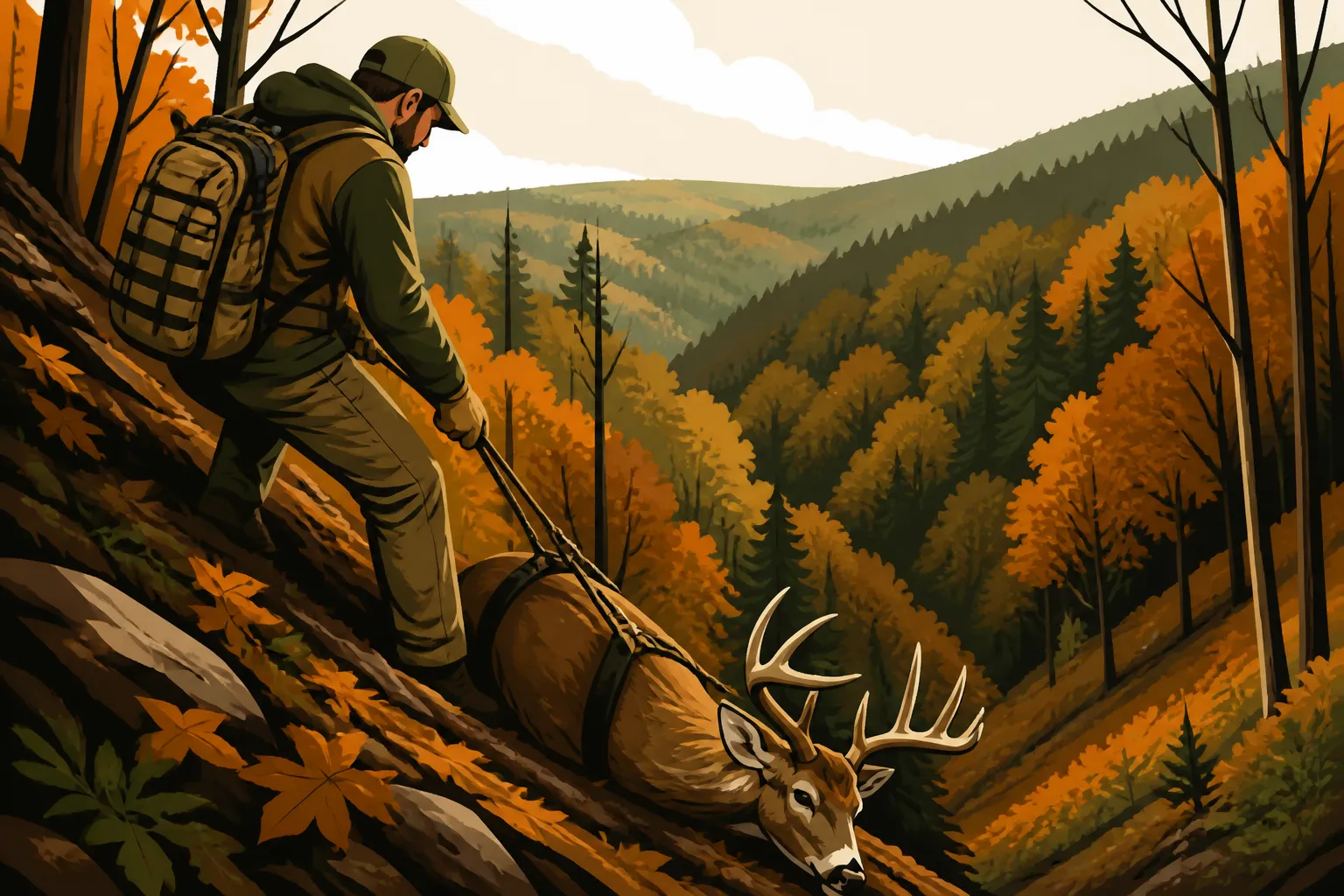
Let’s be brutally honest: dragging a mature Kentucky buck out of a steep, deep hollow by yourself is an incredibly tough feat. It's a lung-busting, muscle-straining endeavor that can leave you utterly spent and possibly injured. If you’re hunting alone and successfully make a recovery in a hollow, be prepared for a long, grueling drag. Take frequent breaks, hydrate, and don’t be ashamed to call for help if possible. If you’re hunting with a partner, however, the task becomes significantly more manageable. Two or more people can distribute the weight, coordinate pulls, and offer much-needed encouragement. Having another set of hands can also make navigating obstacles much smoother. When it comes to Deer Drives With Three or Four Hunters or just general teamwork, having extra hands is invaluable.
Mechanical Advantage and Creative Solutions
Sometimes, sheer muscle isn isn’t enough. For those truly extreme situations where a deer is deep in a gorge or on an incredibly steep slope, thinking creatively about mechanical advantage can be a game-changer. A small, portable rope and pulley system can multiply your pulling power, making a heavy deer feel significantly lighter. Anchoring the pulley to a sturdy tree higher up the slope can allow you to winch the deer up in stages. Also, use the natural environment to your advantage. Fallen logs can serve as temporary rests, or even as pivot points to maneuver the deer around tight turns. If you can get a game sled or deer cart to the animal (which is often difficult in the steepest sections), use it the moment the terrain allows. Sometimes, the best approach is to get the deer out of the absolute worst of the hollow and onto a slightly less steep trail before deploying wheels or a sled. Our article on Sleds and Drags for Ridge Country offers more creative ideas for difficult terrain.
Planning Your Extraction Route
Before you even start dragging, take a moment to assess the best possible exit route. Don’t just blindly pull the deer the way you came in, especially if you descended a near-vertical slope. Use your GoHunt app or other mapping tools to identify potential paths of least resistance. Look for old logging roads, game trails, or even slight ridges that might offer a more gradual ascent out of the hollow. It might mean dragging the deer a little further horizontally to reach an easier incline, but that extra distance can save you hours of struggle and immense physical pain. Consider the final destination – where is your vehicle parked? Aim for the path that gets you closest to accessible transport. If you scouted the area before the season, you might already have a mental map of easier routes; if not, now is the time to study your topography and choose wisely. Remember, Scouting With the Kentucky Hunt Fish App is not just for finding deer, but for planning your entire hunt, including recovery.
Disclaimer
Please be aware that hunting regulations, license requirements, and season dates can change. Always consult the most current Kentucky Department of Fish and Wildlife Resources (KDFWR) regulations before planning your hunt. Safety should be your top priority in the field.