Headlamps for Walking Out After Dark
There's nothing quite like the feeling of watching the last sliver of daylight disappear below the Kentucky tree line, knowing you've still got a good mile or two to walk back to the truck. That moment often brings a mix of satisfaction from a day well spent, and a nagging worry about tripping over a hidden log or misplacing your footing in a steep hollow. A quality headlamp isn't just a convenience in these situations; it's a critical piece of safety gear that can truly make or break your late-evening exit. This guide will walk you through why a reliable headlamp is essential for every Kentucky hunter and what features to prioritize to ensure a safe journey out of the woods, no matter how dark it gets.
Why a Reliable Headlamp is Non-Negotiable for Kentucky Hunters
Let's be real, we've all been there. You push it a little too long, hoping for that last-minute deer, or you're just so focused on the hunt that the sun dips faster than you expected. Suddenly, your familiar trail turns into a maze of shadows and obstacles. This isn't just an inconvenience; it can be downright dangerous. A good headlamp changes all of that, turning potential hazards into manageable paths.
Safety First: Navigating Treacherous Terrain
Kentucky's terrain, especially in our eastern mountains or the rolling hills of the Bluegrass, can be deceptively challenging. Even seemingly flat stretches can hide roots that grab at your boots, loose rocks ready to roll an ankle, or small gullies that appear out of nowhere. Trying to navigate this with a handheld flashlight is a recipe for disaster. Your hands are often full with your bow or rifle, maybe a pack, and certainly a deer drag if you're lucky enough to have punched a tag.
A headlamp keeps both hands free, allowing you to maintain balance, push through thick brush, or simply have a firm grip on your gear. Think about traversing a steep hillside in the Daniel Boone National Forest after dark. Without a clear view, every step is a gamble. A well-lit path allows you to pick out secure footing, identify potential hazards like downed timber or slippery leaves, and move with confidence instead of hesitation. It's about preventing a twisted ankle or a nasty fall that could leave you stranded miles from help.
Tracking and Recovery in Low Light
One of the most heart-wrenching scenarios for any hunter is losing a blood trail as daylight fades. You’ve made a good shot, you’re confident in the hit, but that last half-hour of light just wasn’t enough to finish the job. This is where a high-quality headlamp truly shines – literally. Trying to track in dim light with a weak beam or a handheld light that constantly bobs and weaves as you move is incredibly frustrating and often ineffective.
A powerful headlamp with a focused beam can illuminate subtle drops of blood, disturbed leaves, or even broken twigs that indicate a deer's path. It allows you to keep your eyes on the ground, scanning continuously for sign without the added effort of aiming a light. For situations that require Blood Trailing After Dark in Kentucky, a superior headlamp is your most valuable tool, increasing your chances of a successful recovery exponentially. It's the difference between finding your deer and spending a sleepless night worrying, only to return at dawn to a cold trail.
Hands-Free Convenience for All Tasks
Beyond just walking, hunting involves a lot of tasks that become incredibly awkward in the dark without hands-free lighting. Imagine field dressing a deer in the pitch black. You need both hands for the knife, for holding organs, and for keeping things clean. Trying to juggle a flashlight in your mouth or under an arm is not only difficult but also unsanitary and unsafe. The same goes for packing up your gear – zipping up your pack, securing your weapon, or even just finding your truck keys.
A headlamp lets you focus completely on the task at hand. If you need to check your Scouting With the Kentucky Hunt Fish App on your phone or your handheld GPS to confirm your route, your headlamp ensures you can see the screen clearly while still having both hands free to hold the device and operate its controls. It’s also invaluable when you're setting up a ground blind before first light or taking down a treestand after legal shooting hours. Every action becomes more efficient and safer when you don't have to worry about where your light source is pointing.
Key Features to Look for in a Kentucky Hunting Headlamp
So, you're convinced you need a good headlamp. But with so many options out there, how do you choose the right one for hunting our Kentucky woods? It's not just about the brightest light; it's about a combination of features that cater specifically to the demands of hunting.
Lumens and Beam Patterns: Lighting Up the Kentucky Woods
When you start looking at headlamps, "lumens" is the first term you’ll encounter. This refers to the total amount of visible light produced. For walking out after dark, especially if you anticipate tracking or navigating challenging terrain, you'll want something with a healthy lumen output. Aim for a headlamp with at least 200-300 lumens on its highest setting, and ideally, one that can push 500-800 lumens for those moments when you really need to cut through the darkness or scan a distant area. However, remember that higher lumens chew through batteries faster.
Beyond raw brightness, consider the beam pattern. Many quality headlamps offer adjustable beams:
- Spot beam: This is a focused, narrow beam that projects light a long distance. It’s excellent for looking ahead on a trail, spotting distant markers, or intense tracking.
- Flood beam: A wider, more diffused light that illuminates your immediate surroundings. This is perfect for field dressing, reading a map, or setting up camp.
- Red light mode: This is a critical feature for hunters. Red light doesn't constrict your pupils as much as white light, preserving your natural night vision. This means you can switch from red to white light and back without your eyes having to completely readjust. It's also less disruptive to wildlife, making it ideal for sneaking into your stand before dawn or packing up without spooking nearby animals.
Having a headlamp that offers both a strong spot and a wide flood, along with a reliable red light option, gives you the versatility you need for all aspects of a Kentucky hunt. Think about using a spot beam when Reading a Ridge for Cumberland Deer on the way in, then switching to red when you get close to your stand to avoid blowing out your night vision.
Battery Life and Power Source Considerations
Battery life is paramount. There’s nothing worse than having your headlamp die halfway back to the truck. When evaluating headlamps, look at the advertised runtimes for different lumen settings. Manufacturers typically provide runtimes for high, medium, and low settings. You'll likely use a medium setting for most walking, but need that high beam for occasional bursts of intense light.
Most headlamps use either:
- Disposable AA or AAA batteries: These are convenient because you can easily carry spare batteries and swap them out in the field. They're readily available in any store.
- Rechargeable batteries (often proprietary or 18650/21700 lithium-ion): These offer excellent power density and can save you money in the long run. The downside is that you need a power source (like a portable power bank) to recharge them in the field, or you have to carry fully charged spare battery packs.
Consider Kentucky's cold weather in late fall and winter. Cold temperatures drastically reduce battery efficiency, so always factor that in. If you're on a multi-day hunt or planning for Hunting Deer After a January Cold Front, carrying extra disposable batteries or a fully charged portable battery bank for rechargeable units is a non-negotiable insurance policy.
Durability, Water Resistance, and Comfort
Hunting gear takes a beating, and your headlamp is no exception. It needs to withstand bumps, drops, and the unpredictable Kentucky weather. Look for headlamps made from robust materials like aircraft-grade aluminum or high-impact plastics. They should feel solid, not flimsy.
Water resistance is another must-have. Kentucky can experience sudden downpours, misty mornings, or heavy snow. An IPX rating tells you how well a device is protected against water and dust. For hunting, aim for at least an IPX4 (splash resistant) or, ideally, an IPX7 (submersible for a short period) rating to ensure it can handle anything Mother Nature throws at you. You don't want your light failing when you're in a critical situation like Recovering a Deer From a Steep Hollow in the rain.
Finally, comfort. A headlamp that constantly slips, bounces, or digs into your forehead will quickly become a nuisance. Look for an adjustable, comfortable strap – often elastic and sometimes with a top strap for added stability, especially if the light unit itself is heavier. Some headlamps allow you to remove the light unit from the strap, which can be a nice feature for hands-free work or if you want to clip it to your pack or hat brim.
Practical Headlamp Strategies for Your Hunt
Having the right headlamp is only half the battle; knowing how to use it effectively is the other. Developing smart habits around your headlamp can significantly improve your safety and success in the field.
Pre-Hunt Preparation and Battery Management
Your headlamp should be part of your essential gear checklist, right alongside your weapon and proper Clothing for a Kentucky Late Season. Before every hunt, especially if it's been sitting in your pack for a while, give it a thorough check.
- Charge or refresh batteries: If it's rechargeable, top it off. If it uses disposables, replace them with fresh ones, even if you think there’s some juice left. Old batteries can unexpectedly die or leak.
- Test all modes: Make sure the white light, red light, and any different beam patterns are working correctly.
- Pack spares: Always carry extra batteries or a small, charged power bank. A small, lightweight unit can easily fit in your pack.
- Keep it accessible: Don't bury your headlamp at the bottom of your pack. Keep it in an outer pocket where you can grab it quickly when the light starts to fade. You don't want to be fumbling around in the dark to find your light.
This simple routine can save you a lot of headache and potentially keep you out of a dangerous situation. It's a small investment of time for a significant payoff in safety and peace of mind.
Using Red Light for Stealth and Night Vision Preservation
The red light feature isn't just a gimmick; it's a strategic tool for hunters. As mentioned, red light has a minimal impact on your rhodopsin, the pigment in your eyes responsible for night vision. This means when you turn off the red light, your eyes are still largely accustomed to the darkness, unlike the blinding effect of white light.
Use red light when:
- Walking into your stand before dawn: It allows you to see the path just enough to avoid obstacles without broadcasting your presence or destroying your vision.
- Packing up after legal shooting light: Again, minimal disturbance to wildlife and your own eyes.
- Checking your gear quietly: If you need to grab something from your pack or adjust a piece of clothing, red light is the way to go.
- Reading maps or your phone: If you're using a digital mapping app like GoHunt, red light makes it less obvious to other hunters or animals while still providing enough illumination.
Avoid using white light unless absolutely necessary, such as when Hunting the Rut in Early November and you need to thoroughly check a scrape line or blood trail. Make the red light your default for low-light situations.
Pairing Your Headlamp with Other Navigation Tools
Your headlamp doesn't operate in a vacuum; it works best when integrated with other navigational aids. While it illuminates your immediate path, it also helps you read your maps and GPS devices effectively.
- Physical Maps: If you carry paper maps of areas like the Daniel Boone National Forest Hunting, your headlamp allows you to unfold and read them accurately in the dark.
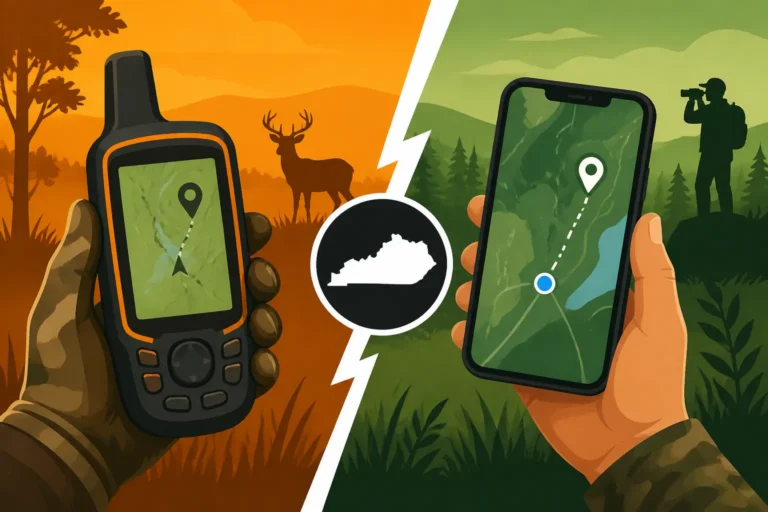
- GPS Devices and Apps: Whether it's a dedicated handheld GPS unit or a mapping app like GoHunt on your smartphone, your headlamp ensures you can clearly see the screen. This is crucial for verifying your position, following your track back to the truck, or double-checking property lines if you're Finding Property Lines. The ability to glance at your screen and adjust your headlamp beam as needed makes navigating much less stressful.
- Trail Markers: If you use reflective tacks or flagging tape to mark your route, your headlamp's beam will make these markers glow, guiding you efficiently back to your vehicle. This is especially helpful in dense timber or areas with less defined trails.
By combining the illuminating power of a good headlamp with reliable navigation, you equip yourself for the most challenging exits from the Kentucky backcountry.
Here's a quick comparison of some common headlamp features you might encounter:
| Feature | Low-End (Basic) | Mid-Range (Good) | High-End (Excellent) |
|---|---|---|---|
| Lumens (Max) | 50-150 | 250-500 | 600-1000+ |
| Beam Patterns | Fixed flood or spot | Adjustable spot/flood, often red light | Fully adjustable, multiple colors, intelligent modes |
| Battery Type | AAA/AA Disposable | AAA/AA or Rechargeable (proprietary/18650) | High-capacity rechargeable (18650/21700) |
| Runtime (Max) | 10-20 hours (low setting) | 30-60 hours (low setting) | 80-150+ hours (low setting) |
| Water Resist. | IPX2-IPX4 (splash resistant) | IPX4-IPX7 (splash to short submersion) | IPX7-IPX8 (full submersion capable) |
| Durability | Basic plastic, prone to damage | Durable plastics, some aluminum | Aircraft-grade aluminum, sealed components |
| Comfort | Basic elastic strap, can be tight | Adjustable elastic, often with top strap | Ergonomic, balanced weight, breathable materials |
| Price Shape | Generally more affordable | Moderate investment | Higher investment for advanced features |
Investing in a reliable headlamp is investing in your safety, your success, and your peace of mind when hunting in Kentucky. Don't let the darkness dictate your hunt; conquer it with confidence.
Disclaimer
This article is for general informational purposes only and does not constitute professional advice. Laws, prices and regulations vary by location and change over time. Consult a qualified professional for guidance on your specific situation.