Two-Way Radios on a Deer Drive
Ah, a Kentucky deer drive! There's nothing quite like the excitement, the anticipation, and let's be honest, the utter frustration when you're trying to coordinate a group of hunters across a few hundred acres of Kentucky timber. You're yelling, waving your arms, or desperately trying to get a signal on your phone, and all you hear back is the rustle of leaves or the distant sound of nothing at all. This guide is all about how two-way radios can cut through that chaos, making your deer drives safer, more effective, and a whole lot less like a game of charades in the woods.
Why Traditional Communication Often Falls Short on a Kentucky Deer Drive
Let's face it, hunting in Kentucky isn't like walking through a manicured park. Our terrain is rugged, beautiful, and often an absolute nightmare for simple communication. You might have a perfect plan laid out back at the truck, but once everyone spreads out, it's a different story.
The Murky Depths of Kentucky's Topography
Kentucky's landscape is a master of signal suppression. Those beautiful, rolling hills and deep hollows that make for prime deer habitat are also fantastic at blocking radio waves and absorbing sound. You might be standing on a ridge, convinced your voice is carrying for miles, only for your buddy in the hollow below to hear absolutely nothing but the wind whistling through the pines. The thick timber, especially the evergreens or dense brush of eastern Kentucky, acts like an acoustic sponge, devouring shouts and whistle blasts. It’s infuriating when you've got deer slipping through a gap and you can't tell your blocker just three hundred yards away to hold tight or shift position. That natural sound dampening means your grand plans for Deer Drives With Three or Four Hunters can quickly unravel if you're relying on yelling alone.
The Unreliable Embrace of Cell Service
Ah, the modern hunter's dilemma: "Can you hear me now?" We've all been there, trying to make a critical call or send a text to coordinate on a deer drive, only to be met with that dreaded "no service" icon. While our cell phones are indispensable tools for things like checking the weather or looking up property lines on apps like GoHunt, they're notoriously unreliable in the vast stretches of rural Kentucky. Many prime hunting spots, particularly in areas like the Daniel Boone National Forest, are simply dead zones. You might get a bar or two on the highest ridgeline, but as soon as you drop into a saddle or a creek bottom, you're disconnected. This unreliability isn't just an inconvenience; it can be a real safety issue if someone needs help or you need to make urgent tactical adjustments.
Safety: The Silent Killer of a Good Hunt
Beyond the frustration of missed opportunities, the biggest concern with poor communication on a deer drive is safety. When hunters are moving through thick cover, especially when some are pushing and others are posted as blockers, knowing everyone's exact location is paramount. Without clear, consistent communication, there's a heightened risk of someone inadvertently walking into a shooting lane or a driver unknowingly pushing game towards a hunter who isn't ready or aware. In the heat of the moment, with adrenaline pumping, the lack of immediate feedback on positions can lead to dangerous situations. This isn't just theoretical; it's a very real anxiety that hangs over many uncoordinated deer drives, especially in areas with varying terrain where sightlines are limited.
The Undeniable Edge: How Two-Way Radios Transform Deer Drives
Bringing two-way radios into your deer drive strategy isn't just about convenience; it's about elevating your hunt to a new level of safety, efficiency, and success. Think of them as giving your hunting party a collective brain, able to react and adapt as a single unit.
Real-Time Coordination for a Dynamic Hunt
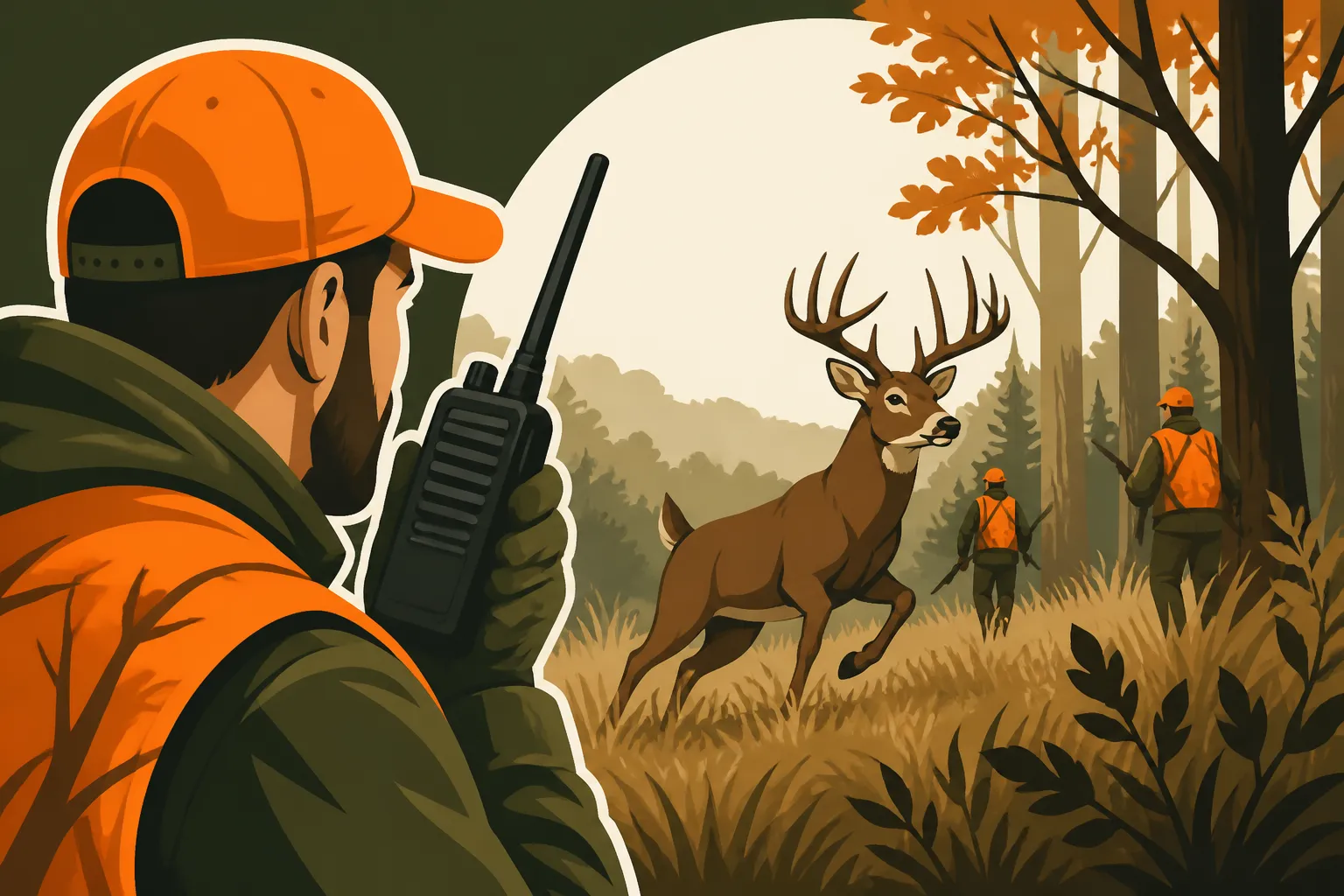
The beauty of a two-way radio is its immediacy. No more guessing games or relying on outdated information. Imagine you're the designated driver, pushing through a thick bedding area, and you jump a buck that veers hard left, heading straight for a specific bottleneck. With a radio, you can instantly key up and say, "Buck just broke left, heading for the big oak near the creek, Blocker 3!" That kind of real-time update allows your blockers to anticipate, adjust their position, or even prepare for a shot that they wouldn't have known was coming otherwise. This dynamic feedback loop is incredibly powerful, transforming a chaotic push into a coordinated maneuver. It allows for quick decisions on how to Posting a Drive Around a Hollow or reposition hunters if deer aren't behaving as expected.
A Lifeline of Safety in the Backcountry
Safety on a deer drive is non-negotiable, and two-way radios provide a crucial layer of security. Every member of the hunting party can communicate their position regularly, especially as they move or if they need to stop. "Driver 1, I'm at the bottom of the first draw, proceeding east." "Blocker 2, still at my post by the downed sycamore, clear to shoot north." This constant flow of information drastically reduces the chance of someone being in an unsafe position. Moreover, if a hunter takes a fall, twists an ankle, or needs assistance for any reason, they can instantly call for help. In remote parts of Kentucky, far from cell service, a radio can literally be a lifeline, ensuring that minor mishaps don't escalate into serious emergencies. Having that immediate connection brings invaluable peace of mind, allowing everyone to focus on the hunt while knowing they're connected to their team. It’s as important as having First Aid Kits for Remote Daniel Boone Forest Ground in your pack.
Maximizing Success: From Strategy to Shot
Effective communication via two-way radios directly translates to more successful deer drives. When everyone is on the same page, you can make nuanced tactical adjustments that would be impossible otherwise. For instance, if the wind unexpectedly shifts, or you notice deer consistently breaking in a certain direction, the group leader can use the radios to call for a strategic change. Blockers can be moved to cut off escape routes, or drivers can adjust their pace and angle of attack. This is particularly crucial when dealing with complex terrain, such as trying to funnel deer through a narrow saddle or along a specific ridge. You can direct drivers to push a little harder in certain spots or slow down to let deer filter naturally towards waiting hunters. The ability to react instantly to the ever-changing conditions of a deer drive, from animal movement to shifts in Wind and Thermals on a Kentucky Ridge, is the key to turning a near miss into a filled tag.
Selecting the Right Radio for Your Kentucky Crew
So, you're convinced two-way radios are the way to go for your Kentucky deer drives. But walk into any sporting goods store or browse online, and you'll be faced with a bewildering array of options. How do you choose? It really boils down to understanding your needs and the specific challenges of our Kentucky woods.
FRS vs. GMRS: Understanding the Power Play
When looking at consumer-grade two-way radios, you'll primarily encounter two types: FRS (Family Radio Service) and GMRS (General Mobile Radio Service). Understanding the difference is crucial for effective communication in our state's diverse hunting landscapes.
- FRS Radios: These are the basic, license-free radios you often find in multi-packs. They operate on lower power (typically 0.5 watts to 2 watts), which means their range is quite limited, especially in hilly, timbered country. While they might boast "up to 30 miles!" on the packaging, that's typically under perfect line-of-sight conditions over water, not through dense Kentucky hardwoods and undulating terrain. For short-range communication, say within a single hollow or a small, open woodlot, FRS might suffice. They're easy to use and a good entry-level option, but don't expect miracles in challenging environments.
- GMRS Radios: These radios operate on the same frequencies as FRS but are allowed to transmit at much higher power levels (up to 50 watts, though most handhelds are 5-10 watts). This increased power significantly boosts their effective range, making them far more suitable for the long distances and challenging topography encountered on many Kentucky deer drives. However, GMRS radios require a license from the FCC. It's not a difficult or expensive process, and it covers your entire immediate family for multiple radios. For serious hunters who rely on reliable communication across larger tracts of land, GMRS is almost always the superior choice.
| Feature | FRS Radio | GMRS Radio |
|---|---|---|
| Power Output | 0.5 to 2 watts | Up to 50 watts (handhelds typically 5-10W) |
| Range (Realistic) | Short (under 1 mile in heavy timber) | Medium to Long (1-5 miles in heavy timber, more) |
| License Required | No | Yes (one license covers family) |
| Cost | Generally less expensive | Slightly more expensive, plus license fee |
| Antenna | Fixed, non-removable | Often removable (allows for upgrades) |
| Channels | 22 channels shared with GMRS | 30 channels, includes FRS channels |
| Booster/Repeater | No support | Yes, repeater capable (extends range further) |
| Best Use | Small, close-proximity groups, clear terrain | Larger groups, challenging terrain, increased safety |
Features That Matter on a Kentucky Hunt
Once you've decided between FRS and GMRS (or a hybrid unit that does both), it's time to look at specific features that will make a difference in the Kentucky woods:
- Durability and Weatherproofing: Your radios are going to get dropped, rained on, and covered in mud. Look for units rated IPX4 or higher for water resistance. A rugged case that can withstand bumps and knocks is also essential.
- Battery Life: Long hunting days demand long battery life. Look for radios with extended-life battery packs or, even better, those that can also run on standard AA/AAA batteries as a backup. There's nothing worse than a dead radio halfway through a drive.
- Range and Antenna: While wattage is important, a good antenna can make a huge difference. Some GMRS radios allow for aftermarket antennas, which can significantly boost performance, especially when you're trying to reach a hunter tucked deep in a Hunting a Funnel Between Two Hollows.
- Privacy Codes/Sub-Channels: These aren't truly private, but they filter out chatter from other radio users on the same main channel. They're excellent for keeping your group's communication clear and free from interference, which is common on public lands.
- Voice-Activated Transmission (VOX): This feature allows you to transmit without pressing a button, which can be handy when you're moving and need both hands free. However, it can sometimes pick up ambient noise, so test it thoroughly.
Beyond the Hardware: Integrating with Digital Tools
While a physical radio provides direct communication, its effectiveness can be amplified when integrated with your digital scouting tools. Many hunters, for example, use apps like GoHunt to mark waypoints, track their movement, and visualize terrain. Before a drive, you can use GoHunt to meticulously plan your drivers' routes and blockers' positions. Even though GoHunt doesn't directly connect to your radio, having everyone on the same digital map, able to reference the same features (e.g., "I'm at the waypoint marked 'North Ridge Drop' on GoHunt"), makes radio communication much more precise and effective. It's like having a shared blueprint for the hunt, where your radio calls are the live updates. This integration helps coordinate efforts across vast public lands like those in Daniel Boone National Forest Hunting.
Mastering Radio Etiquette and Operations for Deer Drives
Simply having two-way radios won't guarantee a smooth drive. Just like any tool, they require proper usage and a bit of discipline to be truly effective. Good radio practices mean safer hunters and more deer in the freezer.
Pre-Drive Protocol: Setup for Success
Before anyone even sets foot in the woods, a little prep goes a long way. This isn't just about charging batteries; it's about establishing clear operating procedures.
- Charge and Test: Ensure all radios are fully charged. Always carry spare batteries, especially for longer hunts or colder weather, which can drain batteries faster. Do a quick radio check when you're still within sight of each other – a simple "Radio check, one two three" confirms everyone can hear and transmit.
- Channel Assignment: Designate a primary channel and a backup channel for your group. Agree on a standard "privacy code" (often called a sub-channel or CTCSS/DCS tone) to minimize interference from other users. Make sure everyone knows these settings.
- Identify Call Signs: Assign clear, concise call signs to each hunter. Instead of using names like "Bobby" or "Uncle Frank," which can get confusing, use "Driver One," "Blocker Three," or "Team Leader." This is especially useful if you're taking a newer hunter out for Bringing a First-Timer on a December Hunt, as it adds a layer of professionalism.
- Review the Plan: Before splitting up, reiterate the drive plan, including starting points, routes, and blocking positions. Use your GoHunt map to point out key features. Remind everyone of the boundaries, especially if you're Hunting Western Kentucky Bottomland Deer or near a property line.
Clear, Concise, and Calm: The Golden Rules of Radio Talk
Effective radio communication is about transmitting vital information quickly and clearly, not about idle chatter.
- Listen Before You Talk: Always pause for a second before transmitting to ensure the channel is clear. Interrupting another hunter can lead to confusion or missed critical information.
- Press, Pause, Speak, Release: Press the transmit button, pause for a half-second to ensure the mic is active, speak clearly and concisely, then release the button. Rushing this can cut off the beginning or end of your message.
- Keep it Short and Sweet: Radios are for essential updates. Avoid lengthy conversations. Messages should be direct and to the point: "Driver Two to Team Leader, deer just busted, running north." or "Blocker One, I'm repositioning 50 yards east."
- Confirm Receipt: After a critical transmission, wait for confirmation. "Copy that, Driver Two. Understood, deer north." This ensures the message was received and understood.
- Minimize Background Noise: If you're talking, try to do so away from rustling clothes or heavy breathing. If you hear someone transmitting with a lot of background noise, politely ask them to repeat the message.
- Emergency Protocol: Establish a clear emergency code or phrase. For example, "Emergency, Emergency, Driver Four needs assistance!" This immediately signals a serious situation and ensures rapid response. This is also where knowing your location via GoHunt or another GPS tool comes in handy for relaying to others.
Powering Through the Long Haul: Battery Management and Maintenance
Your radio is only as good as its power source. Don't let a dead battery spoil your hunt.
- Start Fully Charged: This seems obvious, but it's often overlooked. Always charge your radios the night before.
- Spare Batteries: Carry a spare, fully charged battery pack or a set of fresh AA/AAA batteries if your unit supports them. Cold weather drastically reduces battery life, so this is critical during late season hunts.
- Power Down When Not in Use: If you're sitting on stand for an extended period and aren't expecting immediate communication, consider turning the radio off or to a low-power standby mode to conserve battery. Just remember to turn it back on when the drive is about to begin!
- Keep Them Dry: Even weather-resistant radios can fail if water gets into ports or battery compartments. Store them in a dry place when not in use, and use a waterproof bag if conditions are particularly wet.
- Clean Contacts: Occasionally clean the battery contacts with a pencil eraser or cotton swab to ensure a good connection.
By embracing two-way radios and adopting these best practices, your deer drives will transform from a series of hopeful pushes into a finely tuned, coordinated effort. You'll hunt safer, smarter, and with a far greater chance of success, knowing that every member of your crew is connected, aware, and ready for whatever the Kentucky woods throw your way.
Disclaimer
This article is for general informational purposes only and does not constitute professional advice. Laws, prices and regulations vary by location and change over time. Consult a qualified professional for guidance on your specific situation.