Safety Harnesses and Lifelines
For many of us who hunt in Kentucky, especially when chasing whitetails, the treestand is an indispensable tool. It gives us that vital elevated vantage point, helping us see over brush and outsmart a deer's keen nose. But let's be honest, that height also brings a very real, very scary risk: falling. The thought of hitting the ground from twenty feet up is enough to make anyone's stomach churn, and unfortunately, it's a danger that hunters face every season. This guide is all about giving you the straight talk on safety harnesses and lifelines, ensuring you understand how to use them to keep yourself secure, confident, and most importantly, alive in your treestand.
The Unseen Danger: Why Treestand Falls Happen and Why We Need Protection
It’s easy to get complacent, isn't it? We’ve all been there—climbing into a stand countless times, feeling like second nature. But that familiarity can breed a dangerous overconfidence. Treestand falls aren't just for inexperienced hunters; they happen to seasoned veterans too, often when least expected. The truth is, accidents can strike even when you're just a few feet off the ground, not just at the canopy.
Common Causes of Treestand Accidents
Think about all the variables out there in the Kentucky woods. You're usually climbing in the dark, often in a hurry to get set before first light. Your hands might be cold, maybe a bit numb from the chill of a crisp autumn morning. The tree itself could be wet from dew or a recent rain, making steps slippery. Old climbing sticks or a stand that hasn't been properly maintained can fail. Sometimes, it's simply a moment of inattention, a lapse in focus while reaching for gear or turning to scan the woods. A foot can slip, a handhold can give way, or you could simply lose your balance. I've heard stories, and seen the unfortunate results, of hunters who just "missed a step" and found themselves in freefall. It’s a stark reminder that gravity is an unforgiving force, and even a minor misstep can lead to catastrophic injuries.
The True Impact of a Fall from Height
A fall from any height can be serious, but from a treestand, it can be life-altering, or worse. We’re not talking about a scraped knee here. Broken bones, head trauma, spinal injuries—these are the real consequences. Imagine falling, hitting your head, and being knocked unconscious. Who would find you? How long until help arrives? On a remote WMA like those you might find while Scouting Kentucky Public Land Before Season, it could be hours. Even if you're lucky enough to avoid critical injury, a broken leg or arm can leave you stranded, exposed to the elements, and in agonizing pain. Beyond the physical, there's the mental and emotional toll, not just on you, but on your family. Taking a few extra minutes to ensure your safety isn't just about protecting yourself; it's about protecting those who care about you. It's a non-negotiable part of responsible hunting, especially when you're hanging a stand on a slippery ridge in the Daniel Boone National Forest Hunting area, far from any paved road.
Understanding Your Gear: Harnesses, Lifelines, and Straps
Navigating the world of treestand safety gear can feel a bit overwhelming, with so many options and terms thrown around. But really, it boils down to a few critical components designed to keep you connected to the tree from the moment your feet leave the ground until they touch back down. These aren't just accessories; they're your life insurance policy when hunting aloft.
Full-Body Harnesses: Your Foundation of Safety
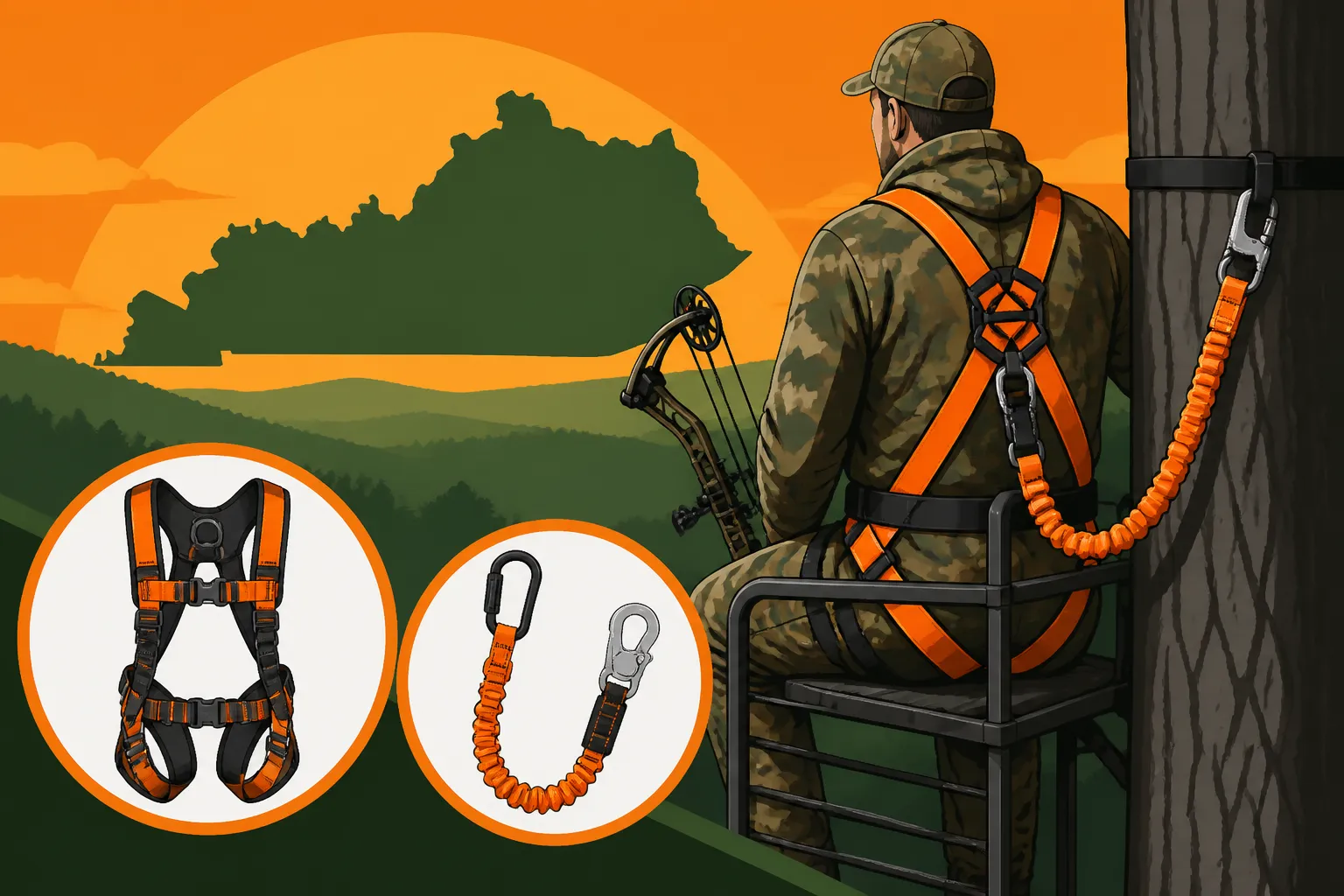
The full-body harness is the cornerstone of any treestand safety system. This isn't just a belt you wear around your waist; it's a carefully designed piece of equipment that distributes the force of a fall across your chest, shoulders, and legs, rather than concentrating it in one area. If you were to fall while wearing only a waist belt, the sudden jolt could cause severe internal injuries or even snap your spine. A quality full-body harness has multiple points of adjustment, allowing you to get a snug, comfortable fit. It should fit like a glove, but not restrict your movement or breathing. You want it tight enough that it won't slip up over your head in a fall, but loose enough that you can move freely to make that crucial shot. When you're choosing one, make sure it meets industry safety standards, like those set by the Treestand Manufacturers Association (TMA). Brands know this is important, and you'll find plenty of reliable options on the market. Always inspect your harness before each use for any fraying, cuts, or worn stitching, especially if it's been stored for a while in your Packs for a Daniel Boone Forest Day Hunt.
Lifelines and Lineman's Belts: Staying Connected
Beyond the harness, you need a way to stay connected to the tree. That's where lifelines and lineman's belts come into play.
- Lifelines: A lifeline is a rope that extends from the base of the tree up to your stand, usually with a prusik knot or similar device that allows you to ascend and descend while always staying tethered. As you climb, you slide the prusik knot up the rope. If you were to slip, the knot would cinch tight, catching you immediately. This system is critical because it protects you during the most vulnerable parts of your hunt: climbing up to and down from your stand. You attach your harness to the prusik knot, ensuring that from the moment your feet leave the ground until you're safely in your stand, you're always connected. Many hunters regret not using a lifeline, especially after they've had a close call during a frosty morning climb when fingers are cold and grip is compromised. Learning to set up a lifeline properly is a non-negotiable skill for any treestand hunter.
- Lineman's Belts: A lineman's belt is a separate strap or rope that wraps around the tree and clips into D-rings on either side of your harness. This is used when you're installing or uninstalling a treestand, or when you need to perform maintenance on it. It keeps both hands free and securely holds you against the tree, allowing you to safely maneuver and work without fear of falling. Without a lineman's belt, installing a stand, especially something like Hanging a Stand on an Eastern Kentucky Ridge where the tree might be leaning or the terrain is uneven, becomes incredibly dangerous. It's an indispensable tool for safely setting up your hunting location.
Tree Straps and Suspension Systems
Once you're in your stand, the lifeline has done its job getting you there. Now, you need a tree strap to stay connected while you're sitting or standing. This is a shorter strap that wraps around the tree at stand height and connects directly to your harness. It's designed to keep you in the stand if you somehow lose your balance, fall asleep, or even have a stand component fail. It acts as a safety tether, ensuring you don't hit the ground. Many systems come with a simple quick-release buckle or carabiner for easy attachment. It’s a simple piece of gear, but absolutely vital. Think of it: you've done everything right with your harness and lifeline, only to unclip once in the stand because you think you're safe. That's a huge mistake. The tree strap keeps you constantly connected, ready for any unexpected movement.
| Safety Gear Component | Primary Function | When to Use It | Key Benefit |
|---|---|---|---|
| Full-Body Harness | Distributes fall force, keeps you upright | Always, when leaving the ground | Prevents severe injury, keeps you conscious |
| Lifeline | Continuous connection during ascent/descent | Every climb and descent to/from stand | Protects during most vulnerable phases |
| Lineman's Belt | Hands-free connection for stand setup | Installing/removing stand, maintenance | Allows safe work, prevents falls while working |
| Tree Strap | Secures hunter while in the stand | Always, once you're in the treestand | Prevents falling from the stand |
| Suspension Relief | Allows you to relieve pressure after a fall | After a fall, while awaiting rescue | Prevents suspension trauma (blood pooling) |
Proper Usage and Best Practices for Treestand Safety
Having the best safety gear means absolutely nothing if you don't use it correctly, every single time. This isn't a "sometimes" thing; it's an "always" thing. Just like you wouldn't head out Hunting the Rut in Early November without your rifle or bow, you shouldn't step into a treestand without your safety system.
The "Three Points of Contact" Rule and Continuous Connection
This is the golden rule of treestand safety: maintain three points of contact with the ladder or climbing sticks at all times. That means two hands and one foot, or two feet and one hand. It sounds simple, but in the dark, cold, and excitement of the moment, it's easy to rush. Always move slowly and deliberately.
Even more critical is the concept of continuous connection. From the very moment your feet leave the ground, you should be connected to the tree. This is where your lifeline shines. You attach your harness to the lifeline before you start climbing, and you remain attached until both feet are firmly back on solid ground. This means no unhooking to adjust something, no brief moments of vulnerability. If you're utilizing a system from a company like GoHunt, which often provides valuable digital scouting and mapping tools, you can even plan your approach to the stand with safety in mind, noting potential obstacles or tricky sections where extra care will be needed before you ever step foot in the woods. This foresight can make all the difference when you're actually executing the climb in low light conditions.
What to Do in a Fall: Self-Rescue and Emergency Preparedness
Nobody wants to think about actually falling, but preparing for it is part of being a responsible hunter. If the unthinkable happens and you do fall, your full-body harness and lifeline should catch you. The immediate danger after a fall isn't necessarily hitting the ground; it's something called suspension trauma. This occurs when you hang in your harness for an extended period, leading to blood pooling in your legs and potentially serious medical issues.
That's why every treestand hunter needs a suspension relief strap or device. This is a small strap that's part of your harness system, or an accessory you add, that allows you to stand up in your harness after a fall, relieving pressure on your femoral arteries and giving you time to recover or signal for help. Practice using it at ground level so you're not trying to figure it out when adrenaline is pumping. Additionally, always carry a small whistle or a cell phone (charged and in a waterproof bag) to call for assistance. Have a plan—let someone know exactly where you're hunting and when you expect to be back. This is especially vital when hunting remote areas or during Cold-Weather Sitting Strategy in Kentucky, where exposure to the elements after a fall could quickly become life-threatening.
Choosing the Right Safety System for Your Kentucky Hunts
With so many brands and types of safety gear out there, picking the right system can feel a bit daunting. But trust me, investing in quality gear and knowing how to use it is one of the most important decisions you'll make as a treestand hunter. Your life literally depends on it.
Factors to Consider for Your Setup
When you're looking for a safety system, think about your specific hunting style and the conditions you often encounter in Kentucky.
- Comfort and Fit: A harness that's uncomfortable is a harness you're less likely to wear. Try on different models to ensure a snug, but not restrictive, fit. Adjustable straps are key. You'll be wearing this for hours, sometimes in bulky clothing during Hunting the Late-Season January Lull, so comfort is paramount.
- Ease of Use: Can you easily put on and take off the harness, even in the dark? Are the buckles intuitive? Can you quickly attach and detach from your lifeline? Simplicity in design often translates to safer use, especially when your hands are cold or numb.
- Weight and Bulk: If you're walking long distances to a stand, particularly on public land or to a spot where you're Finding Ground Others Walk Past, you don't want overly heavy or bulky gear. Look for lightweight, packable options that won't hinder your trek. However, never compromise safety for a few ounces.
- Durability and Weather Resistance: Kentucky weather can be unpredictable. Your gear needs to withstand rain, snow, and UV exposure. Look for harnesses and lifelines made from robust, weather-resistant materials that won't degrade quickly. Checking your gear regularly for wear and tear, especially after a tough season, is crucial.
Integrating Safety with Your Treestand Type
Your safety system should work seamlessly with the type of treestand you use.
- Fixed-Position Stands: For hang-on stands, you'll install your climbing sticks or ladder first, then the stand. Your lifeline attaches to the tree before you even start ascending, and you're connected throughout the entire process. Once in the stand, you attach your tree strap. It's a continuous process that should never be broken.
- Climbing Stands: With climbing stands, the challenge is maintaining connection while both you and the stand are moving up the tree. Some climbing stands have integrated safety lines, or you can use a separate lifeline system that allows for continuous connection. The key here is practice. Learn how to move your tether up the lifeline as you climb, ensuring you're always protected. This takes coordination and practice, but it's essential.
- Ladder Stands: While ladder stands feel more stable, falls can still happen. The same rules apply: use your full-body harness, and connect to a lifeline during ascent. Once in the platform, connect to a tree strap. Just because it has a ladder doesn't mean it's inherently safer if you're not clipped in.
Remember, regardless of your stand type, the goal is always continuous connection. Don't take shortcuts. It might feel like an extra step, an inconvenience, but it’s a necessary one. Tools like GoHunt's mapping capabilities can even help you identify suitable trees for your stand type, allowing you to mentally walk through the setup and safety process before you even leave home. This preparation, combined with reliable gear, ensures you're ready for a successful and safe hunt.
Disclaimer
This article is for general informational purposes only and does not constitute professional advice. Laws, prices and regulations vary by location and change over time. Consult a qualified professional for guidance on your specific situation.