Hunting a Funnel Between Two Hollows
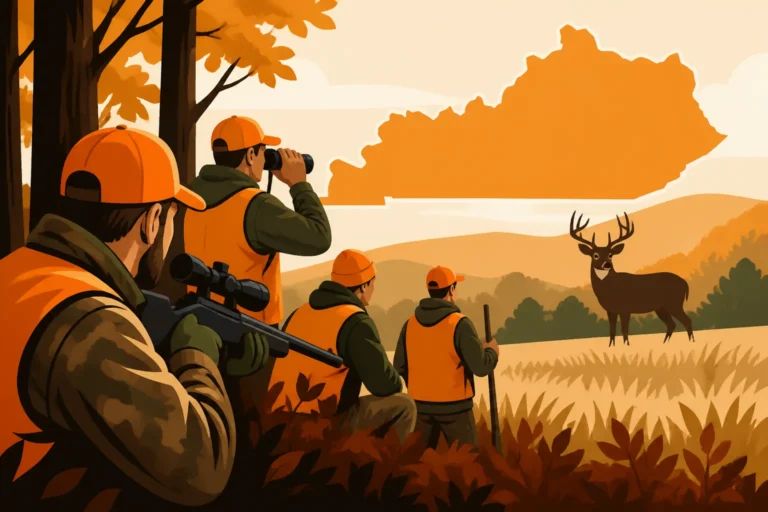
Finding consistent deer movement in Kentucky's diverse and often rugged terrain can feel like chasing a ghost, especially when you're trying to pinpoint where that trophy buck might slip through undetected. The challenge often lies in deciphering the subtle ways deer navigate the landscape. This guide dives deep into how to effectively hunt funnels situated between two hollows, helping you unlock prime ambush spots and increase your success in the Kentucky woods.
Understanding Hollows and Funnels in Kentucky Terrain
Kentucky's landscape is a beautiful tapestry of rolling hills, deep hollows, and dense woodlands, all of which play a crucial role in how deer move and survive. To successfully hunt a funnel between two hollows, you first need a solid grasp of what defines these features and why they are so irresistible to whitetails.
What Defines a Kentucky Hollow?
A hollow in Kentucky isn't just a dip in the ground; it's a distinct topographical feature, often carved out by ancient waterways or natural erosion, creating a micro-ecosystem within the larger forest. Picture a long, winding depression, typically with steeper slopes on either side that converge at the bottom, forming a drainage or a small creek bed. These hollows can range from shallow, barely perceptible depressions to deep, dark ravines that plummet hundreds of feet.
One of the most defining characteristics of a Kentucky hollow is its vegetation. The slopes, often shielded from direct sunlight and wind, tend to retain more moisture, leading to lush undergrowth, thickets, and mature hardwoods. You'll often find a mix of oaks, hickories, poplars, and maples, providing varied food sources and ample cover. The bottoms of these hollows frequently harbor seasonal seeps or perennial streams, making them critical water sources, especially during dry spells. Deer will naturally gravitate towards these areas for hydration.
The microclimates within hollows are also fascinating. They act as natural thermal sinks, meaning cooler air settles in them overnight and can linger well into the morning, creating distinct temperature differences compared to the surrounding ridge tops. This thermal action can influence deer movement, as they might seek the cooler air in a hollow on a warm early-season morning or use the protected slopes to bed down out of a biting winter wind. Understanding these dynamics is key to predicting deer behavior. These secluded pockets offer deer both security cover and essential resources, making them natural travel corridors.
The Anatomy of a Funnel Between Hollows
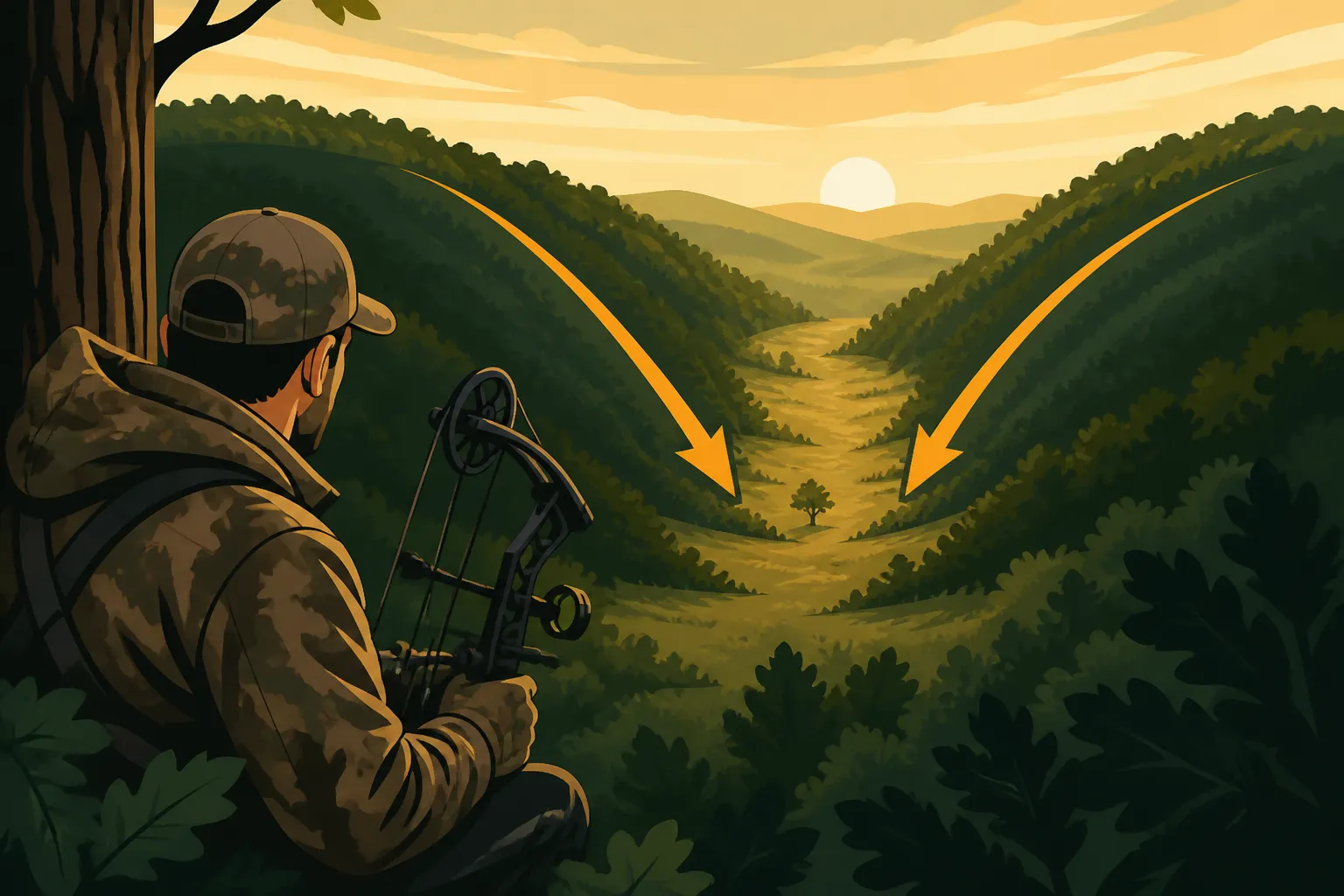
Now, imagine two of these hollows running somewhat parallel, or converging in a way that forces deer to choose a narrow strip of land between them. That narrow strip, a natural pinch point, is your funnel. Deer are creatures of efficiency; they prefer to expend the least amount of energy possible to get from point A to point B. When faced with the option of traversing steep, difficult terrain or squeezing through a relatively easier, narrower path, they almost always choose the path of least resistance.
A funnel between hollows can manifest in several ways. It might be a saddle along a ridge connecting two broader ridge lines, with a hollow dropping off on either side. It could be a slightly raised finger ridge that separates two drainages. Sometimes, it's simply a narrow, flatter bench of timber between two steep hollows that get progressively wider as they descend. These funnels naturally compress deer movement, concentrating it into a smaller, more predictable area.
Deer use these funnels for a multitude of reasons. They're often primary travel routes between bedding areas on one ridge or slope and feeding areas in another hollow or agricultural field. During the rut, bucks will cruise these funnels, scent-checking for does moving between the safety of different hollows. Doe family groups, too, will rely on these constricted travel ways to move securely. Beyond natural topography, man-made features can sometimes create or enhance these funnels. Old logging roads that cut across ridge lines or fence lines that run perpendicular to the terrain can also act as linear funnels, channeling deer movement in predictable patterns. Understanding Hunting a Funnel Between Two Hollows is about recognizing these natural highways.
Scouting and Identifying Key Funnels
You can stare at maps all day, but nothing beats getting your boots on the ground to truly understand the land. However, modern technology has given us powerful tools to significantly narrow down our physical scouting efforts, especially when looking for those subtle funnels between hollows.
Map Reconnaissance and Digital Tools
Before you even step foot in the woods, fire up your preferred mapping application. Many hunters rely on tools like GoHunt, which offer incredibly detailed topographical maps and aerial imagery. Start by identifying the most prominent hollows in your chosen hunting area. Look for those dark, winding depressions that indicate significant elevation changes. Once you've found a few, begin looking for the land between them.
Specifically, search for areas where the contour lines are tightly packed on either side, then spread out in the middle, creating a "neck" or "saddle." These are often the prime candidates for funnels. Aerial imagery can reveal vegetation changes; look for areas of thinner timber or breaks in thick cover that might indicate a natural pathway. Pay attention to anything that looks like a natural travel corridor: old logging roads, distinct changes in timber type, or even subtle benches on steep hillsides.
With GoHunt, you can overlay different layers—topography, satellite, public/private land boundaries—to get a holistic view. Identify potential bedding areas (often thick, south-facing slopes for warmth or north-facing for cooler summer bedding) and feeding areas (hardwood ridges, oak flats, or nearby agricultural fields). Funnels are the natural connectors between these crucial zones. Pinpoint several promising locations on your map, mark them, and prioritize which ones you'll scout physically. This pre-scouting saves immense time and energy, allowing you to focus your boots-on-the-ground efforts where they matter most. You can learn a lot from Reading Aerial Photos for Eastern Kentucky Deer before you ever lace up your boots.
Boots-on-the-Ground Scouting Strategies
Once you have your marked spots from your map work, it's time to hit the woods. This is where you confirm your hypotheses and uncover the subtle details that maps can't show. Start by walking the potential funnel itself. Look for definitive deer sign:
- Tracks: Are there fresh tracks indicating consistent use? Pay attention to the size and direction.
- Trails: Well-worn trails are obvious indicators. Are they single trails or multiple parallel paths? How wide are they?
- Scrapes and Rubs: During the rut, these are gold. Bucks will often mark their territory along these travel corridors. Finding a series of scrapes along a logging road or a rub line cutting through a saddle confirms heavy buck traffic. For more on this, check out Scrape Lines Along a Logging Road.
- Droppings: Fresh droppings indicate recent activity and can give you an idea of deer density.
- Bedding Areas: While not directly in the funnel, understanding where deer are bedding on either side is crucial. Look for depressions in thickets or under evergreens where deer have laid down.
- Browse: Are there signs of deer browsing on young shoots or palatable plants? This indicates feeding activity nearby.
When scouting, don't just walk through the funnel; walk the edges of the hollows, too. Try to think like a deer. Where would you feel safest moving? Where would you stop for a quick bite or a drink of water? Pay particular attention to how deer enter and exit the funnel from the hollows. Are there distinct entry routes through standing beans or dense cover? This information will be vital for planning your stand placement and entry/exit routes without alerting deer. Always remember, the goal isn't just to find a funnel, but to understand its purpose in the deer's daily routine. You're looking for Finding Sign in Big Daniel Boone Timber that tells a story of consistent deer movement.
Strategic Setups for Hunting Funnels
You've done the hard work of scouting and identified that perfect funnel. Now comes the exciting part: setting up for the hunt. Your success hinges on choosing the right location for your stand or blind, considering factors like wind, thermals, shooting lanes, and, crucially, your own stealthy access.
Optimal Stand Placement
When hanging a treestand, your number one consideration in a funnel is the wind. Deer will often use funnels to move with the wind in their face, allowing them to scent-check ahead for danger. If you're hunting a funnel that runs generally north-south, and deer are primarily moving from north to south, you'd want a wind blowing from the south to southeast, carrying your scent away from their likely approach. This can be tricky with complex terrain, as Wind and Thermals on a Kentucky Ridge can be unpredictable. Use an app with real-time wind forecasts, or carry a puff bottle to constantly check swirl patterns.
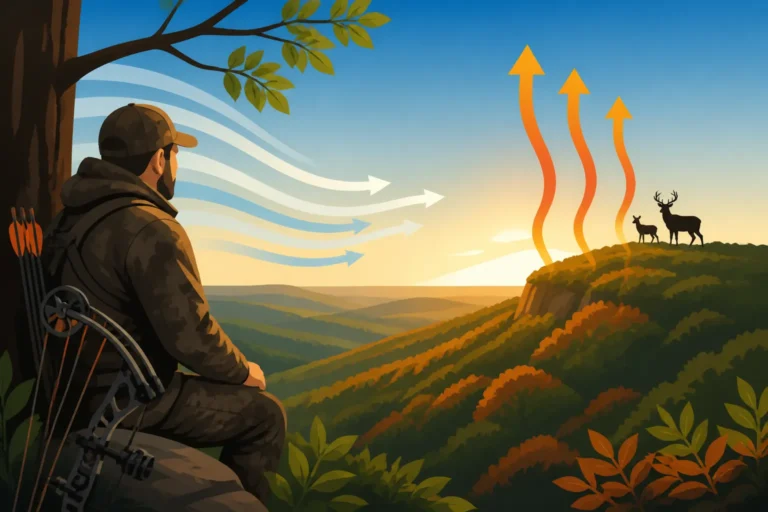
Beyond wind, thermals are critical, especially in the mornings and evenings. As the sun rises, thermals typically pull air up the hollows and ridges. In the evening, as the air cools, thermals start to fall, pulling air down the hollows. You need to position your stand where your scent will be carried away from the likely deer travel path during your chosen hunting time.
Your stand should offer good shooting lanes along the most defined trails within the funnel, but also provide ample cover for concealment. Don't just pick the tallest tree; pick the tree that breaks up your silhouette effectively. Sometimes, a slightly smaller tree with dense canopy and background cover is better than a giant oak that leaves you silhouetted. Consider the sun's position – you don't want to be staring directly into it at prime hunting time, nor do you want it silhouetting you.
Finally, plan your entry and exit routes meticulously. Can you get to and from your stand without spooking deer in the funnel or their bedding/feeding areas? This might mean taking a longer, more circuitous route, or utilizing a creek bed or a logging road that deer use less frequently. For advice on putting up your stand, consider resources like Hanging a Stand on an Eastern Kentucky Ridge.
Ground Blind Considerations
Treestands aren't always the answer, especially if suitable trees are scarce, if you're hunting with a youth hunter, or if the terrain is simply too rugged for a safe hang. In these scenarios, a well-placed ground blind can be incredibly effective in a funnel.
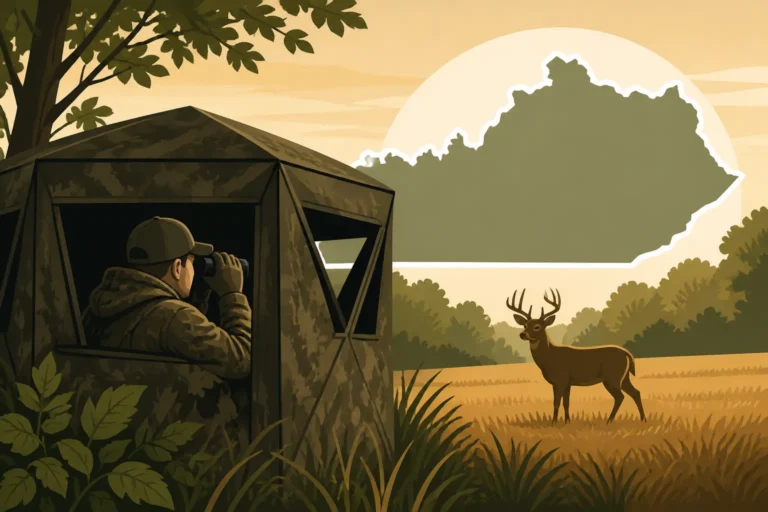
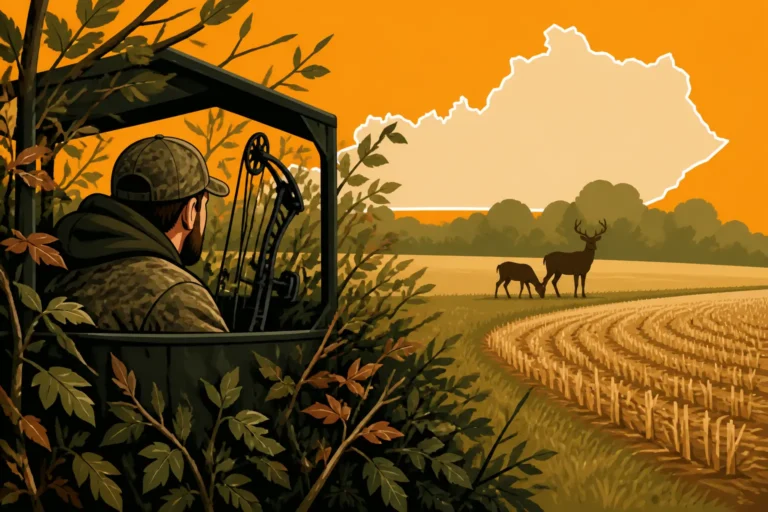
The biggest advantage of a ground blind is concealment and scent containment. Modern blinds are designed to blend into the natural environment, and the dark interior makes it hard for deer to spot movement. For added effectiveness, brushing in a blind on a field edge or within thick timber is crucial. Gather natural vegetation—branches, leaf litter, corn stalks if near a field—and liberally incorporate it into the blind's exterior. The more it looks like a natural part of the landscape, the better. Consider Brushing In a Blind on a Field Edge for detailed tips.
Scent control is paramount with ground blinds, even with their inherent advantages. While the fabric does help, any air movement will still carry scent. Pay attention to wind direction, just as you would with a treestand. Also, ensure your blind is placed where you can get clear shots down the funnel trails without excessive window opening, which can release more scent.
One key consideration for ground blinds in funnels is the potential for deer to approach from multiple directions simultaneously. Unlike a treestand, where you have a higher vantage point, a ground blind offers limited visibility, making it harder to spot deer before they're right on top of you. Position your blind to maximize visibility into the most active parts of the funnel, and ideally, have a solid wall or thick cover at your back to minimize movement being seen. When considering Using a Ground Blind on Kentucky Public Land, remember that blending in is non-negotiable.
Adapting Tactics to Conditions
Hunting funnels is a dynamic process, and what works one day might not work the next. Successful hunters understand that adapting their approach based on current weather, time of day, and the specific phase of the deer season is absolutely critical.
Wind and Thermal Dynamics
We've touched on wind and thermals, but it's worth reiterating their complex interplay, especially in Kentucky's hilly terrain. In a hollow, the wind might be blowing one direction 50 feet up, but swirling unpredictably at the bottom. Thermals, meanwhile, dictate vertical air movement.
- Morning Hunts: As the sun hits the east-facing slopes, the air warms and begins to rise, creating an upward thermal draft. Deer moving out of feeding areas in the hollows and up towards bedding areas on the ridges will be moving with these rising thermals. You'd ideally want to be positioned high enough in the funnel that your scent is carried up and over any approaching deer, or on a cross-wind that pulls your scent away from their path. Setting up along the ridge top, overlooking a saddle or bench funnel that drops into two hollows, can be effective in the morning.
- Evening Hunts: As the sun sets and the air cools, the thermals reverse. Cooler, denser air begins to sink, creating a downward draft that pulls scent into the hollows. Deer moving from bedding areas on the ridges down into feeding areas in the hollows will often use these falling thermals to their advantage, allowing their noses to tell them if danger lurks below. For an evening hunt, you might want to set up lower in the funnel, ensuring your scent is carried down and away from the deer's approach from above. A mid-slope position can sometimes catch shifting thermals as they transition. Constantly checking a wind indicator, like a milkweed pod or a puff bottle, is non-negotiable. Don't be afraid to adjust your stand site if the conditions aren't right.
Rut vs. Early/Late Season Approaches
Deer behavior changes dramatically throughout the hunting season, and your funnel strategy needs to shift accordingly.
- Early Season (September/Early October): During the warmer early archery season, deer are highly patternable around food and water. Bucks are often still in bachelor groups. Funnels between bedding areas and a prime food source like an oak flat dropping acorns, or a water source in a hollow, will be hotspots. Focus on morning and evening movements. Scent control is paramount due to higher temperatures. You might even find some success at night with Coyote Calling in Kentucky Farm Country during the off-season.
- The Rut (Late October/November): This is when funnels truly shine. Bucks are actively cruising, seeking does. They will use funnels between hollows as high-traffic highways to cover ground efficiently while scent-checking for receptive does. A buck might scent-check one hollow, cruise the funnel to the next, and repeat. This is the prime time for aggressive tactics like Rattling and Grunting in Kentucky. Set up in a funnel during the peak of Hunting the Rut in Early November and you're in a high-odds location for a cruising buck at any time of day. Be prepared for less predictable deer movement as bucks chase does erratically.
- Late Season (December/January): After the rut, deer revert to a survival mode, focusing heavily on available food sources and thermal cover. Funnels connecting thick bedding cover (like a pine thicket on a north-facing slope, offering shelter from cold winds) to remaining food sources (like standing corn, cut bean fields, or persistent browse in a sheltered hollow) become crucial. Deer movement might be concentrated around midday as they move less during extreme cold. Hunting the Late-Season January Lull requires patience and a deep understanding of late-season food sources. Pay attention to how deer are using thermal inversions in the hollows to stay warm.
Understanding these seasonal shifts allows you to adjust your stand placement, hunting times, and calling strategies to maximize your chances in that perfect funnel between two hollows.
Key Funnel Hunting Considerations
To help you visualize the various factors at play when hunting funnels between hollows, here's a quick comparison of considerations:
| Feature/Factor | Early Season Strategy (Food Focus) | Rut Strategy (Cruising Focus) | Late Season Strategy (Survival Focus) |
|---|---|---|---|
| Deer Movement | Highly predictable between bedding and primary food/water. | Erratic, bucks actively cruising for does. | Focused on food and thermal cover, often midday. |
| Stand Placement | Closer to primary food/water sources within the funnel. | Anywhere along the funnel, especially pinch points. | Near late-season food sources and dense thermal cover. |
| Wind/Thermals | Critical, often morning up-drafts, evening down-drafts. | Less forgiving, bucks move more randomly, but still consider. | Crucial for scent control, cold air sinks quickly. |
| Calling | Minimal, maybe a soft doe bleat if curiosity is desired. | Aggressive rattling and grunting, doe bleats. | Minimal, subtle doe bleats if any, focus on natural movement. |
| Hunt Duration | Primarly morning/evening; short sits for scent preservation. | All day sits highly recommended, especially midday. | Focus on midday, short sits in extreme cold. |
| Scouting Focus | Fresh tracks, browse, water sources. | Rubs, scrapes, doe groups, secondary trails. | Remaining hard mast, persistent green browse, thickets. |
| Gear Notes | Lightweight, good scent control. | Binoculars for spotting, calls ready. | Layered warm clothing, insulated boots, hand warmers. |
Disclaimer
Hunting is an inherently dangerous activity. Always prioritize safety, understand and follow all Kentucky hunting regulations, and ensure you have the proper licenses and permits. This guide is for informational purposes only and does not substitute for personal judgment, thorough scouting, or professional safety instruction.