Finding Sign in Big Daniel Boone Timber
Navigating the immense, seemingly endless timber of the Daniel Boone National Forest can feel like searching for a needle in a haystack when you're trying to locate deer. It's easy to get overwhelmed by the sheer scale of it all, with thick forests stretching for miles and subtle terrain features that disappear the moment you look away. This guide is dedicated to helping you decipher those elusive clues, teaching you how to read the landscape and the subtle signs that Kentucky whitetails leave behind, turning a daunting task into a rewarding hunt.
Understanding the Daniel Boone Landscape and Deer Behavior
The Daniel Boone National Forest, a sprawling wilderness covering over 700,000 acres, presents a unique challenge for deer hunters. Unlike the patchwork of fields and small woodlots common in Kentucky's farm country, this is big, unbroken timber, often with steep, rugged terrain. This vastness means deer behavior and the signs they leave are often far more subtle and spread out than in areas with high deer density or agricultural food sources.
The Challenges of Big Timber Hunting
Hunting in expansive, continuous timber, especially in a place like Daniel Boone National Forest, throws a curveball at many hunters accustomed to different environments. The first challenge is simply the scale. With so much cover and uniform habitat, it can feel impossible to pinpoint where deer might be. You don't have those clear field edges or distinct transition zones that scream "deer highway" in other parts of the state. Instead, you're looking at miles of similar-looking trees, which can make a well-defined trail blend into the background or a small rub go unnoticed.
Visibility is often limited, even on open ridges, due to the dense understory and the sheer number of trees. This means you're relying less on long-distance glassing and more on close-up detection. The deer themselves often move differently here too; they might not follow the same well-worn paths you'd expect in areas with heavier pressure or more defined bedding-to-feeding routes. Their patterns are dictated more by subtle changes in topography, available mast crops, and the constant need to avoid predation in a largely wild environment. It's a completely different ballgame than hunting Western Kentucky Bottomland Deer, for instance.
How Deer Utilize Large Forested Areas
In big timber, deer movement is intrinsically tied to the available food sources, water, and bedding cover, all within the context of minimizing human interaction. Instead of obvious, linear travel corridors between a bean field and a bedding thicket, deer often create a network of more subtle, meandering paths that connect pockets of preferred browse or mast. They might gravitate towards specific oak flats during acorn drops or dense rhododendron thickets for bedding. Learning to read these movements is key to success.
Deer will use benches and saddles on ridgelines as natural travel routes, especially during the rut. A small dip in a ridge might not seem like much on a map, but it can be a significant funnel for deer traveling from one hollow to another. Similarly, thick, overgrown clear-cuts or areas with dense mountain laurel provide excellent bedding cover. These spots offer thermal regulation and security, making them prime locations to check for beds, especially on days with strong winds where deer will bed on the leeward side of a ridge. Understanding Where Daniel Boone Forest Bucks Bed is crucial. Their patterns also shift with the seasons; in the early fall, they might be scattered, focused on various soft mast, while later in the season, they'll concentrate more on hard mast like acorns or even green browse if available.
Key Types of Deer Sign to Scout For
When you're slogging through the deep woods of Daniel Boone, the goal isn't just to cover ground, but to see what the deer are telling you. Every broken twig, scuffed leaf, or rubbed sapling is a piece of a larger puzzle. Learning to distinguish fresh sign from old, and understanding what each type indicates, will drastically improve your chances.
Decoding Rubs and Scrapes
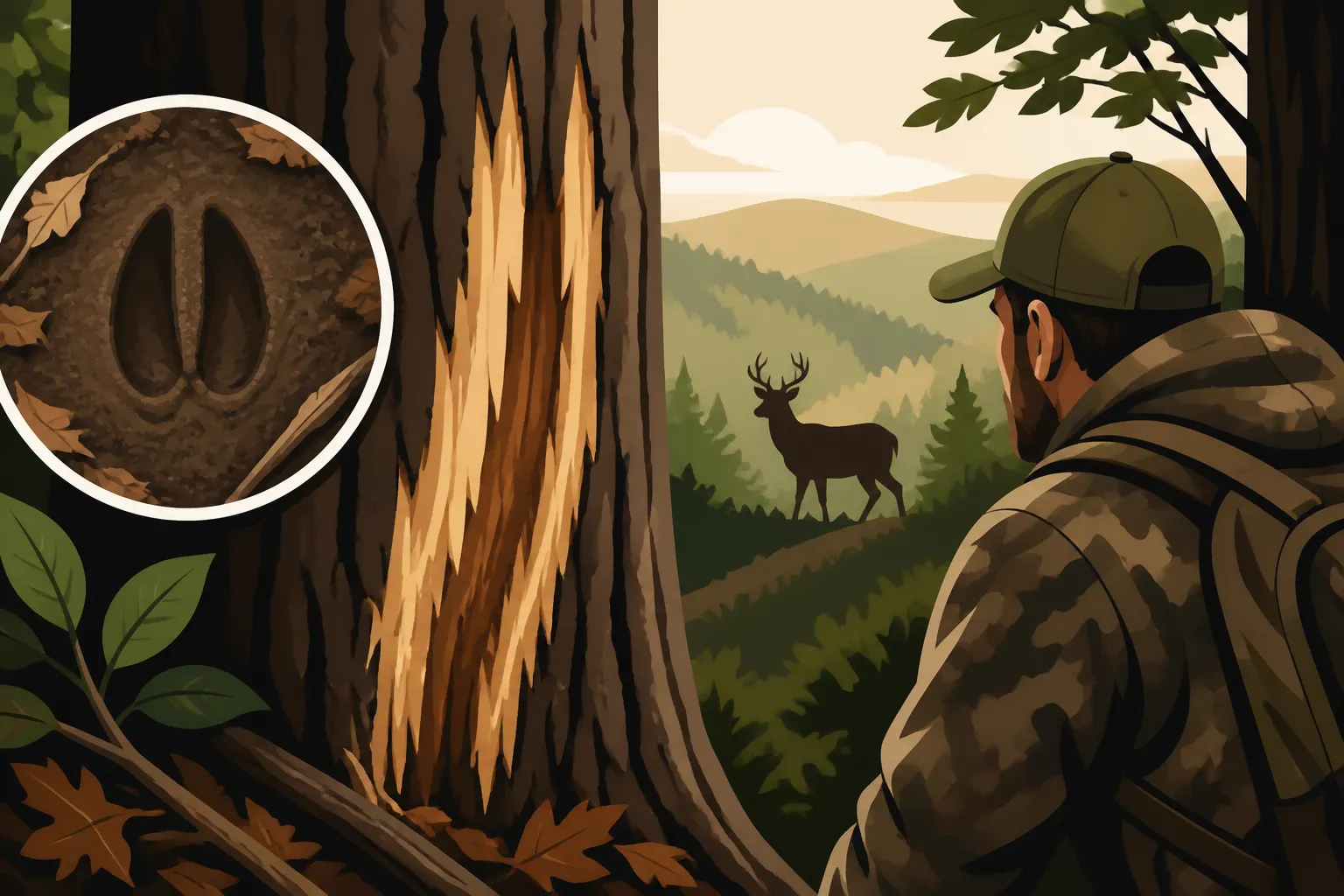
Rubs and scrapes are like neon signs in the deer world, particularly during the pre-rut and rut. Bucks create rubs by rubbing their antlers on saplings and small trees, polishing them and leaving behind scent. A fresh rub will have exposed, light-colored wood, often with sap still weeping, and will be devoid of leaves or debris around its base. The height of the rub can give you a rough idea of the buck's size, and the diameter of the tree can hint at his maturity. A line of fresh rubs usually indicates a travel corridor or a "signpost" marking a buck's core area. If you find a series of them, you're likely on a well-used route.
Scrapes, on the other hand, are spots where bucks paw away leaves and debris, expose the bare earth, and then urinate into the disturbed soil, often rubbing an overhead branch (the licking branch) with their preorbital glands. A fresh scrape will have moist, disturbed earth, often with a strong musky odor. These are communication hubs, telling other deer who's in the area and who's ready to breed. Look for scrapes along logging roads, field edges within the timber, or at the base of large, overhanging branches. Finding Scrape Lines Along a Logging Road can be a goldmine, as these often mark established travel routes that bucks routinely check. If a scrape is actively being worked, the licking branch will often look chewed or heavily rubbed.
Interpreting Tracks and Trails
Tracks and trails are the most fundamental signs, but in the leaf litter of Daniel Boone, they can be tricky to read. Fresh tracks will have crisp edges and distinct toe and dewclaw impressions, often pushing aside leaves or disturbing soil that hasn't settled yet. Older tracks might have leaves blown into them or edges that have softened from dew or rain. Distinguishing between a buck and a doe track isn't always foolproof, but generally, buck tracks are wider and more rounded, while doe tracks are narrower and more pointed. Also, if you see dewclaw impressions in an otherwise normal track, it often indicates a heavier animal or one moving quickly, usually a buck.
More importantly, look for subtle deer trails. In big timber, these aren't always super highways. They might just be slightly depressed paths where leaves are matted down, or where smaller plants have been consistently brushed aside. These trails often follow the path of least resistance: along contour lines, through saddles, or connecting areas of thick cover. Don't overlook these subtle pathways; they are critical for understanding how deer move from bedding to feeding and back. Pay attention to how deer might be Hunting a Funnel Between Two Hollows, as these spots will concentrate movement and leave more distinct trails.
Locating Droppings and Beds
Deer droppings, or scat, are another invaluable indicator of recent deer activity. Fresh droppings will be moist, dark, and often clumped together if the deer has been on a lush diet. As they age, they become drier, lighter, and more scattered. The quantity and freshness of droppings can tell you about how recently deer have been in an area and in what numbers. If you find a significant pile of fresh scat, you know deer are using that spot heavily, perhaps as a feeding area or a staging point before moving to bedding.
Beds are depressions in the leaves or grass where a deer has recently rested. In Daniel Boone's thick timber, beds are often found in dense cover like rhododendron thickets, cedar groves, or brushy clear-cuts. When you find a bed, pay attention to its orientation. Deer typically bed with the wind at their back, allowing them to detect danger in front with their nose and behind with their eyes. This knowledge can help you understand Wind and Thermals on a Kentucky Ridge and predict where a deer might bed given certain conditions. Fresh beds will still be warm to the touch (on a cold day), and the leaves will be noticeably flattened and disturbed. Finding a cluster of fresh beds can indicate a preferred bedding area, especially for a mature buck seeking security.
Strategic Scouting Techniques for Daniel Boone Timber
Scouting in Daniel Boone is less about stumbling upon a big buck and more about systematic investigation. It requires a blend of modern tools and old-school woodsman skills. You need a game plan before you ever set foot in the woods, and then the ability to adapt as you find new information.
Leveraging Topographic Maps and Aerial Imagery
Before you ever leave the truck, spend significant time studying the terrain with mapping applications. Services like GoHunt are invaluable for this, allowing you to pour over topographic maps and aerial imagery from the comfort of your home. Look for features that naturally funnel deer, such as saddles, draws, ridges that "pinch down," and benches along steep hillsides. Deer will almost always take the path of least resistance, so these terrain features act as natural highways.
Identify potential bedding areas—dense, dark green patches on the aerial photos, often on leeward slopes or areas with thick regrowth. Then look for potential feeding areas, such as oak flats marked by different tree textures or areas of less dense canopy where browse might thrive. Use your mapping app to mark these potential hotspots and plan your scouting routes to connect them. Consider how Reading Aerial Photos for Eastern Kentucky Deer can reveal hidden opportunities by identifying subtle elevation changes or clear-cut boundaries that aren't obvious on the ground.
Focusing on Micro-Terrain and Habitat Edges
Once you're on the ground, don't just walk in straight lines. Pay close attention to subtle changes in the landscape. A small rock outcropping, a cluster of blown-down trees, or even a slight change in the dominant tree species can create a "micro-edge" that deer prefer to travel along or bed near. These aren't always obvious on a map, but they become apparent as you learn to read the woods.
Look for areas where different habitat types meet, even if they're just subtle transitions within the forest. For example, where a stand of mature hardwoods meets a younger, brushier regrowth area, that edge can be a high-traffic zone. Similarly, a small spring seep or a trickle of water down a hollow can draw deer in dry conditions. By focusing on these often-overlooked details, you'll find where deer feel most comfortable moving and feeding. You might discover a perfect spot for Hanging a Stand on an Eastern Kentucky Ridge by identifying one of these micro-terrain features. These nuanced transitions are often where you'll find concentrated sign, even when the broader timber looks uniform.
Scrutinizing Food and Water Sources
Food and water are the lifeblood of deer activity. In Daniel Boone, these can be less obvious than in agricultural areas. Spend time identifying mast crops, especially various species of oak (white, red, chestnut, pin), American beech, and hickory. During the fall, finding a productive oak flat dropping acorns is like finding a deer magnet. If it's been Hunting After a Poor Acorn Year, deer might be forced to rely more heavily on browse such as greenbrier, honeysuckle, or various forbs. Learn to identify these plants and look for signs of heavy browsing, like clipped twigs or stripped leaves.
Water sources, while often abundant in Kentucky, can become critical during dry spells. Small seeps, trickling springs, or even small potholes of water in rocky areas can be important attractants. GoHunt's mapping features can help you locate drainage areas, but ground-truthing is essential to find actual water sources. Deer will often trail directly to and from these spots. Always be on the lookout for natural mineral licks as well, which are less common but can be very productive.
Seasonal Considerations and Long-Term Strategies
Scouting is not a one-and-done affair; it's an ongoing conversation with the land. Deer patterns shift, food sources change, and hunting pressure affects their behavior. A long-term strategy, informed by seasonal changes, is crucial for consistent success in Daniel Boone's vast timber.
Early Season vs. Late Season Sign
The type and intensity of deer sign you find will vary significantly with the season. In the early archery season, typically from September into October, bucks are often still in bachelor groups or just starting to disperse. Rubs and scrapes might be minimal, or just beginning to appear, and mostly focused around early mast crops or summer bedding areas. Deer movement might be more nocturnal, especially in warmer weather. If you're Bowhunting Kentucky's Long Archery Season, you'll be looking for trails leading to soft mast or early-dropping acorns.
As the season progresses into the late fall and early winter, around the peak of the rut and through the late muzzleloader week in December, sign becomes much more apparent. Rub lines and scrape lines will be highly active, signaling intense buck activity. Trails will be more beaten down as deer move more frequently. In the late season, after gun seasons have come and gone, deer will be focused almost entirely on available food sources to build energy for winter. This means looking for Late-Season Food Sources for Kentucky Whitetails like hard mast they missed earlier, or any green browse that remains. Sign will often be concentrated around these critical feeding areas as deer try to conserve energy.
Setting Up Trail Cameras Smartly
Trail cameras are a modern hunter's best friend, but their placement in big timber requires thought. Don't just hang them randomly. Instead, place cameras on existing rubs or scrapes you've found, on subtle deer trails identified during your scouting, or overlooking potential food sources. Utilize your mapping app to identify strategic pinch points or funnels, then hang a camera there to see what's truly moving through.
Consider hanging cameras on benches, along ridge lines, or where two draws meet. Even a single logging road can be a prime camera location if you've noticed consistent tracks. For those looking for more insight into Where to Hang a Camera on a Logging Road, consider placing them at intersections or where a dense thicket meets the road. Check cameras frequently enough to get timely information but not so frequently that you pressure the area. Using scent-free practices when checking cameras is also paramount.
The Value of Repeated Scouting Trips
One scouting trip to Daniel Boone National Forest, no matter how thorough, is rarely enough. The sheer size and ever-changing nature of the forest demand repeated visits. Think of each trip as adding another layer to your understanding of the deer in that specific area. What you learn in September about early mast might be irrelevant by November. What you find in December might be key for understanding how deer move in deep snow.
Regular scouting allows you to monitor changes in sign, track the progression of the rut, and identify new food sources as they become available. It also helps you learn the nuances of how deer navigate the terrain, giving you a deeper appreciation for their habits. Over time, you'll develop a mental map that goes far beyond what any digital app can provide. This commitment to Scouting Kentucky Public Land Before Season and continuing throughout, is what separates consistently successful hunters from those who just get lucky.
Disclaimer
Hunting is an inherently dangerous activity. Always prioritize safety, adhere to all Kentucky Department of Fish and Wildlife Resources regulations, and ensure you have the proper licenses and permits before heading into the field. This guide is for informational purposes only and does not replace official hunting regulations or professional safety instruction.