Hunting Pine Mountain Ridgelines
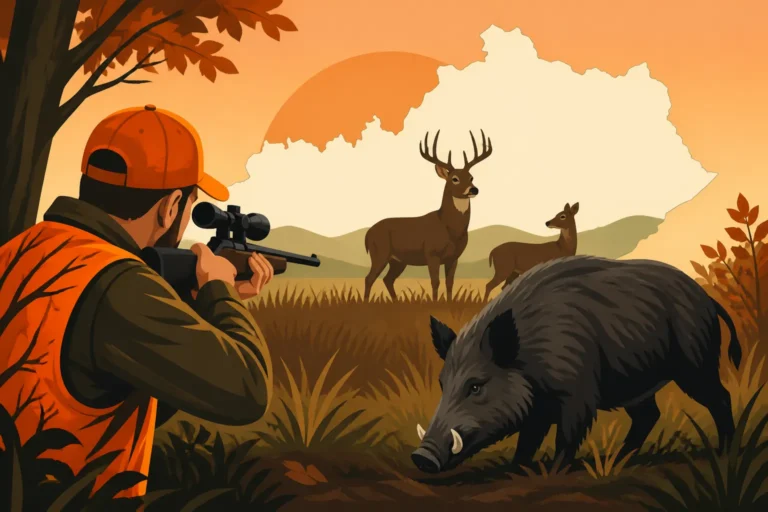
Hunting the rugged, unforgiving terrain of Pine Mountain in southeastern Kentucky is a challenge that many hunters dream of tackling, but few truly understand the unique demands it places on skill and preparation. The steep climbs, dense cover, and often unpredictable weather can test even the most seasoned outdoorsman, making finding and recovering game an arduous task. This guide will walk you through the specific tactics and considerations for successfully hunting Pine Mountain ridgelines, helping you navigate its formidable beauty and increase your odds of success.
Understanding the Pine Mountain Landscape and its Challenges
Pine Mountain, a formidable ridge stretching across southeastern Kentucky, presents a truly unique hunting environment. Unlike the rolling hills of the Bluegrass region or the flat river bottoms of Western Kentucky, this is big, steep country that demands respect and thorough preparation.
The Unique Topography and Habitat
Pine Mountain isn't just a big hill; it's a massive, linear ridge that can feel more like a small mountain range, with elevations peaking around 3,200 feet. The terrain is characterized by incredibly steep slopes, deep hollows, and dense, mature timber, often mixed with thick rhododendron and mountain laurel thickets that can be impenetrable. This creates distinct microclimates and specific challenges for hunters. Game animals, especially deer and bear, utilize these features to their advantage, often bedding on benches or saddles just off the main ridgetops, or seeking refuge in the thickest cover on north-facing slopes.
The sheer scale of the landscape can be overwhelming. You might spend hours climbing just to reach a promising ridgetop, only to find another series of steep draws and secondary ridges stretching out before you. The forests are primarily mixed hardwoods, with oaks, hickories, and beeches dominating, providing crucial mast crops during the fall. Understanding where these food sources are on the ridge can be key. For instance, a saddle thick with white oaks can be a prime spot during the early season. Additionally, some areas, particularly those impacted by past logging or natural events, feature younger, denser growth that creates excellent bedding cover. Identifying these transitions between mature timber and thick regrowth is vital for locating deer. Many hunters often discuss Hunting Eastern Kentucky Coalfield Country and the specific challenges of finding productive ground there, and Pine Mountain is certainly part of that conversation.
Weather Patterns and Their Impact
Hunting Pine Mountain ridgelines means being prepared for rapidly changing weather conditions. A sunny, crisp morning can quickly turn into a cold, driving rain or even a snow squall, especially as you gain elevation. Fog often clings to the ridgetops, reducing visibility to mere yards, which can disorient you and make long-range glassing impossible. The temperature can drop significantly as you climb, and wind speeds on exposed ridges are often much higher than in the sheltered valleys below. This necessitates a layered clothing system that can adapt to varying conditions, allowing you to shed layers during strenuous climbs and add them back on when sitting stationary.
Furthermore, precipitation can make the already treacherous slopes incredibly slick, turning a manageable descent into a risky slide. Rocks, loose dirt, and wet leaves can all contribute to dangerous footing. This isn't just about discomfort; it's about safety. Beyond the immediate physical challenges, weather profoundly impacts game movement. Deer might bed down tighter during a heavy rain or intense wind, preferring sheltered leeward slopes. However, a sudden drop in temperature after a cold front can often spur increased feeding activity. Bears, too, will adjust their patterns based on weather, perhaps seeking dens earlier in a harsh winter. Being aware of these meteorological nuances, and how they interact with the terrain, is fundamental to successful mountain hunting. Don't underestimate how quickly a mild day can turn into a serious test of your resolve and gear.
Strategies for Locating Game on Ridgelines
Finding game in the vastness of Pine Mountain requires a methodical approach, focusing on understanding animal behavior in this specific environment. You can't just wander aimlessly; you need a plan, even if that plan is flexible.
Reading the Ridge for Deer and Bear Sign
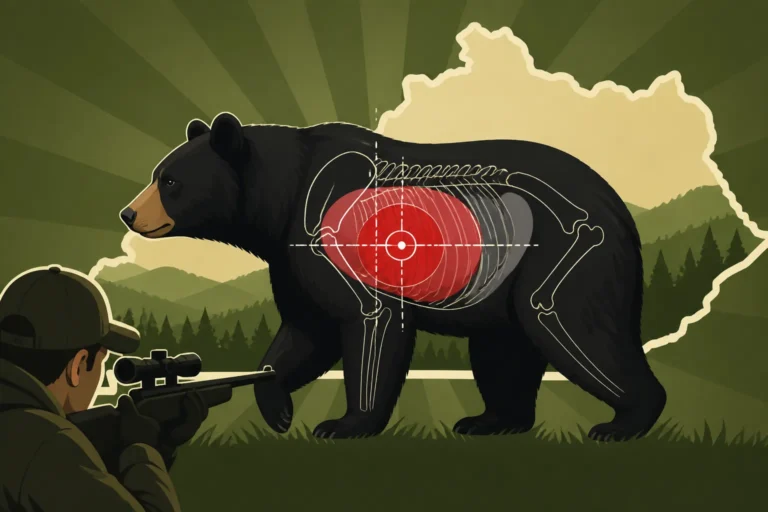
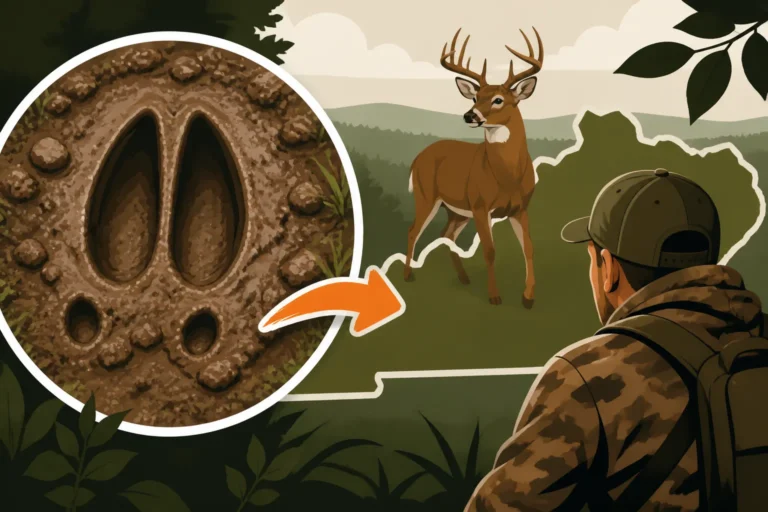
Successful hunting on Pine Mountain ridgelines hinges on your ability to interpret the subtle clues animals leave behind. Deer and bear use these ridges as travel corridors, feeding grounds, and bedding areas. The key is finding where these activities intersect. Look for well-worn trails, especially those connecting distinct habitat features like dense thickets, oak flats, or water sources. These trails often run just below the crest of a ridge, offering animals cover from the skyline while still providing an elevated view. Scrapes and rubs, particularly in the pre-rut and rut, can indicate prime buck activity along these pathways. Bear sign, such as claw marks on trees, overturned rocks, scat, or even disturbed anthills, is also a vital indicator, especially during periods of heavy mast production. Keep an eye out for specific food sources; a ridge rich in acorns or soft mast like pawpaws can be a magnet for both species.
Beyond obvious sign, pay attention to the "soft sign" – subtle nuances in the landscape that funnel animal movement. This includes saddles, which are natural low points on a ridge where animals can cross from one side to another with minimal effort. These are classic ambush points. Also, look for benches or subtle changes in elevation on a steep slope that offer flat ground for bedding. Deer and bear often bed with their backs to the wind, facing downhill, allowing them to smell danger behind them and see what's approaching from below. You can learn a lot from Reading a Ridge for Cumberland Deer, and those principles apply directly to Pine Mountain. Utilize digital mapping tools like GoHunt to analyze topography before you even set foot on the mountain, identifying potential saddles, benches, and thick cover that warrant a closer look on the ground. This pre-scouting is indispensable.
Leveraging Thermals and Wind for Success
In mountain hunting, understanding thermals and wind is paramount. Unlike flatland hunting where wind direction is relatively consistent, Pine Mountain's steep topography creates complex air currents that change throughout the day. Thermals, driven by temperature changes, typically rise in the morning as the sun warms the earth and fall in the evening as the air cools. This means your scent will be carried uphill in the morning and downhill in the evening. Hunting low in the morning and high in the evening can put you in a favorable position, as animals are often moving along benches and contours.
However, prevailing wind can override or interact with thermals, making things even more complicated. A strong west wind, for example, might push scent horizontally across a ridge even when thermals are trying to rise or fall. Your best bet is to position yourself on the downwind side of travel corridors or bedding areas, ensuring your scent is carried away from where you expect game to be. Small pockets and draws on the ridge can create swirling winds, so always have a wind checker handy and use it constantly. A good rule of thumb is to hunt the "thermal hubs" – areas where multiple terrain features meet, creating predictable updrafts or downdrafts. Being acutely aware of how Wind and Thermals on a Kentucky Ridge behave can literally make or break your hunt, providing that crucial edge in such demanding terrain.
Still-Hunting and Glassing Techniques
Still-hunting is perhaps the most effective tactic for navigating Pine Mountain's dense ridgelines. This involves moving incredibly slowly, taking a few steps, then pausing for several minutes to scan for movement, listen for subtle sounds, and carefully observe your surroundings. You're not just looking for an entire animal; you're looking for an ear flick, a patch of hide, or a horizontal line in a vertical world. This slow pace allows you to cover ground effectively while minimizing your disturbance and maximizing your chances of spotting game before it spots you. Always move into the wind or crosswind, utilizing thermals to your advantage, and stick to the quietest routes, like old logging roads or sparse timber.
Glassing is another powerful tool, especially from elevated positions where you can see into multiple hollows and across distant ridges. While the thick cover on Pine Mountain often limits long-range visibility, finding strategic overlooks or "windows" through the timber can reveal animals moving below. A quality pair of binoculars (8x or 10x magnification) is essential. Take your time, systematically scanning open areas, timber edges, and benches. Don't just glance; pick apart every shadow and anomaly. This can be particularly effective when Spot-and-Stalk Tactics for Pine Mountain Bears are on your mind, as bears can sometimes be seen moving through less dense areas. Use natural cover to break up your silhouette and try to stay still for extended periods, as animals often reveal themselves only after a long period of quiet observation.
Essential Gear and Safety for Mountain Hunting
Hunting Pine Mountain isn't a casual stroll; it's a strenuous endeavor that demands robust, reliable gear and a steadfast commitment to safety. You're often miles from any road, and a simple mistake can have serious consequences.
Footwear and Layering for Steep Terrain
Your feet are your most valuable asset on Pine Mountain, and investing in high-quality, comfortable, and supportive footwear is non-negotiable. Look for boots with excellent ankle support to prevent twists and sprains on uneven ground, aggressive tread for traction on steep, loose slopes, and waterproofing to keep your feet dry in rain or snow. Boots like those from Kenetrek or Schnee's are popular among serious mountain hunters for a reason – they hold up to abuse. Break them in well before your hunt to avoid blisters, which can quickly derail your efforts. Remember, a single bad step on a steep, leaf-covered slope can lead to a nasty fall. Beyond boots, consider merino wool socks; they wick moisture, prevent blisters, and retain warmth even when wet. For more insights, check out discussions on Boots for Kentucky Hollows and Creek Bottoms.
Layering is equally critical for managing your body temperature in fluctuating mountain conditions. Start with a moisture-wicking base layer (again, merino wool is excellent) to pull sweat away from your skin. Add a mid-layer for insulation – a fleece jacket or a lightweight puffy can work well. Your outer shell should be waterproof, windproof, and breathable to protect against the elements while allowing perspiration to escape. Avoid cotton, as it absorbs moisture and loses its insulating properties when wet. Having extra layers in your pack, like a heavy down jacket for glassing or sitting, can make a huge difference in comfort and safety. Think strategically about what you wear, and how easily you can adjust to climbing uphill in a t-shirt versus sitting in a stand in freezing rain.
Navigation and Communication Essentials
Getting lost on Pine Mountain is a very real possibility, even for experienced hunters. The dense timber, endless ridges, and lack of distinct landmarks can disorient you quickly, especially in fog or low light. A reliable GPS unit or a smartphone with a robust mapping app (like GoHunt, OnX Hunt, or BaseMaps) loaded with offline maps is absolutely essential. Don't rely solely on cell service, as it's often non-existent in many parts of the mountain. Always carry a physical compass and a paper map as a backup, and know how to use them. Before you head out, study your map, identify key terrain features, and mark your intended route and bailout points.
Communication is another critical safety consideration. Carry a fully charged cell phone (though anticipate spotty service). Consider a satellite messenger device like a Garmin inReach or Zoleo, which allows you to send text messages and SOS signals even when out of cell range. Let someone know your detailed hunting plan, including where you'll be, your intended route, and when you expect to return. This isn't just a suggestion; it's a safety imperative when hunting solo in remote, unforgiving terrain. Being prepared for emergencies, whether a twisted ankle or a sudden blizzard, starts with having the right tools to navigate and call for help.
Meat Care in Remote, Rugged Country
Successfully harvesting an animal on Pine Mountain is only half the battle; getting that animal off the mountain and preserving its meat is the other, often more difficult, half. The terrain makes dragging a deer out of a steep hollow nearly impossible in many areas. This means you need a plan for field dressing and packing out. The gutless method, where you bone out the animal in the field, is highly recommended. It significantly reduces the weight you have to carry and minimizes the risk of spoilage, especially if temperatures are mild. Learn how to perform the gutless method efficiently before your hunt. This is a skill that saves hours of grueling work and ensures quality meat.
Carry a sturdy frame pack designed for hauling heavy loads. A good pack will distribute the weight properly, allowing you to carry out hundreds of pounds of meat in multiple trips if necessary. Game bags (preferably breathable, synthetic ones) are essential for protecting the meat from dirt, insects, and flies. Having them in a pack like those discussed in Packs for a Daniel Boone Forest Day Hunt will make a huge difference. If you're Hunting Pine Mountain Bear Zone Public Ground and are lucky enough to take a bear, remember that bear fat can spoil quickly in warm weather, so getting the hide and meat cooled rapidly is even more critical. Consider carrying a small, lightweight tarp or game hauler to slide meat down less-steep slopes, but be realistic about what the terrain will allow. Your goal is to get that meat home in prime condition, which often requires more effort after the shot than before.
Summary Table: Key Considerations for Pine Mountain Ridgeline Hunting
| Aspect | Key Challenge | Essential Strategy | Recommended Gear / Practice |
|---|---|---|---|
| Terrain | Steep, dense, remote, limited access | Pre-scout with maps, identify funnels & benches | GoHunt app, paper map, compass |
| Weather | Rapid changes, high winds, fog, precipitation | Layered clothing, flexible hunting times | Moisture-wicking base, waterproof outer shell |
| Game Location | Sparse density, thick cover, large area | Still-hunting, aggressive glassing, interpret sign | Quality binoculars (8-10x), wind checker, patience |
| Scent Control | Complex thermals, swirling winds | Hunt the wind, understand thermal shifts | Wind indicator, scent-free clothing regime |
| Safety | Getting lost, injury, lack of cell service | Carry multiple nav tools, tell someone your plan | GPS device, satellite messenger, first-aid kit |
| Meat Care | Difficult extraction, spoilage risk | Bone out in field (gutless method), multiple trips | Frame pack, game bags, sharp knife |
Disclaimer
The information provided in this guide is for general informational purposes only and does not constitute legal advice or a comprehensive statement of Kentucky hunting regulations. Hunting laws and regulations are subject to change, and it is the individual hunter's responsibility to review and comply with all current rules set forth by the Kentucky Department of Fish and Wildlife Resources (KDFWR). Always consult the official KDFWR hunting guide and any applicable local regulations before engaging in hunting activities.