Shot Placement on a Kentucky Black Bear
The thrill of spotting a black bear in Kentucky's rugged terrain is unlike anything else, but that excitement quickly turns to immense responsibility when it's time to take a shot. The last thing any ethical hunter wants is a wounded animal and a difficult, potentially dangerous, tracking job through dense woods. This guide is all about giving you the critical knowledge for precise shot placement, ensuring a quick, humane harvest and a successful end to your pursuit of a Kentucky black bear.
Understanding Kentucky Black Bear Anatomy for Shot Placement
Before you even think about pulling the trigger or releasing an arrow, you need a deep, working knowledge of black bear anatomy. While some hunters might assume it's similar to a deer, there are crucial differences, particularly in the placement of vital organs and the density of their bone structure, that demand your attention. Don't fall into the trap of thinking a deer shot is a bear shot; a precise understanding is key to a humane harvest.
The Critical Vitals: Heart and Lungs
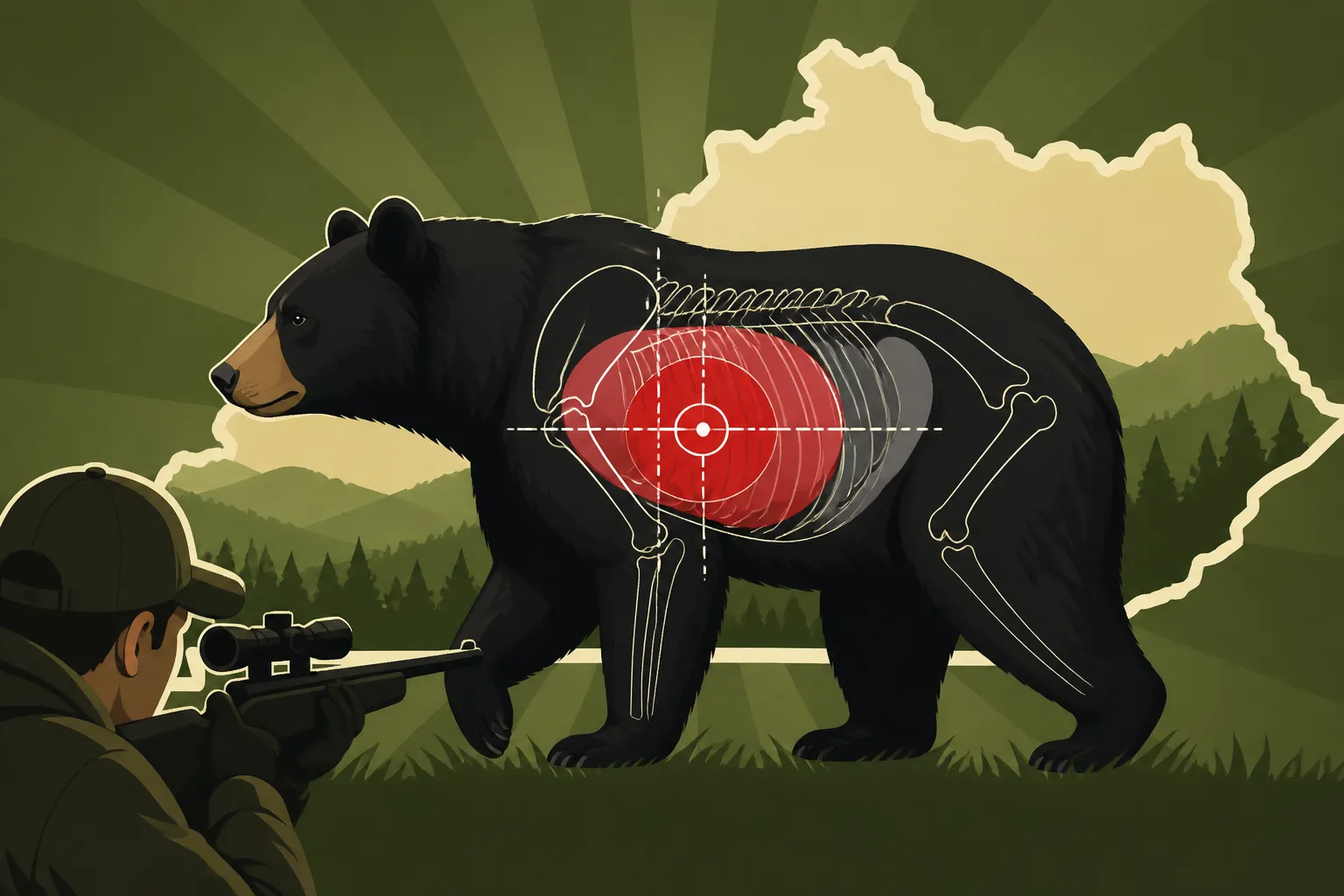
Just like any other big game animal, the primary goal for ethical shot placement on a black bear is to target the heart and lungs. These organs are the engine of life, and a hit here will result in rapid blood loss and incapacitation. The lungs, being larger, offer a more forgiving target than the heart, but both, when struck effectively, lead to a quick kill. On a broadside bear, these vitals sit directly behind the front shoulder, relatively low in the chest cavity.
However, a bear's thick coat, dense muscle, and fat layers can obscure the exact location of these vitals. It’s not always as clearly defined as on a deer. You need to visualize a line running up from the middle of the leg, just behind the crease of the shoulder, and aim for the lower third of the body. This is a compact, vital area, so precision truly matters. Understanding this internal mapping is fundamental to ensuring your projectile impacts where it needs to for maximum effect.
A common mistake is aiming too high on a bear, especially if you're accustomed to deer hunting where a high lung shot can be effective. A bear's spine and associated nerve clusters run along the top of the body, and while a spine shot will drop an animal instantly, it's a much smaller target and presents a higher risk of merely wounding the bear if missed slightly. For the most consistently fatal and ethical shot, stick to the heart and lung area, visualizing that critical intersection behind the shoulder blade.
Skeletal Structure and Shot Angles
The skeletal structure of a black bear, particularly its shoulder blade, is considerably more robust and dense than that of a whitetail deer. This is a critical factor, especially for archery hunters or those using lower-caliber firearms. The shoulder blade itself can deflect or significantly impede a projectile if struck head-on, preventing it from reaching the vitals. For this reason, the ideal shot often involves slipping your bullet or broadhead behind the shoulder blade, or, with proper angling, through the thin bone just in front of it.
When a bear is standing perfectly broadside, the sweet spot is typically about one-third of the way up from the brisket, directly in line with the bear's opposite leg. This aims for the heart and the lower portion of both lungs, avoiding the heaviest part of the shoulder bone. If the bear is quartering away slightly, the shot becomes even more advantageous, allowing you to bypass the shoulder completely and angle directly into the vitals.
It's also important to consider the angle of the shot relative to your position. If you're hunting from a treestand, the downward angle can alter where your projectile exits the bear. A high entry shot from above might exit low on the opposite side, potentially missing key organs if not aimed correctly. Always mentally trace the projectile's path through the bear, aiming for the exit point as much as the entry, to ensure both lungs and the heart are intersected.
Bear Physiology vs. Whitetail Deer
The differences in physiology between a black bear and a whitetail deer are more pronounced than many hunters realize. For starters, bears have a much broader, rounder body cavity compared to the more slender, deeper chest of a deer. This means the vital organs are tucked in a bit tighter and are not as horizontally elongated as in a deer. Their shoulder bones are larger and more forward-set, offering substantial protection to the front vitals.
Another key distinction is the musculature and fat layers. Bears, especially in late fall as they prepare for denning, can carry significant amounts of fat. This fat, combined with thick muscle, can absorb some of a projectile's energy, potentially reducing penetration. This is why choosing a sufficient caliber and a well-constructed bullet is paramount when Rifle Calibers for Kentucky Bear are being considered. For archery hunters, a razor-sharp, well-placed broadhead is non-negotiable to ensure full penetration through these dense layers.
Finally, a bear's tenacity and ability to absorb punishment should not be underestimated. They are incredibly tough animals. A marginal shot that might drop a deer can leave a bear with enough fight to disappear into the thick cover of Daniel Boone National Forest Hunting, leading to a challenging and potentially dangerous tracking job. This physiological robustness underscores the absolute necessity of precise shot placement to ensure a clean, ethical kill. Many hunters rely on resources like GoHunt for detailed anatomical charts and strategies that differentiate bear hunting from other species.
Optimal Shot Placement Zones for Black Bear
Understanding where to aim is half the battle; knowing the best angles and scenarios for those shots is the other. Black bears offer various shot opportunities depending on their behavior and your position, but not all are created equal. Let's delve into the most effective and ethical shot zones.
Broadside: The Classic Kill Zone
The broadside shot is, without a doubt, the gold standard for black bear hunting. When a bear is standing perfectly perpendicular to you, its vital organs are fully exposed, offering the largest and most forgiving target for a clean kill. In this position, you want to aim just behind the crease of the front shoulder, about one-third of the way up from the bottom of the chest. This placement ensures your bullet or broadhead passes through both lungs and likely catches the top of the heart or major blood vessels.
Imagine a vertical line running directly up the back of the bear's front leg, and a horizontal line running across the bottom third of its chest. Where these two lines intersect is generally your target. This angle allows your projectile to bypass the heavy shoulder bone, maximizing penetration and energy transfer to the vital organs. It’s crucial to wait for the bear to be calm and still, ideally with its head down feeding or browsing, offering a steady target. Rushing a broadside shot is a recipe for disaster; patience is your greatest ally.
With a perfect broadside shot, you can expect a quick, humane death. The bear might run a short distance, but significant blood loss from the double-lung and heart hit will quickly incapacitate it. This shot placement is ideal whether you're using a rifle during Kentucky Bear Firearms Season Dates or archery gear during Kentucky Bear Archery Season Dates. Always be prepared for the bear to react, often with a short, powerful burst of speed into cover, so note its direction of travel for tracking.
Quartering-Away: A Viable Option
While broadside is ideal, a quartering-away shot can be equally, if not more, lethal. This occurs when the bear is angled away from you, with its hindquarters closer to you than its front. This angle provides an excellent opportunity to thread your projectile directly into the vital cavity, often bypassing both shoulders entirely. The key is to aim for the opposite shoulder, visualizing a line that travels diagonally through the bear, impacting the heart and lungs on the far side.
For a quartering-away shot, your aim point will be further back on the body than a broadside shot. Instead of directly behind the near shoulder, you'll be aiming towards the pocket of the far shoulder. This allows the projectile to traverse the entire chest cavity, maximizing the damage to both lungs and potentially the heart. It's a highly effective shot, particularly for archers, as it minimizes the chance of hitting dense bone and maximizes the vital organ exposure.
However, the quartering-away shot requires careful consideration of the angle. If the bear is severely quartering away, you risk a gut shot if your aim is too far back. If it's only slightly quartering, you might still need to contend with the near shoulder blade. Practice visualizing these angles on 3D targets or even pictures to hone your judgment. A well-executed quartering-away shot, much like a broadside, results in swift incapacitation and an ethical harvest. Many hunters find that tools available from resources like GoHunt, with their detailed anatomical overlays, are invaluable for visualizing these complex angles.
Shots to Avoid or Take with Extreme Caution
Not every shot opportunity is a good one, and knowing when not to shoot is as important as knowing where to aim. Several shot angles on a black bear should be avoided or taken only by highly experienced hunters under very specific circumstances, usually with a powerful firearm.
Firstly, a frontal shot (bear facing directly at you) is almost always a bad idea. While a perfectly placed shot can theoretically penetrate the chest and hit vitals, it presents a very small target area, protected by the dense sternum and heavy muscle. The risk of merely wounding the bear and causing prolonged suffering is too high. Unless it's an absolute last resort in a dangerous situation, avoid frontal shots.
Secondly, a quartering-to shot (bear facing towards you, with its front shoulder closer) is similarly problematic. This angle forces your projectile to pass through the heavy shoulder bone and potentially a significant amount of muscle before reaching the vitals. Again, the chances of deflection, reduced penetration, and a non-lethal wound are significantly increased. Wait for the bear to turn, offering a broadside or quartering-away opportunity.
Finally, a straight-away shot (bear facing directly away from you, showing only its rear) is a definite no-go. This is a notorious gut shot waiting to happen. While it might damage the spine, the primary target would be the digestive system, leading to a long, agonizing death for the animal and a potentially impossible recovery for the hunter. Always prioritize ethical hunting, and that means being patient enough to wait for the optimal shot angle.
| Shot Angle | Aim Point | Effectiveness/Risk |
|---|---|---|
| Broadside | One-third up from brisket, directly behind front leg crease. | High Effectiveness: Ideal. Bypasses heavy shoulder bone, double lung/heart shot likely. Results in rapid incapacitation. |
| Quartering-Away | Aim for opposite (far) shoulder, visualizing path through heart/lungs. | High Effectiveness: Excellent. Bypasses both shoulders, maximum vital organ damage. Requires precise angle judgment to avoid gut shots. |
| Quartering-To | Avoid. If absolutely necessary, high shoulder/neck base but highly risky. | High Risk: Avoid if possible. Projectile must pass through heavy near shoulder bone and muscle. High chance of deflection or superficial wound. Ethical harvest unlikely. |
| Frontal | Avoid. Small target, protected by sternum. | Extreme Risk: Avoid. Small vital target, heavily protected by dense bone. High probability of non-lethal wound or mere stunning. Only in dire self-defense. |
| Straight-Away | Avoid. Only exposed vitals are digestive system. | Extreme Risk: Avoid. Almost guaranteed gut shot, leading to prolonged suffering and very difficult, unethical recovery. Never an ethical hunting shot. |
Factors Influencing Shot Success and Ethical Harvest
Beyond knowing anatomy and angles, a truly successful and ethical bear hunt hinges on a combination of factors, from your gear to your behavior after the shot. Cutting corners on any of these can lead to a less-than-ideal outcome.
Weapon Choice and Ammunition Considerations
When pursuing black bears in Kentucky, your weapon choice and the ammunition you pair with it are paramount. Bears are tough, well-muscled animals, and they demand a firearm or bow capable of delivering sufficient energy and penetration. For rifle hunters, calibers like the .30-06, .308, .270, and larger are popular and effective. The key isn't just the caliber, but the bullet construction. You need a premium, controlled-expansion bullet designed for deep penetration, not rapid expansion. Brands like Barnes TSX, Nosler Partition, or Hornady InterLock are excellent choices, built to hold together and drive through bone and thick muscle. While scouting, consider how your rifle performs in environments such as Hunting Western Kentucky Bottomland Deer or Still-Hunting Eastern Kentucky Ridges, as similar challenges apply to bear hunting terrain.
For archery hunters, the minimum legal draw weight in Kentucky is 40 pounds, but for bears, you really want to be at 60 pounds or more, combined with a heavy arrow and a razor-sharp, fixed-blade broadhead. Mechanical broadheads can work, but their energy is often spent on expansion rather than penetration through the dense hide and bone of a bear. Fixed blades, with their robust construction, are generally preferred for their reliable penetration. When Hunting Bear With Archery Gear in Kentucky, every bit of kinetic energy and broadhead integrity counts.
Muzzleloader hunters should opt for heavy, well-constructed conical bullets or sabots designed for large game. Powder charges should be maximized within safe limits to ensure adequate velocity and penetration. Regardless of your chosen weapon, practice extensively with your hunting setup. Know your effective range, practice from various field positions, and ensure your accuracy is pinpoint. A marginal hit with an underpowered setup can be disastrous.
Reading Bear Body Language and Stance
A bear's body language and stance can tell you a lot about whether it's the right moment to take a shot. A calm, relaxed bear, often with its head down feeding or sniffing the ground, provides the most stable and ethical shot opportunity. This is when its muscles are relaxed, and it's less likely to suddenly bolt or shift position, giving you the precious seconds needed for a precise aim. This often happens when bears are feeding on natural mast, as discussed in Hunting Bears Over Natural Mast in the Mountains.
Conversely, a bear that is alert, with its head up, ears swiveling, and constantly shifting its weight, is a much riskier target. It's on edge, and any sudden movement or sound could trigger it to flee, potentially ruining your shot or leading to a poorly placed one. Similarly, a bear that is walking or trotting should almost always be passed on. The vitals are constantly shifting, and the chance of a clean kill is significantly reduced.
Patience is a virtue here. If the bear isn't offering a perfect, still, broadside or quartering-away shot, wait. It's far better to pass on a marginal shot and go home empty-handed than to take a risky shot that wounds the animal. Observe its behavior, predict its movements if possible, and wait for that optimal, ethical window. Using a good set of binoculars, like those suggested for Optics for Eastern Kentucky Ridges, can help you assess the bear's demeanor from a distance without disturbing it.
After the Shot: Tracking and Recovery
So, you've made a great shot – now what? The moments immediately after the shot are crucial for a successful and safe recovery. First and foremost, resist the urge to immediately run after the bear. Even a mortally wounded bear can travel a surprising distance and, if cornered, can be extremely dangerous. Mentally mark the exact spot where the bear was standing when you shot it, and its direction of travel.
After waiting at least 30 minutes, and preferably an hour for a well-hit bear (longer for a questionable hit, if possible and safe), begin your tracking. Look for blood, broken branches, disturbed leaves, and tracks. Bears, with their dense fur and fat, can sometimes leave a sparse blood trail initially, especially if the entry wound is high. So, don't get discouraged if the blood trail isn't immediate or heavy. Pay close attention to any details. If you're hunting in the rugged terrain of Bear Hunting Southeastern Kentucky, tracking can be particularly challenging.
If the blood trail peters out or you lose it, consider calling in a tracking dog, if legal and available in your area. Many responsible hunters use services like this to ensure a wounded animal is recovered. Always carry a good headlamp and extra batteries, as tracking can easily extend into low light or darkness. When you approach a downed bear, do so with extreme caution. Circle wide, approach from behind, and ensure it is truly expired before touching it. This is not the time to let your guard down. A great hunting platform like GoHunt can often provide resources or forums to connect with local trackers if needed.
Disclaimer
Please remember that hunting regulations and practices can change. Always consult the official Kentucky Department of Fish and Wildlife Resources (KDFWR) regulations before heading afield. This guide is for informational purposes only and does not supersede state laws or professional advice. Hunter safety and ethical conduct are paramount.