Kentucky Bear Archery Season Dates
The crisp autumn air in Kentucky signals more than just deer season; for dedicated archers, it heralds the challenging and incredibly rewarding opportunity to pursue black bears. Many hunters find themselves scratching their heads trying to decipher the specific dates and regulations for bear archery season, especially with Kentucky's unique zone system and the ever-present possibility of early season closures. This comprehensive guide aims to cut through that confusion, providing clear, up-to-date information on Kentucky's bear archery season dates, essential regulations, and critical preparation tips to help you successfully plan your hunt.
Navigating Kentucky's Bear Archery Season Dates
Understanding when you can legally hunt bears with archery equipment in Kentucky is the absolute first step in planning your adventure. The Kentucky Department of Fish and Wildlife Resources (KDFWR) meticulously sets these dates, but they can sometimes feel a bit like reading ancient scrolls if you're not familiar with the structure.
Understanding the Annual Calendar
Unlike deer season, which often has consistent, long windows, Kentucky's bear archery season is typically split into shorter, distinct periods. This is largely due to the department's careful management of the burgeoning bear population, ensuring sustainable harvest quotas are met without overpressuring the bears. These season windows are designed to align with periods when bears are active, but also when archers have a reasonable chance of success without creating undue stress on the population. It’s crucial to remember that Kentucky’s bear seasons, regardless of weapon type, are quota-driven. This means that if the statewide or zone-specific harvest quota is met early, the season will close immediately, sometimes without much notice. Always check the KDFWR website or use a reliable app like GoHunt for real-time closure announcements before heading into the woods.
Key Dates for Each Bear Zone
Kentucky divides its bear hunting areas into specific zones, each with its own set of rules and, sometimes, slightly different season dates. For the 2023-2024 season, the standard archery/crossbow bear season typically ran from October 27 – November 10, 2023, and then picked back up for a shorter second window from December 9 – 17, 2023. These dates generally apply to the primary bear hunting areas, encompassing what are known as Bear Zone One and Two.
However, if you're planning on hunting in Kentucky's New Bear Zone Three, which currently includes Clinton and Wayne counties, you’ll find the regulations are even more restrictive. Zone Three often has shorter, specific windows within the broader season, or sometimes even archery-only periods separate from firearm seasons, all designed to carefully manage harvest in these newer expansion areas. Always double-check the KDFWR's current regulations guide for the most precise dates for your target zone. Relying on outdated information could lead to a violation, and nobody wants that kind of trouble in the woods.
Kentucky's Bear Zone System and Archery Opportunities
Kentucky's bear population has made an incredible comeback, particularly in the eastern part of the state. This success has led to a structured management approach, dividing the state into distinct bear zones. Understanding these zones is paramount for any hunter, especially those considering archery, as they directly dictate where and when you can hunt.
Deciphering Bear Zone One, Two, and Three
Kentucky's bear zones are geographical areas established by the KDFWR to manage the bear population effectively and distribute hunting pressure.
- Bear Zone One: This is the core bear habitat, primarily concentrated in the southeastern mountainous counties. Think of places like Harlan, Letcher, and Pike counties – these are the historical strongholds and where the highest bear densities are found. Zone One typically offers the most liberal hunting opportunities, including longer seasons and sometimes higher quotas for both archery and firearm hunters, reflecting the robust population.
- Bear Zone Two: Surrounding Zone One, this area represents the expanding range of Kentucky's bears. Counties like Knox, Clay, and Bell are often included here. While bears are common, their densities might not be as high as in Zone One. Hunting regulations in Zone Two are usually similar to Zone One, though quotas might differ slightly.
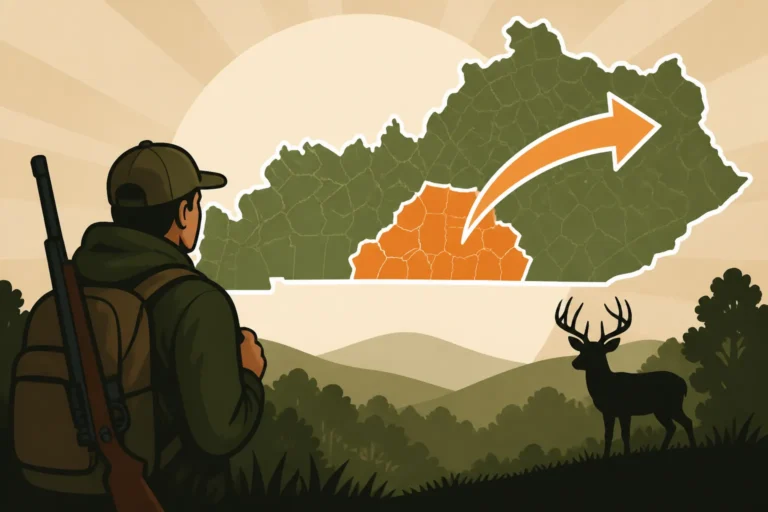
- Bear Zone Three: This is the newest addition, comprising Clinton and Wayne counties. The inclusion of these counties reflects the continued expansion of the bear population westward. To carefully manage this newer expansion and avoid over-harvest, Zone Three typically has the most conservative hunting regulations, often with very short season windows or specific weapon restrictions. If you're looking for an archery hunt here, prepare for a shorter, more intense season, and always be vigilant about the quotas.
Knowing which zone your target hunting area falls into is crucial for accurate season dates and bag limits. The KDFWR website features detailed maps, and a good mapping app like GoHunt can layer this information directly onto your public land maps. This can be particularly helpful when scouting Kentucky Public Land Before Season.
How Zone Regulations Impact Your Hunt Plan
The zone you choose to hunt in profoundly impacts your planning. For archery hunters, this means not only precise dates but also an understanding of the overall harvest pressure. In Zones One and Two, with longer seasons, you might have more flexibility to pick your hunting days, perhaps waiting for ideal weather or peak bear activity. However, the quota system means you need to stay updated. I’ve known hunters who drove hours to their favorite spot only to find the season had closed overnight due to the quota being met. This can be a real punch to the gut. The KDFWR maintains a telecheck system and frequently updates their website, so checking daily once the season opens is a smart move.
For Zone Three, the limited window means you'll need to be even more strategic with your time. Every day in the woods counts, and you'll want to have your scouting done and stands set well in advance. Consider these zones not just as lines on a map, but as distinct management units each requiring a tailored approach. For more detailed information on specific regulations, you can delve into Kentucky Bear Zone One and Two Rules or specifically for the newer area, Kentucky's New Bear Zone Three.
| Kentucky Bear Zone | General Location (Examples) | Archery Season Type | Typical Dates (e.g., 2023-2024) | Quota System |
|---|---|---|---|---|
| Zone One | Southeastern KY (Harlan, Pike) | Archery/Crossbow | Oct 27 – Nov 10, Dec 9 – Dec 17 | Yes, Harvest-Based |
| Zone Two | Surrounding Zone One (Knox, Clay) | Archery/Crossbow | Oct 27 – Nov 10, Dec 9 – Dec 17 | Yes, Harvest-Based |
| Zone Three | Clinton & Wayne Counties | Archery/Crossbow | More restrictive, shorter windows often | Yes, Harvest-Based |
Note: Always consult the official KDFWR Hunting & Trapping Guide for the most current and exact season dates and regulations as they are subject to change annually and by quota fulfillment.
Essential Archery Bear Hunting Regulations and Preparations
Beyond just knowing the dates, a successful and legal bear archery hunt in Kentucky requires adherence to specific regulations and thorough preparation. This isn't just about avoiding a citation; it's about ethical hunting and respecting the incredible comeback story of Kentucky's black bears.
Archery Equipment Requirements and Limitations
When hunting bear in Kentucky with archery equipment, there are clear guidelines for what you can and cannot use.
- Vertical Bows: For traditional compound, recurve, and longbows, your draw weight must be at least 40 pounds. This ensures enough kinetic energy for a humane harvest. Arrows must have a minimum overall length of 20 inches, and broadheads must be fixed-blade or expandable, with a minimum cutting diameter of 7/8 inch. These aren't just arbitrary numbers; they are set to ensure a quick, clean kill.
- Crossbows: Kentucky allows crossbows during the archery bear season. Similar to vertical bows, broadheads must meet the minimum cutting diameter of 7/8 inch. Crossbows are often a popular choice for hunters seeking a slightly different challenge or with physical limitations. For a deeper dive into the nuances, check out Hunting Bear With Archery Gear in Kentucky.
- Illegal Equipment: It goes without saying, but no firearms, unless you have a valid concealed carry permit and it's for self-defense only and not for taking game during archery season. No poisoned arrows, no explosive broadheads, and no electronic devices attached to the arrow shaft that would aid in targeting. Keep it traditional within the legal framework.
Permitting, Licensing, and Reporting Your Harvest
This is where many hunters, especially those new to Kentucky or bear hunting, can get tripped up.
- Licenses and Permits: To hunt bear, you'll need a valid Kentucky hunting license (resident or non-resident) and a specific Kentucky Bear Permit. This permit is separate from your general deer or turkey permits. The Kentucky Bear Tag Cost is usually a bit higher than other game tags, reflecting the specialized nature of the hunt and the conservation efforts required. Make sure these are purchased before you head afield. Many hunters use the GoHunt app to keep track of their licenses and permits digitally, alongside using it for mapping and property boundary checks.
- Hunter Education: If you were born after January 1, 1975, you must carry proof of hunter education completion, or be hunting under the direct supervision of a qualified, licensed hunter.
- Harvest Reporting (Telecheck): This is non-negotiable and critical for managing the bear population. If you are fortunate enough to harvest a bear, you must report it via the KDFWR Telecheck system by 8:00 PM Eastern time on the day you harvest it. This immediate reporting is vital because of the quota system – it allows the KDFWR to monitor harvest numbers and close the season promptly if a quota is met. Failing to Telecheck your bear is a serious violation. Following up with the Kentucky Bear Checking Requirements will ensure you stay compliant.
- Physical Bear Check: In addition to Telechecking, all harvested bears must be presented to a KDFWR check station within 24 hours of harvest. This allows biologists to collect important data such as sex, weight, and a tooth for aging, which is crucial for population health assessment. This step is equally as important as the Telecheck.
Pre-Season Scouting and Bear Behavior
Scouting is fundamental for archery bear hunting, perhaps even more so than for deer, due to the limited season windows and the often vast, rugged terrain where bears reside. Bears are creatures of habit, driven primarily by food sources.
- Food is Key: Bears in Kentucky primarily feed on hard mast (acorns, hickory nuts, beechnuts), soft mast (berries, wild grapes), and various plants. During the fall archery season, they're often gorging themselves to build fat reserves for winter. Focus your scouting efforts around mature oak ridges, creek bottoms with soft mast, and areas where you find overturned rocks or logs, indicating they've been foraging for insects. A tool like GoHunt can help you identify differing timber types or potential food sources via satellite imagery.
- Sign and Rubs: Look for fresh tracks, scat (droppings), and claw marks on trees. Bear rubs on trees, where bears scratch and scent mark, are another excellent indicator of their presence. You might also find evidence of recent digging.
- Water Sources and Travel Corridors: Bears need water, so scout near creeks, springs, and small ponds. They also utilize distinct travel corridors, often along ridge lines, benches, or dense cover connecting food and water. These are prime spots for stand placement. When you're in rugged terrain like the Daniel Boone National Forest, learning how to use Wind and Thermals on a Kentucky Ridge becomes critical for approaching these spots undetected.
- Trail Cameras: Trail cameras can be invaluable for identifying active bear areas, understanding their travel patterns, and determining the size and sex of bears. Place them on trails leading to food sources or near active rubs.
Maximizing Your Archery Bear Hunt Success in Kentucky
Harvesting a black bear with archery equipment in Kentucky is a challenging but incredibly rewarding feat. It requires patience, precision, and a deep understanding of bear behavior and the terrain.
Understanding Bear Habits and Habitat
Kentucky's black bears thrive in the dense forests and rugged terrain of the eastern part of the state. They are incredibly adaptable but tend to gravitate towards areas that offer both ample food and security cover.
- Seasonal Movements: During the early archery season (late October/early November), bears are often heavily focused on hard mast crops, especially acorns. If it's a good acorn year, they might be scattered across wide areas of oak timber. If it's a poor acorn year, they'll concentrate on other food sources, making them more predictable. As the season progresses into December, they're still feeding but might be more focused on securing denser bedding areas as colder weather approaches. Understanding Where Southeastern Kentucky Bears Range can help narrow down your focus.
- Diurnal Patterns: While bears can be active at any time, they are often most active during the early morning and late evening, similar to deer. However, during periods of intense feeding, they can be seen throughout the day. Their sense of smell is legendary, far superior to a deer's, making scent control an absolute must.
- Habitat Preferences: Dense, mature hardwoods with a good mast crop are bear magnets. Also, don't overlook thick clear-cuts or remote hollows that offer dense cover for bedding. Bears are generally solitary animals, and they appreciate their privacy. You'll often find them in the remotest corners of places like Hunting Eastern Kentucky Coalfield Country.
Strategic Stand Placement and Scent Control
Archery hunting a bear is an intimate affair, often requiring close-range shots. This makes stand placement and rigorous scent control non-negotiable.
- Wind Direction and Terrain: Always hunt with the wind in your favor. With a bear's incredible nose, any mistake in wind direction will result in an empty stand. Use the terrain to your advantage: set up on benches, saddles, or ridges where thermals might carry your scent up or down a hollow without directly broadcasting it to a feeding area. Think about how to effectively use Wind and Thermals on a Kentucky Ridge to conceal your approach and presence.
- Funnel Points and Travel Routes: Look for natural funnels – narrow strips of timber between clear-cuts, creek bottoms that pinch down, or saddles between two ridges. Bears, like deer, use these choke points to travel. Setting up an ambush along a well-used travel route, especially if it connects a bedding area to a food source, can be highly effective.
- Visibility and Shooting Lanes: While you want thick cover for concealment, ensure you have clear shooting lanes for an ethical archery shot. Practice shooting from elevated positions or from your ground blind to ensure you can confidently make the shot when the moment arises. Remember, ideal Shot Placement on a Kentucky Black Bear is crucial for a quick, humane harvest.
- Scent Control Regiment: This cannot be stressed enough. Wear scent-free clothing, use a scent-eliminating spray, and store your hunting clothes in airtight containers. Avoid using scented soaps, deodorants, or strong-smelling foods before and during your hunt. Even walking through certain vegetation can pick up odors that bears will detect.
Taking on an archery bear hunt in Kentucky is an experience unlike any other. It challenges your skills, tests your patience, and offers a deep connection to the wild. By understanding the season dates, respecting the regulations, and preparing meticulously, you can increase your odds of a memorable and successful hunt for one of Kentucky's most magnificent creatures.
Disclaimer
The information provided in this guide is intended for general informational purposes only and is subject to change. Hunting regulations, season dates, and quotas are set by the Kentucky Department of Fish and Wildlife Resources (KDFWR) and can be modified annually or even mid-season. Always consult the official KDFWR website and the current Hunting & Trapping Guide before planning and embarking on any hunting trip to ensure you have the most accurate and up-to-date information. Compliance with all state and federal hunting laws is the sole responsibility of the hunter.