Where Southeastern Kentucky Bears Range
For hunters and outdoor enthusiasts in Kentucky, trying to understand exactly where black bears roam can feel like trying to nail jelly to a wall. These magnificent creatures are elusive, and their range isn't static, leading to a lot of confusion about where you might encounter them, especially in the rugged landscape of Southeastern Kentucky. This comprehensive guide aims to clear up that mystery, offering a detailed look into the historical re-establishment, current population dynamics, and specific regions where you're most likely to find Kentucky's growing bear population.
The Resurgence of Kentucky's Black Bear Population
Kentucky's black bear story is a true conservation success, a testament to dedicated efforts and the incredible resilience of wildlife. For generations, many Kentuckians grew up hearing stories of bears as something from a bygone era, confined to distant mountains, or perhaps even extinct within the state. But that narrative has dramatically changed, and understanding this comeback is crucial to appreciating their current distribution.
Historical Context and Conservation Efforts
Believe it or not, black bears were once common across much of Kentucky's wilderness, long before European settlement. However, as pioneers moved in, clearing land for agriculture, logging vast forests, and hunting with unchecked fervor, the black bear population plummeted. By the early 20th century, black bears were virtually extirpated from Kentucky. They were gone, a ghost of the deep woods, and it was a real loss for our state's biodiversity.
The reintroduction and natural re-colonization efforts that began in the latter half of the 20th century were nothing short of remarkable. Bears started migrating back into Kentucky from healthy populations in neighboring states like West Virginia and Virginia, particularly through the Cumberland Mountains and the Big South Fork region. The Kentucky Department of Fish and Wildlife Resources (KDFWR) played a pivotal role in monitoring and managing this resurgence, focusing on habitat protection and public education. It wasn't just about stocking animals; it was about creating an environment where they could thrive naturally once more, and their careful stewardship has paid off immensely. This long-term commitment allowed our state to once again support a robust bear population, allowing a new generation to experience the thrill of seeing or encountering these magnificent animals.
Current Population Estimates and Growth Trends
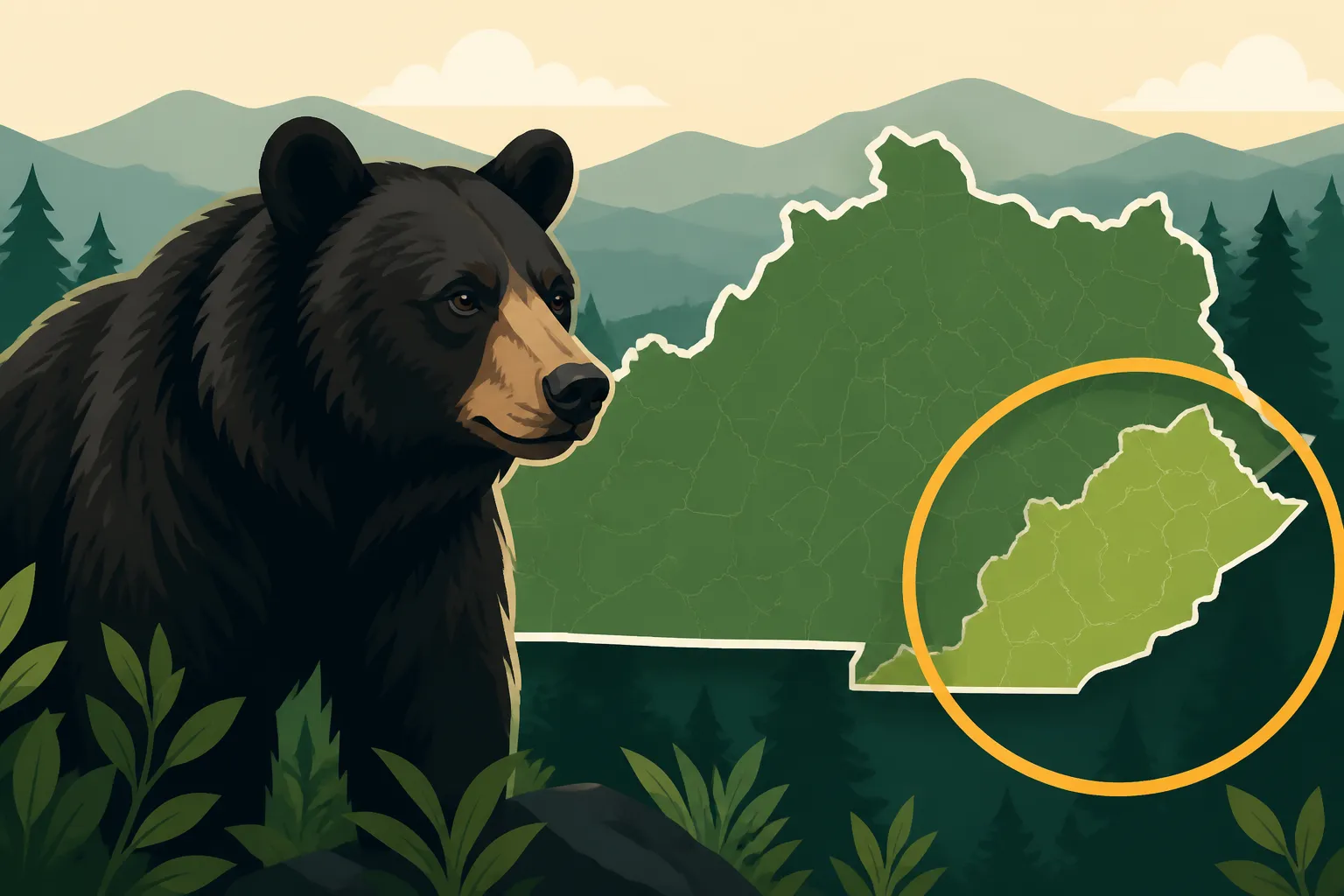
Today, the black bear population in Kentucky is not just stable but actively growing and expanding its range. While exact numbers are difficult to pin down due to the bears' secretive nature and the rugged terrain they inhabit, the KDFWR estimates that there are well over 1,000 black bears in the state, with the majority concentrated in Southeastern Kentucky. This is a dramatic increase from just a few decades ago when sightings were rare occurrences.
The growth isn't uniform, of course. Some areas have much denser populations than others, influenced by food availability, habitat quality, and human-bear interactions. What's particularly interesting is how resilient these animals are, adapting to changing landscapes and, in some cases, even learning to coexist closer to human development than previously imagined. You can learn more about the overall status of Kentucky's Black Bear Population in our detailed guide, which covers the broader statewide picture. This expansion is a dynamic process, and understanding the core areas where they've firmly re-established themselves is key to predicting where they might appear next.
Pinpointing the Core Bear Habitat in Southeastern Kentucky
When people talk about Kentucky's black bears, their minds almost immediately jump to the southeastern part of the state, and for good reason. This region is the undisputed stronghold of the black bear in the Commonwealth, offering the vast, rugged, and wild landscapes these animals need to thrive.
Key Counties and Mountain Ranges
The absolute heart of Kentucky's black bear country lies in the counties that comprise the Appalachian Plateau. Think of places like Harlan, Leslie, Letcher, Bell, Knox, Whitley, McCreary, and Wayne counties. These are the areas where bear populations are densest and where sightings are a regular, rather than rare, occurrence. Within these counties, the dominant features are the Cumberland Mountains and the Big South Fork National River and Recreation Area.
The Cumberland Mountains, with their extensive tracts of unbroken forest, steep ravines, and abundant mast crops, provide ideal habitat. Here, you'll find everything a bear needs: secluded den sites, diverse food sources like acorns, berries, and insects, and plenty of cover from both the elements and human activity. Similarly, the Big South Fork region, which straddles the Kentucky-Tennessee border, offers an immense wildland complex that acts as a vital corridor and sanctuary for bears. If you're looking for public land opportunities within these areas, places like Pine Mountain State Forest Hunting and Big South Fork Kentucky Side Access are prime examples of the type of terrain bears call home.
Natural Features Shaping Bear Distribution
It's not just the sheer acreage of forest that defines bear range; it's the specific ecological features within those forests. Black bears are highly dependent on reliable food sources, and their distribution is heavily influenced by the availability of mast crops – acorns, hickory nuts, and beech nuts, primarily – which are crucial for them to put on weight before winter denning. Areas with a diverse array of mature hardwood stands, particularly those dominated by oak, will often support higher bear densities.
Beyond food, the topography itself plays a huge role. Bears thrive in rugged, broken terrain that offers plenty of natural shelters like rock crevices, hollow logs, and dense thickets for bedding and denning. The steep slopes and deep hollows found throughout southeastern Kentucky provide this sanctuary. Water sources are also critical, and the countless small streams, creeks, and rivers that dissect the mountains offer not just drinking water but also a source of aquatic insects and other small prey. These natural features create a mosaic of habitats that, when abundant, allow bear populations to flourish.
Expansion into Adjoining Regions
While the aforementioned counties remain the core, Kentucky's black bear population is not static. Bears are explorers by nature, especially younger males seeking new territories. This natural dispersal is leading to an expansion of their range into adjacent counties and even further west and north. Counties like Clay, Laurel, Perry, and even parts of Pulaski are seeing increasing numbers of bear sightings and established populations.
This expansion means that what was once considered a rare event is becoming more common. Farmers in counties that haven't traditionally had bears are now occasionally encountering them, and hunters pursuing deer or turkey in these "fringe" areas might stumble upon bear sign or even a bear itself. This gradual but steady spread demonstrates the health and vitality of Kentucky's bear population, but it also necessitates an understanding of their adaptable nature as Bears Moving Into Central Kentucky are becoming a reality for some residents. Tools like the KDFWR's online maps and resources from platforms like GoHunt can be invaluable for tracking these trends and staying informed on current distribution patterns.
Understanding Bear Behavior and Movement Patterns
Black bears aren't just static residents of certain counties; they are dynamic creatures whose movements and habits are intricately tied to the seasons, food availability, and even their reproductive cycles. Understanding these behaviors is critical for anyone venturing into bear country, whether you're a hunter, hiker, or just a curious nature enthusiast.
Seasonal Movements and Food Sources
The life of a black bear revolves around food, particularly from spring through fall when they need to consume massive amounts of calories to build up fat reserves for winter denning. In spring, as they emerge from their dens, bears are often drawn to low-elevation areas and south-facing slopes where tender green vegetation, like skunk cabbage and emerging grasses, is the first to appear. They'll also seek out winter-killed animals and any remaining hard mast from the previous fall.
As summer progresses, their diet shifts to soft mast – berries like blackberries, raspberries, and blueberries – and insects, grubs, and larvae they find by flipping rocks and tearing apart rotten logs. By late summer and especially into fall, the focus turns almost entirely to hard mast. Acorns, hickory nuts, and beech nuts become their primary food source. Areas with abundant oak and hickory forests become prime bear habitat during this crucial time. Hunters know this well; finding a good mast crop can be key to understanding where game, including bears, will be concentrated. This seasonal foraging means a bear's location can change dramatically throughout the year. For more on this, check out our piece on Hunting Bears Over Natural Mast in the Mountains.
Denning Habits and Reproductive Cycles
As temperatures drop and food sources dwindle in late fall, black bears begin their journey toward denning. Unlike true hibernation, bears enter a state of torpor, where their metabolic rate slows significantly but they can still be roused. Den sites are incredibly varied: rock crevices, hollow trees, brush piles, or even simply a shallow depression under a fallen log. Females, especially pregnant sows, seek out more secure den sites to give birth in late winter.
The reproductive cycle of black bears is fascinating. Sows typically breed in early summer, but fertilized eggs undergo a process called "delayed implantation." This means the embryo doesn't implant in the uterine wall until late fall, only if the sow has accumulated sufficient fat reserves. If she hasn't, her body can reabsorb the embryo, a natural mechanism to ensure survival. Cubs are born in the den in January or February, tiny and helpless, and they remain with their mother for about 1.5 to 2 years, learning vital survival skills before dispersing to find their own territories. This slow reproductive rate makes conservation even more important.
Interactions with Human Activity and Development
As bear populations expand and human development encroaches on wild lands, interactions between bears and people are becoming more common. Most bears are naturally shy and will avoid human contact, but they are incredibly intelligent and opportunistic. If they learn that human dwellings or campsites provide an easy meal – whether it's garbage, pet food, or bird feeders – they will exploit it. This is where conflicts arise.
In Southeastern Kentucky, where rural communities are nestled deep within bear habitat, these interactions require careful management. Hikers, campers, and residents need to practice "bear-wise" behaviors to minimize attractants and prevent bears from becoming habituated to human food. Unfortunately, habituated bears can become bold and sometimes dangerous, often leading to their removal or euthanasia. Understanding how our actions impact bear behavior is paramount for coexistence. Instances of Bear Encounters Around Eastern Kentucky Cabins highlight the importance of being aware and prepared in these areas.
Navigating Kentucky's Bear Zone System
For hunters interested in pursuing black bears in Kentucky, understanding the state's bear zone system isn't just helpful; it's absolutely essential. The Kentucky Department of Fish and Wildlife Resources uses these zones to manage the bear population, regulate hunting pressure, and ensure sustainable harvest opportunities while allowing the population to continue to grow.
Overview of Bear Zones One, Two, and Three
Kentucky's bear zones are geographical areas defined by county lines, each with specific regulations pertaining to bear hunting seasons and methods. Historically, Kentucky has had two primary bear zones. Zone 1 typically encompassed the densest bear populations, allowing for more liberal hunting opportunities, while Zone 2 included counties with emerging or expanding populations, often with more restricted seasons or methods.
However, recognizing the continued expansion of bears, the KDFWR recently established a third zone, Bear Zone 3. This new zone includes counties that are seeing increasing bear activity but might not yet have established, huntable populations that can sustain a full season. It's a proactive step to manage the growing population responsibly and provide opportunities in areas where bears are becoming more common. Our article on Kentucky's New Bear Zone Three provides a deep dive into the specifics of this recent change and what it means for hunters. Staying informed on these zone definitions and any updates is crucial for compliance.
How Zones Impact Hunting Opportunities and Management
The primary purpose of the bear zone system is to tailor hunting regulations to the local bear population dynamics. In Zone 1, for instance, you'll generally find more robust season lengths and potentially higher quotas, reflecting a healthy, well-established bear population that can sustain a greater harvest. This allows the KDFWR to manage population growth and mitigate potential human-bear conflicts in areas with high densities.
In contrast, Zone 2 might have shorter seasons, different weapon restrictions, or even specific permit requirements designed to limit harvest numbers and allow the population to continue strengthening. Zone 3, being the newest, often starts with very conservative or experimental hunting opportunities, if any, to gather data and allow the population to further establish itself before opening up to broader hunting. This tiered approach is a sophisticated way to manage a recovering wildlife population across a diverse landscape, ensuring hunting contributes to, rather than detracts from, conservation goals. You can find detailed information on previous regulations in our guide to Kentucky Bear Zone One and Two Rules.
Understanding Zone Regulations and Boundaries
Before planning any bear hunt in Kentucky, it is absolutely non-negotiable to consult the current KDFWR hunting guide and map out your intended hunting area in relation to the bear zones. Counties can shift between zones, and regulations within each zone can change from year to year based on population surveys, harvest data, and management goals. For example, a county that was in Zone 2 last year might be moved to Zone 1, or a new county might be added to Zone 3.
Understanding these boundaries is critical to avoid violations. Imagine planning a hunt, driving hours, only to find out the county you're in has different season dates or weapon restrictions than you anticipated. This is why resources like the KDFWR's online mapping tools and even advanced scouting apps like GoHunt are indispensable. They allow you to overlay property lines, public land boundaries, and—critically—bear zone boundaries, helping you plan your hunt meticulously and legally. Always verify the current year's regulations directly from the KDFWR website before heading afield.
Here's a simplified overview of key Southeastern Kentucky counties and their historical bear zone status, though always verify current regulations with KDFWR:
| County | Primary Mountain Range | Typical Bear Zone (Historic) | Key Habitat Characteristics |
|---|---|---|---|
| Harlan | Cumberland Mountains | Zone 1 | Vast, rugged forests, high ridges, deep hollows, abundant mast |
| Leslie | Cumberland Mountains | Zone 1 | Extensive timber, steep terrain, good denning habitat |
| Letcher | Cumberland Mountains | Zone 1 | Secluded areas, dense cover, proximity to WV/VA populations |
| Bell | Pine Mountain | Zone 1 | Mix of forest and reclaimed land, diverse food sources |
| Knox | Cumberland Mountains | Zone 1/2 | Expanding populations, forested hillsides |
| Whitley | Big South Fork | Zone 1/2 | Large tracts of public land, river drainages |
| McCreary | Big South Fork | Zone 1/2 | Dense forest, wilderness feel, connects to TN populations |
| Wayne | Big South Fork | Zone 2/3 | Forested uplands, expanding range from core population |
| Clay | Cumberland Plateau | Zone 2/3 | Increasingly seeing activity, mixed forest and agriculture |
| Laurel | Cumberland Plateau | Zone 2/3 | Growing sightings, dispersal from core areas |
Safety and Coexistence in Bear Country
Encountering a black bear in the wild is an incredible privilege, but it's one that comes with a responsibility to understand and practice bear safety. As bears expand their range and more people venture into their habitat, minimizing human-bear conflicts becomes paramount for both wildlife and people.
Minimizing Human-Bear Conflicts
The vast majority of human-bear conflicts stem from bears becoming habituated to human food sources. A fed bear is a dead bear, unfortunately, as these animals lose their natural fear of humans and can become a nuisance or even a danger, often leading to their removal. This is why the first rule of bear country is: do not feed the bears, intentionally or unintentionally.
For residents in bear country, this means securing garbage in bear-proof containers, bringing pet food indoors, removing bird feeders, and cleaning outdoor grills. For campers and hikers, proper food storage is critical – using bear-resistant canisters or hanging food from trees, and never leaving food unattended. Even seemingly innocuous items like scented toiletries can attract a bear's keen sense of smell. Being diligent about attractants is the single most effective way to prevent conflicts and keep bears wild.
Essential Practices for Hunters and Outdoor Enthusiasts
For those of us who spend a lot of time in the woods, especially hunters, an understanding of bear behavior is crucial. If you're hunting in southeastern Kentucky, particularly during archery or muzzleloader seasons when bears are still active, you need to be bear-aware. When field dressing game, move the carcass away from your kill site and immediately remove any gut piles from popular trails or campsites. It's also smart to wear blaze orange during firearms seasons, even for archery or muzzleloader hunters, as bears can be mistaken for other game in low light.
Carrying bear spray is a good idea, and knowing how to use it. If you encounter a bear, remain calm, make yourself look as large as possible, speak in a deep voice, and slowly back away. Never run, as this can trigger a chase instinct. Most black bears will flee when confronted. For hunters specifically, if you harvest a bear, immediately contact the KDFWR as required for Kentucky Bear Checking Requirements. Knowing what to do in various bear encounter scenarios can literally save a life, yours or the bear's.
Reporting Bear Sightings and Incidents
The KDFWR relies on public reporting to monitor the bear population and track their movements. If you see a bear, especially in a county where they are not commonly reported, consider reporting it to the KDFWR. This data is invaluable for management decisions, helping wildlife biologists understand expansion patterns and assess population health.
Similarly, if you experience a negative interaction with a bear – perhaps a bear attempts to access your trash or property, or you have a close encounter that causes concern – it's important to report these incidents. This allows KDFWR staff to intervene if necessary, educate the public, or implement specific management strategies to address problem bears before situations escalate. Accurate reporting helps ensure a future where both bears and humans can safely share Kentucky's beautiful landscape.
Disclaimer
This article is for informational purposes only and does not constitute legal advice. Hunting regulations, bear zone boundaries, season dates, and license requirements in Kentucky are subject to change. Always consult the most current Kentucky Department of Fish and Wildlife Resources (KDFWR) regulations and official publications before planning any hunting trip or outdoor activity in bear country. It is the responsibility of each individual to know and obey all applicable laws and regulations.