Chronic Wasting Disease in Kentucky Deer
There's a quiet but deeply concerning threat lurking in the background for Kentucky deer hunters, and it's called Chronic Wasting Disease (CWD). This neurological disease is fatal to deer and elk, and its presence in even a few Kentucky counties has raised serious questions about the future of our beloved deer herd. This comprehensive guide will break down everything you need to know about CWD in Kentucky, from how it spreads to what you, as a hunter, can do to protect our deer and ensure safe hunting for generations to come.
What Exactly is Chronic Wasting Disease (CWD)?
Chronic Wasting Disease is one of those phrases that can send shivers down a hunter's spine, and for good reason. It's not like the flu or a common bacterial infection; CWD is a serious, progressive, and always fatal neurological disease affecting cervids, which include deer, elk, moose, and caribou. Its long incubation period and unique method of transmission make it a particularly insidious threat to wild populations.
The Prion Problem: How CWD Attacks Deer
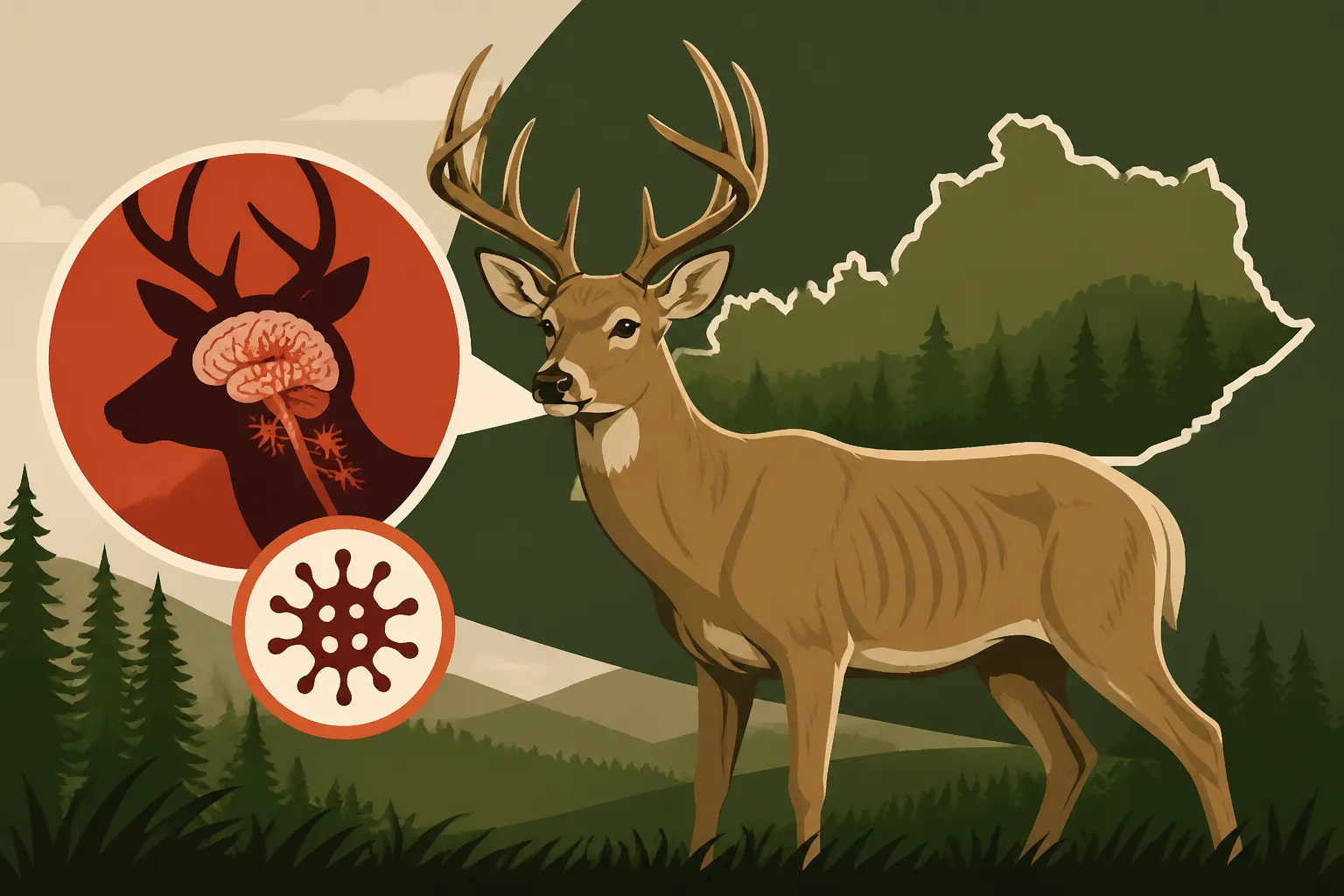
At its core, CWD isn't caused by a virus or bacteria, but by an abnormal protein called a prion. Think of prions as misfolded proteins that cause normal proteins in the brain to also misfold. This leads to a slow, irreversible degeneration of brain tissue. As these abnormal prions accumulate, they literally create sponge-like holes in the brain of an infected animal. It's a terrifying process that manifests over months or even years, slowly robbing the animal of its cognitive and physical functions. There's currently no cure, no vaccine, and no treatment. Once an animal is infected, its fate is sealed.
The disease targets the central nervous system, and the prions can be found in the brain, spinal cord, lymph nodes, and spleen of an infected animal. Even seemingly healthy deer can carry the prions during the long incubation period, unknowingly spreading the disease before showing any outward symptoms. This silent spread is a major challenge for wildlife managers trying to contain CWD.
Silent Spreaders: Transmission Routes of CWD
CWD prions are incredibly resilient and can spread in a few ways. The most direct route is animal-to-animal contact, where infected deer shed prions through saliva, urine, and feces. Imagine a buck licking a branch or an antler rub; an infected animal can leave behind these prions, which can then infect another deer that comes into contact with the same spot.
But it gets even more complicated. Prions are also shed when an infected animal dies and decomposes. These prions can persist in the environment – in soil, plants, and even water – for years, maybe even decades. This means that a healthy deer grazing in an area where an infected deer once lived or died can inadvertently pick up the prions from the contaminated environment. This indirect transmission, coupled with the prions' environmental persistence, makes CWD incredibly difficult to contain or eradicate once it takes hold in a landscape. It's truly a nightmare scenario for wildlife health.
Recognizing the Signs: What to Look For in a Deer
As hunters, we're often the first line of defense in spotting unusual behavior in the woods. Recognizing the signs of CWD in a deer is crucial, though it can be tricky because many symptoms mimic other diseases or conditions. The disease progresses slowly, so you might not see obvious signs in the early stages.
Typically, CWD-infected deer will exhibit progressive weight loss, leading to severe emaciation – hence the "wasting" in Chronic Wasting Disease. They might appear lethargic, with a lowered head and drooping ears. You could also notice behavioral changes, like a lack of fear of humans, or repetitive walking patterns. Excessive drooling is another common sign, often accompanied by teeth grinding. In advanced stages, deer might have an insatiable thirst, urinate frequently, or show poor coordination and tremors. If you ever encounter a deer displaying several of these symptoms, it's absolutely vital to report it to the Kentucky Department of Fish and Wildlife Resources (KDFWR) immediately. Do not attempt to harvest or handle the animal yourself unless instructed by wildlife officials.
The Threat to Kentucky's Deer Herd and Hunting Heritage
The introduction of CWD into any state is a game-changer for deer management and hunting culture, and Kentucky is certainly no exception. Our state boasts a rich hunting tradition and a robust deer population, making the threat of CWD particularly alarming. It's not just about a few sick deer; it's about the very foundation of what we cherish in the outdoors.
Why CWD is Such a Major Concern for Deer Populations
The primary reason CWD is a major concern is its 100% fatality rate coupled with its slow, insidious progression. Unlike acute diseases that might kill quickly or allow for recovery, CWD works silently for months or even years before symptoms appear. During this lengthy incubation period, infected deer continue to shed prions into the environment, spreading the disease to other deer. This means that by the time you see a "wasted" deer, many others in the area could already be infected without showing any signs.
Left unchecked, CWD has the potential to significantly reduce deer densities in heavily affected areas, impacting herd health and overall population stability. While Kentucky's deer population is healthy, sustained, high CWD prevalence in other states has shown that it can lead to noticeable declines, affecting not just hunters, but the ecological balance of the forest. The long-term presence of prions in the soil also creates an environmental reservoir, meaning that even if every infected deer were removed, the land could still be infectious for future generations of deer.
Economic and Social Impacts on Kentucky Hunting
Beyond the biological impact on deer, CWD casts a long shadow over the entire hunting community and the local economies that depend on it. Imagine if a popular hunting county in Kentucky experienced a significant outbreak. Hunter participation might decline due to concerns about herd health or meat safety, leading to a drop in license and permit sales. This directly impacts the KDFWR's budget, which relies heavily on these funds to manage wildlife and habitats.
Local businesses in rural Kentucky, like sporting goods stores, gas stations, restaurants, meat processors, and taxidermists, often see a surge in activity during deer season. A CWD outbreak could devastate these small businesses, affecting livelihoods and the social fabric of hunting communities. The fear and uncertainty surrounding CWD can erode public trust in wildlife management agencies and even create divisions among hunters regarding management strategies. Our shared hunting heritage, built on generations of tradition and camaraderie, could face unprecedented challenges.
Understanding the Risk to Humans and Other Animals
It's natural to wonder about the risk CWD poses to human health, especially for those who consume venison. The Centers for Disease Control and Prevention (CDC) and the World Health Organization (WHO) currently state there is no direct scientific evidence that CWD can be transmitted to humans. However, out of an abundance of caution, both organizations recommend against consuming meat from CWD-positive animals. It's always better to err on the side of safety when it comes to something as potentially serious as a prion disease.
Research is ongoing to understand if CWD prions could ever cross species barriers, and scientists are studying the potential for transmission to livestock and other animals. While there have been no confirmed cases of CWD in humans, nor widespread transmission to domestic animals, the unique nature of prions means that vigilance and caution are always warranted. This is why strict testing protocols and carcass movement restrictions, which we'll discuss shortly, are so vital for public health and wildlife management.
Kentucky's CWD Surveillance Zone: Understanding the Boundaries
The KDFWR has been proactive in its efforts to monitor and manage CWD, establishing a CWD Surveillance Zone that has evolved as new information emerges. Understanding where this zone is and why it exists is paramount for every hunter in the Commonwealth.
The Emergence of CWD in Kentucky: Key Events and Locations
Kentucky remained CWD-free for a long time, even as neighboring states detected the disease. Unfortunately, that changed in 2017 when the first CWD-positive deer was detected in Ballard County, right in the heart of our prime waterfowl hunting grounds. This initial case, followed by another in Ballard County and a third in Hickman County, quickly established the presence of CWD in Kentucky. These cases were alarming because they were found in wild deer, indicating that the disease was actively circulating in our natural populations.
Later, in 2021, a separate and concerning incident occurred involving a captive deer facility in Breckinridge County. This incident highlighted another potential pathway for disease spread and triggered significant responses from the KDFWR. The discovery of CWD in both wild and captive populations underscored the complexity of managing this disease and led to expanded surveillance efforts. If you want to dive deeper into these initial findings, you can look up resources on How CWD Reached Ballard County Twice and What Happened at the Breckinridge Captive Facility.
Defining the Current CWD Surveillance Zone Counties
Following these detections, the KDFWR established a CWD Surveillance Zone. Initially focused on the westernmost counties, the zone has expanded to include a growing list of counties where heightened vigilance is required. As of the latest regulations, the CWD Surveillance Zone now encompasses Ballard, Calloway, Carlisle, Christian, Crittenden, Fulton, Graves, Hickman, Hopkins, Livingston, Logan, Lyon, Marshall, McCracken, Muhlenberg, Simpson, Todd, Trigg, and Webster counties. Additionally, following the captive cervid detection, Breckinridge County was also added to the CWD Surveillance Zone, as well as the adjoining counties of Grayson, Hardin, and Meade. Most recently, the KDFWR further expanded the zone to include Pulaski County and its adjacent counties after a CWD-positive deer was confirmed there.
These boundaries aren't arbitrary; they are meticulously drawn based on the locations of CWD-positive animals, deer movement patterns, and scientific modeling to encompass areas where the risk of CWD is highest. Hunters in these counties face specific regulations designed to prevent the further spread of the disease. For a definitive and up-to-date list, always consult the KDFWR's official hunting guide or their website, or utilize mapping tools like GoHunt, which often integrate current regulations directly into their platform. For a complete understanding, review the Which Counties Sit in the CWD Surveillance Zone article.
How Kentucky's CWD Map Has Evolved Over Time
The CWD map in Kentucky isn't static; it's a dynamic reflection of ongoing surveillance and new discoveries. The initial cases in Ballard and Hickman counties were a wake-up call, immediately establishing a core zone in Western Kentucky. However, the detection of CWD at a captive facility in Breckinridge County signaled a new, separate front in the battle, leading to the designation of Breckinridge and its neighboring counties into the surveillance zone.
The most recent significant shift came with the detection of a CWD-positive deer in Pulaski County. This single discovery prompted another major expansion of the surveillance zone to include Pulaski and all adjacent counties. This expansion demonstrates the KDFWR's adaptive approach: when a new positive is found, the boundaries are re-evaluated to contain potential spread. This process of identifying and expanding zones based on confirmed cases highlights the persistent and evolving nature of CWD in the landscape. Understanding Why Pulaski County's Case Expanded the Map is crucial for hunters in Central and Eastern Kentucky.
| CWD Surveillance Zone Counties (as of Fall 2023) | Mandatory Testing (Select Seasons/Zones) | Carcass Movement Restrictions (Out of Zone) | Key KDFWR Action |
|---|---|---|---|
| Western KY: Ballard, Calloway, Carlisle, Christian, Crittenden, Fulton, Graves, Hickman, Hopkins, Livingston, Logan, Lyon, Marshall, McCracken, Muhlenberg, Simpson, Todd, Trigg, Webster | Yes, during specific weekends/seasons for target counties. | Only deboned meat, cleaned skull plates/antlers, hides, finished taxidermy. | Initial Detections |
| Central KY: Breckinridge, Grayson, Hardin, Meade | Yes, specific testing requirements may apply during designated periods. | Only deboned meat, cleaned skull plates/antlers, hides, finished taxidermy. |
Disclaimer
This article is for general informational purposes only and does not constitute professional advice. Laws, prices and regulations vary by location and change over time. Consult a qualified professional for guidance on your specific situation.