Handling a Bear After the Shot
There's nothing quite like the rush of a successful bear hunt in Kentucky, but that intense adrenaline can quickly turn into uncertainty the moment your shot connects. Recovering and properly handling a large, powerful animal like a black bear requires careful planning and a clear head, especially when you're deep in the rugged mountains of southeastern Kentucky. This guide will walk you through the critical steps immediately after the shot, from prioritizing your safety to field dressing and ensuring you meet all legal requirements.
Immediate Post-Shot Protocol and Safety
The moments right after you take a shot at a black bear are absolutely critical, and safety should always be your top concern. Unlike deer, bears are incredibly tough animals, and a wounded bear can be unpredictable and dangerous. It's easy to get caught up in the excitement, but a few calm, deliberate actions can make all the difference for a safe and successful recovery.
Prioritizing Hunter Safety
First and foremost, never, ever rush in immediately after the shot. I know the urge is strong to see what happened, but a wounded bear is not to be trifled with. Give the bear time. Most experienced hunters recommend waiting at least 30 minutes to an hour, sometimes even longer if you suspect a marginal hit, especially if you're hunting in dense cover common in areas like the Daniel Boone National Forest. This allows the bear to expire or to calm down and bed, making your approach much safer. Think about it: a bear that might still be on its feet could charge if it feels cornered, and you don't want to be in that situation.
Always have a plan for how you'll approach. If you're hunting with a partner, communicate clearly. Ensure everyone knows their role and maintains situational awareness. Carrying bear spray, even though black bears are generally not aggressive, is a smart move, especially if you're going into thick stuff to track. Some hunters also choose to carry a sidearm for added peace of mind, particularly if you're venturing into known bear territory along the Big South Fork border. Remember, your safety and the safety of your hunting partners are paramount. A bear, even a downed one, is a formidable creature.
Marking the Shot Location and Bear's Last Sighting
Once you've taken the shot, and after you've given it that crucial waiting period, the very next step is to pinpoint exactly where the bear was when you shot it and its last known direction of travel. This is absolutely foundational for a successful track. Don't rely on memory alone, even if you feel like you have a perfect mental picture. Trees, brush, and terrain can look incredibly different when you're actually walking through them.
Immediately mark the exact spot where the bear was standing or hit with something visible – a piece of flagging tape, your hat, or even a brightly colored item from your pack. Then, walk to the spot where you last saw the bear disappear and mark that as well. Use a GPS device or a hunting app like GoHunt to drop pins at both locations. This creates a virtual "line" that the bear likely followed. Not only does this give you a starting point, but it also helps you visualize the bear's path, which is incredibly useful if the blood trail is sparse or the terrain is challenging. Pay attention to any sounds you heard after the shot – a crash, a tumble, or silence – as these can offer clues to how far the bear traveled and its condition.
Tracking a Wounded Bear in Kentucky Terrain
Tracking a wounded bear, especially one hit with a vital shot, can be a short affair, but sometimes it turns into a real grind through thick Kentucky woods. Bears don't always leave the same kind of blood trail as deer, and their massive bodies can sometimes block external bleeding. Knowing what to look for and how to approach the track can save you a lot of time and frustration.
Reading Bear Sign and Blood Trails
Bear blood can often be darker and thicker than deer blood, sometimes almost purplish, and may clot faster. It might not be as profuse, especially if the wound is high or if the bear has a thick layer of fat. Instead of a continuous spray, you might find clumps of blood or smears on vegetation. Look not just for blood on the ground, but also on the sides of trees, bushes, and briars, as a bear's broad chest will brush against things that a deer's narrower body might clear.
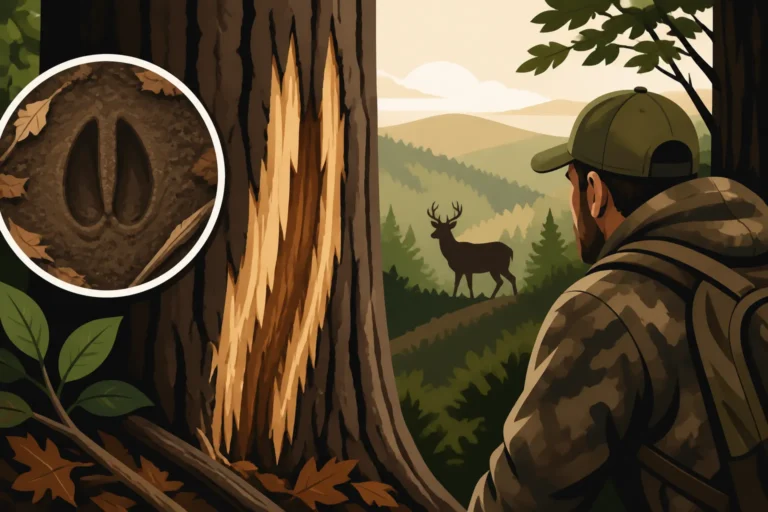
Beyond blood, bears leave a lot of other tell-tale signs. Look for freshly broken branches or disturbed leaves where their heavy body has pushed through. Their paw prints are distinct and much larger than deer tracks, sometimes with visible claw marks. You might find tufts of black hair, especially near the point of impact or where the bear has scraped against something. Even disturbed rocks or mud can tell a story. Move slowly and methodically, marking any sign you find (even if it's just a tiny speck of blood) so you don't lose the trail. If you lose the trail, back up to the last confirmed sign and search in a grid pattern. This slow, deliberate approach is key to successfully Tracking a Deer Through Kentucky Leaf Litter, and it's even more crucial for a bear.
Utilizing Dogs for Recovery Where Legal
Kentucky's regulations regarding using dogs for hunting bears are very specific, generally reserved for the regulated bear dog season windows. However, when it comes to recovering a wounded bear after a legal harvest, the rules can be different. It is generally permissible to use a leashed dog to track and recover wounded game, provided the dog is under physical control and used solely for tracking, not for the act of hunting itself. This is often done by professional tracking services.
If you find yourself with a tough track and a sparse blood trail, especially as darkness approaches, consider calling a licensed tracking dog handler if available in your area. These professionals and their trained dogs can be absolute game-changers, often locating animals that would otherwise be lost. They operate under strict guidelines to ensure ethical recovery. Before relying on this, always double-check the latest Kentucky Department of Fish and Wildlife Resources (KDFWR) regulations regarding the use of dogs for game recovery to ensure you're in compliance.
Approaching a Recovered Bear
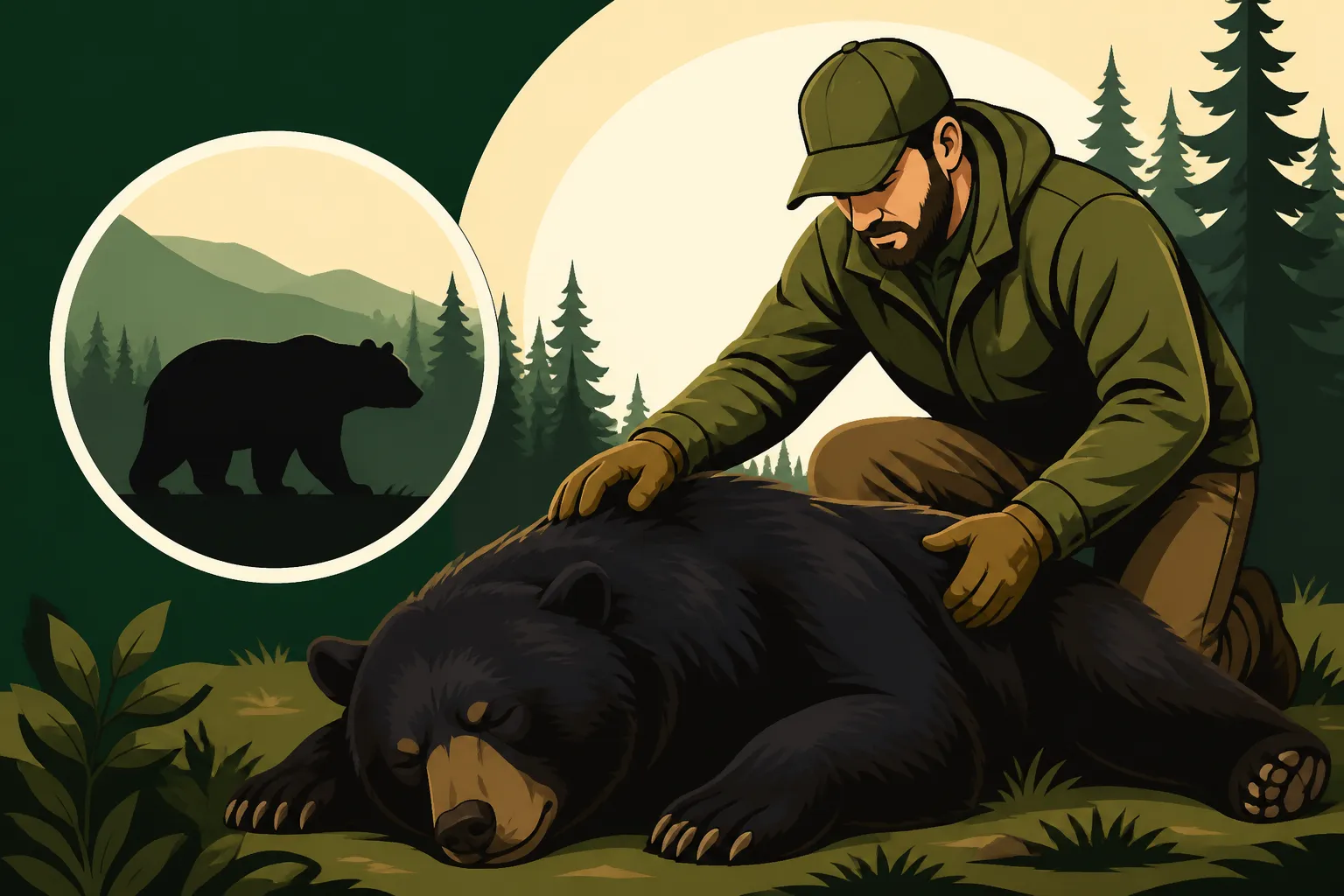
Once you've successfully tracked your bear and it appears to be down, extreme caution is still necessary. Never approach a bear from the front, especially not head-on. A bear can easily feign death and then spring up to defend itself. Always approach from the rear, making noise as you go, and observing its body language. Look for signs of life: open eyes, breathing, or any twitching.
Use a stick or your boot to poke the bear from a safe distance, ideally from behind, to ensure there's no reaction. If the bear is truly expired, its eyes will likely be glazed over and fixed, and there will be no response to touch. Only then is it safe to fully approach and admire your impressive harvest. Confirming the animal is dead before getting too close is a critical safety step that far too many hunters overlook in their excitement.
Field Dressing and Prepping Your Kentucky Bear
Once you've confirmed your bear is down and you've taken a moment to appreciate the animal, the real work begins. Field dressing a bear is a much bigger undertaking than field dressing a deer due to their size, thick hide, and fat layers. Proper and prompt field dressing is vital for preserving the meat and the hide, especially in Kentucky's varied climate.
Essential Tools for Field Dressing
For a bear, you'll need more than just your trusty hunting knife. Pack multiple sharp knives, as bear hide and fat will dull blades quickly. A sturdy fixed-blade knife is good for initial cuts, and a skinning knife can be helpful. You'll definitely want a good pair of surgical gloves, possibly multiple pairs, as this can be a messy job. Game bags are essential for protecting the meat once it's separated, and a large tarp can be a lifesaver for keeping the meat clean as you work.
A small hatchet or bone saw might be useful for larger cuts if you're planning to quarter the bear for easier transport. Rope is also incredibly handy – for tying legs back during skinning or for dragging out sections. Considering the often steep and rugged terrain in places like the Daniel Boone National Forest, a good, durable pack with ample space is also crucial, like one of the quality Packs for a Daniel Boone Forest Day Hunt that can handle heavy loads. Don't forget plenty of water for yourself and maybe even some wipes for cleanup.
Field Dressing Techniques for Bears
The most important thing to remember when field dressing a bear is to cool the carcass as rapidly and thoroughly as possible. Bears have incredibly thick fat layers that can trap heat, leading to spoilage if not addressed quickly.
Start by making a long incision from the sternum to the pelvis, circling the anus. Be careful not to puncture the intestines. You'll need to work quickly to remove all the internal organs. For bears, many hunters also remove the diaphragm and cut through the sternum to open the chest cavity as much as possible, allowing maximum airflow.
Unlike deer, where often just gutting is enough, bears often benefit from being "halved" or even quartered in the field to allow for faster cooling and easier transport, especially if you're deep in the woods. Skinning the bear immediately can also dramatically reduce heat. Many hunters choose to skin the bear where it falls, removing the hide and breaking the carcass down into manageable sections. If you plan to have the hide tanned or mounted, be extra careful with your cuts and try to keep it as intact as possible. Remember to remove the scent glands located near the anus and in the armpits; while not necessary for meat quality, they can be potent.
When it comes to the meat itself, bear meat is generally lean but can be prone to trichinosis, a parasitic worm. This means proper cooking to an internal temperature of at least 160°F (71°C) is absolutely essential. Don't take chances. Bear meat, when cooked correctly, can be incredibly delicious, and many consider it among the Best-Eating Game in Kentucky.
Handling the Hide and Meat
After field dressing, your focus shifts to getting the hide and meat cooled and transported. If you're planning a rug or taxidermy mount, careful skinning is paramount. Lay the bear on its back, make your cuts along the belly, and then skin cleanly around the legs and head, leaving the paws and skull attached to the hide. Roll the hide up with the flesh side out, and get it cooled as quickly as possible. Even in cooler temperatures, the heat trapped in a rolled hide can lead to hair slippage.
For the meat, once quartered and skinned, get it into game bags. These cloth bags protect the meat from flies and debris while allowing air circulation for cooling. If you're far from a vehicle, be prepared for a difficult drag or multiple trips. Dragging a Deer Out of a Steep Hollow is tough, but a bear is significantly heavier. Consider bringing a deer cart or sled if terrain permits, or be ready to bone out the meat to reduce weight. The faster you can get the meat cooled, ideally to refrigerator temperatures, the better the quality will be. Pack snow or ice into the body cavity if available, or just get it to a cooler with ice as soon as humanly possible.
Transport, Telecheck, and Legal Requirements
You’ve successfully recovered and field dressed your bear. Congratulations! But the job isn’t done until you’ve complied with all of Kentucky’s legal requirements. This often includes tagging, telechecking, and ensuring proper transport. Adhering to these rules is not just about avoiding fines; it’s about responsible hunting and contributing to sound wildlife management.
Checking Requirements and Tagging
In Kentucky, after harvesting a bear, one of the most important legal steps is to tag your animal immediately. Your bear permit should have a tag that needs to be securely affixed to the bear, usually through a major tendon or bone in the leg, as soon as it's harvested and before you move it from the kill site. This tag must remain attached until the bear reaches its final processing point.
The next crucial step is reporting your harvest through Kentucky's Telecheck system. This is mandatory for all harvested deer, turkeys, and bears. You'll need to report your bear by 8:00 PM Eastern time on the day you harvest it, or by 8:00 PM Eastern time on the day you retrieve it from the field if it was retrieved on a day subsequent to the harvest. You can use the KDFWR website, a mobile app, or call a toll-free number. The information you provide—such as the county of harvest, date, and sex of the bear—is vital for KDFWR biologists to accurately manage Kentucky's Black Bear Population. Make sure you understand the specific Kentucky Bear Checking Requirements before you head out into the field. Sometimes, even an app like GoHunt can help you quickly access regulations or the Telecheck portal on the fly, assuming you have cell service.
Transporting Your Harvested Bear
Transporting a bear safely and legally requires a bit of foresight. The most important thing, after tagging, is to keep the meat cool during transport. If you've quartered the bear and placed the meat in game bags, get it into coolers with plenty of ice. For the hide, if you plan on taxidermy, ensure it's also kept cool and clean. Avoid leaving the bear exposed to direct sunlight or warm temperatures for extended periods, as this can quickly degrade both the meat and the hide.
Your bear tag must remain visible and securely attached during transport. Law enforcement officers may check for proper tagging and compliance with regulations during transport. If you’re traveling through different counties, or potentially across state lines (though Kentucky’s bear hunting is generally contained within specific zones), be aware of any carcass movement restrictions or additional tagging requirements. The goal is to get your harvest home or to a processor quickly, cleanly, and legally.
Importance of Reporting and Data Collection
Every bear harvested and successfully telechecked contributes to a larger dataset that the Kentucky Department of Fish and Wildlife Resources uses for population management. This information helps biologists understand harvest rates, population health, and distribution. Without accurate data, it's impossible to set responsible quotas or season dates for Bear Hunting Southeastern Kentucky or to understand the trends in Kentucky's Bear Zone One and Two Rules.
When you take the time to properly tag and telecheck your bear, you’re doing more than just complying with the law; you’re playing an active role in conservation. This data allows KDFWR to make informed decisions that ensure a healthy, sustainable bear population for future generations of Kentucky hunters. It’s a small but significant act that underscores the ethical responsibilities of every hunter.
| Aspect | Bear Recovery Challenges | Deer Recovery Challenges |
|---|---|---|
| Size & Weight | Significantly larger and heavier, making tracking and extraction more physically demanding. | Generally smaller, lighter, and easier to handle and drag. |
| Danger Level | Wounded bears can be unpredictable and dangerous; require extreme caution and waiting periods. | Wounded deer are rarely a direct threat, but caution is still advised. |
| Blood Trail | Often darker, less profuse; can clot quickly; fat layer may obscure external bleeding. | Typically brighter red; more consistent and easier to follow, especially from a vital hit. |
| Field Dressing | Requires rapid and thorough cooling due to thick fat layer; often needs quartering in the field. | Easier to cool; usually only requires gutting for adequate cooling. |
| Hide & Meat Prep | Higher risk of trichinosis; requires higher cooking temperatures; hide removal more involved. | Generally safer to eat when cooked; hide removal is straightforward. |
| Required Tools | Multiple sharp knives, gloves, large game bags, tarp, potentially a bone saw/hatchet. | Basic hunting knife, gloves, smaller game bags (optional). |
| Recovery Strategy | Longer waiting period, cautious approach, keen eye for subtle sign; potential for tracker dogs. | Shorter waiting period, often a more direct track; dog tracking less common for deer. |
Disclaimer
Please note that hunting regulations, seasons, and licensing requirements can change. This guide is intended for informational purposes only and should not replace your due diligence. Always consult the most current Kentucky Department of Fish and Wildlife Resources (KDFWR) regulations before any hunting activity to ensure full compliance with state laws.