Grouse Hunting Cumberland Mountain Cover
For many hunters, the ruffed grouse of Kentucky’s Cumberland Mountains represents one of the most elusive and rewarding challenges our state has to offer. Trying to find these ghost birds in the steep, tangled cover can feel like searching for a needle in a haystack, often leaving you exhausted and bird-less. This guide is dedicated to helping you unravel the mysteries of grouse hunting in this rugged terrain, offering practical advice to increase your chances of a successful and fulfilling hunt.
The Challenging World of Cumberland Mountain Grouse
Grouse hunting in Kentucky, especially within the Cumberland Mountain range, is not for the faint of heart. It demands patience, perseverance, and a deep understanding of the unique environment these birds call home. Unlike other game, grouse live in a world defined by dense cover, and finding them often means earning every flush.
Understanding Kentucky's Grouse Stronghold
The Cumberland Mountains represent the last true stronghold for ruffed grouse in Kentucky. This isn't your open, rolling farmland; we're talking about incredibly rugged, steep terrain, often choked with dense rhododendron thickets, mountain laurel, and the kind of young forest regrowth that makes walking feel like swimming through treacle. The counties in this region, like Harlan, Letcher, Bell, and Knox, hold the most promise, primarily due to the vast expanses of forested public land, including parts of the Daniel Boone National Forest and various Wildlife Management Areas (WMAs).
When you think about the ideal grouse habitat here, you're picturing areas that have seen timber harvests within the last 5 to 20 years. These clear-cuts or select cuts, particularly those on north-facing slopes or in stream bottoms, offer the thick overhead canopy and dense understory that grouse crave for protection from predators and the elements. They need that cover to feel safe, to escape quickly, and to find the food sources that sustain them through the seasons. It’s a stark contrast to hunting in more open country, and it requires a completely different mindset and approach. Knowing this general range is key when you're first scouting and looking at maps.
The Decline and Current Status
It's no secret that ruffed grouse populations across much of their traditional range, including Kentucky, have seen significant declines over the past few decades. This downward trend is largely attributed to habitat loss and fragmentation, as mature forests are either left untouched or converted to other uses, failing to provide the specific early successional habitat that grouse require. The Cumberland Mountains, with their history of timbering (both commercial and for mining operations), have inadvertently provided some of the best remaining habitat due to natural regeneration of those disturbed areas.
While you won't find grouse in the numbers seen fifty years ago, there are still huntable populations, particularly in those areas actively managed for timber or that have had recent natural disturbances like ice storms. The challenge for hunters today is not just finding a bird, but finding enough birds to make a hunt worthwhile, and that means focusing your efforts intensely on the best available cover. The Kentucky Ruffed Grouse Decline has been a real blow to many hunters, but those who are willing to put in the effort can still experience the thrill of a wild flush. It also means celebrating every single bird you encounter, because each one is a testament to the resilience of nature in these mountains.
Navigating the Ideal Grouse Habitat
Success in grouse hunting on Cumberland Mountain cover hinges on your ability to recognize and access the habitat they prefer. It’s a puzzle, and each piece, from topography to plant species, plays a crucial role.
Identifying Prime Timber Cuts and Regrowth
When you're looking for grouse, you're not just looking for "woods." You're looking for very specific stages of forest regrowth. The sweet spot is generally 5 to 20 years post-timber harvest, where the canopy is starting to close but the understory is still incredibly dense. This creates a multi-layered refuge. You want to pay close attention to areas on maps that show recent logging activity. Satellite imagery, especially high-resolution options like those found on platforms like GoHunt, can be invaluable here. You can literally see the difference in vegetation density and age.
Look for areas where different age classes of timber meet—the edge of a five-year-old clear-cut bordering a twenty-year-old stand, for example. These "edge habitats" are transition zones that birds use for feeding and seeking denser cover. Often, these cuts will be on benches, along secondary ridges, or in steep creek bottoms. Don’t ignore areas that might look too thick to walk through, because those are often the spots where grouse feel safest. When looking at aerial photos, pay attention to the texture of the forest canopy. A uniform, dark green canopy often indicates mature timber, which while it may hold birds in specific spots, isn't usually prime habitat. What you're seeking are the mottled, varied textures that denote younger, regenerating growth. Understanding How Old a Cut Should Be for Grouse is perhaps the single most important factor in your scouting.
Food Sources and Seasonal Movements
Grouse are opportunistic feeders, and their diet changes with the seasons. In the Cumberland Mountains, knowing what they're eating can help you narrow down your search. Early in the season (September/October), they'll be keying in on soft mast like wild grapes, elderberries, and thornapples, often found along old logging roads, clear-cut edges, or stream beds. As the season progresses into late fall and early winter, their diet shifts to buds and catkins of trees like aspen, birch, and even some oaks. Areas with a good mix of these species will be more productive.
For instance, you might find a patch of old apple trees on an abandoned homestead in a hollow that produces excellent cover crops for grouse. Or a specific ridge that has a higher concentration of birch trees might become a hot spot once the leaves fall and the catkins become a primary food source. They often seek cover in rhododendron thickets adjacent to these food sources. The birds don't move vast distances; they're generally residents of small, relatively compact areas, so if you find good food and cover, chances are you'll find grouse. Keep in mind that severe winters or poor mast crops can also influence bird distribution and survival, so paying attention to those environmental factors can also give you an edge. Many serious hunters rely on apps like GoHunt to mark these productive patches on their maps for future reference, building a catalog of productive spots over time.
Effective Hunting Strategies in Steep, Thick Cover
Hunting ruffed grouse in the Cumberland Mountains is less about a leisurely stroll and more about a strategic, strenuous expedition. Your approach needs to be as rugged as the terrain itself.
Still-Hunting and Flushing Techniques
For many solo hunters or those without a dog, still-hunting is the primary tactic. This means moving slowly, deliberately, and stopping frequently to listen and scan the cover. Grouse often hold incredibly tight, relying on their camouflage, and you might walk right past them if you're not paying attention. The key is to zig-zag through likely cover, making noise (like breaking a stick) to try and force a flush, but then pausing and being ready for the shot.
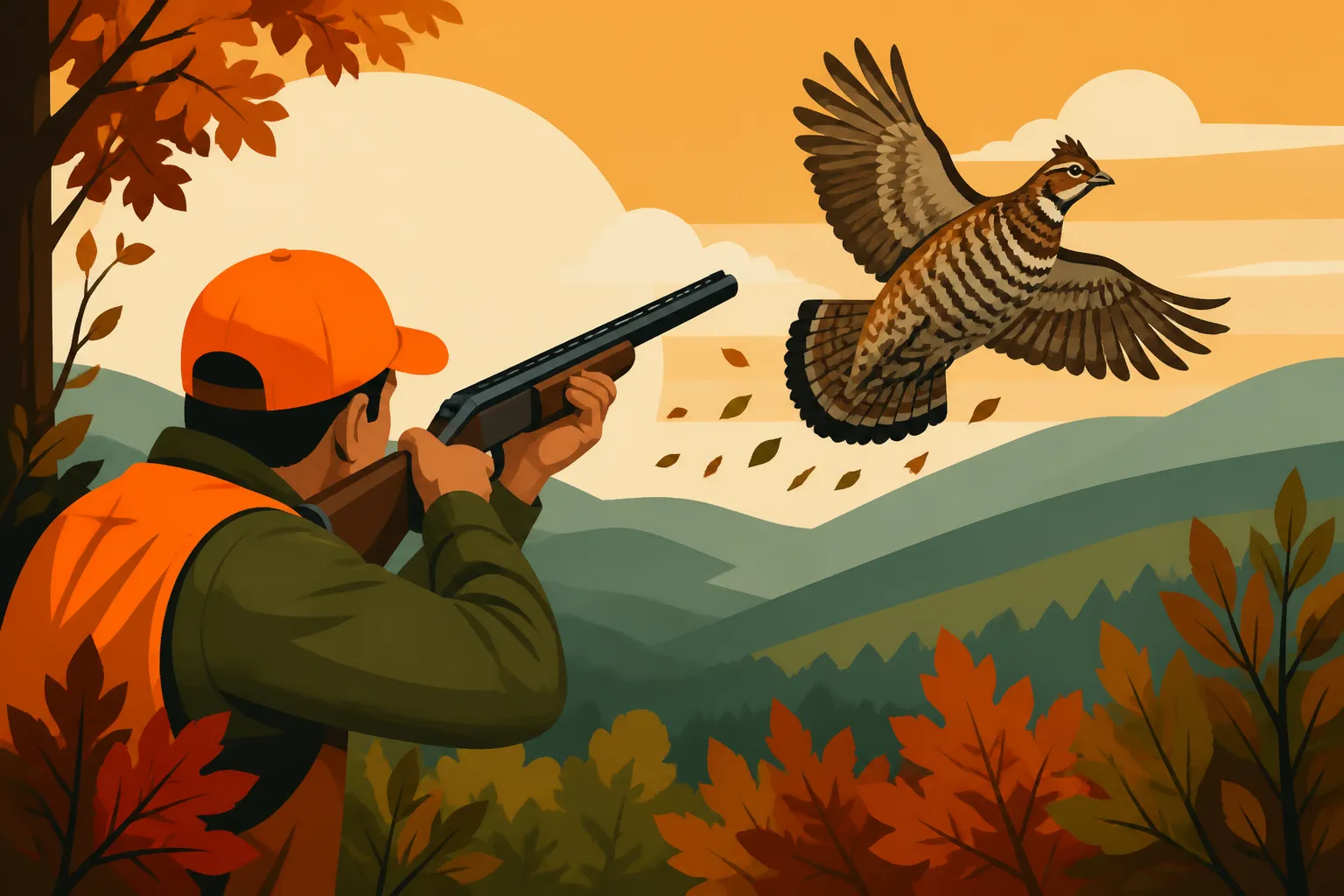
When a grouse does flush, it's typically a thunderous explosion of wings that will startle you to your core. They often fly through the cover, not above it, so you need to be quick and decisive with your gun. Expect only a fleeting glimpse, if that. I've found that walking slowly, often stopping for 10-20 seconds every few yards, and listening for the subtle sounds of the woods can sometimes reveal a bird that might otherwise have let you walk by. It’s an art form of patience and quick reflexes. You'll be surprised how many times a bird will flush from behind you after you've passed a promising spot. Focus on controlling your breathing and being mentally prepared for that sudden burst of speed. If you find yourself in extremely dense cover, don't be afraid to try Flushing Grouse Without a Dog by systematically working through the thickets, being methodical in your approach.
Working with or Without a Dog
A well-trained bird dog is an undeniable asset for grouse hunting, especially in the rugged, dense cover of the Cumberland Mountains. A good setter or pointer will locate birds that you would never find on your own, hold them on point, and allow you to get into a shooting position. They also greatly aid in retrieving downed birds from thick tangles. Dogs can cover more ground and penetrate dense thickets more effectively than a human, vastly increasing your chances of finding birds. However, even with a dog, the terrain is physically demanding, and you need to ensure your dog is conditioned for the strenuous work, especially in warm early-season conditions.
If you’re hunting without a dog, your strategy needs to adapt. You become the "dog." This means focusing on meticulous, slow movements through the densest cover. You're looking for subtle signs like droppings, feather dustings, or even just the perfect tangle of rhododendron that screams "grouse." Instead of rushing, assume a bird is always just ahead. When you walk, try to move in a way that creates natural breaks or openings in the cover, allowing yourself a shooting lane if a bird does flush. It's a much more challenging endeavor, but it's not impossible, especially if you focus on prime habitat. Regardless of whether you have a dog, using an app like GoHunt to track your path and mark flushes can help you identify productive patterns over the season. Remember, this isn't about covering miles; it's about thoroughly working productive cover.
Essential Gear for Mountain Grouse Pursuits
Your gear setup for Cumberland Mountain grouse hunting needs to prioritize durability, comfort, and safety in challenging conditions. This isn't a casual walk in the park.
Footwear, Clothing, and Safety
The steep, uneven, and often slippery terrain of the Cumberland Mountains demands robust footwear. Invest in high-quality, waterproof hiking boots with excellent ankle support and aggressive tread. You'll be climbing, descending, and traversing across steep slopes, often in wet conditions. Brands like Schnee's or Crispi offer the kind of durability and support needed. Layering your clothing is also crucial. The strenuous nature of the hunt means you'll generate a lot of body heat, but prolonged stops or descending into cool hollows can quickly chill you. Start with a moisture-wicking base layer, add an insulating mid-layer (fleece or wool), and top it off with a briar-resistant, waterproof outer shell. Expect to get snagged, scratched, and muddy.
Safety is paramount. Always wear blaze orange, even though it's not strictly required during early archery season, as it's just good practice in thick cover where visibility is limited. A good vest with plenty of game and shell pockets is essential. A reliable compass and a GPS unit (or a smartphone app like GoHunt with downloaded maps) are non-negotiable, as getting turned around in these mountains is easier than you think. Carry a first-aid kit, a whistle, a fire-starter, and plenty of water. The physical exertion can be intense, so stay hydrated and know your limits. You can find more specific advice on Boots for Walking Kentucky Ridges and Packs for a Daniel Boone Forest Day Hunt to help you prepare.
Shotgun and Ammunition Choices
For grouse, a fast-handling, lightweight shotgun is ideal. Most hunters prefer a 20-gauge or 28-gauge over a heavier 12-gauge, simply because you'll be carrying it for miles up and down hillsides, and the shots are almost always close-range. An open choke, such as improved cylinder or skeet, is highly recommended to maximize your pattern density at the typical 10-25 yard range of a grouse flush. These birds are small and fast, and you need a wide pattern to increase your chances.
Ammunition-wise, number 7.5 or 8 shot is standard for grouse. These smaller pellets provide a dense pattern without over-penetrating the bird. You're looking for a quick, clean kill, and a heavy pattern of smaller shot is more effective for this than fewer, larger pellets. Carry enough shells for the day, but don't overload yourself. Because shots are so quick and often obscured by cover, you might only get one or two good chances for every five flushes, if you’re lucky. Practicing quick mounting and swinging the gun will pay dividends in these tight quarters.
| Aspect of Hunting | Without a Dog (Still-Hunting) | With a Dog (Point/Flush) |
|---|---|---|
| Pace | Very slow, deliberate, frequent stops | Faster, dog covers ground ahead |
| Cover Focus | Meticulous examination of dense thickets | Dog penetrates thickets, locates hidden birds |
| Flushing | Unexpected, often at close range | More controlled, allows hunter to prepare |
| Retrieval | Very challenging in thick cover | Dog greatly aids in finding downed birds |
| Physicality | High, as hunter navigates all terrain | High, but dog covers more ground, hunter follows |
| Scouting | Essential for identifying likely micro-habitats | Still very important, but dog's nose adds another layer |
| Gear Importance | Navigation and personal safety tools are critical | Same, plus dog training and tracking gear |
Disclaimer
Always consult the most current Kentucky Department of Fish and Wildlife Resources regulations before heading afield. Hunting laws and seasons can change, and it is your responsibility to be informed and compliant.