Hunting the Archery-Crossbow Either-Sex Elk Season
Drawing an archery-crossbow either-sex elk tag in Kentucky is like winning the lottery for many hunters. The sheer difficulty of securing one means that when you finally get that golden ticket, the pressure is on to make the most of it. This isn't just another deer hunt; it's a monumental opportunity to pursue one of North America's most magnificent game animals right here in the Bluegrass State. This comprehensive guide is designed to help you navigate every aspect of this unique hunt, from understanding the regulations to field care, ensuring you're as prepared as possible to seize your moment.
Navigating Kentucky's Archery-Crossbow Either-Sex Elk Season
Getting an elk tag in Kentucky, especially an archery-crossbow either-sex one, is a rare privilege. Unlike many Western states where drawing an elk tag is more common, Kentucky's herd, while robust and impressive, has limited tags available each year. This makes every hunter who draws one part of an exclusive club, entrusted with the opportunity to pursue an animal that truly embodies wild Kentucky. Understanding the nuances of this specific season, its rules, and what an "either-sex" tag entails, is your first critical step.
Understanding the Unique Season Rules
Kentucky's elk seasons are highly structured, and the archery-crossbow either-sex hunt is no exception. The Kentucky Department of Fish and Wildlife Resources (KDFWR) meticulously plans these seasons to manage the herd effectively while providing hunting opportunities. When you draw an archery-crossbow either-sex tag, it's crucial to know your specific season dates, which unit you're assigned to, and the legal equipment. These details are explicitly outlined in your permit and the annual hunting guide. You're restricted to specific dates and usually a particular Elk Hunting Unit (EHU). For instance, an early September hunt will present very different challenges and opportunities than a late September or early October hunt, especially regarding elk vocalization and rut activity. It's also vital to confirm your weapon type. While the permit specifies archery-crossbow, ensure your chosen equipment, including broadhead type and draw weight, meets all legal requirements. Remember, compliance isn't just about avoiding a ticket; it's about ethical hunting and respecting the resource. If you're looking into the application process, it's worth checking out resources on Kentucky Elk Application Window Dates to stay on top of deadlines.
Maximizing Your Either-Sex Opportunity
An "either-sex" tag grants you the flexibility to harvest either a bull or a cow elk. This flexibility is a significant advantage, especially in an archery or crossbow season where close encounters are paramount. While the allure of a bugling bull is undeniable, targeting a cow can often lead to higher success rates, particularly if you're unfamiliar with elk behavior or hunting highly pressured areas. Cows are often less wary and travel in larger, more predictable groups. However, if the rut is in full swing during your season, you might find more success locating bulls by listening for bugles and understanding their movements. You'll need to develop strategies for both scenarios. For example, during the peak of the rut, focusing on aggressive calling and trying to draw out a bull could be your primary tactic. But if the rut is winding down or hasn't started, locating feeding areas or dense bedding cover where cows are likely to congregate might be more effective. The choice isn't just about what you want to shoot, but what the conditions and the elk population in your specific unit are presenting. This is where truly understanding Kentucky's Seven Elk Hunting Units comes into play, as each unit can have distinct characteristics.
Pre-Hunt Preparation: Scouting and Research
Even with a tag in hand, the real work is just beginning. Elk are enormous animals that require vast amounts of feed and cover, and they move across rugged terrain. Effective scouting and diligent research before you ever step foot in the woods are absolutely non-negotiable for an archery or crossbow elk hunt in Kentucky. You need to become intimately familiar with your assigned unit, even if it's just from behind a screen.
E-Scouting and Topographic Analysis
Before you burn a single drop of gas, you need to dive deep into digital maps. Tools like GoHunt or OnX Hunt are invaluable for this. Start by identifying the boundaries of your assigned Elk Hunting Unit. Then, look for key terrain features: steep ridges, deep hollows, drainages, benches, saddles, and potential water sources. Elk, much like deer, often use saddles and benches as travel corridors to avoid climbing straight up and down mountains. Identifying these natural funnels can give you a significant advantage. Pay close attention to vegetation changes as well. Areas of mature timber will hold different appeal than recent clear-cuts or dense regrowth, especially for bedding and feeding. Look for any public access points, logging roads, or old trails that might lead you deeper into potential elk country. Consider how prevailing winds will affect different parts of the terrain. A good e-scouting session can reveal numerous potential hunting spots and entry/exit routes, saving you precious time and effort once you're on the ground. This initial homework is critical for getting a lay of the land, especially if you're new to the area.
On-the-Ground Reconnaissance and Sign Reading
Once you've narrowed down some promising areas on your maps, it's time to hit the dirt. Nothing replaces actual boots-on-the-ground scouting. During the spring or summer, long before your season opens, spend as much time as possible exploring your unit. Look for fresh elk sign: tracks, droppings, rubs on trees, and wallows. Wallows, muddy depressions where elk roll to cool off and deter insects, are prime locations to set up an ambush, especially during warmer periods. Identify bedding areas, which are often on secluded benches or thick areas with good visibility downhill. Locate primary feeding areas, which can vary from acorns in oak forests to lush grasses in clearings or reclaimed mine land. Pay attention to water sources, as elk need to drink regularly.
When scouting, try to mimic a hunting scenario. Walk slowly, quietly, and observe. What are the predominant wind patterns? Where could an elk approach from? Where would you set up a stand or blind for a shot within archery range? Even if you don't see elk during your scouting trips, finding fresh sign confirms their presence and helps you understand their travel patterns. Also, observe any human pressure – if you see lots of boot prints or old tree stands, you might need to hike deeper to find less disturbed animals. Learning to read the subtle clues elk leave behind is a vital skill.
Understanding Elk Movement and Habitats
Elk behavior is heavily influenced by time of year, weather, and pressure. During the archery-crossbow season, which often coincides with portions of the rut, understanding elk vocalizations can be a game-changer. Bugling bulls are actively seeking cows, and while it's thrilling, it also makes them vulnerable. Cows, on the other hand, are more focused on feeding and tending to calves. Knowing when Kentucky elk bugle can significantly inform your calling strategies. Early in the season, before the peak rut, elk are often in larger bachelor groups or cow/calf herds, and their movements might be more predictable, centered around food and water. As the rut approaches, bulls become more solitary or gather harems, and their movements become more erratic as they chase cows and challenge rivals.
Weather plays a huge role too. Hot temperatures will push elk into cooler, thicker cover during the day, making them primarily crepuscular (active at dawn and dusk). Cooler temperatures might see them more active throughout the day. Understanding the unique habitat of the Kentucky Elk Restoration Zone, much of which is reclaimed coal mining land interspersed with hardwood forests, is also key. These varied habitats offer different challenges and opportunities. Sometimes, Glassing an Elk Restoration Zone Meadow can be a productive way to locate animals from a distance.
Archery and Crossbow Gear for Kentucky Elk
Hunting elk with archery equipment, especially in the rugged terrain of Eastern Kentucky, demands a serious and well-thought-out gear setup. You're not just shooting at a target; you're preparing to take down a magnificent animal that can weigh upwards of 700 pounds. Every piece of gear, from your bow to your broadheads, needs to be reliable, effective, and perfectly suited to the task.
Bow/Crossbow and Broadhead Selection
For an archery-crossbow either-sex elk hunt, your weapon is your most critical tool. If using a vertical bow, ensure it's tuned perfectly and you're consistently shooting tight groups out to your maximum ethical hunting range, typically 40-60 yards for most hunters. A compound bow with a draw weight of 60-70 pounds is generally recommended to ensure sufficient kinetic energy for penetration on an elk. For crossbows, a modern crossbow with a good scope and consistent accuracy is essential. Practice shooting from various positions – standing, kneeling, and from a ground blind – as you won't always have a perfect setup in the field.
Broadhead selection is paramount. Fixed-blade broadheads are often favored for elk due to their robust construction and reliable penetration, especially on bone. Examples like the Iron Will Outfitters Wide, QAD Exodus, or Slick Trick Magnum are popular choices. Mechanical broadheads can also be effective if they are designed for large game and have a proven track record of durability and deep penetration. Regardless of your choice, ensure your broadheads are razor-sharp and your arrow FOC (Front of Center) is optimized for penetration. You need to be confident that your setup can deliver a lethal blow.
Essential Optics and Calling Gear
While Kentucky elk hunting isn't typically defined by vast, open landscapes like the West, quality optics are still indispensable. A good pair of 10×42 binoculars (or even 12×50 if you're doing a lot of glassing from higher vantage points) will help you pick apart distant hillsides, spot elk moving through timber, and identify sign. A rangefinder is absolutely non-negotiable for archery and crossbow hunting to ensure you know the precise distance to your target before taking a shot. For a deeper dive into optimal choices, looking into Binocular Choice for Kentucky Whitetails can offer some transferable insights, even if elk are bigger!
Calling gear is another vital component, especially during the rut. A good bugle tube and a variety of cow calls (mouth reeds, diaphragms, or external calls) are essential. Practice making realistic cow chirps, mews, and aggressive bull bugles. Knowing when and how to use these calls can mean the difference between drawing an elk into range or scaring them off. For specific advice, check out Elk Calls and Cow Decoys. You might also consider carrying a small, lightweight decoy, particularly a cow decoy, to draw in an inquisitive bull or even a wary cow herd into bow range.
Clothing and Comfort for Mountain Hunts
Kentucky's elk zone in the southeastern part of the state features rugged, mountainous terrain. You'll be doing a lot of walking, climbing, and sitting, often in variable weather conditions. Layering is key. Start with a moisture-wicking base layer, add insulating layers (fleece or synthetic down), and top it with a quiet, durable, weather-resistant outer shell. Brands like Sitka Gear, KUIU, or First Lite offer excellent options designed for demanding hunts. Pay attention to camouflage patterns that blend into the deciduous forests of Kentucky.
Comfortable, supportive hiking boots with good ankle support are absolutely critical. You'll be navigating steep slopes, uneven terrain, and potentially wet conditions. Waterproof boots are a smart investment. Don't forget high-quality wool or synthetic socks to prevent blisters and manage moisture. A comfortable day pack capable of carrying water, snacks, emergency supplies, your calls, and potentially extra layers is also essential. Remember to pack light, but be prepared for sudden weather changes. Given the need for reliable footgear, articles like Boots for Kentucky Hollows and Creek Bottoms could provide helpful context.
Effective Hunting Strategies for the Elk Zone
Hunting elk with an archery or crossbow requires patience, persistence, and a keen understanding of elk behavior and the terrain. The vastness of the Kentucky elk zone and the animals' ability to cover ground quickly mean you need to be strategic in your approach. Whether you're actively pursuing a bugling bull or patiently waiting for a cow herd, having a well-thought-out plan increases your chances of success.
Spot-and-Stalk Techniques in Eastern Kentucky
While traditional Western spot-and-stalk often involves long-range glassing across open country, Eastern Kentucky presents a different challenge with its dense timber and undulating hills. Here, spot-and-stalk typically involves slowly moving through areas of good visibility, like ridgetops, clear-cuts, or reclaimed land, stopping frequently to glass and listen. Once elk are spotted or heard, the stalk begins. This requires meticulous planning, using terrain features (rises, hollows, thickets) to remain concealed, and paying constant attention to wind direction. Elk have an incredible sense of smell, and one whiff of human scent will send them scattering.
When stalking, move at a snail's pace, placing each foot carefully to avoid snapping twigs or rustling leaves. Use calls sparingly, if at all, during a stalk to avoid revealing your position prematurely. Instead, focus on closing the distance quietly, aiming to get within 60 yards or less for an ethical shot. This method can be incredibly rewarding but also physically demanding. It's similar in principle to Spot-and-Stalk Tactics for Pine Mountain Bears, just with a different quarry.
Ambush Points and Patience
Sometimes, the most effective strategy isn't to chase, but to wait. Setting up an ambush point near known elk travel corridors, bedding areas, wallows, or feeding grounds can be highly productive, especially when the elk are not actively bugling. Scout for fresh sign—tracks, droppings, and rubs—to identify these high-traffic areas. Consider setting up a ground blind or a well-concealed tree stand overlooking these spots. A ground blind brushed into natural cover can be particularly effective, offering concealment and allowing for more movement. For instance, Using a Ground Blind on Kentucky Public Land details how to effectively set up for such scenarios.
Patience is your greatest virtue here. Arrive at your ambush point well before daylight and stay until dark. Elk can appear suddenly, seemingly out of nowhere. Be prepared for long sits, and make sure your setup allows for comfortable, quiet movement to draw your bow or shoulder your crossbow when the moment arrives. Consider how the wind will shift throughout the day and how elk might approach your position.
Calling Strategies for Kentucky Elk
Elk calling can be one of the most exciting and effective ways to hunt, particularly during the rut. If your season aligns with the peak of the rut, using a combination of cow calls and bull bugles can be incredibly effective. Start with softer cow calls to gauge interest. If you hear a bull bugle, you can respond with a challenge bugle or more excited cow calls to draw him in. Remember that not every bugle is a challenge; sometimes, it's just a location call. Learn to interpret their vocalizations.
However, calling too aggressively or at the wrong time can also spook elk. In heavily pressured areas, elk can become "call-shy." Sometimes, a softer, more subtle approach using only cow mews and chirps can be more effective than a full-on bugle battle. If you're hunting post-rut or a more heavily hunted area, focus on locating fresh sign and using subtle calls to draw in curious animals, rather than trying to challenge dominant bulls. Mastering Calling a Southeastern Kentucky Bull Elk will be a huge asset on your hunt.
Post-Harvest: Field Dressing and Recovery
You've done the work, made the shot, and your elk is down. Congratulations! But the job isn't over. This is where the real physical challenge begins. An elk is a massive animal, and proper field dressing and recovery are crucial to preserving the meat and honoring your harvest. Being prepared for this stage is just as important as the hunt itself.
Field Dressing and Initial Meat Care
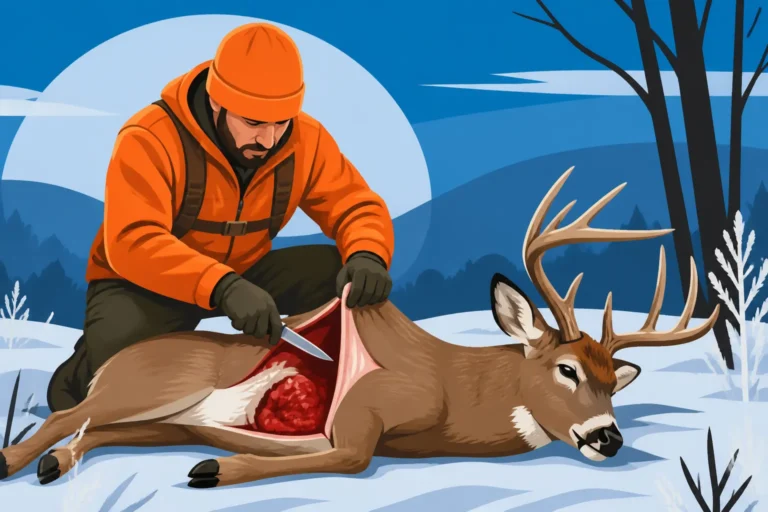
When an elk hits the ground, the clock starts ticking, especially if temperatures are warm. Your immediate priority is to field dress the animal to cool the carcass as quickly as possible. This means removing the entrails. For elk, many hunters opt for the "gutless method," which involves skinning and quartering the animal in place without removing the internal organs. This method is often preferred for large animals in steep or remote terrain because it eliminates the need to move the heavy guts and allows you to pack out smaller, more manageable sections of meat.
Regardless of the method, work quickly and cleanly. Use a sharp, sturdy field dressing knife and wear gloves. Once the meat is exposed, ensure it cools down. If you're far from a cooler, game bags are essential. Use breathable game bags (cotton or synthetic mesh) to protect the meat from flies and dirt while allowing it to air out. If temperatures are above 40°F, you need to prioritize getting that meat on ice as soon as possible. Understanding proper techniques is vital for Butchering a Deer at Camp, and many of those principles apply, just on a much larger scale.
Recovery and Transport Challenges
An elk can be down in a tough spot—at the bottom of a steep hollow, deep in thick timber, or miles from the nearest road. Recovering it is often the most physically demanding part of the hunt. If you've used the gutless method, you'll be packing out the quarters, backstraps, tenderloins, and trim meat in a good frame pack. This usually requires multiple trips, especially if you're hunting solo or with a small group. Each quarter alone can weigh 80-100+ pounds.
Consider bringing a game cart if the terrain allows, but much of Kentucky's elk country is too rugged for carts. Plan your extraction route before the hunt. How will you get the meat out? Do you have enough help? Are there logging roads or trails you can use? Sometimes, it might involve hiking in several miles to get to an animal, then several more miles out with heavy loads. Having a good Packs for a Daniel Boone Forest Day Hunt that can double as a frame pack for quarters will serve you well. Be prepared for a long day (or two) of hard work.
Telechecking and Regulations Specific to Elk
After all the effort of the hunt and the recovery, don't forget the final, critical step: reporting your harvest. In Kentucky, all harvested deer and elk must be telechecked. This means reporting your kill through the KDFWR website or phone system by midnight on the day the animal is recovered. You'll need your customer ID, the animal's specific details (species, sex, county of harvest, date, etc.), and your permit number.
Beyond the telecheck, be aware of any specific regulations regarding elk carcasses, particularly if you are in a Chronic Wasting Disease (CWD) surveillance zone, though currently, Kentucky's CWD concerns are primarily deer-focused. Always consult the most current KDFWR hunting guide for any updates or specific requirements for elk. Ensuring you comply with all reporting requirements is not just a legal obligation but also helps KDFWR manage the state's incredible elk herd for future generations.
| Aspect | Archery/Crossbow Elk Hunt | Considerations for Success |
|---|---|---|
| Permit Rarity | Extremely difficult to draw an either-sex tag. | Maximize every opportunity; consider cow harvest for higher success. |
| Terrain | Rugged, steep, dense timber, reclaimed mine land. | E-scout with topographic maps; on-the-ground recon to identify funnels/bedding. |
| Season Timing | Often coincides with parts of the rut. | Adapt calling and tactics based on peak rut activity. |
| Weapon Choice | Compound Bow (60-70lb), Crossbow. | Proper broadhead selection (fixed blade recommended), excellent shot placement. |
| Optics | 10×42/12×50 Binos, Rangefinder. | Crucial for identifying elk at a distance and confirming shot range in varied terrain. |
| Calling | Bugle tubes, various cow calls (mews, chirps). | Learn nuances of elk vocalizations; adapt to pressured animals. |
| Strategy | Spot-and-stalk, ambush points, calling. | Patience is key; focus on wind direction; be prepared for long sits and quiet movements. |
| Post-Harvest | Gutless method often preferred due to size/terrain. | Plan for heavy packing (multi-trips), use game bags, cool meat quickly. |
| Regulations | Telecheck required, adhere to specific unit/season dates. | Double-check current KDFWR guide; ensure all legal requirements are met. |
| Physical Demands | Very high; requires strength, endurance, mental fortitude. | Train beforehand; pack light but adequately; be prepared for arduous recovery. |
Disclaimer
The information provided in this guide is for general informational purposes only and is subject to change. Hunting regulations, season dates, and specific rules are determined by the Kentucky Department of Fish and Wildlife Resources (KDFWR) and can be updated annually. It is the responsibility of every hunter to consult the most current official KDFWR hunting guide and any applicable local regulations before heading afield. Safety should always be your top priority.