Calling a Southeastern Kentucky Bull Elk
Calling a bull elk in the rugged, expansive terrain of Southeastern Kentucky can feel like searching for a needle in a haystack, especially when those bulls seem to go silent or move through dense timber like ghosts. It's a truly challenging hunt, and many hunters struggle to connect with the elk they hear bugling in the distance. This comprehensive guide is designed to equip you with the knowledge and tactics needed to confidently call a bull elk in Kentucky's unique landscape, turning those distant bugles into up-close encounters.
Understanding the Southeastern Kentucky Elk Rut
The elk rut in Kentucky is a spectacle, but it presents its own unique set of challenges compared to the vast Western landscapes. We're talking about steep, timbered hills, reclaimed strip mines, and dense pockets of cover where a bull can seemingly vanish into thin air. Knowing when and how the elk behave in this specific environment is your first step toward success.
When Kentucky Elk Bugle
The timing of the rut can vary slightly year to year, influenced by weather and moon phases, but generally, you can expect the peak bugling activity to kick off in late September and run strong through the first couple of weeks of October. This is when the bulls are most vocal, challenging each other and gathering cows, making it the prime window for calling them in. Early season, before the cows are fully ready, you might hear some sporadic bugles, but the true vocalizations really ramp up once those cows come into estrus.
It's not just about the calendar date, though. Pay attention to the weather. Cooler temperatures, especially crisp mornings after a cold front, tend to ignite more bugling. Conversely, a string of hot, humid days can make bulls quieter and more lethargic, pushing their activity to cooler periods like dawn and dusk. Understanding When Kentucky Elk Bugle can give you a significant advantage, helping you plan your hunt for the most opportune moments.
Elk Behavior During the Rut in the Coalfields
Kentucky's elk inhabit a landscape that's a mix of dense hardwoods, thick regenerating forests, and the open grasslands of reclaimed coal mines. This diverse habitat directly influences how elk behave during the rut. Unlike vast, open Western ranges, Kentucky bulls often hold tighter to cover, using the topography and vegetation to their advantage. They might bugle from a thick clear-cut, challenging other bulls without exposing themselves in the open.
You’ll find herd bulls actively defending their harems, pushing cows into the thickest pockets of timber or using the steep hollows for concealment. Satellite bulls, often younger or less dominant, will skirt the edges of these harems, trying to sneak in and breed a cow. They are often more susceptible to calling, especially if you can convince them a lone cow is nearby or a smaller bull is encroaching on their territory. Their movements are dictated by food, water, and security cover, often leading them along benches, saddles, and ridge lines, rather than wide-open plains.
Reading the Environment
Successfully calling a bull elk in Southeastern Kentucky demands more than just making the right sounds; it requires a deep understanding of the environment you're hunting in. The steep, often broken terrain means thermals play a huge role. In the mornings, air currents will typically rise, carrying your scent and sounds uphill. In the evenings, they fall, pulling your scent down into the hollows. Ignoring these subtle air movements is a surefire way to get busted by a wary bull.
Look for signs of recent elk activity: fresh tracks in muddy creek beds, rubbed trees where bulls have polished their antlers, and well-used game trails. These tell you where elk are moving and potentially staging. Additionally, the mix of timber and open fields on reclaimed mine lands means you need to adjust your approach. Open areas might call for longer-range glassing with good optics and more cautious, subtle calling, while dense timber requires you to get closer and be prepared for a quick, close-range shot. Understanding the contours and cover is crucial for anticipating elk movement and setting up effectively. Optics for Glassing Reclaimed Mine Land can be incredibly helpful here.
Essential Elk Calls for Kentucky Hunters
The world of elk calling can feel overwhelming with all the different types and brands out there. For Kentucky's unique hunting environment, you don't need every call under the sun, but you do need to master a few key ones to effectively communicate with bulls.
Cow Calls and Estrus Chirps
These are arguably the most important calls in your arsenal, often more effective than bugles, especially for drawing in wary or satellite bulls. Cow calls mimic the sounds of an individual cow elk, and estrus chirps signify a cow that is ready to breed. These sounds are universal attractants for bulls of all sizes. They speak to a bull's fundamental drive: reproduction.
There are various types of cow calls: diaphragm calls that fit in your mouth, external reed calls, and squeeze bulb calls. Each has its pros and cons. Diaphragm calls offer hands-free operation and versatility, allowing you to seamlessly transition from chirps to mews, but they take practice to master. External reed calls are easier for beginners to pick up and produce consistent sounds. I've had great success with Phelps Game Calls and Rocky Mountain Hunting Calls. Start with soft, pleading mews, adding a few estrus chirps if you hear a bull bugle. Remember, subtlety can often be more convincing than aggressive loudness, especially when dealing with elk that have likely heard a lot of calling pressure.
Mastering the Bugle Tube
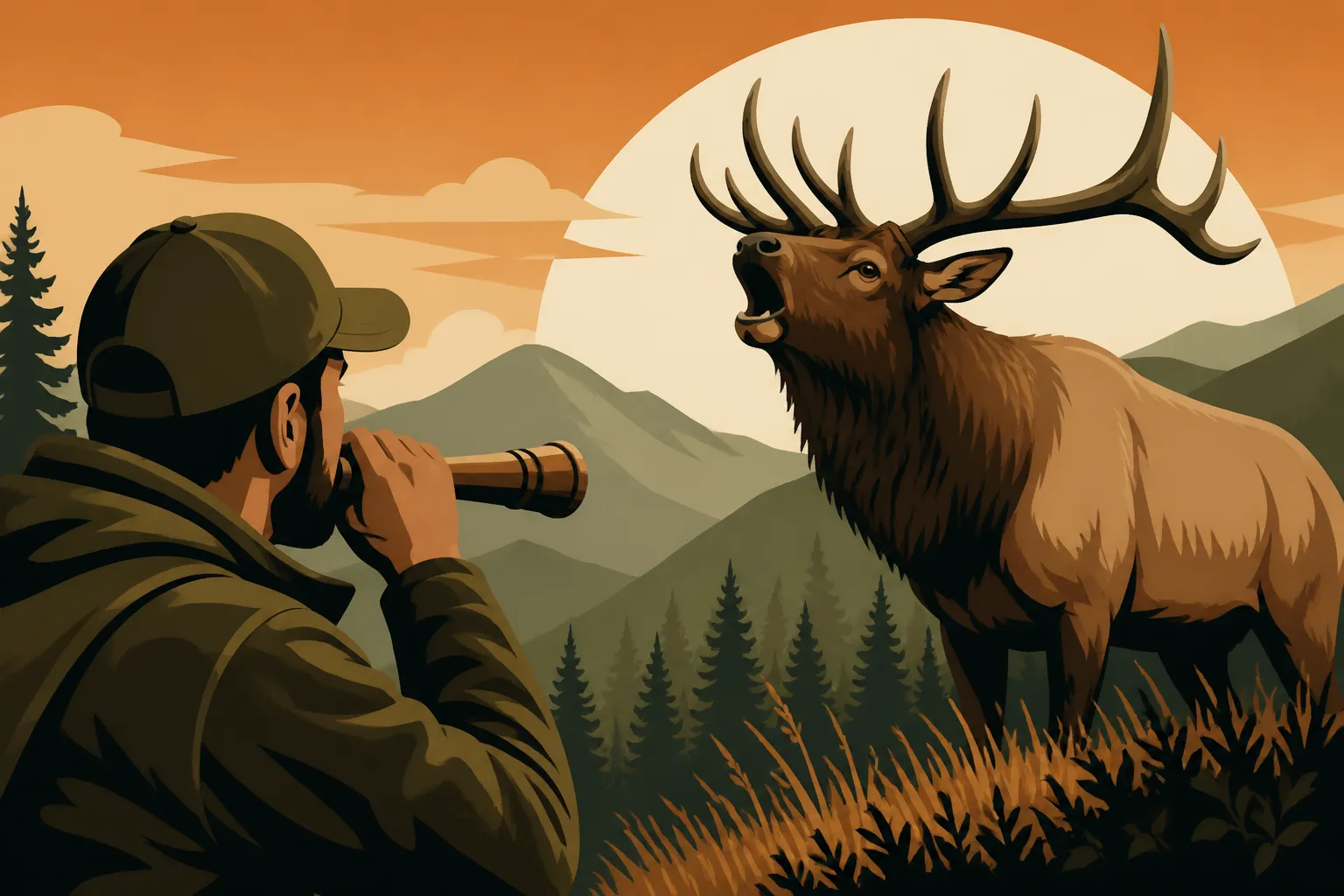
The bugle tube is synonymous with elk hunting, and it's your tool for challenging other bulls, locating elk, and expressing dominance. However, in Kentucky, knowing when and how to use it is key. Over-bugling can spook pressured bulls or alert other hunters to your presence. Your bugle tube, often combined with a diaphragm call, allows you to create realistic bull sounds, from the initial roar to the chuckles and grunts that follow.
When a bull bugles in the distance, you can respond with a challenge bugle, but often a simpler, less aggressive "locate" bugle or even just a cow call is a better initial response. If you get a strong response, then you can decide to ramp up the aggression. Practice your bugles to sound authentic, mimicking the natural rhythm and inflection of a real bull. Use your bugle tube to project sound, but also learn to muffle it for closer-range, subtle challenge sounds. Think of it as a conversation; you wouldn't shout every word. For Rifles Built for a Southeastern Elk Hunt, pairing a reliable firearm with solid calling can be deadly.
Combining Calls for Realism
The true artistry of elk calling comes from combining different sounds to create a realistic scenario. Few situations in the wild involve just a single cow mewing or a bull bugling in isolation. Often, you'll hear a mix of cow and calf mews, a bull bugling in response, and maybe even the sounds of rubbing or footsteps. Your goal is to paint an auditory picture that convinces a bull something real is happening.
Start with a few cow mews to gauge interest. If a bull responds, you might follow up with an estrus chirp or two. If he sounds like he's moving your way, consider adding a soft, guttural "chuckle" on your bugle tube, signaling that a bull is already with the cows. This can sometimes make a satellite bull come charging in, thinking he can steal a cow. Conversely, if you're trying to challenge a dominant bull, a series of aggressive bugles followed by some raking of a tree limb can simulate a fight. Always adapt your calling to the bull's response and the situation. Don't be afraid to experiment, but always prioritize realism.
Strategic Calling Techniques for Rugged Terrain
Kentucky's elk country, with its steep hills, dense timber, and fluctuating thermals, demands a more nuanced approach to calling than the wide-open spaces often associated with elk hunting. Your strategy needs to account for visibility, wind, and the elk's natural movement patterns in this kind of environment.
Setting Up Your Calling Position
Choosing the right calling position is paramount. You need to maximize your chances of seeing the bull before he sees you, control your scent, and have an escape route or a clear shooting lane. In steep country, saddles and benches are often natural travel corridors for elk. Setting up on the downwind side of these features, with a clear view into the wind, gives you an advantage.
Always try to position yourself with some form of natural cover – a large tree, a thick bush, or a rise in the terrain – to break up your silhouette. If you're calling from a ridge, position yourself just below the crest on the downwind side. This allows your sounds to carry up and over, while your scent is carried down and away. Consider using a partner: one person calling from a distance and another positioned closer to where you expect the elk to approach. This tactic, known as "caller and shooter," can be incredibly effective, especially in dense cover where pinpointing the exact location of a bull can be tricky. Remember that elk often circle downwind to get a sniff, so always have an exit strategy or a shooting lane in that direction.
Aggressive vs. Passive Calling Scenarios
When to be aggressive and when to be passive is a critical decision that changes with each encounter. An aggressive bugle might ignite a distant bull, but it could also send a wary old bull trotting in the other direction. It's about reading the situation.
- Aggressive Calling: Use aggressive bugles, challenging chuckles, and raking a tree with a stick (or your bugle tube) when you've located a bull that sounds dominant and responsive. This works best when you're trying to draw a bull away from his cows or provoke a satellite bull into a confrontation. If a bull responds with a "fired up" bugle, matching his intensity can often bring him closer. However, be prepared for him to come in hot and fast.
- Passive Calling: Often, especially with heavily pressured elk, a more passive approach is better. Soft cow mews, subtle estrus chirps, and light grunts can be incredibly effective. This approach works well for bringing in satellite bulls or easing a hesitant herd bull into range. If a bull is hung up or silent after an initial bugle, switching to passive cow sounds can sometimes convince him to investigate. It mimics a lone cow seeking companionship, which often feels less threatening than a challenging bull. Knowing How Many Elk Live in Kentucky Today might give you a sense of population, but individual elk behavior is what really matters.
Responding to a Distant Bugle
Hearing that first distant bugle echo through the hollows is an exhilarating moment, but your immediate response is crucial. Don't just blast back with your loudest bugle. First, assess the situation. Is it a single bugle? A series? Does it sound like a herd bull or a satellite?
Start with a single, soft cow call or a simple "locate" bugle. Your goal is to confirm the bull's location and interest without overcommitting. If he responds, listen carefully to his next bugle. Does he sound closer? More aggressive? Then you can adjust your strategy. If he sounds distant and uninterested, you might move closer before trying again. If he's actively moving your way, subtle cow calls might be all you need to seal the deal. Remember to always consider the wind and thermals, adjusting your position if necessary to ensure the bull approaches from an advantageous angle, ideally upwind or crosswind. For detailed regulations on the permits, check out Kentucky Elk Quota Hunt Rules.
Common Calling Mistakes and How to Avoid Them
Even seasoned hunters make mistakes, and elk calling is no exception. In Kentucky's challenging terrain, small errors can cost you an opportunity. Being aware of these pitfalls can significantly increase your chances of success.
Over-Calling and Under-Calling
It’s a delicate balance, and finding that sweet spot is often the difference between success and failure.
- Over-Calling: This is probably the most common mistake, especially for excited hunters. Blasting calls too frequently or too loudly can make a bull suspicious. Imagine walking through the woods and hearing an elk sound like a broken record player – you'd know something was off. Over-calling makes your setup sound unnatural and alerts elk to your specific location without giving them time to commit. It can also cause bulls to hang up out of range, listening intently but unwilling to approach. Once you get a response, slow down. Give the bull time to process your calls and make his move. Less can often be more.
- Under-Calling: On the flip side, not calling enough can also be detrimental. If you make one call and then sit in silence for twenty minutes, a bull might lose interest, or simply assume the "elk" you simulated have moved on. The key is to maintain a conversation. If a bull is responding, continue to engage him, but adjust the frequency and intensity of your calls based on his reactions and how close he sounds. If he's moving in, call less frequently and more softly. If he hangs up, a gentle cow call or a soft chuckle might be enough to encourage him forward.
Ignoring Wind and Thermals
This is a fundamental mistake that plagues many hunters, not just elk hunters. The wind and thermals are your biggest adversaries, and ignoring them guarantees you'll be busted. Elk, like all deer species, rely heavily on their sense of smell.
In Kentucky's mountainous terrain, thermals are particularly tricky. As discussed, they rise in the morning and fall in the evening. This means your scent will travel accordingly. Always try to set up so the wind or thermal carries your scent away from where you expect the elk to approach. If a bull is coming in, he will almost always try to circle downwind to get a sniff before committing. You absolutely must anticipate this move. Use wind-checking powder frequently. If the wind shifts unexpectedly, be prepared to move quickly and quietly to a new position that maintains your scent advantage. A good resource for understanding this concept and more localized terrain features is Wind and Thermals on a Kentucky Ridge.
Patience and Persistence
Elk hunting, especially for big bulls in challenging country, is rarely a quick affair. It often requires immense patience and relentless persistence. You might call for hours without a response, or a bull might bugle back for an hour before going silent. Don't give up too quickly.
Sometimes, a bull needs convincing. He might test your calls, try to get you to commit, or just be moving slowly. Sitting tight, remaining quiet, and making very subtle calls every 10-15 minutes can often draw in a bull that seemed to have lost interest. Conversely, if a bull goes silent, he might be circling downwind, or he might have just decided to move on. This is where persistence comes in. If the bull truly vanished, relocate to a new area and try again. Don't be afraid to cover ground. Hunters often make the mistake of sticking to one spot for too long. Kentucky's elk are dynamic, and your strategy needs to be too. Remember, applying for an elk permit can be a long game, so persistence starts even before the hunt, as detailed in Applying for a Kentucky Elk Permit.
Integrating Scouting with Calling Strategy
Calling a bull elk is significantly more effective when it's built upon a foundation of solid scouting. Knowing where the elk are, what they're doing, and how they use the terrain before you ever pull out a call will make your efforts much more successful.
Locating Core Areas Before the Season
Pre-season scouting is absolutely invaluable. While you might not hear bugles in August, you can certainly find where elk are feeding, bedding, and traveling. Look for elk sign: large tracks, droppings, rubs from previous years, and wallows. Focus on areas with good food sources (acorns, lush grasses in reclaimed areas) near dense cover. Elk will stick to these core areas, especially as the season approaches.
Using mapping tools like GoHunt, or the Kentucky Fish and Wildlife's interactive map, can help you identify potential pinch points, saddles, and dense bedding areas that elk are likely to use. These tools allow you to study topography and access points remotely, saving you valuable time on the ground. When the rut hits, these core areas are where you'll find the bulls gathering cows and establishing dominance. Knowing these spots lets you move in strategically, setting up your calling ambush where it's most likely to be effective. Don't forget that scouting extends to understanding the herd itself, for example, reading about Kentucky's Record Elk Herd.
Using Trail Cams to Gauge Elk Activity
Trail cameras are an incredible scouting tool for understanding elk patterns in the specific areas you plan to hunt. While rules for trail camera use vary on public land, if you have private land access, they can provide real-time intelligence. Set them up on active game trails leading to food sources, near water, or in areas with old rubs and droppings.
What you're looking for is more than just pictures of elk. Pay attention to the time of day they are moving, the size of the bulls, and whether they are bachelor groups or mixed herds. As the rut approaches, you might start to see bulls exhibiting rutting behavior, such as sparring or chasing cows. This data helps you fine-tune your calling strategy. If a big bull is consistently moving through a certain saddle at dawn, you know exactly where to set up your ambush and what kind of calls might pique his interest. This helps you narrow down potential hot spots, guiding your in-field calling efforts.
Post-Season Scouting for Next Year
Just because the season is over doesn't mean your scouting stops. In fact, post-season scouting, particularly in late winter or early spring, can reveal a tremendous amount of information for the following year. With the leaves off the trees, visibility is greatly improved, allowing you to see terrain features and elk sign that might have been hidden during the hunting season.
Walk those steep hollows and ridges, looking for old rubs, discarded antlers (shed hunting!), and winter bedding areas. Pay attention to how the elk are using the terrain in different conditions. Identify specific travel routes, feeding areas, and staging grounds that will be relevant when the rut kicks off again. This off-season work allows you to build a comprehensive map of elk activity, giving you a significant head start for future hunts. It’s an investment of time that pays dividends, year after year, in Hunting Kentucky's Record Elk Herd.
Elk Calling Techniques Comparison
Here's a quick look at some common elk calling techniques and when they're best deployed in Kentucky's challenging terrain.
| Calling Technique | Primary Sound Type | Best Use Cases in Kentucky | Notes for Kentucky Terrain |
|---|---|---|---|
| Locator Bugle | Short, sharp bugle | Initial location of distant bulls, gauging interest | Use sparingly; project sound over hollows, listen for responses. |
| Challenge Bugle | Aggressive, loud bugle | Challenging a known bull, drawing in satellite bulls | Be ready for close encounters; can scare pressured bulls if overused. |
| Chuckles/Grades | Guttural, throaty sounds | Simulating a bull with cows, adding realism to bugles | Effective for making a bugle sound more complete and enticing. |
| Estrus Chirps/Mews | Soft, pleading cow sounds | Attracting all bulls, especially satellite and wary herd bulls | Most effective for bringing bulls into shooting range. Start soft, add urgency if needed. |
| Herd Mews/Chirps | Multiple cow/calf sounds | Simulating a group of elk, can calm nervous bulls | Good for breaking the silence if a bull hangs up, or to reassure approaching elk. |
| Raking/Rubbing | Sound of antlers on trees | Simulating a bull marking territory, combined with bugles | Use a stick or your bugle tube on a tree. Adds visual/auditory realism. |
Disclaimer
Hunting is an inherently dangerous activity. Always prioritize safety, follow all Kentucky Department of Fish and Wildlife Resources regulations, and ensure you have proper training and equipment. The information provided in this guide is for informational purposes only and does not guarantee hunting success or safety. Always be aware of your surroundings, understand local laws, and consider hunting with a knowledgeable partner.