Squirrel Hunting a Kentucky Oak Ridge
Trying to hunt squirrels on Kentucky's sprawling oak ridges can sometimes feel like chasing ghosts through the timber. You hear the chatter, see the flick of a tail, but getting a clear shot or even figuring out where they'll be next can be a real head-scratcher. This comprehensive guide is here to unravel those mysteries, offering deep insights into understanding squirrel behavior, mastering the terrain, and equipping you with the tactics needed to fill your game bag consistently.
Understanding the Kentucky Oak Ridge Ecosystem for Squirrels
Kentucky's oak ridges are a special kind of playground for squirrels, and understanding why they thrive in these areas is the first step to becoming a more successful hunter. It's not just about finding any oak tree; it's about knowing the rhythms of the forest and how those tiny, bushy-tailed residents respond to them.
Why Oak Ridges are Squirrel Havens
When we talk about oak ridges, we're really talking about a buffet line for squirrels. Oaks are known for their acorns, which are a primary food source for both gray and fox squirrels in Kentucky. But it's more nuanced than just "acorns." Different oak species drop their mast at different times and in varying quantities, creating a dynamic food map throughout the season.
Think about the majestic white oak (Quercus alba). Its acorns are typically sweeter, lower in tannin, and tend to drop earlier in the fall, often by late September or early October. Squirrels absolutely gorge themselves on these because they're easily digestible and highly palatable. If you find a patch of white oaks, especially after a good mast year, you've likely found a squirrel hot spot. However, these acorns don't store well due to their low tannin content, so squirrels will consume them quickly or bury them for immediate use.
Then you have the red oak family, which includes species like northern red oak (Quercus rubra), black oak (Quercus velutina), and scarlet oak (Quercus coccinea). Their acorns are higher in tannin, making them a bit more bitter, and they tend to drop later in the fall, often extending well into October and November. The beauty of red oak acorns for squirrels is their longevity; they store much better and are a crucial food source through the colder months, even into winter when other foods are scarce. This is why you'll often see squirrels busily caching red oak acorns even as the first snows start to fall.
Beyond the acorns, these ridges offer a diverse menu. Hickories are another powerhouse, providing rich, fatty nuts that squirrels adore. Beech trees with their small, triangular nuts, and even wild cherries, can contribute to the squirrels' diet. And let's not forget the fungi and various berries they'll forage throughout the year. Knowing this variety helps you predict where squirrels might shift their feeding activity if one mast crop fails or is depleted.
Reading the Terrain and Habitat
An oak ridge isn't a flat, uniform landscape. It's a complex network of elevations, slopes, and timber types that squirrels utilize in specific ways. Learning to "read" this terrain is essential for predicting their movements and finding success.
Ridge tops are often prime areas. They can be drier and feature mature oaks, providing both food and ideal vantage points for squirrels to spot predators. Squirrels will often travel along these high points, moving between groves of oaks. As you move down the ridge, you'll encounter benches – flatter sections of ground that interrupt the slope. These benches can act as natural travel corridors or feeding zones, especially if they hold a concentration of productive mast trees. Squirrels will often stop and feed on benches, or use them to navigate more easily than scrambling straight up or down a steep incline.
Hollows, the low-lying areas between ridges, can also be critical, especially during dry spells or if they contain different tree species. While oaks dominate the ridges, hollows might hold maples, poplars, or other trees that offer alternative food or denning opportunities. Squirrels might move into hollows to find water sources, or to escape harsh winds and cold temperatures prevalent on exposed ridge tops. Pay attention to how the timber changes as you descend into a hollow; different tree compositions often mean different squirrel activities.
Mature timber, with its large, old growth trees, is invaluable not just for mast production but for denning. Squirrels need cavities in trees for shelter, especially for raising young and escaping predators. Look for trees with visible holes, broken limbs, or large leaf nests (dreys) in the canopy. These are clear indicators of squirrel presence. Younger growth, on the other hand, might offer less immediate food but can provide dense cover for travel and escape. The density of the canopy also plays a role. A thick, interlocking canopy allows squirrels to travel through the treetops for great distances without touching the ground, making them harder to spot. Conversely, a more open canopy might force them to the ground more often, increasing your chances of an encounter.
Essential Gear and Scouting for Success
You wouldn't go deer hunting without your rifle and binoculars, and squirrel hunting, while sometimes perceived as simpler, benefits immensely from having the right gear and putting in some pre-season scouting work. It's about being prepared and knowing where to focus your efforts.
The Right Tools for the Job
When it comes to squirrel hunting on a Kentucky oak ridge, your choice of firearm is paramount. Many hunters swear by a good .22 rifle, and for good reason. The quiet report means you're less likely to spook every other squirrel in the area after the first shot. It's also incredibly accurate, allowing for precise headshots that preserve meat and minimize damage. A clean .22 shot is a badge of honor for many squirrel hunters. However, it does require a steady hand and a clear line of sight, which can be challenging in dense canopy.
Shotguns are another excellent option, especially for beginners or in situations where squirrels are moving quickly through the branches. A .410, 20 gauge, or 12 gauge can be incredibly effective. The wider pattern of shot increases your chances of connecting with a fast-moving target. While a shotgun might cause more meat damage if you hit the body, a well-placed shot with smaller shot sizes (like 6 or 7.5) often yields plenty of good meat. The key is to match your choke and shot size to the typical range and cover you'll be hunting. For walking thick cover, a lighter gauge like a .410 or 20 gauge might be more comfortable to carry. You can read more about the best shotgun gauge for Kentucky squirrel and recommended shot size for squirrel and rabbit to fine-tune your setup.
Beyond firearms, optics are critical. A good pair of 8x or 10x binoculars can be a game-changer. Squirrels are masters of camouflage, and their movements are often subtle. Binoculars allow you to scan tree trunks for tell-tale flickers of a tail, or to pick out a squirrel hunkered down on a branch, blending in perfectly. You'll spot far more squirrels with optics than with your naked eye, especially when they're still.
Your clothing should prioritize quiet fabrics and camouflage that blends with the autumnal woods. Layers are always a good idea in Kentucky, as mornings can be chilly and afternoons can warm up considerably, even in the late fall. A comfortable backpack for carrying your squirrels, a good sharp knife for field dressing, and a reliable compass or GPS system are also non-negotiables. Many hunters now rely on robust hunting apps like GoHunt, which can provide invaluable mapping data, property lines, and even track your movements, making it easier to navigate unfamiliar ridges and find your way back to the truck.
Pre-Season Scouting Strategies
Effective squirrel hunting isn't just showing up on opening day. It often starts long before with careful scouting. This is where you put together the puzzle pieces of squirrel activity.
Your primary goal during scouting is to identify active feeding areas. This means looking for "cuttings" – the tell-tale piles of chewed nut fragments, often found at the base of trees or on logs. If you find fresh cuttings, you've found a recent feeding spot, and squirrels are likely still in the vicinity. You can even determine what they're currently eating by examining the shell fragments. Reading cuttings under an oak is a skill that helps you understand their current preferences. Look for different types of nut shells, and even mushroom fragments they might have left behind.
Next, focus on locating den trees. These are the squirrel's homes – either natural tree cavities or large, leafy nests called dreys. A hollow tree with a visible entrance hole is a sure sign of a den. While squirrels might forage far from their den, a cluster of dens indicates a healthy local population. Observe these areas for squirrel activity during non-hunting hours to confirm they're occupied.
Utilizing mapping tools, especially a powerful app like GoHunt, during your scouting phase is incredibly beneficial. You can pour over topographical maps to identify ridge lines, benches, and hollows that might serve as travel corridors or prime feeding areas. Satellite imagery can reveal different timber types, allowing you to pinpoint potential oak groves. The ability to mark waypoints for promising spots, track your scouting routes, and confirm property lines adds a huge layer of confidence and efficiency to your pre-season work. It’s also wise to check the Kentucky Department of Fish and Wildlife Resources (KDFWR) website or use the Kentucky Hunt Fish App for any specific WMA regulations or closure dates that might affect your chosen hunting area.
Finally, always be mindful of seasonal changes. The availability of food changes dramatically from early fall to late winter. A spot that was hot with white oak acorns in September might be dead by November, forcing squirrels to switch to red oak acorns or other food sources. Understanding these shifts allows you to adapt your hunting locations accordingly. Remember, the earlier in the season, like when Kentucky's squirrel season opens, the more abundant the mast might be. Later in the season, focus on areas with persistent food sources.
Effective Hunting Tactics on Kentucky Oak Ridges
Once you've got your gear dialed in and your scouting done, it's time to hit the woods. Hunting squirrels on an oak ridge demands patience, keen observation, and the right approach. There are a few tried-and-true tactics that consistently produce results.
Still-Hunting and Stalking Approaches
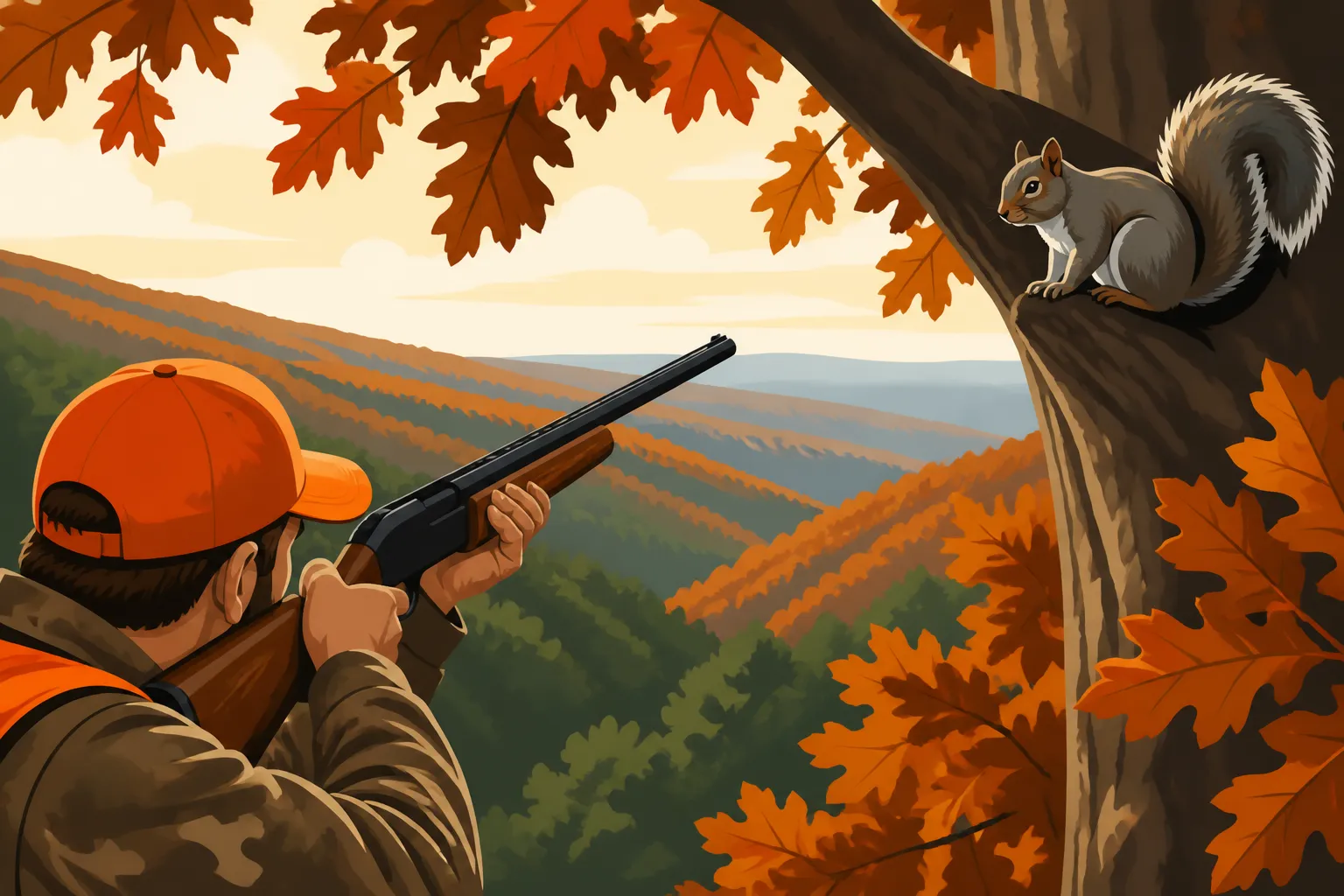
Still-hunting is perhaps the most rewarding and challenging method for squirrel hunting, especially in the varied terrain of a Kentucky oak ridge. It involves moving incredibly slowly, stopping frequently, and using your eyes and ears to their fullest. The key is to blend into the environment, becoming just another silent part of the forest.
Start your hunt early in the morning, right after daylight, or late in the afternoon, as squirrels are most active during these times. As you move, take one or two steps, then pause. Scan the trees from the ground up: look for movement, a twitching tail, a slight disturbance in the leaves, or even the subtle gleam of an eye. Listen intently for the distinct sounds of squirrels: their barks and scolds, the rustle of leaves as they scamper, and most importantly, the sound of acorn or nut cuttings falling to the forest floor. That "pitter-patter" can be your best indicator of a feeding squirrel. Many hunters even use Boots for Walking Kentucky Ridges that are quiet and provide good traction to minimize noise.
When you spot a squirrel, assess the situation. Is it feeding, moving, or just sitting? If it's feeding, try to position yourself for a clear shot while using trees or topography for cover. If it's moving, try to predict its path and get ahead of it. The real challenge comes when a squirrel spots you or hears you and "trees up," pressing itself flat against the opposite side of a tree trunk. This is where patience truly pays off. Rather than moving around the tree, which often just makes the squirrel circle with you, try standing still. Sometimes, after a few minutes, the squirrel will peek out. Other times, a gentle tap on the tree with your hand or foot might make it shift, revealing itself. Another old trick is to walk away, making the squirrel think the threat has passed, then circle back cautiously.
Using the natural contours of the ridge can also aid your stalking. Walk along benches or just below the crest of a ridge to stay out of sight against the skyline. Use large trees or rock outcrops as cover as you advance. It's a game of chess, and the squirrel has the home-field advantage.
Sitting and Waiting Strategies
While still-hunting is dynamic, sometimes the most effective tactic on a productive oak ridge is simply to find a good spot, sit down, and wait. This approach works particularly well if you've done your scouting and identified a prime feeding area or a cluster of den trees.
To implement this strategy, first, locate an area where you've seen fresh cuttings, heard active squirrels, or know there's a strong concentration of mast-producing trees. Pick a spot where you have a clear view of multiple trees, ideally with your back against a large tree for concealment and to break up your outline. Comfort is important, as you'll be sitting for extended periods. A small folding stool or a thick seat cushion can make a huge difference.
Once you're settled, remain absolutely still and silent. Let the woods return to their natural state after your arrival. Within minutes, or sometimes longer, squirrels will often resume their activity. They are creatures of habit and will often follow predictable paths. Watch the canopies for movement, the trunks for scurrying forms, and listen for those tell-tale sounds of cutting and chattering. This method is all about patience and observation.
Another aspect to consider when sitting is the wind. While less critical than for deer, a strong wind can make it harder to hear squirrels and can also make them less active, as they don't like being exposed to predators from above. Try to position yourself so the wind is not blowing directly into your face, but rather across you, carrying your scent away. You can also utilize specific gear like Upland Vests With Water Capacity to keep essentials close at hand without needing to shift around.
Hunting with Dogs
For many, squirrel hunting isn't truly complete without the companionship of a good squirrel dog. It’s a completely different experience, often more active, vocal, and deeply rooted in tradition. Kentucky has a rich history of squirrel doggers, and watching a well-trained dog work is a marvel.
Different breeds are popular for squirrel hunting, primarily "cur" and "feist" breeds. These dogs are specifically bred for their keen noses, relentless treeing instincts, and vocal nature. They'll range out, locate a squirrel by scent, chase it up a tree, and then "tree" on it, barking loudly to alert you to the squirrel's location.
Hunting with a dog involves following your canine companion through the woods, listening for their barks. When the dog trees, your job is to locate the squirrel in the tree. This often requires careful scanning of the branches, sometimes from multiple angles, as squirrels are adept at hiding. It can be a challenge, especially if the canopy is thick, but the dog's persistent barking helps pinpoint the exact tree. This method is excellent for covering a lot of ground and for finding squirrels that might be difficult to spot with still-hunting or stalking alone. It’s a particularly active style of hunting, often involving brisk walking and navigating rough terrain, so good physical conditioning for both hunter and dog is a must.
There are challenges, of course. Dogs need to be well-trained to stay focused on squirrels and not chase other game. They also need to be able to handle rough terrain and potential encounters with other wildlife. You'll also need to consider things like E-Collar Use on Public Ground for training and control, especially if hunting on shared land. But the bond forged and the sheer joy of watching a dog work often far outweigh these difficulties. It's a dynamic, exciting way to hunt and one that adds a whole new dimension to your time on a Kentucky oak ridge.
Final Thoughts on Your Kentucky Squirrel Adventure
Hunting squirrels on Kentucky's oak ridges is more than just a hunt; it's an immersion into the state's natural beauty and a test of your woodcraft. Whether you're a seasoned veteran or just starting out, there's always something new to learn from these clever critters and the forest they call home. Pay attention to the subtle details of the habitat, keep a keen eye out for those distinctive Gray Versus Fox Squirrels in Kentucky, and remember that patience and persistence are your greatest allies. Get out there, enjoy the crisp air, and make some memories on the ridge!
Disclaimer
Hunting is an inherently dangerous activity. This guide provides general information and should not be considered a substitute for official regulations, professional instruction, or personal judgment. Always consult the latest Kentucky Department of Fish and Wildlife Resources (KDFWR) regulations, practice firearm safety, and obtain proper licenses and permits before heading into the field. The author and publisher are not responsible for any accidents, injuries, or legal infractions that may occur.