Reading Cuttings Under an Oak
You’ve spent hours scouting, hiking those promising ridges and hollows, meticulously looking for rubs, scrapes, and fresh tracks. Yet, sometimes, the deer sign seems to evaporate, leaving you scratching your head. It’s incredibly frustrating when you know deer are in an area but they're just not showing themselves. What if I told you there’s often a clear, undeniable story of deer activity right under your feet, especially around oak trees? This guide will teach you how to read those subtle clues – the acorn cuttings – that savvy Kentucky hunters use to pinpoint whitetail feeding patterns.
The Unseen Buffet Beneath Kentucky's Oak Canopies
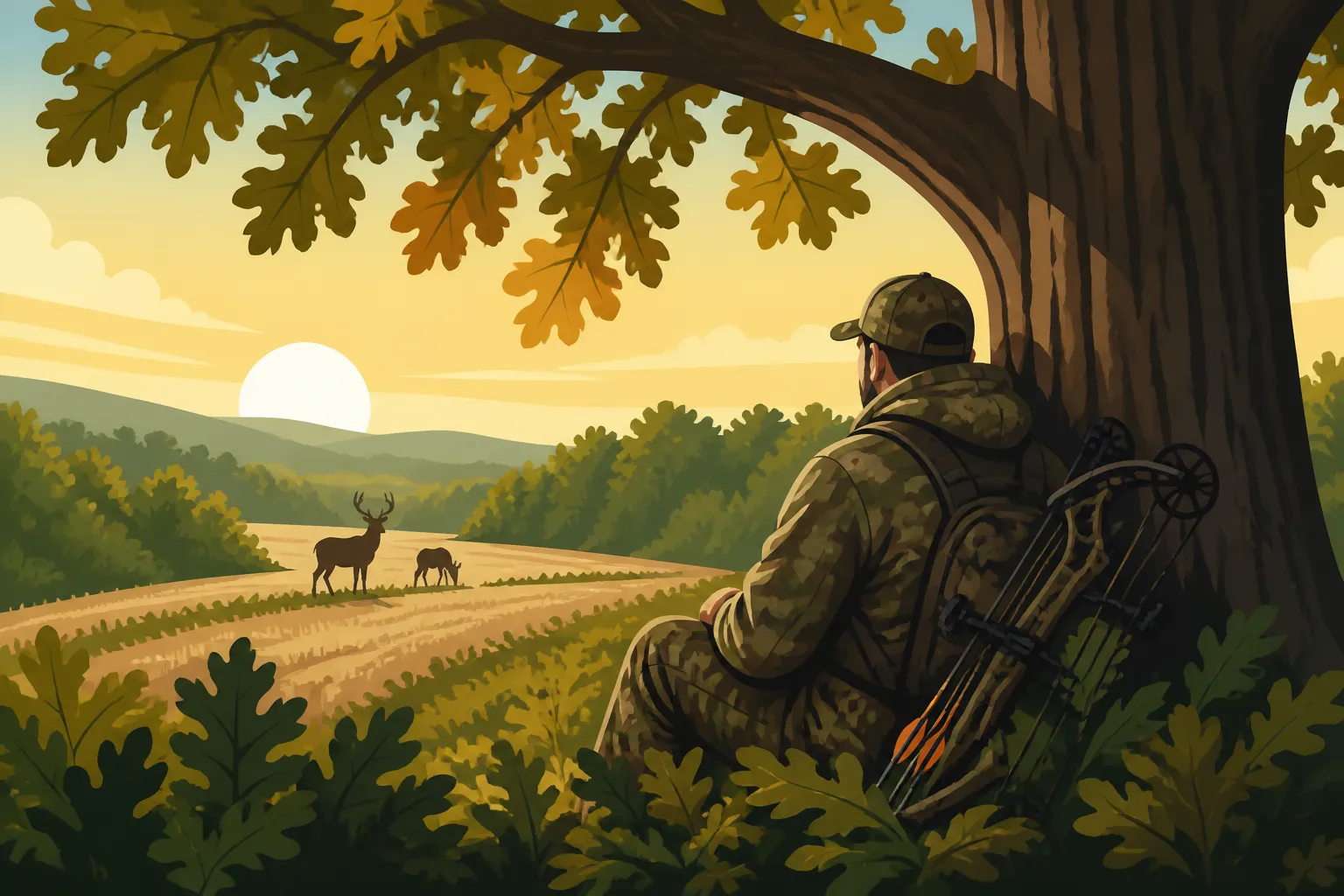
When we think about deer food, often our minds go straight to green fields, browse, or even agricultural crops. But in the vast timbered landscapes of Kentucky, especially across the eastern hills or the oak-heavy bottoms of the west, acorns are king. These little powerhouses of nutrition are a primary food source for whitetails, and a good acorn crop can dictate deer movement for weeks, sometimes even months. The problem is, you can't always see deer munching on acorns, and once the leaves fall, those brown caps blend right into the forest floor. That's where knowing how to read cuttings comes in – it’s like reading the dinner plate a deer left behind.
Why Acorns Are the Ultimate Deer Magnet
Deer are opportunists, and when acorns are dropping, they're practically irresistible. These fatty, carbohydrate-rich nuts provide an incredible energy boost, essential for does preparing for winter and bucks recovering from the rut. Unlike browse that offers limited calories or green fields that are seasonal, acorns are a dense, easily accessible food source that often draws deer from surrounding areas.
Think about it: a deer needs to eat a lot of leaves or twigs to get the same caloric intake as a handful of acorns. This efficiency makes oaks, particularly white oaks, premium real estate for hungry whitetails. They'll spend hours, sometimes entire nights, under a productive oak, gorging themselves. If you can identify these preferred feeding areas, you’re halfway to understanding deer movement in your hunting block. This is especially true when you're Hunting the Rut in Early November – bucks are burning massive amounts of energy and need to refuel constantly.
Identifying Productive Oak Species
Not all oaks are created equal in the eyes of a deer. Kentucky boasts a diverse range of oak species, and knowing which ones drop the "good stuff" and when can give you a significant advantage.
- White Oaks (e.g., White Oak, Chestnut Oak, Chinkapin Oak): These are the gold standard. White oak acorns are lower in tannin, making them sweeter and far more palatable to deer. They typically drop their acorns earlier in the fall, often starting in late August through September and into early October. When white oaks are dropping, deer will abandon almost everything else to feed under them. Look for trees with rounded leaf lobes. If you find a ridge loaded with healthy white oaks, you've likely found a major deer congregation point.
- Red Oaks (e.g., Northern Red Oak, Scarlet Oak, Pin Oak, Black Oak): Red oak acorns contain higher levels of bitter tannins. Deer will still eat them, but usually after the preferred white oak acorns have been depleted. The big advantage of red oaks for hunters is their longevity; red oak acorns often persist on the ground well into late fall and even early winter, making them a crucial Late-Season Food Sources for Kentucky Whitetails. Their leaves typically have pointed, bristle-tipped lobes.
When you're doing your Scouting Kentucky Public Land Before Season, use a mapping tool like GoHunt to identify areas with a high concentration of oak timber. You can often discern different canopy textures that hint at oak species from aerial imagery. Ground truthing is still essential, but a good map can save you countless hours of wandering.
Decoding the Language of Acorn Cuttings
Alright, so you’ve found some oak trees, maybe even seen a few acorns on the ground. But how do you know if deer are actually feeding there, or if it's just squirrels and turkeys? This is where the art of "reading cuttings" truly comes into play. Deer have a very specific way of eating acorns that leaves behind tell-tale signs, distinct from other critters.
What Deer Cuttings Look Like
When a deer eats an acorn, they typically use their incisors (front teeth) to nip off the cap and sometimes a small piece of the nut itself, before swallowing the rest whole or in large chunks. The key here is the clean cut.
- Clean, Precise Nips: Deer cuttings are characterized by a relatively clean, often crescent-shaped or slightly ragged edge where the cap was removed. You might find just the cap, or the cap with a small, neat piece of the acorn still attached. The edge of the remaining acorn shell will look as if it was cleanly sliced or bitten.
- Location, Location, Location: You’ll find these cuttings directly under the canopy of an oak tree, often scattered on the leaf litter. If you're seeing a dense concentration of these clean-cut caps and acorn fragments, you’ve hit the jackpot. This tells you deer have been actively feeding there, likely for an extended period.
Compare this to other common acorn eaters:
- Squirrels: Squirrels are notorious for leaving behind a messy scene. They'll gnaw through the shell, leaving behind jagged, splintered pieces and often completely consumed nuts. You'll see tiny teeth marks all over the remaining shell fragments.
- Turkeys: Turkeys swallow smaller acorns whole or will peck at larger ones, often leaving behind a broken, cracked shell rather than a clean cut. They don't have teeth, so you won't see any bite marks.
- Hogs: While not as common everywhere in Kentucky, wild hogs are opportunistic acorn eaters. They will often root up large patches of ground to get to acorns, leaving obvious disturbed soil, not just individual cuttings.
A Table for Quick Identification
To help you distinguish, here's a handy breakdown:
| Animal | Acorn Eating Sign | Key Identifier |
|---|---|---|
| Deer | Clean, precise nips on caps and small shell pieces. | Smooth, crescent-shaped, or neatly bitten edges on shell fragments. |
| Squirrel | Jagged, splintered shell fragments; tiny teeth marks. | Messy, chewed-up appearance; often a pile of small debris. |
| Turkey | Cracked, broken shells; may swallow whole. | No teeth marks; shells appear crushed or pecked. |
| Wild Hog | Large areas of rooted-up soil; completely consumed. | Disturbed earth, overturned leaves, often larger scale. |
When you're out Finding Sign in Big Daniel Boone Timber, this table can be a real-time cheat sheet to confirm what kind of critter is hitting your oak stand. It’s not just about finding acorns; it’s about knowing who is eating them.
Integrating Acorn Cuttings into Your Hunting Strategy
Now that you know what to look for, how do you turn this knowledge into successful hunts? Reading acorn cuttings isn't just a fun scouting exercise; it's a critical piece of the puzzle for understanding deer movement and placing your stand where you'll have the best chance.
Scouting with Cuttings
Your preseason scouting efforts are where this skill truly shines. Instead of just looking for rubs and scrapes on main travel corridors, start looking for these subtle feeding clues.
- Prioritize White Oaks Early Season: In late August and September, focus your efforts on white oak stands. If you find fresh, abundant deer cuttings under a white oak, you’ve likely found an active feeding area. This is the place to hang a stand or set a ground blind for early archery season.
- Shift to Red Oaks Later: As white oak acorns dwindle, typically by late October or November, shift your focus to red oak stands. Their higher tannin content means deer will only turn to them once other, sweeter options are gone, but they can be absolutely vital during the colder months. These can be prime spots for Hunting the Late-Season January Lull when other food sources are scarce.
- Monitor Crop Freshness: The fresher the cuttings, the more recently deer have been feeding there. Look for caps that still have a bit of moisture or haven't fully dried and curled up. This indicates current activity. If all the cuttings look old and weathered, the deer have likely moved on or the tree has stopped dropping.
When you're Reading Aerial Photos for Eastern Kentucky Deer, try to identify large swaths of oak forest. Then, on the ground, hone in on specific trees or clusters that show heavy feeding activity via cuttings.
Stand Placement Based on Cuttings
Once you've identified a hot oak, your stand placement becomes critical. You don't want to just blindly put a stand in the middle of the feeding area.
- Approach Routes: Deer will approach these feeding trees from bedding areas. Look for subtle trails leading into the oak stand where you find the cuttings. Your stand should be positioned along these trails, or at least where you can intercept deer as they come to or leave the feeding area, always considering wind direction. A tool like GoHunt can help you overlay topography and wind direction, helping you visualize potential entry and exit routes that keep you undetected.
- Prevailing Winds: Deer almost always approach food with the wind in their favor, scenting for danger. Position your stand downwind or crosswind of their likely approach, never directly upwind of the feeding tree itself. You want your scent to blow away from where they’ll be coming from and where they’ll be eating.
- Cover and Concealment: Your stand needs to offer good concealment. Don’t just pick the tree with the best view; pick the one that lets you break up your silhouette and blend into the surroundings. If you're considering a ground blind, make sure you're Brushing In a Blind on a Field Edge – the same principle applies in the woods.
- Bedding Areas: Try to locate nearby bedding areas uphill or in thick cover. Deer will move from these secure spots to the feeding oaks. Knowing this helps you understand the entire movement pattern, not just the feeding location.
When Acorn Crops Fail or are Scarce
It’s important to remember that acorn crops aren't consistent year to year. Some years are bumper crops, and others are lean.
- Hunting After a Poor Acorn Year: If you scout and find very few acorns or cuttings, it means deer will be relying on other food sources. This could be green fields, agricultural crops (corn, soybeans), or heavy browse. In these years, focusing on planted food plots or natural browse lines becomes paramount.
- Hunting a "Mast Gap": Sometimes, white oaks drop heavily, then run out, and red oaks haven't started yet, or vice versa. This "mast gap" can make deer movement unpredictable. Persistent scouting for the freshest cuttings will help you find the few trees still dropping, or pivot to alternative food sources.
Understanding acorn cuttings is a nuanced skill that develops with practice. The more you walk the woods, the more you’ll train your eye to spot these subtle signs. It gives you a deeper understanding of deer behavior, especially their daily routine of moving from bed to food. This knowledge is invaluable, allowing you to become a more effective and successful hunter, year after year, regardless of whether you're rifle hunting or Bowhunting Kentucky's Long Archery Season.
Common Mistakes and Advanced Cutting Tips
Even seasoned hunters can sometimes misinterpret what they're seeing on the forest floor. Avoiding common pitfalls and incorporating a few advanced tips can sharpen your "cutting" skills significantly.
Differentiating Old vs. Fresh Cuttings
This is perhaps the most crucial distinction. Finding cuttings from last week is interesting, but finding cuttings from last night is game-changing.
- Color and Texture: Fresh cuttings will often have a lighter, less weathered look, and sometimes even a slight sheen. The edges might appear crisp. Older cuttings will be duller, drier, and might have started to curl or break down. They'll blend more seamlessly into the leaf litter.
- Moisture Content: If you pick up a piece and it feels slightly pliable or still holds some moisture, it's fresh. If it's brittle and crumbles easily, it's older. This is especially true after a rain, where fresh cuts will still show some contrast.
- Quantity and Concentration: While old cuttings might be scattered, a concentrated area of fresh cuttings is a strong indicator of current heavy use. If you see dozens of fresh caps within a small radius under one tree, you know exactly where deer were very recently.
- Trail Camera Confirmation: The ultimate confirmation of fresh activity is a trail camera. Once you've identified a promising oak stand with fresh cuttings, consider Where to Hang a Camera on a Logging Road or nearby travel corridor to see exactly when and which deer are using that food source. This provides real-time intel that backs up your ground scouting.
Don't Forget the Weather's Impact
Weather plays a huge role in acorn drop and deer feeding patterns.
- Windy Days: Strong winds can knock down a significant amount of acorns in a short period. Deer will often respond to this "fresh drop" by moving into these areas quickly. Scout after a windy front to find these newly-exposed food sources.
- Rainy Periods: While rain can make older cuttings harder to distinguish, a steady drizzle can also make deer less wary as their scent is washed away and their movement is muffled. They might feed more openly during these times.
- Cold Fronts: As temperatures drop, deer's caloric needs increase. A sharp cold front can push deer to feed more aggressively, especially under red oaks later in the season.
Beyond Just Oak Trees
While oaks are the focus of "cuttings," remember that deer feed on many other mast crops. While they won't leave "cuttings" in the same way, understanding other preferred food sources is part of the bigger picture of deer movement. Look for persimmons, pawpaws, and even honeysuckle patches. When acorns are scarce, deer will readily switch to these alternatives.
By combining the specific art of reading acorn cuttings with broader scouting knowledge, aerial mapping (perhaps with GoHunt's detailed satellite imagery), and an understanding of weather patterns, you’ll develop an intuition for deer movement that few hunters possess. It's about becoming a detective in the woods, piecing together the clues that lead you to success.
Disclaimer
Hunting and scouting involve inherent risks. Always prioritize safety, follow all Kentucky Department of Fish and Wildlife Resources regulations, and ensure you have the appropriate licenses and permits. This guide is for informational purposes only and does not substitute for official regulations or professional guidance.