Flushing Grouse Without a Dog
Grouse hunting in Kentucky is an incredible experience, but let's be real: not everyone has access to a well-trained bird dog. The thought of navigating thick cover, hoping to stumble into a ruffed grouse without a canine companion, can feel daunting, even impossible. But I'm here to tell you that it's absolutely doable, and can even be incredibly rewarding. This guide will walk you through practical, boots-on-the-ground strategies for flushing grouse in Kentucky's challenging terrain, dog or no dog.
Understanding Kentucky Ruffed Grouse Behavior Without a Dog
Before you can flush a grouse, you've got to think like one. Understanding where these elusive birds prefer to hang out and how their movements change throughout the day and season is your biggest advantage as a dogless hunter. They aren't just anywhere in the woods; they have specific hideouts.
Where Grouse Hide: Reading the Cover
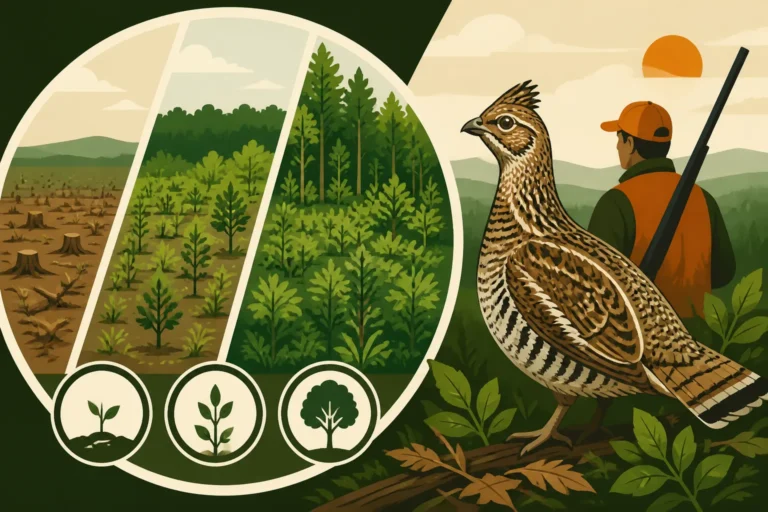
Ruffed grouse are creatures of thick, dense cover. Forget open timber or sparse woods; you're looking for the nastiest, most impenetrable stuff you can find. In Kentucky, this often means specific types of disturbed forest habitat. You'll want to focus on areas with a mix of young, regenerating forest, often found in old clear-cuts, timber stand improvement areas, or even along the edges of old logging roads that have grown back aggressively.
Think about areas that were logged 10 to 20 years ago. These patches are usually too dense for deer hunters to navigate easily, and that's exactly where grouse thrive. Look for a dense understory of greenbriar, honeysuckle, grapevines, and especially rhododendron thickets, particularly in the eastern parts of the state like the Cumberland Mountains. These thickets provide excellent escape cover from predators and harsh weather, making them prime grouse territory. Don't be afraid to dive into the stuff that makes you want to turn around. Creeks bottoms, especially those with dense riparian vegetation, can also hold birds, particularly when it's colder or drier elsewhere. Understanding how old a cut should be for grouse is crucial, as the sweet spot for prime habitat is relatively narrow in its regeneration cycle. Too young, and there isn't enough cover or food; too old, and it becomes too open.
Daily and Seasonal Movements: Predicting Flushes
Grouse movements aren't entirely random. They're influenced by several factors: food, weather, and time of day. Early morning and late afternoon are often the best times to find them actively feeding, which might make them a little more prone to flushing. During midday, especially on colder days, they might be tucked into dense thermal cover, holding tighter. On rainy or windy days, they'll often hunker down, making them even harder to flush but also more likely to hold tight if you do find them.
Seasonally, early season grouse hunting (think October) means you're contending with a full canopy of leaves. This makes seeing flushes incredibly difficult and limits your shooting windows. Birds might hold tighter simply because they feel more secure in the dense foliage. As the leaves drop in November and December, visibility improves, but birds also become warier due to increased hunting pressure and less overhead cover. In late season, especially after a snow, grouse will often concentrate around specific food sources like greenbrier berries, rose hips, or the buds of aspen and birch if present. Their patterns can also be influenced by the Kentucky Ruffed Grouse Decline, which means you need to be even more strategic in finding productive areas.
Strategic Footwork and Pacing for Dogless Hunters
Since you don't have a dog to put birds in the air, your feet become your best flushing tool. This means adopting specific walking patterns and using the terrain to your advantage. It’s all about creating enough pressure to make a bird flush, but also being ready when it does.
The "Stop-and-Go" Method
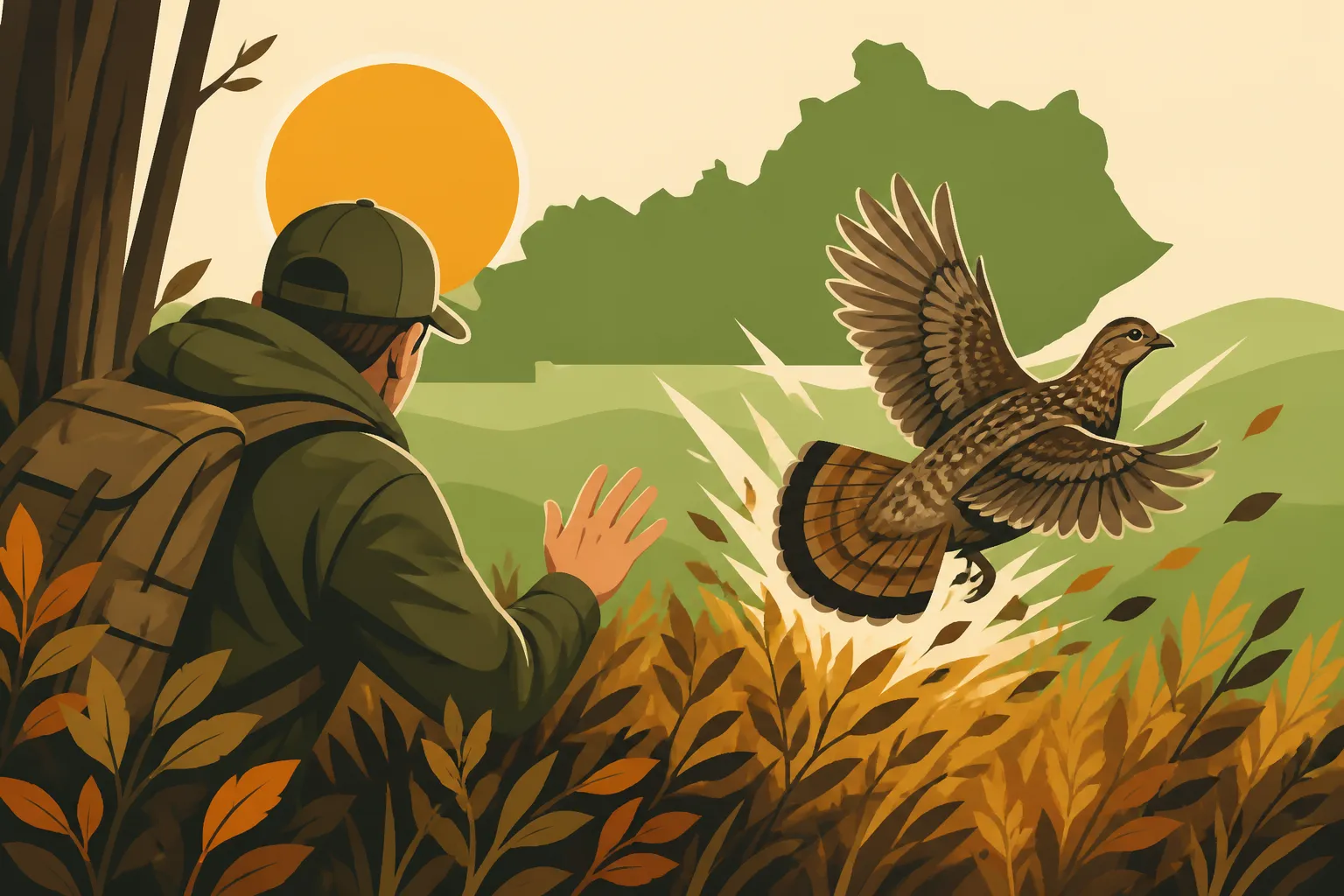
This is perhaps the most effective technique for the dogless grouse hunter. Instead of walking continuously, you adopt a deliberate, rhythmic stop-and-go pace. Here’s how it works: you walk for 20-30 yards, then stop dead still for 10-20 seconds. Repeat. The logic behind this is simple yet profound. Grouse, like many wild birds, often rely on camouflage and stillness to avoid detection. When you're walking, they might hunker down, hoping you'll pass them by. But when you stop, their perceived threat level rises. They can no longer pinpoint your exact movement, and the sudden cessation of your footsteps can unnerve them, prompting a flush.
The key is to truly stop and scan. Listen for the tell-tale thunder of wings. Keep your gun mounted or in a ready position, especially during those pauses. Many times, a grouse will explode from cover within seconds of you stopping. This method requires patience, but it dramatically increases your chances of putting birds in the air compared to a continuous, predictable stroll. It makes the grouse think you might have seen them, or are about to, and the uncertainty often seals their fate.
Working Ridgelines and Hollows
Kentucky's landscape is a mix of rolling hills, steep ridges, and deep hollows, particularly in prime grouse habitat. This varied topography requires specific tactics. When working a ridgeline, it's often productive to hunt just off the crest, perhaps 10-20 yards down one side. This allows you to work along the contour, pushing birds either up over the ridge or down into the hollow, often offering better shooting lanes than if you were directly on top. When ascending or descending hollows, try to zigzag rather than going straight up or down. This exposes you to more varied cover and prevents you from pushing all the birds out the top or bottom of the hollow too quickly.
Always be mindful of wind and thermals on a Kentucky ridge. While not as critical for grouse as for deer, understanding how air currents move can give you an edge, especially on colder days when birds might favor sun-drenched, leeward slopes. If you're working a steep incline, move slowly and deliberately, pausing frequently. Grouse often flush downhill, using gravity to gain speed, so be prepared for a fast, downward-angled shot.
Utilizing Natural Barriers and Funnels
Just like deer, grouse can be funneled by terrain and cover. Look for natural barriers like steep ravines, rock outcroppings, or even old, grown-over fencerows. These features can concentrate birds into narrower strips of cover. Similarly, "funnels" created by changes in habitat—where a dense young clear-cut narrows down into a thick riparian zone along a creek, for instance—are prime areas to find birds. They will often travel along the edges of these transition zones.
Old logging roads, especially those that are no longer actively used and have dense growth along their edges, are fantastic places to hunt. Walk parallel to the road, just inside the thick stuff, rather than directly on the open path. The birds will often flush from the denser cover, crossing the more open road, giving you a quick shot opportunity. Creeks and drainages, particularly if they are choked with rhododendron, serve as excellent travel corridors and escape routes. By working these natural funnels, you can effectively predict where a grouse is most likely to be holding, or where it will attempt to flee once flushed.
Gear and Preparedness for the Dogless Hunter
Going after grouse without a dog means your personal gear and readiness are even more critical. You're the one doing all the work, so you need to be equipped for the task.
Essential Personal Gear
Kentucky's grouse cover is notorious for its thorns and briars. Trust me, you need durable clothing. Invest in a good pair of brush pants or chaps, preferably briar-proof, and a tough canvas or synthetic upland vest. Regular hunting pants will be shredded in a single outing. Layers are key, as you'll be working hard and then standing still, so moisture-wicking base layers are a must. For footwear, comfortable, waterproof boots with good ankle support are non-negotiable for navigating Kentucky's hollows and creek bottoms. You'll be covering a lot of ground, often off-trail, so comfort and protection are paramount.
When it comes to your shotgun, a lightweight 20-gauge or 12-gauge is ideal. A 20-gauge offers a quicker swing and lighter carry, which can be a huge advantage when you're walking miles through thick stuff. For shot size, #7.5 or #8 lead shot is typically perfect for grouse at close range. An improved cylinder or modified choke is generally preferred for the quick, close-range shots grouse offer. Don't forget a compass or a reliable GPS unit/phone app like GoHunt to keep you oriented in the dense woods, especially when deep in areas like Daniel Boone National Forest hunting grounds. Losing your way in thick grouse cover is an easy mistake to make.
Shotgun Handling and Readiness
With grouse, a successful shot often boils down to seconds. You won't have the luxury of a dog pointing the bird and giving you time to prepare. Your gun must be carried in a "ready" position, meaning it's shouldered or at least halfway to your shoulder, safety on, whenever you're in potential grouse habitat. This allows for a much quicker mount and swing when a bird explodes from literally under your feet.
Practice mounting your gun smoothly and quickly at home. Think about a quick, fluid motion to your shoulder, eyes focused on where the bird will be, not where it was. The shot will almost always be fleeting and often through a small window in the trees. Many seasoned grouse hunters actually prefer a shorter barrel shotgun (24-26 inches) for better maneuverability in tight cover. While there's no official rule regarding shotgun gauge choice for grouse, the quicker swing of a smaller gauge can be a real game-changer when a bird flushes unexpectedly.
Maximizing Your Chances: Beyond the Flush
Getting a grouse to flush is one thing; bagging it is another. But even if you miss, your job isn't over. There are strategies to increase your overall success and make the most of every encounter.
Marking a Flush and Follow-up
So, a grouse just blasted out of the thicket right in front of you. Even if you don't get a shot, or if you miss, mark its flight path. Watch exactly where it goes, note any distinct trees, changes in terrain, or landmarks. Grouse often don't fly too far, especially if they weren't pressured heavily. Many will fly 50-150 yards and then dive back into another thick patch of cover.
After the initial flush, give it a few minutes, then quietly approach the area where you last saw the bird disappear. This is where the "scatter hunt" technique can come into play, although it's often more effective on coveys of quail or turkeys. For a single grouse, approach the marked spot slowly, ready for a second flush. Often, the bird will hold even tighter this time, making it even harder to flush, but also presenting a potential closer shot if you can get it to go. Be patient and systematic in searching the new patch of cover. Sometimes, just walking in circles around the suspected landing zone for 5-10 minutes can be enough to push the bird up again.
Hunting Pressure and Finding Untouched Cover
Let's face it, Kentucky's public lands, especially those easily accessible, can see a fair amount of hunting pressure on Kentucky public land during deer season. While grouse habitat is often too thick for most deer hunters, increased activity in the general area can still affect their behavior. Pressured grouse will often hold tighter, or simply move deeper into even thicker, less accessible areas. Your best bet is to seek out remote, overlooked patches of cover.
This is where detailed mapping tools truly shine. Programs like GoHunt allow you to zoom in on aerial photos and identify those nasty, hard-to-reach clear-cuts, rhododendron thickets, or creek bottom tangles that might be miles from the nearest road or even a well-used trail. Learn to read aerial photos for Eastern Kentucky deer, and apply that same eye for detail to grouse. Look for areas that require a long walk in, or that are separated by steep hollows or other challenging terrain. These are the places that see less human traffic, and thus, often hold less pressured birds. Finding ground others walk past is a critical skill for any successful public land hunter, but especially for the dogless grouse hunter seeking untouched cover.
Grouse Cover Types and Flushing Behavior
Here's a quick look at common Kentucky grouse cover and what to expect:
| Cover Type | Characteristics | Likely Flushing Behavior | Best Approach for Dogless Hunter |
|---|---|---|---|
| Young Clear-cuts (10-20 yrs) | Dense regeneration, briars, thick saplings | Explosive, often short flights into more thicket | Slow, "stop-and-go" through the thickest parts, especially edges |
| Rhododendron Thickets | Dense, evergreen understory, often along creeks/slopes | Very tight hold, sudden close-range flush | Deliberate pushing, focusing on openings and edges of the thicket |
| Grown-over Logging Roads | Dense edge cover, open center | Often flush across the road into adjacent cover | Walk parallel inside the thick edge, ready for crossing shots |
| Steep Creek Bottoms | Mixed hardwoods, dense understory, fallen timber | May flush up/down creek, or into hillside cover | Work slowly along contour, especially near downed logs or snags |
| Old Field Edges | Transition from open to thick brush/young trees | Birds often hold in brush, flush towards thicker woods | Hug the thick side, working from open to dense cover |
Final Thoughts on Dogless Grouse Hunting
Hunting grouse without a dog is undoubtedly a challenge, but it's a deeply satisfying one. It forces you to hone your woodsmanship, truly learn the land, and understand the intricate behaviors of these magnificent birds. It demands patience, perseverance, and a willingness to push through cover that others avoid. But when that thunderous flush occurs and a beautiful ruffed grouse takes to the air, there's no denying the thrill and the earned success of your efforts.
Disclaimer
Hunting is an inherently dangerous activity. Always prioritize safety, understand and follow all Kentucky hunting regulations, and consider taking a hunter education course. This guide provides general information and does not replace professional instruction or official regulations. It is your responsibility to be safe and legal in the field.