Optics for Glassing Reclaimed Mine Land
Hunting Kentucky's reclaimed mine lands is a completely different ballgame than still-hunting dense timber or sitting a cozy field edge. The vast, often exposed landscapes, interspersed with brushy regrowth and deep cuts, present unique challenges for locating game, especially when deer, elk, or bear might be moving at extreme distances during those crucial low-light hours. This guide is dedicated to helping you navigate that terrain, focusing on the specialized optics and glassing techniques you'll need to effectively spot and identify animals in these often-overlooked yet incredibly productive hunting grounds.
The Unique Challenges of Reclaimed Mine Land
Anyone who has ventured onto Kentucky's reclaimed mine lands knows that they are a world unto themselves. These areas, once scarred by industry, have been painstakingly rehabilitated, often creating a mosaic of open grasslands, dense young timber, and deep, winding cuts and valleys. This varied topography, while providing incredible habitat, also demands a very specific approach from hunters, particularly when it comes to visual scouting.
Vastness and Varied Terrain
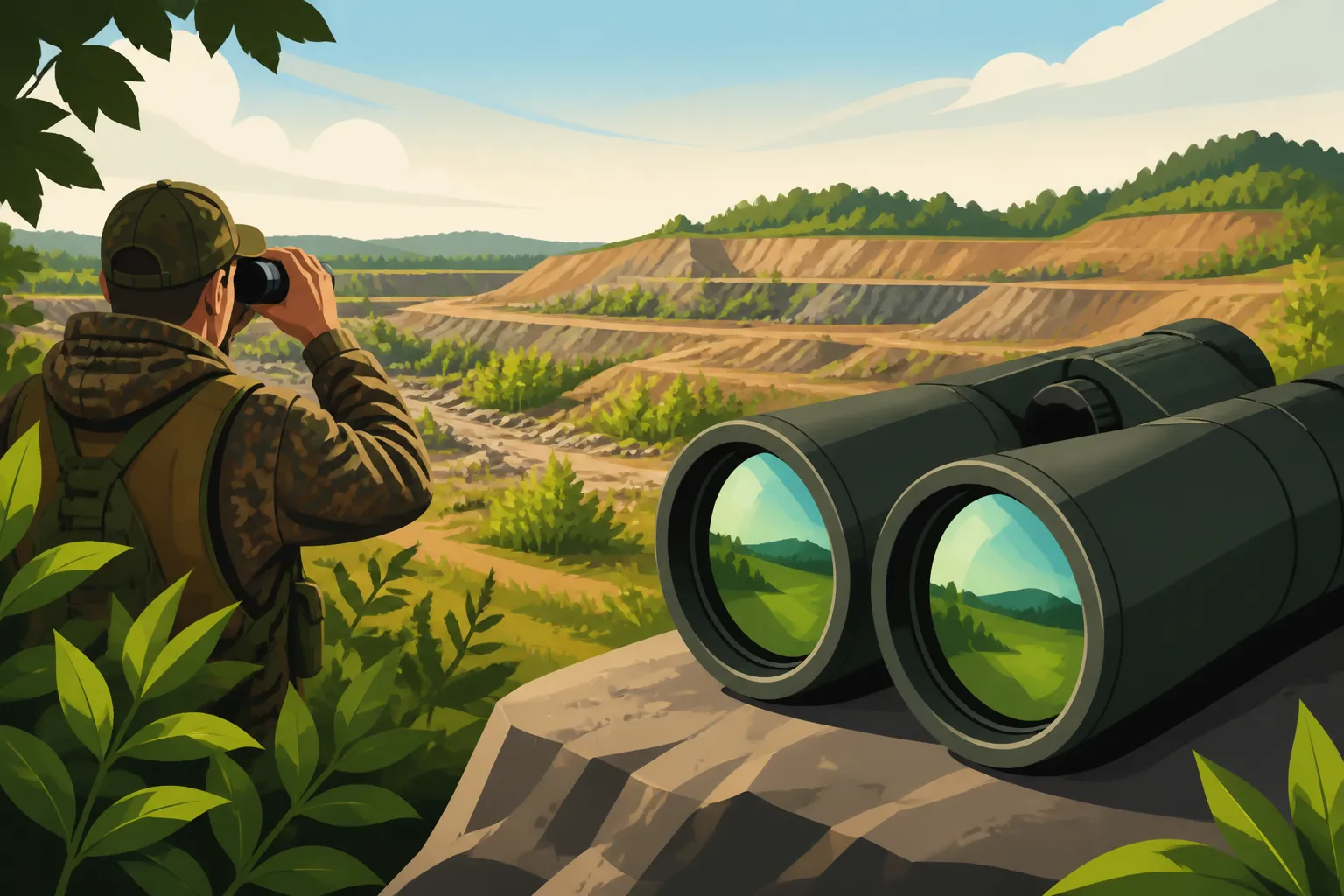
Imagine standing on a high point overlooking thousands of acres of rolling hills, some covered in short grass, others choked with thick, regenerating hardwoods, and still others crisscrossed by old haul roads and steep, rocky ledges. That's the typical scene on reclaimed mine land. The sheer scale can be overwhelming, making it nearly impossible to cover all the ground on foot. You can't just walk every square inch; you have to rely on your eyes to do the heavy lifting from a distance.
The terrain itself is a puzzle. Deer and elk might be grazing openly in expansive fields, but they're never far from the security of thick brush lines or the deep hollows where they can disappear in an instant. Bear might be foraging in a dense thicket of blackberry or moving along a wooded finger ridge leading to a larger patch of timber. Your optics need to be versatile enough to let you systematically scan broad vistas for movement, then instantly zoom in to pick apart tight cover for hidden antlers or a tell-tale patch of black fur. It’s not just about seeing something; it’s about identifying what you're seeing, often from a mile or more away.
Distance and Low Light Conditions
Game animals, especially mature ones, quickly learn the patterns of human activity. On reclaimed lands, where visibility can be immense, this often means they're most active at the very fringes of daylight. Those precious minutes at dawn and dusk are when deer will emerge from deep cover to feed in an open field, or when a bull elk might step out of the timber to bugle across a vast valley. This is when your optics are truly tested.
Spotting a deer at 800 yards as the sun barely cracks the horizon, or identifying the size of an elk's rack as he fades into the shadows just before dark, requires optics that excel in light transmission and clarity. There's nothing more frustrating than knowing an animal is out there, seeing a blurry shape, but being unable to confirm if it's a legal animal or even what species it is due to poor glass. The broken, rolling nature of the terrain also means that light can play tricks, creating deep shadows in hollows even when the sun is bright overhead. You need optics that can cut through that haze and bring those distant, dimly lit targets into sharp focus.
Essential Optics for Glassing Reclaimed Mine Land
When you step onto reclaimed mine land, you quickly realize your standard deer hunting binoculars might not cut it. The distances are vast, the cover is diverse, and the game can be elusive. You need a dedicated optical system, not just a single piece of gear, to truly unlock the potential of these areas.
Binoculars: Your Primary Scouting Tool
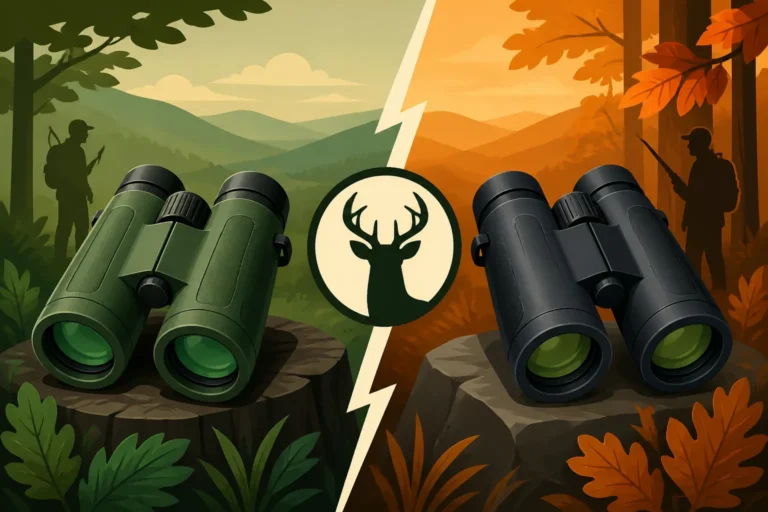
Your binoculars are the undisputed workhorse of any glassing setup, especially on expansive terrain like reclaimed mine land. They're what you'll be using for 90% of your initial scanning, searching for any flicker of movement or unusual shape that hints at game. For these environments, you're going to want to lean towards higher magnification than you might typically use in thick timber. A good 10x or 12x power is often ideal, providing a balance of magnification, field of view, and reasonable hand-holdability. If you’re truly covering massive, open areas and primarily working from a stable rest, a 15x might even be considered, though it almost always requires a tripod.
Beyond magnification, the objective lens size is paramount, particularly for those crucial low-light periods. A 42mm objective is a solid all-around choice, but stepping up to a 50mm or even 56mm can make a noticeable difference when light is fading or just barely emerging. This larger front lens gathers more light, resulting in a brighter, clearer image when it matters most. Top-tier glass, with excellent coatings, will further enhance this, allowing you to pick out the subtle details of an antler tine or the twitch of an ear at a distance where lesser optics would only show a dark blob. Think of these as your first line of defense; they tell you where to look closer. When I'm considering new binoculars, I often check resources like GoHunt to compare specs and read reviews from other hunters who are using them in similar rugged terrain. This kind of research helps ensure I’m investing in the right tools for the job.
Spotting Scopes: For Detailed Analysis at Extreme Ranges
While binoculars get you in the neighborhood, a spotting scope is what allows you to knock on the door and ask for details. For reclaimed mine land, where distances can stretch beyond what even powerful binoculars can effectively resolve, a spotting scope becomes indispensable. Once you've spotted potential game with your binoculars, you'll switch to the spotting scope to confirm if it's indeed an animal, what species it is, and, most importantly, if it's a legal target. This is where you count antler points, assess body size, and look for identifying features.
Spotting scopes typically offer variable magnification, ranging from 15-45x, 20-60x, or even higher. For the diverse conditions of Kentucky's reclaimed lands, a scope with a wide magnification range is incredibly useful, allowing you to dial down for a broader view to locate the animal, then zoom in for meticulous inspection. Objective lens sizes generally range from 60mm to 85mm. Again, the larger the objective, the better the light gathering, which is crucial for those sunrise and sunset moments. Whether you prefer a straight or angled eyepiece is largely a matter of personal preference and how you'll be glassing. Angled eyepieces are often more comfortable for prolonged glassing from a prone or seated position, especially if glassing uphill or downhill. A quality spotting scope, firmly mounted on a sturdy tripod, truly completes your long-range observation system. You'll be amazed at the detail you can resolve when Glassing an Elk Restoration Zone Meadow or counting points on a distant buck.
Rangefinders: Precision for the Shot
Although rangefinders don't help you find game, they are an absolutely critical component of your overall optical system once an animal has been spotted. On reclaimed mine lands, where the terrain is undulating and distances can be deceptive, accurately determining the range to your target is not just important, it's essential for an ethical shot. A slight rise or dip in the ground, or even just the vastness of the landscape, can make a 400-yard shot feel like 200, or vice versa.
Modern hunting rangefinders offer incredible precision and often include angle compensation features, which are vital when shooting from an elevated position across a valley or down into a hollow. This feature adjusts the horizontal distance for the actual bullet trajectory, preventing costly miscalculations. Look for a model that has a strong reflective capability at extreme distances, as you'll often be ranging objects far out. Some rangefinders also integrate ballistic solutions, which can be helpful if you plan on taking longer shots. Having a reliable rangefinder immediately accessible once you identify an animal with your binoculars or spotting scope ensures that you have the critical data needed before you even think about shouldering your rifle. Without it, even the best glassing session can end in frustration or, worse, a missed opportunity due to an inaccurate range.
Magnification, Objective Lens, and Exit Pupil Explained
Understanding the basic terminology of optics can seem like a daunting task, but for hunting on reclaimed mine land, a solid grasp of magnification, objective lens size, and exit pupil is crucial. These three elements work in concert to determine how well your optics perform, especially in challenging conditions.
Understanding Magnification and Its Trade-offs
When you pick up a pair of binoculars labeled "10×42," the "10x" refers to the magnification. This means that an object viewed through the binoculars will appear 10 times closer than it would to the naked eye. So, a deer that is 1,000 yards away will appear as if it's only 100 yards away. For glassing vast, open reclaimed mine land, higher magnification often seems like the obvious choice, and for good reason: it allows you to see distant objects with more detail. A 12x or even 15x binocular, or a spotting scope zoomed to 60x, can bring far-off game into incredible focus.
However, higher magnification comes with trade-offs. The most noticeable is a reduced field of view. As you zoom in, the width of the area you can see through the optics shrinks. This makes it harder to initially locate game or track a moving animal. Another significant factor is stability. Any slight tremor in your hands is magnified along with the image, making it difficult to hold the view steady. This is why for anything beyond 10x, and certainly for spotting scopes, a tripod or a stable rest becomes almost mandatory. You're balancing the ability to see further with the practicality of finding and holding a steady image. For example, while Binocular Power for Ridge Hunting is important, too much power without stability can be a hindrance.
Objective Lens Size and Light Gathering Ability
Referring back to our "10×42" binoculars, the "42" represents the diameter of the objective lens in millimeters. The objective lens is the front-most lens, the one facing your target. Its primary job is to gather light. The larger the objective lens, the more light it can collect. This is immensely important when hunting in low-light conditions, such as dawn and dusk, which are often the most productive times on reclaimed land.
A larger objective lens means a brighter image, allowing you to distinguish details in shadows or at last light that would remain invisible through smaller lenses. For instance, comparing a 10×32 to a 10×50, the 10×50 will generally provide a noticeably brighter image, assuming all other factors (glass quality, coatings) are equal. While a larger objective lens adds to the size and weight of the optic, the enhanced light gathering capability can be a game-changer when you're trying to identify a distant buck as it steps out of the timber at the edge of legal shooting light. It directly impacts your ability to extend your effective glassing time and resolve fine details in challenging light.
Exit Pupil and Low-Light Performance
The exit pupil is a lesser-known, but critically important, specification that directly impacts an optic's performance in low light. It's the diameter of the light beam that exits the eyepiece and enters your eye. You can calculate it by dividing the objective lens size by the magnification. So, for a 10×42 binocular, the exit pupil is 4.2mm (42mm / 10). For a 10×50, it's 5mm.
Why does this matter? In bright daylight, the pupil of the average human eye constricts to about 2-3mm. So, even a small exit pupil is sufficient. However, in low light, your pupil dilates to maximize light intake, often reaching 5-7mm (and up to 9mm in very young people). For optimal low-light viewing, you want the exit pupil of your optic to be equal to or larger than your dilated eye pupil. If the optic's exit pupil is smaller than your eye's pupil, your eye won't be able to utilize all the light the optic is gathering, resulting in a dimmer image. This is why a larger exit pupil (achieved by either a larger objective or lower magnification) provides a brighter, more comfortable viewing experience in dim conditions. On reclaimed mine land, where animals are often most active during the low-light bookends of the day, maximizing your optic's exit pupil can dramatically improve your ability to spot and identify game.
| Optic Type | Magnification Range | Objective Lens (mm) | Typical Exit Pupil (mm) | Primary Use Case | Best Stability |
|---|---|---|---|---|---|
| Binoculars | 8x – 12x | 42 – 56 | 3.5 – 7 | General scanning, closer to mid-range observation | Handheld |
| High-Mag Binoculars | 15x – 18x | 50 – 56 | 2.8 – 3.7 | Long-range scanning, requires tripod | Tripod |
| Spotting Scope | 15x-60x | 60 – 85 | 1 – 5.6 | Detailed inspection at extreme distances, trophy ID | Tripod |
Key Features to Look For in Hunting Optics
Beyond the basic numbers of magnification and objective lens, the actual construction and features of your optics play a huge role in their performance and longevity in the field. When you're out Hunting Eastern Kentucky Coalfield Country, conditions can be rough, and your gear needs to stand up to the challenge.
Glass Quality and Coatings
This is where the rubber meets the road, or rather, where the light meets the lens. The inherent quality of the glass used in your optics profoundly impacts image clarity, contrast, and color fidelity. Cheaper glass can result in blurry edges, washed-out colors, and a generally "flat" image. Top-tier optics often feature what's known as Extra-Low Dispersion (ED) glass or even fluorite elements. These specialized glass types dramatically reduce chromatic aberration – the phenomenon where different colors of light focus at slightly different points, creating distracting color fringing around objects. On reclaimed land, where you're scrutinizing distant brush lines for subtle outlines, superior glass makes all the difference in resolving detail.
Equally important are the lens coatings. Most modern optics have multiple layers of anti-reflective coatings applied to their lenses. These coatings reduce light reflection off the glass surfaces, allowing more light to pass through the optic to your eye. "Fully multi-coated" optics typically have the best light transmission, meaning every air-to-glass surface has multiple layers of coatings. This not only makes the image brighter but also enhances contrast and color vibrancy. When you're trying to pick out a whitetail that's partially obscured by shadows at long range, the difference between good coatings and great coatings can be the difference between seeing it or not.
Durability, Waterproofing, and Fog Proofing
Hunting on reclaimed mine land isn't a walk in the park. You'll encounter dust, mud, rain, snow, and significant temperature swings. Your optics are an investment, and they need to be built to withstand these conditions year after year. Durability starts with the housing material, which should be robust and offer a good grip, even when wet. Many quality optics feature a rubber armor coating that protects against minor bumps and provides a secure hold.
Waterproofing is non-negotiable. Look for optics that are O-ring sealed, meaning they are completely impervious to moisture, preventing rain, snow, or even an accidental dunk in a creek from getting inside and ruining the internal components. Equally important is fog proofing. As temperatures fluctuate, moisture inside an optic can condense on the lenses, fogging up your view. High-quality optics are typically purged with an inert gas like nitrogen or argon, and then sealed. This replaces the moisture-laden air inside the optic with a dry gas, preventing internal fogging. Imagine finally spotting a distant elk on a cold, damp morning, only for your binos to fog up internally just as you reach for them – it’s a soul-crushing experience that quality fog proofing completely eliminates.
Ergonomics and Weight Considerations
While performance is paramount, how an optic feels in your hands and how much it weighs significantly impacts your experience, especially during long days of scouting. Ergonomics refers to the design and comfort of the optic. Does it fit comfortably in your hands? Are the focus wheel and diopter easy to adjust, even with gloves on? Can you comfortably hold it steady for extended periods? These may seem like minor details, but they can lead to significant eye fatigue and frustration if poorly executed.
Weight is another critical factor. While larger objective lenses often mean heavier optics, manufacturers are constantly innovating to reduce weight through advanced materials without sacrificing durability. If you're going to be carrying your binoculars or spotting scope for miles across rugged, unforgiving terrain – perhaps on a big backcountry pack out after a successful Hunting Kentucky's Record Elk Herd venture – every ounce matters. A lighter setup means less fatigue, allowing you to stay in the field longer and glass more effectively. Consider if you'll be carrying your optics on a bino harness (which helps distribute weight and keep them accessible) or stowing them in a pack. The balance between optical performance, comfort, and portability is key to making a wise choice for reclaimed mine land hunting.
Effective Glassing Techniques for Reclaimed Mine Land
Having the right optics is only half the battle; knowing how to use them effectively is the other. On the vast and varied landscapes of Kentucky's reclaimed mine lands, simply "looking" isn't enough. You need a systematic approach to unlock their secrets.
Grid Searching and Breaking Down the Landscape
When faced with a massive expanse of reclaimed land, the temptation is to just scan randomly, hoping to catch a glimpse of movement. This is a recipe for missed opportunities and eye strain. A much more effective method is the "grid search." Start by finding a good vantage point, ideally one that gives you a sweeping view of a large basin, a long ridge line, or a series of clear-cuts and replanted areas. Then, mentally divide the landscape into smaller, manageable sections, or "grids."
Begin glassing the closest section to you, systematically working from left to right, then dropping your optics slightly and working right to left, like reading a book. Move slowly, scrutinizing every bush, rock, and shadow for anything that looks out of place – a horizontal line in a vertical world, a patch of color that doesn't quite match the surroundings, or the twitch of an ear. Once you've thoroughly covered that first grid, move to the next, expanding your search outwards until you've covered the entire area within your line of sight. This disciplined approach ensures you don't miss anything. Before I even head out, I often use the Scouting Kentucky Public Land Before Season strategy with mapping tools like the GoHunt app. It lets me identify potential glassing knolls and understand the terrain features like old haul roads or brushy draws where game might travel, allowing me to plan my grid sections more effectively.
Utilizing Tripods and Stable Platforms
For any serious glassing on reclaimed mine land, especially with higher magnification binoculars (12x and up) or a spotting scope, a sturdy tripod is not just recommended, it's essential. Trying to hold high-power optics steady for extended periods by hand is an exercise in futility. Hand shake, no matter how slight, is magnified through the lenses, creating a blurry, jumpy image that quickly leads to eye fatigue and missed details.
A tripod eliminates this shake, providing a rock-solid platform that allows you to truly pick apart the landscape. With your optics mounted securely, you can relax, settle in, and meticulously examine distant features for hours if needed. This stability reveals details that are simply invisible through shaky hands – a subtle twitch of a deer's tail, the glint of sunlight off an elk's antler, or a patch of dark fur in deep shadow. Many hunters also use a window mount for their vehicle if glassing from a truck, or a dedicated ground pod if they prefer to sit on a low stool. The key is eliminating movement to maximize the optical resolution. Remember, the best optics in the world are only as good as the stability of their platform.
Timing Your Glassing Sessions
The timing of your glassing sessions is just as important as your technique and equipment. On reclaimed mine lands, like most hunting environments, animals are most active during the low-light periods of dawn and dusk. This is when they move between bedding and feeding areas. Positioning yourself on a high vantage point before first light, with your optics ready, gives you a crucial advantage. As the sun begins to creep above the horizon, the landscape slowly comes alive, and your optics with good Rifle Scopes for Low-Light Hollows performance will allow you to capitalize on this prime movement time.
Don't overlook midday glassing, however. While animals are often bedded during the brightest part of the day, they might still be visible. They might choose beds on open slopes to catch the sun on a cold day, or seek shade on a hot one, often near an edge where they can see danger approaching. Sometimes, you'll spot a bedded animal that you might not have seen moving. Furthermore, inclement weather like a light rain or a passing snow shower can often spur midday movement, offering unexpected opportunities. Pay close attention to how the light changes throughout the day, the shifting shadows, and how these affect where animals might be moving or bedding. Adapting your timing and location to these natural rhythms will significantly increase your odds of spotting game.
Investing Wisely in Optics
Let's be honest: quality hunting optics can represent a significant investment. It's easy to get overwhelmed by the price tags and the sheer number of options out there. But remember, good optics aren't just a purchase; they're a long-term investment in your hunting success and enjoyment, especially when you're tackling challenging terrain like reclaimed mine lands.
Balancing Cost and Performance
When you first start looking at optics, the price range can be staggering, from a couple of hundred dollars to several thousand. It's tempting to think that you have to spend a fortune to get good performance, or conversely, that a cheap pair will be "good enough." The reality is somewhere in the middle. While you generally get what you pay for in optics, there's a point of diminishing returns. You'll see a massive leap in performance going from entry-level to mid-range optics, but the jump from high-end to ultra-premium might be less dramatic for most hunters, though the subtle differences are there for those who demand the absolute best.
Your goal should be to find the sweet spot that balances your budget with the performance you genuinely need for the type of hunting you do on reclaimed land. If you're primarily hunting deer at closer ranges, you might not need the absolute best low-light performance of a 56mm objective. But if you're Applying for a Kentucky Elk Permit and planning to glass vast, open expanses for elk that might be a mile away, investing in a larger, higher-quality spotting scope and powerful binoculars will pay dividends. Research, read reviews, and if possible, try out different models in real-world conditions. Prioritize the features that are most critical to your specific hunting style and the environment you'll be in, such as superior low-light performance or robust waterproofing. Don't be afraid to save up for a quality piece; it will serve you faithfully for decades.
Maintenance and Care
Even the most expensive, robust optics will only last if they are properly cared for. Neglect can quickly degrade performance and shorten the lifespan of your investment. The good news is that maintaining your optics isn't complicated, but it does require consistency. The most common enemy of clear vision is dirt, dust, and smudges on the lenses. Always use a proper lens cleaning kit – a soft brush to remove loose debris, a microfiber cloth, and a specialized lens cleaning solution. Never use your shirt, paper towels, or harsh chemicals, as these can scratch the delicate coatings.
Beyond cleaning, proper storage is crucial. When not in use, keep your optics in a protective case or bag to shield them from dust and impact. Avoid storing them in extreme temperatures, such as a hot car dashboard or a freezing garage, for extended periods, as this can stress internal components and seals. If your optics get wet, dry them thoroughly with a soft cloth before putting them away. Periodically check the diopter and focus wheel for smooth operation. By being diligent with these simple maintenance practices, your binoculars, spotting scope, and rangefinder will remain crystal clear and reliable, ready to help you spot that trophy animal on Kentucky's reclaimed mine lands for many seasons to come.
Disclaimer
This article is for general informational purposes only and does not constitute professional advice. Laws, prices and regulations vary by location and change over time. Consult a qualified professional for guidance on your specific situation.