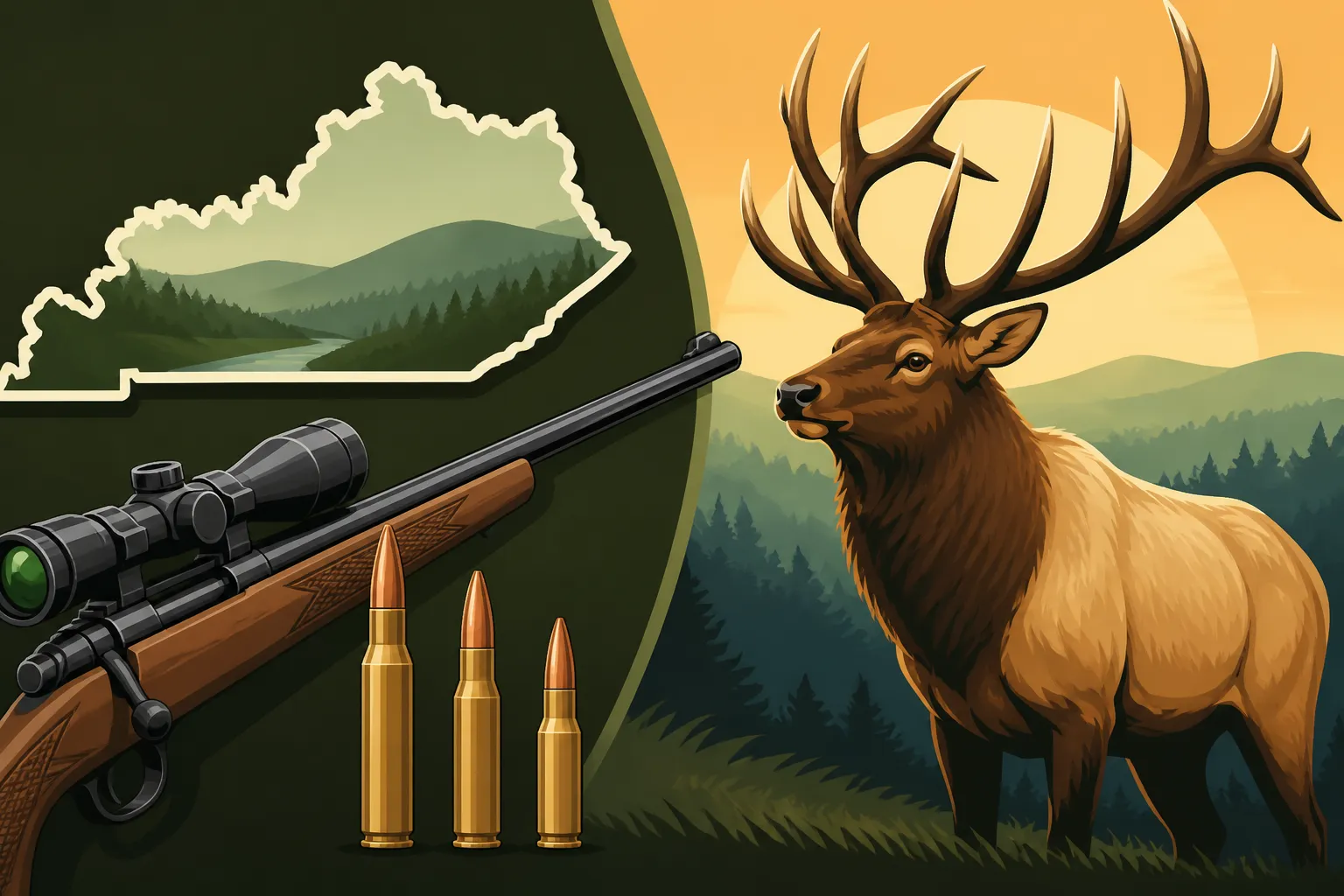
Rifle Calibers for Kentucky Elk
If you've ever dreamt of heading into Kentucky's rugged eastern mountains in pursuit of a majestic bull elk, you're not alone. It's an incredible opportunity, but the excitement can quickly turn to anxiety when you start thinking about the gear, especially that all-important rifle. Choosing the right caliber for Kentucky elk isn't just about raw power; it's about making an ethical, clean kill in conditions that can range from dense timber to open reclaimed mine lands. This guide will walk you through the considerations, help you understand what makes a caliber suitable, and recommend some excellent choices so you can head afield with confidence.
The Unique Landscape of Kentucky Elk Hunting
Hunting Kentucky's elk isn't like hunting the vast, wide-open spaces of the American West. Our elk country, primarily nestled within the Appalachian foothills of the state's eastern coalfields, presents its own distinct challenges and opportunities. Understanding this terrain is the first step in selecting the ideal rifle caliber.
Terrain and Shot Distances
When you envision elk hunting, you might picture mile-long shots across expansive prairies. In Kentucky, that's rarely the case. While opportunities for longer shots can certainly arise on reclaimed mine lands or across larger food plots, much of the hunting occurs in more timbered, undulating terrain. You'll navigate steep hollers, dense woods, and brushy clear-cuts. This means that while a rifle capable of precise long-range shooting is still valuable, you're often looking at shots that might be more akin to typical deer hunting distances – anywhere from 50 to 250 yards. However, don't let that lull you into a false sense of security; an elk can step out at 400 yards on a powerline cut or across a reclaimed knob, so being prepared for varying ranges is crucial. It’s a dynamic environment, demanding versatility from your setup.
Elk Size and Toughness
Kentucky is home to Kentucky's Record Elk Herd, with bulls that rival their western counterparts in size and resilience. These animals are significantly larger and tougher than white-tailed deer. An adult bull elk can weigh upwards of 700-800 pounds, with some reaching even greater weights. Their bone structure is robust, and their vitals are well-protected by thick muscle and hide. This isn't an animal you want to take lightly with an underpowered cartridge. A proper elk caliber needs to deliver sufficient kinetic energy and bullet penetration to reliably reach and destroy the vital organs, ensuring a quick and humane harvest. You want a rifle that not only drops the animal but anchors it, preventing long, difficult tracking jobs through some truly unforgiving topography. Hunting Eastern Kentucky Coalfield Country provides more insight into these challenging conditions.
Importance of Shot Placement
No matter how powerful your rifle or how well-constructed your bullet, nothing replaces precise shot placement. Even the biggest magnum caliber will perform poorly if the bullet doesn't hit its mark. When hunting elk in Kentucky, where opportunities might be fleeting and often present themselves in dense cover, the ability to put the bullet exactly where it needs to go is paramount. This emphasizes the need for a rifle and caliber combination that you can shoot accurately and comfortably, especially under pressure. While larger calibers offer a greater margin for error in terms of energy delivery, a slightly less powerful round placed perfectly will always be superior to a high-powered round that wounds.
Essential Criteria for Elk Rifle Calibers
When you're trying to decide which rifle to take elk hunting, it's easy to get bogged down in the sheer number of options. To simplify things, let's break down the core characteristics that make a rifle caliber truly effective for Kentucky elk.
Kinetic Energy and Bullet Construction
This is perhaps the most critical factor. Kinetic energy is the measure of a bullet's ability to transfer its force to the target, causing damage. For an animal as large and tenacious as an elk, you need a substantial amount of energy to ensure deep penetration and hydrostatic shock that incapacitates the animal quickly. Most ethical hunters agree that for elk, you want a cartridge that delivers at least 1,500 foot-pounds of energy at the point of impact. While many cartridges can achieve this at the muzzle, it's crucial to consider the energy retained at various distances, especially if you anticipate shots extending beyond 200 yards.
However, energy isn't everything. Bullet construction is equally vital. You need a bullet designed for large game, one that will not fragment prematurely upon impact but will instead expand reliably while retaining most of its weight to drive deep through muscle and bone. Look for bullets with bonded cores, monolithic construction (like copper), or controlled expansion designs. These types of bullets ensure that the energy is delivered efficiently into the vitals, leading to quick incapacitation. A varmint bullet, even from a powerful magnum, will fail spectacularly on an elk.
Trajectory
While Kentucky elk hunting might involve closer shots than out West, a flat-shooting cartridge still offers significant advantages. A flatter trajectory means less bullet drop over distance, which simplifies aiming, especially when you might not have time to range every shot precisely or when an elk is moving. It provides a greater "point-blank range," making it easier to hold dead-on without worrying about excessive holdover. This is particularly useful when hunting across open stretches of reclaimed land or if an elk presents itself at an unknown distance between your 100-yard zero and your maximum point-blank range. You can consult guides like Rifle Setups for Kentucky Deer Hunting for a broader discussion on rifle trajectory principles that apply to larger game as well.
Recoil: Balancing Power with Shootability
There's a common misconception that "more power is always better." While sufficient power is essential for elk, excessive recoil can be detrimental. A rifle that kicks too hard can lead to flinching, poor shooting habits, and ultimately, missed shots or wounded animals. If you're struggling with flinching, you're not going to be accurate, plain and simple.
The goal is to find a balance: a caliber powerful enough for elk but comfortable enough for you to shoot accurately and consistently, both at the range and in the field. Don't let ego dictate your caliber choice. If you can shoot a .30-06 Springfield expertly, it's a far better choice than flinching through every shot with a .338 Winchester Magnum. Consider practicing with different calibers or rifles that have recoil reduction features like muzzle brakes or heavier stocks. What feels like manageable recoil on the bench at the range can feel very different in the heat of the moment during an actual hunt.
Accuracy: The Ultimate Factor
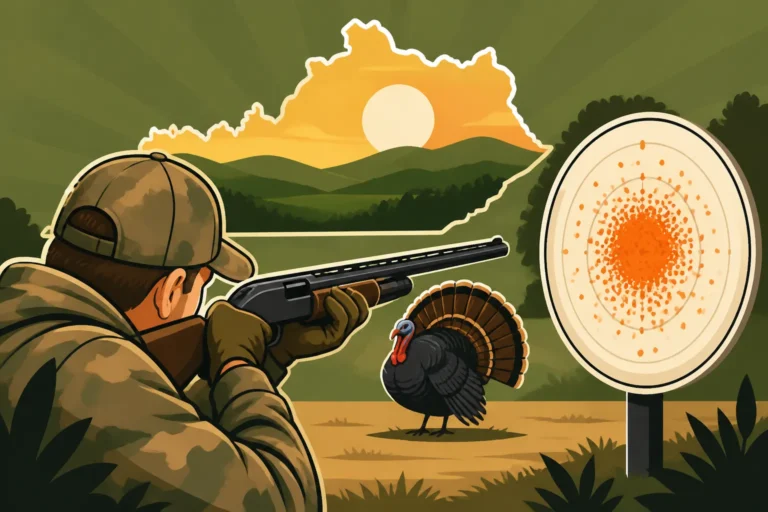
Above all, accuracy reigns supreme. A powerful, flat-shooting rifle is useless if it can't group shots tightly where you intend them to go. Consistency at the range translates directly to confidence and ethical performance in the field. Whatever caliber you choose, you must be able to consistently place your shots into a 3-inch group or smaller at 100 yards, and ideally, practice extending that accuracy out to the maximum distance you anticipate shooting.
This means finding a rifle that fits you well, spending significant time practicing with it, and using high-quality ammunition that your rifle likes. Don't skimp on practice; it’s the cheapest and most effective way to improve your chances of a successful and ethical hunt. Remember, the best rifle caliber is the one you can shoot most accurately under varying field conditions.
Top Rifle Caliber Recommendations for Kentucky Elk
Now that we've covered the crucial criteria, let's dive into some specific rifle calibers that have proven themselves more than capable for Kentucky's elk. Each has its strengths and considerations, but all can deliver effective performance when paired with the right bullet and a skilled shooter.
.30-06 Springfield: The Classic Workhorse
Ah, the venerable .30-06. If there's one caliber that embodies versatility and reliability, this is it. It has probably taken more big game worldwide than any other cartridge, and for good reason. For Kentucky elk, the .30-06, loaded with 180-grain or 200-grain premium bullets, delivers ample energy and penetration. It's powerful enough to ethically take an elk, yet its recoil is generally manageable for most shooters, allowing for good accuracy.
You'll find .30-06 ammunition virtually everywhere, and there's a vast selection of bullet types for different applications. It might not be the flattest shooting magnum on the market, but for typical Kentucky elk ranges, its trajectory is more than adequate. It's often seen as the minimum effective caliber for elk by many experienced hunters, offering a perfect blend of power, availability, and shootability. If you're looking for a dependable, no-frills choice that gets the job done without excessive recoil, the .30-06 is a superb option.
6.5 Creedmoor: The Modern Contender
The 6.5 Creedmoor has taken the hunting world by storm in recent years, largely due to its superb accuracy and mild recoil. For Kentucky elk, it’s a viable option, provided you choose the right bullet. This is absolutely critical. While it has less raw energy than a .30-06, its high ballistic coefficient bullets, typically in the 140-160 grain range, retain energy very well at longer distances.
The key to success with a 6.5 Creedmoor on elk is selecting a premium, heavy-for-caliber bullet specifically designed for deep penetration and controlled expansion on large game. Think bonded bullets or monolithic copper designs. Avoid lighter, frangible bullets intended for deer or varmints. With the right ammunition, a 6.5 Creedmoor offers a pleasant shooting experience, excellent accuracy, and sufficient penetration for ethical elk harvests, especially when shots are kept within reasonable distances, say, under 300-350 yards. It's definitely a caliber that makes it easier to practice extensively due to its low recoil. For more on this popular cartridge, check out 6.5 Creedmoor for Eastern Kentucky Ridges.
7mm Remington Magnum: Power with Manageable Recoil
Stepping up in power, the 7mm Remington Magnum offers a noticeable increase in velocity and energy over the .30-06, providing a flatter trajectory and more knockdown power at extended ranges. It's often considered a sweet spot for elk hunting, offering magnum performance without the truly punishing recoil of some larger calibers.
With 160-grain to 175-grain premium bullets, the 7mm Rem Mag is a fantastic choice for Kentucky elk, especially if you anticipate some longer shots across openings or powerline cuts. Its flatter trajectory can give you a bit more confidence when estimating ranges. While recoil is certainly more pronounced than a .30-06 or 6.5 Creedmoor, many shooters find it manageable, particularly in a rifle with good weight or a muzzle brake. This caliber offers a great balance of power, trajectory, and relative shootability for a magnum.
.300 Winchester Magnum: Serious Punch for Long Range
For hunters who want maximum power and flatter trajectory, especially if there's a chance of longer shots or a desire for a greater margin of error, the .300 Winchester Magnum is an excellent choice. It delivers a significant amount of energy, typically with 180-grain or 200-grain bullets, making it incredibly effective on elk.
The trade-off, however, is increased recoil. The .300 Win Mag can be a handful for some shooters, and if you're not comfortable with it, accuracy will suffer. If you can shoot it well, it's an undeniable elk killer. It excels in situations where an elk might present at a longer distance, providing plenty of energy to anchor the animal. Many experienced elk hunters consider it a top-tier choice. Just be sure to practice diligently to ensure you're proficient with its recoil characteristics.
Here's a quick comparison of these popular elk rifle calibers:
| Caliber | Key Attributes | Recoil Level | Effective Range (Elk) | Bullet Weight Range (Common) |
|---|---|---|---|---|
| .30-06 Springfield | Excellent all-around performance, widespread | Moderate | Up to 350-400 yards | 150-200 grains |
| 6.5 Creedmoor | Exceptional accuracy, mild recoil, flat shooting | Mild | Up to 300-350 yards (w/ premium bullets) | 120-160 grains |
| 7mm Remington Magnum | Flat trajectory, powerful, manageable magnum | Moderate-Heavy | Up to 450-500 yards | 140-175 grains |
| .300 Winchester Magnum | High power, flat trajectory, deep penetration | Heavy | Beyond 500 yards | 165-220 grains |
Other Viable Options
While the above are perhaps the most popular, other calibers can certainly do the job. The .308 Winchester, for example, is a fantastic deer cartridge and can take elk with careful shot placement and premium 180-grain bullets, especially at closer ranges. The .338 Winchester Magnum offers even more power than the .300 Win Mag but comes with substantial recoil, making it suitable only for those who can truly handle it. Calibers like the .270 Winchester or .280 Remington are also considered by some for elk, again with premium bullet selection, but many hunters prefer something with a bit more punch for these tough animals. Ultimately, personal comfort and confidence with your chosen rifle are paramount.
Beyond Caliber: The Full Package for Elk Success
Selecting the right rifle caliber is undoubtedly a cornerstone of successful Kentucky elk hunting, but it's just one piece of the puzzle. To truly maximize your chances and ensure an ethical harvest, you need to consider the entire hunting system.
Ammunition Choice: It's Not Just the Caliber
We touched on this briefly, but it's worth reiterating: the bullet within your chosen caliber is almost as important as the caliber itself. A 150-grain varmint bullet in a .300 Winchester Magnum will still perform poorly on an elk. For any caliber, especially those on the lighter end of the elk spectrum like the 6.5 Creedmoor or .308, you absolutely must use premium, heavy-for-caliber bullets designed for controlled expansion and deep penetration on large, thick-skinned game.
Look for bullets marketed as "elk" or "large game" specific. Brands like Barnes TSX or TTSX, Hornady ELD-X, Nosler AccuBond, Swift A-Frame, or Federal Terminal Ascent are excellent examples of the type of projectile you need. These bullets are engineered to hold together, expand reliably, and drive through heavy bone and muscle to reach the vitals, ensuring maximum energy transfer and tissue damage. Don't cheap out on ammunition for an elk hunt; it's a small investment for a significant return in ethical performance.
Optics: Seeing Clearly When It Counts
Kentucky's elk country can be dense, and legal shooting hours often mean low-light conditions at dawn and dusk. A high-quality rifle scope with excellent light-gathering capabilities is non-negotiable. You'll need clear glass, a reticle that's easy to see, and enough magnification to make precise shots at varying distances. Variable power scopes, typically in the 3-9x, 3-10x, or even 4-12x range, offer versatility for both close-quarters timber shots and longer opportunities across fields or power lines.
Beyond your scope, a good pair of binoculars is essential for scouting and identifying elk. You'll be spending a lot of time glassing hillsides, thickets, and openings. Consider something in the 8x or 10x magnification range with a 42mm objective lens for a good balance of field of view and light transmission. For a deeper dive into choosing the right glass, explore articles like Optics for Eastern Kentucky Ridges and Rifle Scopes for Low-Light Hollows.
Practice, Practice, Practice
This cannot be stressed enough. No matter how much money you spend on a fancy rifle and premium ammunition, if you haven't put in the range time, you're setting yourself up for disappointment. Practice shooting from various field positions – offhand, kneeling, sitting, and from a solid rest – not just from a bench. Practice quickly acquiring your target and making a clean shot, simulating the adrenaline of a real hunting scenario.
Know your rifle's capabilities and, more importantly, your own. Understand your effective range for a clean kill under pressure. If you've never shot your rifle beyond 100 yards, don't attempt a 300-yard shot on an elk. Consistent practice builds confidence and muscle memory, which are invaluable when that moment of truth arrives.
Scouting and Situational Awareness
While not directly gear-related, thorough scouting and excellent situational awareness are critical for elk hunting success. Understanding the terrain, elk travel patterns, and bedding areas will put you in a better position for a shot. Tools like GoHunt can be invaluable for identifying potential travel corridors, terrain features, and even recent harvest data in specific areas, helping you narrow down your search and strategize your approach.
Knowing the typical shot distances in your specific hunting unit and having a solid grasp of where the elk are likely to be found—and how they react to pressure—will inform your approach. This includes understanding the specific rules for your hunt, which you can learn more about by reading Applying for a Kentucky Elk Permit and general guidance on Elk Hunting Gear for Southeastern Kentucky. By combining the right rifle caliber with careful preparation and diligent practice, you'll be well-equipped for an unforgettable Kentucky elk hunting experience.
Disclaimer
This article is for general informational purposes only and does not constitute professional advice. Laws, prices and regulations vary by location and change over time. Consult a qualified professional for guidance on your specific situation.