Upland Vests With Water Capacity
There's nothing quite like the feeling of chasing grouse, rabbits, or squirrels across Kentucky's diverse landscape – from the rolling hills of the Bluegrass to the rugged terrain of the Cumberland Mountains. But let's be honest, those long treks through briar thickets and over steep ridges can leave you and your trusty hunting dog parched. Fumbling for water bottles, dealing with leaky containers, or realizing you just didn't bring enough can quickly turn an enjoyable hunt into a miserable slog. This guide is all about tackling that common frustration head-on, diving deep into why upland vests with integrated water capacity are an absolute game-changer for Kentucky hunters, ensuring you stay hydrated and focused on the hunt.
Why Integrated Water Capacity is a Game-Changer for Kentucky Upland Hunters
Kentucky's upland hunting opportunities are fantastic, but they demand a lot from both hunter and dog. We're talking about covering serious ground, pushing through dense cover, and navigating varied elevations. Without proper hydration, that challenging fun can quickly turn into a dangerous situation. An upland vest designed with water capacity isn't just a convenience; it's a critical piece of safety and performance gear.
Beating the Heat and Hydration Challenges
Think about a typical early fall day in Kentucky. The air might start crisp, but by mid-morning, the sun can be beating down, and the humidity can rise. Whether you're chasing grouse in the eastern mountains or pushing fencerows for rabbits in the western part of the state, the exertion is real. You're constantly moving, climbing, and sometimes even running to keep up with flushing birds or bounding rabbits. This level of activity, combined with fluctuating temperatures, leads to significant fluid loss through sweat.
For us hunters, dehydration manifests as fatigue, loss of focus, and even cramps – nobody wants to miss a shot because their hands are cramping up or their vision is blurry. But it's even more critical for our canine companions. Hunting dogs, especially breeds like pointers, setters, and beagles, are working incredibly hard. Their bodies generate a lot of heat, and they don't sweat like humans; they primarily cool themselves by panting. If they don't have access to water, they can overheat rapidly, leading to heatstroke, which is a serious and potentially fatal condition. I've seen good dogs go down far too fast on hot days, and it's a heartbreaking experience. Carrying enough water for both of you, and making it readily accessible, is paramount. Trying to carry a separate backpack just for water or stuffing multiple bottles into inadequate pockets is cumbersome and often leads to less frequent, but necessary, hydration stops.
Comfort and Accessibility on the Move
One of the biggest frustrations with traditional upland vests or even small backpacks is how they distribute weight, or how difficult they make it to access essentials. A good upland vest is designed to carry the load of shells, game, and other gear ergonomically, spreading the weight across your shoulders and back rather than having it sag uncomfortably. When you add a dedicated water bladder or bottle system to that design, the hydration becomes an integrated part of the load, often close to your center of gravity.
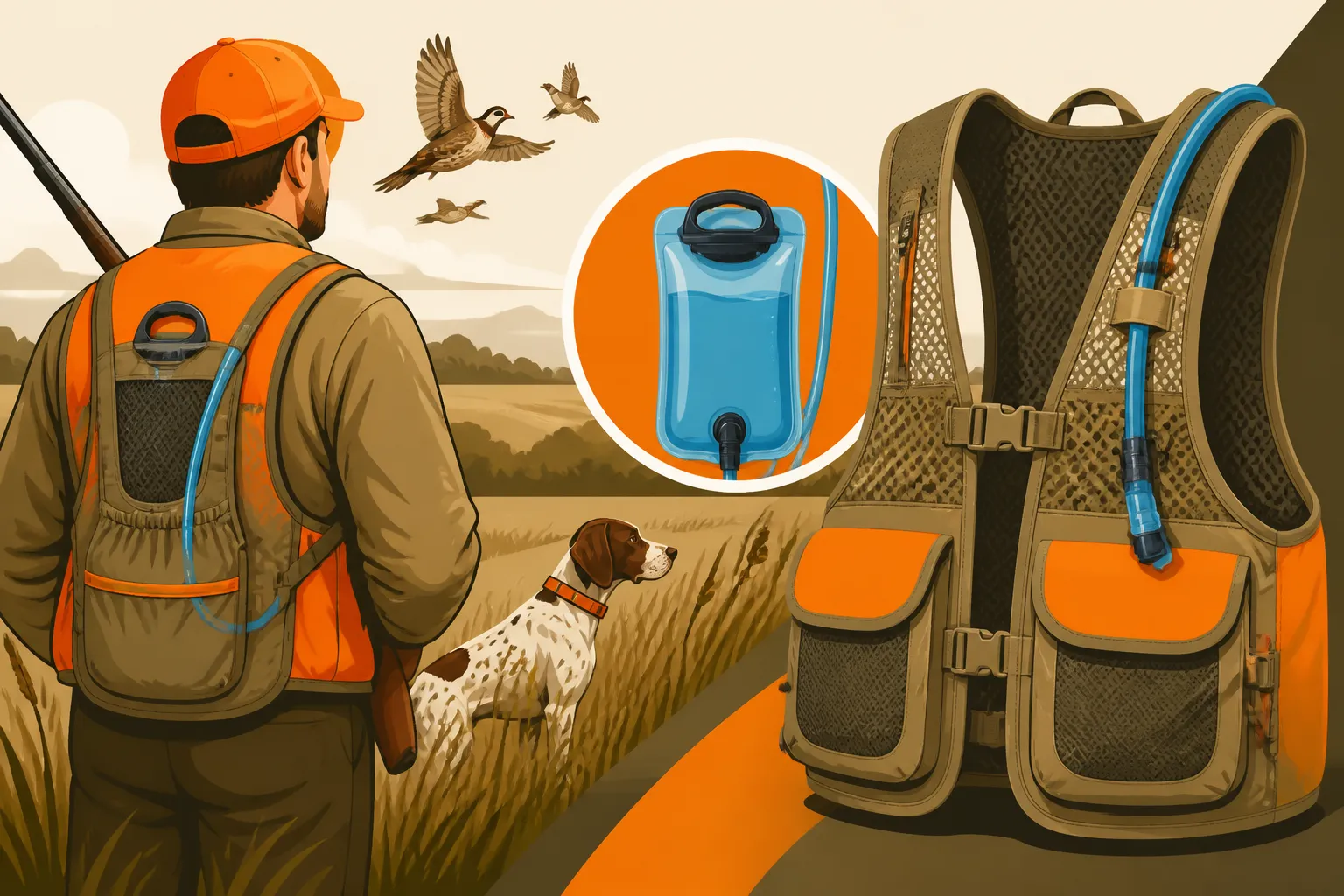
Imagine busting through a thick briar patch in pursuit of a covey of quail or working a dense creek bottom for Squirrel Hunting Kentucky Bottomland Hardwoods. The last thing you want is a bulky water bottle rattling around in a cargo pocket or a backpack getting snagged on every limb. A vest with an internal hydration bladder keeps the water secure and streamlined. The drinking tube can typically be routed over a shoulder, clipped to a strap, making it incredibly easy to take a sip without breaking stride or even taking your eyes off your dog. For your dog, a dedicated pouch for a collapsible bowl, or even a system that allows you to quickly detach a bottle, means you can offer them a drink almost instantly when you pause, rather than fumbling around. This accessibility encourages more frequent hydration for both of you, preventing issues before they start. When you're spending hours on foot, perhaps Flushing Grouse Without a Dog on a remote mountain ridge, every bit of comfort and efficiency counts.
Key Features to Look For in an Upland Vest with Water Capacity
When you're ready to invest in an upland vest with water capacity, it's not just about the water. You need a system that integrates seamlessly with your hunting style, protects your gear, and stands up to the rigors of Kentucky's diverse terrain. There are several crucial features to consider beyond just the hydration aspect itself.
Water Reservoir Design and Capacity
The heart of a hydration vest is, of course, its water system. You'll generally find two main approaches: a dedicated hydration bladder or external pockets for water bottles. Each has its pros and cons.
Hydration Bladders:
- Pros: Typically offer larger capacities (1.5 to 3 liters are common), distribute weight evenly across your back, and allow for hands-free drinking via a hose. They are usually slim and don't interfere with your swing or movement.
- Cons: Can be trickier to fill and clean in the field, and if punctured, you lose all your water. It can also be hard to tell exactly how much water you have left without checking a gauge or squeezing the bladder.
- Ideal Use: Long hunts where consistent hydration is needed, or when you're covering vast distances and can't easily refill.
Bottle-Based Systems:
- Pros: Easy to refill individual bottles, and if one leaks or breaks, you don't lose your entire water supply. Some vests have external bottle pockets that make it simple to grab and offer water to your dog directly.
- Cons: Bottles can shift around, be less comfortable, and might offer less overall capacity than a large bladder. Retrieving a bottle can also be less convenient than using a drinking tube.
- Ideal Use: Shorter hunts, or when you prefer the flexibility of carrying different liquids (e.g., water in one, electrolyte drink in another), or when you anticipate easy access to refill points.
For Kentucky hunting, where you might be out for hours in varied conditions, a vest with a 2-liter hydration bladder is often a sweet spot, providing ample water for both you and your dog without adding excessive bulk. Look for bladders made from durable, taste-free materials, and with wide openings for easy cleaning and adding ice on a hot day. Ensuring the bite valve seals well is also crucial to avoid annoying drips.
Pockets, Game Bag, and Overall Durability
Beyond water, an upland vest needs to effectively carry everything else you need for a day in the field. This includes shells, a first-aid kit, maps, a phone, dog training gear like an E-Collar Use on Public Ground, and, of course, your birds or small game.
- Pockets: Look for multiple pockets of varying sizes, ideally with secure closures like zippers or sturdy snaps. Shell pockets should be easily accessible and large enough to hold a box or two of shells. Interior pockets are great for securing valuables or sensitive electronics. Many hunters appreciate a dedicated GPS or phone pocket that allows for quick access to navigation apps or mapping tools. Speaking of mapping, consider how you might use digital tools like those found on the GoHunt platform to plan your routes and identify potential cover; a vest pocket designed to protect your device is a huge plus.
- Game Bag: The game bag is another critical feature. It should be roomy enough to accommodate your anticipated harvest – whether that's a limit of rabbits or several pheasants. A blood-proof lining is a massive bonus, making cleanup much easier after a successful hunt. Look for materials that can withstand punctures from bird beaks or sharp claws and that don't absorb odors. Easy access for loading game is also important, as is proper ventilation, especially on warmer days, to help cool your game.
- Durability: Kentucky's woods and fields are tough on gear. From thorny locust trees to dense honeysuckle patches, your vest will take a beating. Invest in a vest made from rugged, tear-resistant fabrics like heavy-duty nylon or Cordura. Reinforced stitching at stress points, durable zippers, and robust hardware are all indicators of a quality vest that will last season after season. Don't underestimate the importance of strong shoulder straps and waist belts, as they bear the brunt of the load. When you're Hunting the Kentucky Rut in Early November and pushing through thickets, durability is key.
Here's a quick comparison of hydration system types:
| Feature | Hydration Bladder System | Bottle-Based System |
|---|---|---|
| Capacity | Often higher (1.5L – 3L+) | Varies, dependent on bottle size/number |
| Accessibility | Hands-free tube, easy sips for hunter | Quick grab/pour, easier for dog bowls |
| Weight Dist. | Even across back, close to center | Can be less balanced, pockets bulge |
| Refill/Clean | Can be cumbersome in field, requires brushes | Simple refills, easier to clean individual |
| Damage Risk | Single point of failure (puncture) | Multiple points (individual bottle damage) |
| Typical Cost | Generally mid-to-high range | Can be found in various price points |
| Best For | Long, strenuous hunts, consistent hydration | Shorter hunts, varied liquid needs |
Practical Tips for Using and Maintaining Your Hydration Vest in Kentucky
Having the right gear is only half the battle; knowing how to use it effectively and keep it in top condition will ensure it serves you well for many seasons of Grouse and Small Game Hunting in Kentucky. These practical tips can make a big difference in your overall hunting experience and the longevity of your investment.
Pre-Hunt Preparation and Hydration Strategy
Before you even step out of the truck, a little preparation can go a long way.
- Fill and Chill: On warmer days, fill your hydration bladder with ice and then top it off with water. This not only keeps your water refreshingly cold but also helps cool your core as the ice slowly melts. For bottle-based systems, freezing a bottle or two beforehand can achieve a similar effect.
- Pre-Hydrate: Start hydrating the day before your hunt, and especially the morning of. Don't wait until you're thirsty in the field; by then, you're already starting to dehydrate.
- Plan Your Water Needs: Consider the weather forecast, the intensity and duration of your planned hunt, and the terrain. Will you be climbing steep hills where Wind and Thermals on a Kentucky Ridge might dry you out faster? How much ground will you cover? Use a mapping app – like the one available on the GoHunt platform – to scout your route beforehand. Knowing the topography and potential cover types can give you an idea of how much exertion to expect and, therefore, how much water you'll realistically need. This planning helps prevent you from running dry far from the truck.
- Dog Hydration Protocol: Always carry a collapsible bowl for your dog. A quick squirt from your hydration tube or pouring from a bottle into a bowl is much more efficient than trying to get your dog to drink from your hand or directly from the bladder. Offer water frequently, especially during breaks, and be extra vigilant on warm days. If you're working thick cover in places like the Daniel Boone National Forest Hunting, your dog will be working hard, so don't skimp on their water.
- Test Your Setup: Before your first hunt with a new vest, take it for a walk, loaded with water and some gear. Adjust all the straps to ensure a comfortable fit and that the drinking tube is easily accessible. You don't want to be making adjustments when a covey flushes!
Post-Hunt Care for Longevity
The conditions in Kentucky, from mud and rain to briars and blood, can be tough on your gear. Proper cleaning and maintenance after each hunt will extend the life of your vest and keep it hygienic.
- Clean the Hydration System Thoroughly: This is critical to prevent mold and mildew. Immediately after your hunt, empty any remaining water from the bladder or bottles. Rinse them thoroughly with warm water. For bladders, use a cleaning kit with a long brush for the tube and a bladder brush to scrub the inside. You can also use a mild soap solution, but ensure you rinse it out completely to avoid a soapy taste on your next hunt. Hang bladders and tubes upside down or use a drying rack to ensure they dry completely before storage. Neglecting this step often leads to a nasty surprise next time you hit the field.
- Clean the Vest: If your vest has seen a lot of mud, blood, or grime, give it a good cleaning. Most upland vests can be spot-cleaned with a damp cloth and mild soap. For more extensive cleaning, follow the manufacturer's instructions; some can be hand-washed or even machine-washed on a gentle cycle, but always air dry. Never put your vest in a dryer, as it can damage the specialized fabrics and coatings. Pay special attention to the game bag – blood and feathers can quickly become a breeding ground for bacteria if not cleaned properly. A good scrub with a hose and a brush, followed by complete drying, is usually sufficient.
- Inspect for Wear and Tear: After cleaning, take a moment to inspect your vest. Check all zippers, snaps, and buckles for damage. Look for any rips or tears in the fabric, especially after a rough hunt pushing through dense cover for Rabbit Hunting Thick Kentucky Brush. Repair small issues promptly to prevent them from becoming bigger problems. This vigilance ensures your gear is always ready for the next adventure.
- Proper Storage: Store your clean, dry vest in a cool, dry place, away from direct sunlight, which can degrade fabrics over time. Hanging it allows air circulation and helps maintain its shape.
By following these tips, your upland vest with water capacity will not only enhance your hunting experience by keeping you and your dog hydrated but will also remain a reliable piece of gear for many years of memorable Kentucky hunts.
Disclaimer
This article is for general informational purposes only and does not constitute professional advice. Laws, prices and regulations vary by location and change over time. Consult a qualified professional for guidance on your specific situation.