Squirrel Hunting Kentucky Bottomland Hardwoods
Navigating the dense canopy and often muddy terrain of Kentucky’s bottomland hardwoods for squirrels can feel like a puzzle. You know the squirrels are there, chattering away, but actually getting a shot can be a real challenge with all that thick cover and towering trees. This guide is going to walk you through everything you need to know to successfully hunt squirrels in these unique and productive Kentucky habitats, from understanding the ecosystem to the best gear and tactics.
Understanding Kentucky's Bottomland Hardwoods
Kentucky's landscape is incredibly diverse, and among its most overlooked gems for small game hunting are the sprawling bottomland hardwoods. These areas, often adjacent to rivers and creeks, present a unique set of opportunities and challenges for the squirrel hunter.
Defining Bottomland Habitats
Bottomland habitats are essentially the low-lying, often flood-prone areas found along rivers, streams, and major creeks. These aren't your typical dry, upland ridges; they're characterized by rich, fertile soil deposited by centuries of flooding, which supports a different, often more robust, variety of tree species. Think of places like the Green River, the Ohio River, or the Cumberland River bottoms – these are prime examples. The periodic inundation enriches the soil, creating an incredibly productive ecosystem for a myriad of wildlife, including our bushy-tailed friends. It's a dynamic environment, constantly shaped by water, that provides consistent food and cover year after year.
What truly makes these areas stand out is the sheer density and size of the trees. Because of the ample water and nutrient-rich soil, bottomland hardwoods often boast towering, mature timber that's hard to find in other parts of the state. You'll find a mix of species that thrive in moist conditions, providing a smorgasbord of food sources for squirrels. The canopy here is often incredibly dense, even after leaf fall, providing squirrels with a network of aerial highways to travel safely.
Identifying Prime Hardwood Stands
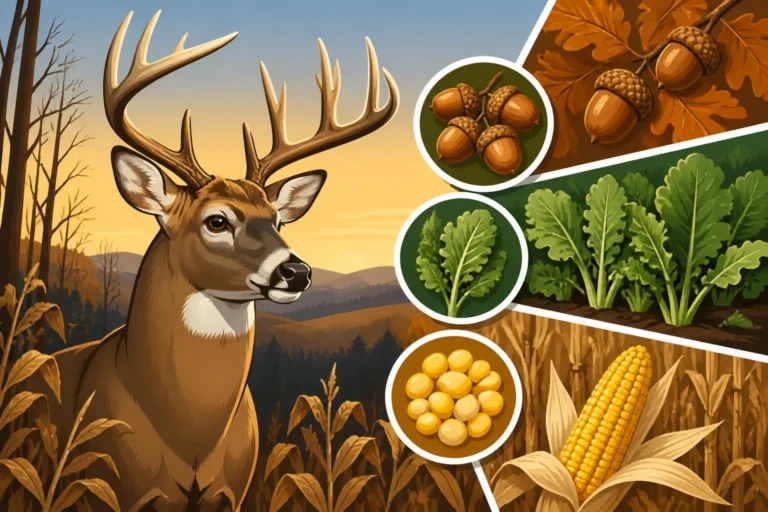
When you're eyeing a bottomland area for squirrel hunting, you're primarily looking for mature timber stands, especially those rich in mast-producing trees. We're talking about various oak species (pin oak, willow oak, water oak are common in wetter areas), pecan, hickory, hackberry, and even some sycamore and sweetgum. These trees drop the nuts, seeds, and fruits that form the core diet of Kentucky's squirrels, particularly gray and fox squirrels. The older the stand, generally the more hollows and den trees you'll find, providing crucial winter shelter and breeding sites.
Diversity in food sources is a huge advantage. A stand with a mix of different oak species, for instance, might offer acorns ripening at different times throughout the fall, ensuring a steady food supply. If you can find a pocket that also includes pecan or hickory trees, you've hit the jackpot. These areas not only provide more food but also tend to draw and hold more squirrels throughout the season, as they aren't solely reliant on one type of mast. Look for clusters of these productive trees rather than isolated individuals.
Canopy connectivity is another critical factor. Squirrels prefer to travel through the treetops rather than on the ground, especially when predators like coyotes or hawks are around. In prime bottomland hardwoods, the branches of mature trees often intertwine, forming a continuous aerial pathway. This allows squirrels to move quickly and safely from one feeding area to another, or from a den tree to a mast tree. Areas with strong canopy connectivity mean squirrels feel more secure, leading to more visible activity and better hunting opportunities.
Seasonal Changes and Their Impact
Squirrel hunting in Kentucky's bottomlands is a game of adapting to the seasons, as the habitat and squirrel behavior change dramatically from early fall to late winter. Understanding these shifts is key to consistent success.
Early in the season, typically when Kentucky's archery season opens in early September, the woods are still thick with leaves. This means squirrels have abundant cover, making them harder to spot, but they're also highly active, feasting on green mast like hickory nuts and early acorns. Look for squirrels cutting nuts high in the canopy; the falling fragments are often the first sign of their presence. You'll want to focus on areas with the freshest food drops, as squirrels will congregate there.
As mid-season approaches and the leaves begin to fall, especially after a good frost, the hunting changes. The reduced foliage makes spotting squirrels easier, but they also become more wary. At this point, they're often more focused on dropped mast on the forest floor, actively caching nuts for winter. This is when understanding where to look for Reading Cuttings Under an Oak becomes paramount. You'll also want to start paying more attention to den trees – hollow trees or old woodpecker holes where squirrels will seek refuge as the weather cools. Knowing where these dens are can be crucial for late-season hunts.
By late season, from December into January, conditions can get tough. The trees are bare, revealing any movement, but squirrels are less active, often only venturing out during warmer parts of the day. Snow or heavy frost can be your ally, as you can track squirrel movements directly to their feeding areas or den trees. During this time, hunting near reliable, late-season food sources or quietly approaching active den trees can be very productive. Remember to check the Kentucky Small Game Season Rules for specific dates and bag limits as you plan your hunt.
Essential Scouting for Bottomland Squirrels
You can't just wander into the woods and expect to find squirrels, especially not consistently. Successful squirrel hunting, particularly in the vastness of bottomland hardwoods, starts long before you ever step foot in the timber with your firearm. It begins with diligent scouting.
Reading the Land from Afar
Before you even lace up your boots, you can gather a wealth of information about potential squirrel hotspots using modern tools. Topographical maps and aerial imagery are your best friends here. Satellite maps, available through services like GoHunt, allow you to zoom in and identify blocks of mature hardwoods, discern tree species (to a degree, based on canopy shape and color), and pinpoint water features like creeks and oxbow lakes that define bottomland areas. Look for areas with dense, unbroken canopy cover, as this often indicates older, more productive timber.
Understanding the topography, even subtle changes in elevation, can reveal critical insights. While bottomlands are generally flat, slight rises or humps can act as refuges during minor flooding and may hold different types of mast trees. Identify where these bottomlands meet upland ridges; these transition zones can be natural travel corridors for squirrels moving between different food sources or seeking higher ground. A good aerial view can also help you identify logging roads or old farm paths that might offer easier access into these often-impenetrable areas.
Pinpointing potential travel corridors and pinch points is a strategic move, even for small game like squirrels. A narrow strip of mature trees connecting two larger blocks of timber, a hedgerow bordering a field, or a bottleneck where a creek bends sharply through a dense woods – these are all places squirrels are likely to travel. By identifying these features from your map, you can plan your approach and anticipate where squirrels might be moving, allowing you to set up for a shot more effectively. Consider how these natural features might also influence how squirrels move within a given area, helping you to narrow down your focus.
On-the-Ground Reconnaissance
Once you've done your homework with maps, it's time to hit the ground. The most direct sign of squirrel presence is fresh cuttings. These are the chewed remnants of nuts or seeds that squirrels have been actively feeding on. Under an oak, you'll find acorn cap fragments and chewed nut meats; under a hickory, you'll see small, gnawed pieces of the shell. Fresh cuttings often have a lighter, fresher appearance compared to older, weathered pieces. Piles of these cuttings beneath a tree indicate a current feeding hot spot.
Beyond cuttings, look for dreys (squirrel nests made of leaves and twigs) and den trees. Dreys are typically visible high in the branches, often looking like a messy bundle of leaves. While not all dreys are active, a large number in an area suggests a healthy squirrel population. Den trees, with their tell-tale holes, are even more important, particularly as the season progresses. These provide crucial shelter and often act as central hubs for squirrel activity. Spotting several active den trees in a bottomland area is a strong indicator of a good hunting spot.
Finally, don't forget to check for tracks and other ground signs. Along creek banks, in muddy depressions, or after a light rain, you might spot squirrel tracks. These can give you an idea of their travel patterns on the ground. Also, observe the current year's mast crop. Is it a good acorn year? Are the hickory nuts abundant? The quantity and quality of mast will directly impact where squirrels concentrate their feeding efforts. You can use tools like the Kentucky Hunt Fish App to identify public access points, but nothing beats getting boots on the ground to confirm what you see on the maps.
Utilizing Technology in the Woods
Modern technology can be a squirrel hunter's secret weapon, especially when navigating the often-featureless expanse of bottomland hardwoods. Your smartphone, loaded with the right apps, can be an invaluable scouting and navigation tool.
GPS apps, like those offered by GoHunt, are fantastic for marking hot spots and ensuring you don't get turned around in unfamiliar territory. You can drop pins on productive den trees, areas with heavy cuttings, or even specific mast trees that look promising. These apps often provide satellite imagery that is even more detailed than general online maps, allowing you to discern nuances in the canopy or identify smaller waterways. The ability to see your exact location on a detailed map, even without cell service, is a game-changer for safety and efficiency.
While not as common for squirrel hunting, trail cameras can still offer valuable insights. Setting a camera near a particularly productive mast tree or a well-used game trail in the bottomland can help you confirm squirrel activity, identify peak feeding times, and even distinguish between different species. While perhaps overkill for some, for the serious squirrel enthusiast, it can add another layer of intelligence to your scouting efforts.
Finally, don't underestimate the power of a good weather app. Squirrel activity is often influenced by weather patterns. They tend to be more active on calm, clear days and particularly after a rain shower has passed, often emerging to feed when the woods are still damp. Conversely, strong winds or heavy rain can send them scurrying to their dens. Checking the forecast can help you plan your hunt for optimal activity, ensuring you're in the woods when squirrels are most likely to be out and about. Knowing Wind and Thermals on a Kentucky Ridge might be crucial for deer, but even for squirrels, understanding how wind affects their movement and your ability to hear them can make a big difference.
Tactical Approaches for Hunting Bottomland Squirrels
Squirrel hunting in bottomland hardwoods requires a blend of patience, stealth, and a keen eye. Unlike hunting a deer, where you might sit for hours, squirrel hunting often involves more movement and quick decisions. Let's look at the proven strategies.
Still-Hunting Strategies
Still-hunting is perhaps the most popular and effective method for squirrels in bottomland hardwoods. It's not about being absolutely still; it's about moving incredibly slowly and deliberately, constantly scanning the trees and forest floor. Think of it as a slow, methodical walk, pausing frequently to observe and listen. You're trying to blend into the environment, becoming part of the natural rhythm of the woods.
The key to successful still-hunting is to use natural cover to your advantage. Walk along the edges of thickets, behind large trees, or through slight depressions that break up your silhouette. Always try to walk into the wind, if possible. This helps carry your scent away from the squirrels and also makes it harder for them to hear your approach, as the rustling leaves might mask your footsteps. Your eyes should be constantly moving, not just looking straight ahead, but sweeping the canopy, checking every branch, every knot, and every shadow for the tell-tale twitch of a tail or the outline of a squirrel.
Patience is a virtue here. After moving a short distance, stop and stand absolutely still for several minutes – five to ten minutes is not too long. Let the woods settle around you. Often, squirrels that have been spooked by your movement will resume their activity once they feel safe, or you'll spot others that were simply hidden from view. Use this time to listen intently for the subtle sounds of squirrels cutting nuts, scampering up tree trunks, or chattering. You might be surprised at what emerges from the seeming stillness. For a deeper dive into stealthy movement, you might find tips on Still-Hunting Eastern Kentucky Ridges useful, as many principles apply even to different terrain.
Sit-and-Wait Tactics
While still-hunting is active, the sit-and-wait method is a classic for a reason, especially in a productive bottomland. This tactic works best when you've identified a concentrated food source, like a cluster of pecan or oak trees that are dropping heavily, or a known den tree area. The idea is to get to your chosen spot quietly before dawn or during the prime activity times (early morning and late afternoon), and then simply become a part of the forest furniture.
When choosing a spot, look for a comfortable natural blind – perhaps leaning against a large tree trunk, or tucking yourself into some dense undergrowth. You want a position that offers a good field of view, ideally into the sun (so squirrels are backlit, not you), and allows you to remain still for extended periods. A small, portable seat or cushion can make a world of difference for comfort. Once settled, minimize all movement. Small shifts or rustling can easily spook a squirrel that's just starting to feel safe enough to emerge.
The trick to this method is letting the squirrels come to you. They often emerge from their dens or start feeding after the woods have been quiet for a while. Listen for the distinct sound of gnawing, falling nut fragments, or the soft thud of an acorn hitting the leaf litter. Once you hear or see movement, slowly bring your firearm to bear. This method can be incredibly relaxing and productive, especially in areas where squirrels are abundant and accustomed to using specific trees.
Hunting with Dogs
For many, squirrel hunting isn't truly squirrel hunting without a good dog. Breeds like feists and curs are bred specifically for this purpose, offering an entirely different and often more exciting experience. A well-trained squirrel dog works by ranging ahead, scenting out squirrels on the ground, and then "treeing" them – barking at the base of the tree where the squirrel has sought refuge.
The joy of hunting with a dog is that they cover a lot of ground, locate squirrels efficiently, and eliminate much of the tedious still-hunting. They also often find squirrels that you would have otherwise walked right past. Training is key; a good squirrel dog learns to ignore other game and focus solely on squirrels, barking only when a squirrel is treed. This requires patience and consistent work, often starting from a young age.
In thick bottomland timber, your dog's ability to navigate the terrain and clearly indicate a treed squirrel is paramount. You'll learn to interpret their barks – a frantic, steady chop often means a squirrel is high up, while a more subdued bark might mean it's hidden lower. Once the dog has a squirrel treed, your job is to slowly and quietly approach, scan the tree from all angles, and locate the squirrel for a shot. It's a true partnership, making for some of the most memorable hunts. Consider taking a new hunting partner on a Bringing a First-Timer on a December Hunt outing for squirrels, as it's a great introduction to the sport.
Reading Cuttings Under an Oak
As mentioned in scouting, understanding how to read cuttings is a skill that pays dividends, especially when actively hunting. When you're still-hunting or moving to a new sit-and-wait spot, always keep an eye on the ground for these tell-tale signs. Fresh cuttings are your clearest indication that squirrels have recently been feeding in that exact spot, meaning there's likely a squirrel or two nearby, or they'll be back soon.
What specifically are you looking for? Freshly gnawed shells, particularly the inner white membrane of acorns or the clean breaks of hickory nut shells. If the edges of the shell fragments are still crisp and have not yet turned dark or weathered, you know they're recent. The quantity of cuttings also matters; a large pile under a single tree indicates a heavy feeding effort and a productive tree. Also, note the type of nut – are they red oak acorns, which typically ripen later, or white oak acorns, which are preferred and drop earlier? This helps you understand the current diet of the squirrels.
Once you find a spot with fresh cuttings, you have a couple of options. You can slow down your still-hunt even further, circling the tree very deliberately, often finding the squirrel still in the tree or a neighboring one. Alternatively, if it's a prime tree, you can transition to a sit-and-wait tactic, setting up quietly and patiently waiting for the squirrel to return or for another one to arrive. This method is incredibly effective and directly leverages your scouting efforts in real-time.
Gear and Essentials for Bottomland Squirrel Hunting
Having the right gear makes a world of difference, especially when you're tramping through wet, often thick bottomland hardwoods. It's not just about the firearm; it's about comfort, visibility, and efficiency.
Firearms and Ammunition
For squirrel hunting, especially in hardwoods where shots can be precise but also quick, you typically have two main firearm choices: the .22 LR rifle or a shotgun. Each has its advantages.
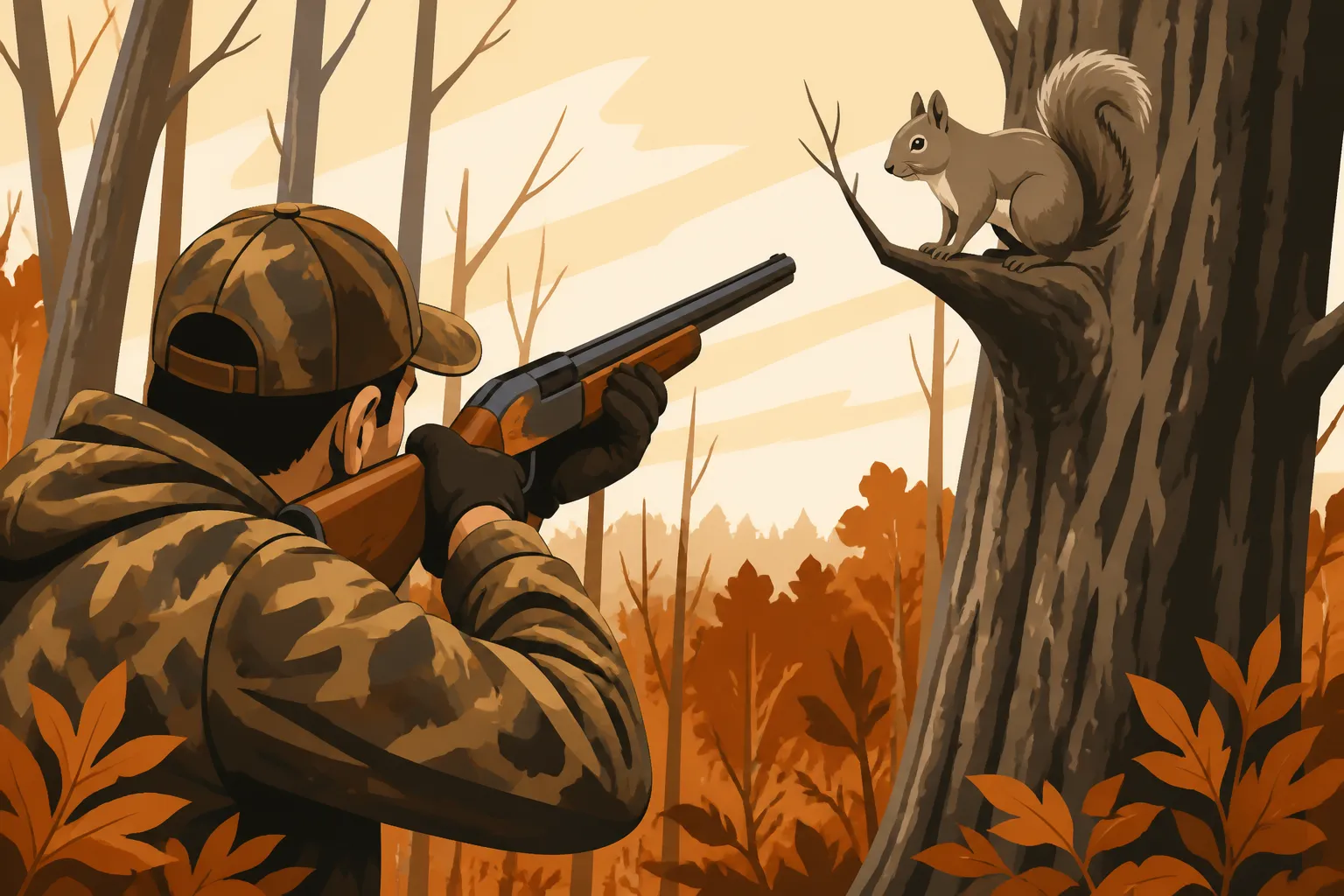
The .22 LR rifle is the classic squirrel gun. It offers precision, quiet operation, and incredibly cheap ammunition. This is your tool for headshots, preserving more meat, and making those tricky shots at squirrels silhouetted against the sky or hunkered down on a branch. In thick bottomland, shots are often relatively close, within 50 yards, making the .22 ideal. Paired with a decent scope, it allows for surgical accuracy. Hollow-point ammunition is often preferred as it delivers a bit more punch to humanely dispatch the animal. For longer shots or to learn more, check out Zeroing at 100 Yards for Ridge Hunting and adapt the principles for closer ranges.
Shotguns, typically a .410 or a 20-gauge, are excellent for faster, more dynamic squirrel hunting, especially when dogs are involved or when squirrels are particularly skittish and moving quickly through the canopy. The spread of shot gives you a greater margin for error, which can be crucial when a squirrel is darting between branches. Smaller shot sizes, like 6 or 7 ½, are perfect for squirrels, providing enough pellets for a clean kill without over-damaging the meat. While a .410 is light and nimble, a 20-gauge offers a bit more range and knockdown power. If you're wondering which to pick, consider the Best Shotgun Gauge for Kentucky Squirrel.
Regardless of your choice, safety is paramount. Always know your target and what's beyond it. In dense bottomland, be extra cautious about your backdrop, as thick foliage can sometimes obscure houses or roads. Handle your firearm responsibly, keep it pointed in a safe direction, and ensure it's unloaded when navigating tricky terrain or crossing obstacles.
Optics and Vision Aids
Beyond the firearm itself, a few optical aids can significantly enhance your squirrel hunting success in bottomland hardwoods.
Binoculars, ideally an 8x or 10x magnification, are invaluable for spotting subtle movements in the dense canopy. It's amazing how a squirrel can disappear against a tree trunk, and a good pair of binoculars can help you pick apart the shadows and leaves, revealing its location. They also save your neck from constant craning by allowing you to scan distant branches more effectively. Choose a pair that is lightweight and durable enough for the woods.
A good scope on your .22 rifle is almost non-negotiable for precise squirrel hunting. A low-power variable scope (e.g., 1-4x or 2-7x) offers versatility, allowing you to quickly acquire a target at lower magnifications and then dial up for more precise shots. Clarity and light-gathering capability are important, especially in the dim light of a dense bottomland forest early or late in the day. Rifle Scope Magnification for Kentucky Deer might seem like overkill, but the principles of clear optics apply across the board.
While not always necessary for squirrel hunting, a compact rangefinder can be surprisingly useful, especially if you're using a .22 rifle and want to be precise with your shots. Knowing the exact distance to a squirrel allows you to account for bullet drop, ensuring a clean kill. In the cluttered environment of bottomland hardwoods, judging distance by eye can be difficult, and a rangefinder removes the guesswork.
Clothing and Comfort
Comfort and practicality in clothing are vital when hunting Kentucky's bottomland hardwoods, which can be notoriously wet, muddy, and thick.
Layering is crucial, as early fall mornings can be cool, but midday can warm up considerably, even in the shade of dense trees. Start with a moisture-wicking base layer, add an insulating mid-layer (fleece or wool works well), and top it off with a waterproof and breathable outer shell. Bottomlands are often damp, and a sudden rain shower isn't uncommon. A good waterproof jacket and pants will keep you dry and comfortable.
Quiet fabrics are a must. The last thing you want is for your clothing to rustle loudly with every slight movement, alerting every squirrel within a hundred yards. Wool, fleece, and soft-shell materials are excellent choices. Avoid noisy nylon or stiff cotton if you plan on still-hunting. Consider some blaze orange or pink elements, even if not strictly required for small game, for safety, especially if other hunters might be in the area. The Kentucky Blaze Orange Requirements for deer are strict, but it’s still wise to be visible.
Finally, invest in comfortable, waterproof boots. You'll likely be traversing muddy creek banks, crossing shallow streams, and walking through damp leaf litter. A pair of knee-high rubber boots or waterproof hiking boots with good ankle support will be your best friend. Your feet are your foundation, and keeping them dry and comfortable will allow you to stay in the woods longer and focus on the hunt, not your discomfort.
Navigating Kentucky's Public and Private Bottomlands
Finding a place to hunt squirrels in Kentucky's bottomland hardwoods is half the battle. Whether you prefer public lands or seek permission on private tracts, understanding access and regulations is key.
Public Land Opportunities
Kentucky offers a variety of public hunting lands that contain excellent bottomland hardwood habitats. Wildlife Management Areas (WMAs) are often prime spots, as many are located along major river systems. Areas like Sloughs WMA in western Kentucky, or sections of the Green River Lake Public Hunting Ground, are examples where you can find extensive bottomland areas perfect for squirrel hunting. The Kentucky Department of Fish and Wildlife Resources (KDFWR) manages these areas, and they are generally open for public hunting.
However, each WMA can have specific rules and regulations beyond statewide general small game seasons. Some might have special quotas, different access points, or specific regulations on vehicle use. It's imperative to check the KDFWR hunting guide or the individual WMA's website before you go. This will ensure you're hunting legally and safely. Tools like GoHunt can provide overlays for public land boundaries, helping you identify exactly where you can hunt and plan your routes in.
Dealing with hunting pressure is a reality on public land. Bottomland areas can be popular, especially on weekends or during peak season. To find less-traveled areas, you often need to be willing to walk further than most. Look for sections of a WMA that are harder to access, perhaps requiring a longer hike or crossing a small creek. These areas often hold more undisturbed squirrels. Using aerial maps to scout out these more remote pockets, or identifying Finding Ground Others Walk Past, can significantly improve your chances of a successful and peaceful hunt.
Gaining Private Land Access
Hunting private land often offers a more secluded experience with less pressure, but it requires the effort of gaining permission. The vast majority of Kentucky's land is privately owned, and building relationships with landowners can unlock some truly fantastic squirrel hunting opportunities, especially in areas with extensive bottomlands.
The art of asking permission is a delicate one. Start by identifying potential areas on maps, then politely approach landowners. A face-to-face conversation is always best. Be respectful, dress neatly, and be prepared to introduce yourself and explain what you're hoping to do. Offer to provide references if they like, and always have your hunting license and proof of insurance (if applicable) handy. Explain that you understand the responsibility of being on their land and that you will treat it with the utmost respect.
Once you gain permission, it's crucial to be an exemplary guest. Leave absolutely no trace, pick up any trash you find (even if it's not yours), and always respect their property boundaries. Communicate your plans – let them know when you'll be on their land and where. Offering to share your harvest, or even helping with small tasks around their property like fixing a fence or checking livestock, can go a long way in building trust and securing future hunting access. Many landowners appreciate the help and the reduced squirrel population if they're experiencing crop damage. Remember, Do You Need Written Permission in Kentucky? is a good question to ask, and often recommended for clarity.
| Hunting Method | Pros | Cons | Ideal Conditions |
|---|---|---|---|
| Still-Hunting | Covers more ground; active and engaging; finds hidden squirrels. | Requires stealth and patience; can be tiring. | Early-mid season; calm, quiet days; diverse habitat. |
| Sit-and-Wait | Less physical exertion; effective in high-density areas; good for focusing on specific trees. | Less ground covered; reliant on squirrel movement to you. | Peak feeding times; productive mast trees; den tree areas. |
| Hunting with Dogs | Highly efficient; exciting experience; covers large areas quickly. | Requires a trained dog; dog noise can alert other game. | Mid-late season; dense cover; when squirrels are active. |
Disclaimer
The information provided in this guide is for general educational and informational purposes only. Hunting regulations, seasons, and licensing requirements can change. Always consult the most current Kentucky Department of Fish and Wildlife Resources (KDFWR) regulations and local ordinances before engaging in any hunting activity. Safety should be your top priority.