Zeroing at 100 Yards for Ridge Hunting
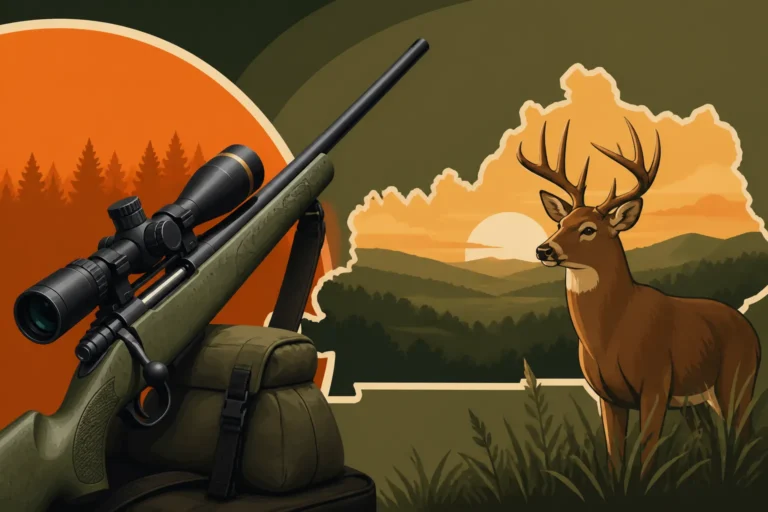
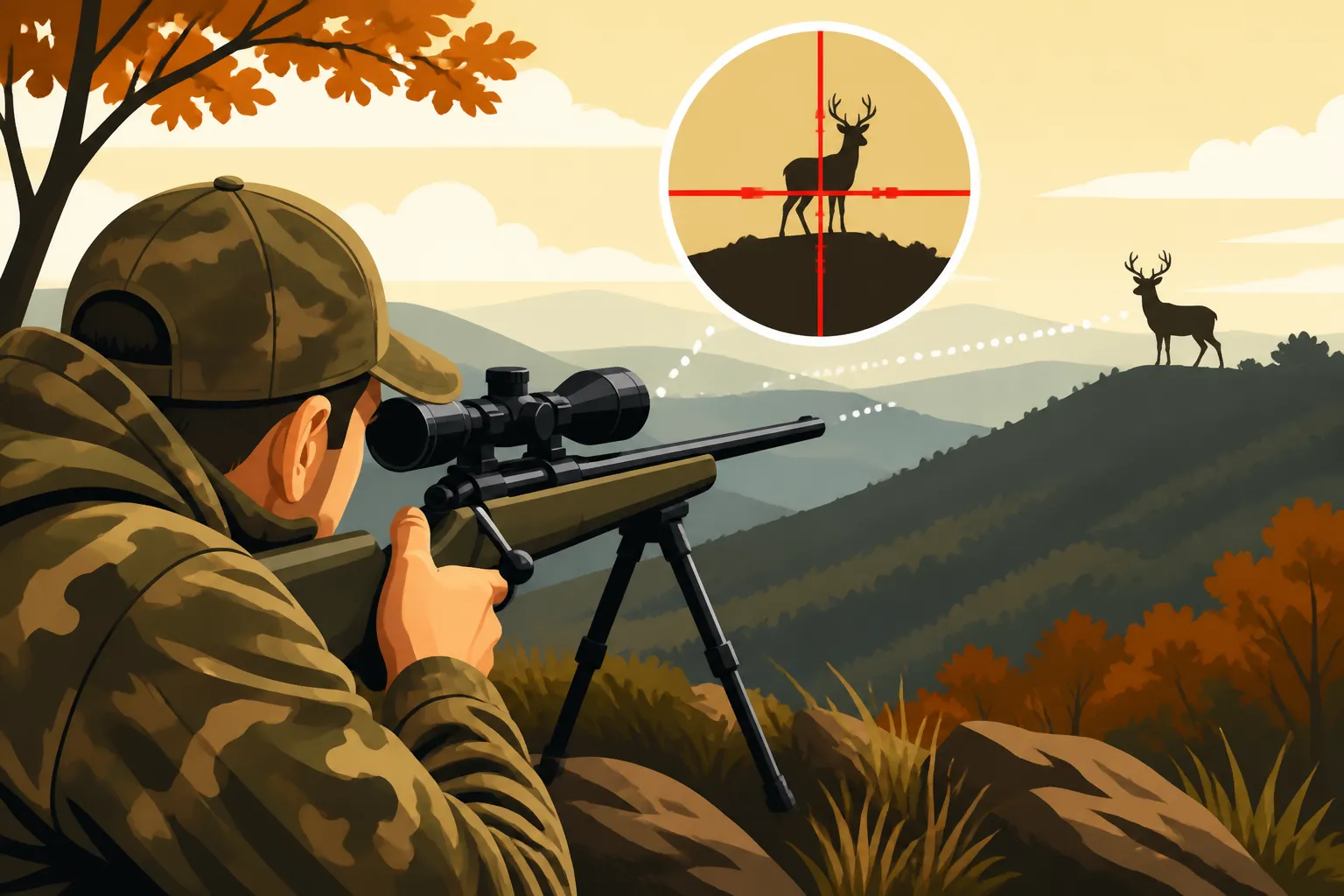
One of the biggest head-scratchers for Kentucky hunters, especially when you're staring down a steep ridge or across a hollow, is figuring out how to zero your rifle for those unpredictable shots. You might have a 40-yard chip shot in thick timber one moment and a 200-yard opportunity across a powerline cut the next. This guide aims to demystify the process, helping you understand why a precise 100-yard zero is arguably the most versatile and effective foundation for hunting Kentucky's diverse terrain.
Why 100 Yards is Your Go-To for Kentucky Ridges
Let's face it, Kentucky's hunting landscape isn't one big, flat cornfield. We're talking rolling hills, steep hollows, dense hardwoods, and often, extremely thick cover that makes long-range shots a rarity for many of us. Trying to pick a "perfect" zero for every possible scenario is a fool's errand. That's why establishing a solid 100-yard zero becomes such a powerful, practical solution, allowing you to confidently take shots in a wide range of typical Kentucky hunting situations without overthinking your hold.
Understanding Kentucky's Terrain
When you're still-hunting the steep slopes of Eastern Kentucky or carefully picking your way through the thick undergrowth of Daniel Boone National Forest, you quickly realize that clear, unobstructed shooting lanes rarely extend beyond 100-150 yards. While there might be that occasional logging road or powerline right-of-way that opens up, the vast majority of your opportunities will likely present themselves much closer. You're constantly navigating dense timber, thick multiflora rose, and the undulating terrain that defines so much of our state. A hunter spending time in Hunting Eastern Kentucky Coalfield Country will understand this immediately.
Imagine you're tucked into a saddle, glassing a bench below, and a nice buck slips through the hardwoods at 70 yards. Or perhaps you’re easing along a creek bottom and a deer steps out at 120 yards. These are common scenarios, not the exception. A zero set for much longer distances, say 200 or 300 yards, might mean you're holding unnervingly low on those closer, more common shots. That mental gymnastics under pressure is exactly what we want to avoid. Your focus should be on the deer, not on an overly complicated aiming solution.
The "Point-Blank" Advantage
The beauty of a 100-yard zero for most common deer cartridges is that it offers a very forgiving "point-blank range." What does that mean? It means your bullet's trajectory remains relatively flat, often staying within a few inches above or below your line of sight, for a significant distance both closer and farther than your 100-yard zero. This allows for a simple "hold on hair" approach for the majority of shots you're likely to encounter in typical Kentucky timber.
For example, with a common deer hunting caliber like a .308 Winchester, zeroed at 100 yards, your bullet might only be an inch high at 50 yards and perhaps 3-4 inches low at 200 yards. For a deer's vital zone, which is generally about 8-10 inches in diameter, this means you can often place your crosshairs directly on the vitals and still achieve a lethal hit without significant hold-over or hold-under. This simplicity is invaluable when a buck suddenly appears and you have mere seconds to make a decision. It reduces variables and boosts confidence, which is paramount when the moment of truth arrives. Knowing your rifle's capabilities with a 100-yard zero also ties directly into Rifle Setups for Kentucky Deer Hunting.
Let's look at a hypothetical trajectory for a common deer cartridge (e.g., .308 Win, 150-grain bullet, 2800 fps muzzle velocity) with a 100-yard zero, assuming a 1.5-inch scope height over bore.
| Range (Yards) | Bullet Drop (Inches) | Hold Adjustment (with 100-yard zero) |
|---|---|---|
| 25 | +0.5 | Aim dead-on |
| 50 | +1.0 | Aim dead-on |
| 75 | +0.5 | Aim dead-on |
| 100 | 0.0 | Aim dead-on |
| 125 | -1.0 | Aim dead-on or slight hold-high |
| 150 | -2.5 | Aim dead-on or slight hold-high |
| 175 | -4.5 | Slight hold-high |
| 200 | -7.0 | Hold 3-4 inches high |
As you can see, from 25 to about 150 yards, you're pretty much aiming straight at the target. This "point-blank" approach covers a massive percentage of shots taken in the vast majority of Kentucky's hunting areas.
The Practicalities of Zeroing at 100 Yards
Zeroing a rifle isn't just about punching paper; it's about building confidence and ensuring ethical shots in the field. The process itself needs to be methodical, and you need to understand the variables at play. A hasty zero can lead to frustrating misses and, worse, wounded game. Taking the time to do it right at 100 yards provides that solid base you need.
Setting Up Your Range Session
First things first, you need a safe and reliable place to shoot. Finding a suitable range in Kentucky can sometimes be a challenge, especially if you want to avoid crowds or need a spot where you can take your time. If you’re heading to a public range, try to go on a weekday or during off-peak hours. Make sure you have a sturdy rest – sandbags, a bipod, or a lead sled are all excellent choices. You want to eliminate as much human error as possible from the equation.
Start by bore-sighting your rifle. Many gun shops can do this for you, or you can purchase an inexpensive laser bore sighter. This gets you on paper quickly at 25 or 50 yards, preventing wasted ammunition and frustration. From there, move to 100 yards. Always take a minimum of three shots per group, allowing your barrel to cool between groups, especially after the first few. Don't chase flyers; if you have one shot wildly off, disregard it and shoot another group to confirm. Pay attention to your breathing, trigger pull, and follow-through. It’s not just the rifle you're zeroing; you're also zeroing yourself to the rifle. Remember, consistent Rifle Scopes for Low-Light Hollows settings are crucial here.
Ammo Consistency is Key
This is a point I can't stress enough: always zero your rifle with the exact ammunition you intend to hunt with. Different bullet weights, bullet types, and even different manufacturers of the same bullet weight can produce vastly different points of impact. It's not uncommon for a rifle zeroed with inexpensive practice ammunition to shoot several inches off at 100 yards when switched to premium hunting rounds. Think of all the care you put into Choosing a Rifle Caliber for Kentucky Deer; you should put that same care into your ammunition choice.
Hunting ammunition is designed for terminal performance on game, not just accuracy. It's often more expensive, but it's a critical investment. Buy several boxes of your chosen hunting load well in advance, especially with current Ammunition Availability Before Opening Day concerns. Shoot enough of it to confirm your zero and get comfortable with how it performs from your rifle. Once you have that 100-yard zero locked in with your hunting load, you can then proceed to understand its trajectory for longer shots if you choose, but never compromise that foundational accuracy by using a different load for hunting.
Extending Your Effective Range Beyond 100 Yards
While a 100-yard zero is fantastic for the vast majority of Kentucky hunting situations, there will be times when you find yourself with an opportunity for a longer shot. This could be across a large field, down a powerline cut, or from one ridge to another. Knowing your rifle and ammunition's capabilities beyond 100 yards is about being prepared, not necessarily about seeking out those shots.
Learning Your Bullet Drop
Once your 100-yard zero is confirmed, the next step is to understand how your bullet behaves at longer distances. This means knowing your bullet drop. You don't need to be a long-range precision shooter, but having a general idea of how many inches your bullet will drop at 150, 200, or even 250 yards with your chosen ammunition is incredibly valuable. Many modern hunting apps and online ballistic calculators, like those often linked through resources you might find on GoHunt, can provide excellent data points based on your specific bullet, muzzle velocity, and environmental conditions.
The best way to truly learn your bullet drop is to practice at those longer ranges. If your local range has 200 or 300-yard lanes, take advantage of them. Shoot groups at these distances and observe where your bullets are hitting relative to your aiming point. You'll likely find that at 200 yards, you might need to hold a few inches high, and at 250 yards, it could be closer to 8-10 inches. Document this in a small notebook you keep with your hunting gear. This isn't about precise dialing for every shot; it's about having enough knowledge to make an informed decision when a longer opportunity arises. Knowing your true Practical Range in Daniel Boone Forest Timber is essential.
Practical Field Applications and Ethical Shots
Understanding bullet drop is one thing; applying it ethically in the field is another. On a Kentucky ridge, not only are you dealing with distance, but you're often dealing with significant angles – uphill or downhill shots. These can complicate bullet trajectory, often causing the bullet to impact higher than it would on flat ground. While calculating precise adjustments for angle shooting can be complex, for common hunting distances, knowing your flat-ground holdovers is usually sufficient, as the effect of typical hunting angles is less pronounced than extreme long-range shooting.
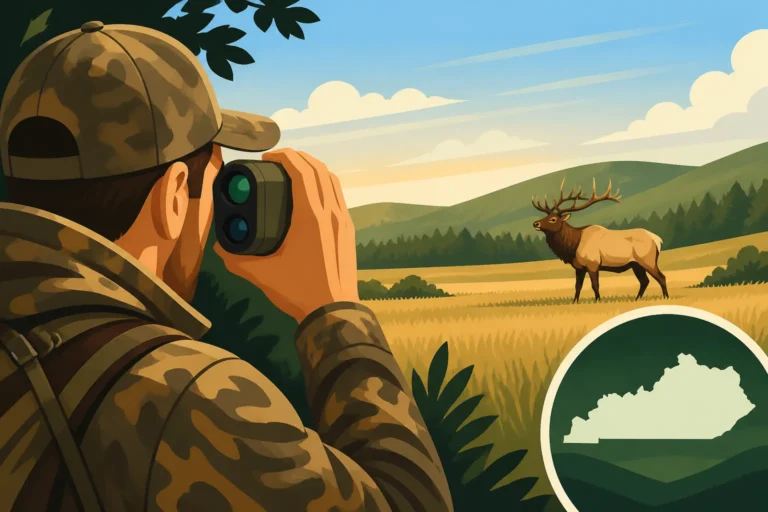
The most crucial aspect is knowing your personal ethical limit. Just because your rifle can shoot 300 yards doesn't mean you should take that shot in a hunting scenario, especially on an animal that might move, in varying light, or when you're breathing hard after a climb. Factors like wind (which can be notoriously tricky on Wind and Thermals on a Kentucky Ridge), brush, and the animal's disposition all play a role. Using tools like a rangefinder to get an exact distance is vital. If a shot feels borderline, it's almost always best to try and get closer or wait for a better opportunity. Kentucky hunters pride themselves on clean, ethical kills, and knowing when not to shoot is as important as knowing when to. Hunting the Kentucky Rut in Early November can provide some of these long-range opportunities, but patience is key.
Common Mistakes and How to Avoid Them
Even seasoned hunters can make mistakes when it comes to zeroing, and these errors can have real consequences in the field. Avoiding these pitfalls can save you frustration, ammunition, and ensure you're as prepared as possible for your next hunt.
Rushing the Process
We've all been there: it's a few days before opening day, you realize you haven't shot your rifle since last season, and you rush to the range for a quick "check." This hurried approach is a recipe for disaster. Zeroing takes time, patience, and a calm, focused mindset. Rushing leads to sloppy shooting, misinterpreting groups, and ultimately, an unreliable zero. You might tell yourself, "It's good enough," but "good enough" rarely cuts it when a mature Kentucky buck steps out.
Dedicate ample time to your zeroing session. Don't go to the range when you're stressed or pressed for time. Bring all your necessary gear: targets, eye and ear protection, a cleaning kit, and plenty of ammunition. Take breaks, let your barrel cool, and focus on each shot. If you find yourself getting frustrated, pack it up and come back another day. It's far better to have a perfectly zeroed rifle a week before the season than a rushed, questionable one the day before. This mindful approach is part of the preparation for Bowhunting Kentucky's Long Archery Season as well, even if the distances are different.
Ignoring Environmental Factors
While we've emphasized the importance of a 100-yard zero for its "point-blank" simplicity, it's a mistake to completely ignore environmental factors, even at closer ranges, especially on our Kentucky ridges. The most significant factor is wind. A strong crosswind, even at 100 yards, can push your bullet a few inches off target. At 200 yards, that effect becomes much more pronounced. You need to develop an awareness of wind direction and speed.
Learn to read the wind by observing swaying trees, rustling leaves, or by carrying a small ribbon or puff bottle. Recognize that wind on a ridge can swirl and shift rapidly. Thermals, those rising and falling air currents, also play a role, particularly in mountainous terrain, and can subtly affect bullet flight. While you might not be making precise windage adjustments for every shot in dense timber, being aware of a strong crosswind when you have a 150-yard shot across a clearing is crucial. Integrate this observation into your pre-shot routine. Being mindful of these details, just like when Scouting Kentucky Public Land Before Season, makes you a better, more prepared hunter.
Disclaimer
This article is for general informational purposes only and does not constitute professional advice. Laws, prices and regulations vary by location and change over time. Consult a qualified professional for guidance on your specific situation.