Shooting Sticks From a Kentucky Overlook
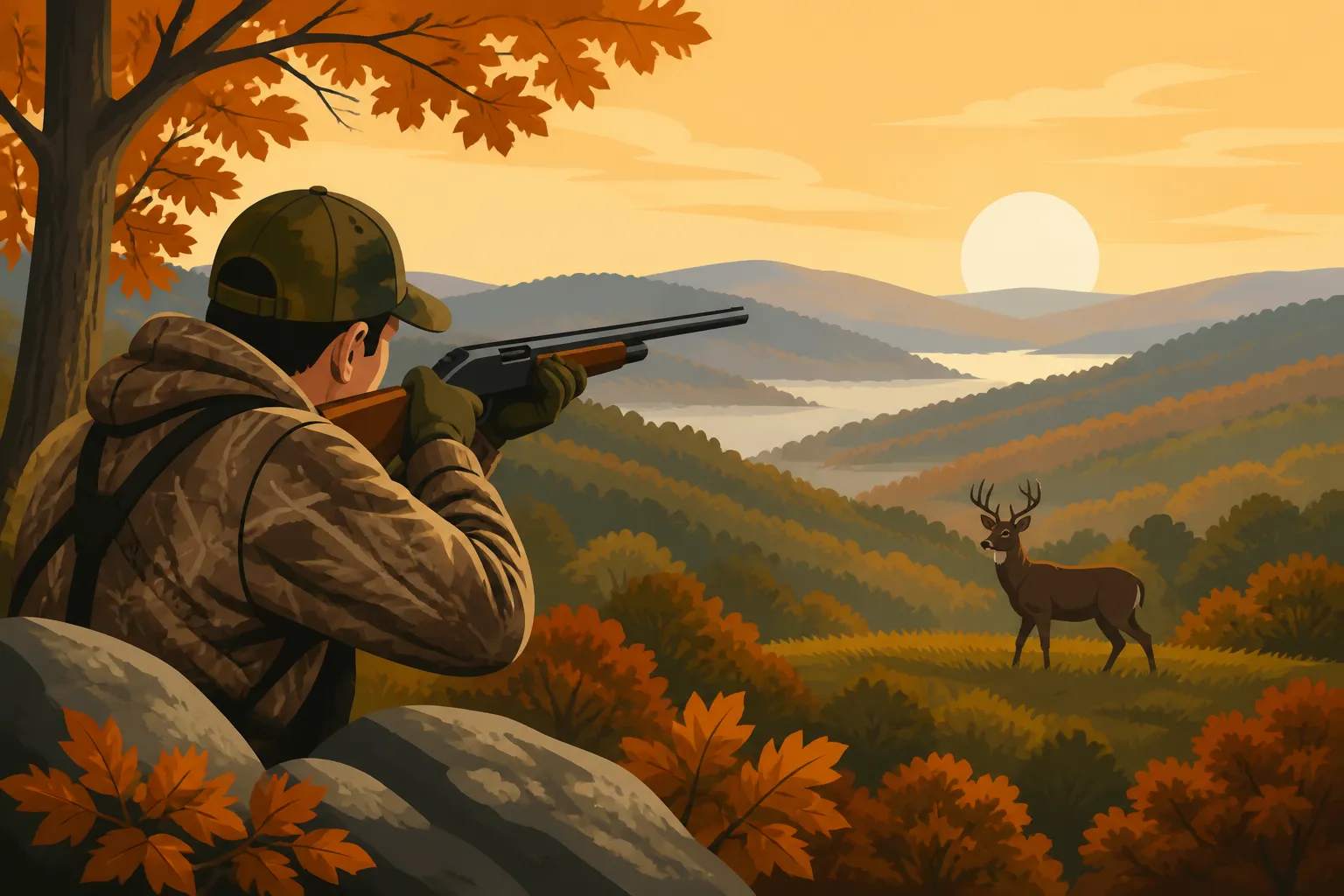
It's a familiar scenario for many Kentucky hunters: you've climbed that steep ridge, glassed a distant hollow, and finally spotted that deer you've been after, only for it to be across a ravine at an awkward angle. The ground is uneven, your heart is pounding from the climb, and trying to get a steady shot freehand feels like a fool's errand. This guide is all about embracing the often-challenging, yet incredibly rewarding, experience of shooting from a Kentucky overlook, specifically by leveraging the stability and precision that shooting sticks bring to the table.
The Overlook Advantage: Why Shooting Sticks Shine in Kentucky's Hills
Hunting from an overlook in Kentucky's diverse terrain, from the rugged eastern mountains of the Daniel Boone National Forest to the rolling hills of the Pennyroyal, presents both incredible opportunities and unique challenges. You've got that vantage point, a sweeping view that can reveal deer movement miles away, but when it comes time to take a shot, that same elevation can work against you. Traditional methods of steadying a shot often fall short in these elevated, uneven environments.
The Instability of Uneven Ground
Imagine you're tucked into a rocky outcrop, overlooking a creek bottom where you've patterned a nice buck. The ground underfoot isn't flat; it's a mix of loose rock, leaf litter, and roots. Trying to get prone or even kneel comfortably to take a shot is often impossible or, at best, incredibly unstable. You might try to rest your rifle on a tree limb, but that limb is rarely at the perfect height, and it might have its own sway or give. This is where the frustration really sets in – you've done all the hard work to find the deer, but the shot itself feels like a gamble because you can't get steady.
Shooting sticks eliminate much of this instability. They provide a portable, adjustable platform that can quickly adapt to the contours of the land, giving you a solid, consistent point of contact for your rifle. This is crucial when you're perched on a steep slope, where finding a level spot is a luxury. The ability to quickly adjust height means you're not trying to contort your body around a fixed rest, which can lead to fatigue and an unsteady hold. It's about bringing the rest to your height, rather than trying to match your height to an uncooperative natural rest.
Battling Distances and Angles
From an overlook, your shots are often going to be at longer distances than what you might encounter still-hunting through thick timber. A deer feeding in a distant clear-cut or traversing a faraway ridge line can easily be several hundred yards out. Furthermore, the shot isn't always flat; you're often shooting downhill, sometimes steeply. This combination of distance and angle adds layers of complexity to a shot that a freehand hold simply isn't designed for. Even a slight tremor at 200 yards translates to a significant miss.
Shooting sticks offer the stability needed to make these longer, angled shots with confidence. They help minimize the wobble that naturally occurs when holding a rifle, allowing you to focus on breath control and trigger pull. When you’re looking across a deep hollow, say in the eastern coalfields, and that buck steps out at 300 yards, a reliable rest is not just helpful, it’s practically mandatory for an ethical shot. For hunters utilizing tools like the mapping features on GoHunt to identify potential overlooks and long-range shooting lanes, a solid rest is the logical next step to capitalizing on that intel. Understanding Rifle Setups for Kentucky Deer Hunting is also key here, as your chosen rifle and caliber need to be capable of those longer, precise shots that an overlook might present.
Quick Setup and Silent Operation
The beauty of hunting from an overlook is often the element of surprise – spotting game before it spots you. However, that advantage is quickly lost if your setup takes too long or creates too much noise. Fumbling with a backpack, trying to find a solid tree to lean against, or digging for shooting bags can alert game, turning a golden opportunity into a missed chance.
Modern shooting sticks are designed for rapid deployment and silent operation. Many models feature quick-release levers or twist-locks that allow for near-instant height adjustments. The materials are often lightweight, making them easy to carry, and quiet against brush or your clothing. This speed means you can spot a deer, adjust your sticks, and be ready to shoot in mere seconds, capitalizing on those fleeting moments when a deer pauses in an opening. This agility is invaluable, especially when trying to intercept a moving target or when time is of the essence.
Choosing Your Weapon: Types of Shooting Sticks for Kentucky Hunters
Just like there's no single "best" rifle for every hunting scenario, there isn't one universal shooting stick. Each type offers a different balance of stability, portability, and ease of use, making certain designs better suited for specific hunting styles and terrains you'll encounter across Kentucky.
Monopods: The Lightweight, Quick-Draw Option
Monopods are, as the name suggests, a single leg. They are the lightest and most compact of the shooting stick options. For hunters who prioritize mobility above all else, perhaps those who are constantly on the move, still-hunting through diverse habitat or trying to cover a lot of ground in the Daniel Boone National Forest Hunting area, a monopod can be a real game-changer.
Pros:
- Ultimate Portability: They weigh very little and are easy to strap to a pack or even carry in hand without hindrance. Perfect for those long walks along a ridgeline.
- Rapid Deployment: A monopod can be deployed almost instantly. You extend it, plant it, and you've got a quick, immediate forward rest. This is great for those sudden encounters where a deer pops out unexpectedly.
- Improved Stability: While not as stable as a bipod or tripod, a monopod dramatically reduces vertical movement, which is often the biggest culprit in missed shots at moderate distances. It effectively adds a third point of contact (the ground, your shoulder, and the monopod).
Cons:
- Limited Lateral Stability: Since it's only one leg, you still need to actively support the rifle laterally. This means you'll still experience some left-to-right wobble, especially at longer distances.
- Less Ideal for Longer Shots: For shots beyond 200 yards, where precision is paramount, the inherent lateral instability can become a significant factor. It might not provide the rock-solid platform you need for extreme downhill shots across a vast hollow.
Best Use in Kentucky: Ideal for run-and-gun hunting, quick stops to glass, or when you anticipate shots under 150-200 yards. Think of it as a significant upgrade from freehand, but not a bench rest.
Bipods: The Versatile Workhorse
Bipods feature two legs, offering a much more stable platform than a monopod, particularly in both vertical and lateral planes. They strike a good balance between stability and portability, making them a popular choice for a wide range of hunting situations.
Pros:
- Excellent Stability: With two points of contact on the ground, a bipod provides solid vertical and lateral support. This is a significant advantage when you're looking to make more precise shots at longer ranges from an overlook.
- Versatile: Many bipods can be adjusted to different heights, allowing you to shoot from kneeling, sitting, or standing positions, which is incredibly useful when dealing with varied terrain and vegetation on a Kentucky ridge.
- Quick to Deploy: While slightly more involved than a monopod, a bipod can still be set up very quickly, especially models with independent leg adjustments to compensate for uneven ground.
Cons:
- More Weight/Bulk: Naturally, two legs are heavier and bulkier than one. While still generally manageable, it's a consideration for ultralight hunters.
- Can Be Tricky on Steep Slopes: On very steep side hills, getting both legs positioned stably can take a little more finessing than a monopod.
Best Use in Kentucky: Fantastic for general deer hunting from overlooks where shots might stretch out to 300-400 yards. They're a great all-around choice for hunters who want a solid rest without sacrificing too much mobility. If you're using a 6.5 Creedmoor for Eastern Kentucky Ridges, a bipod is an excellent pairing.
Tripods: The Ultimate in Stability
Tripods, with their three legs, offer the highest level of stability. They are essentially portable shooting benches, providing a rock-solid platform that virtually eliminates wobble, making them perfect for long-range precision shots.
Pros:
- Unmatched Stability: When every inch counts, especially at extreme ranges or in windy conditions (which can often be the case from a high overlook), a tripod provides the most stable shooting platform available.
- Hands-Free Operation: A well-designed tripod will hold your rifle securely, allowing you to take your hands off the gun to glass, check your rangefinder, or make adjustments without losing your point of aim. This is especially useful when scouting from a new vantage point.
- Adaptability: Most hunting tripods are highly adjustable, capable of going from a prone position all the way up to a standing height, and their independent legs make them excellent for highly uneven terrain.
Cons:
- Heaviest and Bulkiest: The trade-off for all that stability is weight and size. A hunting tripod is the least portable of the three options, which might be a deterrent for hunters covering significant ground.
- Slower to Deploy: Setting up three legs, especially if they need individual adjustments on rough terrain, takes more time than a monopod or bipod. This can be a critical factor in fast-paced hunting scenarios.
Best Use in Kentucky: Best suited for static hunting from a fixed overlook position, particularly for long-range shooting opportunities where precision is paramount, such as chasing an elk in the Hunting Kentucky's Record Elk Herd zone or targeting a specific mature buck you've located on a distant hillside. If you plan to sit and glass an area for extended periods, this is your best friend.
| Shooting Stick Type | Portability | Stability (Relative) | Ideal Shot Range (Kentucky) | Best Scenario |
|---|---|---|---|---|
| Monopod | Excellent | Good | 50 – 200 yards | Run-and-gun, quick setups, moderate range. |
| Bipod | Very Good | Very Good | 100 – 350 yards | All-around hunting, varied terrain, longer distances. |
| Tripod | Fair | Excellent | 250 – 500+ yards | Stationary overlooks, long-range precision, glassing extended. |
Mastering the Shot: Techniques for Using Sticks from an Overlook
Getting a good set of shooting sticks is only half the battle. Knowing how to use them effectively, especially when shooting from the unique perspective of a Kentucky overlook, is where true proficiency lies. It's not just about planting them and resting your rifle; it's about integration into your entire shooting process.
Proper Stance and Body Position
When shooting from an overlook, especially on uneven terrain, your stance and body position are paramount. You can have the most stable sticks in the world, but if your body is contorted or unstable, your shot will suffer.
First, try to find the most stable footing possible. Dig your heels in slightly if you're on a downhill slope. If possible, use natural features like rocks or stumps to brace your non-shooting side. The goal is to create a solid base for your body, independent of the sticks. Next, position the sticks so that they are providing forward support for your rifle, not taking the entire weight of the gun. You want a consistent, gentle forward pressure into the sticks. Your non-shooting hand should ideally be gripping the forearm of the rifle, resting on the V-shaped yoke of the sticks, allowing you to control slight adjustments.
If you're using a bipod or tripod, spread the legs wide enough to create a broad, stable footprint. On a sidehill, you might need to adjust the individual leg lengths to ensure the rifle is level. This is crucial for avoiding cant, which can cause significant misses at longer ranges, especially when shooting at an angle. Practice getting into a comfortable, repeatable position quickly. The more consistent your body is, the more consistent your shots will be.
Adjusting for Height and Angle
One of the biggest advantages of shooting sticks from an overlook is their adjustability, but it's a skill you need to master. A deer might appear in a low creek bottom, then suddenly move up a hillside. Your sticks need to adapt instantly.
Most quality shooting sticks have either quick-release levers or twist-lock mechanisms for height adjustment. Familiarize yourself with these. When you spot game, the first thing is to estimate your shooting height. Are you standing, kneeling, or sitting? Adjust the sticks accordingly before you shoulder the rifle. For downhill shots, remember that the angle changes the effective distance. While a rangefinder will give you the line-of-sight distance, many modern rangefinders also provide an "equivalent horizontal distance" or "ballistic range" which compensates for the angle. This is particularly important for Zeroing a Rifle for Mixed Distances and ensuring your bullet drop compensation is accurate.
When shooting downhill, it's often more comfortable to lower the sticks and perhaps kneel or even sit. This reduces the effect of gravity pulling you forward and allows you to maintain a more relaxed, stable position. For extreme downhill shots, you might even consider rotating your body slightly, so your shoulders are parallel to the slope, rather than trying to twist against it. This helps with natural point of aim and follow-through.
Using Natural Elements for Enhanced Stability
Even with the best shooting sticks, don't forget to incorporate natural elements around you. They can provide an extra layer of stability, turning a good rest into an unshakeable one.
If you're near a stout tree, use its trunk to brace your elbow or shoulder on your non-shooting side. A large rock can serve a similar purpose. Sometimes, simply leaning against a sturdy sapling can provide that additional support you need, particularly when using a monopod which benefits from lateral bracing. If you have a backpack, you can often use it as a rear bag or to prop up your non-shooting elbow, especially when kneeling or sitting.
Think of your shooting sticks as the primary support, and the environment as a secondary, reinforcing element. This combination is especially powerful on those windy days high on a ridge where Wind and Thermals on a Kentucky Ridge can play havoc with your shot, even with a solid rest. Incorporating your body and the natural surroundings can help mitigate sway and improve accuracy significantly. When using a tool like GoHunt to analyze topography for potential shooting lanes, consider how these natural elements might be integrated into your setup.
Beyond the Rest: Additional Considerations for Overlook Hunting
Hunting from an overlook is about more than just a stable shooting platform; it's a holistic approach that incorporates strategic thinking, ethical considerations, and proper gear to maximize your chances of success in Kentucky's challenging landscape.
Ethical Shot Placement and Recovery in Steep Terrain
Taking a shot from an overlook often means that if you connect, your deer will likely be down in a hollow, at the bottom of a steep decline, or on another ridge. This is not the place for a marginal shot. An ethical hunter always strives for a clean, quick kill, and this is even more critical when recovery will be difficult.
Always aim for the vitals. From an elevated position, your bullet trajectory will be downward. This means you might need to adjust your aim point slightly lower than you would for a flat-ground shot, to ensure the bullet passes through the heart/lung area rather than going over the top of the animal. Practice shooting from elevated positions to understand how your point of impact shifts. After the shot, be prepared for a challenging recovery. A downed deer in a steep hollow, especially in the thick cover often found in Eastern Kentucky Versus Western Kentucky Deer country, can be incredibly difficult to locate and retrieve. Mark your shot location and the last seen location of the deer meticulously. Having a good set of binoculars, like those described in Binocular Power for Ridge Hunting, is critical for watching the deer's reaction and fall. Don't rush into a recovery; give the animal time, but be prepared for a tough drag or even having to quarter the animal in the field.
Scouting and Understanding Thermals
The advantage of an overlook is vision, but that vision is only useful if you understand what you're seeing and how deer use the terrain. Scouting plays a massive role here, and it extends beyond just spotting deer.
Pay close attention to funnels, natural pinch points, and food sources from your high vantage point. Use high-quality optics to really pick apart the landscape, identifying potential travel corridors or bedding areas that are invisible from the ground. During the cooler parts of the day (morning and evening), thermals will generally flow downhill, carrying your scent into the hollows. As the day warms, thermals will reverse and rise, carrying scent uphill. This is a critical factor when positioning yourself on an overlook. If you're hunting in the morning, position yourself so rising thermals won't carry your scent directly into the deer's path once they start moving uphill. The opposite is true in the evening. Understanding Wind and Thermals on a Kentucky Ridge is not just about shot stability, but about remaining undetected. Utilizing a modern hunting app, perhaps by GoHunt, can provide topographical maps and wind forecasts that are invaluable for planning your approach and sit.
Gear Up for the Kentucky Mountains
Hunting from an overlook often means being in rugged, remote country. Your gear choices, beyond just your rifle and shooting sticks, become even more important.
Clothing: Layering is key. You'll work up a sweat climbing to your overlook, then sit for hours. You need adaptable clothing that can handle the chill of a pre-dawn climb and the warmth of a midday sun. Look for wool or synthetic base layers that wick moisture away, and a good outer shell that's quiet and provides protection from wind and rain. The article on Layering for a Kentucky Deer Stand offers great advice here.
Footwear: Sturdy, comfortable hiking boots with good ankle support are non-negotiable. You'll be traversing uneven terrain, steep inclines, and potentially slippery leaf litter. Investing in quality boots will save your feet and prevent injury.
Optics: As mentioned, binoculars are crucial for scanning those distant slopes. A reliable rangefinder that can calculate angle-compensated distances is equally important. Rifle Scopes for Low-Light Hollows are also essential, as game often moves at dawn and dusk when light is at a premium.
Survival Gear: A small backpack with water, snacks, a headlamp, a basic first-aid kit, and a way to communicate (fully charged phone or satellite messenger) is a smart idea. You're often a long way from the truck when hunting overlooks in places like the Hunting Pine Mountain Ridgelines.
By combining a sturdy set of shooting sticks with proper technique and a thoughtful approach to the unique challenges of elevated hunting, you'll be well on your way to success from those beautiful, expansive Kentucky overlooks.
Disclaimer
This article is for general informational purposes only and does not constitute professional advice. Laws, prices and regulations vary by location and change over time. Consult a qualified professional for guidance on your specific situation.