Straight-Wall Cartridge Options in Kentucky
It's no secret that Kentucky has a rich hunting tradition, but navigating the nuances of firearm regulations can sometimes feel like trying to track a mature buck through a briar patch in the dark. One area that often leaves hunters scratching their heads is the requirement for straight-wall cartridges in certain areas or during specific seasons. This guide is here to untangle that confusion, providing you with a comprehensive look at your straight-wall cartridge options so you can hit the woods with confidence, knowing your chosen setup is legal and effective for Kentucky's diverse hunting landscapes.
Understanding Kentucky's Straight-Wall Requirements
Kentucky's regulations regarding firearms, especially for deer hunting, have evolved to balance hunter opportunity with public safety and landowner concerns, particularly in areas with higher population densities or smaller land tracts. This is where straight-wall cartridges often come into play, serving as a compromise that allows firearm hunting in locations where traditional bottleneck rifle cartridges might be deemed too powerful or have an excessive range for the local conditions.
The Regulatory Landscape for Straight-Walls
Traditionally, most centerfire rifle cartridges feature a bottlenecked case design, which allows for higher velocities and flatter trajectories, making them suitable for longer-range shooting often found in open country. However, in regions where shorter engagement distances are the norm, or where concerns about projectile travel exist, straight-wall cartridges offer a viable alternative. These cartridges, as the name suggests, have a case that is largely the same diameter from base to mouth, without the distinct shoulder of a bottlenecked cartridge. This design typically results in lower velocities and a more pronounced bullet drop at longer distances, making them perceived as safer in more densely populated or smaller tract hunting environments. Understanding these nuances is crucial, especially when planning a hunt in regions like the Bluegrass or some of the Kentucky Wildlife Management Areas. It's always a good idea to consult the most recent Kentucky Department of Fish and Wildlife Resources (KDFWR) regulations before any hunt to confirm the specific rules for your chosen hunting grounds.
For instance, in some parts of Kentucky, particularly those designated as "Deer Management Zone 1," which tend to be in more agricultural or suburban areas, the use of straight-wall cartridges in rifles (and handguns) for deer hunting is often permitted during the modern gun season. This contrasts with counties that might allow traditional bottlenecked cartridges. The intent is to provide effective hunting tools while mitigating potential safety risks associated with high-velocity rifle rounds in areas that might have more homes, roads, or less expansive wilderness. Hunters coming from states with different regulations can sometimes be caught off guard by these distinctions, so a thorough review of the Kentucky Deer Management Zone Rules is always time well spent. Knowing your zone can literally determine what rifle you can carry into the field.
Where and When Straight-Walls Are Required or Permitted
The primary scenario where you'll encounter straight-wall specific rules in Kentucky is during the statewide modern gun deer season, particularly if you're hunting in counties that fall under specific deer management zones. While Kentucky's statewide modern gun season dates are often consistent, the legal firearms can differ significantly by county. This means a hunter might use a standard .30-06 in one county in Daniel Boone National Forest, but if they cross into an adjacent county with different regulations, they might be limited to a straight-wall cartridge, shotgun slug, or muzzleloader.
It's not just about what's required, but also what's permitted. Many hunters choose straight-wall cartridges even where traditional bottlenecked rifles are allowed, due to factors like less recoil, cost of ammunition, or simply enjoying the challenge and characteristics of these calibers. Some hunters might even prefer them for still-hunting in thick timber where shots are almost exclusively close-range, such as when Still-Hunting Eastern Kentucky Ridges. The regulations are designed to provide flexibility while ensuring safety, so familiarizing yourself with the specific county-by-county rules is paramount. The KDFWR website and its excellent interactive maps, such as those found on the GoHunt platform, are invaluable resources for pinpointing exactly what's allowed in your desired hunting area. These tools can save you a lot of headache, or worse, a citation, by clearly outlining the Kentucky Legal Firearms for Deer Hunting for each specific zone and season.
Top Straight-Wall Cartridge Contenders for Kentucky Deer
Once you understand why and where straight-wall cartridges are relevant, the next step is figuring out which one is right for you. There's a growing array of excellent straight-wall options on the market, each with its own advantages, whether you're chasing a trophy buck or simply filling the freezer with venison.
Popular and Effective Straight-Wall Options
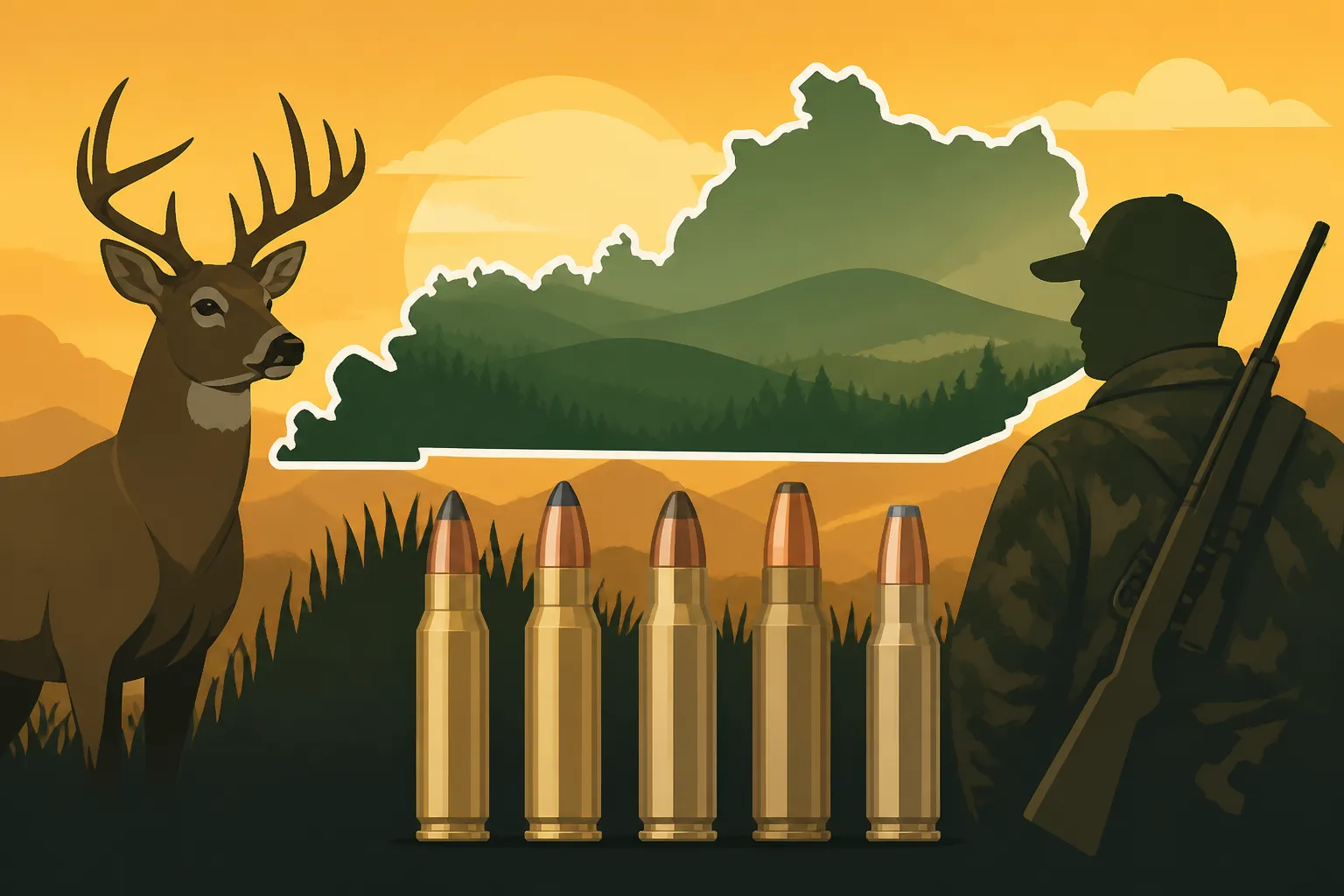
When you start looking at straight-wall cartridges for Kentucky deer, a few names tend to rise to the top of the list. These are cartridges that have proven their effectiveness and have gained significant popularity among hunters.
- ** .450 Bushmaster:** This caliber has surged in popularity thanks to its powerful performance in a straight-wall design. It's essentially a .45-caliber bullet propelled at respectable velocities, delivering significant energy on target. It’s an excellent choice for deer, even at ranges out to 200 yards with good bullet selection and practice. Recoil can be stout, but it’s manageable for most hunters, especially in a heavier rifle. Many hunters appreciate the large-diameter bullet for its ethical harvesting capabilities. It certainly hits hard and leaves a substantial wound channel, which is something hunters appreciate when tracking a deer through dense Kentucky leaf litter.
- ** .350 Legend:** A newer contender, the .350 Legend was specifically designed to meet straight-wall hunting regulations while offering milder recoil and a flatter trajectory than some other options. It fires a .357-inch bullet (similar to a .38 Special or .357 Magnum, but in a rifle platform) and is quite capable of taking deer out to 150-200 yards. Its lighter recoil makes it a fantastic choice for new hunters, youth hunters, or anyone sensitive to recoil, without sacrificing terminal performance on whitetails. The ammunition tends to be more affordable, which is always a bonus when you're sighting in your rifle or just enjoying some target practice.
- ** .44 Magnum / .444 Marlin:** While more commonly known as a handgun cartridge, the .44 Magnum in a rifle (like a lever action) is a potent straight-wall option. Its effective range for deer is generally considered within 100-125 yards, making it ideal for thick woods or short-range encounters. The .444 Marlin takes the .44 Magnum concept and supersizes it for rifles, offering greater velocity and range, pushing effective deer distances out to 150-200 yards with a good scope and practiced shooter. Both are classic choices that have proven themselves over decades in the field, offering reliable performance for those who appreciate traditional firearm platforms.
- ** .45-70 Government:** A true classic, the .45-70 Government has been dropping big game for over a century. In modern loadings, it's a powerful straight-wall option that is more than capable of handling any deer in Kentucky, and even Kentucky's Black Bear Population, with proper bullet selection. While it has a more pronounced bullet arc, particularly at longer ranges, it delivers tremendous energy. Hunters who appreciate lever-action rifles often gravitate towards this iconic cartridge. It’s a fantastic choice for those close-to-medium range shots, especially in dense cover where you might be Hunting a Funnel Between Two Hollows.
Here's a quick comparison of some popular straight-wall cartridges:
| Cartridge | Bullet Diameter (inches) | Typical Bullet Weight (grains) | Effective Deer Range (yards) | Recoil Impression | Common Rifle Type |
|---|---|---|---|---|---|
| .350 Legend | .357 | 150-180 | 150-200 | Mild to Moderate | Bolt-action, AR-platform |
| .44 Magnum | .429 | 200-300 | 100-125 | Moderate | Lever-action, Bolt-action |
| .450 Bushmaster | .452 | 250-300 | 175-200 | Moderate to Heavy | Bolt-action, AR-platform |
| .444 Marlin | .429 | 240-300 | 150-200 | Moderate to Heavy | Lever-action |
| .45-70 Government | .458 | 300-400+ | 150-175 | Moderate to Heavy | Lever-action, Bolt-action |
Note: Effective range can vary significantly based on bullet type, rifle, and shooter proficiency.
Terminal Ballistics and Bullet Selection
Understanding terminal ballistics is crucial for ethical hunting, regardless of the cartridge you choose. With straight-wall cartridges, which typically operate at lower velocities than high-powered bottlenecked rounds, bullet selection becomes even more critical. You want a bullet designed to expand reliably at lower impact velocities while retaining enough weight to penetrate deeply into the vitals of a deer.
Modern bullet designs have greatly improved the performance of straight-wall cartridges. Look for bullets specifically designed for hunting deer, often featuring soft points, bonded cores, or polymer tips engineered for controlled expansion. For example, a heavy, well-constructed bullet in a .450 Bushmaster will transfer a tremendous amount of energy to the deer, often resulting in quick, clean kills. Similarly, a .350 Legend with an appropriately designed bullet will perform admirably on deer, especially at the ranges it's most commonly employed. Don't just grab the cheapest box of ammo; research bullet types and choose those known for good performance on whitetails. Companies like Hornady, Federal, and Winchester offer excellent hunting-specific loads for these calibers. This attention to detail in ammunition choice is just as important as your Rifle Setups for Kentucky Deer Hunting itself.
Choosing the Right Straight-Wall for Your Hunting Style
The best straight-wall cartridge for you isn't just about legality; it's about matching the cartridge and rifle to your personal hunting style, the terrain you hunt, and your comfort level with recoil. What works for one hunter stalking open fields in western Kentucky might not be the best fit for another still-hunting steep ridges in the eastern coalfields.
Matching Cartridge to Terrain and Distance
Kentucky offers an incredibly diverse range of hunting environments. From the vast, undulating hills of the Daniel Boone National Forest to the flat, agricultural bottomlands of the western counties, the distances and types of shots you're likely to encounter can vary dramatically.
- Thick Cover and Close Shots: If you primarily hunt in dense timber, thick brush, or areas where visibility is limited to 75 yards or less, then cartridges like the .44 Magnum (in a rifle) or even the .45-70 Government (with traditional loads) are fantastic. These rounds deliver significant punch at close range, and their flatter trajectories aren't as critical when shots are so close. For hunters focused on Hunting Western Kentucky Bottomland Deer where dense creek bottoms and standing cover are prevalent, these calibers shine.
- Mixed Terrain and Medium Shots: For areas with a mix of open fields and timber, or ridges and hollows where shots might range from 50 to 150 yards, the .350 Legend and .450 Bushmaster truly come into their own. Their improved ballistic profiles make hitting targets at these distances much more manageable than some of the older straight-wall options. If you're Hunting the Bluegrass Region where you might have to cross a field to get to a woodlot, or are setting up on a field edge, these options offer a good blend of power and trajectory. For these scenarios, a good scope, perhaps a 1-4x or 2-7x, and practicing at various distances, including Zeroing a Rifle for Mixed Distances, will be beneficial.
Consider the maximum ethical range you are comfortable shooting. While some straight-wall cartridges can reach out to 200 yards, practicing at those distances is paramount to ensure humane kills. Many Kentucky hunters prefer to limit their shots to 150 yards or less, especially in timber, regardless of the cartridge. This conservative approach often leads to more success and less frustration.
Recoil Management and Rifle Platforms
Recoil is a significant factor, not just for comfort, but for accuracy and the ability to make a quick follow-up shot if needed. Straight-wall cartridges, especially the more powerful ones like the .450 Bushmaster and .45-70, can produce noticeable recoil.
- Milder Recoil Options: The .350 Legend is hands down one of the most comfortable straight-wall rifle cartridges to shoot. Its mild recoil makes it a joy to practice with and is perfect for youth, smaller-framed hunters, or anyone who simply doesn't enjoy getting rattled by their firearm. This can make a huge difference in the hunting experience, especially if you're Bringing a First-Timer on a December Hunt.
- Managing Heavier Recoil: For cartridges like the .450 Bushmaster or .45-70, a rifle with good recoil-absorbing features, such as a quality recoil pad or a heavier stock, can make a big difference. Additionally, shooting technique plays a huge role. Proper form and a firm grip can help mitigate the felt recoil. If you're considering one of these heavier-hitting options, spend plenty of time at the range to become proficient and comfortable with your rifle. Don't let perceived recoil scare you away from a cartridge if it otherwise fits your hunting needs, but be realistic about your personal limits. Many of the modern Rifle Setups for Kentucky Deer Hunting come with excellent recoil pads.
- Rifle Platforms: Straight-wall cartridges are available in various rifle platforms. Lever-action rifles are iconic and popular for the .44 Magnum, .444 Marlin, and .45-70, offering quick follow-up shots in a compact package. Bolt-action rifles chambered in .350 Legend or .450 Bushmaster provide excellent accuracy and can be configured with various optics and stock options. AR-platform rifles are also popular for these calibers, offering modularity and often lighter recoil due to their semi-automatic action. The choice of rifle platform often comes down to personal preference, familiarity, and the specific characteristics you prioritize for your hunt.
Maximizing Performance with Straight-Walls in the Field
Having the right straight-wall cartridge is only part of the equation; truly maximizing your performance in the field involves careful preparation, smart hunting tactics, and an understanding of how these cartridges perform in real-world scenarios.
Sighting In and Practice
This might sound obvious, but it's astonishing how many hunters only sight in their rifles right before opening day. With straight-wall cartridges, whose trajectories are often more parabolic than high-velocity bottlenecked rounds, consistent practice and precise sighting are paramount.
- Understanding Your Trajectory: Each straight-wall cartridge has a unique trajectory. While a .350 Legend might be relatively flat out to 150 yards, a .45-70 will drop significantly more over the same distance. It’s vital to know your rifle's point of impact at various ranges – 50, 100, 150, and even 200 yards if you plan to shoot that far. Don't just zero at 100 and assume you know where the bullet will go at 175. Use a ballistic calculator for your specific load and bullet, and then confirm it on the range. A good rangefinder is also invaluable for quickly determining target distance in the field, allowing you to make accurate holdover adjustments.
- Realistic Practice Scenarios: Practice shooting from field positions you’ll actually use: offhand, kneeling, sitting, or from a treestand. Don't just shoot from a bench rest. If you typically hunt from a ground blind, practice Brushing In a Blind on a Field Edge and shooting from inside it. If you use a treestand, find a safe spot to practice shooting from an elevated position. This type of realistic practice will build confidence and muscle memory, which are invaluable when that moment of truth arrives. For instance, knowing how your rifle performs when you're perched in a treestand setup in Daniel Boone National Forest, aiming into a steep hollow, is far more useful than just knowing its bench-rest accuracy.
Ethical Shot Placement and Tracking
Regardless of the cartridge, ethical shot placement is non-negotiable. Straight-wall cartridges are powerful and effective, but proper bullet placement into the vitals is always key to a quick, humane harvest.
- Aim for the Vitals: Always aim for the heart and lung area, located just behind the deer's shoulder. This maximizes the chances of a quick, clean kill. While larger diameter bullets in some straight-wall calibers might seem more forgiving, they don't negate the need for precision. A well-placed shot with a .350 Legend is far more effective than a poorly placed shot with a .450 Bushmaster.
- Patience and Tracking: After the shot, be patient. Give the deer time, especially if the shot wasn't absolutely perfect. Waiting 30 minutes to an hour (or longer if it's a gut shot) before beginning to track can make all the difference in recovery. With straight-wall cartridges, especially those with good expanding bullets, you should expect a solid blood trail, but diligent tracking is still essential. Look for blood, broken twigs, and disturbed leaves. A good headlamp can be a lifesaver if you find yourself Blood Trailing After Dark in Kentucky. Tools like the GoHunt app can also be a game-changer for tracking, with features that let you mark blood spots and plot your course through unfamiliar woods, making the recovery process much smoother. Remember, recovering your animal is the final, crucial step in a successful hunt, and it's a skill every hunter needs to hone.
Disclaimer
This article is for general informational purposes only and does not constitute professional advice. Laws, prices and regulations vary by location and change over time. Consult a qualified professional for guidance on your specific situation.