Bone Saws Versus the Gutless Method
The moment you pull the trigger or release an arrow on a hard-earned Kentucky deer, a new challenge immediately begins: getting that animal out of the woods and ready for the freezer. It’s a moment of triumph, yes, but also a sudden shift to intense labor, especially if you’re far from the truck or dealing with a big buck on a steep ridge. Deciding how to process your deer in the field can make or break the next few hours, turning a heavy, awkward drag into a manageable pack-out, or vice-versa. This guide will walk you through two primary methods – the traditional bone saw approach and the increasingly popular gutless method – helping you understand which one is best suited for your specific hunting situation in Kentucky.
Understanding the Traditional Bone Saw Method
For generations, hunters have relied on the traditional field dressing method, which often involves thoroughly gutting the animal and then, frequently, utilizing a bone saw to aid in the process. This approach is tried and true, and many folks swear by it, especially if they're processing the whole animal at home. It’s about getting the internal organs out quickly to cool the carcass and then making cuts that prepare the animal for transport and later butchering.
The Role of the Bone Saw in Traditional Field Dressing
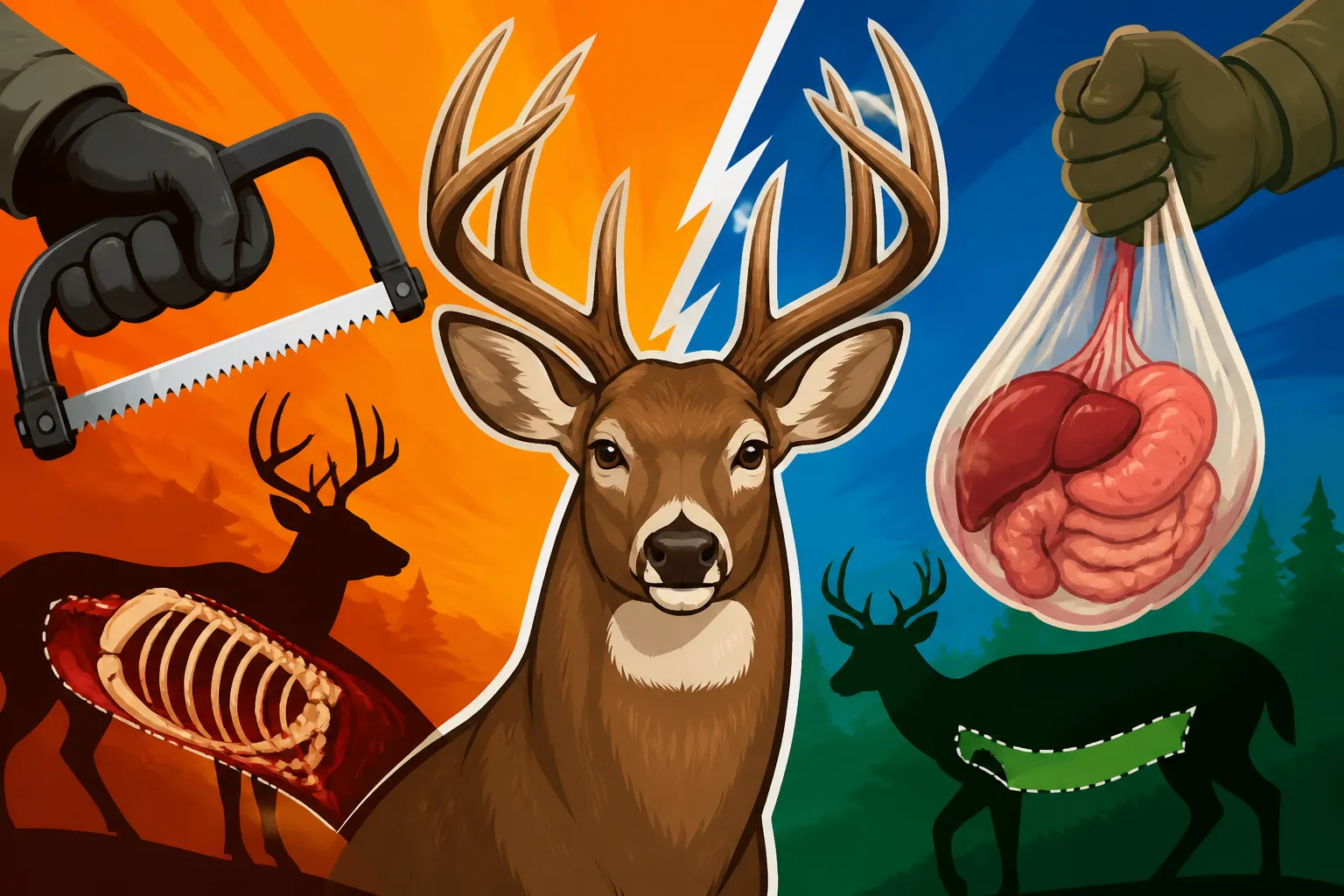
When we talk about a bone saw in traditional field dressing, we're usually referring to a compact, often folding, hand saw designed to cut through bone. Its primary uses are to split the deer’s sternum and pelvis. Splitting the sternum allows for a much wider opening of the chest cavity, which can make it easier to reach in and remove the lungs and heart, and also promotes faster cooling. Similarly, splitting the pelvis opens the hindquarters, making it easier to thoroughly clean the pelvic cavity and sometimes remove the lower digestive tract more effectively. For many, this is the standard way to ensure a clean, well-cooled carcass heading back to camp or the butcher. You often see this method employed when a deer is dropped relatively close to a vehicle, perhaps just off a logging road or a field edge in western Kentucky, where the drag isn't an epic expedition. The goal here is to get the whole animal back in one piece for home processing, ensuring that everything is accessible for a thorough job.
When to Opt for the Bone Saw Approach
This method truly shines when your primary concern isn't shedding maximum weight for a long pack-out. If you're hunting smaller private tracts, or areas with good vehicle access like some parts of the Western Kentucky bottomlands, and you can get an ATV or truck within a reasonable distance, the traditional gut-and-saw method is often perfectly adequate. It's also preferred by hunters who enjoy doing their own butchering from a whole carcass at home. You bring the entire deer back, hang it, and have full control over how you break it down into primal cuts. It can feel more "complete" for some, ensuring every bit of meat is recovered and allowing for a better visual inspection of the animal's overall health. When the weather is cooler, like during Hunting the Late Muzzleloader Week in December, or even Hunting a Muzzleloader-Only Primitive Weapons Tract where you might be close to a camp, keeping the carcass whole and clean for hanging can be a real advantage. The main downside, of course, is the sheer weight. A gutted deer is still a heavy deer, and dragging it out of a steep hollow can be an absolute grunt, even with a sled.
Embracing the Gutless Method for Backcountry Efficiency
The gutless method has gained significant traction, especially among hunters who venture deep into public lands like Daniel Boone National Forest or are faced with the prospect of navigating Dragging a Deer Out of a Steep Hollow. This technique bypasses the traditional gutting process entirely, focusing instead on quickly removing the prime cuts of meat directly from the animal without opening the body cavity.
The Mechanics of the Gutless Method
Instead of eviscerating the deer, the gutless method involves skinning one side of the animal, removing the front and hindquarters, the backstraps, and the tenderloins, then rolling the animal over and repeating the process on the other side. You're essentially deboning the animal in the field, often leaving the entire rib cage, skull (unless you're taking the antlers), and internal organs right where the animal fell. This is a game-changer for weight reduction, turning a 150-pound deer into a manageable 50-70 pounds of meat, depending on the animal's size and how much bone you leave behind. The primary tools you'll need are a very sharp knife (or two!), some robust game bags, and a good plan. The process often feels much cleaner than traditional gutting because you're not dealing with the mess of internal organs. For instance, when you're deer hunting deep in the Cumberland Mountains or after Hunting a Ridge-Top Saddle for Rutting Bucks, minimizing mess and maximizing efficiency are top priorities. Frame Packs for Boning Out a Deer become indispensable here.
When the Gutless Method Becomes Essential
If you're facing a long pack-out, whether it's miles from the nearest trail or through incredibly rugged terrain like the eastern Kentucky coalfields, the gutless method isn't just an option—it's often a necessity. Imagine dropping a mature buck far back on public land, deep in a ravine, or on the backside of a mountain. Trying to drag that entire animal out, even gutted, can be an all-day ordeal that risks spoiling meat due to exhaustion or distance. This method significantly reduces the weight you need to carry, making it feasible for a solo hunter or a small group to pack out an animal in manageable loads. It's particularly useful during warmer early archery season days in September when Game Bags for Warm September Days are critical to airflow and cooling the meat quickly. Even with the best scouting from resources like GoHunt, sometimes a deer drops in the absolute worst spot for extraction, and that's precisely when the gutless method shines. It reduces the chance of meat contamination by avoiding contact with the stomach and intestines, which is a huge benefit when you're working quickly in the field.
Pros and Cons: Bone Saw vs. Gutless Method
Deciding between these two field dressing strategies really boils down to your specific hunting conditions, personal preferences, and how much effort you're willing to put into the pack-out versus the processing back home. Both methods have their distinct advantages and drawbacks.
Here's a breakdown to help you compare:
| Feature | Traditional Bone Saw Method | Gutless Method |
|---|---|---|
| Primary Goal | Thorough internal organ removal, carcass cooling, whole transport | Maximize weight reduction, rapid meat removal, packability |
| Typical Scenario | Short drag, vehicle access, processing whole carcass at home | Long pack-out, rugged terrain, solo hunting, warm weather |
| Weight Reduction | Moderate (gutted carcass still heavy) | Significant (only meat and antlers, if desired) |
| Mess & Cleanliness | Can be messy with organ removal; blood/fluid management | Generally cleaner; avoids gut pile; less blood/fluid on meat |
| Speed | Can be slower initially if splitting bone for full access | Very fast for experienced hands; quicker meat cooling |
| Meat Preservation | Excellent if cooled quickly; hang whole for aging | Excellent if bagged correctly; allows rapid cooling of quarters |
| Required Skill | Basic field dressing knowledge; proper saw use | Good anatomical knowledge for efficient deboning |
| Gear Needed | Sharp knife, gloves, bone saw, drag rope/sled | Very sharp knife(s), game bags, pack frame |
| Considerations | Aesthetics (whole carcass), traditional home processing | Backcountry efficiency, minimizes scent, reduces spoilage risk |
As you can see, the choice isn't just about the tools, but about the entire approach to managing your harvest. For a short drag out of a familiar woodlot, the bone saw method might be perfectly fine. But for those times you're Hunting the Daniel Boone National Forest deep in a remote area, the gutless method is truly a lifesaver.
Making the Right Choice for Your Kentucky Hunt
Ultimately, the best method for you comes down to a few key factors that every Kentucky hunter faces. There's no single "right" answer for every situation, and experienced hunters often find themselves using both methods depending on where and when they harvest an animal.
Assessing Your Hunting Environment
Think about where you're hunting. Are you on private land with ATV access right up to the property line? Or are you miles deep into a WMA with nothing but your own two feet and a long walk back to the truck? The rugged, steep terrain of eastern Kentucky, with its dense timber and deep hollows, almost screams for a gutless approach if you're alone or your deer drops way off the beaten path. Conversely, a deer taken in a flat, agricultural field in western Kentucky might be perfectly suited for a traditional gut-and-drag. Before you even head out, take a moment with your Scouting With the Kentucky Hunt Fish App or your GoHunt maps to visualize potential extraction routes. Knowing the topography can help you anticipate the effort required.
Temperature and Time Sensitivity
Kentucky weather can be notoriously fickle. An early season archery hunt in September can still see daytime temperatures well into the 70s or 80s, even though the nights are cooling. In these warmer conditions, getting the hide off and the meat cooling rapidly is paramount to preventing spoilage. The gutless method excels here because you can get the quarters and backstraps into breathable game bags and cooling within minutes, rather than trying to cool a whole carcass. Conversely, during a frigid December hunting after a January cold front, meat spoilage is less of an immediate concern, giving you more time to use a bone saw method if that's your preference. Always consider how much time you have before the meat begins to degrade, and make your choice accordingly.
Personal Skill and Equipment
Both methods require practice to become truly efficient. If you’ve always done it the traditional way, learning the gutless method takes some YouTube videos, some practice, and a willingness to try something new. The reverse is also true. Make sure your knives are razor-sharp—dull knives are a recipe for frustration and potential injury, especially when working around bone. For the gutless method, investing in good quality game bags is non-negotiable for keeping your meat clean and allowing it to breathe. For traditional methods, a good Deer Sleds for Ridge Country can be a huge help, saving your back on even moderate drags. No matter your choice, ensure you have the necessary Field Dressing Knives Worth Carrying and a solid plan for transport, whether that involves a deer cart, a sled, or a sturdy frame pack.
Ultimately, being prepared for both scenarios is probably the best advice. Carry a sharp knife, game bags, and perhaps a small folding bone saw in your pack, so you can adapt to whatever situation a successful hunt throws your way. Being able to pivot from one method to another means you're always ready to handle your harvest efficiently and respectfully, ensuring that delicious Kentucky venison makes it to your dinner plate in prime condition.
Disclaimer
This article is for general informational purposes only and does not constitute professional advice. Laws, prices and regulations vary by location and change over time. Consult a qualified professional for guidance on your specific situation.