Field Dressing Knives Worth Carrying
There's nothing quite like the rush of a successful hunt in Kentucky, whether it's dropping a big buck in the Daniel Boone National Forest or tagging a gobbler out on a private field edge. But after the shot, the real work begins, and nothing can sour that experience faster than a dull, flimsy, or ill-suited knife when it's time to field dress your game. We've all fumbled with a cheap pocket knife that struggles to make a clean cut, or a blade that can't hold an edge through a single deer, leaving you frustrated and the job less than ideal. This guide is all about helping you avoid those headaches by breaking down the essential qualities of field dressing knives worth carrying, ensuring you're prepared for efficient and hygienic processing in the field.
The Crucial Role of a Reliable Field Dressing Knife
Think about it: after all the effort, scouting, patience, and skill it takes to harvest an animal, the last thing you want is for the field dressing process to be a struggle because of inadequate tools. A good field dressing knife isn't just a convenience; it's a critical piece of gear that impacts everything from the cleanliness of your meat to your personal safety.
When you're out there, maybe on a brisk November morning in a deep hollow, with cold fingers and a magnificent whitetail laid before you, speed and precision matter. A sharp, ergonomic knife allows you to make clean, efficient cuts, which minimizes contamination and helps to quickly cool the carcass. This is especially vital during warmer early archery seasons or late-season hunts where temperatures can still climb unexpectedly. Fumbling with a dull blade not only makes the job harder and slower but increases the risk of accidental cuts. We've certainly learned this lesson the hard way, trying to gut a deer in the waning light of evening, miles from the truck, with a knife that was more butter spreader than cutting tool. Having the right knife can truly make the difference between a smooth, satisfying experience and a messy, frustrating ordeal. It's a fundamental part of Meat Care Gear for Kentucky Hunters.
Understanding Different Types of Field Dressing Knives
The market is flooded with knives, and it can feel overwhelming trying to pick the "best" one. The truth is, there's no single perfect knife for everyone or every situation. What works for a quick gut job on a small doe might not be ideal for quartering a large Kentucky elk. Let's explore the main types of knives you'll encounter and their particular strengths and weaknesses for field dressing.
Fixed Blade Knives: The Traditional Workhorse
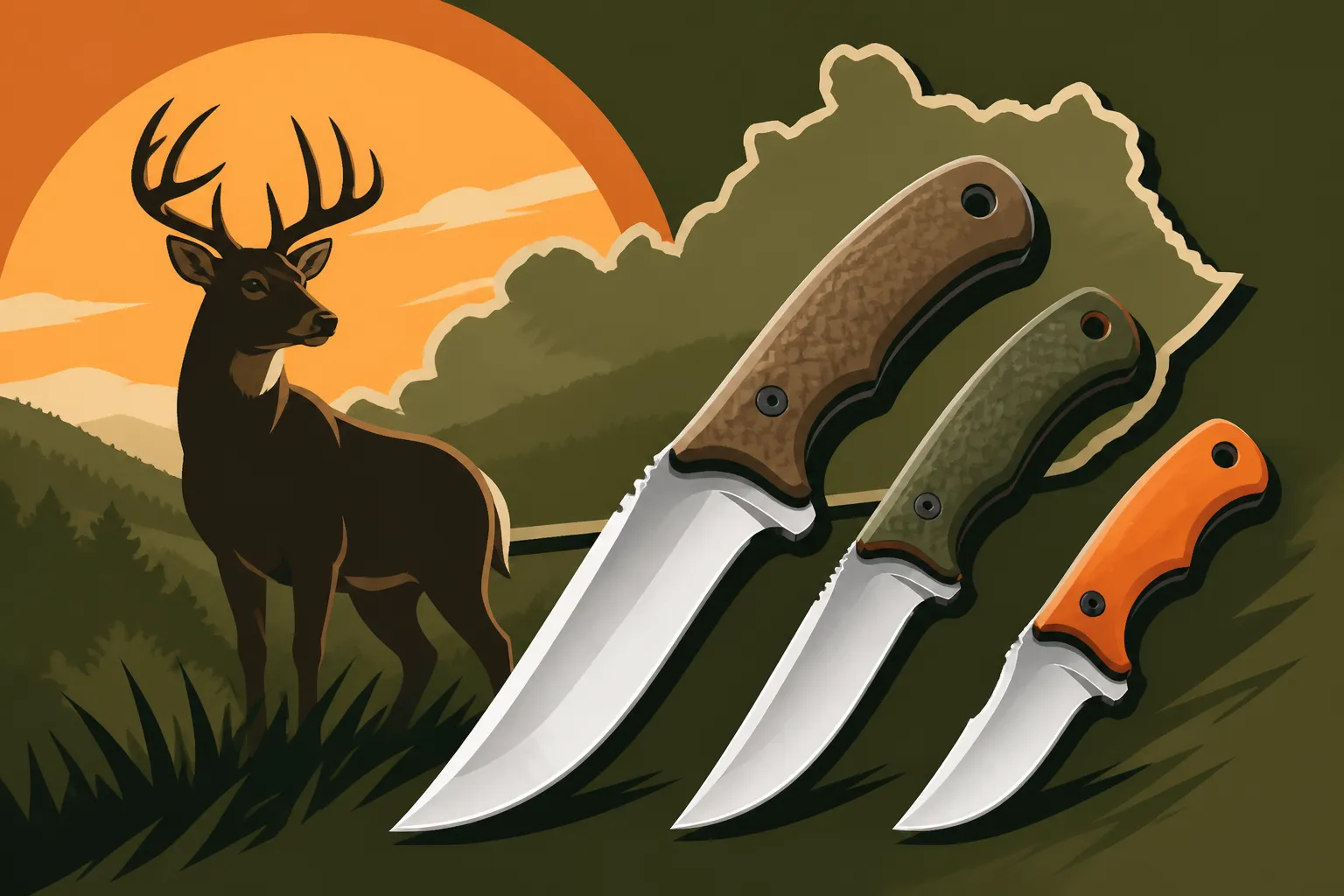
Fixed blade knives are what many hunters picture when they think of a hunting knife, and for good reason. They are generally the most robust and reliable option because the blade extends continuously through the handle (full tang construction), eliminating moving parts. This design translates to incredible strength, making them excellent for tougher tasks like separating the sternum or, with careful technique, even splitting the pelvic bone on smaller deer.
The advantages are clear: durability, stability, and ease of cleaning. You don't have nooks and crannies for blood and grime to collect in, unlike folding knives. This is a huge plus for hygiene. They're also often designed with more substantial handles, offering a better grip, especially when your hands are cold, wet, or covered in blood. The downside, however, is their size. Fixed blades require a dedicated sheath and can be bulkier to carry, either on your belt or in your pack. For those long walks into remote sections of public land or deep into the Daniel Boone National Forest Hunting, every ounce and every piece of gear that might snag matters.
Folding Knives: Compact Convenience
Folding knives offer undeniable portability. They tuck away neatly in a pocket or a small pouch, making them super convenient to carry, often as a backup or for lighter, more delicate cuts. Many hunters appreciate the safety of a closed blade when moving through dense undergrowth. Modern folding knives feature robust locking mechanisms that keep the blade securely open during use, greatly reducing the risk of accidental closure on your fingers.
However, folding knives come with their own set of considerations for field dressing. The pivot point and handle design can create traps for blood, hair, and other debris, making them notoriously harder to clean thoroughly. This can be a concern for hygiene and preventing bacterial growth, especially if you're not meticulous with post-hunt cleaning. While stronger than ever, even the best folders generally don't match the sheer brute strength and rigidity of a full-tang fixed blade for heavy-duty tasks. They are fantastic for making initial incisions, cutting around the anus, or other fine work, but you might find yourself wishing for a fixed blade if you need to really lean into a cut.
Replaceable Blade Knives: Razor Sharp, Every Time
This category has gained significant popularity in recent years, and for good reason. The main appeal of replaceable blade knives is that you always have a razor-sharp edge at your disposal. Instead of sharpening a dull blade in the field (which, let's be honest, few of us actually do perfectly), you simply swap out a used blade for a fresh, scalpel-sharp one. This is a game-changer for precise skinning and caping, where a keen edge is paramount for avoiding hair contamination and making clean cuts.
These knives are typically lightweight and come with a supply of replacement blades, often stored conveniently in the handle. They are excellent for the intricate work of preparing a hide for taxidermy or for making quick, clean work of initial cuts during field dressing. The drawback is that the blades, while incredibly sharp, are often thinner and more brittle than traditional knife blades. They can break or snap if subjected to prying, twisting, or encountering bone with too much force. They also represent a recurring cost for replacement blades. While they might not be your primary tool for quartering a large animal, they are invaluable for certain tasks and can drastically speed up the initial processing steps, especially if you're trying to Field Dressing a Deer in Cold Weather and want to be efficient.
Here's a quick comparison of these knife types:
| Feature | Fixed Blade | Folding Knife | Replaceable Blade Knife |
|---|---|---|---|
| Durability | High (full tang) | Moderate (pivot point is weak) | Low (blades can snap) |
| Sharpness | As sharp as you make it | As sharp as you make it | Always razor-sharp (new blade) |
| Cleaning Ease | Very Easy | Difficult (crevices) | Moderate (handle still cleans) |
| Portability | Moderate (needs sheath) | High (folds into pocket) | High (lightweight) |
| Heavy-Duty Tasks | Excellent | Poor to Moderate | Poor |
| Cost | One-time purchase | One-time purchase | Initial + recurring blade cost |
| Best For | All-around, tough jobs | Backup, light cuts, general use | Precision skinning, quick cuts |
Key Features to Consider for Your Kentucky Hunting Knife
Once you have a general idea of the type of knife that suits your hunting style, it’s time to drill down into the specifics. The materials, design, and ergonomics of a knife are what truly define its performance in the field.
Blade Material and Profile: Edge Retention Meets Corrosion Resistance
The blade is the heart of your field dressing knife. You want something that will hold an edge through the entire job, resist corrosion, and be easy enough to sharpen when you get home.
- Blade Material: Most hunting knives come in either stainless steel or carbon steel.
- Stainless Steel: This is the popular choice for hunting knives, and for good reason. It contains chromium, which gives it excellent resistance to rust and corrosion – a huge plus when dealing with blood, moisture, and Kentucky's humid environment. While some purists argue it doesn't hold an edge quite as long as high-carbon steel, modern stainless alloys are incredibly good at edge retention and are generally easier for the average hunter to sharpen back to a working edge. You'll spend less time worrying about rust and more time focusing on the hunt.
- Carbon Steel: Known for its exceptional ability to hold a razor-sharp edge and for being relatively easy to resharpen to that keen edge. However, carbon steel rusts very easily if not meticulously cleaned and oiled after every use. For field dressing, where blood and moisture are unavoidable, this requires a lot of diligence. While some prefer carbon steel for its performance, the maintenance can be a hassle when you're tired after a successful Bowhunting Kentucky's Long Archery Season hunt.
- Blade Profile: The shape of the blade also plays a huge role.
- Drop Point: This is arguably the most common and versatile blade shape for hunting. The spine of the blade drops gently to meet the tip, creating a strong point that's less likely to break. The belly (the curved part of the blade) is excellent for skinning. It’s a great all-around choice.
- Clip Point: Features a concave or straight "clip" at the tip, making it thinner and more acute for piercing. This can be useful for initial penetration, but the tip is often weaker than a drop point.
- Gut Hook: Some knives incorporate a small, specialized hook on the spine of the blade. This is designed to open the skin without piercing the internal organs, reducing the risk of contamination. While useful, some hunters find it gets in the way during other cuts, and it requires careful cleaning itself. For a new hunter, it can be a helpful feature, but many experienced hunters prefer a plain edge and careful technique.
Handle Ergonomics and Material: Grip When It Matters Most
You might not think much about the handle until your hands are slick and cold, but a good handle is just as important as a sharp blade.
- Ergonomics: The handle should fit comfortably and securely in your hand, offering a non-slip grip even when wet or bloody. Finger grooves, textured surfaces, and a proper guard can all contribute to safety and comfort. You'll be making repetitive motions, and a poorly designed handle can lead to hand fatigue and even blisters. When you're Butchering a Deer at Camp, you'll appreciate a comfortable handle.
- Material:
- Synthetics (G10, Micarta, Kraton, Zytel): These are incredibly popular for hunting knives due to their durability, moisture resistance, and excellent grip. They won't swell, crack, or rot like natural materials can, and they're very easy to clean. Many synthetic handles are brightly colored, which can be a real blessing if you accidentally drop your knife in the leaf litter while Tracking a Deer Through Kentucky Leaf Litter.
- Wood: Beautiful and traditional, but can become slippery when wet and requires more care to prevent cracking or warping. It's often less hygienic as blood can soak into the pores, making it harder to sanitize completely.
- Rubberized Overmolds: Offer exceptional grip, even in the nastiest conditions, absorbing some shock and making the knife very secure in hand.
Sheath or Carrying System: Safety and Accessibility
How you carry your knife matters for both safety and convenience. A good sheath protects you and the blade, keeping it accessible when you need it and secure when you don't.
- Material:
- Kydex or Injection-Molded Plastic: Durable, weather-resistant, and provides excellent retention. Often allows for multiple carry options (belt loop, Molle attachment). Easy to clean.
- Leather: Traditional and aesthetically pleasing, but can retain moisture, making it harder on stainless steel and especially carbon steel blades. Can eventually get cut up if you're not careful re-sheathing.
- Nylon/Cordura: Often seen on folding knives or multi-tool pouches. Lightweight but generally less rigid than Kydex or leather, offering less puncture protection.
- Retention: Ensure the knife snaps securely into the sheath and won't fall out if you're hiking through rough terrain or climbing into a treestand. Some sheaths have straps or snaps for added security.
- Carry Position: Think about where you want to carry it. On your belt for quick access, in your pack for more secure transport, or clipped to your pocket. Accessibility is key when the moment arrives. Many Kentucky hunters, myself included, prefer carrying a fixed blade horizontally on the small of their back or on their hip for ease of draw and less interference with backpack straps. Don't forget, when you’re out on a hunt trying to find Finding Ground Others Walk Past, you’ll be doing a lot of movement, so comfort and security are paramount.
Maintaining Your Field Dressing Knife for Peak Performance
A field dressing knife is an investment, both in money and in confidence. Taking care of it ensures it’s always ready when you need it and prolongs its life.
Sharpening: The Edge of Success
A sharp knife isn't just about efficiency; it's about safety. A dull knife requires more force, increasing the chance of slipping and cutting yourself.
- Regular Sharpening: Don't wait until your knife is completely dull. A few passes on a ceramic rod or strop after each use, or a quick touch-up with a fine stone, can maintain a keen edge without needing a full re-profiling.
- Sharpening Systems: There are countless ways to sharpen a knife.
- Whetstones/Sharpening Stones: Require some practice but offer the most control and can create the sharpest edges. You’ll need different grits for different stages of sharpening.
- Pull-Through Sharpeners: Quick and easy, often with ceramic and carbide slots. Great for quick touch-ups in the field or camp, but can remove a lot of metal quickly if overused and might not achieve the keenest edge.
- Guided Sharpening Systems: Excellent for maintaining consistent angles, which is crucial for a truly sharp edge. Brands like Work Sharp or Wicked Edge make systems that take the guesswork out of sharpening.
- Stropping: After sharpening, stropping on leather with a compound can refine the edge to an almost mirror finish, making it incredibly sharp.
Always make sure you have a sharpening tool with you, even if it's just a small ceramic stick, especially when heading out for a multi-day hunt or planning on Aging Venison in Cold Weather at camp.
Cleaning and Care: Hygiene and Longevity
Proper cleaning immediately after field dressing is non-negotiable for hygiene and preventing rust or corrosion.
- Immediate Rinse: As soon as you're done, rinse your knife with water (bottled water works great in the field) to remove as much blood and tissue as possible. This prevents it from drying and hardening, which makes cleaning much harder.
- Thorough Wash: Back at camp or home, wash the knife thoroughly with soap and warm water. Pay special attention to any crevices on folding knives. A small brush can be helpful. This is crucial for maintaining hygiene, especially if you're in a Kentucky's Chronic Wasting Disease Surveillance Zone and want to be extra cautious with cross-contamination.
- Dry Completely: Ensure the knife is completely dry before storing it. Moisture is the enemy of steel. Pat it dry with a towel, and if it's carbon steel, apply a light coat of oil (food-grade mineral oil is best for knives used on game meat) to prevent rust.
- Sheath Care: Don't neglect your sheath. If it's leather, allow it to dry completely and treat it with a leather conditioner. Kydex or synthetic sheaths can be wiped down with a damp cloth.
Storage: Protecting Your Investment
Store your knife in a way that protects both the blade and prevents accidental injury. Keep it in its sheath, in a dry place, away from excessive humidity or temperature fluctuations. Many hunters dedicate a specific box or drawer for their hunting gear to keep everything organized and safe. If you're using specialized Coolers and Game Bags for Early Archery, make sure your knife has its own secure spot, separate from where it could puncture a game bag.
Having the right field dressing knife in your hunting pack isn't just about getting the job done; it's about doing it well, safely, and efficiently. It’s a tool that connects you directly to the harvest, a final crucial step in a successful hunt. Investing in a quality knife and maintaining it properly will serve you faithfully for many seasons to come, making those post-harvest tasks a lot more enjoyable, whether you're working on a sprawling Kentucky bottomland buck or a challenging mountain gobbler.
Disclaimer
This article is for general informational purposes only and does not constitute professional advice. Laws, prices and regulations vary by location and change over time. Consult a qualified professional for guidance on your specific situation.