Crossbow Scopes for Kentucky Timber Ranges
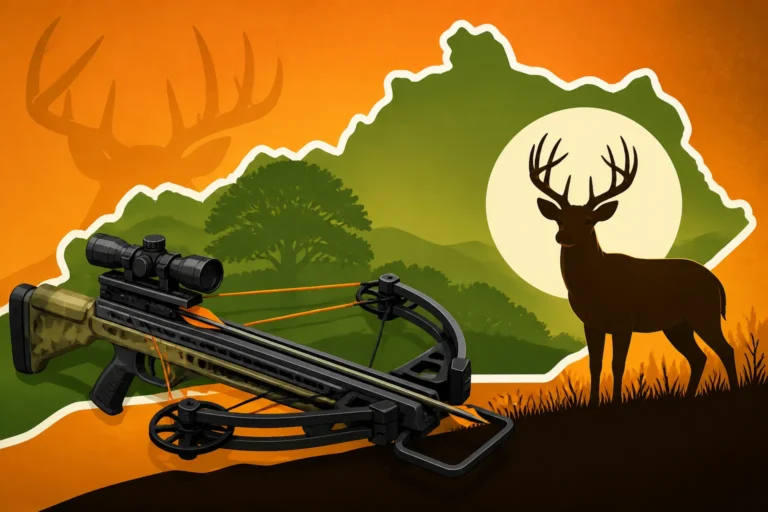
Hunting in Kentucky's dense timber with a crossbow presents its own unique set of challenges, especially when it comes to maximizing your accuracy and confidence in those close-quarters, low-light situations. It's not like shooting across open fields; here, every branch and shadow can make or break a shot, and your crossbow scope needs to be an absolute ally, not a hindrance. This guide will walk you through what truly matters in a crossbow scope specifically designed for the often tight, often dim, and always exciting timber ranges you'll encounter across Kentucky.
Understanding Kentucky Timber Ranges for Crossbows
When you're slipping through the woods in places like the Daniel Boone National Forest or the deep creek bottoms of Western Kentucky, the term "timber range" takes on a very specific meaning for crossbow hunters. We're not talking about those wide-open, long-distance shots you might see on western hunts. Here, it's all about quick acquisition and precision within a much narrower window.
Average Shot Distances in Thick Cover
Let's be real: most deer you encounter in Kentucky's thick timber aren't going to be 50 or 60 yards away. More often than not, they'll pop out at 15, 20, or maybe 30 yards, sometimes even closer if you're set up tight in a brushy funnel or along a well-used game trail. This reality drastically changes what you need from a scope. A scope designed for rifle-like distances with a busy reticle for 80-100 yards can actually be detrimental, cluttering your field of view when you need simplicity the most.
Think about it: that moment a mature buck steps silently into an opening, maybe pausing for a split second behind a screen of saplings. You don't have time to fiddle with extreme magnification or decipher a complicated series of aiming points. You need to identify the target, put the correct reticle on the kill zone, and execute the shot, all within seconds. The average shot distance dictates that clarity, simplicity, and rapid target acquisition are paramount.
Obstacles and Light Conditions
Kentucky timber is a maze of obstacles – thick undergrowth, fallen logs, tight saplings, and mature hardwoods. Your line of sight is rarely perfectly clear for more than a few dozen yards. This means a wide field of view and excellent light-gathering capabilities become crucial. Deer often move during the dim hours of dawn and dusk, when the woods are at their darkest. A scope that performs poorly in low light conditions is essentially useless during prime hunting hours.
Imagine sitting in your stand just before sunrise, a faint mist rising from the hollow below. You hear footsteps, and then a deer materializes from the shadows at 25 yards. If your scope's objective lens isn't pulling in enough light, or if the glass itself isn't crystal clear, that deer might just appear as a dark blob, making ethical shot placement incredibly difficult. The frustration of seeing a ghost-like deer through a dim scope is something no hunter wants to experience. This is where quality glass truly shines.
Key Features of a Crossbow Scope for Close-Quarters Hunting
Selecting the right crossbow scope for Kentucky's timber isn't about having the most bells and whistles; it's about having the right features that contribute to quick, accurate shots in challenging environments. We're looking for practical performance, not just marketing hype.
Appropriate Magnification for Timber Ranges
Many crossbow scopes come with variable magnification, often ranging from 1x to 5x or even 1.5x to 8x. For the dense timber you'll find when Hunting Western Kentucky Bottomland Deer or still-hunting through Where Daniel Boone Forest Bucks Bed, lower magnification is usually your friend. A fixed 3x or 4x scope is often ideal, providing enough zoom to distinguish detail without narrowing your field of view too much.
Higher magnification, while seemingly an advantage, can actually make target acquisition harder at close range, especially if the deer is moving. It amplifies every slight wobble, making a steady hold more difficult. When a deer steps out at 20 yards, a wide field of view at a lower power allows you to find it quickly, track its movement, and place your shot with confidence. If you prefer variable power, consider scopes that start at 1x or 2x and allow you to dial up if a slightly longer, clearer shot presents itself, but always be prepared to use the lowest setting.
Objective Lens Size and Light Transmission
The objective lens is the front lens of your scope, and its size directly impacts how much light the scope can gather. For dim timber conditions, a larger objective lens (e.g., 32mm, 40mm, or even 50mm) can make a noticeable difference in brightness and clarity, especially during twilight hours. However, a larger objective lens also adds weight and can sometimes make the scope sit higher on the crossbow, affecting your cheek weld.
It's a balance. A 32mm or 40mm objective lens typically offers a good compromise between light gathering capability and overall bulk. Beyond just the size, the quality of the glass and the coatings applied to it are equally important for light transmission. High-quality, fully multi-coated lenses reduce glare and maximize the amount of light that reaches your eye, giving you a brighter, clearer image in those critical low-light moments when you're perched in a Treestand Setups in Daniel Boone National Forest. Don't cheap out here; your ability to see clearly when it matters most is worth the investment.
Durability and Weather Resistance
Hunting in Kentucky means dealing with all kinds of weather – sudden downpours, thick fog, chilly mornings, and humid afternoons. Your crossbow scope needs to be built to withstand these conditions without fogging up or taking on water. Look for scopes that are advertised as fogproof, waterproof, and shockproof.
Fogproofing typically involves purging the scope of air and filling it with inert gases like nitrogen or argon, preventing internal condensation. Waterproofing ensures that seals keep moisture out, protecting the delicate internal components. Shockproofing means the scope can handle the recoil of the crossbow and the occasional bump or scrape that's inevitable when you're moving through rugged terrain. A durable scope means you can focus on the hunt, not worry about your gear failing when you're Recovering a Deer From a Steep Hollow in unpredictable weather.
Reticle Types and Their Effectiveness in Thick Cover
The reticle is arguably the most important feature of a crossbow scope. It's your aiming point, and in the dynamic environment of Kentucky timber, the right reticle can make all the difference between a clean harvest and a frustrating miss.
Illuminated Reticles for Low Light
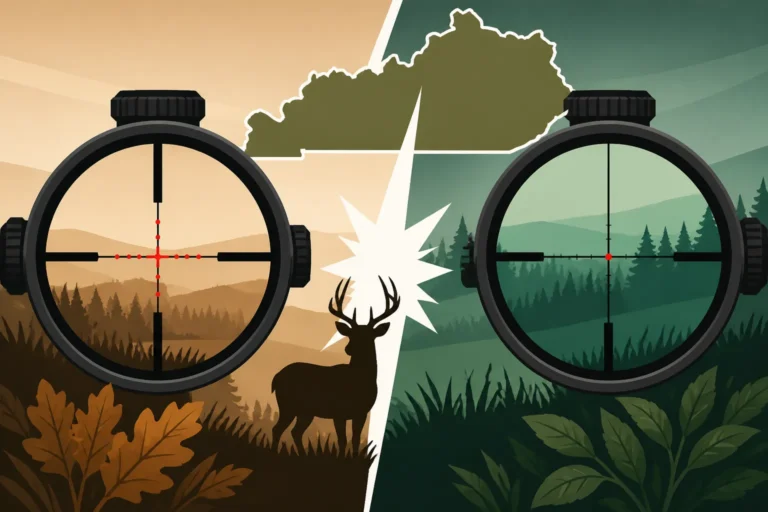
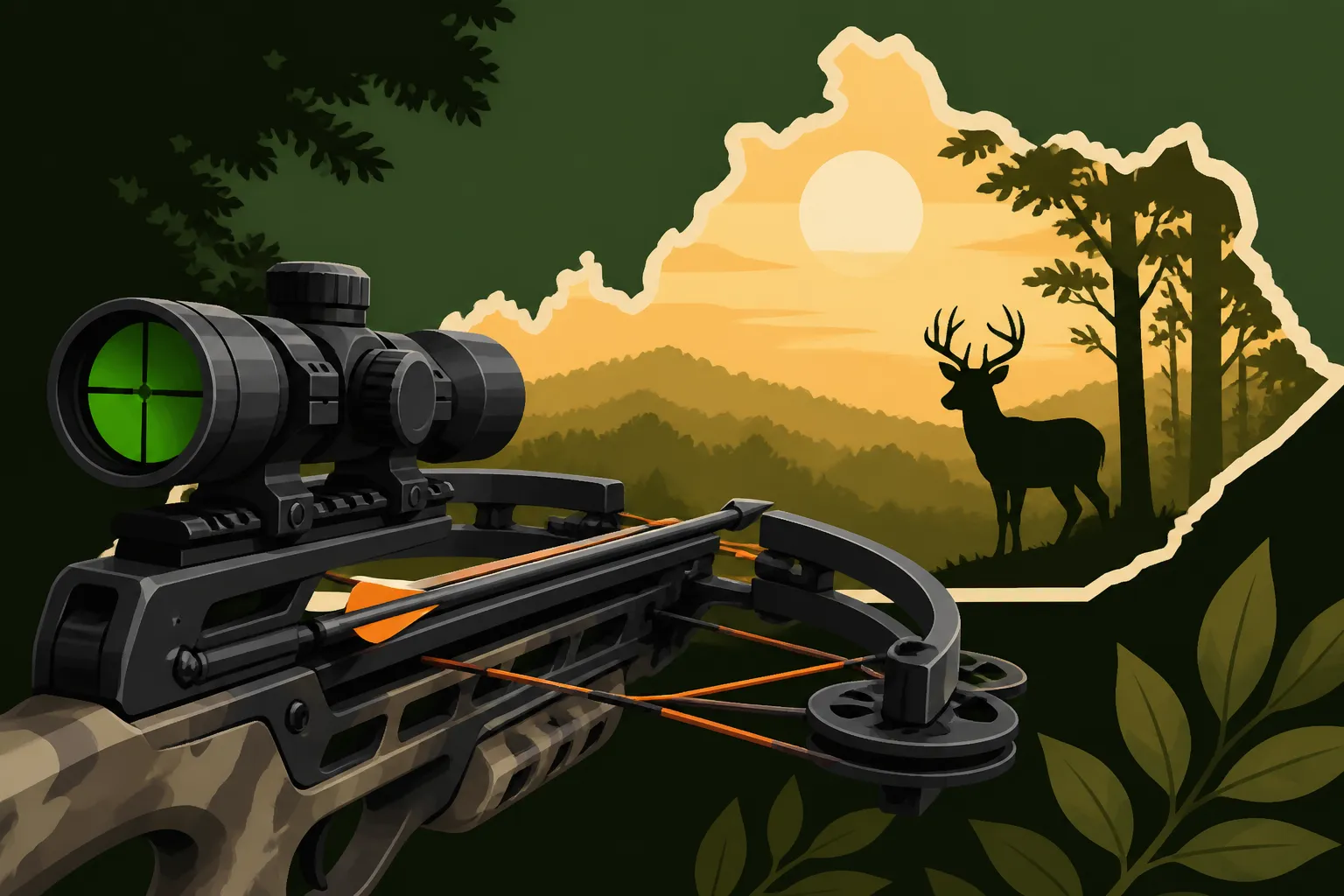
As mentioned earlier, many prime hunting opportunities in timber occur in low light. An illuminated reticle can be a game-changer. Rather than a black reticle that can disappear against a dark background (like a deer's hide or shadowed woods), an illuminated reticle (usually red or green) stands out brightly, providing a clear aiming point.
Most illuminated reticles offer adjustable brightness settings, allowing you to dial it down to a subtle glow that doesn't wash out your vision, or crank it up on a bright, overcast day. This feature is invaluable when that big buck walks out from under a thick cedar tree just as the sun is dipping below the ridgeline. A quality illuminated reticle means you can still make that shot with confidence, seeing your aiming point clearly even when the rest of the world is fading to gray. It's one of those features that, once you have it, you'll wonder how you ever hunted without it, especially when Hunting the Rut in Early November and deer are moving more frequently in the early morning and late evening.
Multiple Aiming Points
Crossbows shoot on an arc, meaning you need different aiming points for different distances. Most crossbow scopes come with multiple aiming points (often dots or horizontal lines) calibrated for various yardages, typically starting at 20 yards and extending out to 50 or 60 yards. Some advanced scopes even allow for speed calibration, matching the reticle to your specific crossbow's velocity.
When you're dealing with quick shots in timber, these aiming points need to be intuitive and easy to use. A busy reticle with too many lines or dots can become confusing under pressure. Simplicity is key. A clear 20, 30, and 40-yard set of aiming points is usually sufficient for most timber hunting scenarios. Practice with your specific crossbow and scope to understand exactly where each point hits at various distances. Knowing your holdovers instinctively when you see a deer is crucial for making a quick, ethical shot. Don't rely on guesswork in the field – use the GoHunt app to record your shots and verify your distances with your rangefinder.
Reticle Simplicity and Clean Sight Picture
Beyond illumination and multiple aiming points, the overall simplicity of the reticle design is critical for timber hunting. A clean, uncluttered reticle allows for faster target acquisition and less visual distraction. You want to focus on the deer, not on trying to find the correct dot among a dozen other markings.
Some scopes feature busy "Christmas tree" reticles designed for long-range shooting and windage adjustments, but these are generally overkill and counterproductive for the typical crossbow ranges in Kentucky timber. A basic duplex or multi-stadia reticle is often the best choice. This ensures that when that buck steps out, perhaps when you're Still-Hunting Eastern Kentucky Ridges, you can quickly acquire the target, place your reticle, and send your bolt without hesitation or confusion.
Mounting and Zeroing Your Crossbow Scope for Kentucky Conditions
Having the best scope in the world won't do you any good if it's not properly mounted and meticulously zeroed. This critical step ensures your crossbow shoots consistently and accurately, giving you the confidence you need in the field.
Proper Mounting Techniques
Mounting your crossbow scope correctly is the foundation of accuracy. Start by ensuring your scope rings are appropriate for your scope's tube diameter and your crossbow's rail type (usually Picatinny or Weaver). Loosely attach the rings to the rail, then place the scope in the rings, making sure to set your eye relief. Eye relief is the optimal distance between your eye and the scope's eyepiece to get a full, clear sight picture without any "black crescents" around the edges. This is often dictated by your shooting posture and the crossbow's design.
Once eye relief is set, level the reticle. This is absolutely vital; a canted reticle will cause your shots to drift horizontally at longer distances, even if your vertical aiming point is correct. You can use a scope leveling kit or a simple bubble level for this. After leveling, tighten the ring screws evenly and securely, following the manufacturer's torque specifications. Over-tightening can damage the scope, while under-tightening can lead to the scope shifting under recoil. A well-mounted scope will hold its zero, even when navigating tight trails or climbing into a stand.
The Zeroing Process
Zeroing your crossbow scope isn't a one-and-done deal; it's a methodical process that requires patience and precision. Most crossbow hunters start by zeroing at 20 yards. Place a target at this distance and take a few shots from a stable rest. Adjust your scope's windage and elevation turrets until your bolts are consistently hitting the bullseye. Remember the "Kentucky Rule" for adjustments: if your bolt hits low, turn the elevation turret "up"; if it hits left, turn the windage turret "right" (assuming the turrets are marked for direction of impact correction).
After you're consistently hitting at 20 yards, move your target to 30, 40, and 50 yards (or whatever your scope's multiple aiming points are calibrated for). Shoot groups at each distance, using the corresponding reticle mark. You're looking for consistent impact, not necessarily a bullseye with every single mark. For example, your 30-yard mark might put you an inch or two high at 30 yards, but perfectly on target at 25 yards. Knowing these subtle nuances is part of mastering your setup. It's also wise to verify your setup using an app like GoHunt to mark your actual impact points at various ranges, ensuring accuracy.
Field Adjustments and Confidence
Even after a perfect zeroing session at the range, your setup needs to perform in the field. This means not just knowing your holdovers, but understanding how temperature changes, humidity, and even the angle of your shot can affect arrow impact. While you won't be making major scope adjustments in the field, knowing your equipment's limitations and tendencies builds confidence.
Before heading into the timber for Hunting Kentucky's Fall Turkey Season or chasing deer during Kentucky's Statewide Modern Gun Season, take a few practice shots from an elevated position (if safe and legal), mimicking a treestand shot. Observe how your bolts impact. This helps you account for the common tendency to shoot low when shooting downhill from a stand. The more familiar you are with your crossbow and scope combo in various real-world scenarios, the more confident you'll be when that fleeting opportunity arises.
Comparing Crossbow Scope Features for Kentucky Timber
To help you visualize the choices, here's a quick comparison of some common scope features and their suitability for Kentucky timber hunting.
| Feature | Ideal for Kentucky Timber | Less Ideal for Kentucky Timber | Rationale |
|---|---|---|---|
| Magnification | Fixed 3x-4x, or variable 1-5x | Variable 1.5-8x or higher | Lower power for wide FOV, quick acquisition at close range. Higher power narrows FOV and magnifies wobble. |
| Objective Lens | 32mm-40mm (quality glass is key) | Very small (e.g., 20mm) or very large (e.g., 56mm) | Good light gathering without excessive bulk. Small lacks light; large adds weight/height. |
| Reticle Type | Illuminated multi-stadia (simple) | Busy "Christmas tree" reticle | Simple, illuminated reticles are fast to acquire in dim, cluttered environments. Complex reticles distract. |
| Durability | Waterproof, fogproof (nitrogen/argon purged), shockproof | Not specified, or basic water resistance | Essential for Kentucky's unpredictable weather and rugged terrain. |
| Eye Relief | Generous (3+ inches) and consistent | Short and/or inconsistent | Provides comfort and safety, preventing "scope bite" and maintaining sight picture from various positions. |
| Speed Adjustment | Matched to crossbow velocity (if variable) | Fixed calibration for a single speed | Ensures aiming points are accurate for your specific crossbow. |
Advanced Considerations for Crossbow Scopes
While the core features discussed are paramount, there are a few additional points that can further refine your choice and enhance your timber hunting experience.
Brand Reputation and Warranty
Investing in a quality crossbow scope means looking at reputable brands. Companies like GoHunt, for instance, are known for producing reliable hunting equipment, and often have excellent customer service and warranties to back their products. It's a real peace of mind knowing that if something goes wrong, you're covered. A scope is a significant investment, and you want it to last through years of hard hunting. Research different brands and read reviews from other hunters who use their gear in similar conditions to Kentucky.
A strong warranty isn't just about getting a replacement if your scope breaks; it's an indicator of the manufacturer's confidence in their product. A lifetime warranty, for example, suggests a commitment to quality that speaks volumes. This can be particularly important for a piece of equipment that takes a beating in the woods.
Budgeting for Quality
It's tempting to try and save money on a scope, but this is one area where cutting corners can severely impact your hunting success and enjoyment. While you don't need to spend a fortune, a "cheap" scope often means poor glass quality, unreliable adjustments, and a lack of durability. The difference in clarity, brightness, and ruggedness between an entry-level scope and a mid-range, quality optic is often dramatic.
Consider your budget as an investment in your hunting success. A reliable, clear scope helps you make ethical shots and brings home venison. Factor in the cost of a good set of rings, too, as they are just as crucial to holding zero as the scope itself. Often, a scope in the $150-$300 range will offer a significant performance jump over anything cheaper, giving you the features and reliability you need for Kentucky's timber ranges.
Choosing the right crossbow scope for hunting in Kentucky's timber is about understanding the unique demands of this environment. It's about prioritizing clarity, simplicity, durability, and low-light performance over high magnification or complex reticles. With the right scope mounted and zeroed correctly, you'll be well-prepared to make the most of your time in the woods, ready for whatever opportunity the Kentucky wilderness presents. From the thickest bottoms to the steepest ridges, your crossbow scope will be your window to success.
Disclaimer
This article is for general informational purposes only and does not constitute professional advice. Laws, prices and regulations vary by location and change over time. Consult a qualified professional for guidance on your specific situation.