Kentucky Deer Management Zone Rules
Trying to make sense of Kentucky's deer hunting regulations can sometimes feel like deciphering an ancient scroll, especially when it comes to those all-important deer management zones. It's frustrating to pore over dense rulebooks, wondering if you truly understand what's legal for your specific hunting spot. This comprehensive guide is here to untangle the complexities of Kentucky's Deer Management Zone rules, helping you confidently plan your hunts and stay compliant, whether you're chasing a trophy buck or filling the freezer with does.
Understanding Kentucky's Deer Management Zones
Kentucky's landscape is incredibly diverse, from the rugged mountains of the east to the rolling farmland of the Bluegrass and the expansive river bottoms in the west. This variety means that deer populations and their impact on local ecosystems and agricultural interests aren't uniform across the state. That's precisely why the Kentucky Department of Fish and Wildlife Resources (KDFWR) implemented a zone-based management system. It's not just about making rules; it's about tailoring regulations to fit the unique needs of different areas, aiming for a healthy deer herd, balanced ecosystems, and happy landowners.
Why Zones Exist
The primary reason for Kentucky's deer management zones is to effectively manage the whitetail deer population across the Commonwealth. In areas where deer numbers are high and potentially causing crop damage or increasing vehicle collisions, the zones allow for more liberal antlerless harvest. Conversely, in regions where the deer population might be lower, or where there's a desire to allow the herd to grow, the rules become more conservative. This granular approach prevents a one-size-fits-all regulation from negatively impacting specific local deer populations. Without these zones, a statewide rule might lead to overharvest in one area and underharvest in another, creating an imbalance that hurts both the deer and the hunters.
Consider a farming community in Western Kentucky where deer are regularly feasting on soybeans and corn. A Zone 1 designation in that county allows hunters to take more does, providing an effective tool for farmers to mitigate agricultural damage while still offering ample hunting opportunities. On the flip side, in a more heavily forested Eastern Kentucky county with lower deer density, a Zone 3 or 4 designation helps protect the does, allowing the herd to grow and mature. It's a pragmatic approach to a complex biological and social challenge.
The Four Zone System
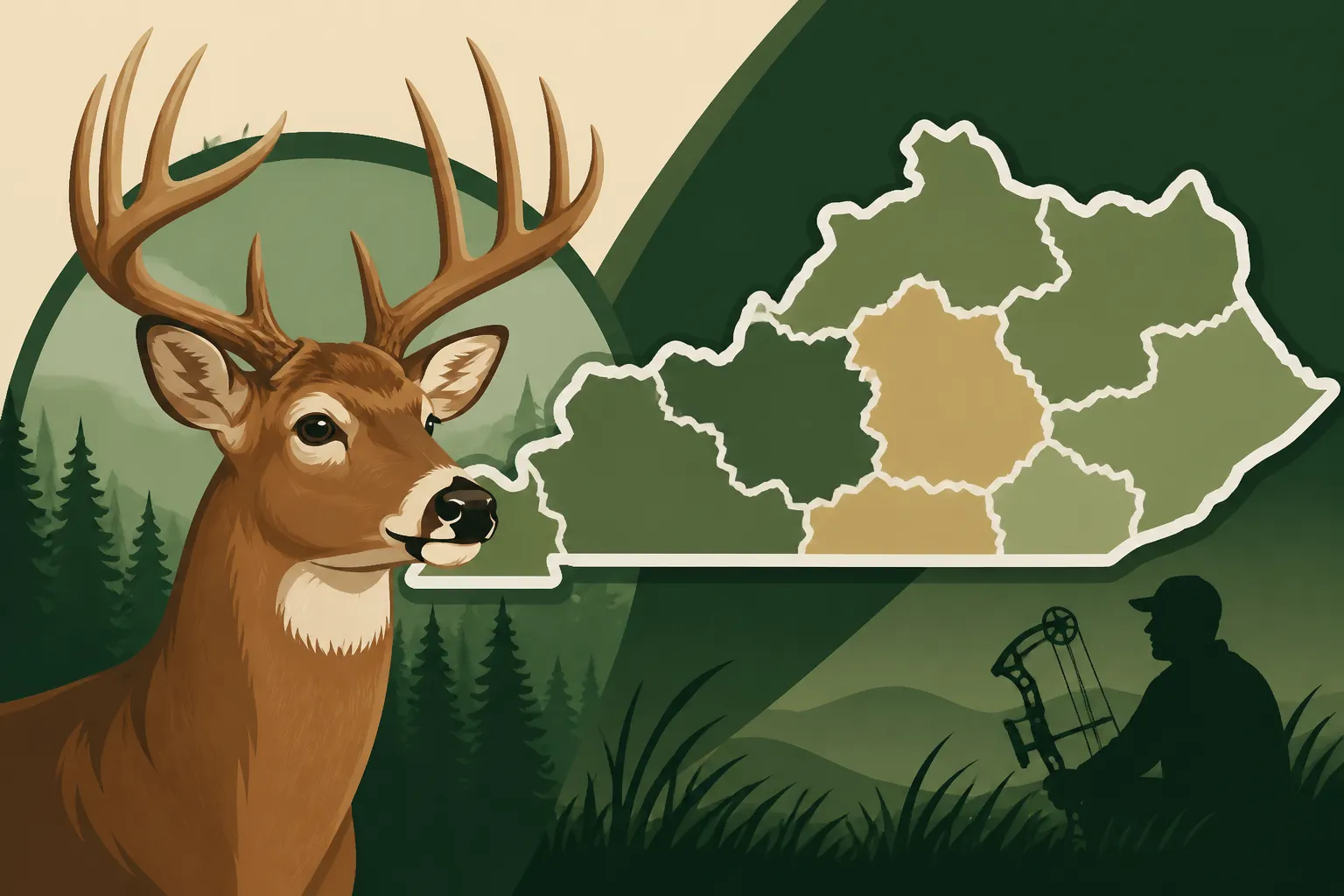
Kentucky utilizes a four-zone system, creatively named Zone 1, Zone 2, Zone 3, and Zone 4, each with distinct antlerless deer harvest regulations. These zones are defined by county lines, making it relatively straightforward for hunters to determine which rules apply to their hunting location. Zone 1 offers the most liberal antlerless harvest opportunities, allowing hunters to take an unlimited number of does with the appropriate permits. Zone 2 scales back slightly, usually allowing a set number of antlerless deer. Zone 3 is even more restrictive, often limiting antlerless harvest to specific seasons or a very low bag limit. Finally, Zone 4 is the most conservative, typically allowing no antlerless harvest at all, or only during very specific, limited windows.
This tiered system ensures that local conditions dictate harvest pressure. For instance, in a Zone 1 county like much of Western Kentucky, where habitat is abundant and deer populations thrive, hunters can enjoy extended opportunities for harvesting does. This is crucial for managing the herd's overall health and preventing overpopulation issues like disease spread or habitat degradation. Moving into the central and eastern parts of the state, you'll find more Zone 2 and 3 counties, reflecting areas with different habitat types and deer densities that require a more tailored management strategy.
Historical Context and Evolution
Kentucky's deer management zones haven't always been what they are today. The system has evolved significantly over the decades, adapting to changing deer populations, habitat conditions, and hunter feedback. In the early days of modern deer hunting, after successful restoration efforts, deer populations were often managed with broad, statewide rules. As deer numbers rebounded and spread across the state, it became clear that a more nuanced approach was necessary. The KDFWR began implementing zone-specific regulations to address localized challenges, gradually refining the system to what we see today.
The agency continually monitors deer populations through harvest data, herd health assessments, and biological surveys. This data-driven approach means that zone boundaries aren't set in stone; they can and do change. For example, a county that was once Zone 2 might be reclassified as Zone 1 if its deer population consistently shows robust growth and reproductive success, or if it experiences increased human-deer conflicts. These adjustments are made annually, often after public input periods, to ensure the rules remain relevant and effective. Staying informed about these potential shifts is crucial, as the rules you hunted under last year might have changed. Checking the latest Kentucky hunting regulations is always a wise first step before heading afield.
Zone-Specific Antlerless Deer Harvest Limits
The core of Kentucky's deer management zone system revolves around antlerless deer harvest limits. While antlered deer rules remain fairly consistent statewide (more on that later), it's the number of does you can take that truly differentiates one zone from another. Understanding these specific limits is paramount for every hunter, as exceeding them can lead to serious penalties. These limits are designed to either reduce, stabilize, or grow the local deer population, acting as a vital tool in the KDFWR's wildlife management arsenal.
Zone 1 Rules: Maximum Flexibility for Antlerless Harvest
Zone 1 counties are where the deer population is generally robust, often exceeding habitat carrying capacity or creating significant human-deer conflicts. In these areas, the KDFWR encourages a liberal antlerless harvest. This means that hunters in Zone 1 counties typically have the most generous opportunities to take does. During the archery and crossbow seasons, hunters with valid permits can usually take an unlimited number of antlerless deer. During the modern gun and muzzleloader seasons, the regulations often allow for multiple antlerless deer as well, making it an excellent option for filling your freezer.
The unlimited antlerless bag limit during archery and crossbow seasons in Zone 1 is a game-changer for many hunters. It allows for sustained pressure on the doe population throughout the long Kentucky Archery Season Opening Day, which runs for several months. For hunters who prioritize venison or who are participating in agricultural damage control, Zone 1 is ideal. This flexibility also supports the overall goal of achieving a healthier buck-to-doe ratio, as removing more does can lead to improved nutritional conditions for the remaining deer, potentially resulting in larger, healthier bucks in the long run.
Zone 2 Rules: Balanced Approach to Herd Management
Zone 2 counties represent a middle ground in Kentucky's deer management strategy. The deer population in these areas is generally healthy and stable, but not typically at the level of overpopulation seen in Zone 1. As such, the antlerless harvest limits are more conservative than in Zone 1 but still allow for reasonable opportunities to take does. Often, hunters in Zone 2 counties are permitted to harvest a specific number of antlerless deer during the entire deer season, or a certain number per week within a given season, such as two antlerless deer per hunter during the modern gun season.
This balanced approach aims to maintain the current deer population while providing ample hunting recreation. It acknowledges that while some population reduction might be beneficial, an unlimited harvest could potentially lead to a decline in the herd. Hunters pursuing deer in Zone 2 counties need to pay close attention to the specific bag limits for antlerless deer, as they are not unlimited like in Zone 1. It's a fantastic zone for those looking to harvest a few does for meat while still having a good chance at an antlered deer. Understanding How Many Antlerless Deer Your Zone Allows is absolutely critical here to avoid violations.
Zone 3 Rules: More Conservative Antlerless Harvest
When you move into Zone 3 counties, the antlerless harvest rules become notably more restrictive. These areas typically have lower deer densities, or the KDFWR might be actively trying to allow the deer population to grow. In Zone 3, antlerless harvest opportunities are often limited to specific dates or specific weapon types. For instance, antlerless deer might only be legal during the early archery season, or perhaps during a designated "quota" period, and often with a very low bag limit, such as one antlerless deer per hunter per year.
Hunting in a Zone 3 county requires careful planning and a deep understanding of the regulations. If you're primarily focused on harvesting a doe for meat, you'll need to know the exact windows when antlerless deer are legal. This often means your opportunities are more limited and you'll have to make the most of those specific dates. This conservative approach helps protect the breeding potential of the herd, allowing more does to reproduce and contribute to population growth. It's a clear example of how the KDFWR uses zones to achieve specific population goals tailored to local conditions.
Zone 4 Rules: Strict Limitations or No Antlerless Harvest
Zone 4 counties represent the most restrictive end of Kentucky's deer management spectrum. These are typically areas with very low deer populations, or regions where the KDFWR is focused intensely on herd recovery and growth. In Zone 4, antlerless deer harvest is either prohibited entirely or limited to an extremely narrow window, often involving specific managed hunts or strict quota permits. For the vast majority of hunters, the expectation in a Zone 4 county is that they will only pursue antlered deer.
If you find yourself hunting in a Zone 4 county, your focus will almost exclusively be on taking a legal antlered deer. This requires a different mindset and strategy, as the option to take an antlerless deer as a secondary harvest simply isn't there for most situations. It's a strong indicator that the deer population in that area needs significant protection to rebuild. Always double-check the current regulations for Zone 4 counties, as any limited antlerless opportunities that might exist would be highly specific and rigorously controlled. This zone is a testament to the KDFWR's commitment to protecting and rebuilding struggling deer populations.
Antlered Deer Restrictions and the QDM Philosophy
While antlerless deer rules vary significantly by zone, the regulations concerning antlered deer are much more consistent across Kentucky. The KDFWR has embraced a statewide Quality Deer Management (QDM) philosophy, which aims to improve the age structure and overall health of the buck population. This means allowing younger bucks to mature, resulting in more mature animals available for harvest, which is a goal many hunters appreciate. These rules aren't just about growing bigger antlers; they're about fostering a healthier, more natural deer herd.
Statewide Antlered Deer Limits: The One-Buck Rule
Kentucky has a very clear and widely understood "one-buck rule." Regardless of which zone you're hunting in—Zone 1, 2, 3, or 4—each hunter is permitted to harvest only one antlered deer per license year. This rule is absolute and applies across all deer seasons, whether you're bowhunting, using a muzzleloader, or carrying a modern firearm. Once you harvest an antlered deer and tag it, your buck season is over for that year. This simplicity helps prevent overharvest of the buck population and supports the state's QDM objectives.
This one-buck rule is a cornerstone of the KDFWR's management strategy for antlered deer. It's designed to distribute the harvest pressure evenly across the state's buck population, preventing localized overharvest in popular areas. It also encourages hunters to be selective, perhaps passing up a younger buck in hopes of encountering a more mature animal later in the season. This ethical consideration plays a significant role in the overall health and age structure of Kentucky's buck herd.
Minimum Antler Requirements: How Points and Spread Are Defined
In addition to the one-buck rule, Kentucky also implements minimum antler requirements for what constitutes a legal antlered deer in many areas. While there aren't always specific point restrictions in every county, the general rule is often that a legal buck must have at least one antler that is a minimum of four inches long. This rule is in place to protect yearling bucks (often 1.5 years old) that might have very small spikes or button antlers, allowing them to grow and contribute to the herd's breeding potential for another year or two.
It's crucial to consult the annual hunting guide for any specific county-level antler restrictions, as these can vary. Some counties might have stricter rules, such as requiring a minimum number of points (e.g., three points on one side) or a minimum outside spread (e.g., 13 inches). These more specific regulations are often implemented in areas where the KDFWR is intensely focused on growing a more mature buck age class. Knowing these definitions—how points are counted (e.g., a point must be at least one inch long) and how spread is measured—is vital to avoid mistakenly harvesting an illegal buck. The goal here is to allow bucks to reach a higher age class, leading to healthier and often larger deer across the landscape, aligning perfectly with the principles of Quality Deer Management.
Quality Deer Management Principles
The entire framework of Kentucky's deer management zones and antlered deer restrictions is steeped in Quality Deer Management (QDM) principles. QDM isn't just about growing huge antlers; it's a holistic approach to deer management that prioritizes herd health, habitat quality, and balanced age structures. It recognizes that a healthy deer population thrives when there's a balanced buck-to-doe ratio and when bucks are allowed to reach older age classes. By reducing pressure on young bucks and allowing for a more significant harvest of antlerless deer where populations are high, the KDFWR aims to create a more natural and resilient deer herd.
This philosophy has profoundly impacted Kentucky hunting. It means that hunters are encouraged to think beyond just "shooting the first legal deer" and to consider the long-term health of the herd. Education plays a massive role, helping hunters understand that passing on a young buck or harvesting an extra doe in a Zone 1 county directly contributes to a better hunting experience for everyone in the future. The results of QDM can be seen in the improving age structure of Kentucky's bucks and the overall health of its deer population, contributing to a better hunting experience for everyone, which is evident in the state's growing reputation for quality whitetails.
How Deer Zones Impact Season Dates and Methods
While the overarching season dates for various weapon types are largely consistent across Kentucky, the deer management zones primarily influence the number and type of deer you can harvest within those seasons, particularly regarding antlerless deer. It's important to differentiate between when you can hunt and what you can legally take, as the zones directly impact the latter. This distinction is crucial for hunters planning their outings and ensuring they comply with all regulations.
Archery and Crossbow Seasons: Consistent Dates But Zone-Dependent Bag Limits
Kentucky's archery and crossbow seasons are famously long, often spanning from early September well into January. These season dates are generally statewide, meaning bowhunters can be in the woods during the same broad period regardless of the zone they're in. This consistency is a real blessing, offering ample opportunity to be afield. However, it's during these long seasons that the zone rules regarding antlerless deer truly come into play.
In Zone 1 counties, an archery or crossbow hunter might be able to harvest an unlimited number of antlerless deer throughout the season, given they have the appropriate deer permits. This offers incredible flexibility for those looking to fill the freezer or manage local populations. Contrast that with a Zone 3 county, where antlerless harvest might be limited to a single doe during a specific portion of the archery season, or even entirely closed during certain periods. Therefore, while you can hunt with a bow or crossbow on the same dates across the state, what you can legally tag will depend entirely on Kentucky Archery Season Dates and the zone rules for your specific hunting location. Always verify the antlerless bag limits for the zone you intend to hunt before you head out.
Muzzleloader and Modern Gun Seasons: Statewide Consistency with Zone-Specific Harvest
Similar to archery, the season dates for muzzleloader and modern gun hunting are largely uniform statewide. The Kentucky Modern Gun Season Opening Day is a highly anticipated event, and everyone generally starts on the same day. However, just like with archery, the impact of the deer management zones is seen in the antlerless harvest regulations during these shorter, more intense hunting periods.
During the modern gun season, for example, a hunter in a Zone 1 county might be permitted to take multiple antlerless deer in addition to their single antlered deer. This offers a significant opportunity for population control and meat harvesting. In a Zone 2 county, that might be reduced to one or two antlerless deer, while in a Zone 3 or 4 county, antlerless harvest during modern gun season might be extremely limited or entirely prohibited. This means that while hunters across Kentucky might be using the same weapon on the same dates, their actual harvest potential for does is dictated by the zone. This is why understanding Kentucky Deer Season Structure Explained in conjunction with zone rules is paramount.
Youth and Free Youth Hunting Weekends: Special Considerations Within Zones
Kentucky offers special youth hunting opportunities, including a dedicated Youth Firearms Season and sometimes a free youth hunting weekend in December. These special seasons are designed to introduce younger hunters to the sport in a less pressured environment. While the dates for these youth hunts are typically statewide, the deer management zones still play a critical role in determining the antlerless bag limits for these young hunters.
Even during a youth firearms season, a youth hunter in a Zone 1 county might have more liberal antlerless harvest opportunities than a youth hunting in a Zone 3 or 4 county. The KDFWR often ensures that youth hunters have a chance to harvest an antlerless deer during these special weekends, recognizing the importance of a successful first hunt. However, the exact number will still align with the overall management goals for that specific zone. Parents and mentors taking young hunters afield need to be particularly diligent in understanding the zone rules for their chosen location, ensuring a positive and legal experience for the next generation of hunters, following all Kentucky Youth Firearms Season Rules.
Navigating Your County's Deer Zone
One of the biggest hurdles for any Kentucky deer hunter is figuring out precisely which deer management zone their hunting spot falls within. With county lines defining these zones, it's not always immediately intuitive, especially if you hunt in an area near a county border. Thankfully, the Kentucky Department of Fish and Wildlife Resources (KDFWR) provides excellent tools and resources to help you quickly and accurately determine your zone. Taking the time to verify this information before your hunt is a non-negotiable step to ensure you're hunting legally and ethically.
Finding Your County's Zone: Using the KDFWR Resources
The absolute best and most official source for determining your county's deer zone is the KDFWR's annual Hunting & Trapping Guide. This guide is updated every year, typically in late summer, and contains all the current regulations, including a comprehensive list or map of counties and their corresponding deer zones. You can usually find a printed copy at most places where hunting licenses are sold, or, more conveniently, you can access a digital version on the KDFWR website.
The KDFWR website is a treasure trove of information. They often have an interactive map tool where you can click on a county to see its current deer zone designation, along with other relevant regulations. This online resource is incredibly helpful, providing real-time updates and clarifications. Always prioritize these official sources over anecdotal information from fellow hunters, as regulations can change from year to year. A quick check of the KDFWR site can save you a lot of headache and potential legal trouble.
Counties Straddling Zone Boundaries: What to Do in These Situations
Sometimes, the county you hunt in might technically border a different deer zone. This can lead to confusion, especially if your hunting land is large or if you plan to hunt in adjacent counties. The rule of thumb is always that the regulations of the specific county you are physically hunting in apply. If you're standing in a Zone 1 county, Zone 1 rules apply, even if you can see a Zone 2 county just across the creek.
This means if you're hunting private land that spans two counties, you must be acutely aware of which county line you're near. You would abide by the rules of the county your stand is in, or where the deer was harvested. For public land hunters who might move between areas, Finding Which Deer Zone Your County Sits In becomes even more critical. It’s not uncommon for hunters to experience this near large public lands like Daniel Boone National Forest, which can span multiple counties, each potentially with different zone designations. Always know your exact location and the corresponding zone.
Utilizing Mapping Tools: How Apps Like GoHunt Can Help
In today's digital age, mapping applications have become indispensable tools for hunters. Apps like GoHunt offer incredibly detailed aerial imagery, topographical maps, and, crucially, property line and public land boundary overlays. Many of these premium hunting apps also integrate official game management boundaries, including Kentucky's deer management zones, directly into their mapping interface. This feature can be a game-changer for quickly and accurately identifying which zone you're in.
Using a mapping app with zone overlays can help you visualize the boundaries in relation to your hunting spot, whether it's a specific treestand location or a large tract of public ground. Before your hunt, you can scout your potential spots virtually and confirm their zone designation. This is particularly useful in areas where counties with different zones meet. While GoHunt and similar apps are fantastic tools, always cross-reference their information with the official KDFWR guide, especially at the start of a new hunting season, as these apps rely on updated data, and occasional discrepancies can occur if they haven't been refreshed for the current year.
Reporting Your Harvest and CWD Considerations
Harvest reporting is a non-negotiable requirement for all deer hunters in Kentucky. It's not just a formality; it's a critical component of the KDFWR's deer management strategy, providing valuable data that informs future zone designations and season structures. Beyond basic reporting, hunters must also be aware of the state's Chronic Wasting Disease (CWD) Surveillance Zone and the specific rules that apply to it, as these can intersect with and sometimes override general deer management zone rules.
Telecheck System: Mandatory Reporting Explained
Every hunter who successfully harvests a deer in Kentucky is legally required to report their harvest through the Telecheck system. This must be done by midnight on the day the deer is harvested. The Telecheck system is simple and efficient, allowing hunters to report their kill either online through the KDFWR website or by phone. You'll need your hunting license number, the county of harvest, the species (deer), gender (buck or doe), and whether it was an antlered or antlerless deer.
This data is vital for the KDFWR. It helps them monitor harvest trends, track deer population estimates, and assess the effectiveness of their management strategies, including the deer management zones. For instance, if Telecheck data shows a consistent underharvest of antlerless deer in a Zone 1 county, it might prompt the KDFWR to consider additional incentives or changes to encourage more doe harvest. For a seamless experience, make sure you understand Kentucky Deer Harvest Reporting Rules and have your license and Telecheck information handy before you even head to the woods.
CWD Surveillance Zones: How They Interact with General Deer Zones
Chronic Wasting Disease (CWD) is a devastating neurological disease that affects deer, elk, and moose. While Kentucky has a relatively low incidence of CWD compared to some other states, the KDFWR is proactive in its surveillance and management. This has led to the establishment of CWD Surveillance Zones, which are specific counties where CWD has been detected or is deemed a high risk. These zones impose additional requirements on hunters, which can sometimes overlap with or modify general deer management zone rules.
If you harvest a deer in a county designated as a CWD Surveillance Zone, you might be subject to mandatory CWD testing of your harvested animal. This involves providing a sample (usually lymph nodes) at designated drop-off locations within the surveillance zone. These specific requirements are crucial for monitoring the spread of the disease and are taken very seriously. The presence of CWD surveillance zones doesn't change the antlered/antlerless limits of your deer management zone, but it adds an extra layer of responsibility for hunters. Always check if your hunting county is part of Kentucky's Chronic Wasting Disease Surveillance Zone before planning your trip.
Carcass Movement Restrictions: What You Need to Know if You Hunt in a CWD Zone
Another critical aspect of hunting within a CWD Surveillance Zone relates to carcass movement restrictions. To prevent the potential spread of the disease, the KDFWR places limitations on what parts of a deer harvested in a CWD zone can be transported out of that zone. Typically, only certain parts are allowed, such as deboned meat, antlers (with no brain tissue attached), cleaned skulls, hides, or teeth. Whole carcasses or parts containing spinal cord or brain tissue are usually prohibited from leaving the surveillance zone.
These restrictions are paramount for controlling CWD. If you plan to hunt in a CWD-affected county, you need to be prepared to process your deer appropriately within that zone before transporting it home, especially if you live outside the zone. This might mean having a portable butchering setup or using a local processor within the CWD zone. The KDFWR provides detailed guidance on these rules, and adhering to them is essential for protecting Kentucky's deer herd from this insidious disease. Being prepared for Kentucky CWD Testing for Hunters is just part of responsible hunting in these areas.
Common Misconceptions and Troubleshooting Zone Rules
Even with the best intentions, hunters often encounter specific points of confusion or have lingering questions about Kentucky's deer management zones. These rules can be nuanced, and it's easy to fall prey to common misconceptions or outdated information. Addressing these directly can help clear up doubts and ensure a smoother, more compliant hunting season for everyone. Knowing the exact limitations and flexibilities is key to maximizing your hunting opportunities legally.
The "Bonus Antlerless" Tag Myth: Clarifying Additional Tags
A frequent point of confusion revolves around "bonus antlerless" tags. Some hunters mistakenly believe that simply because they are in a Zone 1 or Zone 2 county, they automatically get "extra" antlerless tags beyond their initial deer permit. This isn't how it works in Kentucky. Your basic hunting license and deer permit (or Sportsman's License bundle) cover your ability to hunt deer. The deer management zone designation then dictates how many antlerless deer you can harvest using that permit's antlerless portion, or how many additional deer you can take with separate antlerless-only tags that must be purchased.
In Zone 1, for example, your single deer permit allows you to harvest one antlered deer and an unlimited number of antlerless deer. But to take those additional antlerless deer beyond the first doe, you must purchase additional antlerless-only deer permits from the KDFWR. These are not "bonus" tags in the sense of being free or automatically provided; they are separate purchases that allow you to utilize the liberal bag limits of Zone 1. This system ensures that all harvested deer are properly documented and accounted for, while providing the flexibility needed for herd management. Always remember, each deer harvested, antlered or antlerless, requires a valid tag.
Hunting Different Zones in One Season: Legalities and Logistics
It is absolutely legal to hunt in different deer management zones within the same season in Kentucky. Many hunters take advantage of this, perhaps starting their season in a Zone 1 county for liberal doe opportunities and then traveling to a Zone 2 or 3 county known for larger bucks. The key is that you must always adhere to the specific rules of the zone you are physically hunting in at that moment.
This means you can't, for instance, harvest an antlerless deer in a Zone 3 county during a closed antlerless period and claim you were just crossing through a Zone 1 county. Your location at the time of harvest dictates the legality of that harvest. It's a logistical challenge that requires meticulous planning. If you plan a multi-zone hunt, ensure you know the exact county boundaries, and have thoroughly reviewed the regulations for each zone you intend to hunt. This makes having a good mapping app invaluable, helping you define your location down to the property line.
Changes to Zone Boundaries: Staying Informed Year to Year
Perhaps the most important troubleshooting tip is to understand that deer management zone boundaries are not static. The KDFWR continually monitors deer populations, habitat conditions, and harvest data, and they adjust zone boundaries as needed to meet management objectives. A county that was Zone 2 last year might be reclassified as Zone 1 this year if its deer population has grown significantly, or it might move to Zone 3 if populations have declined.
This means that relying on last year's hunting guide or "what you've always done" is a recipe for potential violations. Every year, before the season begins, you absolutely must obtain and review the latest Kentucky Hunting & Trapping Guide. Check the specific counties you plan to hunt to confirm their current zone designation. The KDFWR typically announces these changes well in advance of the season, often inviting public comment, but it's ultimately the hunter's responsibility to stay informed. A quick check of the official KDFWR website in late summer will ensure you're always up-to-date and hunting legally.
The Future of Kentucky's Deer Management Zones
Kentucky's deer management zones are not just a set of static rules; they are a dynamic, evolving system designed to ensure the long-term health of the state's deer herd and the sustainability of its hunting tradition. The KDFWR takes a scientific approach to managing this valuable resource, constantly gathering data, engaging with hunters, and adapting strategies. Understanding this ongoing process helps hunters appreciate the depth and foresight behind the regulations they follow.
Data-Driven Decisions: How KDFWR Monitors Deer Populations
The KDFWR relies heavily on data to make informed decisions about deer management zones. This data comes from multiple sources:
- Telecheck Harvest Data: As discussed, mandatory harvest reporting provides a huge dataset on the number of deer harvested, their gender, and the county of harvest. This helps track trends in population density and hunter success across the state.
- Deer Population Surveys: KDFWR biologists conduct various surveys, including spotlight counts, trail camera surveys, and sometimes aerial surveys, to estimate deer numbers and densities in different regions.
- Biological Samples: Data from jawbones collected from harvested deer provides insights into the age structure of the herd. Samples for CWD testing offer critical health information.
- Hunter Opinion Surveys: The KDFWR periodically surveys hunters to gauge satisfaction levels, observe trends in hunting effort, and gather anecdotal evidence about deer populations and antler quality.
All this data is compiled, analyzed, and used to determine if current zone boundaries and bag limits are achieving their intended goals. If, for example, a Zone 2 county consistently shows an increasing deer population despite current harvest limits, the KDFWR might consider reclassifying it as a Zone 1 to encourage more antlerless harvest. This commitment to data-driven decision-making ensures that management is responsive and effective, contributing to the impressive Kentucky Deer Herd Size we see today.
Hunter Feedback and Public Input: Your Role in Rule-Making
While scientific data forms the backbone of KDFWR decisions, hunter feedback and public input are also incredibly important. The KDFWR values the input of its constituents, recognizing that hunters are often on the ground daily and have valuable observations to share. Before significant changes to zone boundaries or regulations are finalized, the KDFWR typically opens a public comment period.
This is your opportunity as a hunter to voice your opinions, share your experiences, and provide constructive feedback. Whether you've observed a decline in deer numbers in your favorite Zone 1 area or feel that the antlerless limits in your Zone 3 county are too restrictive, your input matters. Engaging in this process helps ensure that regulations reflect not only biological needs but also the desires and concerns of the hunting community. It's a fundamental part of the democratic process of wildlife management and shows that How Many Acres of Public Land Kentucky Has means a lot of voices contribute to its management.
Potential Adjustments and Long-Term Goals: What Might Change
Looking ahead, Kentucky's deer management zones will continue to be evaluated and adjusted. The KDFWR's long-term goals include maintaining a healthy, sustainable deer population across the state, minimizing human-deer conflicts (like crop damage and vehicle collisions), and providing ample hunting opportunities for all Kentuckians.
Potential adjustments could include:
- Shifting Zone Boundaries: As deer populations ebb and flow, counties might move between zones to reflect new realities.
- Fine-tuning Bag Limits: The number of antlerless deer allowed in certain zones might be adjusted based on population trends.
- Special Regulations: In response to localized issues or specific management needs, the KDFWR might introduce special youth hunts, urban archery zones, or antler restrictions in particular areas.
- CWD Impact: If CWD prevalence changes, there could be further adjustments to surveillance zones, testing requirements, or carcass movement rules.
The adaptability of the zone system is its strength. It allows the KDFWR to remain agile in its management, responding to ecological changes, disease threats, and the evolving needs of hunters and landowners. By staying informed, participating in feedback opportunities, and understanding the "why" behind the rules, Kentucky hunters can continue to be vital partners in the conservation of the state's incredible deer resource.
Kentucky Deer Management Zone Overview
To help visualize the differences between Kentucky's deer management zones, here's a quick reference table outlining the general characteristics for antlerless harvest during the main seasons. Remember, specific rules and dates can change annually, so always consult the latest KDFWR Hunting & Trapping Guide.
| Deer Management Zone | General Deer Population Status | Antlerless Archery/Crossbow Limits (Typical) | Antlerless Modern Gun/Muzzleloader Limits (Typical) | Primary Management Goal |
|---|---|---|---|---|
| Zone 1 | High / Overpopulation Concern | Unlimited (with additional permits) | Multiple (with additional permits) | Reduce population |
| Zone 2 | Stable / Healthy | Limited, often 2-4 (with additional permits) | Limited, often 1-2 (with additional permits) | Stabilize population |
| Zone 3 | Moderate / Growing | Very Limited, often 1 during specific dates | Very Limited, often 0-1 during specific dates | Grow population |
| Zone 4 | Low / Recovery Focus | Prohibited or extremely limited | Prohibited or extremely limited | Maximize population growth |
Disclaimer
Please remember that hunting regulations, including Kentucky's deer management zones and associated rules, are subject to change annually. While this guide provides a comprehensive overview, it is essential that every hunter consults the most current Kentucky Hunting & Trapping Guide published by the Kentucky Department of Fish and Wildlife Resources (KDFWR) before heading afield. This guide is for informational purposes only and does not supersede official KDFWR regulations. Always confirm specific dates, bag limits, and legal requirements for your hunting location and chosen season.