How Many Antlerless Deer Your Zone Allows
For many Kentucky deer hunters, figuring out the antlerless deer regulations can feel like trying to untangle a stubborn fishing line in the dark. It's frustrating when you're just trying to do the right thing and fill your freezer, but the rules seem to shift depending on which county line you're standing near. This guide is designed to cut through that confusion, giving you a clear understanding of how Kentucky's deer management zones dictate exactly how many antlerless deer you can legally harvest.
Understanding Kentucky's Deer Management Zones
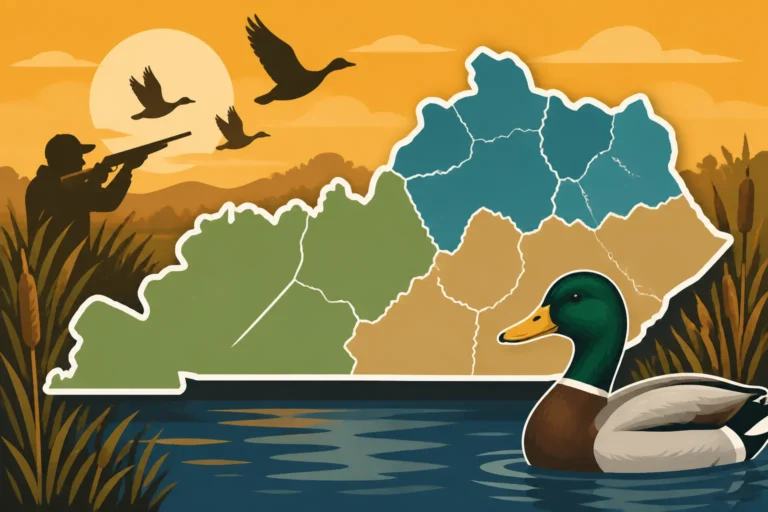
Kentucky is blessed with a thriving white-tailed deer population, and managing that population effectively is a complex dance. The Kentucky Department of Fish and Wildlife Resources (KDFWR) has established a system of deer management zones, dividing the state into areas with different deer densities, habitat characteristics, and management goals. These zones aren't just arbitrary lines on a map; they're critical tools used to maintain healthy deer herds, balance ecological impacts, and provide diverse hunting opportunities across the Commonwealth.
Why Zones Matter for Antlerless Harvest
The primary reason these zones exist, especially from a hunter's perspective, is to regulate the harvest of antlerless deer – does and fawns. Does are the reproductive engine of any deer herd. If their numbers aren't managed, a population can quickly explode, leading to overbrowsing of habitat, increased disease transmission, more deer-vehicle collisions, and greater agricultural damage. Conversely, in areas where deer numbers are lower, restricting antlerless harvest helps the herd grow and become more robust.
Each zone has specific goals for its deer population. Zone 1, for instance, generally aims to reduce or stabilize deer numbers due to high densities, which means more liberal antlerless opportunities. Zone 4, on the other hand, might be focused on increasing deer numbers, leading to very restrictive antlerless limits. These regulations are meticulously crafted, taking into account herd health, hunter harvest data, public input, and scientific population models. Ignoring these zone rules can not only lead to fines but also undermine the KDFWR's efforts to ensure sustainable deer hunting for generations to come. It’s all part of the overarching Kentucky Deer Management Zone Rules framework designed to keep our deer healthy and abundant.
How Counties Are Assigned to Zones
The assignment of counties to specific deer management zones isn't a static decision; it's a dynamic process that the KDFWR reviews periodically. Factors that heavily influence a county's zone designation include:
- Deer Population Density: This is perhaps the most significant factor. Counties with very high deer densities, often found in agricultural regions with abundant food sources, are typically assigned to Zone 1. Areas with moderate populations might fall into Zone 2 or 3, while those with lower densities, sometimes in more heavily forested or less productive habitats, could be Zone 4.
- Habitat Quality and Carrying Capacity: The natural environment's ability to support a deer population plays a huge role. Rich farmlands can support more deer than rugged, mountainous terrain with fewer food sources. The goal is to keep deer numbers in line with what the habitat can sustainably provide.
- Agricultural Damage Reports: Farmers often bear the brunt of an overabundant deer herd through crop damage. Counties with significant agricultural concerns and consistent reports of deer depredation are strong candidates for more liberal antlerless harvest limits.
- Deer-Vehicle Collisions: Higher rates of deer-vehicle accidents indicate a higher deer population in that area, another factor that can push a county towards a more liberal antlerless zone.
- Hunter Harvest Data: The KDFWR constantly collects and analyzes harvest data from hunters, including the number of bucks and does taken, and how many are harvested per square mile. This data provides real-world insights into the effectiveness of current regulations and helps inform future zone assignments. This is why it's so important to adhere to Kentucky Deer Harvest Reporting Rules.
- Public Input: Local hunter surveys, public meetings, and direct feedback from landowners and conservation groups also contribute to the decision-making process, ensuring that local concerns and observations are considered.
All these variables are crunched to determine where each county sits. It's not uncommon for a county to shift zones over time as populations fluctuate or management objectives evolve. This constant evaluation is crucial for the KDFWR to effectively manage White-Tailed Deer Across Kentucky.
Navigating Antlerless Bag Limits by Zone
Understanding the specific antlerless bag limits for each zone is paramount to hunting legally and responsibly in Kentucky. These limits directly impact your hunting strategy, especially during seasons like the general Kentucky Modern Gun Season Opening Day or the broader Bowhunting Kentucky's Long Archery Season where antlerless opportunities are typically available. Remember, these are general guidelines, and it's always best to consult the current KDFWR Hunting & Trapping Guide for the absolute latest regulations, as they can be updated seasonally. Many hunters find digital tools like the GoHunt app incredibly useful for quick reference while in the field.
Zone 1: Abundant Deer, Ample Opportunities
Zone 1 counties are often characterized by high deer populations, typically found in central and western Kentucky, where agricultural lands provide a rich food source. These areas can support a robust deer herd, but without adequate management, they can quickly become overpopulated, leading to increased conflicts with humans and ecological issues.
For hunters, Zone 1 offers the most generous antlerless deer opportunities. In these counties, during the established deer seasons where antlerless harvest is permitted (which is often throughout archery, crossbow, muzzleloader, and modern gun seasons), hunters may typically harvest an unlimited number of antlerless deer, provided they possess the appropriate deer permits. This means if you're hunting in a Zone 1 county like Muhlenberg or Hardin County, and you have your statewide deer permit, you could potentially harvest multiple does to help meet your family's freezer needs and contribute to herd management. It's a fantastic opportunity to fill your tag and help manage the local herd. A good strategy here might involve focusing on antlerless deer early in the season to reduce overall numbers before the rut. When considering Hunting Western Kentucky Bottomland Deer, many of these prime agricultural river bottoms fall into Zone 1.
Zone 2: Healthy Herds, Balanced Management
Zone 2 counties typically have healthy, stable deer populations, though not quite as dense as Zone 1. These areas strike a balance, often featuring a mix of agricultural land, timber, and suburban fringe areas. The management goal here is to maintain a healthy population while allowing for sustainable harvest.
The antlerless bag limit in Zone 2 is more restrictive than Zone 1, reflecting the slightly lower deer density. Historically, hunters in Zone 2 counties might be allowed to harvest one or two antlerless deer per season, sometimes with specific restrictions on which seasons or methods (e.g., archery vs. modern gun) the antlerless tags can be used. For example, if you're hunting in a Zone 2 county such as Grayson or Adair, you'll need to be more strategic about your antlerless harvest, perhaps focusing on filling one or two doe tags. This balance aims to keep the population robust without letting it get out of control. It encourages hunters to be selective, perhaps taking an older doe that has already contributed to the population, rather than simply any antlerless deer.
Zone 3: Growing Populations, Careful Harvest
Zone 3 counties are generally areas where deer populations are lower than in Zone 1 or 2, and the management goal is often focused on allowing the herd to grow or maintaining it at a lower, healthier level given the habitat. These counties are often found in the more rugged, eastern Kentucky landscape, with less intensive agriculture and more forested terrain.
Consequently, the antlerless bag limits in Zone 3 are more conservative. Hunters in Zone 3 counties might be limited to just one antlerless deer per season, or even more restrictive, perhaps only during specific seasons like archery or late muzzleloader, and sometimes only with a bonus antlerless tag. If you're hunting in a Zone 3 county like Clay or Leslie, every antlerless tag becomes precious, and you'll likely want to make sure you're targeting a mature doe to maximize your harvest and contribute to population health. The KDFWR is carefully fostering herd growth here, and your judicious harvest plays a direct role in that.
Zone 4: Focus on Herd Growth, Limited Harvest
Zone 4 counties represent areas with the lowest deer populations in Kentucky, often in the most rugged, heavily forested parts of eastern Kentucky. The primary management objective in Zone 4 is almost exclusively focused on fostering herd growth and maintaining a very low population density to prevent overbrowsing in sensitive habitats.
As you might expect, antlerless deer harvest opportunities in Zone 4 are extremely limited. In some seasons, there might be no antlerless harvest allowed at all, or only for a very short window, perhaps limited to one antlerless deer during the entire archery season. Counties like Boyd or Greenup might fall into this category. If you find yourself hunting in a Zone 4 county, your focus will almost certainly be on harvesting an antlered buck, as antlerless opportunities will be rare, if they exist at all. It's a testament to the KDFWR's commitment to building and sustaining these populations that they implement such strict controls. Always double-check the current regulations, especially if using a tool like GoHunt, as these rules are subject to change based on population data.
Here's a quick overview of the typical antlerless bag limits by zone:
| Deer Management Zone | Typical Deer Population Density | Primary Management Goal | Typical Antlerless Bag Limit | General Antlered Buck Limit |
|---|---|---|---|---|
| Zone 1 | High | Reduce/Stabilize Herd | Unlimited (with permits) | 1 per hunter |
| Zone 2 | Moderate-High | Maintain Healthy Herd | 1-2 per hunter | 1 per hunter |
| Zone 3 | Moderate-Low | Allow Herd Growth | 1 per hunter (often restricted to specific seasons/methods) | 1 per hunter |
| Zone 4 | Low | Maximize Herd Growth | Very Limited (e.g., 0-1, specific seasons only) | 1 per hunter |
*Note: The antlered buck limit is generally one per hunter statewide, regardless of zone, with a few exceptions for special quota hunts or youth seasons. Always confirm current regulations with the KDFWR.
Practical Considerations for Antlerless Hunting
Navigating the complexities of deer zones and antlerless limits requires more than just knowing the numbers; it demands practical awareness and a proactive approach to staying informed. This is where your individual responsibility as a hunter truly shines.
Checking Your Specific County's Zone
The most crucial piece of advice for any Kentucky deer hunter is to always confirm the current deer management zone for the specific county you plan to hunt. Zone boundaries are not set in stone; they can and do change from year to year based on KDFWR's latest population assessments, harvest data, and management objectives. What was a Zone 1 county last season might be a Zone 2 this year, and vice-versa.
Fortunately, the KDFWR makes this information readily available. Your go-to resource should always be the official KDFWR Hunting & Trapping Guide, published annually. You can find this guide online on their website or pick up a physical copy wherever hunting licenses are sold. Many hunters also find the Kentucky Hunt Fish App to be an invaluable tool, providing real-time access to regulations, maps, and reporting features right on your smartphone. Before you even pack your gear, take a few moments to search " Finding Which Deer Zone Your County Sits In " on the KDFWR website or check your preferred hunting app like GoHunt to ensure you're compliant. Don't rely on memory or what your buddy told you last year—the rules can change!
The Role of Bonus Antlerless Tags
Beyond your statewide deer permit, Kentucky offers opportunities for hunters to purchase additional "Bonus Antlerless Deer Tags" in certain situations. These tags are usually available for Zone 1 and, sometimes, Zone 2 counties, where the KDFWR actively encourages hunters to harvest more does to control populations. Think of them as extra allowances on top of your standard permit, explicitly for antlerless deer.
These bonus tags come into play when you want to harvest more antlerless deer than your general statewide deer permit allows in a given season, or if you've already filled your general deer permit with an antlered buck and still want to pursue does. For instance, in a Zone 1 county, while you might technically have an unlimited antlerless bag limit, you still need to possess a valid tag for each deer you harvest. So, if you plan to take three does, you'd need your statewide deer permit and two bonus antlerless tags. These tags are a vital tool for hunters to actively participate in herd management in high-density areas. Make sure you understand How Many Antlerless Deer Your Zone Allows and if bonus tags are applicable to your hunting plans.
Impact of CWD on Antlerless Quotas
The emergence of Chronic Wasting Disease (CWD) in Kentucky has added another layer of complexity to deer management, and it can directly influence antlerless quotas. CWD is a fatal neurological disease affecting deer, elk, and moose, and its presence poses a serious threat to Kentucky's deer herd. When CWD is detected in a county, that area becomes part of the Kentucky's Chronic Wasting Disease Surveillance Zone.
Within these surveillance zones, the KDFWR often implements specific management strategies aimed at monitoring and, if possible, containing the disease. One such strategy can be altered antlerless harvest regulations. For example, in counties like Ballard, which has had Why Ballard County Has Two Confirmed CWD Cases, or Pulaski County, where a CWD case expanded the surveillance zone, hunters might be encouraged or even required to harvest more antlerless deer to help reduce overall deer densities. Lower densities can slow the spread of CWD. Conversely, if a county is still trying to establish a healthy population but is near a CWD zone, restrictions might be in place to prevent overharvest. These CWD-related regulations are dynamic and crucial, so always pay close attention to any special rules associated with CWD surveillance zones when planning your hunt.
Disclaimer
The information provided in this guide is intended for educational purposes and general guidance only. Hunting regulations in Kentucky are subject to change annually and can vary by specific county, season, and even method of take. While we strive to provide accurate and up-to-date information, it is the individual hunter's responsibility to consult the official Kentucky Department of Fish and Wildlife Resources (KDFWR) Hunting & Trapping Guide for the current year, or visit their official website, before engaging in any hunting activities. Failure to do so could result in legal penalties.