White-Tailed Deer Across Kentucky
Trying to understand the vast and varied world of white-tailed deer in Kentucky can feel like a real puzzle. From the dense, unforgiving ridges of the east to the sprawling farm country of the west, deer behavior, populations, and even the hunting challenges shift dramatically. It's easy to get frustrated trying to piece together where the deer are, what they're eating, and how to effectively hunt them in a state with such diverse landscapes and regulations. This comprehensive guide will pull back the curtain on everything you need to know about white-tailed deer across Kentucky, giving you the insights and strategies to confidently pursue them, no matter where you hunt.
Understanding Kentucky's Deer Population and Health
Kentucky boasts an incredibly robust white-tailed deer population, a testament to decades of careful management and restoration efforts. However, understanding the nuances of this herd—its size, its health, and how it varies from one end of the state to the other—is key to becoming a more successful and responsible hunter.
The State of the Herd: Growth and Management
It's truly remarkable to look back at how far Kentucky's deer herd has come. Just a few generations ago, deer were practically non-existent in many parts of the state, hunted nearly to extinction. Thanks to concerted efforts by the Kentucky Department of Fish and Wildlife Resources (KDFWR) through restocking programs and strict management, the population has exploded. Today, it’s one of the largest and healthiest deer populations east of the Mississippi River, often exceeding state goals. The KDFWR utilizes various methods, including aerial surveys, harvest data analysis, and citizen science programs, to continually monitor and estimate the Kentucky deer herd's size and distribution.
While the overall picture is overwhelmingly positive, hunters often face localized challenges. For example, periods of drought can lead to widespread outbreaks of Epizootic Hemorrhagic Disease (EHD) in certain areas, causing significant localized die-offs. It can be incredibly disheartening to find multiple dead deer in your hunting area or hear reports from neighbors about deer suffering from EHD. These events are a stark reminder that even a thriving herd faces natural hurdles, and local populations can fluctuate. Habitat loss due to development, particularly around urban fringes, also presents an ongoing challenge, pushing deer into smaller, often more fragmented pockets of cover.
Deer Density by Kentucky Region
The sheer diversity of Kentucky's landscape means that deer density isn't uniform. You'll find vastly different numbers of deer per square mile depending on whether you're in the rugged mountains, the rolling Bluegrass region, or the flat agricultural plains.
Eastern Kentucky, dominated by the Daniel Boone National Forest and extensive timber, generally has lower deer densities. The habitat is vast, but food sources can be more scattered, and the steep terrain can make both deer and hunter movement challenging. Here, a "good day" might mean seeing a few deer, and a successful hunt often involves covering a lot of ground. It's a different game altogether, demanding patience and a keen eye for subtle sign.
Contrast that with the central Bluegrass region. This area, famous for its horse farms and rich agricultural land, often boasts some of the highest deer densities in the state. Lush pastures, abundant row crops, and numerous small woodlots provide an ideal mix of food and cover. This combination, coupled with a higher percentage of private land where deer often experience less pressure and live longer, is a significant reason why the Bluegrass Region Grows Big Bucks. Hunters in these areas might see dozens of deer in a single sit, but gaining access to these coveted private lands is often the biggest hurdle.
Western Kentucky, characterized by its fertile river bottomlands and expansive agricultural fields, also supports extremely high deer populations. Places like the Sloughs Wildlife Management Area or the farm country around Kentucky Lake offer vast food sources and thick cover along waterways. Deer here grow fat and plentiful, but their patterns are often tied to crop cycles and the availability of water. Understanding these regional differences is crucial; what works in the thick timber of the east likely won't yield the same results in the standing corn of the west.
Kentucky Deer Harvest Records and Trends
Looking at the numbers gives us a clearer picture of the health and management of Kentucky’s deer. The state consistently reports high harvest numbers, with the Kentucky Annual Deer Harvest often exceeding 100,000 animals, and in some peak years, pushing over 150,000. This impressive harvest is distributed across various seasons: archery, crossbow, muzzleloader, and modern gun, each contributing significantly.
Modern gun season typically accounts for the largest portion of the harvest, drawing the most hunters and offering the highest success rates due to its timing and equipment. Archery and crossbow seasons, though longer, require different skill sets and contribute a steady flow throughout the fall. Muzzleloader seasons, often strategically placed before and after the modern gun season, offer unique opportunities.
One of the key metrics the KDFWR monitors is the buck-to-doe ratio, which varies by region. In areas with high antlerless harvest, the ratio can be more balanced, leading to healthier fawns and more intense rutting activity. In contrast, regions with lower pressure or more conservative doe harvest might have a higher doe population, which can impact herd health over time if not managed. The age structure of Kentucky bucks is another critical indicator. Thanks to regulations designed to protect younger bucks and allow them to mature, many regions see a healthy population of older, more mature bucks. This focus on allowing bucks to reach older age classes contributes to Kentucky's reputation for producing Boone and Crockett Whitetails and consistent trophy potential. Understanding these trends helps hunters align their expectations and strategies with the realities of the local herd.
Regional Differences in Kentucky Deer Hunting
Kentucky is a state of contrasts, and nowhere is that more apparent than in its deer hunting landscapes. The strategies that lead to success on a steep eastern Kentucky ridge will likely leave you empty-handed in a western Kentucky bottomland field. Truly understanding these regional differences is paramount for any hunter looking to consistently fill their tags.
Eastern Kentucky: Mountains, Forests, and Hardwoods
When you venture into Eastern Kentucky, you're stepping into a world of rugged beauty and challenging deer hunting. Areas like the Daniel Boone National Forest are characterized by steep hollows, dense timber, and remote tracts of land. Deer here often live in lower densities compared to other regions, and they earn their living by navigating vast blocks of hardwood forest. Food sources can be more scattered, with acorn crops being a primary draw in the fall, interspersed with browse and some softer mast species.
The challenges are considerable: sparse deer populations mean you might have to put in many miles for fewer encounters. Access can be tough, with limited road systems leading to incredibly steep walks into your hunting area. Hunters often experience frustration when scouting, as sign can be spread out, making it hard to pinpoint consistent deer activity. Your strategies here need to be built on endurance and an intimate understanding of topography. This means focusing on long walks, glassing powerline cuts or clearings from a distance, and painstakingly finding oak ridges where deer might be feeding. Learning to read a ridge for Cumberland deer, identifying subtle saddles, benches, and funnels where deer naturally travel, becomes an art form. Setting up treestands on these steep, often remote slopes requires careful planning for both safety and effectiveness. You might find success by scouting out funnels between two hollows, or by pinpointing areas where deer cross from bedding thickets to feeding areas deep in the timber.
Central Kentucky: Bluegrass Farms and Woodlots
The Bluegrass region offers a completely different hunting experience. Here, you'll find a patchwork of lush agricultural fields, manicured horse farms, and small, often dense woodlots. Deer densities are typically very high, providing ample opportunities, but the challenge shifts from finding deer to gaining access and outsmarting pressured animals. Much of this land is privately owned, making securing permission the biggest hurdle for many hunters.
Hunting these areas often means navigating smaller tracts of land. Deer will use any available cover, from fencerows to overgrown creek bottoms, to travel between bedding areas in thickets and feeding grounds in corn, soybean, or alfalfa fields. Hunters often find themselves hunting small woodlots near suburban Louisville, or looking for those overlooked pockets of cover bordering busy roads. The key here is stealth and understanding how deer use fragmented habitats. Focusing on entry routes through standing beans or carefully approaching field edges at dawn and dusk can be incredibly effective. Since deer here are often accustomed to human presence, they can be incredibly wary, requiring meticulous scent control and silent movement. Building relationships with landowners, often through polite door-knocking in Western Kentucky farm country or offering help with chores, can unlock access to these prime hunting spots.
Western Kentucky: River Bottoms and Agricultural Powerhouses
Western Kentucky is defined by its rich river bottomlands, expansive agricultural fields, and the influence of large water bodies like Kentucky Lake and Lake Barkley. This region is an absolute deer haven, offering abundant food sources from corn, soybeans, and winter wheat, combined with excellent cover in riverine forests and dense riparian zones. The Ohio River backwaters and other large drainages create natural corridors and diverse habitats.
Challenges in Western Kentucky often revolve around managing the sheer amount of standing crops, which can hide deer for weeks, and dealing with water access in flooded timber or marshy areas. Public lands like Sloughs WMA or Land Between the Lakes can see significant hunting pressure, especially on opening weekend. Effective strategies here involve understanding crop cycles and how deer use them. Hunting a standing cornfield in farm country, focusing on the edges or internal travel routes, can be highly productive. Deer will often bed in thick cover along the river bottom and move into fields to feed. Setting up on a Western Kentucky field edge or using layout blind hunting a cut cornfield can be very effective, especially for later season hunts when natural cover is reduced. During early seasons, focusing on the subtle transitions from cover to food, or hunting a funnel between two hollows that connect different habitat types, can pay dividends.
Kentucky's Deer Season Structure and Management Philosophy
Kentucky's deer season structure is designed to offer ample opportunity to hunters while maintaining a healthy, balanced deer population across the state. Understanding how the KDFWR approaches deer management, particularly through its zone system, is fundamental to a successful and compliant hunting season. It can seem a bit complex at first, but once you grasp the logic, it makes perfect sense.
Understanding Deer Management Zones and Bag Limits
Kentucky is divided into four primary Deer Management Zones (Zones 1-4), and these zones dictate the antlerless deer bag limits in each county. This system is the cornerstone of Kentucky Deer Management Zone Rules and is crucial for maintaining ecological balance.
- Zone 1 counties typically have very high deer populations and significant agricultural damage. Here, hunters are allowed to take an unlimited number of antlerless deer, often to reduce herd numbers and mitigate crop damage. This provides incredible opportunity but also places a significant responsibility on hunters to participate in herd control.
- Zone 2 counties have healthy deer populations that are generally at or slightly above management goals. The antlerless bag limit is usually more restrictive than Zone 1, perhaps four or two per hunter, depending on the specific regulations each year. This allows for sustained harvest while maintaining a robust breeding population.
- Zone 3 counties have deer populations that are either at or slightly below management goals, or they might be in areas where growth is desired. Antlerless harvest is often limited to one or two per hunter, or restricted to certain weapons types like archery.
- Zone 4 counties, though rare now, historically had very low deer numbers where the KDFWR actively sought to grow the population. Antlerless harvest was often prohibited entirely in these areas. Today, most counties have healthy enough populations to at least be in Zone 3 or higher.
This zone system, while sometimes a source of initial confusion for hunters, particularly those new to the state, is remarkably effective. It allows the KDFWR to tailor management strategies to local conditions, preventing overpopulation in some areas while allowing growth in others. Always double-check which deer zone your county sits in before you head afield, as the limits can change from year to year based on population data.
Key Season Dates and Opportunities
Kentucky offers a remarkably long and diverse deer season, catering to every type of hunter. The season typically kicks off with archery and crossbow in early September, stretches through the peak of the rut in November, and extends well into January.
The Kentucky Archery Season Opening Day typically falls on the first Saturday of September, offering hunters the chance to pursue deer in warm weather before the major gun seasons. This is followed closely by crossbow season, which runs concurrently for much of the archery season, providing flexibility for many hunters. Early Muzzleloader seasons often fall on a weekend in mid-October, allowing a primitive weapons hunt before the main firearms rush.
The highly anticipated Kentucky Modern Gun Season Opening Day usually starts the second Saturday of November, hitting right around the peak of the rut. This is a statewide season, meaning Modern Gun Runs the Same Dates Statewide, which simplifies planning but also concentrates hunter pressure. There's also a late muzzleloader week in December, offering another opportunity after the main gun season. For our younger hunters, the Kentucky Youth Firearms Season Weekend provides a special opportunity in October, and often a Free Youth Weekend in December. These staggered seasons ensure that hunters have plenty of chances to get afield, spread out pressure, and allow deer to be harvested throughout different parts of their annual cycle.
| Season Type | Typical Dates (Approx.) | Legal Weapons | Antlerless Limits (Varies by Zone) |
|---|---|---|---|
| Archery | Early Sept – Mid-Jan | Vertical Bow | Varies (1-Unlimited) |
| Crossbow | Early Sept – Mid-Jan | Crossbow | Varies (1-Unlimited) |
| Early Muzzleloader | Mid-October (Weekend) | Muzzleloader | Varies (1-Unlimited) |
| Youth Firearms | Mid-October (Weekend) | Firearms, Muzzleloader | Varies (1-Unlimited) |
| Modern Gun | Mid-Nov (9-16 days) | Firearms | Varies (1-Unlimited) |
| Late Muzzleloader | Mid-December (7 days) | Muzzleloader | Varies (1-Unlimited) |
License and Permit Requirements
Before you even step foot in the woods, ensuring you have the correct Kentucky hunting licenses and permits is non-negotiable. This isn't just about following the law; it's about supporting the wildlife management efforts that make Kentucky's hunting opportunities so incredible.
Every hunter, resident or nonresident, needs a basic statewide hunting license. For Kentucky Resident Hunting License Cost, it's typically an annual fee, with options for a combo hunting/fishing license or even a Kentucky Sportsman's License bundle that includes many necessary permits. Nonresidents face higher fees, but the opportunities are still abundant. Beyond the general license, a separate Kentucky Deer Permit Cost is required to harvest deer. This permit covers your first deer (typically one antlered deer and an unlimited number of antlerless deer in Zone 1, with varying antlerless limits in other zones). If you wish to harvest additional antlerless deer in certain zones, you may need to purchase bonus antlerless tags.
One critical aspect of hunting in Kentucky is Telechecking. Once you've harvested a deer, you are legally required to report it through the Kentucky Telecheck system. This can be done online or by phone, and there's a specific Kentucky Deer Reporting Deadline, usually by midnight on the day the deer was harvested. This system provides the KDFWR with vital data on harvest numbers, locations, and antlered vs. antlerless take, which directly informs their management decisions. It's a simple process, but failing to telecheck can result in fines and penalties, so always make sure it's one of your first steps after a successful hunt. Remember, carrying proof of your license, whether a physical copy or on your phone, is also mandatory.
Tactics and Strategies for Hunting Kentucky Whitetails
Hunting Kentucky whitetails successfully requires more than just showing up with a rifle. It demands a thoughtful approach, from meticulous pre-season planning to adapting your methods throughout the diverse hunting seasons. No two hunts are ever exactly alike, but a solid foundation of tactics will dramatically increase your odds.
Pre-Season Scouting and Planning
Pre-season scouting is arguably the most critical component of a successful hunt. It's during this time that you unravel the mysteries of deer movement, identify key areas, and formulate a game plan. Don't underestimate the power of knowing your hunting grounds intimately.
Start by scouting Kentucky public land before season. This means putting boots on the ground long before opening day, ideally in late winter or early spring when leaf-off conditions allow you to see the lay of the land more clearly. Look for old rubs and scrapes from the previous rut, which often indicate recurring travel corridors. Identifying major creek crossings, ridge-top saddles, and dense bedding areas will give you a blueprint of deer movement. As spring turns to summer, pivot to identifying primary food sources. Are the white oaks on your ridge producing? Is there a standing cornfield in farm country nearby? Reading aerial photos for Eastern Kentucky deer can reveal subtle terrain features that act as funnels or hidden benches.
Modern mapping tools are invaluable here. Applications like GoHunt provide incredibly detailed aerial photos, topographic maps, and even property line overlays. Using GoHunt, you can virtually scout miles of terrain from your living room, identifying potential stand locations, entry routes, and areas that might hold deer. You can pinpoint scrape lines along a logging road or predict where deer might cross a powerline. Tools like this help you find ground others walk past, giving you an edge. Don't forget shed hunting on Kentucky public land in late winter; finding dropped antlers can confirm the presence of mature bucks and offer clues about their preferred wintering areas.
Effective Hunting Methods for Different Seasons
Kentucky's varied seasons mean you need a dynamic approach to hunting. What works in September won't necessarily cut it in November.
During the early archery and crossbow seasons (When Kentucky's Archery Season Opens), deer are still largely on their summer patterns, focused on food and relatively unpressured. This is often a sit-and-wait game over known food sources. Treestand setups in Daniel Boone National Forest or other heavily timbered areas should focus on oak flats, subtle benches, or natural funnels between bedding and feeding areas. Pay close attention to wind and thermals on a Kentucky Ridge, as deer will use these air currents to their advantage. Using a ground blind on Kentucky Public Land can be highly effective near field edges or thick cover, offering concealment and mobility.
As October progresses, pre-rut activity picks up. Bucks start to make scrape lines along a logging road and rub trees. This can be a prime time for rattling and grunting in Kentucky, mimicking sparring bucks to draw in curious cruisers. The true magic happens during the Rut in Early November, which is often the peak of Kentucky Modern Gun Season Opening Day. Deer are actively seeking mates, and their normal patterns go out the window. Bucks are moving more during daylight, making them more vulnerable. Strategies shift to hunting travel corridors, pinch points, and areas where does congregate.
For modern gun season, especially Opening Weekend Tactics for Kentucky Gun Season, expect high pressure on public land. Deer drives on Kentucky public land can be effective with a group, carefully posting around a hollow or a block of timber to push deer to waiting hunters. In the late season, after the rut, deer are focused almost entirely on recouping energy. Hunting the late-season January lull means targeting late-season food sources for Kentucky whitetails like standing beans, winter wheat, or brassicas. A cold-weather sitting strategy, staying warm and still for long periods, becomes essential as deer movement can be minimal, often restricted to brief feeding forays.
Gear and Equipment for Kentucky Deer Hunters
Having the right gear won't guarantee success, but it will certainly make your hunt more comfortable, safer, and ultimately more effective. Kentucky's diverse terrain and weather demand versatile equipment.
For rifle hunters, choosing a rifle caliber for Kentucky deer is a common debate. A .243 is often enough for Kentucky whitetails, especially with modern bullet technology, but many opt for popular choices like a 6.5 Creedmoor for Eastern Kentucky Ridges or a .308 versus .270 for versatility. In thick bottomland cover, a .30-30 can be incredibly effective with its quick handling. Remember, Kentucky has minimum rifle caliber rules, so always check the regulations. Optics are crucial: quality binoculars (8×42 Versus 10×42 in the Woods) and a reliable rangefinder for thick Eastern Kentucky cover will help you identify deer and ensure ethical shot distances. A good rifle scope with low-light performance is invaluable in the dark timber of a Kentucky hollow.
Bow and crossbow hunters also have specific needs. Minimum draw weight for Kentucky deer applies, and choosing between fixed versus mechanical broadheads depends on personal preference and desired penetration. Crossbows Under Kentucky Rules are increasingly popular, offering another option during the long archery season. Treestands and saddles on public land are essential for elevating yourself above a deer's line of sight. Climbing sticks for Kentucky hardwoods make accessing those stands feasible, even on oddly shaped trees. Always prioritize safety with a quality safety harness and lifeline. Don't forget Kentucky's blaze orange and pink options for outer garments during modern gun seasons; blaze orange requirements for archery hunters also apply during the modern gun season, even if you're bowhunting. Layering for a Kentucky deer stand, with wool versus synthetics in wet cold, will keep you comfortable through long sits. Insulated boots for all-day sits in Kentucky hollows and creek bottoms are a must for frigid late-season hunts.
Chronic Wasting Disease (CWD) and Hunter Responsibilities
Chronic Wasting Disease (CWD) is a serious concern for deer populations nationwide, and Kentucky is actively working to monitor and manage its presence within the state. As hunters, understanding CWD and our responsibilities is paramount to protecting Kentucky’s cherished deer herd for future generations. It can be a confusing topic, and many hunters understandably feel worried or frustrated about how it might impact their hunting traditions.
Understanding CWD in Kentucky
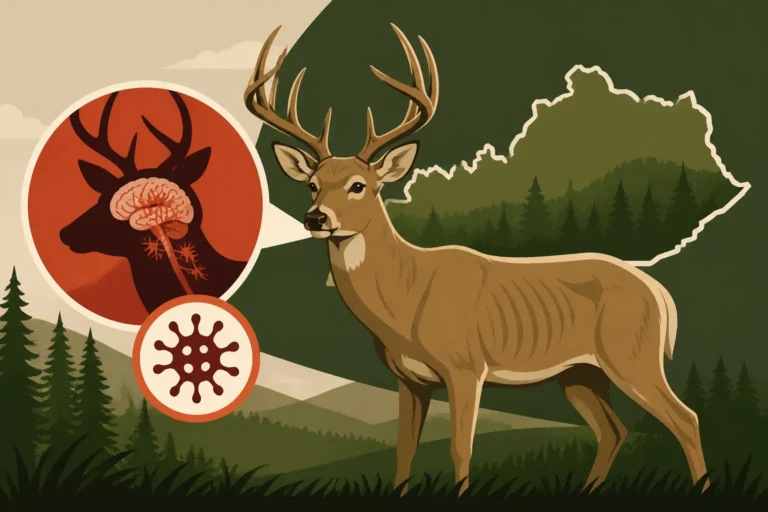
CWD is a fatal neurological disease affecting cervids, including white-tailed deer, elk, and moose. It's caused by abnormal proteins called prions, which can persist in the environment for years. The disease is highly transmissible and currently has no cure. In Kentucky, the first confirmed cases of CWD were detected in 2017 in captive deer facilities, and unfortunately, it has since been found in wild deer. The initial cases in Ballard County, and subsequently the Pulaski County case, have significantly influenced how the KDFWR defines its CWD surveillance zone.
The Kentucky's Chronic Wasting Disease Surveillance Zone is a designated area of counties where CWD has been detected or where the risk of its presence is higher. This zone can expand as new cases are found. For instance, the Pulaski County case, despite being geographically separate from initial detections, necessitated an expansion of the zone to include surrounding counties, demonstrating how quickly the affected area can grow. The KDFWR maintains a comprehensive map and list of these counties, and it's essential for hunters to be aware if they are hunting within this zone. The disease can cause a range of symptoms in deer, including drastic weight loss, stumbling, listlessness, and excessive salivation. While these symptoms are alarming, it's important to note that a deer can be infected and appear healthy for an extended period, making detection challenging without testing.
Mandatory Testing and Carcass Movement Restrictions
To monitor and control the spread of CWD, the KDFWR has implemented specific rules for hunters, especially within the CWD surveillance zone. This often includes mandatory testing of harvested deer.
If you harvest a deer within a designated CWD surveillance county, particularly during specific periods like opening weekend of modern gun season, mandatory CWD testing for hunters may be required. This usually involves taking your deer to a designated CWD sampling location, often a check station or KDFWR drop-off point, where agency personnel will collect tissue samples (lymph nodes or brainstem) for testing. While this adds an extra step to your post-harvest routine, it's a vital part of the state's surveillance efforts.
Equally important are Kentucky carcass movement restrictions. To prevent the unintentional spread of prions, there are strict rules about moving a deer carcass out of the surveillance zone. Typically, only deboned meat, clean antlers, hides, and taxidermy-ready skulls (with all brain and spinal tissue removed) are allowed to leave the zone. Whole carcasses, spinal columns, and other high-risk materials must remain within the county of harvest or be disposed of properly at an approved site. These rules are in place to minimize the risk of transporting infected material to new areas, even if it feels inconvenient after a successful hunt. Always confirm the most up-to-date regulations with the KDFWR before your hunt.
Hunter's Role in CWD Mitigation
Hunters play the most critical role in the ongoing fight against CWD. Without hunter cooperation, the KDFWR's efforts would be significantly hampered.
One of the simplest yet most impactful actions hunters can take is reporting a sick animal in Kentucky. If you observe a deer exhibiting CWD-like symptoms, contact the KDFWR immediately. Do not attempt to harvest or handle the animal unless instructed to do so by agency personnel. Your timely report can help pinpoint new outbreaks and allows wildlife biologists to investigate.
Proper carcass disposal is another key responsibility. Whether you're in the CWD zone or not, never dispose of deer carcasses in areas where other deer might have access, such as ditches, public lands, or along roadsides. This can spread diseases, not just CWD, to healthy deer. If you're butchering a deer at camp, ensure all remains are buried deeply or disposed of in a licensed landfill. By adhering to these practices, we collectively help to limit the environmental presence of prions. The long-term outlook for CWD in Kentucky depends heavily on ongoing monitoring, research, and robust hunter participation. While it's an intimidating threat, the dedication of Kentucky's hunting community and the KDFWR gives hope for managing its spread and preserving the health of our deer herd.
Deer Biology and Behavior Throughout the Kentucky Hunting Seasons
Understanding the intricate biology and ever-changing behavior of Kentucky's white-tailed deer is like having a secret weapon in your hunting arsenal. Deer aren't static creatures; their lives are a continuous cycle driven by food, reproduction, and survival, and these forces dictate their movement and vulnerability throughout the year.
Understanding the Kentucky Rut
Ah, the rut! This is arguably the most anticipated time of year for Kentucky deer hunters, and for good reason. The rut is the breeding season for deer, and it utterly transforms their behavior. While the specific timing can fluctuate slightly due to factors like latitude and genetics, the Kentucky rut peaks predictably. Typically, the primary phase of the rut, when the most intense breeding activity occurs, falls in early November. This is when bucks are most actively searching for does, leading to increased daylight movement.
The rut isn't just one event; it's a series of phases. The pre-rut, usually in late October, sees bucks becoming more aggressive. They'll start making scrapes and rubs, asserting dominance and scent-marking their territories. This is an exciting time, as mature bucks begin to cruise, checking those scrape lines along a logging road. During the peak rut in early November, chasing becomes rampant. Bucks are relentlessly pursuing does, often with little regard for their surroundings, making them more vulnerable to hunters. This is also when you'll see the most intense Grunt Calls in Mature Kentucky Timber and hear rattling activity. Finally, the post-rut, usually late November into December, sees bucks exhausted and focused on recovering energy. While still active, the frenzied pace slows, and they return to more consistent feeding patterns. Understanding these phases and how deer behavior changes is critical for adapting your tactics to the specific week you're hunting.
Seasonal Food Sources and Movement Patterns
Deer are perpetually driven by their stomachs. Their movement patterns are intrinsically linked to the availability and quality of food sources, which shift dramatically throughout the year in Kentucky.
During the early archery season (When Kentucky's Archery Season Opens), deer are often found feasting on abundant summer crops and soft mast. Acorns are a huge draw, especially white oaks, which deer prefer due to their lower tannin content. Hunting after a poor acorn year can be frustrating, as deer patterns become less predictable, and they might disperse more widely in search of other food. Farmers' fields, whether corn, soybeans, or alfalfa, are irresistible magnets during the warmer months, making entry routes through standing beans or setting up on a Western Kentucky field edge prime strategies.
As fall progresses into winter, natural food sources become scarcer, and deer turn to more resilient options. During the late season, from December into January, deer are entirely focused on high-energy, easy-to-access forage. This means hunting late-season food sources for Kentucky whitetails becomes paramount. Winter wheat, brassicas, standing corn, or overlooked pockets of honeysuckle can be absolute deer magnets. Weather plays a significant role here: a sudden cold front will often trigger increased feeding activity as deer try to pack on calories. Conversely, heavy snow can drastically reduce movement, pushing deer into dense thermal cover. Hunters often find that after a major weather event, deer patterns briefly shift before settling back into new routines dictated by the conditions. Understanding these shifts and being adaptable to what deer are eating is crucial for success.
Deer Age Structure and Antler Growth
Kentucky's deer management efforts have significantly impacted the Kentucky buck age structure, contributing to the state's reputation for producing impressive whitetails. The KDFWR's approach, which in many zones encourages antlerless harvest while protecting younger bucks, allows a greater percentage of males to reach older age classes.
Antler growth is a fascinating process influenced by three main factors: age, nutrition, and genetics. While genetics provide the blueprint, age is arguably the most significant driver for antler size. A healthy 4.5-year-old buck, given good nutrition, will almost always sport larger antlers than a 1.5-year-old buck, regardless of genetics. Kentucky's management has fostered an environment where more bucks live long enough to reach their full antler potential. You might see a small-racked young buck on your trail camera early in the season, and if he survives, he could be a real stunner in a couple of years.
The cycle culminates with When Kentucky bucks shed antlers, typically from late January through March, as testosterone levels drop. This is a great time for shed hunting on Kentucky public land, not only to find treasures but also to confirm the presence of specific bucks in your hunting area. The debate around Kentucky deer antler restrictions is an ongoing one, with some advocating for stricter rules to further protect young bucks, while others prefer more liberal approaches. Regardless, the current management has led to a healthier, more mature buck population across much of the state, making Kentucky a premier destination for deer hunters.
Finding and Accessing Prime Deer Habitat in Kentucky
Finding consistent deer sign is one thing; actually being able to hunt that ground is another. Kentucky offers a mix of public and private land, each with its own set of opportunities and challenges. Navigating these options and securing access is often the make-or-break element of a successful hunting season.
Public Land Opportunities and Challenges
Kentucky provides a surprising amount of public hunting land, offering fantastic opportunities for those willing to work for it. From the vast expanse of Daniel Boone National Forest hunting to the numerous Kentucky Wildlife Management Areas (WMAs) and the unique Land Between the Lakes hunting area, there's ground to explore for every hunter. The Daniel Boone alone covers over 700,000 acres, offering true wilderness experiences.
However, hunting pressure on Kentucky public land can be intense, especially during opening weekends and around easily accessible areas. It can be frustrating to hike miles into a "secluded" spot only to find another hunter's tree stand. To combat this, smart hunters leverage tools like GoHunt. Using its detailed mapping features, you can analyze topography, identify natural barriers, and pinpoint areas that require more effort to reach, thereby finding ground others walk past. Look for steep hollows, dense thickets, or areas away from major trailheads. While these areas demand more physical exertion, they often yield less pressured deer and a more rewarding experience. Always familiarize yourself with specific WMA rules, as some have unique regulations regarding vehicle use, camping, or even specific hunting methods.
Securing Private Land Permission
For many Kentucky hunters, especially in the central and western parts of the state where public land is scarcer, securing private land permission is the golden ticket. This can be one of the most rewarding, yet sometimes intimidating, aspects of hunting.
The best strategy for Getting Private Land Permission in Kentucky often involves good old-fashioned face-to-face interaction. Knocking on doors in Western Kentucky farm country, or any rural area, and respectfully asking for permission is still highly effective. Dress neatly, be polite, and have a clear, concise request. Offer to help with chores, share your harvest, or assist with nuisance wildlife issues. Landowners are more likely to grant access to someone they trust and who demonstrates respect for their property. Emphasize that you'll be safe, clean, and considerate.
It's also crucial to understand Kentucky trespass law. In Kentucky, written permission is not legally required unless the land is properly posted with "No Trespassing" signs. However, getting written permission is always a good idea, as it protects both you and the landowner. A simple, signed note detailing who can hunt, for what game, and during what dates can prevent misunderstandings. Always respect the landowner's wishes, even if that means leaving the property if asked. Retrieving game from private land in Kentucky without permission is still trespassing, so always get permission before going onto someone else's property, even for a recovery. Building these relationships takes time and effort but can lead to lifelong hunting opportunities.
Reading Habitat and Sign
Once you have access, whether public or private, the ability to read the habitat and interpret deer sign is what truly connects you with the animals. Deer are creatures of habit, and their patterns are etched into the landscape.
Start by identifying primary habitat features. Where Daniel Boone Forest bucks bed might be in a thick, remote clear-cut on a south-facing slope that gets early sun. In farm country, bedding might be in a small, dense woodlot bordering a cornfield. Look for travel corridors—these are often natural pinch points like a narrow saddle on a ridge, a logging road along a creek bottom, or a fencerow that provides cover between two open fields. Deer will almost always take the path of least resistance or the path that offers the most security.
Learning to interpret fresh deer movement by Reading Kentucky Mud for Fresh Deer Movement, or examining tracks, rubs, scrapes, and droppings is crucial. Fresh sign tells you deer are currently using the area. A hot scrape line along a logging road, with disturbed earth and an overhanging branch worked with saliva, is a prime indicator. Understanding the impact of timber cuts and a clear-cut regrowth edge is also vital; these areas often provide dense thermal cover and new browse, attracting deer who will shift their patterns accordingly. Pay attention to food sources, whether it's an oak ridge full of acorns, a green field planted for deer, or standing cover left after harvest. The deer will be there.
Ethical Hunting and Post-Harvest Practices for Kentucky Deer
A successful hunt doesn't end with the shot. Ethical hunting and responsible post-harvest practices are just as vital as any tactic used in the field. This ensures a humane outcome for the animal, honors the resource, and maintains a positive image for the hunting community.
Responsible Shot Placement and Tracking
Every hunter strives for a quick, humane kill, and that starts with responsible shot placement. For both archery and firearms, aiming for the "boiler room" – the heart and lungs – is critical. This maximizes the chance of a swift, ethical harvest. Practice rigorously at the range to ensure proficiency with your chosen weapon and ammunition, knowing your effective range.
After the shot, patience is paramount. Rushing in too quickly can push a wounded animal further, making recovery much more difficult. Give the deer time to expire, especially if the shot wasn't immediately fatal. Then, the real work begins: tracking a deer through Kentucky leaf litter. This can be incredibly challenging, as fallen leaves can obscure blood trails and tracks. Take your time, mark the last known blood, and work slowly, looking for splashes, individual drops, or disturbed vegetation. If darkness falls, blood trailing after dark in Kentucky often requires a good headlamp and careful methodical searching. If the trail goes cold, back out and return in the morning, enlisting friends to help grid-search the area. Tools like tracking lights (specialized LEDs that make blood visible) or even a trained tracking dog can be invaluable for ensuring a successful recovery. The goal is always to recover every animal ethically harvested.
Field Dressing and Meat Care
Once the deer is down and recovered, proper field dressing and meat care become the immediate priority to preserve the quality of the venison. This is especially true in Kentucky, where early archery seasons can be surprisingly warm.
Field dressing a deer in cold weather is generally easier, as the cold helps cool the carcass and inhibits bacterial growth. However, during warmer temperatures, as often happens during early archery kill, rapid cooling is essential. Get the guts out quickly to allow the body cavity to cool. If you're far from your vehicle, consider the gutless method, which allows you to debone the meat in the field and pack it out in game bags, significantly reducing weight and promoting faster cooling. Coolers and game bags for early archery kill are crucial; pack plenty of ice and get the meat cooled down as soon as possible. If transporting the deer whole, ensure air can circulate around the carcass, avoiding placing it directly on hot truck beds.
Butchering a deer at camp, or taking it to a professional processor, is the next step. If you're doing it yourself, ensure you have clean knives, a sharpener, and a clean workspace. Separating prime cuts and preparing ground meat, roasts, and steaks will maximize your yield. Proper handling means not just good table fare, but also respect for the animal and the effort you put in.
Telecheck and Legal Compliance
Finally, even after the meat is packed, your duties as a responsible hunter aren't quite finished. Kentucky has clear legal requirements post-harvest, primarily centered around the Telecheck system.
Review of telechecking requirements for Kentucky is crucial. As mentioned earlier, every deer harvested must be reported via Telecheck by midnight on the day of the harvest. This system is not just bureaucratic; it provides the KDFWR with critical data to manage the herd. Failing to telecheck your deer is a wildlife violation and can result in fines. Make it a habit: as soon as you've recovered and field-dressed your deer, make the Telecheck call or go online.
Understanding carcass movement restrictions, especially with CWD, is also part of legal compliance. If you've hunted in a CWD surveillance zone county, you must adhere to the rules about transporting only deboned meat, clean antlers, and other low-risk parts outside that zone. These regulations are in place to protect the health of the entire statewide deer herd. Why adherence to regulations protects the resource is simple: every rule, from bag limits to reporting, is designed to ensure sustainable hunting opportunities for everyone, now and in the future. By following these rules, you're not just avoiding a ticket; you're actively contributing to conservation.
Disclaimer
Hunting is an inherently risky activity. This guide provides general information and recommendations but should not replace professional instruction, personal judgment, or official regulations. Always consult the most current Kentucky Department of Fish and Wildlife Resources (KDFWR) hunting regulations before heading afield, as rules and seasons can change. Safety should be your top priority at all times.