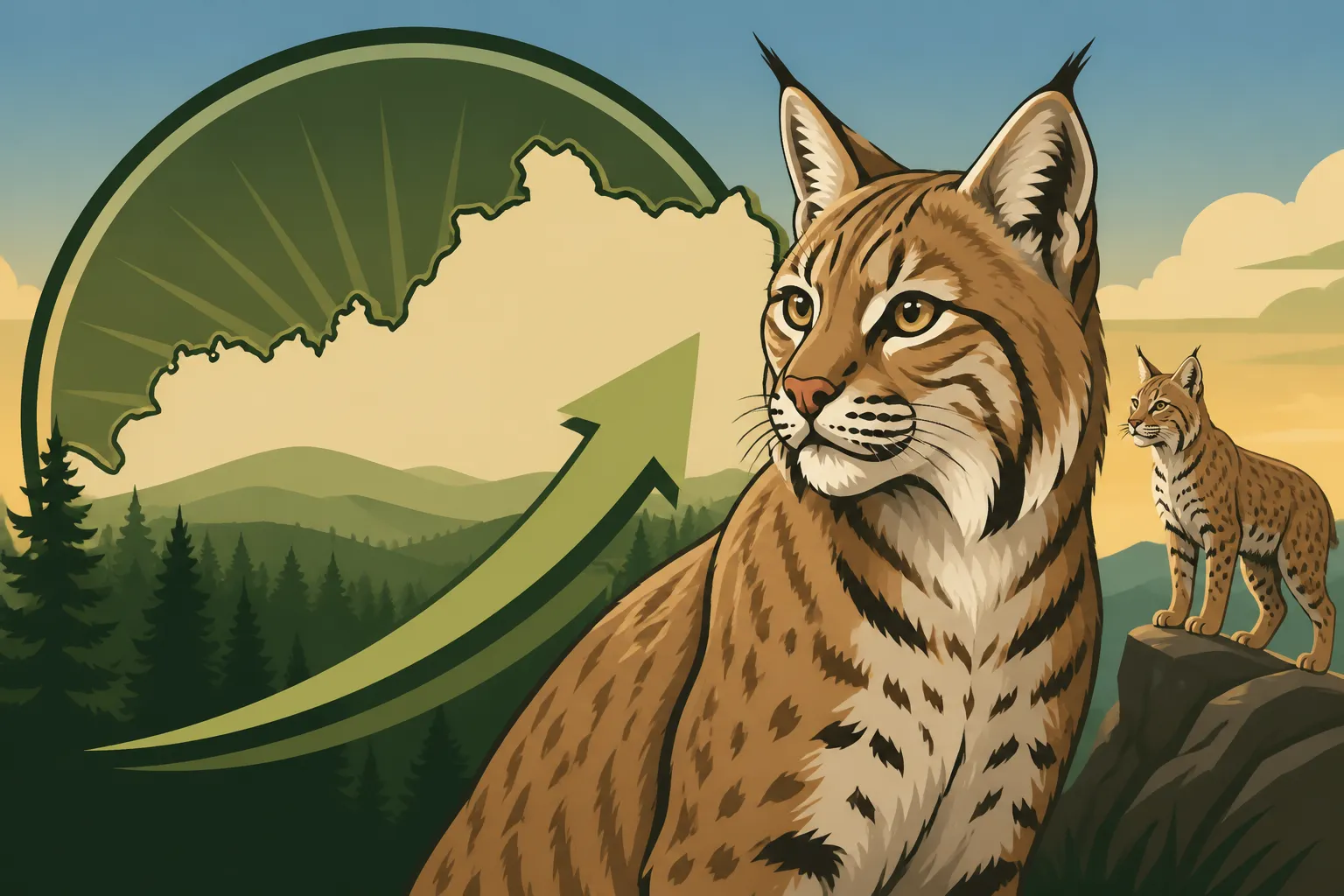
Where Kentucky Bobcats Are Rebounding
For those of us who spend countless hours traversing Kentucky's diverse landscapes, there's a unique thrill in encountering or even just knowing that certain elusive creatures are thriving. It can be frustrating when it feels like some of our native wildlife are struggling, but when it comes to the bobcat, Kentucky has a true success story unfolding right before our eyes. This guide will take a deep dive into where these secretive felines are making a remarkable comeback and what that means for our state's wild places.
Understanding the Bobcat's Comeback Story in Kentucky
The bobcat (Lynx rufus) is a creature of legend and mystery in many parts of the country. For a long time, across much of the eastern U.S., these beautiful cats were thought to be rare, perhaps even dwindling. Kentucky, like many states, saw its bobcat population decline significantly over a century ago, primarily due to habitat loss, unregulated hunting, and persecution. It's a story we hear often with many wildlife species, where human expansion and changing land use practices inadvertently pushed native animals to the brink.
Imagine the Kentucky of yesteryear, vast expanses of old-growth forests being cleared for agriculture and timber. This dramatic alteration of the landscape fragmented the bobcat's preferred dense, brushy habitats, making it harder for them to find food, shelter, and suitable breeding grounds. Coupled with a lack of understanding and management efforts, their numbers dipped to concerning lows. Many hunters and outdoors enthusiasts of previous generations might have gone their entire lives without ever seeing one in the wild, or perhaps only catching a fleeting glimpse.
Historical Context: Why Bobcats Vanished or Declined
Back in the early to mid-20th century, the perception of predators like bobcats was often negative. They were frequently viewed as threats to livestock and game species, leading to concerted efforts to eradicate them. Trapping and hunting seasons were often open-ended, without strict limits or management plans based on scientific population data. This, combined with the loss of vast tracts of forested and brushy cover, created a perfect storm for their decline.
Think about the sheer scale of the changes: from a largely wild frontier to a more settled, agricultural state. This transformation left fewer refuges for animals requiring expansive, undisturbed territories. The very wildness that defined Kentucky in its early days began to shrink, and with it, the populations of its most iconic wild inhabitants, including the bobcat. It wasn't just bobcats, of course; many furbearers and large game animals faced similar pressures, highlighting the immense task of wildlife conservation agencies in the years that followed. For a broader look at the state's furbearer populations, you might be interested in Kentucky Small Game and Furbearers.
The Factors Driving Their Return: Habitat, Prey, and Management
Thankfully, the tide began to turn. A combination of factors has allowed Kentucky's bobcat population to not just stabilize, but genuinely rebound. One of the most significant has been habitat regeneration. As agriculture shifted and some lands reverted from fields to secondary growth forests and thickets, ideal bobcat habitat slowly returned. These brushy, overgrown areas provide excellent cover for hunting and raising young.
Secondly, robust prey populations have been crucial. Bobcats primarily feed on small mammals like rabbits, squirrels, and rodents, but they are also opportunistic predators that will take turkeys, small deer (especially fawns), and even smaller furbearers. Kentucky has seen strong deer and turkey populations in recent decades, providing a stable food source, especially for vulnerable fawns during spring. This abundance of food allows bobcats to thrive, successfully reproduce, and expand their range. Understanding Kentucky Deer Population Estimate helps put this into perspective.
Finally, effective wildlife management by the Kentucky Department of Fish and Wildlife Resources (KDFWR) has been paramount. Regulations on trapping and hunting have become much more science-based, ensuring sustainable harvest levels. Protection measures, combined with habitat improvements on public lands like Kentucky Wildlife Management Areas, have given bobcats the space and security they need. The agency's commitment to monitoring predator populations, similar to how they track Kentucky Coyote Range and Density, has allowed for adaptive management strategies that support a healthy and growing bobcat population.
Key Regions Where Kentucky Bobcats Are Rebounding
While bobcats are now found in all 120 Kentucky counties, their presence and density vary considerably. They are adaptable creatures, but they still prefer specific types of terrain that offer cover, food, and remoteness. Understanding these preferences helps pinpoint the heartlands of their resurgence.
We’re not just talking about isolated sightings anymore; in many areas, bobcats are establishing healthy, reproducing populations, which is incredibly encouraging for the overall health of our state's ecosystems. It's truly a testament to conservation efforts that these secretive cats are making such a strong return.
Eastern Kentucky's Rugged Terrain
When you think of wild Kentucky, Eastern Kentucky's rugged mountains, deep hollows, and vast forested tracts immediately come to mind. This region is undeniably the stronghold for bobcats in the state. Areas within the Daniel Boone National Forest, for instance, offer precisely the kind of dense, unbroken woodland and rocky outcrops that bobcats adore. The sheer inaccessibility of some of this terrain provides natural sanctuaries where they can live relatively undisturbed.
The Cumberland Mountains, Pine Mountain, and the Big South Fork region are prime examples. Here, the landscape is a patchwork of mature timber, regenerating clear-cuts, and thick rhododendron and mountain laurel thickets. These features offer excellent ambush cover for hunting and secure den sites. The abundance of small game, as well as deer and turkey, provides a reliable food source. If you're looking for a challenging hunt in this kind of environment, Daniel Boone National Forest Hunting details some of the unique considerations. Hunters and hikers in these areas frequently report sightings or find signs of bobcat activity, making it clear this is a thriving ecosystem for them.
Western Kentucky's Diverse Landscapes
While often associated with more rolling farmland and river bottoms, Western Kentucky also holds significant bobcat populations, particularly in its larger blocks of timber and areas near major river systems. The Kentucky side of Land Between the Lakes, for example, offers extensive forested habitat and diverse prey opportunities that are perfect for bobcats. Other areas like the Sloughs WMA and Peabody WMA, which include reclaimed mine lands and bottomland hardwoods, also provide excellent habitat.
Bobcats in Western Kentucky adapt to the slightly different terrain. They utilize the dense cover along creek bottoms, drainage ditches, and fencerows that dissect agricultural fields. These linear features act as travel corridors, connecting larger patches of woods. The mix of open fields and heavy cover often creates a "patchwork quilt" effect, which can be very productive for opportunistic predators like bobcats. Their presence here is a great indicator of a healthy mix of agricultural and wild lands.
Central and Southern Kentucky's Expanding Range
Central and Southern Kentucky, often characterized by the iconic Bluegrass region and more moderate rolling hills, also show strong signs of bobcat resurgence. As development pushes outward, and more marginal agricultural lands are left to grow wild, bobcats are finding new territories to colonize. Counties with larger, unfragmented tracts of private timber or those adjacent to major river corridors like the Green River, are seeing increasing bobcat activity.
It’s exciting to see these animals move into areas where they might have been rare just a few decades ago. Farmers in these regions sometimes report bobcat sightings near their fields or woodlots, often to their surprise. This expansion speaks volumes about the overall health and increasing population density of bobcats throughout the state. It also shows the species' adaptability, moving beyond the traditionally rugged areas into more mixed-use landscapes. The KDFWR continually monitors population trends, much like they track Kentucky Turkey Population Trends, to ensure these expanding populations remain healthy and sustainable.
How to Spot or Confirm Bobcat Presence
Given their secretive nature, actually seeing a bobcat in the wild is a rare and special event. Many hunters and outdoors enthusiasts spend years in the woods without ever catching a glimpse. However, there are definitive ways to confirm their presence and understand where they might be living and moving. This isn't about actively hunting them (unless you're pursuing furbearers under specific regulations, of course), but rather appreciating and understanding their role in the ecosystem.
For serious wildlife observers, or even just curious hunters, knowing what to look for can turn an ordinary walk in the woods into a detective mission. It’s all about tuning into the subtle signs that tell a bigger story about what animals are sharing the landscape with you.
Identifying Bobcat Sign: Tracks, Scat, and Scratch Marks
The most common way to confirm a bobcat's presence is by finding their sign. Tracks are often the clearest indicator. Bobcat tracks are typically rounder than a domestic cat's, with four toes showing in the front and rear paws (claws are usually retracted and don't show). They often exhibit a leading toe, with the heel pad having two lobes on the front and three on the back. A typical bobcat track is about 1.5 to 2.5 inches long. Look for these in soft mud, snow, or dusty trails, especially near water sources or game trails.
Scat (droppings) can also be found, though it's less distinctive than tracks. Bobcat scat often looks segmented, can contain hair and bone fragments from their prey, and is usually deposited in visible locations, sometimes to mark territory. Scratch marks, particularly on trees or logs, can also indicate a bobcat is regularly using an area, much like a domestic cat sharpening its claws, but on a larger scale. These marks are often found on vertical surfaces at a height consistent with a bobcat stretching.
Using Trail Cameras and Scouting Tools
For consistent observation, trail cameras are invaluable. Placing cameras along known game trails, near dense cover, or at pinch points between different habitat types can significantly increase your chances of capturing an image or video of a bobcat. They are active both day and night, but often more nocturnal or crepuscular (active at dawn and dusk), so a camera with good low-light or night vision capabilities is ideal.
When scouting for ideal camera placement or just general sign, utilizing modern mapping tools can make a huge difference. Platforms like GoHunt, for example, offer detailed satellite imagery, topographic maps, and public/private land boundary overlays that help you identify promising habitat features like dense thickets, drainages, and remote areas that bobcats favor. This allows you to plan your scouting trips efficiently, focusing on high-probability zones. Learning how to effectively scout public land is crucial, and resources like Scouting Kentucky Public Land Before Season can provide excellent foundational knowledge.
Responsible Observation and Wildlife Etiquette
When observing wildlife, especially predators, responsible etiquette is key. Always maintain a respectful distance to avoid disturbing the animal. Never attempt to approach, feed, or interact with a bobcat. While they are generally shy and reclusive, all wild animals are unpredictable.
If you are lucky enough to see a bobcat, appreciate the moment from afar. Use binoculars or spotting scopes for closer viewing. Avoid making loud noises or sudden movements that could startle them. Remember, we are guests in their habitat, and our goal should be to observe without impacting their natural behavior. Respecting privacy is not just for hunting game, but for all wildlife in their natural environment.
The Ecological Impact of a Healthy Bobcat Population
The resurgence of bobcats in Kentucky is more than just a feel-good story for wildlife enthusiasts; it has profound ecological implications. Healthy predator populations are a sign of a balanced and robust ecosystem, and bobcats play a crucial role in maintaining that balance.
It's a delicate dance in nature, and every player has a part. When one piece is missing or out of sync, the whole system can feel the effects. That's why the bobcat's return is such a positive indicator for Kentucky's wild places.
Predators as Keystone Species: Maintaining Balance
Bobcats act as what biologists call a "mesopredator," meaning they are mid-level predators within the food web. Their presence helps regulate populations of smaller prey species, preventing overpopulation that could lead to habitat degradation or the spread of disease. They also help keep populations of smaller competitors, like raccoons and opossums, in check.
Their role in the ecosystem is complex. By preying on the weak, old, or sick individuals within prey populations, they contribute to the overall health and vitality of those herds and flocks. This natural selection process strengthens the genetic pool of prey species, making them more resilient. Just as understanding Kentucky's Black Bear Population helps us appreciate another apex predator, recognizing the bobcat's place reveals the intricate web of life.
Managing Prey Populations: Deer, Rabbits, and Rodents
While deer make up a smaller portion of a bobcat's diet, they are known to prey on fawns, especially during the spring birthing season. This can help manage deer populations, particularly in areas where deer numbers might be high. The primary targets, however, are rabbits, squirrels, and various rodents. By controlling these smaller mammal populations, bobcats help reduce pressure on plant communities and agricultural crops.
Consider a healthy field mouse population; without natural predators, these numbers can explode, impacting crop yields and spreading disease. Bobcats, along with other predators, are nature's pest control, providing a vital service that benefits both the ecosystem and human interests. The dynamic relationship between predator and prey is continuously studied, just as Kentucky Wildlife Disease Monitoring keeps an eye on the health of various species.
What it Means for Kentucky's Ecosystem
A healthy, widespread bobcat population indicates a healthy, diverse ecosystem in Kentucky. It means that there's enough suitable habitat, enough prey, and a stable environment to support a top-tier predator. It reflects successful conservation efforts and a greater appreciation for biodiversity. For those who hunt or simply enjoy the outdoors, it means a richer, more vibrant wilderness experience.
The return of the bobcat signals a rebalancing of nature, an important step in ensuring the long-term ecological integrity of our state. It's a reminder that when we provide the right conditions, nature has an incredible capacity to heal and thrive.
| Region | Primary Habitat Types | Bobcat Density | Key Indicators |
|---|---|---|---|
| Eastern Kentucky | Rugged mountains, dense forests, steep hollows | High | Frequent trail camera captures, tracks in remote areas |
| Western Kentucky | Bottomland hardwoods, reclaimed mine lands, creek bottoms | Moderate-High | Tracks along waterways, sightings near large timber blocks |
| Central/Southern KY | Rolling hills, mixed woodlands, reverting agricultural land | Growing | Increasing sightings, signs in expanding habitat corridors |
| Bluegrass Region | Woodlots, fencerows, suburban fringes (more rare) | Low-Moderate | Occasional sightings in larger rural tracts, camera traps |
Disclaimer
This article is for general informational purposes only and does not constitute professional advice. Laws, prices and regulations vary by location and change over time. Consult a qualified professional for guidance on your specific situation.