How Wild Hogs Spread Across Kentucky
Wild hogs are a pervasive, frustrating problem for many Kentucky landowners and hunters. They root up fields, destroy habitat, and compete with our native wildlife, leaving a trail of destruction that feels impossible to stop. This guide will dive deep into how these invasive animals managed to spread across our beautiful Bluegrass State, examine the impact they have, and discuss what can be done to manage their growing presence.
The Unwelcome Arrival: Origin and Early Incursions
It’s easy to look at a sounder of wild hogs tearing up a pristine creek bottom and wonder, "Where on earth did these things come from?" The truth is, their history in North America, and specifically in Kentucky, is a complex mix of historical introductions and more recent, less ethical, human actions. They aren't native to our landscape, and their arrival has proven to be a long-term headache.
Historical Context: Escapees and Feralization
The story of wild hogs in the United States often begins centuries ago with early European explorers and settlers who brought domestic pigs with them. These animals were sometimes allowed to forage freely, effectively managing themselves. Over generations, some of these domestic pigs escaped or were simply left behind, adapting to the wild and becoming feral. Without the consistent intervention of humans, these once-domestic animals quickly revert to a more wild state, growing coarse hair, developing tusks, and adopting survival instincts. They're incredibly resilient, and Kentucky's varied terrain, from the rugged mountains to the rich farmlands, proved to be quite accommodating.
However, the hogs we see tearing up fields today aren't solely descendants of these ancient escapees. Many of them are a hybrid mix, often referred to as "feral swine," which includes domestic pigs that have gone wild, Eurasian wild boar (introduced for hunting purposes in some states), and crosses between the two. These animals possess the best (or worst, depending on your perspective) survival traits of both, making them incredibly hardy and difficult to control. For a long time, Kentucky had very few documented populations, but that began to change in earnest, much to the dismay of farmers and conservationists alike.
Initial Sightings and Small Populations
For many years, Kentucky was largely spared the widespread issues faced by some of our southern neighbors. While occasional sightings of feral pigs might have occurred, they were usually isolated incidents, often in counties bordering states with established populations, like Tennessee. These early incursions were typically small, localized groups, possibly escapees from small farms or animals that had wandered across state lines. They might have been mistaken for large domestic pigs on the loose, not recognized as the harbinger of a much larger, ecological challenge.
The shift truly began when these small, scattered populations started to grow and become more established, often in remote, rugged areas that provided plenty of cover and food sources. These foundational groups, though initially small, laid the groundwork for the rapid expansion we’ve witnessed in more recent decades. It was like a slow-burning fuse, and many didn't realize the potential for explosion until the damage was already quite visible. Hunters might have seen one or two and thought nothing of it, never imagining the scale of the problem that was quietly brewing just out of sight.
Fuelling the Fire: Factors Contributing to Their Rapid Expansion
The rapid spread of wild hogs across Kentucky isn't just about a few pigs wandering off. It's a perfect storm of biological advantages, human actions, and environmental conditions that have allowed these animals to thrive and multiply at an alarming rate. Understanding these factors is crucial to grasping the scope of the problem.
High Reproductive Rates
One of the primary reasons wild hogs are such a tenacious problem is their incredible reproductive capacity. These aren't your slow-breeding deer or elk. Wild sows can begin breeding as young as six months old and can have two litters a year, sometimes even three under ideal conditions. Each litter can range from 4 to 12 piglets, with an average of 6-8. Do the math, and you can quickly see how a small group can explode into a massive population in just a few years.
Imagine a single sow and her offspring. If half her litter are females, and they start breeding within a year, the numbers quickly become exponential. This rapid turnover means that efforts to control them often feel like trying to empty a bathtub with a teaspoon while the faucet is wide open. It’s a biological superpower that makes them incredibly difficult to get ahead of. This high fecundity means that even if hunters remove a significant number, the population can rebound swiftly if not kept under intense, consistent pressure.
Human-Assisted Spread (Illegal Translocation)
Perhaps the most frustrating and impactful factor in the spread of wild hogs is illegal human translocation. This isn't about accidental escapes; it's about people deliberately catching wild hogs and moving them to new areas, often for the purpose of creating new hunting opportunities. While the intent might seem harmless to some, the consequences are devastating.
Individuals, sometimes unaware of the ecological damage, or simply driven by a desire for a new hunting pursuit, have been known to move these animals from established populations in other states or even from within Kentucky. They might release them onto private land, hoping to establish a "wild boar" hunt. This practice bypasses natural barriers like rivers and highways, immediately creating new breeding populations in previously uninfested areas. It’s like pouring gasoline on a fire. These actions accelerate the spread exponentially and are a major reason why populations suddenly appear in counties far from any established hog zones. This is why agencies like the Kentucky Department of Fish and Wildlife Resources (KDFWR) take illegal translocation so seriously, as it directly undermines all efforts to contain and eradicate these pests.
Adaptability and Habitat Diversity
Kentucky offers a smorgasbord of habitats that wild hogs simply adore, contributing greatly to their ability to spread. From the dense, rugged forests of Eastern Kentucky, which provide ample cover and diverse food sources, to the rich bottomland hardwoods and expansive agricultural fields of Western Kentucky, hogs can find everything they need to survive and thrive. They are not picky eaters; they'll root for tubers and invertebrates, feast on acorns and other mast crops, and won't hesitate to raid cornfields or soybean fields.
Their adaptability extends beyond diet. They can withstand a wide range of climates, from hot summers to cold Kentucky winters, finding shelter in thickets, brush piles, or even abandoned structures. They're also incredibly intelligent and wary, quickly learning to avoid human contact and adapting their movements to evade hunting pressure. This combination of an abundant food supply, diverse shelter, and inherent cunning makes them perfectly suited to colonize nearly every corner of our state. Whether you're hunting in the Cumberland Mountains or along the Western Kentucky River Bottoms, chances are, wild hogs could potentially find a home there.
The Unseen Price: The Impact of Wild Hogs on Kentucky's Ecosystems and Hunting
The presence of wild hogs isn't just an aesthetic problem; it's a profound ecological and economic crisis. Their destructive nature impacts everything from farmer's livelihoods to the very health of our native wildlife. It’s a cascading effect that touches many aspects of life in Kentucky.
Agricultural Damage and Economic Costs
One of the most immediate and visible impacts of wild hogs is the immense damage they inflict on agriculture. Farmers in counties with established hog populations face significant economic losses year after year. Hogs will root up newly planted fields, consume mature crops like corn and soybeans, and damage fencing and irrigation systems. A sounder of hogs can destroy an acre of cropland overnight, leaving behind a churned-up mess that's costly to replant and repair.
Beyond row crops, they also damage pastures, making them unsuitable for livestock grazing, and can even prey on vulnerable newborn livestock. The financial burden falls directly on the farmers, often with little recourse. Imagine investing thousands in planting a field only to have it decimated by these destructive animals just before harvest. This economic strain is a tangible and heartbreaking consequence of their unchecked spread. This is why Kentucky Landowner Deer Permit Rules often have provisions for managing nuisance wildlife, and wild hogs certainly fit that description.
Ecological Devastation and Disease Risk
The ecological impact of wild hogs runs deep, threatening the delicate balance of Kentucky's natural habitats. Their rooting behavior disturbs vast tracts of land, destroying native plant communities, accelerating erosion, and impacting water quality. They compete directly with native wildlife, like deer, turkey, and squirrels, for critical food resources such as acorns and other mast crops, which can be particularly damaging during harsh winters.
Furthermore, wild hogs are notorious carriers of diseases that can be transmitted to livestock, wildlife, and even humans. They can carry diseases like brucellosis, leptospirosis, and pseudorabies, posing a serious threat to the health of domestic pigs and other farm animals. The risk of spreading Chronic Wasting Disease in Kentucky Deer is also a concern, as hogs can disturb deer carcass sites and move infected material. This disease vector issue makes their presence a significant public health and animal welfare concern, necessitating careful monitoring and control efforts, as discussed in Kentucky Wildlife Disease Monitoring.
Impact on Native Game Species
As hunters, we often focus on the game species we cherish: our Kentucky Deer Herd Size, wild turkeys, and small game. Wild hogs directly threaten these populations in several ways. Their constant rooting destroys food plots and natural forage areas that deer and turkeys rely on, especially during lean times of the year. They are also opportunistic predators, known to prey on fawns, turkey poults, and the nests of ground-nesting birds.
This competition for resources and direct predation puts additional pressure on native game populations that are already facing challenges from habitat loss and other factors. It means fewer deer for hunters, fewer turkeys for spring gobblers, and an overall degradation of the hunting experience. When you're out Scouting Kentucky Public Land Before Season, finding fresh hog sign can often mean the deer sign will be minimal, as these animals often disrupt traditional deer patterns.
The Uphill Battle: Challenges in Control and Management
Controlling wild hog populations in Kentucky is not for the faint of heart. It's a complex, ongoing battle that requires sustained effort, resources, and a multi-faceted approach. There's no silver bullet, and every strategy comes with its own set of hurdles.
Difficulty of Eradication
Eradicating wild hogs from a landscape once they've established themselves is extraordinarily difficult, if not impossible, in most scenarios. Their high reproductive rates, intelligence, and adaptability mean that even aggressive removal efforts often just create a temporary dent in the population. They quickly learn to avoid traps and become nocturnal under pressure, making them even harder to locate and remove.
Effective control often requires a combination of trapping, shooting, and specialized aerial removal in certain large, open areas, though the latter is less common in Kentucky's forested regions. The sheer scale of the problem, spread across diverse and often remote landscapes, means that resources are stretched thin. It's a long-term commitment, not a quick fix, and requires constant vigilance and adaptation to the hogs' cunning ways. Many seasoned hunters using tactics like Still-Hunting Eastern Kentucky Ridges know how challenging it is to even see a hog, let alone consistently remove them.
Legal Status and Hunter Engagement
Kentucky recognizes the severe threat posed by wild hogs, and as such, they are not classified as a game animal. Instead, Why Kentucky Treats Hogs as Unprotected means there are no closed seasons, no bag limits, and no time-of-day restrictions for hunting them. This policy is designed to encourage their removal by any legal means. Landowners often have even more flexibility to deal with hogs on their property.
However, simply allowing year-round hunting isn't always enough to make a significant impact on rapidly reproducing populations. While hunters certainly contribute to removal efforts, especially when hunting Wild Hogs Alongside Deer Season, hunting alone rarely reduces populations sufficiently. Hunters generally target larger, older animals, while the true drivers of population growth – the breeding sows – often go unnoticed or are harder to target. To truly make a difference, hunter engagement needs to be consistent, widespread, and ideally coordinated.
Coordinated State and Federal Efforts
Recognizing the widespread impact, Kentucky actively participates in state and federal programs aimed at controlling feral swine. The KDFWR works in conjunction with agencies like the USDA's Animal and Plant Health Inspection Service (APHIS) to implement integrated management strategies. These efforts often include large-scale trapping operations, surveillance, and public outreach campaigns to educate landowners and hunters about the risks and responsible management practices.
For example, specialized teams might deploy large corral traps, which can capture an entire sounder at once, or utilize advanced thermal imaging for night operations. These coordinated efforts are crucial because the problem extends beyond property lines and county borders. Tackling the issue effectively requires a unified front, sharing data and resources to target problem areas efficiently. This holistic approach, which often leverages mapping tools like those found on GoHunt, helps land managers and hunters identify high-impact areas and coordinate their responses for maximum effectiveness.
Where They Roam: Regional Spread and Current Hotspots
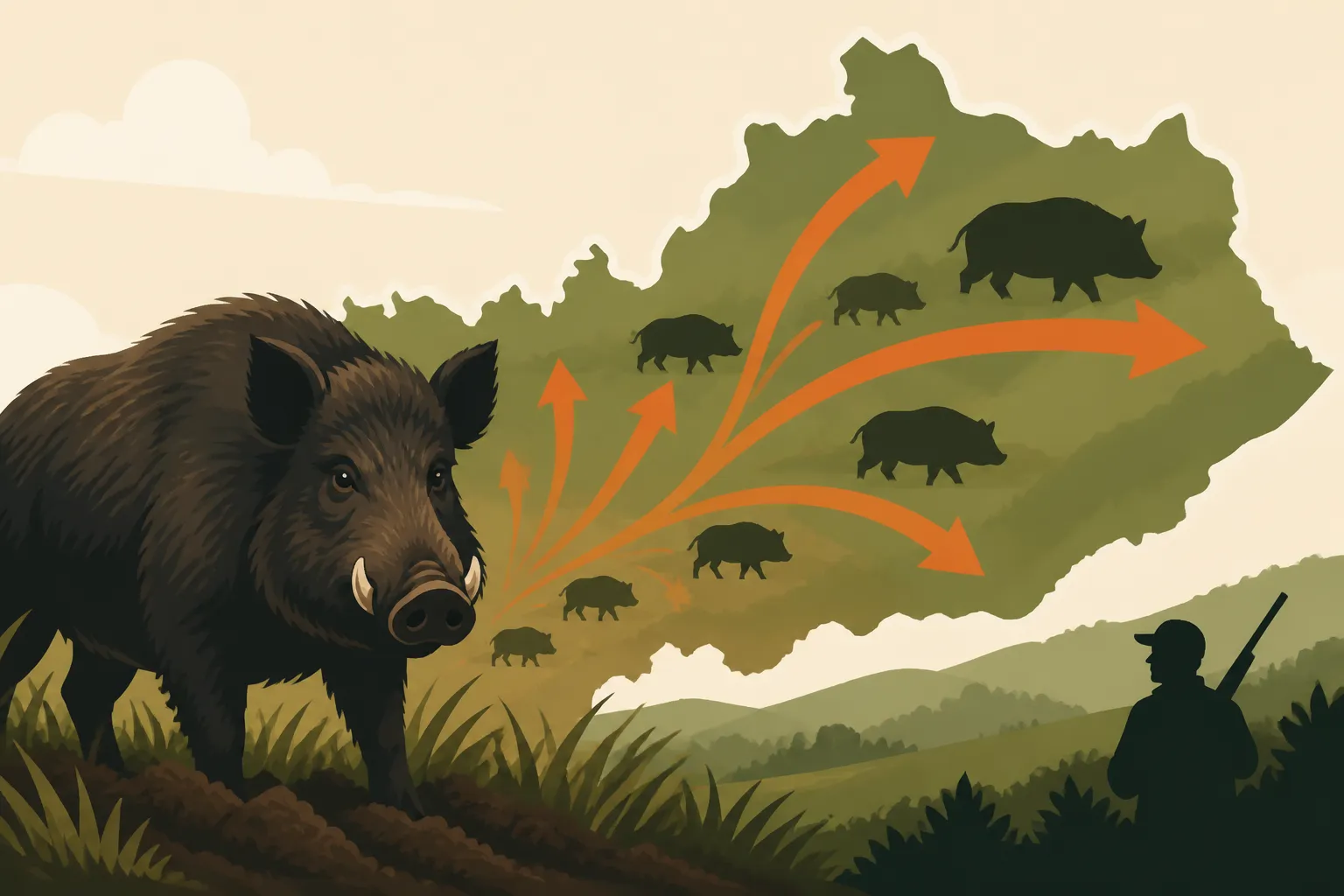
Wild hogs aren't evenly distributed across Kentucky. Their spread has followed certain patterns, often influenced by habitat, human activity, and the proximity to existing populations. Knowing where they are most concentrated can help hunters and landowners understand the local risks.
Southeastern Kentucky Concentration
The rugged, forested terrain of Southeastern Kentucky, particularly in counties bordering Tennessee, has long been a primary hotspot for wild hog populations. Areas like the Daniel Boone National Forest and surrounding coalfield country provide abundant cover, diverse food sources like acorns and wild fruits, and numerous remote hollows where hogs can thrive undisturbed. The proximity to established populations in states to our south also means a constant influx of new animals.
Hunters in these areas often encounter hog sign, sometimes alongside that of bears and elk, especially when traversing steep ridges and creek bottoms. This region's dense timber and broken topography, while challenging for hunters, are ideal for hogs to evade detection and reproduce. They find plenty of places to wallow in muddy creeks and bed down in thick laurel patches. When you're considering Hunting Eastern Kentucky Coalfield Country, you absolutely need to be aware of the potential for encountering wild hogs and their sign.
Western Kentucky River Bottoms and Farmland
While Eastern Kentucky offers rugged sanctuary, Western Kentucky's rich agricultural lands and sprawling river bottoms provide an irresistible buffet for wild hogs. Counties along the Ohio and Mississippi rivers, as well as those with extensive farming operations, have seen a significant increase in hog activity. The fertile soil is easy to root up, and standing crops offer both food and cover.
The vast tracts of bottomland hardwoods, often interspersed with agricultural fields, create a mosaic of ideal habitat. Hogs can hide in the timber during the day and venture into fields at night to feed. The mild winters in this part of the state also aid in their survival and reproductive success. These areas are particularly vulnerable to the agricultural damage we discussed earlier. Hunting Western Kentucky River Bottoms might bring you face-to-face with a sounder of hogs just as often as a group of deer, especially in areas with dense thickets.
Feral Swine Sightings in Central Kentucky
More recently, concerns have grown about Feral Swine Sightings in Central Kentucky. While not as heavily populated as the southeastern or western hotspots, isolated pockets and new incursions are being reported. This expansion is particularly worrying because Central Kentucky includes areas of valuable farmland and is home to many smaller, more fragmented woodlots and river corridors that could easily become new breeding grounds.
These newer populations are often the result of illegal translocation, where individuals have moved hogs into areas where they didn't previously exist. This highlights the ongoing challenge of human behavior in exacerbating the spread. Even areas traditionally thought to be "safe" from hogs are now seeing their presence, requiring residents and hunters to be more vigilant and report any sightings immediately. Keeping an eye on your hunting maps, perhaps through the GoHunt app, to look for reported hog activity, can be an invaluable scouting tool.
Standing Guard: What Hunters Can Do
As hunters and conservationists, we are often on the front lines of wildlife management. When it comes to wild hogs, our role is crucial, not just in harvesting them but also in gathering information and preventing their further spread.
Reporting Sightings
One of the most important things any Kentuckian can do, whether you're a hunter, landowner, or just enjoying the outdoors, is to report any wild hog sightings. The KDFWR relies heavily on public reports to track the spread of these animals, identify new problem areas, and deploy control efforts effectively. Every sighting, no matter how small, helps paint a clearer picture of their presence.
When reporting, try to gather as much detail as possible: the exact location (GPS coordinates are ideal), the number of hogs seen, any sign of damage, and the date and time. This data is critical for wildlife managers to understand how Wild Hogs Spread Across Kentucky and where to concentrate their limited resources. You can usually report sightings directly to the KDFWR through their website or by contacting your local conservation officer.
Hunting Hogs Ethically and Effectively
Given their status as an unprotected species, hunters have a unique opportunity to contribute to hog control. Hunting hogs can be a thrilling pursuit, but it should be done with the primary goal of population reduction, not just sport. This means targeting sows whenever possible to impact their reproductive capacity. Remember, there are no seasons, so you can hunt them year-round, which offers a great opportunity for extra time in the woods.
When hunting hogs, it's essential to understand their behavior. They are often most active at night or during the low light of dawn and dusk, especially when pressured. Using trail cameras can help you identify travel patterns and feeding areas. While rifle hunting is common, archery and even some handgun options are legal. Always follow safe hunting practices, be mindful of your surroundings, and ensure you have proper landowner permission if on private land. Tools like GoHunt can help you scout and understand the terrain, even for these elusive animals.
Preventing Further Spread
Beyond active hunting and reporting, preventing further human-assisted spread is paramount. This means absolutely never, under any circumstances, trapping or catching wild hogs and releasing them in a new location. This practice is illegal and incredibly damaging to Kentucky’s ecosystems and agricultural interests. If you know of someone engaging in this activity, report it to the authorities immediately.
Educate others about the dangers of illegal translocation and the serious ecological threats wild hogs pose. Be vigilant about cleaning equipment, vehicles, and even boots if you've been in an area with known hog populations, to avoid inadvertently carrying mud or plant material that might contain disease vectors or seeds. By being responsible stewards of our land and wildlife, we can all play a part in curbing the further spread of these destructive invaders.
Disclaimer
This article is for general informational purposes only and does not constitute professional advice. Laws, prices and regulations vary by location and change over time. Consult a qualified professional for guidance on your specific situation.