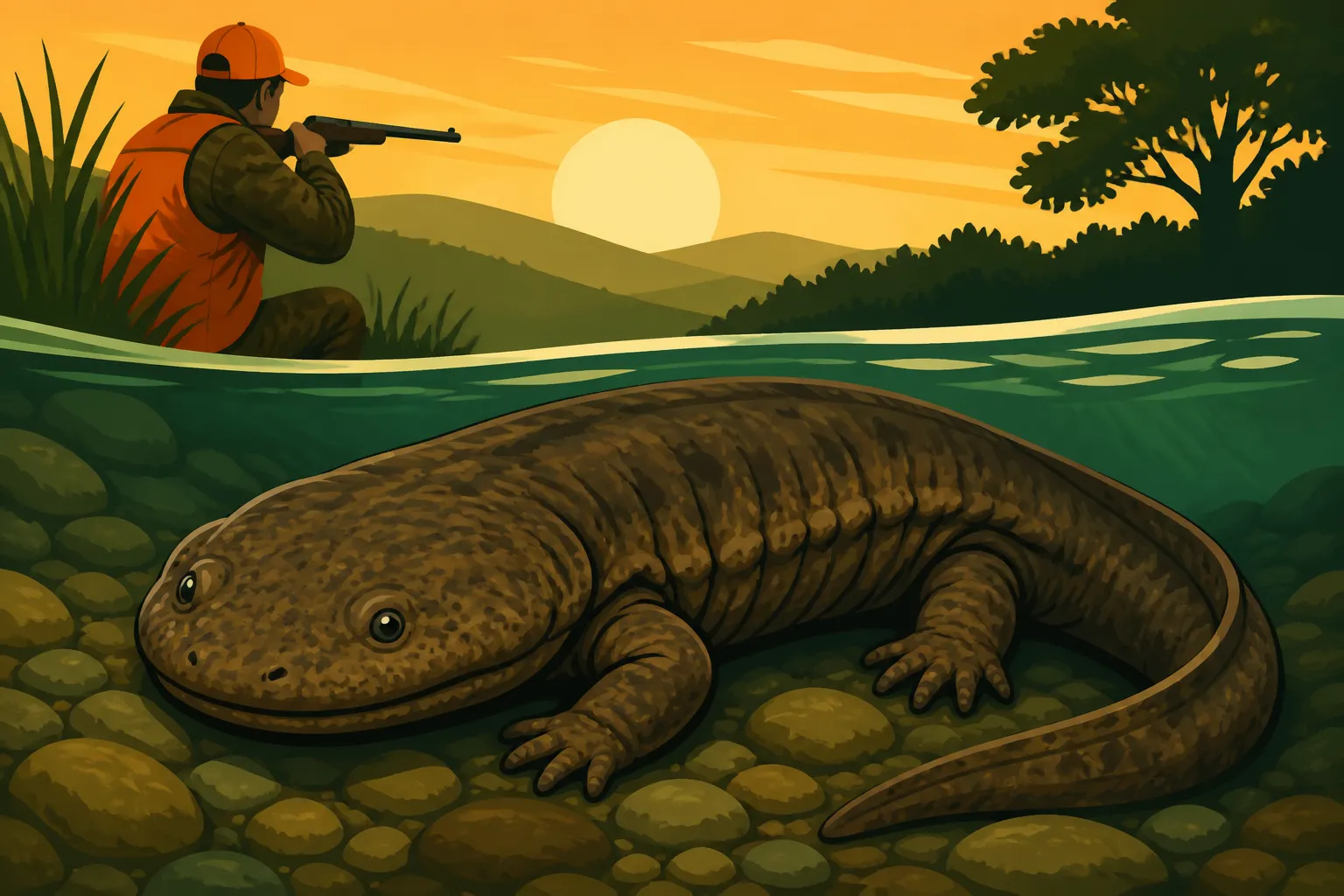
Kentucky Hellbender Salamander Encounters Afield
Imagine you're out there, maybe on a brisk fall morning in Eastern Kentucky, still-hunting a ridge for a whitetail, or perhaps Reading a Ridge for Cumberland Deer, making your way towards a creek bottom. The air is crisp, the leaves crunch underfoot, and you're hyper-focused on movement, listening for that tell-tale snap of a twig. Then, you glance down into a clear, cold stream, and there it is: a creature that looks like it belongs in a prehistoric swamp, flat and slimy, clinging to a rock. You've just stumbled upon a hellbender salamander, a truly rare and incredible encounter that can make you stop dead in your tracks and wonder, "What in the world was that?" This guide is all about understanding these elusive Kentuckians, where you might – just might – see one, and what to do if you're lucky enough to cross paths with this ancient amphibian.
What Exactly is a Hellbender, Anyway?
Before we dive into where you might spot one during a hunt or fishing trip, let's get a handle on what a hellbender actually is. These aren't your typical backyard salamanders you might find under a log after a rain. The Eastern Hellbender, or Cryptobranchus alleganiensis alleganiensis, is North America's largest salamander, and truly a marvel of nature. They're built for life on the bottom of swift-flowing, oxygen-rich streams, a testament to an ecosystem that's largely unchanged for millennia. Seeing one is like peeking back in time.
Appearance and Nicknames
Let's be honest, they're not exactly pretty in a conventional sense, but they are undeniably fascinating. A full-grown hellbender can reach impressive lengths, often 16-20 inches, sometimes even longer! They have a broad, flattened head, tiny eyes set on top, and a paddle-like tail. Their skin is perhaps their most distinctive feature – it's loose, baggy, and covered in folds and wrinkles. This isn't just for show; these folds dramatically increase their skin's surface area, allowing them to absorb more oxygen directly from the water, which is crucial for their survival in fast-moving, cold water.
Their coloration varies, usually a mottled brown, olive, or reddish-brown, often with dark spots or blotches, which helps them blend in perfectly with the rocks and gravel of the stream bed. Because of their somewhat unusual appearance and slimy texture, they've earned a variety of colorful, if not always flattering, nicknames from folks who have encountered them over the years: "snot otter," "mud devil," "Allegheny alligator," and "grampus" are just a few. It speaks to their unique presence in our waterways, something you won't soon forget if you're fortunate enough to see one.
Their Role in Kentucky's Ecosystem
These giant salamanders are more than just a curiosity; they are vital indicators of stream health. Think of them as the canaries in the coal mine for our clean waterways. Hellbenders thrive only in very specific conditions: cold, clear, highly oxygenated streams with abundant large, flat rocks for shelter. If you find hellbenders in a creek, it's a strong sign that the water quality is excellent, with minimal sedimentation or pollution. They're extremely sensitive to changes in their environment.
Unfortunately, their numbers have been in decline across much of their range, including parts of Kentucky, due to habitat degradation, siltation, pollution from runoff, and changes in stream flow. This decline is a serious concern for conservationists because it tells us that the health of these aquatic ecosystems is compromised. Protecting hellbenders means protecting the very streams that are also home to a myriad of fish species, insects, and other wildlife, and are often the same streams that feed into larger rivers and provide clean water for us all. The health of our natural environment, from the deep woods you traverse during Daniel Boone National Forest Hunting to the smallest creek, is interconnected, and the hellbender is a stark reminder of that fact.
Where Hunters Might Encounter a Hellbender in Kentucky
So, where in the world might a hunter or angler actually stumble upon one of these incredible creatures? It's not like they're hanging out by your typical watering hole on a Kentucky Wildlife Management Areas food plot. Hellbenders are incredibly reclusive and prefer very specific environments, making encounters genuinely rare. However, knowing their preferred haunts can help you understand why you might see one in certain areas of the state.
Ideal Habitat in Kentucky's Waterways
Hellbenders are true connoisseurs of pristine stream environments. They absolutely require cold, clean, fast-flowing water with rocky bottoms. We're talking about streams and rivers that haven't been heavily impacted by human activity, where the water flows freely over bedrock and gravel, creating those essential oxygen-rich conditions. They spend almost their entire lives underwater, typically hiding under large, flat rocks that provide shelter from predators and strong currents, and serve as nesting sites.
In Kentucky, this primarily points to the eastern and southeastern portions of the state, particularly in the Cumberland Plateau region. Think of the headwater streams and larger tributaries that eventually feed into systems like the Kentucky River, Big Sandy River, or the Cumberland River. These are often the same rugged, remote areas that draw hunters looking for deer, bear, or elk. The type of terrain that makes for excellent Still-Hunting Eastern Kentucky Ridges is often intertwined with these crucial hellbender habitats. They need water that isn't too warm, isn't choked with silt, and has plenty of hiding spots. If you're wading across a creek with a clear, stony bottom and a decent current, especially in the more mountainous parts of the state, that's where the possibility, however slim, exists.
Why Encounters are So Rare
Despite their impressive size, seeing a hellbender in the wild is truly like finding a needle in a haystack. There are several key reasons for this extreme rarity:
- Nocturnal and Reclusive: Hellbenders are primarily active at night. During the day, they remain hidden under those large rocks, only venturing out to forage after dark. Unless you're exploring streams with a flashlight at night, your chances of seeing one actively moving are minimal.
- Camouflage: Their mottled coloration is incredibly effective. When they're clinging motionless to a rock, they blend in almost perfectly with the stream bed. It takes a keen eye and often a bit of luck to spot one.
- Habitat Degradation: As mentioned, their populations are declining due to human impacts. Siltation from logging, mining, and agricultural runoff smothers their rocky habitats and reduces water quality. Pollution, including chemicals and increased water temperatures, also takes a heavy toll.
- Sensitivity to Disturbance: They are very sensitive creatures. Human presence, especially wading through their habitat or moving rocks, can disturb them and make them even more wary.
So, if you do see one, consider yourself part of a very exclusive club. It's a sign that you're in a truly special, healthy piece of Kentucky's wild country, perhaps a lesser-known corner of Public Hunting Land in Kentucky that remains relatively untouched.
What to Do If You See a Hellbender (And What Not To Do)
Coming across a hellbender is a moment to remember, and it comes with a responsibility. These animals are federally listed as endangered and are of high conservation concern in Kentucky. Your actions (or inactions) in that moment can have a real impact on their survival.
Observe, Don't Disturb
The golden rule when encountering any rare or sensitive wildlife, especially a hellbender, is to observe and absolutely do not disturb. It's incredibly tempting to want to pick up such an unusual creature, to get a closer look, or even to show it to a buddy. Resist that urge!
- Hands Off: Never, ever touch a hellbender. Their skin has a delicate mucous layer that protects them from infections. Handling them can strip this protective slime, leaving them vulnerable to disease. It also causes them immense stress, which can be detrimental to their health.
- Leave Rocks Undisturbed: Do not move the rocks they are hiding under. These rocks are their homes, their shelter, and their nesting sites. Disturbing them can expose the hellbender to predators, destroy their eggs, or simply displace them from vital habitat.
- Photograph from a Distance: If you want a keepsake, take a photo or video from a respectful distance. Use your phone or camera's zoom feature. Let the hellbender continue its life undisturbed. Remember, you're a visitor in its home.
This "hands-off" approach is paramount. Think of it like being an ethical hunter who understands the importance of respecting the wild and its inhabitants, whether it's the deer you're pursuing or a creature you've never seen before.
Reporting Sightings and Their Conservation Status
Your sighting, as rare as it is, can be valuable to conservation efforts! If you are lucky enough to see a hellbender, the Kentucky Department of Fish and Wildlife Resources (KDFWR) would greatly appreciate a report. This information helps them monitor populations, track distribution, and identify critical habitats that need protection.
- What to Report: Note the date, time, and specific location (as accurately as possible, GPS coordinates are best). Describe the size of the animal, its appearance, and any notable behaviors. A photo is incredibly helpful for verification.
- How to Report: You can typically report rare species sightings directly through the KDFWR website or by contacting their wildlife division. Search for their online reporting tools or contact information.
- Conservation Status: Hellbenders are a threatened species in Kentucky and are federally protected. This means they are illegal to harass, capture, or possess without specific permits. Their future depends on continued habitat protection and public awareness. Your ethical behavior afield helps directly.
Using mapping tools like GoHunt, which many hunters use for scouting Where Daniel Boone Forest Bucks Bed or planning access points, can also be invaluable here. You can pinpoint your exact location with a degree of accuracy that helps wildlife biologists follow up on your sighting and understand the precise microhabitat where the hellbender was found.
How Hunters Can Help Protect Hellbenders
As hunters, we are often the staunchest conservationists, spending countless hours in the wild and developing a deep appreciation for healthy ecosystems. Extending that ethic to species like the hellbender, even if they aren't traditional game animals, is a natural fit.
Being Mindful of Waterways While Hunting
Many hunting pursuits, from chasing deer to Spring Turkey Hunting in Kentucky, take us across or near small streams and rivers. Being aware of your impact on these waterways can indirectly benefit hellbenders and other aquatic life.
- Avoid Stream Crossings When Possible: If you're on a multi-use trail or access road, try to cross streams at designated points or bridges. If you must cross a stream on foot, do so carefully, minimizing disturbance to the stream bed.
- Prevent Sedimentation: Activities that cause soil erosion near streams, like creating new trails or disturbing stream banks, can lead to siltation. This is a major threat to hellbender habitat, as silt fills in the spaces under rocks and smothers the stream bottom. Be mindful of your impact, especially in steep terrain.
- Control Runoff: If you're hunting on or near agricultural land, be aware of chemical runoff from fields. While this is often beyond a hunter's direct control, being an advocate for best management practices in your local area can make a difference. Every little bit of clean water helps the entire aquatic ecosystem, which extends from fish to Kentucky Waterfowl on the Mississippi Flyway.
This kind of mindfulness is part of being a responsible steward of the land, something emphasized in Kentucky Hunter Education Requirements. It’s about leaving the wild better than you found it, preserving not just game species but the entire intricate web of life.
Supporting Conservation Efforts
Beyond direct actions in the field, there are broader ways hunters can contribute to hellbender conservation. Many of these actions benefit all wildlife in Kentucky.
- License Purchases: Your hunting and fishing license fees directly support the KDFWR, which in turn funds wildlife research, habitat restoration, and conservation programs for all species, including non-game animals like the hellbender. It’s a direct way your passion for hunting translates into broader conservation.
- Support Conservation Organizations: Numerous non-profit organizations work on aquatic conservation, stream restoration, and endangered species protection. Supporting these groups, whether through donations or volunteering, can provide critical resources for projects aimed at restoring hellbender habitats.
- Advocate for Clean Water: Be an informed voice for clean water initiatives in your community. Attend public meetings, communicate with your elected officials, and educate others about the importance of healthy rivers and streams. The same clean water that supports a thriving hellbender population also supports healthy fish populations, Kentucky's Black Bear Population, and even the impressive How Many Elk Live in Kentucky Today.
Remember, the wild places we cherish for hunting and fishing are complex ecosystems. A healthy environment for a hellbender is often a healthy environment for everything else, from trophy bucks to gobbling turkeys. So, the next time you're out in Kentucky's beautiful woods and waters, keep an eye out. You might just catch a glimpse of this amazing "snot otter," a true ghost of the currents, and carry with you a unique story and a deeper appreciation for Kentucky's incredible natural heritage.
Disclaimer
This article is for general informational purposes only and does not constitute professional advice. Laws, prices and regulations vary by location and change over time. Consult a qualified professional for guidance on your specific situation.