Kentucky Coyote Range and Density
It can sometimes feel like coyotes are everywhere in Kentucky, from the deepest hollers of the Appalachians to the cut cornfields of the Purchase Area, and even creeping into suburban green spaces. Their omnipresence can be a source of frustration for hunters watching deer numbers or livestock owners protecting their herds. This guide is here to shed some light on the truth of coyote range and density across the Bluegrass State, helping you understand where they thrive, why they're so successful, and how that knowledge can make you a more effective hunter or landowner.
The Unstoppable Rise of the Kentucky Coyote: A Story of Adaptation
Kentucky wasn't always a coyote stronghold. For a long time, the eastern United States was thought to be out of their natural range. But these incredibly adaptable canids have proven everyone wrong, successfully expanding their territory eastward over the last century. It's a fascinating and, for some, a concerning story of wildlife migration and environmental change.
From Western Invaders to Eastern Colonizers
Originally, coyotes were creatures of the open plains and western deserts. Their arrival in Kentucky is a relatively modern phenomenon, largely occurring through the early to mid-20th century. As forests were cleared for agriculture and as their natural predators (like wolves) were extirpated from the landscape, coyotes found an open invitation to move in. They followed corridors of suitable habitat, often along river systems and newly deforested areas, slowly but surely establishing a foothold.
It wasn't a sudden invasion, but a gradual colonization. Imagine a few pioneer coyotes, perhaps lone individuals or small family groups, venturing into new territories, finding ample food and few threats. They reproduced, their offspring spread a bit further, and rinse and repeat for decades. This slow, steady expansion has allowed them to adapt to Kentucky's diverse landscapes, from dense timber to sprawling farmlands. It’s why you hear them howling across a wide variety of terrain today.
Why Kentucky Became a Coyote Haven
Kentucky offers a smorgasbord of everything a coyote needs to thrive, making it an ideal haven for them. The varied topography, from the rugged mountains of the east to the rolling hills of the central Bluegrass and the flat river bottoms of the west, provides a mosaic of cover, denning sites, and hunting grounds. More importantly, Kentucky is teeming with prey. Whitetail deer, while often seen as competition, provide abundant carrion, especially during hunting seasons, and fawns offer an accessible protein source.
Small game animals like rabbits and rodents are perennial favorites, found in every nook and cranny of the state. Even wild turkeys, particularly their vulnerable poults, contribute to the coyote's diverse diet. The state's agricultural landscape also plays a huge role. Fields of corn and soybeans offer excellent cover, and the rodents attracted to these crops become easy targets. Livestock, while a frustration for farmers, can also be an opportunistic food source, especially young or unattended animals. It’s this combination of diverse habitat and a rich food base that has allowed coyotes to not just survive but truly flourish in Kentucky.
Mapping the Bluegrass State: Where the Song Dogs Roam
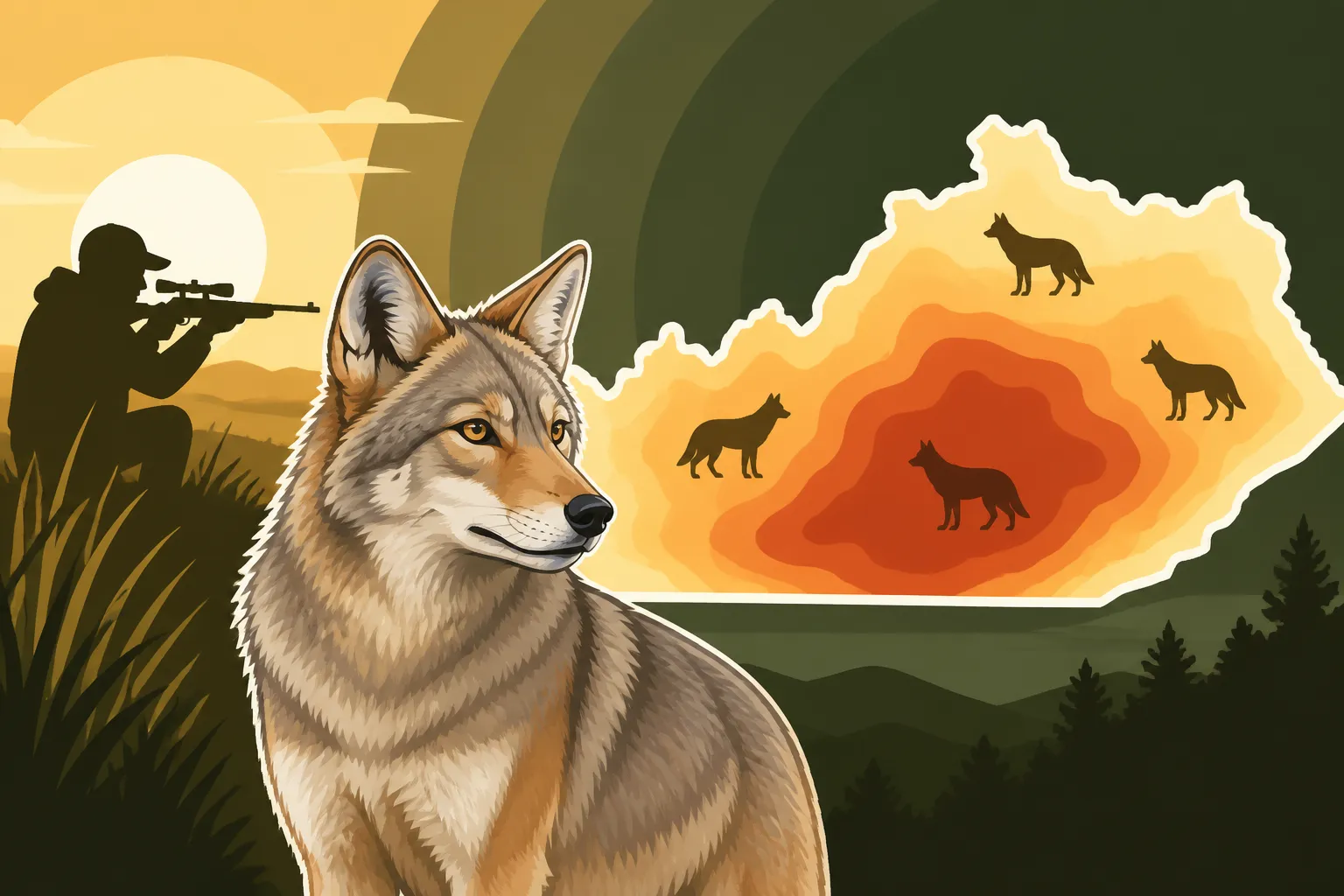
When we talk about coyote range in Kentucky, it’s easier to say where they don't roam, and the answer is practically nowhere. They are truly ubiquitous, but their density and the types of habitat they frequent can vary significantly from one region to another. Understanding these regional nuances is key to knowing what you're up against and adjusting your tactics accordingly.
Western Kentucky Farmlands and River Bottoms
In Western Kentucky, especially in counties like Graves, Hickman, and Ballard, the landscape is dominated by vast agricultural fields interspersed with woodlots, fencerows, and sprawling river bottoms. This is prime coyote country, and you'll find them in high densities here. The flat to gently rolling terrain makes it easy for them to travel, and the abundant prey — from rabbits and voles in the fields to deer in the timbered river corridors — ensures a steady food supply.
Coyotes here are often masters of moving undetected along field edges, through drainage ditches, and in the thick cover of bottomland timber. If you're hunting deer in the fertile river bottoms, say along the Mississippi or Ohio, you're almost guaranteed to encounter coyote sign, if not the animals themselves. They utilize the edges of standing crops for cover during the day and will move into open fields at night to hunt. Their presence can be particularly noticeable during the late fall and winter once crops are harvested, exposing more of the landscape. They really know how to disappear and reappear without warning in these open-yet-broken environments. If you're planning on hunting Western Kentucky river bottoms, expect to share the woods with plenty of coyotes.
Eastern Kentucky Mountains and Forests
Shift eastward, and the landscape changes dramatically to the rugged, heavily forested terrain of the Appalachian foothills and mountains, like those found in the Daniel Boone National Forest. Here, coyotes adapt to a very different environment. While the habitat might seem less open, the vast expanses of timber, steep hollows, and dense undergrowth provide incredible cover and an endless network of travel routes. Counties like Harlan, Leslie, and Pike have robust coyote populations, though their density might feel less concentrated than in agricultural areas simply because of the difficulty in spotting them.
In these mountainous regions, coyotes utilize old logging roads, ridgetops, and creek bottoms as their highways. They're adept at navigating the steep terrain and are incredibly elusive in the thick timber. Food sources here might lean more heavily on deer, small game, and even wild turkeys, which are plentiful in many parts of Eastern Kentucky. You might not see them as frequently as in open country, but their tracks and scat along forest trails will tell you they are present. Their calls echo across the valleys, especially at dusk and dawn, a quintessential sound of the Eastern Kentucky wilderness. If you're focused on hunting Pine Mountain ridgelines, you'll likely hear them.
Suburban Edges and Urban Green Spaces
Perhaps the most surprising aspect of coyote range and density is their increasing presence in and around Kentucky's more populated areas. From the outskirts of Louisville and Lexington to smaller towns nestled in the countryside, coyotes are becoming increasingly common. They thrive in "edge habitats" – where urban or suburban developments meet undeveloped woodlands, parks, golf courses, or agricultural fields. These areas provide easy access to food in the form of rodents, rabbits, domestic pet food left outside, and even garbage.
The cover in these areas might be fragmented, but greenbelts, utility easements, thickets along roadsides, and backyard brush piles offer enough sanctuary for them to den and raise pups. This proximity to humans often leads to conflicts, whether it's concerns about pets or occasional sightings in residential areas. While their density here might not be as high as in ideal rural habitats, their presence is often more acutely felt due to direct human interaction. They are truly an animal that has learned to live among us, whether we like it or not.
Understanding Coyote Population Density
Estimating the exact number of coyotes in Kentucky at any given time is a nearly impossible task, but wildlife agencies do track trends and have a strong understanding of the factors that influence their population density. It's a dynamic equation, constantly shifting based on resources, habitat, and even human activity.
Food Availability and Prey Base
The single biggest driver of coyote density is food availability. Simply put, where there's an abundance of prey, there will be more coyotes. Kentucky, with its healthy populations of white-tailed deer, wild turkeys, rabbits, and a myriad of rodents, provides an incredibly rich larder.
Consider a year with a booming rabbit population, perhaps following a mild winter. This surplus of small, easily catchable prey can lead to higher coyote pup survival and an increase in overall density the following year. Conversely, a severe disease outbreak in a primary prey species could lead to a temporary dip in coyote numbers. Agriculture also plays a huge role. Fields of corn and soybeans support massive rodent populations, which are a cornerstone of a coyote's diet. Even after harvest, dropped grain continues to attract rodents, ensuring a consistent food source through the colder months. This constant availability of diverse food sources is a significant reason why coyotes have reached such high densities across much of Kentucky.
Habitat Suitability and Cover
While food brings them in, suitable habitat and cover allow coyotes to establish and maintain their populations. Kentucky's diverse landscape is generally very favorable. They need safe places to den, raise pups, and escape detection. Dense brush, thickets, abandoned farm structures, hollow logs, and even culverts can serve as ideal denning sites. The larger, contiguous blocks of forested public lands, like those within the Daniel Boone National Forest or state Wildlife Management Areas (WMAs), offer extensive secure habitat.
Even in fragmented agricultural landscapes, fencerows, creek drainages, and unmanaged woodlots provide enough travel corridors and bedding cover. The ability of coyotes to adapt their habitat use, from wilderness areas to suburban fringes, highlights their incredible resilience. They don't need pristine wilderness; they need a blend of cover and hunting grounds, and Kentucky delivers that in spades. Hunters using tools like GoHunt can often identify these patches of dense cover, which might indicate higher concentrations of coyotes in an area, aiding in both deer and predator hunting strategies.
Impact of Hunting Pressure and Trapping
This is where the human element comes in. Kentucky has liberal hunting and trapping regulations for coyotes, reflecting their status as an unprotected species and a common nuisance. Despite this, it's a widely accepted truth that hunting and trapping alone rarely "control" coyote populations on a broad, regional scale. Coyotes respond to pressure with increased reproductive rates and dispersal. If a localized area experiences heavy hunting or trapping pressure, the remaining coyotes will often have larger litters, and coyotes from surrounding, less-pressured areas will quickly fill the void.
However, hunting and trapping can be highly effective for localized management. Landowners dealing with livestock depredation or hunters wanting to reduce pressure on deer fawns in a specific timber block can see real, albeit often temporary, results. Understanding the night hunting rules for Kentucky coyotes can offer a valuable tool for direct pressure, especially during specific times of the year. While the state's overall coyote population remains robust, focused efforts can certainly impact density in a particular field or woodlot.
How Coyote Presence Impacts Other Game Species
The presence of a widespread and dense coyote population in Kentucky naturally raises questions and concerns about their impact on other wildlife, particularly cherished game species like deer and turkeys. This is a complex ecological dynamic, and while coyotes are certainly predators, their exact impact isn't always as straightforward as it seems.
Deer Fawn Predation Concerns
One of the most talked-about impacts of coyotes is their predation on white-tailed deer fawns. It's an undeniable fact that coyotes kill fawns, and studies in many states, including those neighboring Kentucky, have shown that fawn predation by coyotes can be a significant factor in fawn mortality, especially in areas with very high coyote densities or struggling deer populations.
However, the overall effect on the statewide Kentucky deer herd size is debated. Healthy deer populations, with good habitat and favorable buck-to-doe ratios, often produce enough fawns to withstand a certain level of predation. Coyotes tend to take the weakest or sickest fawns, which can sometimes be seen as a form of natural selection. But in areas where deer populations are already stressed by habitat loss, disease, or over-hunting of does, heavy fawn predation can indeed impede herd growth. Many hunters express frustration when they see fewer fawns, and it's certainly a valid concern for wildlife managers.
Turkey Poult Vulnerability
Similar to deer fawns, wild turkey poults are vulnerable to coyote predation. During the critical first few weeks after hatching, young turkeys are small, flightless, and susceptible to a wide range of predators, including coyotes, raccoons, and bobcats. A poor hatch year, compounded by high coyote numbers, could certainly put a dent in local turkey populations.
However, just like deer, healthy turkey populations are resilient. Factors like weather during nesting and brooding season, quality of nesting cover, and overall Kentucky turkey population estimate often play a larger role in annual turkey numbers. Coyotes are opportunistic, and if an easy meal of turkey poults presents itself, they'll take it. But they are just one piece of a much larger predator puzzle for wild turkeys.
Competition with Other Predators and Small Game
Coyotes aren't alone at the top of the food chain in Kentucky. They share the landscape with bobcats, foxes, and even black bears in some eastern regions. This can lead to competition for food sources, particularly small game like rabbits and rodents. In some instances, a high coyote density might suppress fox populations, as coyotes are known to be dominant and can even kill foxes.
The impact on small game like rabbits and squirrels is also a consideration. While coyotes certainly eat these animals, their overall populations are often more influenced by habitat quality and weather patterns than by coyote numbers alone. For many hunters, the interconnectedness of these species means that understanding the coyote's place in the ecosystem is crucial for comprehensive wildlife management. Plus, with the occasional reports of mange in Kentucky coyotes and foxes, it’s clear that even predators have their own challenges.
Hunting Strategies Shaped by Coyote Density
Knowing where coyotes are dense and understanding their behaviors can directly influence your hunting strategies, whether you're specifically targeting them or just trying to mitigate their impact on other game. It's about recognizing the landscape and using the tools available to you.
Calling Tactics in High-Density Areas
In areas with high coyote densities, calling can be incredibly effective. Coyotes are naturally curious and highly territorial, making them responsive to various calls. In Western Kentucky's farmlands, where visibility can be long, electronic calls mimicking distress sounds of rabbits or fawns can draw them in from considerable distances. Setting up with the wind in your favor and being well-hidden is paramount, as these coyotes are often savvy to human presence.
In the dense timber of Eastern Kentucky, close-range vocalizations might be more effective. Locator calls, like howls or barks, can pinpoint their location, and then shorter, softer distress calls can draw them into shooting lanes. Patience is key, as coyotes in dense cover might circle downwind before committing. This is where a good knowledge of coyote calling in Kentucky farm country truly comes into play, as tactics need to change with the environment. Being prepared with a variety of calls and adapting to the terrain is crucial for success.
Night Hunting and Trapping as Management Tools
When densities are particularly high, or when specific issues like livestock depredation arise, night hunting and trapping offer more intensive management options. Kentucky has specific regulations regarding night hunting rules for Kentucky coyotes, which often involve lights and specific firearm restrictions. This can be a highly effective way to remove coyotes, as they are primarily nocturnal. Thermal optics and night vision have revolutionized this type of hunting, allowing hunters to detect and identify coyotes in complete darkness.
Trapping, especially during the colder months, can also be a very efficient method for removing coyotes and can be less weather-dependent than calling. Foothold traps, snare traps, and cage traps, when set correctly and legally, can significantly reduce localized coyote populations. Many landowners turn to trapping to protect calving pastures or reduce pressure on deer fawns. It requires a different skill set and adherence to specific regulations, but it's an undeniable part of predator and furbearer hunting in Kentucky and particularly effective for localized population reduction. For those interested, diving into the nuances of trapping Kentucky furbearers can be a rewarding challenge.
Scouting for Coyote Sign
Regardless of whether you're targeting coyotes directly or just want to understand their presence for deer or turkey hunting, scouting for coyote sign is an invaluable skill. Look for tracks in mud or snow, especially along trails, logging roads, and creek bottoms. Their tracks are typically more oval and less splayed than a domestic dog's, and they often travel in a straight line, placing their hind feet almost directly into their front footprints.
Scat is another key indicator. Coyote scat usually contains hair, bone fragments, and sometimes berries or seeds, and it's often found on prominent objects like rocks or small mounds, serving as territorial markers. Howling at dusk or dawn can also give you a clear indication of their presence and numbers in an area. Pay attention to these details when scouting Kentucky public land before season; it gives you a clearer picture of the overall wildlife dynamics in your hunting area. Using mapping apps like GoHunt can help you identify potential travel corridors and areas of dense cover where coyotes might be most active.
Table: Regional Coyote Presence and Hunting Considerations in Kentucky
| Kentucky Region | Typical Coyote Density | Habitat Description | Primary Food Sources | Hunting Challenges/Considerations |
|---|---|---|---|---|
| Western Farmland/Bottomland | High | Vast agricultural fields, woodlots, fencerows, river bottoms | Rabbits, rodents, deer, carrion, some domestic prey | Long-range calling, wary animals, limited cover for setups |
| Eastern Mountains/Forest | Moderate to High | Steep, heavily forested mountains, hollows, ridges | Deer, small game, turkey, carrion | Close-range calling, difficult terrain, dense cover, elusive |
| Central Bluegrass/Suburban | Moderate | Rolling hills, pasture, fragmented woods, urban fringes | Rodents, rabbits, domestic scraps, small pets | Stealth, understanding human proximity, public perception |
Disclaimer
This article is for general informational purposes only and does not constitute professional advice. Laws, prices and regulations vary by location and change over time. Consult a qualified professional for guidance on your specific situation.