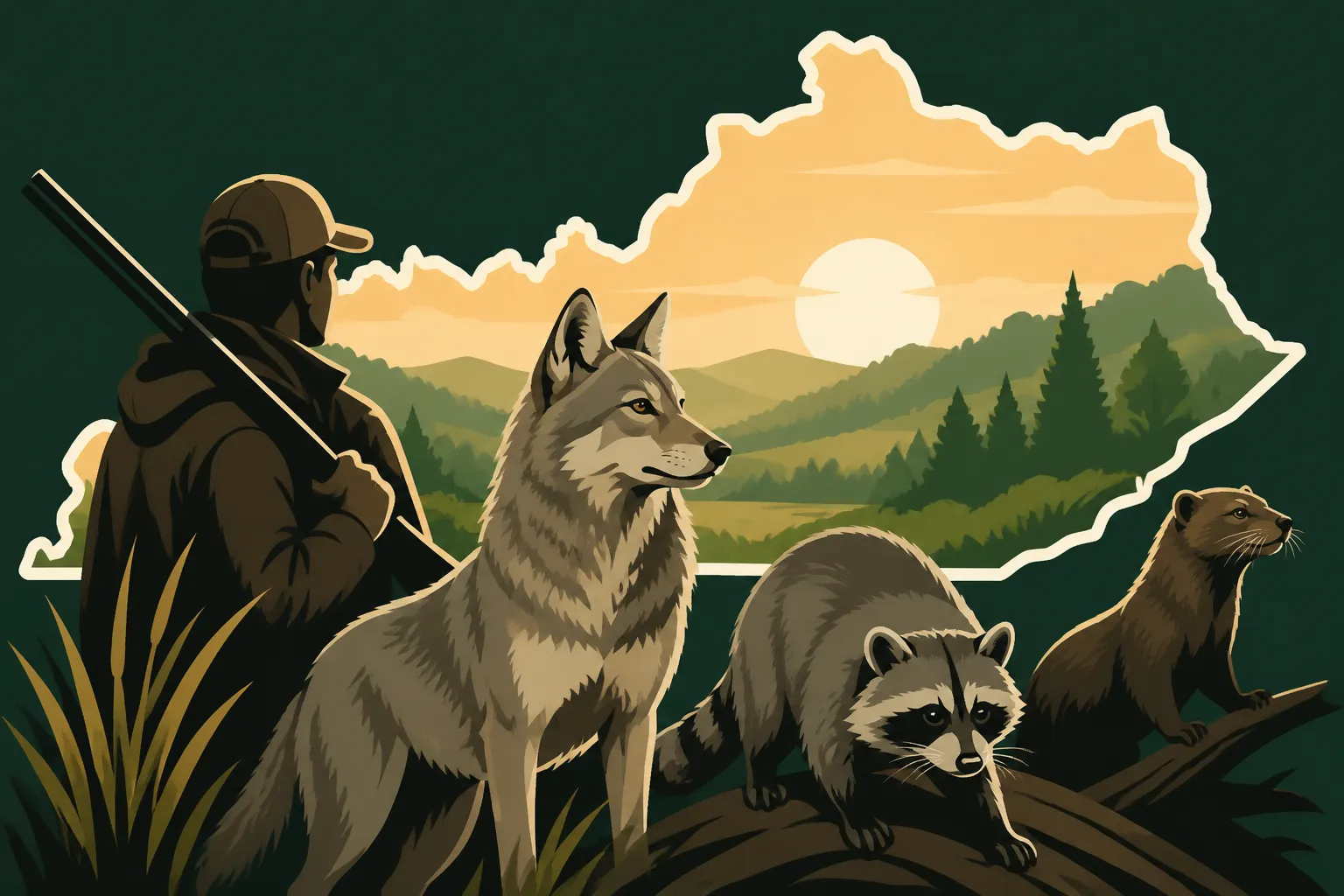
Predator and Furbearer Hunting in Kentucky
The wild places of Kentucky are full of life, and sometimes that life presents unique challenges and opportunities for hunters. If you've ever felt overwhelmed trying to understand the nuanced regulations for everything from coyotes to muskrats, or struggled to find reliable information on how to ethically pursue these often-elusive creatures, you're not alone. This comprehensive guide is designed to demystify predator and furbearer hunting and trapping in Kentucky, equipping you with the knowledge and tactics needed to responsibly enjoy these pursuits, whether for sport, fur, or nuisance control.
Understanding Kentucky's Predator and Furbearer Landscape
Kentucky is home to a diverse array of predators and furbearers, each playing a critical role in the ecosystem. From the cunning coyote to the industrious beaver, these animals present unique challenges and rewards for hunters and trappers. Understanding their behaviors, habitats, and population dynamics is the first step toward successful and ethical engagement. Many hunters are looking for additional opportunities once deer or turkey seasons close, and furbearer hunting can extend your time afield, offering a fresh set of challenges. Others focus on managing populations that might impact livestock or game species, making these pursuits a vital part of wildlife conservation efforts.
Coyotes: The Ubiquitous Hunter
Coyotes are perhaps the most common and widespread predator in Kentucky, thriving in everything from dense forests to open farmland and even suburban fringes. Their adaptability and prolific breeding have led to robust populations across the state. For hunters, coyotes represent a year-round opportunity, often pursued to protect livestock, manage deer populations, or simply for the sport of calling in a wary animal. They are incredibly intelligent, with keen senses, making them a true test of a hunter's skill. Their presence is felt by many, and understanding their movements and habits is crucial for any hunter wishing to pursue them. The challenge lies in outsmarting an animal that has learned to adapt to human presence and pressure.
Foxes: Red, Gray, and the Challenge
Kentucky is home to both red and gray foxes, each with distinct preferences and hunting styles. Red foxes typically favor more open country, agricultural fields, and woodland edges, often seen darting across a snow-covered field. Gray foxes, on the other hand, are masters of the deep woods and thick cover, with their unique ability to climb trees. Both species offer a thrilling challenge to hunters, demanding patience, stealth, and effective calling techniques. While not as numerous as coyotes, foxes are highly sought after for their beautiful fur and the pure sporting challenge they provide. Their smaller size and often more cautious nature require a different approach than that used for coyotes, leaning more towards subtlety and precision. The thrill of seeing a fox cautiously approaching your setup is a unique experience.
Bobcats: Elusive and Regulated
The bobcat is arguably Kentucky's most elusive and captivating furbearer. These beautiful, secretive wildcats prefer dense, inaccessible cover, often found in the rugged terrain of eastern Kentucky or the thicker river bottoms of the west. Their natural caution and nocturnal habits make them incredibly difficult to hunt or trap, and they are not as numerous as other furbearers. Unlike coyotes, bobcats are a regulated species with specific seasons and bag limits, reflecting their lower population density and the desire to maintain healthy numbers. Encountering a bobcat in the wild is a rare and special event, and successfully harvesting one is considered a significant achievement among hunters and trappers. Due to their protected status, precise adherence to regulations is paramount when pursuing bobcats.
Raccoons, Opossums, Skunks: The Common Trappers' Quarry
These nocturnal creatures are abundant across Kentucky, inhabiting a wide range of environments from urban backyards to vast timberlands. Raccoons, with their masked bandit appearance and clever nature, are popular with both hunters (especially those using hounds) and trappers. Opossums, North America's only marsupial, are often caught incidentally but also targeted for their fur. Skunks, while possessing an infamous defense mechanism, are also a viable furbearer. These animals are generally easier to trap than more wary predators, making them excellent targets for beginners looking to learn the ropes of fur harvesting. They provide consistent opportunities for both the seasoned veteran and the newcomer, offering a chance to hone skills and contribute to wildlife management. Targeting these species can also help alleviate nuisance issues around homes and farms.
Beaver and Muskrat: Water-Dwelling Furbearers
Kentucky's waterways are home to two industrious furbearers: the beaver and the muskrat. Beavers, known for their dam-building and habitat-altering activities, are found in rivers, streams, and ponds throughout the state. They can cause significant property damage through flooding and tree felling, making their management important for landowners. Muskrats, smaller and more numerous, prefer marshes, slow-moving streams, and the edges of larger bodies of water. Both are primarily pursued by trappers, who employ specialized water sets to capture them. Their fur is highly valued, and their presence is a clear indicator of healthy aquatic ecosystems. Trapping these water-dwellers requires a keen understanding of their aquatic habits and the specific techniques designed for their environment.
Seasons, Regulations, and Licenses for Predators and Furbearers
Navigating the rules and regulations for hunting and trapping predators and furbearers in Kentucky can sometimes feel like solving a puzzle, but it's absolutely essential for staying legal and ethical. The Kentucky Department of Fish and Wildlife Resources (KDFWR) sets these guidelines to ensure healthy populations and fair chase. Understanding what you can hunt, when, and with what equipment is crucial before heading into the field.
General Hunting and Trapping Seasons
For most furbearers, Kentucky establishes specific seasons for both hunting and trapping. These seasons generally run from late fall through late winter, coinciding with when the animals' fur is prime. Species like raccoons, opossums, skunks, and foxes typically fall under these defined periods. It's not just about when you can hunt, but also the methods allowed. For instance, hunting raccoons and opossums with hounds is a time-honored tradition in Kentucky, and specific rules often govern the use of dogs. Trapping seasons are usually a bit longer than hunting seasons, allowing trappers more flexibility to work their lines. Always double-check the current year's KDFWR hunting and trapping guide, as dates and specific regulations can shift slightly from one year to the next. This ensures you're always operating within the most up-to-date framework.
Specific Rules for Coyotes and Unprotected Species
Coyotes stand out among Kentucky's furbearers and predators because they are considered an unprotected species. This means they can be hunted year-round, day or night, with no bag limit. This open season reflects their abundant populations and the role they play in predation on livestock and sometimes even deer fawns. Hunters pursuing coyotes often enjoy the flexibility this offers, allowing them to hunt opportunisticly or plan dedicated year-round efforts. Wild hogs, another species often encountered by hunters, also fall into the "unprotected" category in Kentucky, meaning there are no closed seasons or bag limits. This is due to their invasive nature and the significant damage they can cause to agricultural lands and native habitats. While it's great to have so much flexibility, hunters must still adhere to general hunting ethics and obtain proper landowner permission, especially when Hunting Wild Hogs Alongside Deer Season.
Licensing and Permits: What You Need
Before you even think about setting a trap or calling a coyote, you need to make sure your licensing is in order. In Kentucky, anyone hunting or trapping furbearers generally needs a valid hunting license. If you're planning to trap, you'll also need a separate trapping license, which is a specific endorsement. Kentucky offers various license options, including annual resident and nonresident licenses, and even a Kentucky Lifetime License Options for those who plan to hunt and fish for many years to come. For specific species like bobcats, you might also need an additional permit or tag after harvest, which often involves reporting the take to the KDFWR for biological data collection. Always carry proof of your current licenses while afield to avoid any issues. If you're new to hunting or trapping, you'll also need to complete the Kentucky Hunter Education Requirements, which is a crucial step in learning safety and ethical practices.
Here's a quick overview of some common species and their general season types:
| Species | Hunting Season | Trapping Season | Special Regulations | Status |
|---|---|---|---|---|
| Coyote | Year-round, day & night | Year-round | No bag limit; night hunting allowed | Unprotected |
| Red/Gray Fox | Late Fall – Late Winter | Late Fall – Late Winter | Bag limits may apply; specific methods | Furbearer |
| Bobcat | Specific, limited season | Specific, limited season | Strict bag limits, tagging required | Furbearer |
| Raccoon | Late Fall – Late Winter | Late Fall – Late Winter | Can use dogs; specific hours for hunting | Furbearer |
| Opossum | Late Fall – Late Winter | Late Fall – Late Winter | Can use dogs; specific hours for hunting | Furbearer |
| Skunk | Late Fall – Late Winter | Late Fall – Late Winter | Generally trapped; no specific limits | Furbearer |
| Beaver | Year-round | Late Fall – Late Winter | No bag limit; often trapped | Furbearer/Nuisance |
| Muskrat | N/A (primarily trapped) | Late Fall – Late Winter | No specific limits | Furbearer |
| Wild Hog | Year-round, day & night | Year-round | No bag limit; considered invasive | Unprotected |
Essential Gear for Predator and Furbearer Pursuits
Just like any other hunting or trapping endeavor, having the right gear can make all the difference in your success and enjoyment. Predator and furbearer pursuits often require specialized equipment, from calls that mimic distressed prey to traps designed for specific animals. Investing in quality gear, and knowing how to use it effectively, is a cornerstone of responsible and productive hunting and trapping. Don't rush into buying the most expensive items; instead, focus on practical, durable equipment that suits the specific animals you're targeting and the conditions you'll face.
Calling Equipment for Coyotes and Foxes
When it comes to hunting coyotes and foxes, calling is often the name of the game. The goal is to mimic the sounds of distressed prey (like a rabbit in pain or a dying rodent) or the vocalizations of the predators themselves. This draws them in close, ideally for a clean shot. You'll find a wide range of calling equipment available, from simple mouth-blown reeds and diaphragm calls to sophisticated electronic callers that can broadcast a library of sounds at varying volumes. Electronic callers, such as those from Foxpro or ICOtec, are incredibly versatile and allow hunters to control sounds remotely, often a game-changer when dealing with wary coyotes.
When choosing a call, consider the specific species you're targeting and the environment. A high-pitched rabbit distress call works well for coyotes in open country, while a more subtle mouse squeak might be better for a cautious fox in thick timber. Understanding different sounds and when to use them is a skill honed over time, and practicing before hitting the field is highly recommended. For more in-depth tactics, check out Coyote Calling in Kentucky Farm Country, which offers great insights into enticing these clever canines.
Trapping Essentials: From Snares to Body-Grips
Trapping requires a different set of tools entirely, each designed for specific furbearers and situations. The basic categories include foothold traps, body-grip traps (like Conibear-style traps), and snares. Foothold traps are designed to hold an animal by the foot, while body-grip traps kill an animal quickly by striking it across the body. Snares, essentially cable loops, are often used for coyotes, foxes, and beavers, placed in trails or pinch points.
Beyond the traps themselves, you'll need a range of accessories: bait and lure (specific to the target animal), setting tools to safely compress powerful springs, wire cutters, a hammer, a pack for carrying your gear, and a solid knowledge of trap placement and concealment. Investing in good quality traps that meet Kentucky regulations and maintaining them properly is crucial for both effectiveness and animal welfare. For water-dwelling furbearers, you'll also need waders and potentially a small boat or canoe, especially when Trapping Kentucky Muskrat and Beaver in larger waterways. Learning the regulations on trap types and set restrictions, especially for body-grip traps near public trails, is non-negotiable.
Night Hunting Gear and Legalities
Night hunting is a popular and effective method for coyotes in Kentucky, given their nocturnal habits. However, it requires specialized gear and strict adherence to specific regulations. The primary tools for night hunting are powerful lights – often red or green lights mounted on scopes or headlamps, as these colors are less likely to spook coyotes. Thermal imaging and night vision devices have also become increasingly popular, offering a significant advantage in detecting animals in complete darkness. Kentucky has specific Night Hunting Rules for Kentucky Coyotes, so it's imperative to understand what is permitted, including specific firearms and lighting restrictions.
Beyond lighting and optics, a sturdy rifle, often chambered in a fast, flat-shooting caliber like .223 or .22-250, is essential. Accuracy is paramount under low-light conditions. You'll also need warm clothing, as night hunts can involve long periods of stationary sitting in cold temperatures, and possibly a comfortable seat or ground blind. Remember, while night hunting for coyotes is allowed, using artificial light to hunt other species is generally prohibited, making it vital to confirm regulations for each target animal.
Effective Hunting Tactics for Kentucky's Predators
Hunting predators in Kentucky, especially coyotes and foxes, requires a strategic approach. These animals are intelligent and wary, and their survival depends on their ability to avoid detection. Success often comes down to understanding their behavior, mastering calling techniques, and adapting to the specific terrain and conditions you encounter. It's a game of wits, and the more you learn, the more rewarding it becomes.
Calling Strategies for Eastern and Western Kentucky Coyotes
Calling coyotes is an art form, and what works in one part of Kentucky might need adjustment elsewhere. In Eastern Kentucky, with its rugged, heavily forested terrain and steep hollows, your calling strategy needs to be aggressive yet cautious. Sounds might not carry as far, and coyotes often approach from unexpected angles through thick cover. Short, intense bursts of rabbit distress or pup distress calls, followed by long periods of silence, can be effective. Consider using more directional calls to cut through the timber. Setting up on a ridge top overlooking a saddle or a clear-cut can give you an advantage, allowing sounds to project into multiple draws.
In Western Kentucky, characterized by more open farmland, rolling hills, and expansive bottomlands, sounds travel much further. Here, longer call sequences, incorporating both distress sounds and coyote vocalizations (howls, yips), can bring in animals from a greater distance. Setup is critical; often, you'll want to position yourself with a good view of an open field or a powerline cut, using natural cover like a fencerow or a tree line to break up your silhouette. Always pay attention to the wind, as a coyote will almost always try to circle downwind of your position to get a scent check. This is where apps like GoHunt can be invaluable for identifying potential approach routes and wind direction based on terrain.
Still Hunting and Stand Hunting Foxes
Foxes, especially the more elusive gray fox, often require a more subtle approach than their coyote cousins. Still hunting – moving slowly and deliberately through prime habitat, stopping frequently to scan and listen – can be highly effective for both red and gray foxes. Focus on areas with good cover transitions, like the edge of a timber block meeting a field, or along brushy creek bottoms. Move into the wind, paying close attention to fresh tracks and scat.
For stand hunting, whether from a treestand (where rules allow, such as for deer or if you're Treestand Setups in Daniel Boone National Forest for multiple species) or a well-concealed ground blind, patience is key. Set up overlooking a known travel corridor, a productive field edge, or a dense thicket where foxes might bed. Use a combination of subtle mouse squeaks, bird distress calls, or even a soft fawn bleat, especially if it's during deer season. The best approach often involves a long sit, remaining absolutely still and quiet, letting the fox come to you. Remember, foxes are smaller than coyotes, so keep an eye out for any subtle movement in the shadows or brush.
Hunting Wild Hogs Alongside Deer Season
While not predators in the traditional sense, wild hogs are an invasive and highly destructive species found in Kentucky, and they are frequently encountered while deer hunting. As an "unprotected" species, they can be harvested year-round without bag limits, making them an opportunistic target for many hunters. Often, if you're Hunting a Green Field Planted for Deer or Hunting a Standing Cornfield in Farm Country, you might find hogs have beaten the deer to it.
The tactics for hunting wild hogs often overlap with deer hunting. Look for signs of rooting, wallows, and fresh tracks in creek bottoms or near food sources. They tend to move in groups (sounders), so if you see one, there are likely more. A well-placed shot from your deer rifle is usually sufficient. Remember, hogs are tough animals, so shot placement is critical. Because they are considered a nuisance, Kentucky encourages their harvest, and taking them can provide an exciting bonus to your deer hunt while helping local ecosystems and agriculture.
Mastering Trapping Techniques for Furbearers
Trapping is an ancient skill that remains highly effective for managing furbearer populations and harvesting valuable furs. It demands patience, keen observation, an understanding of animal behavior, and a commitment to ethical practices. Kentucky offers abundant opportunities for trappers, from urban raccoons to remote beaver colonies.
Water Set Trapping for Beaver and Muskrat
Water sets are specifically designed for aquatic furbearers like beaver and muskrat, utilizing their natural instincts and travel patterns in and around water. For beaver, body-grip traps (like the Conibear 330 or 280) are often placed in dam breaks, channels, or entrance to lodges and bank dens. The key is to position the trap so the beaver must swim through it. Dive poles or stakes are used to guide the beaver into the trap's jaws. For Trapping Kentucky Muskrat and Beaver, muskrats are smaller, requiring smaller body-grip traps (e.g., Conibear 110 or 155) or even specialized muskrat-sized foothold traps set on feeding platforms, slides, or bank runs. Submerged bait, such as fresh aspen branches for beaver or apples for muskrat, can also be used to entice them into the trap's vicinity.
The ethical aspect of water trapping is crucial; traps should be checked frequently to minimize animal suffering. Understanding water levels, currents, and ice conditions is also vital, as these factors can significantly impact trap effectiveness and safety. Location is everything, so scouting for fresh beaver cuttings, muskrat push-ups, and active runs is the first step.
Land Set Trapping for Raccoon, Opossum, and Skunk
Land sets are versatile and can target a variety of terrestrial furbearers. For raccoons, cage traps (live traps), dog-proof traps (DP traps), and even foothold traps are popular. DP traps, like those made by Duke or Coon Dagger, are particularly effective and selective, designed to catch a raccoon's paw when it reaches for bait inside a narrow tube, largely preventing other animals from being caught. Bait, such as marshmallows, corn, or commercial raccoon lures, is key. Sets are often placed near creek banks, culverts, den trees, or along trails.
Opossums are often caught incidentally in sets targeting raccoons or coyotes, but they can also be targeted specifically with similar baits and traps. For skunks, similar methods apply, but trappers often choose cage traps to minimize the chance of being sprayed. Carefully covering and camouflaging land sets is important to prevent accidental captures of non-target animals or theft. When Running a Trapline in Rural Kentucky, understanding the lay of the land, pinch points, and natural funnels will greatly increase your success. Regular trap checks are essential to ensure humane treatment and to secure your catch.
Responsible Trapping Practices and Animal Care
Ethical and responsible trapping is paramount. This includes using properly sized and maintained traps, checking traps regularly (daily is often required by law and best practice), and having the knowledge and tools for humane dispatch. Trappers must also be mindful of non-target animals, employing selective sets and release methods when appropriate. Kentucky's trapping regulations often include specifics on trap tags, set-back distances from public roads, and what types of traps are allowed in certain areas.
Furthermore, proper fur handling, which we’ll discuss shortly, is an extension of responsible trapping. A well-cared-for pelt commands a better price and honors the animal. Education and mentorship are vital for new trappers; seeking guidance from experienced trappers or participating in workshops can accelerate learning and instill best practices. Remember that even though Trapping Kentucky Furbearers can be a rewarding pursuit, it comes with significant responsibilities to the animals and the public.
Locating Prime Habitat and Scouting for Furbearers and Predators
You can have the best gear and the most advanced techniques, but if you're not in an area where furbearers and predators live, your efforts will be in vain. Scouting is the unsung hero of successful hunting and trapping. It's about becoming a detective, piecing together clues that tell you where animals are traveling, feeding, and bedding. Kentucky's diverse landscapes offer varied habitats, and understanding where to focus your scouting efforts is key.
Reading Sign in Kentucky's Diverse Landscapes
Furbearers and predators leave behind a wealth of clues if you know what to look for. Tracks are perhaps the most obvious sign: coyote tracks often appear more elongated than a dog's, with claw marks visible, while fox tracks are daintier. Raccoon tracks, resembling tiny human hands, are unmistakable near water. Look for scat (droppings), which can reveal an animal's diet and recent presence. Wallows, rubbed trees, and active damming are clear indicators of beaver activity.
Beyond direct animal sign, learn to read the landscape itself. Funnels created by topography or changes in vegetation, pinch points where animals are forced to travel through a narrow corridor, and natural crossings over creeks are all prime locations for both hunting setups and trap placements. In Eastern Kentucky, focus on ridge lines, saddles, and creek bottoms. In Western Kentucky, scout along field edges, fencerows, and areas of dense cover adjacent to food sources. Sometimes, simply Reading Kentucky Mud for Fresh Deer Movement can also reveal the presence of coyotes or foxes using the same trails.
Utilizing Technology: Apps and Aerial Photos
In today's world, technology has become an invaluable scouting tool. Mapping applications like GoHunt, OnX Hunt, or the official Scouting With the Kentucky Hunt Fish App allow you to study satellite imagery and topographic maps from your phone or computer. These apps can reveal potential travel corridors, dense cover, water sources, and public land boundaries before you even step foot in the woods. You can mark waypoints for potential stand locations, bedding areas, or trap sets, making your time afield more efficient.
Aerial photos are particularly useful for identifying key habitat features that might not be obvious on the ground. Look for subtle changes in vegetation density, hidden clearings, or remote water sources. This is especially helpful when Reading Aerial Photos for Eastern Kentucky Deer, which often share habitat with predators. Overlaying property lines is also crucial, especially when trying to secure Getting Private Land Permission in Kentucky, ensuring you're always aware of whose land you're on or near. Using these tools significantly reduces the amount of "cold" scouting, allowing you to focus your efforts on the most promising areas.
Public vs. Private Land Access
Kentucky offers a mix of public and private land for hunting and trapping, and understanding the nuances of access is vital. Public lands, such as Daniel Boone National Forest, Land Between the Lakes, and various Kentucky Wildlife Management Areas, provide extensive opportunities but often come with specific regulations regarding methods, seasons, and vehicle access. These areas can also experience higher pressure from other hunters and outdoor enthusiasts. Always check the specific rules for the WMA or National Forest district you plan to hunt, as they can vary.
Private land, while requiring permission from landowners, often provides less pressure and greater control over your hunting or trapping efforts. Building good relationships with landowners is key here. Offering to help with nuisance animals, fence mending, or other farm tasks can often open doors to prime hunting ground. Remember, even on private land, all state hunting and trapping regulations still apply. Always carry written permission if requested by the landowner, or if required by Kentucky law.
Processing Your Harvest: From Field to Fur
Successfully harvesting a predator or furbearer is only half the battle; knowing how to properly process your animal is crucial for maximizing its value, whether that's for fur, meat, or simply respectful handling. Poor handling can diminish the quality of the fur or render the meat unusable, wasting your hard-earned efforts.
Field Dressing and Skinning Techniques
For animals intended for consumption, like raccoons or wild hogs, prompt field dressing is essential, similar to how you would Field Dressing a Deer in Cold Weather. Remove the entrails as quickly as possible to allow the carcass to cool, preventing spoilage. For furbearers, field dressing typically isn't necessary unless you plan to eat the meat, as the primary goal is to preserve the hide.
Skinning, also known as pelting, is an art form that takes practice. The goal is to remove the hide cleanly and without cuts or excess flesh. Different animals require different skinning patterns. Raccoons, foxes, coyotes, and muskrats are often "cased skinned," meaning the hide is pulled off inside-out like pulling off a sock, leaving a tube-like pelt. Beavers, on the other hand, are typically "open skinned" or "flashed," laid flat for drying. Sharp knives, careful movements, and a good understanding of anatomy are crucial. Pay close attention around the eyes, ears, and mouth, as these areas require delicate work. YouTube videos and experienced trapper mentors are excellent resources for learning these techniques.
Fur Handling and Preparation
Once skinned, the raw pelt needs to be properly handled to become a valuable fur. This typically involves several steps: fleshing, stretching, and drying. Fleshing removes any remaining fat or muscle tissue from the hide. This is a critical step, as any leftover flesh can cause the fur to "burn" (spoil) during the drying process. Specialized fleshing knives and beams are used for this purpose, and it requires a delicate touch to avoid cutting the hide.
After fleshing, the pelt is stretched on a wooden or wire stretcher to a uniform shape and size, which also aids in the drying process. Different species have different stretcher size and shape requirements. The stretched pelt is then allowed to air dry in a cool, well-ventilated area away from direct sunlight or heat, which can damage the fur. This drying process can take several days to weeks, depending on humidity and temperature. Proper fur handling is what separates a high-quality, valuable pelt from a lesser one, and it's a skill that directly impacts the monetary return on your efforts if you plan to sell the fur.
Meat Utilization
While many furbearers are primarily harvested for their fur, some, like raccoon and wild hog, are excellent table fare when properly prepared. Raccoon meat, often compared to dark chicken or pork, can be delicious when slow-cooked, stewed, or fried. It’s important to remove all visible fat, as this can impart a gamey flavor. Wild hog meat is leaner and more flavorful than domestic pork, perfect for roasts, sausage, or BBQ. Always ensure the meat is cooked thoroughly, especially wild hogs, due to potential parasites.
Other species, while edible, are less commonly consumed. Opossum and skunk meat can be eaten, but cultural preferences often limit their culinary appeal. Regardless of the species, if you plan to consume the meat, it's vital to handle it hygienically from the moment of harvest, cooling it quickly and processing it cleanly, just as you would with deer or other game. This ensures a safe and enjoyable meal, honoring the animal and making the most of your harvest.
Disclaimer
Hunting and trapping involve inherent risks. Always prioritize safety, adhere to all local, state, and federal laws and regulations, and obtain proper landowner permission. The information provided in this guide is for educational purposes and should not be considered a substitute for official regulations or professional instruction. Always consult the most current Kentucky Department of Fish and Wildlife Resources regulations before participating in any hunting or trapping activities.