Eastern Kentucky Deer Density
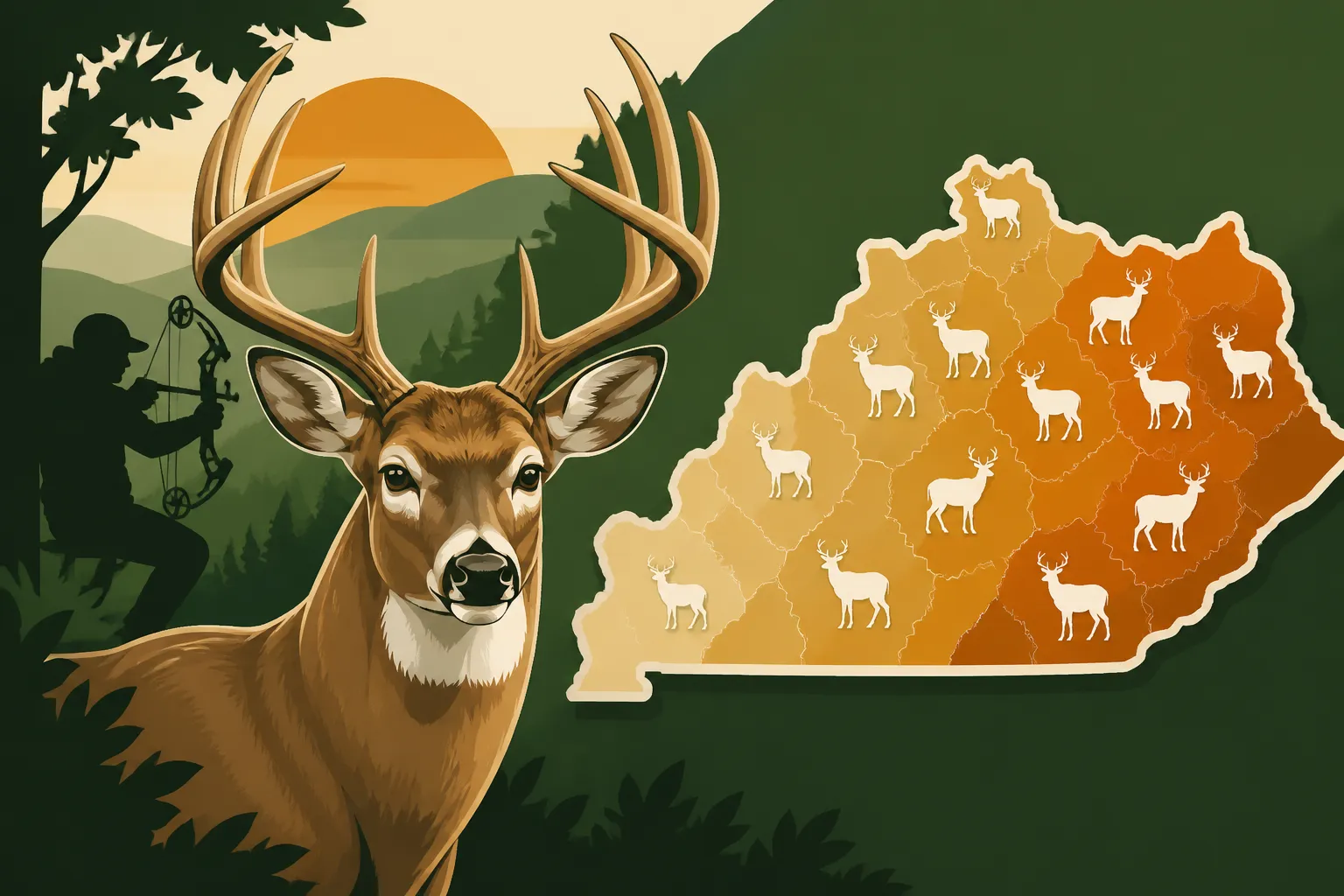
For those of us who cut our teeth hunting the rugged terrain of Eastern Kentucky, the notion of "deer density" can feel a bit… abstract. It’s not like the sprawling agricultural fields of the western part of the state where you might glass dozens of deer in a single sitting. Here, in the mountains and hollers, finding deer often feels like searching for a needle in a haystack, and understanding the actual population density can make a huge difference in how we approach our hunts. This guide will dive deep into what Eastern Kentucky deer density truly means and how you can use this knowledge to become a more effective hunter.
Understanding Eastern Kentucky's Unique Landscape and Deer Habitat
Eastern Kentucky is a world apart from the rest of the state, topographically speaking. We're talking about the Cumberland Plateau and the Appalachian foothills, characterized by steep, heavily forested ridges, deep hollows, and winding creek bottoms. This isn't flat, open farm country, and that fundamental difference dictates a lot about our deer herds.
The Impact of Topography and Forest Cover
When you're slogging up a thousand-foot ridge in the Daniel Boone National Forest, it's easy to feel like you're in an endless sea of timber. And largely, you are. This vast, contiguous forest, while beautiful and wild, doesn't always lend itself to super high deer densities. Deer thrive on "edge habitat" – where different types of cover meet, like a forest line next to a field, or a young clear-cut bordering mature timber. These areas provide both food and security. In Eastern Kentucky, while we have plenty of cover, the food sources can be more scattered and less diverse than in agricultural zones.
Think about it: a big mature oak forest provides acorns in the fall, which is fantastic, but what about early season browse or lush green food plots? These are often less abundant on a grand scale in much of Eastern Kentucky's public land. Deer have to work harder, and travel further, to meet their nutritional needs. This contributes to a more spread-out, rather than concentrated, deer population. This is why understanding Reading a Ridge for Cumberland Deer is so vital; deer often use specific terrain features to move efficiently between limited food sources.
Natural Food Sources and Limited Agriculture
Our deer here depend heavily on natural mast crops—acorns, hickory nuts, beechnuts. The success or failure of these crops from year to year can have a significant impact on deer distribution. In a good mast year, deer might be scattered everywhere, feeding on the bounty across the ridges. In a poor mast year, they'll concentrate around the few remaining food sources, like persimmon thickets, isolated agricultural fields, or even residential areas where people might have fruit trees.
While there are some farming operations in the broader valleys, they are fewer and farther between compared to the flatland counties. This means fewer expansive soybean or corn fields acting as consistent, high-calorie food sources that can support huge numbers of deer. Instead, deer might rely on small logging clear-cuts for browse, or the tender shoots of invasive plants like multiflora rose found along old homesteads. This reliance on varied, often less concentrated, natural food means deer simply can't reach the same densities as they can in areas with vast agricultural subsidies.
Factors Influencing Deer Density in Eastern Kentucky
Beyond the natural lay of the land, several other elements play a crucial role in shaping how many deer call Eastern Kentucky home, and where they tend to cluster. It's a complex ecological puzzle, and understanding these pieces can help you put together a more successful hunting plan.
Hunting Pressure and Public Land Dynamics
A significant portion of Eastern Kentucky's hunting opportunities lie within public lands, like the Daniel Boone National Forest and various Wildlife Management Areas. While fantastic resources, these areas often experience considerable hunting pressure, especially on opening weekends. When many hunters are in the woods, deer adapt. They become more nocturnal, utilize denser cover, and learn to avoid common travel corridors. This pressure can make deer seem less dense, even if the actual population is decent, simply because they're harder to see and pattern.
It’s a common frustration to walk miles into the backcountry only to feel like you're the only living creature there. This isn't always because there are no deer, but because the deer are masters of evasion. They might be bedded tight in a laurel thicket just off the ridge, or using a less obvious trail that skirts the main foot traffic. This constant dance with pressure means that true deer density figures might not always reflect how many deer you personally encounter. Savvy hunters often find success by focusing on Hunting Pressure on Kentucky Public Land and seeking out less disturbed pockets, often further from easy access points.
Predator Populations and Disease Considerations
Kentucky's landscape supports a healthy population of predators, including coyotes and, increasingly, black bears in the southeastern counties. While these predators are a natural part of the ecosystem, a robust predator population can certainly impact fawn survival rates and, over time, influence localized deer densities. If fawn recruitment is consistently low due to predation, the overall population growth can be stunted. This is part of the natural ebb and flow of wildlife populations. To learn more about this dynamic, check out our piece on Kentucky Predator Impact on Fawn Recruitment.
Furthermore, while Kentucky has been proactive in monitoring for Chronic Wasting Disease (CWD), especially in counties like Ballard, the continuous threat of disease spread could impact deer densities in the future. Currently, Eastern Kentucky is largely outside the primary CWD surveillance zone, but wildlife managers are always vigilant. Any major disease outbreak could, of course, lead to localized population declines. The Kentucky Department of Fish and Wildlife Resources (KDFWR) constantly monitors these factors to make informed management decisions that aim to keep our deer herds healthy and sustainable.
State Agency Management and Harvest Regulations
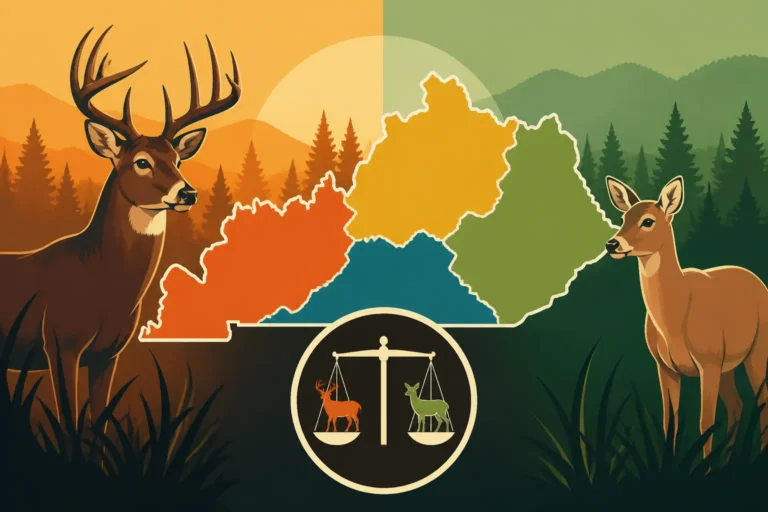
The KDFWR plays a critical role in managing deer populations across the state, including in Eastern Kentucky. Through surveys, harvest data, and biological research, they set regulations designed to maintain healthy deer herds in balance with their habitat. Eastern Kentucky, with its typically lower deer densities compared to central and western regions, often has more conservative antlerless harvest limits. This is generally aimed at allowing does to recruit more fawns and help the population grow or remain stable.
For instance, while a hunter in Zone 1 (typically high-density agricultural areas) might be allowed to harvest multiple antlerless deer, hunters in many Eastern Kentucky counties might be limited to fewer or even restricted to one antlerless deer during certain seasons. This careful management is a direct reflection of the observed deer density and the habitat's carrying capacity. Understanding these regional differences is crucial, and our article on How Many Antlerless Deer Your Zone Allows provides a good overview of these rules.
What Eastern Kentucky Deer Density Means for Hunters
Okay, so we've established that Eastern Kentucky generally doesn't boast the same sky-high deer numbers as other parts of the state. But what does that really mean for you, the hunter? It means a different kind of hunt, one that often rewards patience, meticulous scouting, and a deeper understanding of deer behavior in rugged environments.
Higher Hunter Effort and Lower Success Rates (Potentially)
Let's be realistic: hunting in an area with lower deer density often translates to higher hunter effort per deer sighted or harvested. You might put in more miles, spend more hours on stand, and see fewer deer than someone hunting a prime agricultural field. This isn't a knock on Eastern Kentucky hunting; it's just the reality of the landscape. Success rates might appear lower on average compared to zones with abundant deer, but that doesn't mean the quality of the hunt is diminished. In fact, many seasoned Eastern Kentucky hunters cherish the challenge and the satisfaction of earning a deer in such demanding terrain.
This is where the mental game of hunting really comes into play. It's easy to get discouraged when you haven't seen a deer in hours, or even days. But those who stick with it, who continue to scout, adjust, and remain positive, are often the ones who find success. It’s about being prepared for the grind and enjoying the process, even when it feels like the woods are empty.
Emphasis on Quality Over Quantity
Because deer can be more spread out, and older bucks in particular are masters of staying hidden in the steep, thick cover, many Eastern Kentucky hunters often value quality over sheer quantity. Taking a mature buck from a rugged mountain hollow is a trophy earned through hard work and persistence. These deer often grow older due to less consistent exposure to hunters and abundant secure cover, even if their body size or antler growth might not always rival a corn-fed monster from the Bluegrass region.
The challenge of patterning a ghost-like buck that lives his entire life within a few steep hollows provides a unique sense of accomplishment. It's not about filling a tag every single season; it's about the deep woods experience and the satisfaction of outsmarting an animal in its own, wild domain. This emphasis changes the dynamic of the hunt, making it less about numbers and more about the individual pursuit.
Adapting Your Hunting Strategy to Eastern Kentucky Deer Density
So, given these realities, how do we adjust our tactics to be more effective? It's all about playing to the strengths of the environment and understanding the specific behaviors of deer in lower-density, high-cover areas.
Prioritizing Thorough Pre-Season Scouting
If deer are fewer and farther between, you absolutely cannot afford to just show up on opening morning and hope for the best. Pre-season scouting becomes paramount. This means logging miles, both physically and virtually, to understand deer movement patterns. Tools like GoHunt's mapping features can be invaluable here, allowing you to identify pinch points, saddles, benches, and potential bedding areas without putting scent on the ground. You can overlay different maps, mark historical sightings, and analyze terrain features from your armchair.
Look for subtle signs: old rubs, faint trails, recent droppings, and especially those secluded benches or south-facing slopes where deer might soak up the sun. Pay close attention to water sources and potential bedding areas that offer both cover and an escape route. Identifying these key locations before the season opens is crucial. Our article on Scouting Kentucky Public Land Before Season offers even more tips for maximizing your pre-season efforts.
Strategic Stand Placement and Still-Hunting Techniques
In areas of lower density, deer aren't going to be moving past your stand every hour. You need to be where they will be, even if that's only for a short window. This often means finding those hyper-specific travel corridors, such as a narrow saddle connecting two ridges, a bench halfway up a steep slope that provides an easier travel route, or a funnel between two hollows. You also need to consider Wind and Thermals on a Kentucky Ridge, as these can dictate when and where deer feel safe to move.
For those who prefer a more active approach, still-hunting becomes an incredibly effective tactic. Rather than waiting for the deer to come to you, you're slowly and deliberately moving through their habitat, trying to catch them unaware. This requires extreme stealth, patience, and the ability to read the terrain as you go. Focus on moving into the wind, taking one slow step at a time, pausing to listen and scan. This method allows you to cover more ground and potentially stumble upon a bedded deer or one quietly browsing. For more on this, check out Still-Hunting Eastern Kentucky Ridges.
Utilizing Data and Technology to Your Advantage
While Eastern Kentucky deer density might mean fewer deer overall, it doesn't mean you're flying blind. The Kentucky Department of Fish and Wildlife Resources publishes annual harvest reports that can give you a general idea of deer activity by county. While these numbers won't tell you exactly where deer are on your favorite ridge, they can help you understand trends.
Furthermore, leveraging modern technology can bridge some of the gaps created by lower density. Apps like the Kentucky Hunt Fish App or premium platforms like GoHunt provide invaluable map layers, including public/private land boundaries, topographical maps, and aerial imagery. Using these tools to identify potential bedding cover, historical deer sign, or even areas that might receive less hunting pressure due to difficult access can significantly increase your odds. For example, knowing Where Daniel Boone Forest Bucks Bed often comes down to analyzing aerial photos for thick thermal cover. Combine this digital scouting with boots-on-the-ground confirmation, and you'll be light years ahead.
Hunting During Peak Activity Periods
In areas with lower deer density, maximizing your time during peak deer activity can yield better results. This often means focusing your efforts during the rut when bucks are actively searching for does, covering more ground than usual. Understanding Hunting the Rut in Early November can be a game-changer. Even if overall deer numbers are lower, the increased movement during this period can create more opportunities.
Also, don't overlook the late season. While it can be brutally cold, if you can identify key late-season food sources—like standing beans that haven't been harvested, remaining acorns, or specific green browse that holds up in winter—you might find deer concentrated. Deer are driven by food in the late season, and finding these limited resources can be like finding gold. Patience during this time, often bundled up in a ground blind or a well-insulated stand, can pay off with a hard-earned deer. Consider reading up on Hunting the Late-Season January Lull for strategies that apply to this tough but rewarding time.
Summary of Eastern Kentucky Deer Dynamics
To sum it all up, hunting Eastern Kentucky for deer is a unique endeavor. It's not about numbers in the same way that hunting flatland farm country might be. It's about understanding a rugged landscape, appreciating the wildness of the deer that live there, and adapting your strategies to find success in a challenging environment.
| Aspect | Eastern Kentucky Deer Hunting | General Implications for Hunter |
|---|---|---|
| Topography | Steep ridges, deep hollows, heavy forest. | Deer spread out, utilize thick cover, move efficiently between food. |
| Habitat | Primarily forest, natural mast, limited agriculture. | Food sources scattered; deer travel for nutrition. Less 'edge' habitat. |
| Deer Density | Generally lower than central/western KY. | Fewer sightings, higher effort per deer. Quality over quantity mindset. |
| Hunting Pressure | Moderate to high on public land, especially near access. | Deer become more nocturnal, use dense security cover, adapt to human presence. |
| Predators/Disease | Healthy predator populations (coyotes, bears); CWD monitored. | Impact on fawn survival and overall herd health. |
| Hunter Strategy | Emphasizes scouting, stealth, patience, understanding terrain. | Rewards active still-hunting and strategic stand placement. |
The true reward of hunting Eastern Kentucky often isn't just the deer itself, but the experience of being immersed in such a wild and beautiful place, and the satisfaction of overcoming the unique challenges it presents. Embrace the mountains, hone your skills, and you'll find a deep connection to the land and its elusive deer.
Disclaimer
This article is for general informational purposes only and does not constitute professional advice. Laws, prices and regulations vary by location and change over time. Consult a qualified professional for guidance on your specific situation.