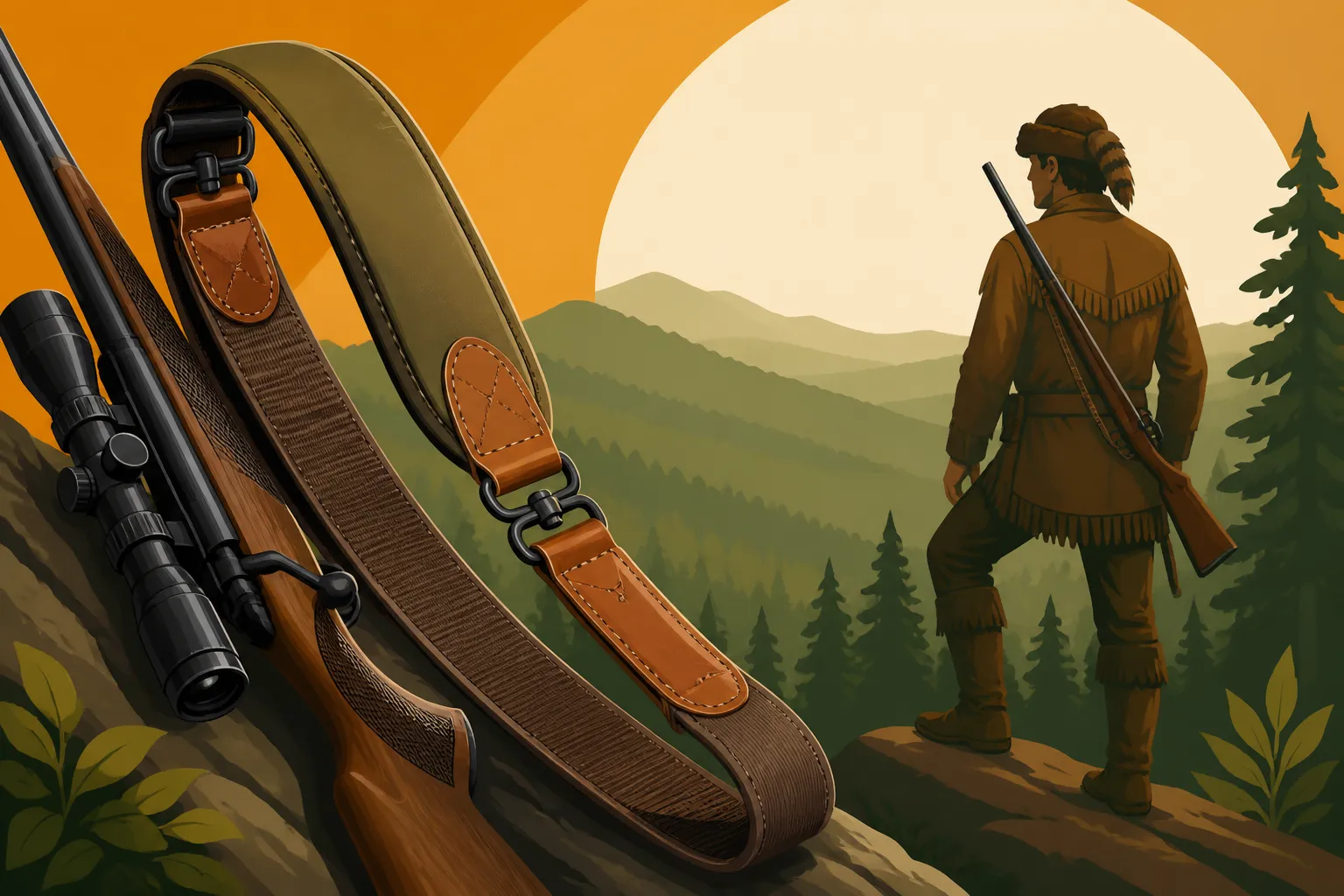
Slings for a Long Daniel Boone Forest Walk
There's nothing quite like the feeling of heading deep into the Daniel Boone National Forest, the crisp Kentucky air on your face, and the promise of the hunt in your heart. But let's be real: that romantic image can quickly turn into a grueling endurance test when you're hauling a rifle for miles over steep ridges, through tangled rhododendron thickets, and across rocky creek beds. Your shoulder aches, your hands are tired, and your focus starts to wane. This guide is dedicated to helping you choose and use the perfect rifle sling, transforming those arduous treks into comfortable, manageable journeys where your firearm is always secure, accessible, and never a burden.
Why a Quality Sling is Your Best Friend in the Backcountry
Navigating the rugged, often unforgiving terrain of places like the Daniel Boone National Forest means every piece of gear has to earn its keep. A rifle sling isn't just an accessory; it's a crucial tool that directly impacts your comfort, safety, and readiness in the field. Skimping on a sling is like buying a high-performance truck and then putting bald tires on it – you're just not getting the full potential or the safety you need.
The True Cost of a Poor Sling on Long Treks
Think about those moments when you've got to climb over a downed log, scramble up a steep embankment, or push through dense brush. If your rifle is constantly slipping off your shoulder, digging into your collarbone, or swinging wildly, it's not just annoying; it's a safety hazard and a massive energy drain. Every time you adjust it, you're taking your eyes off the trail, losing your balance, or making unnecessary movement that could spook game. I've been there, trying to hold my rifle with one hand while using the other to navigate with my GoHunt app, only for the rifle to inevitably slide. That constant mental and physical effort adds up over a long day, turning an otherwise enjoyable hunt into a test of pure grit.
Beyond the physical discomfort, a poorly designed or ill-fitting sling can lead to unnecessary wear and tear on your rifle. Banging your scope on a tree limb or dragging your barrel through the dirt because your sling let you down can be heartbreaking, not to mention expensive. You invest a lot in your firearm and optics; a good sling is a small investment to protect that larger one, ensuring your zero stays true and your rifle remains in top condition for when that shot opportunity finally arises.
Enhanced Safety and Readiness in Dynamic Terrain
Hunting in places like Eastern Kentucky isn't a stroll through a manicured park. You're often dealing with unpredictable footing, sudden changes in elevation, and thick cover that demands your full attention. A well-designed sling keeps your rifle secure against your body, preventing accidental snags or drops. This hands-free capability is vital when you need to break a fall, clear an obstruction, or use your binoculars to glass a distant ridge. Optics for Eastern Kentucky Ridges are useless if you're too busy wrestling with your rifle.
Furthermore, a good sling allows for quick, smooth transitions from carrying to shooting positions. Imagine a buck suddenly appears in a thick hollow. With a proper sling, you can quickly bring your rifle to bear without fumbling, giving you those precious extra seconds for a clean shot. A sling that allows for easy adjustment on the fly, perhaps tightening for a steep descent or loosening for a rapid shoulder mount, significantly boosts your readiness. It’s about having your rifle feel like an extension of your body, rather than an extra burden you’re lugging around.
Decoding Sling Types: Which One is Right for Daniel Boone?
When you start looking at slings, it can feel like you're diving into a whole new world of options. There are countless designs, materials, and attachment methods, each promising to be the "best." But for the unique challenges of a long walk in the Daniel Boone, some types truly shine brighter than others. It's about matching the sling's strengths to your hunting style and the terrain you'll encounter.
The Versatility of Two-Point Slings
The two-point sling is arguably the most common and, for many, the most versatile option for general hunting, especially in varied terrain like Kentucky’s. It attaches at two points on your rifle – typically the buttstock and the fore-end – distributing the weight more evenly across your back or shoulder. This design is fantastic for comfort during extended walks, as it prevents your rifle from swinging excessively and allows you to carry it in multiple positions: slung over one shoulder, across your back, or even diagonally across your chest for hands-free carrying.
For navigating dense timber or climbing up steep hills, the ability to sling your rifle tight against your back is invaluable. It keeps the firearm out of the way, preventing snags on branches and reducing fatigue. Many two-point slings also incorporate quick-adjustment features, letting you cinch the rifle tight when moving and then rapidly loosen it for a shooting position. This kind of adaptability is crucial when you're still-hunting eastern Kentucky ridges or making a long retrieve after the shot, as detailed in Dragging a Deer Out of a Steep Hollow.
Understanding Convertible and Specialty Slings
While the classic two-point is a workhorse, there are also convertible slings that can switch between a two-point and a one-point configuration. A one-point sling attaches to a single point on the receiver, usually in the middle of the rifle. This allows for incredibly fast transitions between shooting shoulders and maximum rifle maneuverability in tight quarters, but it also lets the rifle swing more freely when walking, which can be a real nuisance on a long trek. For the Daniel Boone, a pure one-point sling is often too unstable for extended walking, but a convertible option might offer the best of both worlds: the stability of a two-point for hiking and the quickness of a one-point for unexpected close encounters.
Then there are specialty slings, such as those designed specifically for heavy rifles, or those with unique padding or attachment systems. Some feature extra-wide padding made from materials like neoprene, which not only cushions the shoulder but also provides a bit of grip to prevent slippage. Others incorporate quick-detach swivels or buckles, which can be a real time-saver when you need to remove your rifle quickly or switch to a different carry method. When you're using a Rifle Setups for Kentucky Deer Hunting that includes a heavier caliber, these specialty options become much more appealing, especially if you anticipate long periods of carrying.
Here's a quick comparison of common sling types and their suitability for long walks in Daniel Boone:
| Sling Type | Attachment Points | Primary Benefit | Drawback for Long Walks | Best for Daniel Boone? |
|---|---|---|---|---|
| Two-Point | 2 (buttstock & fore-end) | Excellent stability, weight distribution | Slower transitions than 1-point | Highly Recommended |
| One-Point | 1 (receiver) | Very fast transitions, maneuverability | Rifle swings freely, less stable | Generally Not Ideal |
| Convertible | Can switch between 1 & 2 | Versatility, adaptability | Can be more complex to adjust | Good, if well-designed |
| Padded | 2 (often) | Superior comfort, reduced fatigue | Can be bulkier | Highly Recommended |
Key Features for Comfort and Functionality on Rugged Terrain
Choosing the right sling means looking beyond just the type and considering the specific features that will make your time in the Daniel Boone National Forest more productive and enjoyable. It's the small details that often make the biggest difference when you're grinding out those miles in the woods.
Padding and Material: Cushioning the Load
This is where comfort truly comes into play. A thin, unpadded strap might feel fine for a quick walk to a blind, but after a few hours of climbing and descending, it'll feel like a cheese wire digging into your shoulder. Look for slings with substantial padding, ideally at least 2-3 inches wide, made from materials that offer both cushioning and grip. Neoprene is a popular choice because it’s flexible, durable, and has a slight stretch that helps absorb shock while preventing the sling from slipping. Closed-cell foam padding is another excellent option, offering firm support without absorbing moisture.
The overall material of the sling also matters. Durable nylon webbing is common, offering strength and weather resistance. Some hunters prefer leather for its classic look and feel, and while beautiful, it can absorb water and become stiff if not treated, and typically offers less inherent grip than neoprene. Consider how the material feels against your clothing, especially if you're wearing multiple layers or a heavy pack. A material that doesn't "grab" your shirt too much but still holds its position is the sweet spot. You want to focus on Scouting Kentucky Public Land Before Season or tracking game, not constantly repositioning your rifle.
Adjustability and Attachment Methods: Secure and Adaptable
A sling that isn't easily adjustable is a sling that won't serve you well. You need to be able to quickly lengthen or shorten the sling depending on how you're carrying your rifle (e.g., tight to the back for climbing, looser for a quick shoulder mount). Look for slings with robust, easy-to-operate buckles or cam-locks that won't slip under pressure but can be manipulated with gloved hands. Smooth, silent adjustment is key – you don't want a noisy buckle alerting that wary gobbler you've been working all morning, as discussed in Calling a Kentucky Gobbler Off the Roost.
Attachment methods are also critical. Most hunting rifles use traditional swivel studs, and a good sling will come with high-quality, quick-detach swivels that are strong and silent. Make sure the swivels are steel for durability and have a locking mechanism to prevent accidental detachment. For modern sporting rifles, you might encounter QD (Quick Detach) sockets, M-LOK, or KeyMod attachment points, which offer even more secure and flexible mounting options. Whatever your rifle's setup, ensure your sling's attachment system is compatible, robust, and designed for silent operation. The last thing you need is a flimsy swivel failing on a rocky incline in the middle of a Daniel Boone National Forest expedition.
Mastering Sling Usage: Carrying Techniques for Kentucky's Woods
Even the best sling in the world won't do you much good if you don't know how to use it effectively. Learning a few different carrying techniques and understanding when to employ them can significantly reduce fatigue and keep you ready for action, no matter what the Daniel Boone throws at you.
The Classic Shoulder Carry and Cross-Body Comfort
The most common way to carry a rifle is slung over one shoulder, with the muzzle pointing up or down. For long walks, especially when carrying a pack, muzzle-down is often preferred as it keeps the barrel from getting caught on overhead branches. However, this position requires more vigilance to keep the muzzle out of the dirt. For general walking, slinging the rifle across your back, with the muzzle pointing upwards and the buttstock tucked into your opposite armpit, is a great way to distribute weight and keep your hands free. It's particularly useful when you're moving through thick brush or using a trekking pole for stability, leaving your hands free for tasks like navigating with your GoHunt app or simply maintaining balance.
A cross-body carry, where the sling goes over one shoulder and the rifle rests diagonally across your chest, is excellent for quick access. This keeps the rifle close to your body, reducing swing, and allowing for a very fast presentation to the shoulder. This method is fantastic when you're in areas where a shot could present itself at any moment, like a ridgetop saddle during the rut, as explored in Hunting a Ridge-Top Saddle for Rutting Bucks. However, ensure the sling isn't so tight that it restricts breathing or movement, and that the rifle's position doesn't interfere with your optics or other gear. You want it snug, but not constricting.
Strategic Adjustments for Varying Terrain
The beauty of a good sling lies in its adjustability, and knowing when to adjust it is a skill in itself. When you’re faced with a steep climb or descent, shorten the sling to pull the rifle tighter to your body. This minimizes movement, keeps your center of gravity stable, and prevents the rifle from swinging out and throwing you off balance. When you reach a more open area where you anticipate a shot, lengthen the sling slightly to allow for a smoother mount to your shoulder.
Consider the weather, too. If it's pouring rain and you're wearing heavy rain gear, your sling might feel different. Adjust for bulkier clothing to maintain comfort and access. If you're hunting in particularly rugged or remote sections, like those described in First Aid Kits for Remote Daniel Boone Forest Ground, having your rifle secured and out of the way, yet quickly accessible, becomes paramount for both safety and hunting success. A well-adjusted sling is truly about anticipating your next move, whether it's a scramble over rocks or a sudden moment of truth with a deer.
Disclaimer
This article is for general informational purposes only and does not constitute professional advice. Laws, prices and regulations vary by location and change over time. Consult a qualified professional for guidance on your specific situation.