Hunting the Ohio River Backwaters
Hunting the ever-changing landscape of the Ohio River backwaters can be one of Kentucky's most rewarding, yet challenging, experiences. Many hunters feel overwhelmed by the sheer scale of the river, the fluctuating water levels, and the seemingly impenetrable thickets. This guide is here to cut through that confusion, offering practical advice and seasoned insights to help you navigate these unique environments and unlock their hidden hunting potential, whether you're after ducks, geese, or even a wary whitetail.
Understanding the Ohio River Backwater Environment
The Ohio River, forming Kentucky's northern border, isn't just a single channel; it's a vast, dynamic system, especially in its floodplains and backwater areas. These unique habitats are created by the river's meandering nature, historical floods, and the constant interplay of water levels. For the hunter, understanding this environment is the first step to success.
The Dynamic Nature of River Backwaters
Backwaters are essentially sections of river or floodplain that are connected to the main channel but often have reduced flow. Think of oxbow lakes, old river channels, sloughs, and low-lying areas that fill with water when the river rises. This isn't a static landscape; it's constantly changing. A slough that was a dry cattail marsh in August might be a prime duck spot in November after a heavy rain or a rise in the Ohio's main channel. This fluidity is both the challenge and the charm of hunting these areas.
What makes them so dynamic? Water levels are king here. Heavy rains upstream, dam operations, and seasonal snowmelt all contribute to the Ohio's rise and fall. When the river swells, it floods these low-lying backwater areas, bringing in nutrients, baitfish, and creating new habitat. As it recedes, some areas might become isolated pools, while others dry up completely. Silt deposition and erosion also continually reshape the shoreline and bottom contours. This means that what was a perfect blind location last year might be too shallow or completely overgrown this year. You've got to be flexible and prepared to adapt. The constant change also means that wildlife patterns are rarely consistent from one season to the next, demanding keen scouting skills.
Key Game Species Found in Backwater Areas
While the Ohio River backwaters are perhaps most famous for their waterfowl opportunities, they hold a surprising diversity of game. The rich ecosystem provides food and cover for a variety of species, making these areas productive for multi-species hunters.
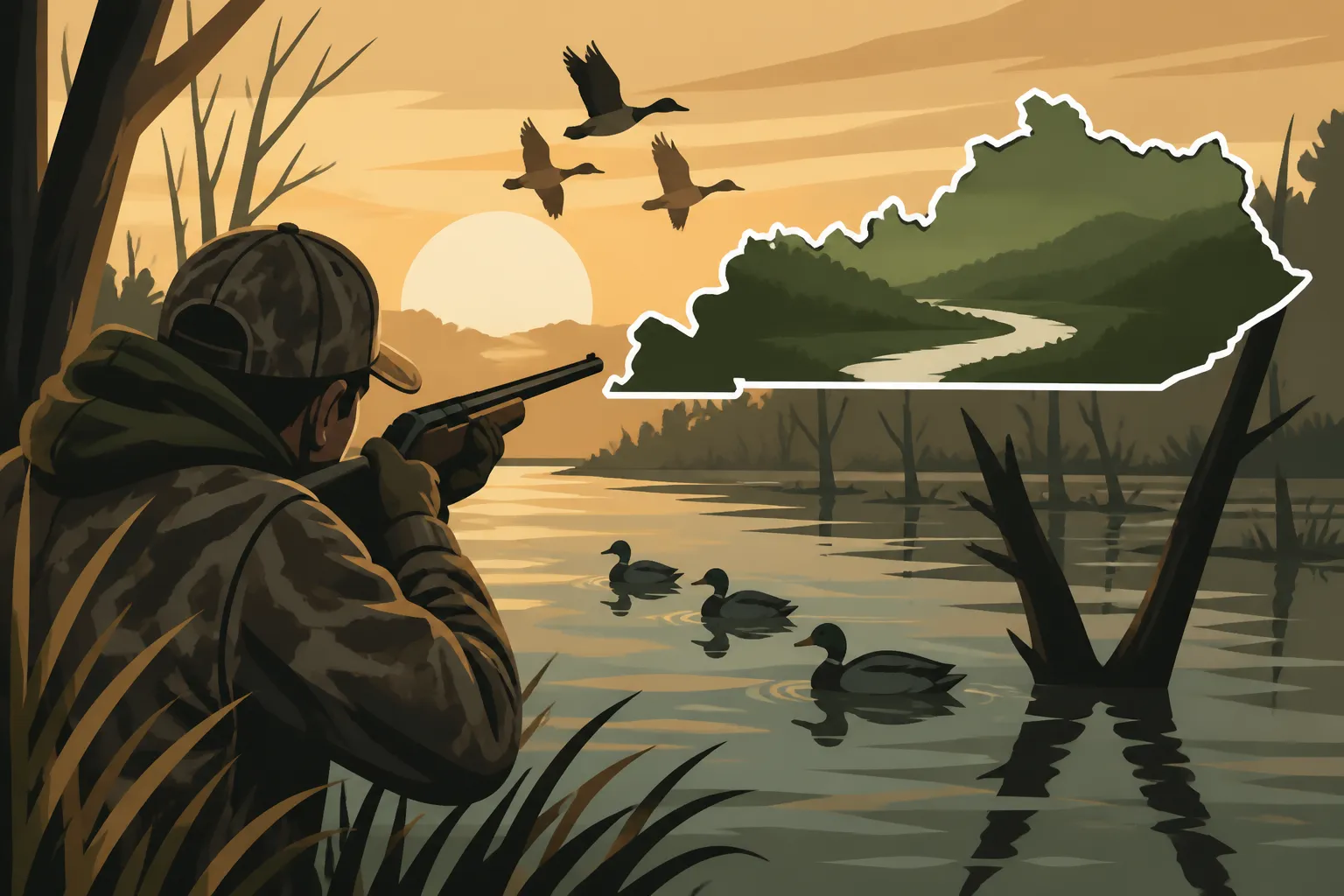
Waterfowl, particularly ducks, are a huge draw. You'll find a variety of dabblers like mallards, wood ducks, and green-winged teal, especially in flooded timber, shallow sloughs, and vegetated oxbows. The slower current and abundant food sources like acorns, submerged vegetation, and invertebrates make these areas ideal feeding and resting spots. Divers, such as scaup and canvasbacks, might be found in larger, deeper backwater lakes, though they're more typically associated with the main river or large reservoirs like Kentucky Lake. Geese, both Canada and sometimes even snow geese, will also utilize backwater areas, especially if there are adjacent agricultural fields or open water for loafing. Knowing your Kentucky Duck and Goose Zone Rules and the Kentucky Waterfowl Migration Timing is crucial for planning successful hunts.
Beyond waterfowl, small game hunters can find success too. Squirrels thrive in the bottomland hardwoods that often fringe these backwaters, feasting on acorns and other nuts. Rabbits can be found in the thick brush and fencerows bordering fields or marshy edges. And don't discount deer. Whitetails frequently use these areas for bedding cover, especially in dense thickets and islands that offer refuge from human disturbance. They'll also browse on riparian vegetation and utilize backwater edges as travel corridors, particularly during the rut. If you're planning a waterfowl hunt, keep an eye out for fresh deer sign along the banks; you might be able to combine efforts.
Essential Scouting and Planning for Backwater Success
Hunting Ohio River backwaters isn't a "show up and hunt" affair. It requires meticulous scouting and planning, often more so than dry-land hunting. The dynamic nature of the environment means that information gathered a month ago might be outdated today. Your success hinges on understanding current conditions and having a solid strategy.
Utilizing Mapping Tools and Aerial Photography
Before you even step foot near the water, modern mapping tools and aerial photography are your best friends. Services like GoHunt or the Kentucky Department of Fish and Wildlife Resources' (KDFWR) Kentucky Hunt Fish Map Tool are invaluable. They allow you to virtually scout vast areas, identifying potential hotspots and access points from the comfort of your home. Look for old river channels, oxbows, sloughs, and areas of flooded timber. These are prime waterfowl habitat. Pay attention to changes in vegetation; dense stands of cattails, smartweed, or buttonbush often indicate shallower water and good duck food. Identify potential bottlenecks or funnels where deer might travel.
Aerial photos are especially useful for spotting subtle changes over time. Compare historical satellite imagery to current views to see how certain areas have changed with erosion or deposition. Use topo maps to identify low-lying areas that are likely to flood. Plot out potential entry and exit routes, noting any obstacles like dense vegetation, fences, or changes in elevation that might be difficult to traverse with gear. With a tool like GoHunt, you can even overlay public land boundaries with satellite imagery, ensuring you're hunting legally. When the water is low, these maps can reveal submerged stumps and sandbars that could pose navigation hazards when the water is higher. Don't forget to mark potential public access points; many of these backwater areas are part of larger Wildlife Management Areas (WMAs) or federal lands that allow hunting.
Reading Water Levels and Weather Patterns
This is perhaps the most critical aspect of backwater hunting. Water levels dictate everything: access, game movement, and even safety. Before any trip, check real-time river gauges for the Ohio River and its major tributaries. Sites like NOAA's river forecast center provide detailed, up-to-the-minute data. A small rise or fall of just a foot or two can completely transform a hunting spot. A rising river might open up new areas of flooded timber or expand a slough, while a falling river might make an area too shallow for a boat or isolate ducks in shrinking pools.
Weather patterns play a direct role in water levels and also influence game behavior. A cold front pushing through can bring fresh migratory waterfowl down the flyway, especially if coupled with northern winds. Pay attention to prolonged periods of rain, which will inevitably lead to rising water. Conversely, a long dry spell will lower water levels, making certain areas inaccessible or less attractive to waterfowl. For Kentucky Waterfowl Zones and Seasons, a cold snap can dramatically improve hunting as ducks push south. Wind direction and speed are also important. Strong winds can make boat travel dangerous, and they can also help conceal hunter movement and vocalizations, or create choppy water that ducks avoid. Always consider how these factors combine to create the conditions you'll encounter.
Practical Hunting Tactics for Ohio River Backwaters
Once you've done your homework and understand the lay of the land, it's time to put those plans into action. Backwater hunting often requires specific strategies, especially when it comes to waterfowl, but there are opportunities for other game too.
Waterfowl Hunting Strategies
Waterfowl hunting in the backwaters typically involves setting decoys, using calls, and hiding effectively. The exact setup will depend on the specific backwater you're hunting. For shallow sloughs and flooded timber, dabbling ducks are your primary target. Consider a spread of a dozen or two mallard and wood duck decoys, placed to look like a relaxed feeding flock. Pay attention to the wind, as ducks will almost always land into it. Position your decoys so that incoming birds have a clear landing zone directly in front of your blind.
Blinds can be natural, brushed-in ground blinds made from local vegetation (cattails, willow branches), or portable layout blinds if you're hunting an open field adjacent to a backwater. The key is concealment; ducks have excellent eyesight. You'll often find success targeting areas with natural cover like buckbrush, buttonbush, or willow thickets that can be easily enhanced for concealment. If you're hunting from a boat, like a jon boat or an aluminum duck boat, make sure it's thoroughly camouflaged. Remember to check local WMA rules regarding Layout Blind Hunting Western Kentucky Fields as some public lands have specific regulations. Learning how to properly Read a Bottomland Slough for a Morning Flight will also greatly improve your success. Early season, when local wood ducks are abundant, jump-shooting secluded pockets and bends in smaller creeks feeding into the backwaters can also be very effective.
| Backwater Waterfowl Strategy | Target Species | Typical Location | Key Tactic | Recommended Decoy Spread |
|---|---|---|---|---|
| Flooded Timber/Brush | Dabbling Ducks | Wooded areas, dense brush | Natural blinds, subtle calling, close shots | 6-12 mallards/wood ducks, feeding |
| Open Sloughs/Oxbows | Dabbling/Diving | Larger, open water bodies | Brushed blinds, calling, landing zone into wind | 12-24 mixed ducks, small goose |
| Creek/River Edges | Wood Ducks, Teal | Narrow channels, bends | Jump-shooting, stealth approach | N/A (or small hand-held if static) |
| Adjacent Fields | Geese, Mallards | Cut corn/soybean fields | Layout blinds, large goose spreads | 12-36 goose decoys, a few ducks |
Small Game and Deer Opportunities
While ducks might be the main attraction, don't overlook the other hunting potential of these river bottoms. When water levels are stable, the edges of backwater areas, especially those with dense undergrowth and mature hardwoods, can be excellent for small game like squirrels and rabbits.
For squirrels, focus on mature oak and hickory stands adjacent to the water. In the fall, when acorns are dropping, squirrels will be actively foraging. A quiet still-hunt through these woods, especially on calm mornings, can be very productive. Look for freshly cut nuts or active leaf nests. Knowing how to Squirrel Hunting Kentucky Bottomland Hardwoods can turn a slow waterfowl morning into a successful mixed bag hunt. For rabbits, target dense briar patches, honeysuckle thickets, and overgrown fencerows that provide cover and food. These areas are often found on the higher ground flanking the backwaters. A good beagler can have a field day running cottontails in these areas, or you can slowly work through them yourself, kicking brush piles and thickets.
Deer also utilize the backwater environment heavily. During hunting season, especially when pressure builds in other areas, bucks will often retreat to the thickest, nastiest cover these bottoms offer. They might bed on small islands in a slough or deep within an almost impenetrable canebrake. Look for tracks along muddy banks, rub lines on saplings, and fresh scrapes during the rut. Setting up a ground blind or even a carefully chosen treestand on an edge overlooking a natural travel corridor between a backwater and a food source can be effective. Remember that deer movement will also be influenced by water levels; a rising river might push them to higher ground, while a receding river could open up new browsing opportunities. Access is often key here; if you can find a way into areas that other hunters avoid due to the wet or rough terrain, your odds significantly increase.
Gear and Safety Considerations for Backwater Hunters
Hunting the Ohio River backwaters is not like hunting a manicured food plot. The environment demands specific gear and an unwavering commitment to safety. You're dealing with water, currents, slippery mud, and often remote locations. Being prepared isn't just about comfort; it's about survival.
Necessary Equipment for Navigating and Staying Warm
Your mode of transportation is paramount. A sturdy jon boat or a robust aluminum duck boat is often essential for accessing deeper backwater areas, navigating sloughs, and transporting gear. Ensure your boat is well-maintained, has a reliable motor (and a backup, like oars or a trolling motor), and is properly registered. If you're venturing into very shallow or heavily timbered areas, a mud motor might be a game-changer. For walking into shallower spots, chest waders are non-negotiable. Look for insulated waders if you plan to hunt in colder weather, which is common during prime waterfowl season. Remember that Waders for Flooded Timber Hunting should be comfortable for walking and standing for extended periods.
Layered clothing is crucial, as temperatures can fluctuate wildly, and you'll often be sitting stationary for long periods. Start with moisture-wicking base layers, add insulating mid-layers like fleece or wool, and finish with a waterproof and windproof outer shell. Wool is an excellent choice for its ability to insulate even when wet. Don't forget warm, waterproof gloves and a hat, as you lose a lot of heat from your extremities and head. A good headlamp or flashlight is also vital for navigating in the dark, both before dawn and after sunset, especially if you're trying to find your way back through unfamiliar terrain. Bringing extra dry clothes in a waterproof bag is always a smart move.
Crucial Safety Precautions
Safety should always be your top priority when hunting backwaters. Water presents inherent risks, and it's easy for things to go wrong quickly. Always wear a life jacket, even if you're an experienced swimmer. Cold water immersion can quickly lead to hypothermia and incapacitation. Inform someone of your hunting plan, including your exact location and expected return time. This is especially important when hunting alone or in remote areas. A communication device, like a fully charged cell phone in a waterproof case or a satellite messenger, is also a good idea, as cell service can be spotty in some bottomland areas.
Be mindful of currents, even in seemingly still backwater areas, especially if they connect to the main river. The Ohio can be unforgiving. Watch for submerged obstacles like stumps, logs, and sandbars, which can damage your boat or cause an accident. If you're hunting with a partner, always maintain communication, especially when moving or setting up. Hypothermia is a serious risk in cold, wet conditions. If you or your hunting partner starts shivering uncontrollably, become disoriented, or show signs of impaired coordination, get to warmth immediately. Pack a small first-aid kit, emergency blankets, and fire-starting materials in a waterproof container. Hunting these expansive backwaters can be incredibly rewarding, but it demands respect for the environment and a commitment to personal safety.
Disclaimer
Hunting is an inherently dangerous activity. This guide provides general information and recommendations. Always consult the most current Kentucky Department of Fish and Wildlife Resources regulations and local laws before hunting. Your safety is your responsibility. Always practice ethical hunting and good sportsmanship.