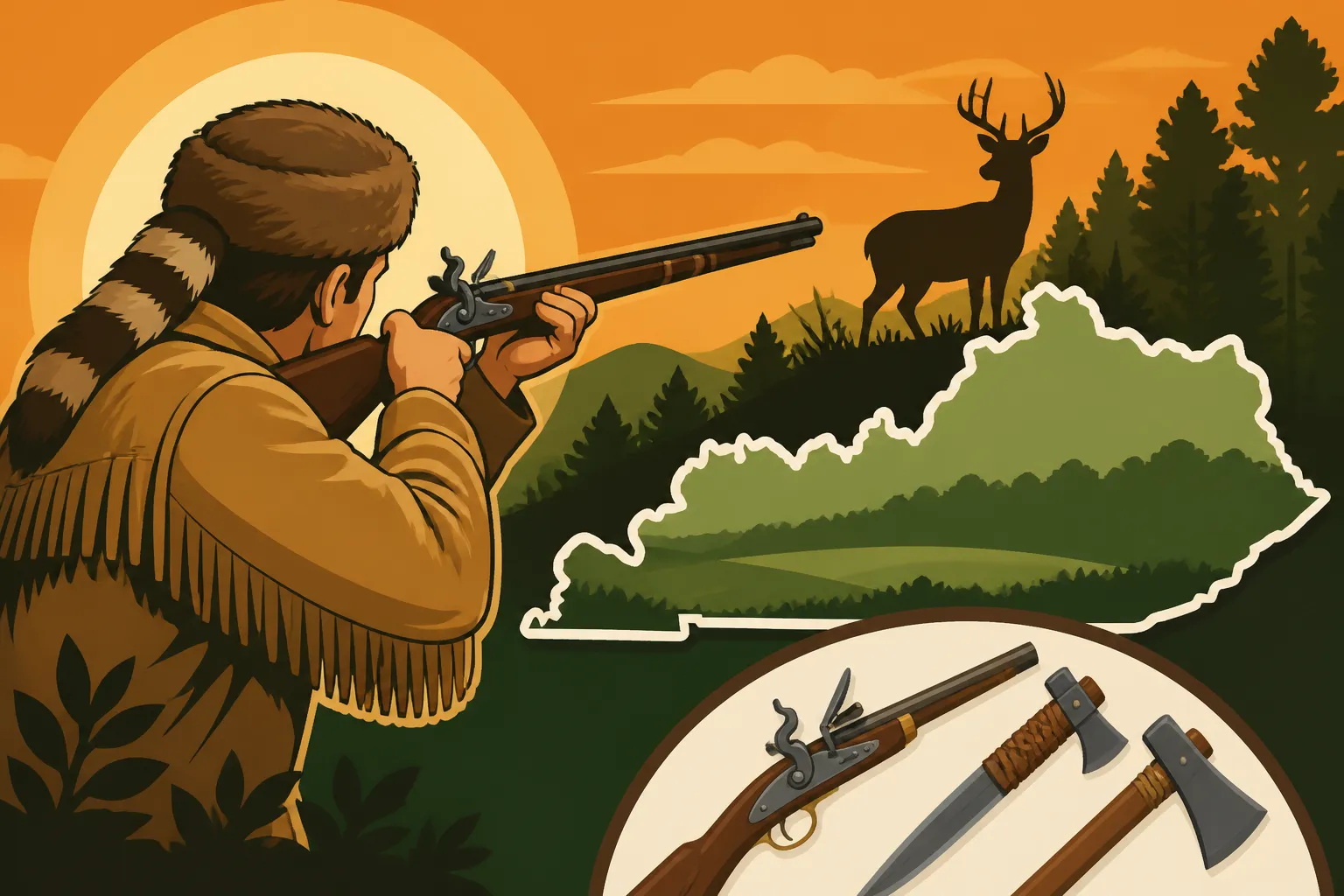
Hunting Pioneer Weapons Only WMAs
Stepping into the world of "Pioneer Weapons Only" hunting areas in Kentucky can feel a little like traveling back in time. It's an exciting prospect for many, but the specific rules and unique challenges can leave even seasoned hunters scratching their heads, wondering exactly what's allowed and how to even approach such a hunt. This comprehensive guide is designed to demystify hunting Kentucky's Pioneer Weapons Only WMAs, offering practical advice on legal gear, effective strategies, and crucial preparation to help you embrace the primitive challenge and experience a truly unique hunt.
Understanding Kentucky's Pioneer Weapons Only WMAs
Kentucky's Pioneer Weapons Only WMAs represent a unique commitment to traditional hunting methods, offering an experience distinct from the broader statewide seasons. These areas aren't just about limiting weapon types; they're about fostering a specific type of hunting ethos, one that emphasizes stealth, skill, and a deep connection to the land and its history. For many, it's a chance to strip away some of the modern conveniences and engage with hunting on a more fundamental level.
What Makes These Areas Unique?
When you hear "Pioneer Weapons Only," it immediately conjures images of frontiersmen and early settlers. That's precisely the spirit these areas aim to capture. The Kentucky Department of Fish and Wildlife Resources (KDFWR) designates certain Wildlife Management Areas (WMAs) or portions thereof, for hunting with specific, more primitive weapons. This isn't a random restriction; it's a deliberate management choice. These areas often have robust game populations, and by limiting the types of weapons, the KDFWR can influence hunting pressure, harvest rates, and the overall quality of the hunting experience. It often means less overall pressure compared to areas open to modern firearms, especially during peak rifle season. This can translate into deer that are less wary and turkeys that aren't quite as callable.
The terrain in these WMAs can vary, but many are situated in challenging, rugged landscapes that further enhance the primitive feel. Think dense timber, steep hillsides, and sprawling hollows where a deep understanding of the land and subtle movements makes all the difference. It's an environment where your woodsmanship is truly put to the test, and relying on technology takes a backseat to relying on your instincts and honed skills.
Locating Pioneer Weapons Only WMAs
Finding these specific WMAs is your first step into this unique hunting experience. The KDFWR website is always your primary resource for up-to-date regulations and maps. They typically list specific WMAs with "Pioneer Weapons Only" designations as part of their annual hunting guide. Some of the most well-known areas that have historically carried these designations or parts of them include places like the Land Between the Lakes (LBL) in certain sections, and other localized WMAs scattered across the state. Remember that these regulations can change year to year, so always check the latest KDFWR hunting guide before planning your trip.
Mapping tools can be an absolute lifesaver when trying to pinpoint these areas and understand their boundaries. Platforms like GoHunt, for example, offer detailed public land overlays that can help you visualize the specific "Pioneer Weapons Only" zones, differentiate them from general public land, and identify potential access points. This kind of digital scouting, combined with physical maps, will give you a significant advantage in understanding the lay of the land before you even step foot in the woods. You'll want to pay close attention to the exact boundaries, as one side of a road might be pioneer weapons only, while the other side is open to general hunting. This attention to detail prevents any unintended violations and ensures you're hunting legally.
Why Choose a Pioneer Weapons Hunt?
So, why would anyone intentionally limit their weapon choice and opt for a more challenging hunt? For many of us, it boils down to the experience. There’s an undeniable satisfaction that comes from harvesting an animal with a weapon that demands a closer range, more precise shot placement, and a deeper level of field craft. It strips away the long-range capabilities of modern firearms and forces you to become a more intimate part of the hunting landscape. This can be especially true if you typically hunt with a rifle and want to try something different.
The experience often feels more authentic, a nod to the hunting traditions that span generations. It’s about honing your tracking skills, understanding animal behavior on a more profound level, and truly earning your success through patience and stealth. You might find yourself more immersed in the sights and sounds of the forest, more attuned to the subtle shifts in wind and terrain, because every detail matters when your effective range is cut in half. It’s a rewarding challenge, a personal test of skill, and a chance to truly connect with the ancestral roots of hunting. For many, this unique journey is what makes the Kentucky hunting experience so special.
Legal Weapons and Gear for Pioneer Areas
Navigating the weapon restrictions in Kentucky's Pioneer Weapons Only WMAs can be a bit like deciphering an ancient scroll if you're not careful. The key is in the details, and understanding precisely what’s permitted, and what’s not, is paramount to a successful and legal hunt. It’s not just about what you can carry, but often about the specific specifications of that equipment.
Approved Firearms and Archery Equipment
Generally, "Pioneer Weapons Only" areas restrict hunters to traditional archery equipment and muzzleloading firearms. For archery, this usually means vertical bows (recurve or longbow) and crossbows. However, it's crucial to consult the specific WMA regulations, as some may further restrict crossbows or have specific draw weight requirements for traditional bows. The beauty of these areas for archers is the opportunity to truly embrace the close-quarters challenge of bowhunting. You'll be looking for tight shot windows, calculating distances precisely, and ensuring ethical shot placement. If you're considering Crossbow Versus Vertical Bow in Kentucky, understand that both typically fall under "archery" but specific WMA rules can differ.
When it comes to muzzleloaders, we’re talking about cap-and-ball revolvers, single-shot muzzleloading rifles (percussion or flintlock), and shotguns that load from the muzzle. In-line muzzleloaders with modern features like 209 primers and optical scopes are typically not permitted. This is where many hunters get tripped up. The spirit of "pioneer" means a more traditional black powder firearm, often with open sights or a very basic fixed scope, if any scope is allowed at all. Check the KDFWR guide meticulously for specific definitions regarding bore sizes, projectile types (e.g., patched round balls, conical bullets), and ignition systems. You might think your shiny new in-line is a muzzleloader, and it is for the statewide modern muzzleloader season, but not for these special zones. This means understanding Muzzleloaders for a Kentucky December might require adjusting your setup if you're planning to hunt a pioneer area.
Essential Gear Beyond the Weapon
Beyond your chosen pioneer weapon, the rest of your gear still needs to be top-notch, perhaps even more so, given the inherent challenges. Comfort, safety, and practicality are your guiding principles. A good set of sturdy boots capable of handling rough, potentially steep terrain is non-negotiable. You'll likely be doing a lot of walking, still-hunting, and potentially tracking an animal through dense cover, so reliable footwear is critical. Layers of clothing are also key, particularly if you're hunting during the colder months when mornings can be frigid and afternoons surprisingly mild. Wool and synthetic blends are fantastic for their warmth-to-weight ratio and ability to wick moisture, keeping you comfortable even when you're exerting yourself. You'll also need to be aware of Kentucky's Blaze Orange and Pink Options for visibility during specific seasons, even in these specialized areas.
Navigation tools are essential. Since long-range glassing might not be as effective in dense timber, and you might be venturing deeper off-trail, a reliable GPS unit or a smartphone app like GoHunt with downloaded maps is crucial. Couple that with a traditional compass and a physical map as a backup. A good headlamp for pre-dawn walks in and post-dusk walks out is also a must. Don't forget a basic first-aid kit, a sharp knife for field dressing, and plenty of water and snacks to keep your energy up during potentially long days in the woods. Because shots will be at closer ranges, a small, compact pair of binoculars can still be invaluable for identifying game in thick cover and confirming legal harvest criteria.
Considering a Muzzleloader or Traditional Bow
Choosing between a muzzleloader or a traditional bow for a pioneer hunt often comes down to personal preference, existing skill sets, and the type of experience you're seeking.
For the muzzleloader enthusiast, the appeal is often in the process itself. The meticulous loading of powder, patching, and ball, the plume of smoke, and the satisfying boom all add to the raw, visceral experience. Muzzleloaders offer a slightly longer effective range than most traditional archery setups, typically out to 75-100 yards with practice, which can be an advantage in certain open timber scenarios. However, the slow reload time means your first shot must count, and any follow-up is unlikely. It demands patience and confidence in your shot placement. If you're accustomed to Kentucky Early Muzzleloader Tactics, you'll find some overlap but also distinct differences in the equipment allowed.
Traditional bow hunters, wielding recurves or longbows, embody the ultimate close-range challenge. Their effective range is often 20-30 yards, requiring supreme stealth, shot discipline, and an intimate understanding of animal movement. The satisfaction of a successful traditional bow hunt is immense, as it truly tests your ability to get within spitting distance of your quarry. It forces you to slow down, pay attention to every leaf and twig underfoot, and master the art of silent movement. Whether you choose a muzzleloader or a traditional bow, significant practice before the season is non-negotiable. Knowing your weapon's limitations and your own capabilities will prevent frustration and, more importantly, ensure an ethical hunt.
| Weapon Type | Typical Allowed Specifications | Effective Range (Approx.) | Reload/Follow-up | Primary Challenge |
|---|---|---|---|---|
| Traditional Bow | Recurve/Longbow, specific draw weights (check WMA), no modern sights/releases often implied (check rules). Crossbows sometimes allowed, but check for restrictions. | 20-30 yards | Silent/Quick | Extreme proximity to game, shot angles |
| Muzzleloading Rifle | Flintlock/Percussion, single-shot, open sights or fixed basic scope (check rules), black powder only, round ball/conical. | 50-100 yards | Slow | Single-shot pressure, smoke obscures view |
| Muzzleloading Shotgun | Single-shot, muzzle-loading, black powder only, often for small game or fall turkey. | 25-40 yards | Slow | Limited range, spread of shot |
| Muzzleloading Pistol | Cap-and-ball revolver, single-shot (check WMA-specific rules). | 15-25 yards | Very Slow | Very short range, hand strength/stability |
Note: Always consult the official Kentucky Department of Fish and Wildlife Resources (KDFWR) regulations for the specific WMA you intend to hunt, as rules can vary and change annually.
Effective Tactics for Hunting Primitive Areas
Hunting in Pioneer Weapons Only WMAs demands a different mindset and skillset than a typical modern firearms season. Your reduced effective range means that the tactics you employ must prioritize stealth, observation, and getting incredibly close to your quarry. Forget about 300-yard shots; here, 50 yards can feel like a long bomb, and 20 yards is the sweet spot.
Still-Hunting and Stalking Techniques
In these primitive areas, becoming one with the forest is paramount. Still-hunting is about moving slowly, deliberately, and stopping frequently to observe and listen. It's not just about covering ground; it's about covering it with purpose, scanning every shadowed log and brush pile for an ear, a flicker of movement, or the horizontal line of a deer's back. Take one or two steps, then pause for several minutes, letting your eyes and ears do the work. Remember, animals are masters of camouflage, and often, you won't see them until they move. This method is incredibly effective in varied terrain, like the often-rugged hillsides and hollows you find in much of Kentucky's public land. You might find yourself Still-Hunting Eastern Kentucky Ridges, where elevation changes dictate wind and thermals, adding another layer of complexity.
Stalking takes this a step further. Once you've spotted an animal, the real challenge begins: closing the distance. This requires an intimate understanding of wind direction, terrain, and the animal's current behavior. Use every bit of cover available—trees, thick brush, changes in elevation—to break up your outline and muffle your steps. Often, this means moving when the animal's head is down feeding or when it's looking in another direction. Foot placement is critical; always look for soft ground, moss, or flat rocks that won't snap a twig. This is where a quiet clothing system, like wool or soft fleece, truly shines. Every rustle or crunch echoes louder when you're trying to get within 30 yards of a wary buck.
Ambush Hunting from the Ground
While treestands might be allowed in some WMAs, many hunters in "Pioneer Weapons Only" areas opt for ground-based ambush tactics. This could be due to personal preference, the type of weapon, or the specific rules of the WMA (always check WMA-specific rules for treestand regulations, e.g., Treestand Rules on Kentucky Public Land). Utilizing natural cover like blowdowns, dense cedars, or thickets to set up an ambush can be incredibly effective. The key is to blend in completely. This means taking the time to position yourself downwind of likely travel corridors, pinch points, or feeding areas, ensuring your silhouette is broken up by the natural surroundings.
Ground blinds are another fantastic option for ambush hunting. Portable pop-up blinds can be brushed in quickly, or you can construct a natural blind using fallen branches, leaves, and logs. The advantage of a ground blind is the ability to move slightly, draw your bow, or shoulder your muzzleloader without being detected, especially if you're hunting with younger hunters who might struggle with prolonged stillness. Mastering the art of Using a Ground Blind on Kentucky Public Land involves careful placement, scent control, and understanding entry and exit routes that don't spook game. Remember, in these areas, every advantage you can gain by minimizing your footprint and maximizing your concealment is worth the effort.
Calling Strategies for Primitive Hunters
Calling can be a powerful tool in Pioneer Weapons Only WMAs, especially for deer and turkey, but it often requires a more subtle approach than in heavily hunted modern seasons.
For deer, rattling and grunting can be highly effective, particularly during the rut. However, because you need to draw deer into much closer range, you might need to adjust your calling volume and frequency. Softer grunts and subtle rattling sequences, imitating a small skirmish rather than a full-blown brawl, can often pique a buck's curiosity without putting him on high alert. Positioning yourself with excellent cover and an open shooting lane at close range is critical, as a buck responding to your call will likely circle downwind. This is where techniques like Rattling Volume in Thick Cover come into play, where less is often more.
Turkey hunting in pioneer areas is, for many, the ultimate challenge. Using mouth calls, slate calls, or box calls to mimic hens can draw a gobbler into range, but the lack of long-range firearms means you need that bird to commit and come within shotgun range – often 25-40 yards. Decoy placement becomes even more critical, ensuring the gobbler approaches from a direction that offers you a clear, ethical shot. Run-and-gun tactics, where you move and call frequently to locate birds, can be effective, but once you get a response, you need to transition quickly to a stealthy setup that brings the bird within primitive range. Understanding Calling a Kentucky Gobbler Off the Roost and setting up quietly before they fly down is often the most productive strategy, as it eliminates the need to stalk a bird that's already on the ground and alert.
Scouting and Preparation for a Successful Hunt
Success in any hunting scenario, especially in a Pioneer Weapons Only WMA, hinges on thorough scouting and meticulous preparation. You can have the best equipment, but without understanding the land and the animals, you're just taking a walk in the woods. These areas often reward diligence and effort more than sheer luck.
Pre-Season Reconnaissance
Before you even tie your boots, your scouting should begin from the comfort of your home. Start by utilizing online mapping tools. The KDFWR website offers an excellent interactive map, and subscriptions like GoHunt provide even more detailed overlays, showing public land boundaries, topo lines, and aerial imagery. Look for key terrain features: ridge lines, saddles, hollows, creek bottoms, and potential funnel points where game might travel. Pay close attention to areas with varying timber types or edges, as these often hold more game. Learning Reading Aerial Photos for Eastern Kentucky Deer can give you a significant leg up on identifying potential travel corridors and bedding areas that might not be obvious from the ground.
Once you have some potential spots identified on the map, it's time for boots on the ground. Visit the WMA during the off-season or before your hunt. Walk those ridge lines, check out the hollows, and confirm those funnels. Look for deer trails, old rubs, scrapes, and turkey roosting areas. Pay attention to food sources, especially mast crops like acorns, which can dictate deer movement. The more you walk, observe, and confirm your digital scouting, the better prepared you'll be when the season opens. This kind of Scouting Kentucky Public Land Before Season allows you to learn the terrain without the pressure of a tag in your pocket.
Physical Fitness and Navigation
Pioneer Weapons Only WMAs, particularly those in more rugged parts of Kentucky, can demand a significant physical effort. You'll likely be walking longer distances, navigating steep inclines, and potentially dragging or packing out an animal without the aid of ATVs (which are often restricted on these lands). Being in good physical condition is not just about comfort; it's about safety and your ability to hunt effectively all day long. Start a walking regimen, incorporating hills if possible, well before your hunt. Carry your loaded pack on your practice walks to simulate the real conditions.
Navigation skills are paramount when you're deep in dense timber or unfamiliar terrain, especially with the limited cell service you might encounter in some remote areas. Don't rely solely on your phone. A handheld GPS unit is highly recommended, and knowing how to use it to mark waypoints (your vehicle, a promising sign, your stand location) is critical. Even more important is carrying a physical map and a compass and knowing how to use them. Technology can fail, batteries die, and knowing how to navigate traditionally can quite literally save your hunt, or even your life. Always make sure to tell someone where you're going and when you expect to return.
Practice Makes Perfect
This might seem obvious, but it's especially true for primitive weapons. If you're using a muzzleloader, spend significant time at the range. Don't just shoot a few rounds; shoot from different positions, practice your loading procedure until it's second nature, and understand how temperature and humidity can affect your powder. Know your effective range cold – not just what the gun can do, but what you can do with it consistently and ethically.
For traditional bowhunters, practice is even more critical. There's no sight pin to rely on, only muscle memory, form, and instinct. Shoot hundreds of arrows before the season, at varying distances, from different stances. Practice judging yardage without a rangefinder. Understand how your arrows fly in different wind conditions. The goal is to make that critical shot under pressure second nature. Whether you're slinging arrows or igniting powder, ethical hunting means you owe it to the animal to be absolutely proficient with your chosen weapon. You don't want to wound an animal because you underestimated the difficulty of a shot with a less forgiving weapon.
Overcoming Challenges and Common Mistakes
Hunting with pioneer weapons adds a layer of complexity that can be both frustrating and incredibly rewarding. To truly succeed, it's crucial to acknowledge these challenges head-on and learn from common pitfalls that can derail a hunt.
Dealing with Limited Range and Follow-Up Shots
The most significant challenge for many hunters transitioning to pioneer weapons is the dramatically reduced effective range. For a traditional bowhunter, this might mean a maximum ethical shot of 25-30 yards. For a muzzleloader, perhaps 75-100 yards, often with open sights. This contrasts sharply with modern rifles capable of 200, 300, or even 400+ yard shots. The primary mistake here is taking a shot that's beyond your, or your weapon's, ethical limit. Buck fever can make a 60-yard shot with a traditional bow seem doable, but the reality is often different. You must exercise extreme discipline.
This limited range also means follow-up shots are usually not an option. A traditional bow requires a full re-draw, and a muzzleloader requires a complete reloading sequence—neither of which is quiet or quick enough for a second shot on a moving animal. This puts immense pressure on that first shot. Consequently, shot placement becomes even more critical. You must wait for the animal to present the perfect angle, ensuring a clean, humane kill. If you hit an animal, the focus immediately shifts to tracking. Understanding Blood Trailing After Dark in Kentucky and being prepared with a bright headlamp and keen eyes is vital, as blood trails with primitive weapons can sometimes be less pronounced if the shot wasn't ideal.
Managing Noise and Scent
With the need to get much closer to game, noise and scent management become exponentially more important in Pioneer Weapons Only areas. Every rustle of clothing, every misplaced step, and every whiff of human odor can spell the end of your hunt.
For noise, focus on quiet clothing. Avoid stiff fabrics that swish as you move. Choose soft, quiet boots with good traction. When still-hunting or stalking, slow down. Pick up your feet instead of shuffling. Look for leaves or twigs before you place your foot down. Break up long walks with frequent, long pauses where you remain absolutely still and listen. The woods are noisy, and blending your movement with natural sounds (like a gust of wind or a bird taking flight) can help, but nothing beats pure silence.
Scent control is another often-underestimated factor. Animals in these areas might be less pressured by modern gun hunters, but their noses are still their primary defense. Shower with unscented soap, use scent-free laundry detergent for your hunting clothes, and store them in airtight bags or containers. Pay attention to wind direction religiously. Always try to approach your stand or hunting area from downwind, and set up so the prevailing wind carries your scent away from where you expect game to appear. Even in a ground blind, your scent can easily swirl, so a scent elimination spray or an ozone generator can be beneficial, but nothing truly replaces playing the wind.
Avoiding Over-Hunting and Pressure
While Pioneer Weapons Only WMAs often see less pressure than general modern firearms zones, they are still public lands, and you'll still encounter other hunters. A common mistake is simply walking in on the main access points and hunting the first decent-looking spot, which is often where other hunters will do the same. This can lead to pressured game that quickly learns to avoid those areas.
To find success, you'll need to go deeper and find those overlooked pockets. This means being willing to walk further than most, climb steeper hills, or explore less obvious access points. Utilize your mapping tools (like those from GoHunt) to identify remote corners or terrain features that might deter other hunters. Look for subtle draws or benches that connect larger pieces of timber, or dense bedding areas that offer sanctuary. Remember, deer and turkeys learn quickly. If they're constantly bumped near a main trail, they'll adjust their patterns. You want to be where they feel safe. This strategy ties directly into Finding Ground Others Walk Past and puts you in a position to encounter game that hasn't been constantly harassed. Sometimes, getting 100-200 yards off a main trail can feel like a different world entirely.
The Rewards of Hunting with Primitive Methods
While the challenges of hunting Pioneer Weapons Only WMAs are undeniable, the rewards are often far greater, leaving you with a deeper appreciation for the sport and a profound sense of accomplishment. It’s an experience that transcends simply filling a tag.
Connecting with History and Nature
There's something incredibly powerful about stepping into the woods with a weapon reminiscent of those carried by hunters generations ago. Whether it's the solid feel of a traditional longbow in your hand or the historical significance of a flintlock muzzleloader, these tools connect you directly to the hunting heritage of Kentucky. It's a tangible link to the pioneers and Native Americans who hunted these same lands, relying on similar skills and facing similar challenges.
This connection isn't just historical; it's also deeply ecological. Hunting with primitive methods often forces you to slow down, to observe more keenly, and to become more attuned to the nuances of the natural world. You're not relying on long-range optics or high-tech gadgetry to find success. Instead, you're relying on your senses, your woodsmanship, and your ability to read the subtle language of the forest. This immersion fosters a deeper respect for the animal, the ecosystem, and the delicate balance of nature. It’s about being present, truly present, in the moment, which is a rare commodity in our fast-paced modern lives.
Developing Sharper Hunting Skills
Regularly hunting with pioneer weapons is like going to hunting boot camp; it invariably makes you a better hunter overall. When your margin for error is significantly reduced, every aspect of your hunting game must be elevated. You become more proficient at reading sign, as you can't afford to misinterpret a rub or a track. Your stealth improves dramatically, because a loud step means a missed opportunity. Your ability to judge distance and account for wind becomes second nature, because there's no forgiving bullet drop compensator or laser rangefinder to save a bad estimate.
Even if you primarily hunt with modern firearms, incorporating pioneer weapon hunts into your season will hone skills that translate to all types of hunting. You'll learn patience, perseverance, and how to stay calm under immense pressure. It forces you to rethink your approach to scouting, calling, and concealment. You'll gain a deeper appreciation for the intricacies of deer behavior, the patterns of turkey movement, and the subtle ways animals use terrain to their advantage. It’s a masterclass in woodsmanship that very few other hunting methods can offer, directly improving your understanding of Hunting Pressure on Kentucky Public Land and how to avoid it.
The Unforgettable Experience
Ultimately, the most profound reward of hunting Pioneer Weapons Only WMAs is the unforgettable experience itself. It's the moment you finally close the distance on a wary buck with your recurve, the suspenseful silence before the shot, and the raw exhilaration of a successful harvest earned through pure skill and dedication. It's the plume of smoke from a muzzleloader shot echoing through the frosty morning air, or the sight of a gobbler strutting into effective range, drawn in by your hand-carved call.
These are the moments that stick with you, the stories you'll tell around the campfire for years to come. The meat from an animal taken with a pioneer weapon often tastes sweeter, imbued with the memory of the profound effort and deep connection to the hunt. It’s a truly authentic adventure, a chance to simplify and reconnect with the foundational elements of hunting. If you're looking for a challenging, deeply rewarding, and historically rich hunting experience in Kentucky, stepping into a Pioneer Weapons Only WMA might just be the most fulfilling hunt you ever undertake.
Disclaimer
The information provided in this guide is for general informational purposes only and is not a substitute for official regulations. Hunting laws and regulations in Kentucky, including those pertaining to Pioneer Weapons Only WMAs, can change frequently. Always consult the most current Kentucky Department of Fish and Wildlife Resources (KDFWR) hunting guide and specific WMA regulations before planning and undertaking any hunting trip. Compliance with all state and federal laws is the hunter's responsibility.