Roost Hunting Kentucky Gobblers
There’s nothing quite like the sound of a Kentucky gobbler hammering away on the roost as dawn breaks, but getting him to commit to your setup after he flies down? That’s where many hunts fall apart. It's frustrating when you do everything right up to fly-down, only for him to pitch down the wrong way or ignore your calls. This guide is all about mastering the art of roost hunting, transforming those early morning frustrations into successful turkey harvests.
Understanding the Kentucky Gobbler's Roost Behavior
Knowing why and where turkeys choose to roost is half the battle. They're not just picking any old tree; there's a method to their madness, driven by safety, comfort, and accessibility. Ignoring these instincts will often leave you staring at an empty field or a silent ridge.
Why Turkeys Roost Where They Do
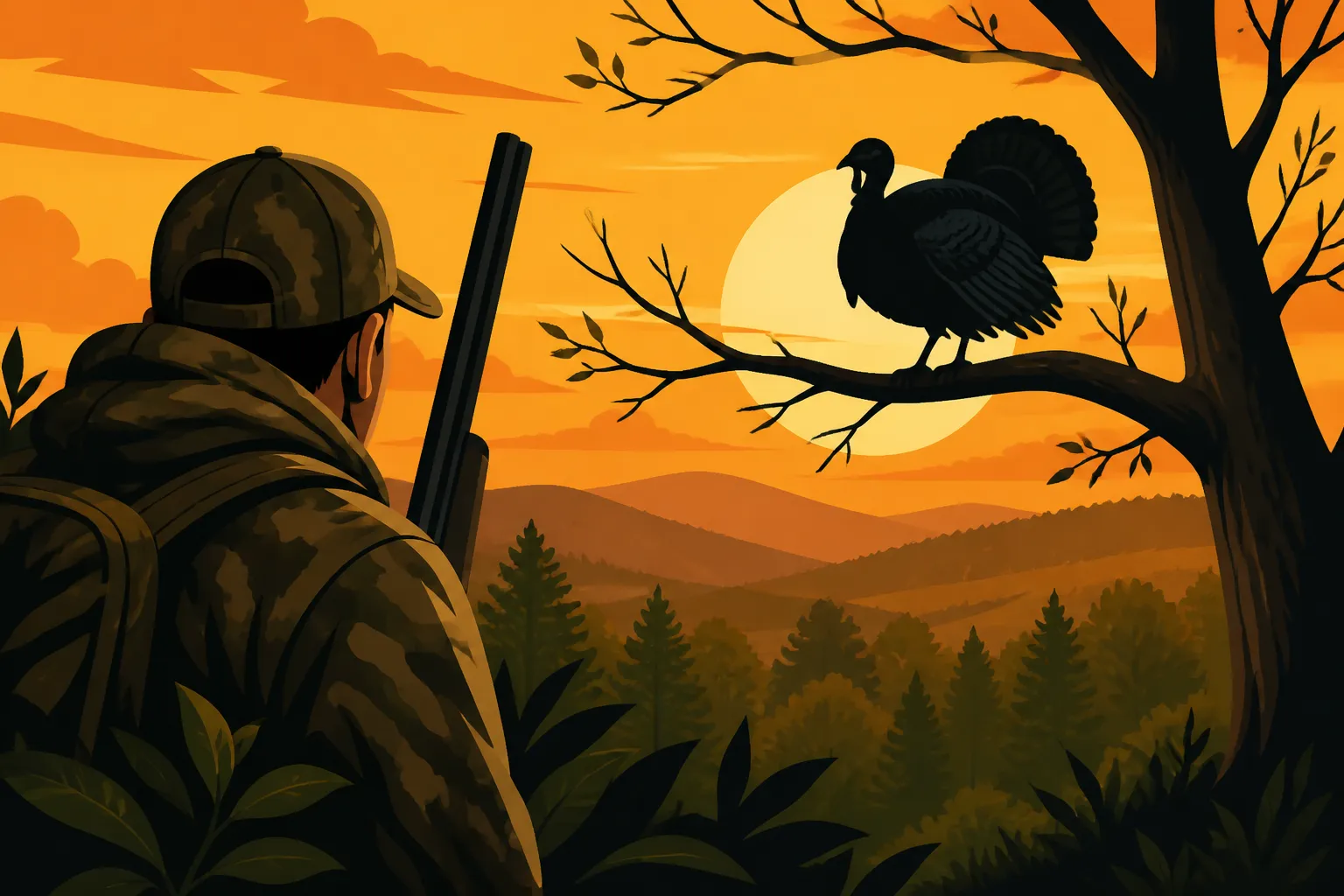
Kentucky gobblers, much like their brethren elsewhere, choose roost trees primarily for safety from ground predators like coyotes, bobcats, and even bears in some parts of the state. They want a clear line of sight, or at least a good feel for their surroundings, before settling in for the night. You'll often find them in the tallest trees on a ridge, or perhaps over a creek bottom where they have water nearby and a natural barrier. Think about the dominant oaks and sycamores that stand head and shoulders above the rest in a particular area. These aren't just random choices; they offer elevation, sturdy branches for support, and often a decent view of the landscape for potential threats.
It’s also about easy access to feeding or strutting areas. A wise old gobbler isn't going to fly a quarter-mile just to get to his breakfast buffet; he wants to be relatively close to where he plans to spend his morning. Often, they'll roost near open fields, food plots, or clearings where they intend to meet up with hens or begin their strutting rituals. Pay attention to those larger, older trees, especially those with wide, horizontal limbs that can comfortably support a heavy bird. These aren't just sleeping spots; they're strategic perches for the night and launchpads for the morning's activities. Understanding these preferences is key to Where Kentucky Gobblers Roost.
Seasonal and Weather Influences on Roosting
Turkey roosting habits aren't static; they shift with the seasons and the whims of Mother Nature. Early in the spring, during the pre-breeding phase, gobblers might roost tighter together, trying to establish dominance and call in hens. As the season progresses and hens start to nest, gobblers might become more solitary, or perhaps roost near known hen nesting areas. This is why a spot that was hot in April might be quiet by mid-May.
Weather plays a huge role, too. On a calm, clear night, turkeys might roost in more exposed trees, relying on their vision. But if a strong wind is blowing, or a storm is brewing, they'll often seek out more sheltered trees, perhaps lower down on a leeward slope or deeper in a hollow, offering protection from the elements. Cold, wet weather can make them seek denser cover, too. I've seen turkeys completely change their roosting patterns after a particularly nasty cold front, opting for pines or cedars that offer more insulation. Keeping an eye on the forecast and understanding these nuances will give you a significant advantage in predicting their movements and choosing your approach.
Scouting for Roosting Sites Before the Hunt
You can't effectively roost hunt if you don't know where the turkeys are sleeping. The best way to stack the odds in your favor is through diligent scouting, both from your armchair and with boots on the ground. This pre-hunt work is often more crucial than the actual calling.
Utilizing Maps and Technology
In today's hunting world, mapping apps are indispensable for scouting. Tools like OnX Hunt, BaseMap, or even Google Earth can be incredibly powerful. Start by looking for prominent ridge lines, isolated patches of tall timber, or trees along creek and river bottoms. Look for elevation changes, areas where different habitat types meet, and potential travel corridors. These are often the places where turkeys prefer to roost. Pay close attention to any clearings, agricultural fields, or food plots that could serve as morning fly-down areas. If you're hunting public land, identify legal access points and potential routes that allow for a silent, pre-dawn approach. The goal is to narrow down your search areas before you ever step foot in the woods.
A valuable technique is to identify key terrain features that act as natural funnels or high points. Ridge tops, particularly those with older, mature trees, are prime candidates. Also, look for timber stands overlooking creek bottoms, as turkeys often prefer to roost over water. Brands like GoHunt provide excellent overlays that can show you topographical maps and public land boundaries, which is incredibly helpful when planning your approach and identifying potential roosting zones. Using these digital tools to identify five or six potential roosting areas can save you countless hours of wandering in the dark.
On-the-Ground Reconnaissance for Sign
While maps are a great starting point, nothing beats putting boots on the ground. As the season draws near, start listening at dusk and dawn. Drive remote roads or walk logging trails around potential roosting areas. Around an hour before sunset, listen for "fly-up" cackles and wing beats as birds pitch into the trees. Just before dawn, listen for gobbling from the roost and the thunderous sound of wings as they fly down. Once you've heard a bird, mark its general location on your map. Then, during the day, go back and look for physical sign.
Underneath active roost trees, you'll find a tell-tale collection of droppings, disturbed leaf litter, and sometimes even shed feathers. A pile of droppings resembling small cigars (for gobblers) or larger, more amorphous blobs (for hens) is a dead giveaway. Look up into the canopy for large, horizontal limbs that show wear or are covered in droppings, indicating a favored perch. Pay attention to the ground directly beneath these trees – it will often be cleared of leaves from the birds’ daily activities. If you find multiple trees with fresh sign, you've hit the jackpot. This ground scouting confirms your digital detective work and provides crucial details about the specific trees they're using, which is vital for your pre-dawn setup. Remember, turkeys aren't always in the same tree every night, but they often utilize the same general area, so finding multiple roost trees indicates a pattern.
Pre-Dawn Tactics: Getting Into Position Undetected
The period between leaving your truck and settling into your setup before light is perhaps the most critical part of a successful roost hunt. One wrong move, one rustle too loud, and that gobbler will know you're there before he even opens his eyes.
Silent Entry and Setup Considerations
The golden rule of pre-dawn entry is silence. Plan your route meticulously. Use the mapping tools mentioned earlier – GoHunt can help you plot a precise, quiet approach. Identify logging roads, old two-tracks, or open timber that allows for quiet movement. Avoid thick brush, crunchy leaves, or steep hillsides that force noisy exertion. I often carry a small headlamp with a red or green light filter to preserve night vision and minimize disturbance. Always give yourself more time than you think you need; rushing in the dark is a recipe for disaster. If you're hunting a public area with specific Kentucky Public Land Hunting Hours, make sure you understand when you can legally enter.
When you get within about 100-150 yards of the suspected roost tree, slow down even more. Listen for any soft clucks or stretches from the birds. If they're awake and starting to vocalize, freeze. Pick out your setup location before first light, ideally with a sturdy tree at your back to break up your silhouette and provide cover. You want to be close enough to hear them clearly, but far enough that they won't spot you flying down. Think about your backdrop, potential shooting lanes, and the likely fly-down path. This is where Setting Up Against a Big Oak can make all the difference, providing the concealment and stability you need. Consider using a compact ground blind if you prefer maximum concealment, especially in areas with less natural cover.
Calling Strategies While on the Roost
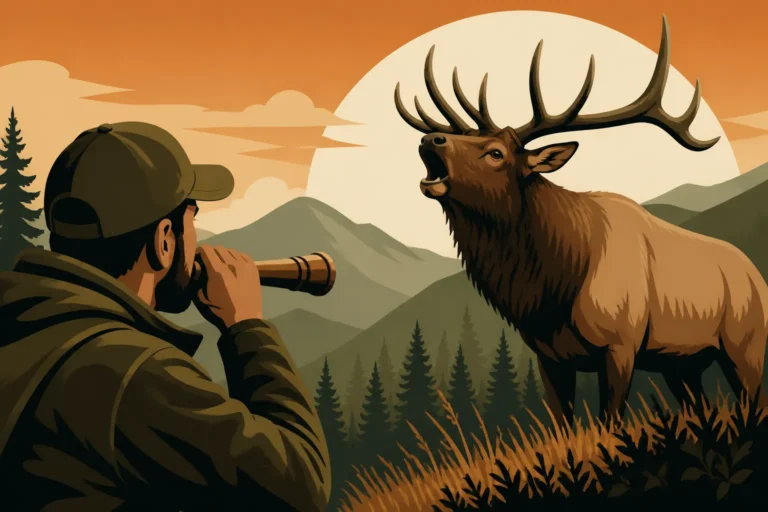
Once you're in position, resist the urge to hammer away on your call. The goal is to locate the bird and gauge his interest, not to spook him. Start with soft, subtle calls as light begins to break. A few soft tree yelps, clucks, or purrs are usually enough to get a response. Listen intently. If he gobbles hard, he knows you're there and he's interested. If he gobbles weakly or infrequently, he might be with hens or less enthusiastic. This initial calling should be minimal.
The key is to mimic a hen just waking up, letting him know she's in the area. Don't call continuously; wait for his response and then gauge when to call again. Sometimes, a single soft yelp is all it takes to make him cut loose. As the sky lightens, you might increase the volume slightly, but still keep it conversational. Avoid aggressive cutting or excited calling while he's still on the limb, as this can make him wary or think you're too eager. The goal is to draw him to your location once he flies down, not to call him off the tree directly. For more in-depth techniques, check out Calling a Kentucky Gobbler Off the Roost.
The Moment of Truth: Roosted Bird to Ground Shot
This is the phase of the hunt where adrenaline kicks in, and every decision, from decoy placement to reading the gobbler’s body language, is critical. A perfectly executed fly-down strategy can turn a silent morning into a memory you'll never forget.
Decoy Placement and Presentation
Decoys can be a game-changer when roost hunting, but they need to be placed strategically. The general rule is to set them up within shooting range, typically 20-30 yards from your position, and facing slightly away from you. This creates a natural angle for the gobbler to approach, presenting a broadside or slightly quartering-away shot. For a solitary gobbler, a single hen decoy, or a jake and a hen, often works best. If you're dealing with multiple gobblers or expecting competition, a full strut tom decoy can sometimes draw them in, but it can also intimidate a subdominant bird.
Consider the terrain and visibility. You want the decoy to be easily visible to the gobbler as he descends, but not so exposed that it looks unnatural. Place it in a clearing, or just at the edge of sparse cover, where he'll see it immediately. Crucially, position your decoy so that the bird's line of approach brings him past your setup, rather than directly to it. This forces him to pass by, increasing your shot opportunity. Make sure your decoys are stable and won't wobble in a breeze, which can look unnatural. On a particularly windy morning, sometimes going without decoys is the safer bet.
Reading the Bird's Descent and Reaction
Once the gobbler flies down, the real chess match begins. He'll typically hit the ground and look immediately for the source of the calls. This is where your decoy placement earns its keep. If he spots your decoy, he'll likely start strutting and vocalizing. Watch his body language carefully. Is he coming in confidently, or is he hung up, displaying but not closing the distance?
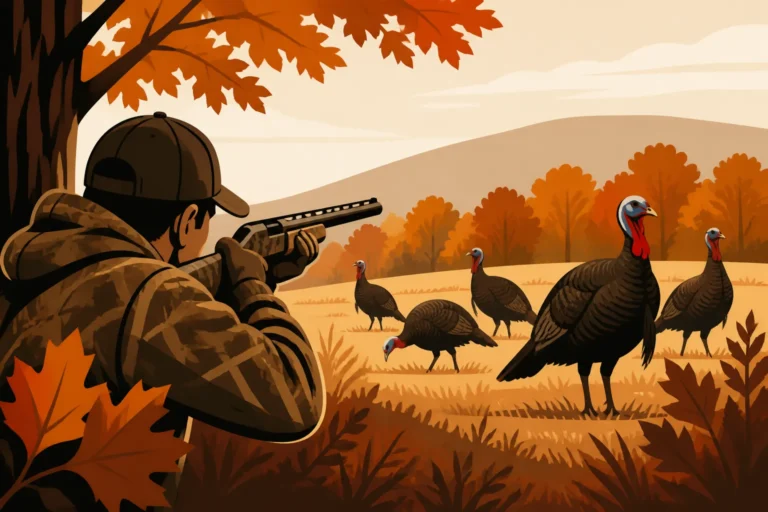
If he pitches down and heads directly away from you, you might need to adjust your calling to pull him back. Sometimes, silence is best, letting curiosity work in your favor. Other times, a few soft yelps or clucks, or even aggressive cutting, might be needed to challenge him or make him think a hen is getting away. Remember that turkeys have incredible eyesight, so minimize movement. If he's focused on the decoy and heading your way, stay rock-still, gun shouldered, and prepare for the shot. Don't wait too long; once he's in range and presenting a good shot, take it. The difference between a successful hunt and a missed opportunity often comes down to making the shot count when it matters most.
Dealing with Common Roost Hunting Challenges
Even the best-laid plans can go awry, and turkey hunting is full of curveballs. Understanding how to react when things don’t go perfectly can save a hunt from becoming a bust.
The Hang-Up and What to Do
Ah, the classic hang-up! You’ve done everything right – perfect setup, soft calling, he’s gobbled his head off on the roost, flies down, and then… he stops. He struts, he gobbles, he displays for what feels like an eternity, but he just won’t close that last 50-70 yards. This is maddening, and it happens to the best of us. Often, he’s waiting for the "hen" (you) to come to him, or he might have a real hen nearby that you can't see, keeping him occupied.
When a gobbler hangs up, resist the urge to call aggressively right away. Sometimes, going silent for 10-15 minutes can make him nervous enough to come looking. If that doesn't work, try changing up your call type or cadence. A sharp series of cuts might challenge him. A few soft purrs and clucks might appeal to his softer side. If he’s in an area where you can safely and subtly move, a slight repositioning to break his line of sight or to get closer can sometimes work. If he's completely stalled, sometimes a "run-and-gun" approach, slowly moving in his direction and calling, might be the only option. Just remember, patience is key. A hung-up bird is still a huntable bird. For advanced tactics on Run-and-Gun Turkey Tactics on Public Land, you might find some crossover strategies useful.
Handling Multiple Gobblers and Hen Interference
Hunting a single gobbler is one thing, but when you have two or three fired-up longbeards, or worse, a whole flock of hens with them, things get complicated fast. Multiple gobblers can be a blessing and a curse. They might compete fiercely, making them more receptive to calling, but they also have more eyes and ears to bust you. With multiple birds, maintain a lower calling volume, aiming to sound like a single hen. If they're coming in, focus on the lead bird or the one offering the best shot, as the others will likely follow.
Hen interference is perhaps the most common and frustrating challenge. A gobbler will often fly down and immediately join a flock of real hens, and once he’s with them, he’s often impossible to pull away. The hens will dictate his movements. If you can see the hens, try to get in front of them or off to the side, calling subtly to the gobbler. Sometimes, calling to the hens can work; if they come to you, the gobbler will often follow. If all else fails, and he’s clearly committed to the real hens, you might have to reposition. Try to get ahead of the flock, predict their travel route, and set up in their path. It takes quick thinking and adaptability.
After the Shot: Recovery and Reflection
The shot is only part of the hunt. Successfully recovering your bird and handling it properly not only respects the animal but also ensures you have quality meat for the table.
Tracking and Retrieval Strategies
So, you’ve pulled the trigger, and your gobbler is down. What next? Resist the immediate urge to sprint to him. Turkeys, especially with a solid head or neck shot, often flop around a bit. Give him a moment to expire completely. Watch for a specific spot where he went down or where he’s last visible. Mark that spot mentally or with a landmark. If he runs off, this landmark will be your starting point for tracking.
If he’s running, aim to give him at least 15-20 minutes before you start tracking, unless you saw him fall stone dead. This allows him to stiffen up or expire without being pushed further. Look for feathers, disturbed leaves, or blood. Turkeys don't bleed as profusely as deer, so tracking can be tougher. Move slowly and methodically. If you lose the trail, circle outwards from the last known sign. Having a hunting buddy can be invaluable here, with one person tracking and the other watching ahead. If you're on public land, remember to keep safety in mind and be aware of other hunters, especially if you're out looking for a bird. Once you recover your bird, take a moment to appreciate the successful end to your hunt. It's truly a rewarding experience.
Respecting the Resource and the Land
Harvesting a wild turkey is a privilege, and with that comes responsibility. Once you've recovered your gobbler, make sure you properly Kentucky Turkey Checking Requirements. In Kentucky, you'll need to telecheck your bird within a specific timeframe, usually by midnight on the day of harvest. This data is crucial for wildlife management and helps the Kentucky Department of Fish and Wildlife Resources (KDFWR) keep track of population trends and harvest numbers, which directly impacts future season regulations and opportunities.
Beyond the legal requirements, take pride in field dressing your bird quickly and cleanly. This ensures the best possible meat quality. Remove the entrails, and if it's a warm day, consider breasting out the bird in the field to allow for faster cooling. Always leave the spurs and a patch of feathers attached to the leg for identification during transport. Pack out all your trash, shell casings, and anything else you brought in. Leave the woods cleaner than you found them. This respect for the game and the land ensures that future generations of hunters can enjoy the same incredible experiences we do. Consider bringing along a new hunter on a The Kentucky Youth Turkey Weekend Dates to share this tradition. It's about preserving not just the wildlife, but the hunting heritage itself.
| Roost Hunting Phase | Key Actions | Common Challenges | Tips for Success |
|---|---|---|---|
| Scouting (Pre-Season) | Map analysis, listen for fly-up/fly-down, find physical sign (droppings, feathers) | Turkeys change roosts, sign is old, misinterpreting terrain | Use GoHunt/OnX for elevation/cover, confirm sign within week of hunt |
| Pre-Dawn Approach | Silent entry, pick quiet route, get to setup early, minimal light | Spooking birds with noise/light, misjudging distance to roost | Plan route day before, red/green headlamp, give extra time, move slowly |
| On the Roost Calling | Soft tree yelps, clucks, purrs, listen for response, minimal volume | Over-calling, spooking bird, bird with hens | Mimic waking hen, respond to gobbler's interest, wait for fly-down |
| Fly-Down & Setup | Decoy placement 20-30yds out, gun up, ready for shot | Gobbler pitches wrong way, hangs up, sees hunter movement | Place decoy for natural approach, identify shooting lanes, stay still |
| Post-Shot | Mark fall location, track thoroughly if needed, telecheck | Losing bird, improper field dressing, not reporting harvest | Wait to recover, track methodically, clean bird promptly, telecheck same day |
Disclaimer
Please remember that hunting regulations and seasons can change. Always consult the most current Kentucky Department of Fish and Wildlife Resources (KDFWR) regulations before heading into the field. This guide provides general information and best practices, but it is the hunter's responsibility to know and follow all applicable laws.