Run-and-Gun Turkey Tactics on Public Land
Hunting turkeys on public land in Kentucky can feel like an impossible puzzle. You trek for miles, trying to locate a gobbler, only to find the spot you scouted has other hunters, or the birds have gone completely silent. The sheer size and varied terrain, combined with hunting pressure, often leave hunters feeling frustrated and resorting to static sits that yield little success. This comprehensive guide is designed to equip you with the knowledge and tactics to successfully implement a "run-and-gun" strategy, helping you actively pursue and engage those elusive Kentucky longbeards on public ground.
Understanding the "Run-and-Gun" Philosophy for Kentucky Gobblers
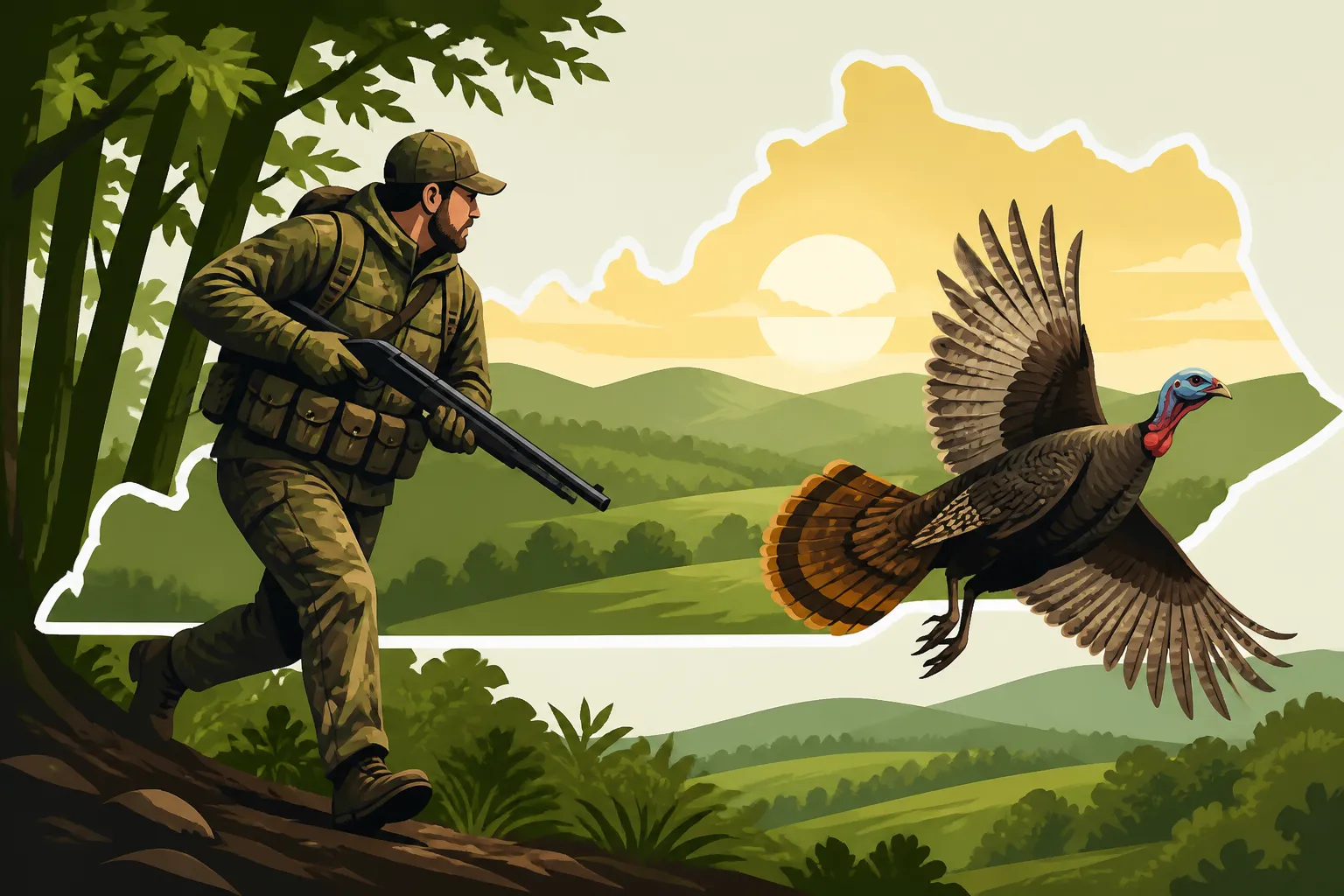
The "run-and-gun" approach isn't just about walking around and hoping for the best; it's a strategic, proactive method tailored for covering ground and aggressively locating birds. It's born out of the necessity to adapt to wide-ranging, sometimes pressured, turkey populations found on Kentucky's public lands. Instead of waiting for a bird to come to you, you're taking the fight to them, constantly moving, calling, and listening until you pinpoint a responsive gobbler.
Why Aggressive Scouting is Your Best Friend
Before you can effectively run-and-gun, you need to understand the lay of the land, even if it's just from an aerial map. Aggressive pre-season scouting, whether boots-on-the-ground or through digital tools like GoHunt, is absolutely critical. You're looking for prime turkey habitat: mature timber for roosting, open hardwood ridges, fields or clear-cuts for strutting, and water sources. Identifying potential roost sites, such as tall oaks or pines along a ridge, gives you a starting point. Knowing the general areas where turkeys frequent will dramatically increase your odds of encountering them once the season starts.
Even without pre-season boots-on-the-ground scouting, you can use apps and maps to identify topography that would appeal to turkeys. Look for logging roads, old clear-cuts, mature timber stands, and creek bottoms. These features often dictate how turkeys move and where they spend their time. The more familiar you are with these potential hot spots, the more efficiently you can run-and-gun when it's time to hunt.
The Mindset: Covering Ground and Adapting
The core of run-and-gun is the willingness to cover significant ground and adapt your strategy on the fly. You're not just taking a casual stroll; you're moving with a purpose, stopping frequently to call, listen, and glass. This means you need to be prepared for varied terrain, from the steep hollows of Eastern Kentucky to the flatter, more expansive woodlots of the western parts of the state. It's an active hunt where your ears and eyes are constantly scanning for any sign of a gobbler.
Flexibility is paramount. If you call from a promising ridge and get no response, don't dwell on it. Pack up quickly and move to the next likely spot. This could mean dropping into a creek bottom to try to call up a bird from another ridge, or circling around a known strutting zone. The birds on public land are often well-educated, so presenting a fresh setup from a new angle can make all the difference. This active pursuit is what makes the method so thrilling and, ultimately, effective.
When to Commit to a Stationary Setup
While run-and-gun emphasizes mobility, there are times when committing to a stationary setup is the smart move. Once you've successfully located a gobbler – perhaps he's hammering on the roost, or you've struck him with a shock gobble from a distant ridge – that's your cue to slow down. If you get a definitive gobble, you need to quickly assess the terrain, find a suitable setup with good cover and clear lines of sight, and get ready for a potentially long waiting game.
The key is not to over-call. After you've identified the bird's general location, make a few soft calls, then go silent. Let him work himself into a frenzy. Often, less is more, especially with pressured birds. If he's hung up or moving away, then you might consider making a subtle move to reposition. But once you have his attention and he's heading your way, patient silence from a well-chosen spot can seal the deal. Remember, a successful run-and-gun often ends with a patient, stationary sit.
Essential Gear for the Mobile Turkey Hunter in Kentucky
Being effective at run-and-gun means being efficient with your gear. Every item you carry needs to serve a purpose and be easy to access. You'll be covering miles, sometimes quickly, so heavy, cumbersome equipment will only slow you down and wear you out. A minimalist, yet functional, setup is key to success in the Kentucky woods.
Lightweight Shotguns and Versatile Chokes
Your shotgun is your primary tool, and for run-and-gun, lighter is almost always better. A heavy magnum shotgun might feel great on a bench rest, but after three miles of walking up and down ridges, it becomes a burden. Look for models designed for field use, often with shorter barrels, that keep the weight down. Gauge choice is personal, but 12-gauge and 20-gauge remain popular for their versatility and stopping power. Modern ammunition technology means even a 20-gauge can deliver devastating patterns at respectable distances.
The choke tube is equally important. A versatile choke, typically a tight full or extra-full, will help you maintain dense patterns at various distances, from close-range ambushes to slightly longer shots across clearings. Some hunters prefer specialized turkey chokes that throw extremely tight patterns, but ensure you pattern your chosen load and choke combination extensively before hitting the woods. Knowing your effective range is crucial for ethical and successful hunting. Consider experimenting with different brands of shells, like Federal Premium or Winchester, to see what patterns best in your shotgun. For more details on choosing your firearm, see our guide on Turkey Shotguns and Chokes.
Call Selection for Quick Reactions
For the run-and-gun hunter, having a diverse but compact array of calls is vital. You need calls that are quick to deploy, reliable, and capable of producing various turkey sounds. Mouth calls (diaphragm calls) are arguably the king of run-and-gun because they allow for hands-free calling, enabling you to keep your gun shouldered and ready. Carry a few different reeds – single, double, triple – to produce various pitches and tones.
In addition to mouth calls, a small, easy-to-use friction call, like a slate or pot call, can be invaluable for soft purrs, clucks, and yelps that might entice a hung-up gobbler. A small striker that fits easily in a vest pocket is also a plus. Lastly, don't forget a good locator call – an owl hooter, crow call, or coyote howler. These are critical for getting shock gobblers to reveal their positions without necessarily spooking them. Having a range of options means you're prepared for whatever mood the turkeys are in. You can find out more about call types in Turkey Calls Worth Carrying in Kentucky.
Minimalist Vest and Comfort Considerations
Your turkey vest isn't just for carrying calls and shells; it's your mobile command center. For run-and-gun, think minimalist. You need pockets for your calls, extra shells, water, a small snack, and possibly a headlamp if you plan on being out at first light or staying late. Many vests now feature built-in seat cushions, which are fantastic for quick setups against a tree, saving you from carrying a separate cushion. Brands like Primos and Knight & Hale make vests with thoughtful layouts for mobile hunters.
Comfort goes beyond the vest. Your footwear is paramount. Invest in comfortable, broken-in boots that offer good ankle support and are waterproof. You'll be crossing creeks, navigating muddy patches, and climbing steep slopes. Layered clothing is also essential for Kentucky's unpredictable spring weather. You might start the morning in frosty temperatures, only for it to be quite warm by midday. Being able to shed or add layers quickly ensures you stay comfortable, focused, and ready to move. Don't forget bug spray, especially as the season progresses.
Reading Public Land Terrain for Turkey Movement
Understanding how turkeys use the landscape is paramount to effective run-and-gun tactics. Kentucky's diverse public lands offer a mix of terrain, from dense timber and steep ridges to more open, rolling hills and agricultural interfaces. Learning to "read" these environments for turkey activity will dramatically improve your chances of intercepting a gobbler.
Identifying Roosting and Strutting Areas
Turkeys are creatures of habit, and their daily routines often revolve around specific types of habitat. Identifying potential roosting sites is often your starting point for early morning hunts. Look for the tallest trees, particularly mature oaks or pines, usually along a ridge top or overlooking a creek bottom. These give birds a commanding view and a sense of security. Using a locator call at first light from a high point can help you pinpoint exactly where Kentucky gobblers roost.
Strutting areas are equally important. Turkeys, especially gobblers, love open areas where they can display for hens and scan for predators. This could be a logging road, a clear-cut, a mature oak flat with sparse understory, or even the edge of a field adjacent to public land. These are the places where you'll want to focus your mid-morning and mid-day searching. Look for visual cues like tracks, droppings, and drag marks from strutting birds. Knowing these key locations allows you to predict their movements and position yourself accordingly.
Utilizing Ridges, Creek Bottoms, and Funnels
Kentucky's topography often features a series of ridges, hollows, and creek bottoms, particularly in areas like Daniel Boone National Forest. Turkeys frequently travel along these natural corridors. Ridge tops offer easy walking and good visibility, making them prime travel routes. When you get a gobble from a ridge, try to get on the same elevation as the bird. If you're below him, he'll often hang up, expecting the hen to come to him.
Creek bottoms and hollows, while often dense with vegetation, can act as natural funnels, directing turkey movement. They also provide excellent cover for you to make silent moves between ridges. Look for subtle changes in elevation, saddles, or benches along a ridge. These are natural congregation points for deer and turkeys alike. Using a mapping app like GoHunt can help you quickly identify these terrain features and plan your movement to intercept birds. Remember, contour lines on a map are your best friend for understanding the terrain without physically being there.
Interpreting Sign: Droppings, Feathers, and Tracks
While scouting with your feet or a mapping app is key, always keep an eye out for fresh turkey sign as you move. Droppings are a dead giveaway; gobbler droppings are typically J-shaped, while hen droppings are more coiled. The size and freshness can tell you a lot about the bird that left them and how recently it was there. Fresh, damp droppings mean a bird was there very recently.
Feathers, especially primary wing feathers, indicate a roost site or an area where a bird has been dusting. Strut marks – the distinct drag of wingtips in soft dirt – are unmistakable signs that a gobbler is using that specific area for displaying. Tracks, though sometimes harder to distinguish from other fowl, will also tell you if birds are in the vicinity and which direction they're heading. The more fresh sign you find, the more confident you can be in working that area hard with your calls.
Executing the Run-and-Gun Approach: Calling and Movement
Once you're in the woods, having done your homework, the real fun of run-and-gun begins. It's a dynamic dance between calling, listening, and moving strategically to get into position for a shot. This phase requires patience, stealth, and a keen understanding of turkey behavior.
Aggressive Locating Calls and Soft Follow-Ups
The primary goal of your initial calls in a run-and-gun scenario is to locate a gobbler. Don't be shy! Let out a loud, aggressive series of yelps, cutts, or a locator call like an owl hooter or crow call. You want to shock a gobble out of a bird that might not be actively looking for a hen yet. Once you get a response, the game changes.
After a gobble, immediately tone down your calling. Switch to softer, more seductive yelps, clucks, and purrs using a mouth call or a slate. The goal now is to sound like a lonesome hen, not a territorial challenge. Often, just one or two soft calls after the initial gobble are enough to peak his interest. Then, go silent and listen intently. Let the gobbler do the work. If he's still gobbling and closing the distance, resist the urge to over-call. If he hangs up or seems to lose interest, that's when you might offer another soft series, or consider a subtle repositioning.
Strategic Movement Between Setups
Moving effectively is as important as calling. When you're not getting a response, you need to quickly and quietly move to the next promising spot. Use terrain features like creek beds, logging roads, or the backside of ridges to mask your movement. Avoid walking over noisy leaf litter if possible. Your pace should be purposeful but stealthy – quick enough to cover ground, but slow enough to be mindful of your surroundings.
As you move, periodically stop, listen for natural turkey sounds, and try a few more locator calls. Think about what a gobbler would be doing at that specific time of day and adjust your movement accordingly. Early mornings might mean moving quietly toward roost sites. Mid-day might involve walking logging roads or clear-cut edges. If you're moving into an area where you suspect a bird might be, drop your pace to a crawl, scanning ahead for any movement. Remember, the birds on public land are adept at spotting movement, so break up your silhouette and use cover.
Decoy Strategies for the Mobile Hunter
Decoys can be incredibly effective, but for run-and-gun, you need to be selective. Carrying a full-strut tom decoy across miles of rough terrain is impractical. Instead, consider a lightweight, foldable hen decoy, or even just a fan decoy. These can be quickly deployed when you get a gobbler to commit and need to give him something visual to focus on. A single hen decoy, especially if it's a realistic one like those from Avian-X or Mojo, can be enough to draw in a curious gobbler.
When setting up a decoy, always place it where the gobbler will see it as he approaches, ideally 20-30 yards from your position. This puts him in range when he focuses on the decoy. Remember that for Decoy Placement for Pressured Kentucky Birds, realism and placement are key. If you're using a fan, practice your fanning technique to ensure it looks natural and enticing. However, be aware of other hunters on public land when fanning or using decoys, and always prioritize safety.
Overcoming Common Public Land Challenges
Public land hunting, particularly for turkeys, comes with its own set of hurdles. From dealing with other hunters to adapting to the capriciousness of the weather, success often hinges on your ability to anticipate and overcome these challenges.
Dealing with Hunting Pressure and Spooky Birds
Let's be real, public land means other hunters. You'll encounter them, especially on Kentucky Spring Turkey Opening Day. This pressure makes turkeys wary and often "call shy." The run-and-gun strategy can actually help with this, as it allows you to cover more ground and get away from the crowds that tend to stick near parking areas and main trails. Be prepared to walk further than most, venturing into harder-to-reach hollows or thicker timber. Using mapping tools like GoHunt to scout remote access points can give you an edge.
When you encounter pressured birds, adjust your calling. Instead of aggressive gobbler yelps, try soft clucks, purrs, and subtle tree yelps. Sometimes, complete silence after an initial gobble is the most effective call. If a bird is gobbling at every call but not coming in, he's likely been called to heavily. It's time to either move quickly to another location or try a drastic tactic, like circling him and calling from a different angle, mimicking a hen walking away. For deeper insights, explore Hunting Pressure on Kentucky Public Land.
Adapting to Weather Changes and Off-Season Lulls
Kentucky spring weather is notorious for being unpredictable. One morning can be clear and calm, perfect for hearing gobblers, and the next can bring heavy rain and strong winds. Rain makes it incredibly difficult to hear distant gobblers, and high winds can make them reluctant to fly down or move in open areas. During these conditions, focus on areas with natural windbreaks, such as leeward sides of ridges, or bottomlands where the wind might be less intense.
Turkeys can also go through "lulls" when they seem less responsive, especially When Kentucky Gobblers Go Quiet in May as breeding activity wanes. This is when run-and-gun truly shines. Instead of waiting for them to get chatty, you're actively searching. Cover more ground, vary your calls, and focus on those prime strutting and feeding areas. During these quiet periods, finding fresh sign becomes even more critical, guiding your movements even without vocalizations.
Ethical Considerations and Safety on Public Ground
Safety should always be your top priority, especially when run-and-gun hunting on public land. Always wear blaze orange when legally required, and even when it's not, consider carrying a blaze orange vest to put on when moving between setups, especially if other hunters are likely to be in the area. Before you set up, always make absolutely sure of your target and what's beyond it. Never assume a sound is a turkey without visual confirmation.
It's also crucial to be respectful of other hunters. If you hear another hunter working a bird, move to a different area. Public land is for everyone, and ethical hunting practices ensure enjoyable experiences for all. Be mindful of property lines, especially when hunting near the edges of public lands. Use your mapping app to verify you're on legal hunting ground. If you're accessing a Wildlife Management Area, remember that a Kentucky WMA Permit Requirement might be in effect.
Post-Shot Procedures and Game Care
You've put in the miles, endured the elements, outwitted a Kentucky gobbler, and made a clean shot. Now, the work isn't quite over. Proper post-shot procedures are crucial for recovering your bird and ensuring the meat is handled correctly.
Tracking and Recovery on Uneven Terrain
Even with a seemingly perfect shot, a wild turkey can sometimes run or fly a short distance. After the shot, keep your eyes on the bird's last known location. Mark it mentally or physically. Give the bird a few minutes, then approach cautiously, gun at the ready. Turkeys can sometimes flop around even when mortally hit, so ensure the bird is expired before handling it.
If the bird runs, tracking it on Kentucky's uneven, leaf-covered terrain can be a challenge. Look for disturbed leaves, dropped feathers, or blood trails. Pay close attention to the direction the bird was heading. Turkeys often run downhill or into thick cover. If you lose the trail, expand your search in concentric circles from the last confirmed sign. Having a hunting partner can be invaluable for grid searching.
Field Dressing and Transporting Your Bird
Once you've recovered your turkey, the next step is to field dress it to cool the meat, especially on a warm spring day. While not strictly necessary for turkeys, removing the entrails helps cool the carcass quickly, preserving meat quality. If you plan to mount the bird, be careful when dressing it to avoid damaging the cape, wings, or tail fan. Many hunters simply remove the breast meat and legs in the field, leaving the rest. This significantly reduces the weight you have to carry out, making the hike back to the truck much easier.
After field dressing, place the turkey in a game bag to keep it clean and protected from insects during transport. If you're far from your vehicle, a lightweight game bag is essential. Once at your vehicle, get the bird on ice as quickly as possible, especially if you plan to process it later or take it to a taxidermist. Proper handling ensures your hard-earned gobbler provides delicious meals and lasting memories.
Disclaimer
The information provided in this guide is for informational purposes only and is not a substitute for official hunting regulations. Always consult the most current Kentucky Department of Fish and Wildlife Resources regulations before hunting. Hunting is an inherently dangerous activity, and safety should always be your primary concern.