Using a Ground Blind on Kentucky Public Land
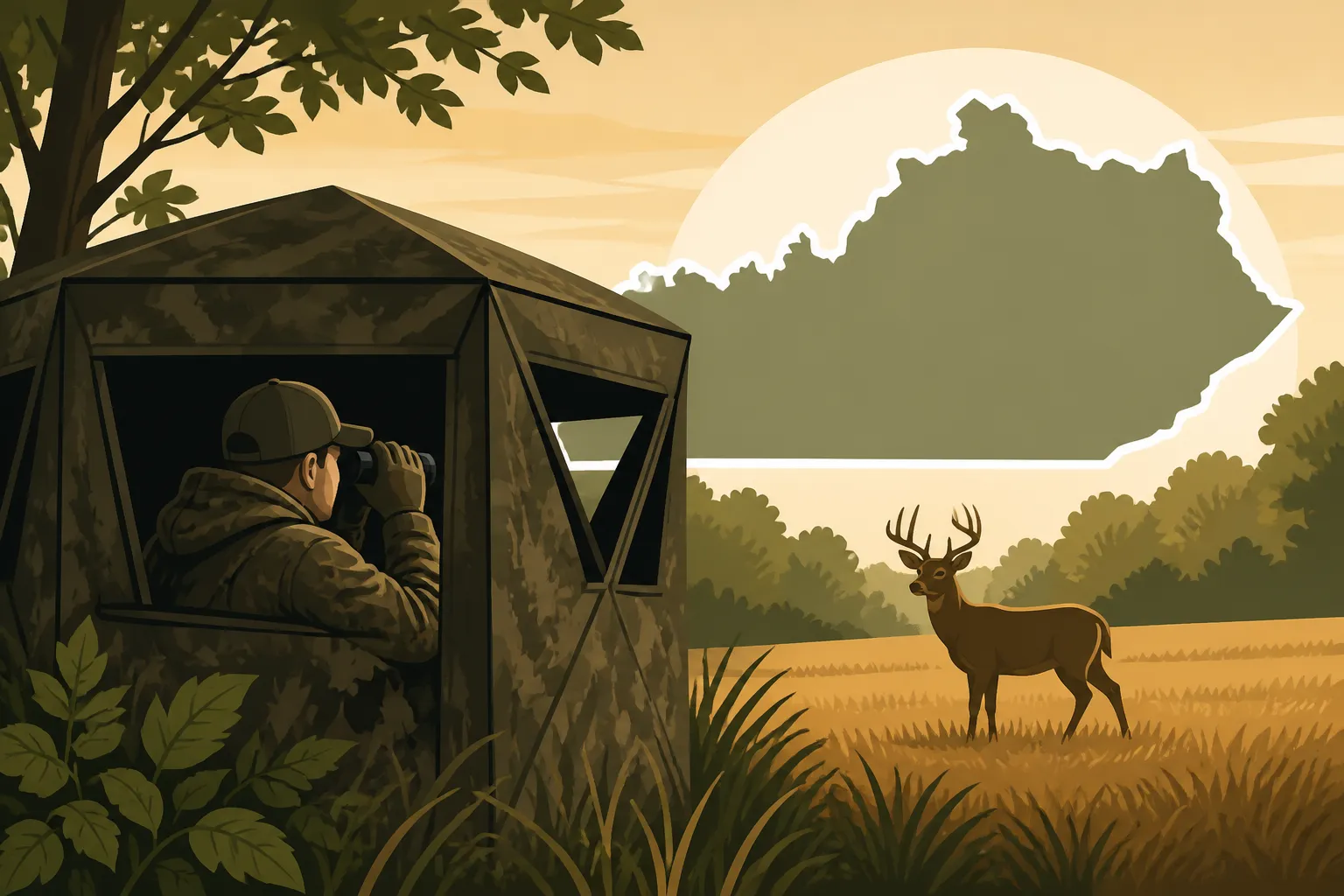
Hunting Kentucky’s public lands can be a real head-scratcher when you’re trying to find adequate cover. Sometimes, the perfect pinch point or feeding area just doesn’t have a tree suitable for a stand, or maybe you’re hunting with a youth or a less mobile hunter. That’s where a well-placed ground blind can truly shine, offering concealment, comfort, and a stable shooting platform, and this guide will walk you through making the most of them.
Why Choose a Ground Blind for Kentucky Public Land?
Let's be honest, the thought of lugging a big ground blind into the rugged terrain of Daniel Boone National Forest or setting it up on a creek bottom at Sloughs WMA can feel daunting. Many hunters instantly think "treestand," and for good reason – they offer a vantage point. But overlooking ground blinds means missing out on a serious advantage, especially when facing common challenges on Kentucky's public lands.
Overcoming Treestand Limitations
You know the drill: you’ve spent hours scouting, found that perfect oak flat dropping acorns, or a thick transition line where deer are constantly moving. You pull out your portable stand, only to realize every tree in the immediate vicinity is either too small, too limby, or just doesn’t offer the right shooting lanes. It's incredibly frustrating to find prime sign and then have to compromise on your setup because of a lack of suitable trees. This is where ground blinds come to the rescue. They don't need a perfect tree; they just need a spot where you can blend in. Think about those areas near a cut cornfield in Western Kentucky where mature hardwoods are sparse, or a creek bottom choked with briars where a treestand would be impossible to get high enough to see over the canopy. A ground blind can be deployed quickly and effectively in these situations, giving you a legitimate hunting spot you might otherwise walk right past.
Enhanced Comfort and Concealment
Let’s talk comfort, especially when you’re committed to an all-day sit during the rut or trying to endure a chilly late-season hunt. Treestands, while great, often leave you exposed to the elements. Wind cuts through you, rain can make a long sit miserable, and snow can quickly accumulate. A good hub-style ground blind, on the other hand, offers a surprising amount of protection from wind, rain, and even light snow, which can be invaluable when you're trying to stay warm and alert. Plus, the complete visual concealment a blind provides is unmatched. You can shift positions, stretch, eat a snack, or even subtly check your phone without deer spotting your movement. This makes it an excellent choice for introducing new hunters, especially kids, who might fidget or struggle with the stillness required in a treestand. It also helps immensely when you're dealing with Hunting Pressure on Kentucky Public Land, allowing you to make small adjustments that other hunters might not have the luxury of.
Versatility and Stability
The versatility of ground blinds extends beyond just treeless areas. They are fantastic for hunting in flat, open country like the reclaimed mine lands of Peabody WMA or along the edges of larger fields where vertical cover is minimal. They also offer a stable platform, which is a huge benefit for rifle hunters taking longer shots or for bowhunters who might struggle with shot angles from an elevated position. For hunters who prefer crossbows, a ground blind can provide a comfortable and steady rest, eliminating the need to worry about awkward leaning shots. This stability is particularly helpful when you’re hunting with a firearm during the Kentucky Statewide Modern Gun Season where quick, ethical shots are paramount.
Choosing and Setting Up Your Blind for Kentucky Public Land
Okay, so you're sold on the idea. Now, what kind of blind should you be looking for, and how do you actually make it work in the wild, often unforgiving, terrain of Kentucky's public lands? It's not as simple as popping it up in your backyard; there's a real art to effective deployment.
Selecting the Right Ground Blind
Not all ground blinds are created equal, and what works for a pristine food plot on private land might not hold up to the rigors of Kentucky public land. You need something durable, portable, and with a good camouflage pattern that breaks up its outline effectively.
| Feature / Type | Pop-Up Blind (Quick Deploy) | Hub-Style Blind (Most Common) | Natural Blind (DIY) |
|---|---|---|---|
| Portability | Excellent, very lightweight, compact when folded | Good, heavier than pop-ups, still manageable | Varies, requires no hauling of gear, just tools |
| Durability | Fair to Good, lighter fabric, can be less weather-resistant | Excellent, robust frame, thicker fabric, more weather-proof | Excellent, uses natural, sturdy materials |
| Setup Time | Very Fast (seconds) | Fast (minutes) | Slow to Moderate (depends on available materials) |
| Concealment | Good, but typically needs brushing in | Excellent, good stock camo, often needs brushing in | Superior, perfectly blends with surroundings |
| Weather Protection | Fair, mainly blocks wind and light rain | Excellent, full enclosure, good for rain/snow | Fair, can be improved with a tarp for rain |
| Shooting Windows | Limited, often pre-cut, can be noisy | Versatile, mesh options, silent zippers often available | Fully customizable, quiet openings |
| Cost | Low to Moderate | Moderate to High | Minimal (just time and maybe a saw/pruners) |
| Kentucky Public Land Fit | Good for mobile hunts, short sits, scouting. | Best overall for comfort, concealment, longer sits. | Ideal for ultimate blend-in, but time consuming. |
For public land, a good quality hub-style blind like those from Barronett or Primos often hits the sweet spot. Look for blinds with a low-sheen finish on the fabric to prevent glare, and a camo pattern that mimics the deciduous forests and undergrowth common in Kentucky. Think about the terrain you’ll be hunting. If you're often in thick cedar breaks or pine plantations in Eastern Kentucky, a darker, more dense pattern might be better. If you’re tucked into a fencerow or on a field edge in Western Kentucky, a pattern with more browns and tans to mimic dormant grasses could be ideal. Don’t forget to consider how you'll carry it – a comfortable shoulder strap or backpack-style carrying case is a must when you’re hiking into remote spots. Tools like GoHunt can even help you visualize terrain features to decide if a blind makes sense for a given area before you ever step foot on the ground.
Strategic Placement for Success
Placing your blind isn't just about hiding it; it's about maximizing your shot opportunities while minimizing detection. When Scouting Kentucky Public Land Before Season, pay close attention to natural funnels, pinch points, and transition zones where deer naturally travel. These are prime locations. Look for existing cover – a thicket, a stand of cedars, a brush pile, or even a deep ditch. Don't just plop your blind in the middle of an open area; tuck it into the natural contours of the land.
Consider the sun’s position throughout the day. You don't want the sun shining directly into your shooting windows, backlighting you and making you easily visible to approaching deer. Orient the blind so the rising or setting sun is to your side or, ideally, slightly behind you.
Also, think about your entry and exit routes. Can you get to and from your blind without spooking deer? On public land, this often means utilizing terrain features like creek beds, ridge lines, or thick timber to mask your approach. A great tactic is to find a Hunting a Funnel Between Two Hollows and tuck your blind just off to the side, allowing you to intercept deer as they move through the natural bottleneck.
Blending In and Staying Hidden
Having the blind set up in the right spot is only half the battle. You absolutely have to take extra steps to make it truly disappear into the landscape, and just as importantly, control your scent. On pressured public land, deer are incredibly wary, and any unnatural sight or smell will send them packing.
Brushing In Your Blind
This is perhaps the most critical step for public land success. A brand-new, brightly camouflaged blind sticks out like a sore thumb. You need to break up its perfect geometric shape and make it look like a natural part of the environment. Start by using local vegetation. Cut branches, deadfall, tall grasses, and briars – whatever is available nearby – and strategically place them around the blind. Don’t overdo it, but make sure the corners and edges are softened. If you're on a field edge, pile up old corn stalks or broom sedge. In the woods, use cedar branches, fallen limbs, and leaf litter. The goal is to make it look like just another piece of natural debris. Remember to leave clear shooting lanes, but make them just big enough for your shot. The less open your windows, the better. This concept is so important that there's even a specific guide on Brushing In a Blind on a Field Edge.
It's often a good idea to set your blind a few days or even a week before you plan to hunt it, if regulations allow and if you can secure it well. This gives wildlife a chance to get used to its presence, and it gives you time for a proper brush-in without rushing. If you're limited to setting up right before a hunt, make sure you dedicate enough time to this crucial step.
Scent Control and Patient Waiting
Just because you're inside a fabric blind doesn't mean you're invisible to a deer's nose. Scent control is still paramount, especially on public land where deer are educated. Wear clean hunting clothes, spray down with scent-eliminating sprays, and use scent-free detergents. Consider using an ozone generator in your blind, or at least strategically placing scent wafers or cover scents that mimic the local flora, like pine or cedar.
Pay close attention to Wind and Thermals on a Kentucky Ridge. Even in a blind, your scent will be carried by the air currents. Always try to set up downwind of where you expect deer to approach or travel. Thermals, especially in hilly terrain like Eastern Kentucky, can be tricky, often rising in the morning and falling in the evening. Understanding these patterns and adjusting your setup or hunt times accordingly can make or break your success.
Finally, patience. A ground blind is fantastic for long sits. Once you’re in, stay put. Minimize movement, speak quietly if you have a hunting partner, and don’t peek out of the windows constantly. A deer’s eyes are incredible at picking up small movements. Trust your setup and be ready when the opportunity arises.
Navigating Rules and Regulations for Public Land Blinds
Using a ground blind on Kentucky public land isn't a free-for-all. There are specific rules and general best practices you need to follow to ensure you're hunting legally and ethically, and to maintain a positive relationship with fellow hunters and the Kentucky Department of Fish and Wildlife Resources (KDFWR).
Kentucky WMA-Specific Rules
Many of Kentucky's Wildlife Management Areas (WMAs) have specific rules regarding ground blinds. These can vary, so it's absolutely essential to check the regulations for the specific WMA you plan to hunt before you head out. Some common regulations might include:
- Temporary Placement: Blinds often must be removed daily or within a certain timeframe (e.g., 24-48 hours) after your hunt. Leaving them out indefinitely can be considered littering or abandonment, and you risk having them confiscated or damaged.
- Permit Requirements: A few WMAs might require a special permit to place a blind, though this is less common for portable ground blinds compared to permanent structures.
- Proximity to Roads/Boundaries: There might be rules dictating how close you can set up a blind to public roads, designated trails, or property boundaries.
- Identification: Some WMAs require you to clearly mark your blind with your KDFWR ID number or name and address.
Always refer to the KDFWR Hunting and Trapping Guide and specific WMA rules on their website. The Kentucky Hunt Fish App is an invaluable tool for this, often providing WMA-specific regulations and maps. Remember that regulations can change, so a quick check before each season is a good habit. There's even a specific resource about Ground Blind Rules on Kentucky WMAs that goes into further detail.
Public Land Etiquette and Safety
Beyond the written rules, there's an unwritten code of ethics for using ground blinds on public land.
- Respect Other Hunters: Public land is for everyone. If you encounter another hunter near your desired spot, respect their presence. Avoid setting up too close, and always be polite. A quick "Good morning, just letting you know I'm set up over here" can go a long way in preventing conflicts.
- Blaze Orange/Pink: If you're hunting during a firearms season, remember Kentucky's blaze orange requirements. Even if you're inside a blind, you'll still need to wear sufficient Kentucky Blaze Orange Requirements when entering or exiting, or if you step outside your blind. This is a crucial safety measure.
- Leave No Trace: Pack out everything you pack in. This includes all trash, spent shell casings, and any flagging tape you used to mark your trail. If you cut branches for brushing in, try to keep it minimal and natural-looking. The goal is to leave the area looking exactly as you found it.
- Secure Your Blind: If you are permitted to leave your blind out overnight or for a few days, make sure it’s securely staked down. Kentucky weather, particularly sudden thunderstorms or strong winds, can turn an unsecured blind into a tumbleweed, potentially damaging it or creating litter.
- Hunting Hours: Be mindful of Kentucky Public Land Hunting Hours. This typically means you can hunt from one-half hour before sunrise until one-half hour after sunset. Ensure your entry and exit from the blind fall within these legal parameters, or use a headlamp to safely navigate in the dark.
Using a ground blind on Kentucky public land can open up a whole new world of hunting opportunities. With careful planning, strategic placement, thorough concealment, and adherence to regulations and etiquette, you can effectively pursue whitetails, turkeys, or even small game from the comfort and cover of your blind. Just remember to use tools like Packs for a Day on Public Land to carry your gear efficiently, and you’ll be set for success.
Disclaimer
The information provided in this guide is for general informational purposes only and does not constitute legal advice. Hunting regulations in Kentucky can change, and specific rules may vary by location (e.g., WMA, National Forest, private land). It is the hunter's responsibility to consult the most current Kentucky Department of Fish and Wildlife Resources (KDFWR) regulations and local ordinances before engaging in any hunting activities. Always prioritize safety and ethical hunting practices.