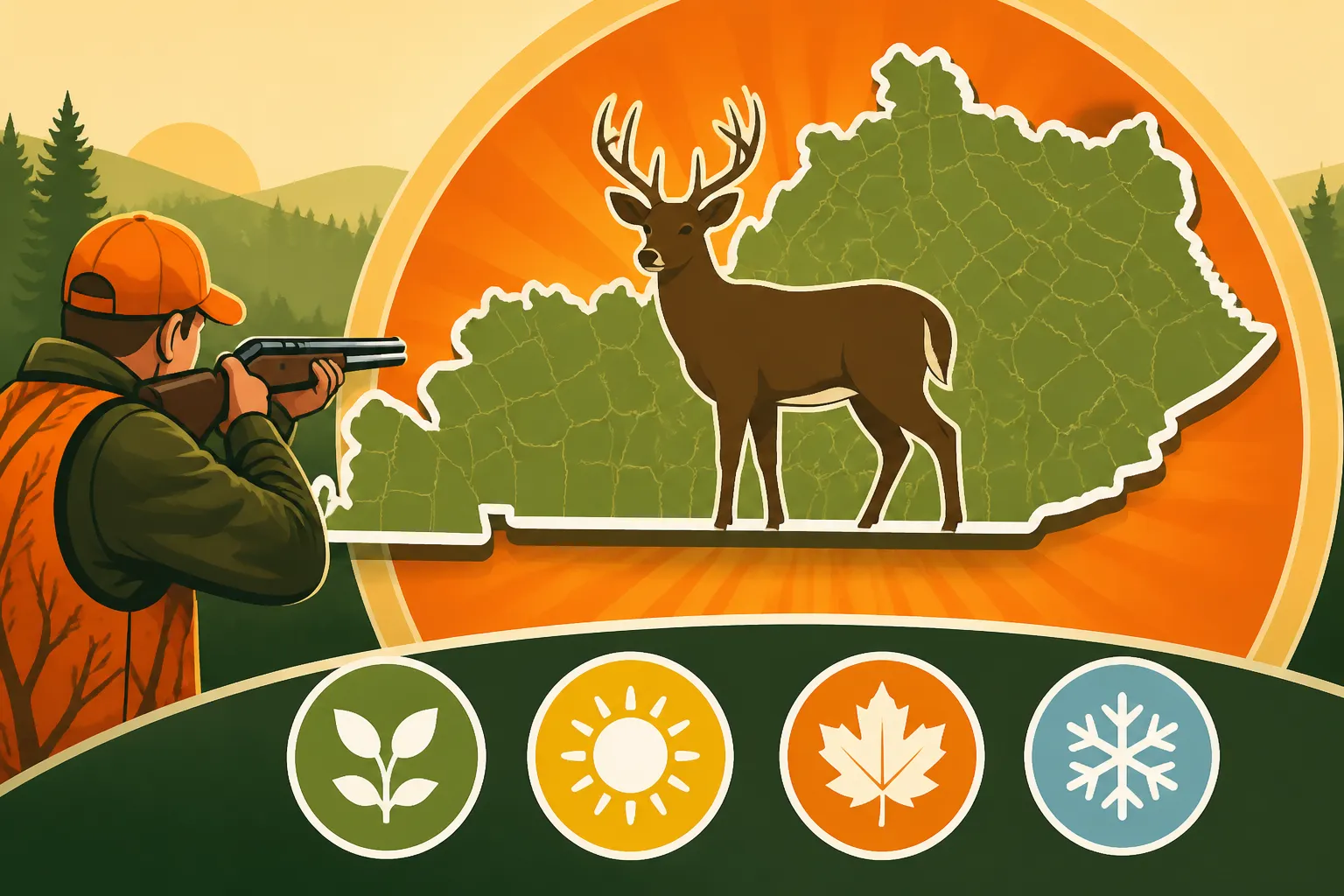
Why Modern Gun Runs the Same Dates Statewide
It's a common head-scratcher for Kentucky deer hunters, especially those new to the Commonwealth or who have hunted in other states: why does our modern gun season kick off on the same date statewide? You might expect different zones, staggered openings, or something to spread out the pressure, but Kentucky does things a bit differently. This guide is here to unravel the logic behind the unified modern gun season, delving into the historical context, biological insights, and practical strategies for making the most of it.
The Strategic Foundation of Kentucky's Unified Modern Gun Season
Many hunters arrive in Kentucky, or even just move across county lines from other states, and wonder why the modern gun season for deer isn't broken down by zones. It's a valid question, as staggering season dates is a common practice elsewhere, often aimed at spreading out hunting pressure or aligning with regional deer behavior. But the Kentucky Department of Fish and Wildlife Resources (KDFWR) has a very specific, well-thought-out strategy behind its statewide approach, rooted in the Commonwealth’s deer management history and its overarching goals for the herd.
Evolution of Kentucky's Deer Season Structure
To truly understand why Kentucky operates its modern gun season as a unified statewide event, we need to glance back at the history of deer management in the state. Kentucky’s deer population, like many states in the eastern U.S., was virtually non-existent by the early 20th century due to unregulated hunting and habitat loss. The monumental task of bringing whitetails back was a long, arduous process that began in earnest in the mid-20th century.
During this restoration era, the focus was on uniform growth and expansion of the herd across all suitable habitats. Fragmenting management with different gun season dates for various zones would have introduced unnecessary complexity and potentially hindered the statewide recovery effort. A simple, predictable season structure helped ensure consistent management and allowed the KDFWR to monitor population growth and health without the added variable of different harvest windows across regions. The goal was to re-establish a healthy, huntable deer herd throughout Kentucky, and a unified season helped achieve this by setting a clear, consistent approach for all hunters, allowing for a focused effort when deer numbers were low. This forms a foundational piece of the larger Kentucky Deer Season Structure Explained.
As the deer population flourished, the KDFWR continued this tradition of a unified modern gun season, even as other regulations, such as antlerless bag limits, became more regionally specific through Kentucky Deer Management Zone Rules. This consistency has become a hallmark of Kentucky hunting, making it relatively straightforward for hunters to understand when the primary firearm season opens and closes. While the landscape and deer densities certainly vary from the Appalachian foothills to the western Kentucky bottomlands, the unified gun season speaks to a holistic approach to managing the state’s deer resource.
The KDFWR's Management Philosophy and Goals
The KDFWR's decision to maintain a statewide modern gun season is not an oversight, but a deliberate choice driven by several key management philosophies. Their primary objective is to maintain a healthy, sustainable deer population that provides ample recreational opportunities for hunters while minimizing conflicts with agriculture and suburban areas. A unified season contributes significantly to these goals.
Firstly, a single, predictable opening date, often referred to as Kentucky Modern Gun Season Opening Day, allows for a concentrated harvest effort that helps the KDFWR achieve its overall deer population management objectives. By having a clear, intense period of hunting, they can more effectively reduce herd numbers where necessary, prevent overpopulation, and keep disease in check. This concentrated pressure acts as a powerful, albeit short-lived, tool to impact the overall Kentucky Deer Population Estimate.
Secondly, this approach simplifies the regulatory landscape not just for hunters, but also for KDFWR personnel, including wildlife biologists and conservation officers. There’s no need to constantly monitor different opening and closing dates for various zones during this critical harvest window. This streamlines enforcement, data collection, and communication efforts, ensuring everyone is on the same page regarding the core gun season dates. It allows for a more efficient allocation of resources where they are most needed.
Finally, the consistency provides a sense of tradition and predictability for Kentucky hunters. They know the rhythm of the seasons, and planning hunting trips, family gatherings, and work schedules around a fixed modern gun season opening is much easier than navigating a complex patchwork of regional dates. This stability encourages participation and allows hunters to build long-standing traditions around this significant hunting event.
Biological and Practical Advantages for Hunters and Deer Management
While some might initially see a statewide modern gun season as a disadvantage due to concentrated pressure, there are significant biological and practical advantages that the KDFWR leverages to ensure effective deer management and a positive experience for hunters. It boils down to regulatory clarity and a targeted approach to managing the overall herd.
Simplifying Regulations for All Hunters
One of the most immediate and often unappreciated benefits of a statewide modern gun season is the sheer simplicity it offers. For any hunter in Kentucky, whether you're a seasoned veteran or just starting out, knowing the exact dates for the primary deer firearm season is straightforward. You don't need to consult complex, often convoluted, zone maps or county-specific regulations to determine when you can legally carry your rifle into the woods.
Imagine the confusion if every single county, or even every major region, had its own unique modern gun season dates. Hunters would constantly need to verify their location, potentially leading to accidental violations or simply deterring participation due to the perceived complexity. This simplicity is particularly beneficial for hunters who travel between different parts of the state. Instead of learning a new set of dates for Eastern Kentucky versus Western Kentucky, they can rely on one consistent calendar for the gun season itself.
This regulatory ease extends beyond the individual hunter. It significantly reduces the burden on the KDFWR for enforcement and public outreach. With fewer variables to explain and patrol, wildlife officers can focus their efforts more effectively, and public information campaigns can be far more direct. For us, this means less time buried in a dense rulebook and more time focused on essential preparations like patterning our shotguns or zeroing our rifles, ensuring our Rifle Setups for Kentucky Deer Hunting are ready for action. It’s a pragmatic approach that reduces barriers to entry and keeps everyone on the same page.
Effective Deer Harvest Management
From a biological and management perspective, a unified modern gun season in Kentucky is a highly effective tool for achieving overall deer harvest goals. While it might seem counterintuitive to open the floodgates everywhere at once, this concentrated, intense hunting period serves a specific purpose: quickly and significantly reducing deer numbers across the state.
Kentucky maintains a robust deer population, and a concentrated gun season allows for a rapid impact on the herd. This short, high-pressure window helps to:
- Prevent Overpopulation: By ensuring a significant harvest, the KDFWR can keep deer numbers in check, preventing potential issues like habitat degradation, increased vehicle collisions, and the spread of diseases. This rapid reduction can be crucial in managing an otherwise rapidly growing herd.
- Mitigate Disease Spread: In areas of higher deer density, particularly in our Kentucky's Chronic Wasting Disease Surveillance Zone, a strong harvest is a key tool in slowing the potential spread of diseases by reducing interactions between animals.
- Align with Biological Cycles: The modern gun season is strategically timed, often overlapping with the tail end of the primary rut or the post-rut period. During this time, bucks are still highly active, searching for does, making them more vulnerable. This timing ensures good opportunities for hunters while efficiently meeting harvest targets before the deer enter the harsh conditions of deep winter.
This unified approach allows the KDFWR to gather comprehensive Kentucky Deer Harvest Reporting Rules data efficiently from across the state. The consistent season dates provide a clear snapshot of harvest success and population trends, which is critical for future management decisions. Rather than dealing with fragmented data from various mini-seasons, they get a strong, cohesive dataset that informs their strategies for the entire Commonwealth. It's a powerful and efficient way to manage a large, dynamic wildlife resource.
Strategies for Successfully Hunting Kentucky's Statewide Modern Gun Season
Understanding why Kentucky's modern gun season is statewide is one thing, but knowing how to hunt it successfully is another. The concentrated pressure, especially during opening weekend, presents both challenges and unique opportunities. Adapting your strategy is key to filling your tag, regardless of whether you're on public or private land.
Adapting Tactics to Peak Pressure
Let's face it: opening weekend of modern gun season in Kentucky is an event. Hunters, often clad in blaze orange, pour into the woods, particularly on public lands and easily accessible private tracts. This creates a surge of human activity that deer are acutely aware of. Trying to hunt deer as you would during the quiet archery season will likely lead to frustration. The secret isn't to fight the pressure, but to anticipate and use it.
Deer, when faced with sudden and widespread disturbance, will change their behavior dramatically. They will seek out thick cover, often becoming nocturnal or moving only during low-light periods in very secluded areas. This means your typical approach of sitting over a food plot or cruising timber might need an adjustment. Instead, focus on funnels, escape routes, and areas of dense bedding cover that deer will retreat to when pressured. These spots become sanctuaries, and if you can intercept deer moving to or from them, your chances dramatically increase. This might mean refining your Opening Weekend Tactics for Kentucky Gun Season.
Consider adjusting your hunting times as well. While the early morning rush is traditional, don't discount mid-day or late-afternoon hunting, especially after the initial flurry of activity dies down. Many hunters leave the woods for lunch or early in the afternoon, creating temporary lulls that deer might exploit. If your schedule allows, hunting mid-week after the initial opening weekend surge can also be highly productive, as many weekend warriors head home, and the woods become quieter, giving deer a chance to settle.
Utilizing Scouting and Technology for an Edge
Pre-season scouting is always important, but it becomes absolutely paramount when preparing for Kentucky's statewide modern gun season. You need to understand the lay of the land, identify potential bedding areas, common travel corridors, and, most importantly, pinpoint those overlooked pockets of heavy cover where deer will retreat once the pressure hits. This is where modern technology, like mapping apps, truly shines.
Tools like GoHunt, or other similar mapping applications, are indispensable for this kind of tactical preparation. They allow you to study satellite imagery, topo maps, and public land boundaries from the comfort of your home. You can identify those steep, brushy hollows, dense cedar thickets, or small, isolated woodlots that might offer a refuge for pressured deer. These apps often feature layers that show public land boundaries, allowing you to find those secluded corners of WMAs that might see less Hunting Pressure on Kentucky Public Land.
Before the season, put boots on the ground to confirm what your maps show. Look for subtle terrain features like saddles, small creek bottoms, or drainage ditches that could act as natural travel corridors when deer are trying to move stealthily. Pay attention to fence lines, overgrown clear-cuts, or natural pinch points – these are the places where deer will be pushed through. Resources like Scouting Kentucky Public Land Before Season offer invaluable advice. By combining rigorous pre-season scouting with advanced mapping technology, you can develop a solid plan that accounts for the inevitable increase in hunter activity, giving you a distinct advantage.
Beyond the Opening Weekend Rush
While opening weekend often garners the most attention, the statewide modern gun season typically runs for about two weeks, offering ample opportunity beyond those first intense days. Many hunters pack up after the initial rush, which can present excellent chances for those willing to stay in the woods. Deer behavior shifts significantly after the initial pressure, and adapting your strategy to these changes can be highly effective.
After the opening weekend, deer often become more wary, more nocturnal, and much more likely to seek out heavy cover. Instead of focusing on wide-open fields or easily accessible food plots, shift your attention to dense bedding areas, security cover, and travel routes between these secluded spots. This is when still-hunting slowly and deliberately through thickets, or staging small, strategic drives with a few partners, can pay off immensely.
Consider the timing of your hunts. While early morning is always a prime time, don't discount late mornings and early afternoons, especially mid-week. Deer might take advantage of lulls in hunter activity to move, even if just for a short distance. Focus on catching them moving between bedding and secondary feeding areas. This period can also overlap with the later stages of the rut, so understanding Hunting the Kentucky Rut in Early November and how it transitions into gun season is still valuable.
Finally, remember the critical importance of safety, especially during this peak hunting period. Adhering to Kentucky Blaze Orange Requirements is not just the law; it's a vital safety measure. Always identify your target and what's beyond it, and communicate clearly if you're hunting with a group.
Impact on Deer Behavior and Hunter Crowding
The unified modern gun season in Kentucky, while simplifying regulations, undeniably creates a significant, short-term impact on deer behavior and hunter distribution, particularly on public lands. Understanding these dynamics is crucial for any hunter aiming for success. It's a game of adaptation and often, outworking others.
Deer Response to Sudden Pressure
Deer are incredibly intelligent and adaptable animals, and they quickly learn to associate concentrated human activity with danger. When the statewide modern gun season opens, it's like a statewide alarm bell goes off. Within hours of the season beginning, deer behavior undergoes a dramatic shift.
Their primary response is to seek refuge. This means moving into the thickest, most inaccessible cover available. Steep hollows, dense cedar swamps, overgrown clear-cuts, and virtually impenetrable brush become their sanctuaries. Furthermore, their movement patterns often become largely nocturnal. Mature bucks, in particular, will rarely move during daylight hours unless pushed or traveling through extremely secure cover. This behavioral shift is a direct result of the sudden, widespread hunting pressure.
For hunters, this means you can’t rely on seeing deer in the same open areas or on the same predictable patterns you observed during early archery season or even the peak rut. Deer that were once comfortable feeding in open fields during daylight might only visit those spots under the cover of darkness. Successfully hunting during this period requires you to think like a deer under duress. Where would you go to escape the noise and intrusion? Where would you feel safe moving during daylight? This often leads to needing to Hunting the Late-Season January Lull which shares some characteristics with post-gun season pressure. You might need to consider strategies like small-scale Deer Drives With Three or Four Hunters to effectively move deer out of these thick havens.
Public Land Considerations and Strategies
Public lands in Kentucky, while offering incredible access to hunting, bear the brunt of the concentrated pressure during the statewide modern gun season. Areas close to parking lots, easily accessible trails, and obvious terrain features will be heavily trafficked, especially on opening weekend. This doesn't mean public land isn't productive, but it does mean you need a different strategy.
To find success on public land during this period, you absolutely have to be willing to put in the extra effort. This usually translates to walking further than the average hunter. Deer, when pushed, will often travel to the deepest, nastiest, most overlooked parts of a WMA or national forest. If you're willing to hike a couple of miles back into a remote hollow or climb over a challenging ridge, you significantly increase your chances of finding less pressured animals. Using tools like GoHunt or the Using the Kentucky Hunt Fish Map Tool is critical for identifying these remote pockets and planning your routes.
Beyond sheer distance, consider looking for overlooked cover. A small, isolated patch of thick woods surrounded by more open timber, a steep hillside that's difficult to navigate, or a tangle of blowdowns can become a deer magnet. Many hunters will walk past such areas looking for more "traditional" deer sign, but these are often where pressured deer hide. This is the essence of Finding Ground Others Walk Past. Study aerial photos to spot these subtle variations in cover and topography. Be patient, move slowly, and be prepared for deer to be extremely alert. Success on public land during the modern gun season often comes down to who is willing to work the hardest and think the smartest about how deer react to pressure.
| Aspect | Statewide Modern Gun Season (Kentucky) | Staggered/Zoned Seasons (Common Elsewhere) |
|---|---|---|
| Regulatory Clarity | Simpler for hunters to remember dates, fewer complex zone boundaries to learn. | Can be confusing, requiring hunters to know specific county/zone rules. |
| Management Focus | Allows for a focused, high-impact harvest window to manage overall herd health. | Spreads harvest pressure, potentially leading to more consistent success. |
| Hunter Pressure | Concentrated on opening weekend, then dissipates throughout the period. | Pressure more evenly distributed throughout various opening weeks/zones. |
| Deer Adaptation | Deer quickly become nocturnal/pressured, requiring adaptable tactics. | Deer may have more "breaks" from pressure, returning to normal patterns. |
| Harvest Control | Effective for achieving desired statewide harvest goals in a short period. | Offers more nuanced control over specific regional deer populations. |
Disclaimer
Please remember that hunting regulations and season dates can change. Always consult the most current Kentucky Hunting & Trapping Guide published by the Kentucky Department of Fish and Wildlife Resources (KDFWR) before heading afield. This guide is for informational purposes only and should not replace official KDFWR publications or professional advice.