Crow Hunting Seasons and Tactics in Kentucky
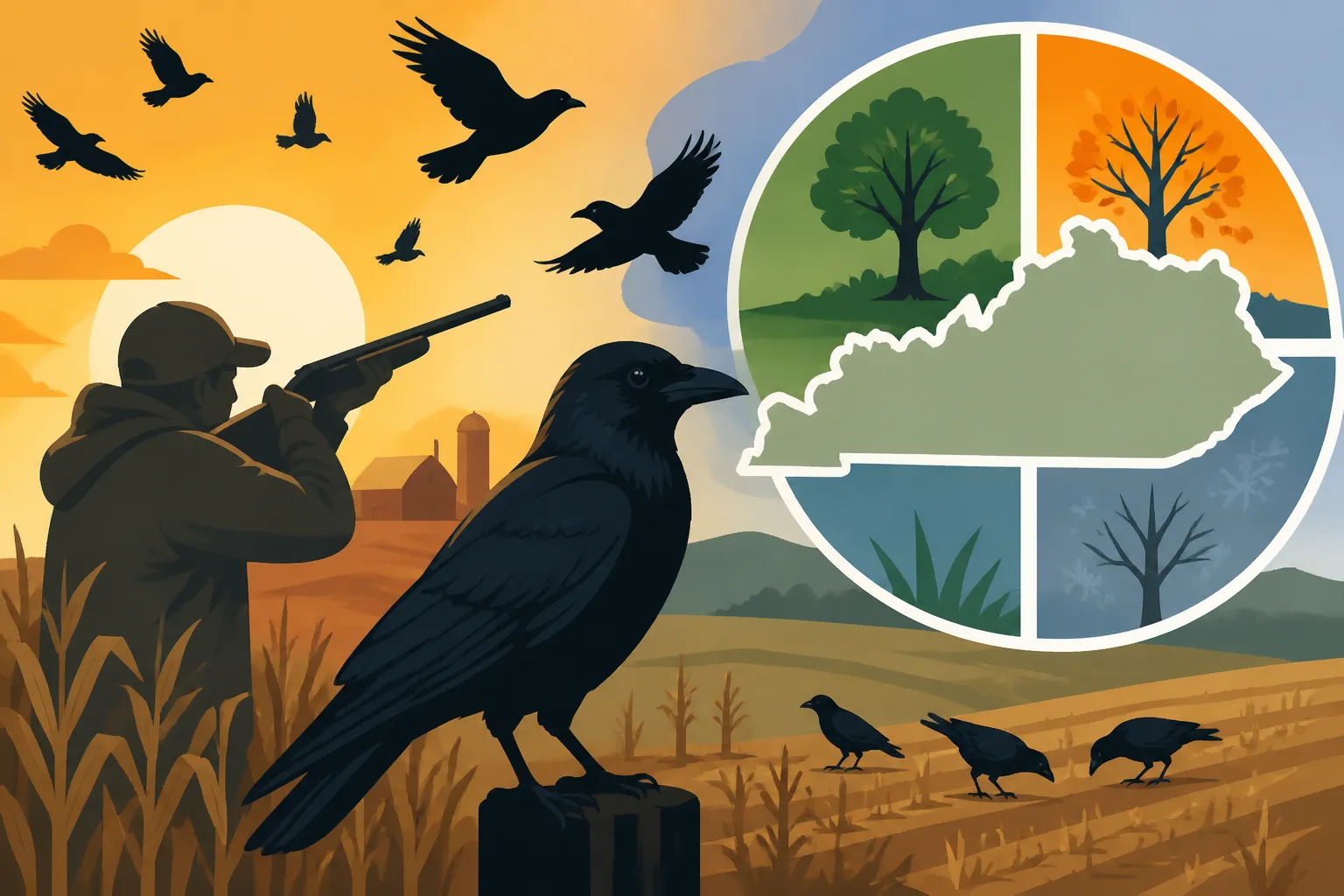
Let's be real, crow hunting often gets a bad rap or just completely overlooked, doesn't it? Most folks are out there chasing whitetails, chasing gobblers, or maybe trying their luck with a covey of quail. But crows? They're smart, they're challenging, and honestly, they can be a real nuisance in agricultural areas. If you're looking for a way to sharpen your shooting skills, test your calling prowess, and contribute to wildlife management in Kentucky, then getting after some crows is a fantastic option. This guide is all about diving deep into the often-misunderstood world of crow hunting in the Bluegrass State, from understanding the seasons to the most effective tactics to bring these crafty birds into range.
Understanding Kentucky's Crow Season Regulations
Unlike many game species with very strict, often short, hunting windows, crow season in Kentucky offers a much more extended opportunity. This flexibility is one of the reasons it's such a great activity for hunters looking to get out more often, especially when other seasons are closed or winding down. But even with that flexibility, there are still specific guidelines you'll want to be intimately familiar with before you head afield.
Official Kentucky Crow Season Dates and Unique Rules
The Kentucky Department of Fish and Wildlife Resources (KDFWR) classifies crows as a migratory bird, which means their hunting is governed by federal guidelines, even if the state sets the specific dates. Historically, Kentucky's crow season has stretched for several months, typically kicking off around September 1st and running all the way through the beginning of March. This long season offers a fantastic window to get out in various conditions, from crisp fall days to chilly winter afternoons.
One of the most appealing aspects for hunters is that, currently, Kentucky typically imposes no daily bag limits or possession limits on crows. This is a stark contrast to many other game birds, where strict limits are in place to manage populations. For crow hunters, it means that if you find yourself in a hot spot with a lot of birds, you can continue to hunt as long as you're ethical and legal. You also don't have to worry about running into issues with Sunday hunting in Kentucky for crows, as it's generally allowed. It's a fantastic way to enjoy a day afield when other seasons are shut down. This extended and generous season acknowledges the crow's widespread population and, in many areas, their potential for agricultural damage, making them a target for management as much as recreation. Knowing When Kentucky's Archery Season Opens or the dates for other big game seasons is one thing, but understanding these unique crow regulations lets you fill in those gaps in your hunting calendar.
Legalities Beyond the Season: Permission and Method
While the seasons are generous, you still have to abide by all other hunting laws and ethical considerations. The biggest hurdle for many crow hunters, especially in Kentucky's diverse landscape, is securing permission to hunt private land. Crows often congregate in agricultural fields – cornfields, bean fields, or pastures – and around woodlots, which are predominantly privately owned. It's absolutely crucial to gain explicit permission from landowners before setting foot on their property. There's no substitute for knocking on doors in Western Kentucky farm country or talking to folks in rural communities. Always remember that Do You Need Written Permission in Kentucky? for private land access, even if it's just a handshake agreement, it’s best to have something formal to avoid misunderstandings.
In terms of hunting methods, shotguns are overwhelmingly the firearm of choice for crow hunting, offering the wide pattern needed for fast-flying, often erratic birds. Most common gauges like 12-gauge and 20-gauge with general birdshot (like 7 1/2 or 8 shot) are perfectly effective. Rimfire rifles, such as a .22LR, can also be used for longer-range, stationary shots, but they present a greater challenge for flying birds. Air rifles, too, are an option in some areas, especially where noise is a concern, but always check local ordinances. When you’re thinking about Kentucky Legal Firearms for Deer Hunting, it's easy to forget about smaller game, but the same principles of safe firearm handling and understanding your effective range apply. You'll also need a valid Kentucky hunting license. To learn about all the options, check out Kentucky Resident Hunting License Options or the equivalent for non-residents.
Essential Gear and Setup for Kentucky Crow Hunting
Crow hunting, at its heart, is often a game of deception. You're trying to convince some of the smartest birds in the woods that their brethren are in trouble, or that there's a feast to be had. To do that effectively, you need the right tools in your bag. It's not just about a gun; it's about the entire setup.
Firearm and Ammunition Choices
As mentioned, a shotgun is king for crow hunting. The speed and maneuverability of crows demand a wide pattern. A 12-gauge is probably the most popular choice, but a 20-gauge will certainly do the trick. You want a relatively open choke, something like an improved cylinder or modified choke, to give you a good spread. Crows are not particularly tough birds, so standard game loads with 7 ½ or 8 shot are usually more than sufficient. You don't need heavy, expensive waterfowl loads or turkey loads for crows; save those for Waterfowl Hunting Kentucky Lakes and Rivers or Spring Turkey Hunting in Kentucky.
For those looking for a different challenge or hunting in areas where shotgun blasts might draw too much attention, a .22LR rifle can be incredibly fun. However, it requires a much higher degree of marksmanship, especially for flying birds. You'll be looking for crows perched high in trees or feeding on the ground. A good scope will be vital here. Always consider your backdrop and know your bullet's trajectory, even with a rimfire.
Decoys and Calls: The Core of Success
This is where the magic happens in crow hunting. Crows are highly social and incredibly responsive to calls and visual stimuli.
- Electronic Calls: If you're serious about consistently bringing in crows, an electronic caller is almost a must-have. These devices can produce a wide range of realistic crow sounds, from distress calls that pique their curiosity and anger, to gathering calls that tell other crows there's a party (or a fight) happening. Brands like Foxpro or Primos offer excellent electronic calls with a variety of pre-programmed sounds. The ability to control volume and switch sounds quickly is invaluable.
- Mouth Calls: Don't underestimate the power of a good hand call! Many experienced crow hunters love the challenge and satisfaction of calling birds in with a simple reed or friction call. They can add a level of nuance and realism that sometimes even electronic calls miss. Learning to make various caws, aggressive fighting sounds, and distress calls will significantly boost your success.
- Decoys: Crows rely heavily on their eyesight, so decoys are incredibly important. You'll want to set out a spread of several full-bodied crow decoys, positioning them realistically in trees or on the ground. A key tactic is to use a "distress" setup: place one or two crow decoys on the ground, perhaps with their wings splayed, suggesting they're injured. Then, nearby, place a decoy of a predator like an owl or a hawk. This creates a highly convincing scene that often infuriates real crows, bringing them in for an aggressive dive. You can find simple, durable decoys from companies like Mojo or Feather Flex. When planning your setup, leveraging mapping tools like GoHunt can help you visualize the terrain, identify potential flight paths, and even mark out where you want to place your decoys and blind, making your setup process much more efficient.
Concealment and Blind Selection
Crows are exceptionally wary birds with incredible eyesight. They will spot you from a long distance if you're not well-hidden. This means camouflage from head to toe, and a good blind are absolutely non-negotiable.
- Natural Cover: Often, the best blind is one you don't have to carry in. Setting up in thick brush, under an evergreen, or along a dense fencerow can provide excellent concealment. You'll need to break up your outline, avoid bright colors, and stay absolutely still.
- Ground Blinds: A pop-up ground blind is a fantastic option, especially if you're hunting in open fields or areas with sparse natural cover. They provide complete concealment, allowing you to move subtly, operate your calls, and ready your shotgun without being detected. Just make sure to brush in a blind on a field edge to make it look as natural as possible. Remember to check local regulations if you're hunting on public land, as rules for Using a Ground Blind on Kentucky Public Land can vary.
- Camouflage: Beyond the blind, your clothing should be a good camouflage pattern that blends with the environment. More importantly, minimize any skin exposure – a face mask and gloves are critical. Movement, especially sudden movement, will instantly alert approaching crows.
Effective Tactics for Crow Hunting in Kentucky
Crow hunting is a dynamic game that rewards adaptability and patience. It's not always about blasting away; it's about understanding crow behavior and using that knowledge to your advantage.
Setting Up Your Ambush Point
Before you even think about calling, you need to think about where you're going to hunt. Scouting is paramount. Look for crow roosts, which are often large stands of trees where crows gather by the hundreds or even thousands in the evening. Identify common flight paths they use to travel from roosts to feeding areas. Agricultural fields, especially those recently harvested or with waste grain, are prime feeding locations. Even areas near landfills or roadkill can attract crows.
When you pick your spot, consider the wind and the sun. You want the wind in your face to carry your scent away (though crows don't have a great sense of smell, it's good practice) and to muffle some of your sounds. More importantly, you want the sun at your back. This makes it harder for approaching crows to see you and forces them to fly into the sun, temporarily blinding them and making them more susceptible to your setup. Place your decoys 20-30 yards out, ensuring they're visible and creating that compelling scene we talked about. A mapping tool from GoHunt can show you prevailing winds and sun angles, helping you choose the optimal ambush point.
Calling Strategies That Work
Once your setup is complete and you're hidden, it's time to call. This is where you become the director of a play, guiding the crows into your scene.
- Distress Calls: These are often the most effective. They mimic a crow in trouble, perhaps being attacked by a predator. This triggers a strong mobbing instinct in other crows, drawing them in to harass the perceived threat. Start with aggressive, urgent distress calls, then vary the intensity. Listen for a response – crows will often caw back aggressively.
- Gathering Calls: These are standard "caw-caw" sounds, letting other crows know there are friends in the area. They can be good for initially attracting birds from a distance or for calming them down if they seem hesitant.
- Aggressive Calls: These are often used when crows are already in sight and hesitant. They mimic crows fighting or scolding, which can draw them closer out of curiosity or aggression.
The key is variety and realism. Don't just blast one call continuously. Mix it up. Use short bursts, then listen. If crows are coming in, ease off the calling a bit. If they hang up, try a different call or increase the intensity. Watch their reactions. Are they circling cautiously? Are they diving in aggressively? Adjust your calling accordingly. Sometimes, a quiet approach works better, especially if you’re trying to avoid alerting deer while scouting for Finding Sign in Big Daniel Boone Timber. Utilizing a mapping application from GoHunt can be invaluable here, not just for pinpointing ideal hunting locations based on terrain and vegetation, but also for identifying potential approach corridors for crows and marking your setup points, improving your overall strategic planning for any hunting scenario, including Coyote Calling in Kentucky Farm Country.
Post-Shot Strategy and Follow-Up
Crow hunting can be a fast-paced affair. When a crow commits and comes into range, make a clean shot. If you drop a bird, immediately focus on getting ready for the next one. Crows often come in groups, and the sound of the shot might even draw in more birds, especially if you maintain your calling.
Quickly retrieving downed birds is important, especially if you have a dog with you. If you pick up a crow and place it near your decoys, it can actually enhance the realism of your setup, drawing in even more birds. Some hunters will even tie a string to a dead crow's leg and use it as a "flapper," pulling it to simulate movement and distress as other crows approach. This can be surprisingly effective for particularly wary birds. Don't forget, ethical hunting means making every effort to recover game.
Maximizing Your Kentucky Crow Hunting Experience
Crow hunting isn't just about the shot; it's about the entire experience of engaging with such an intelligent and challenging bird. To truly excel, you need to understand their environment and adapt to their cunning.
Scouting and Location Selection
The importance of scouting cannot be overstated. You can't just pick a random woodlot and expect crows to magically appear. You need to observe. Spend time driving around rural areas, particularly during the late afternoon, looking for large groups of crows flying towards a common point – this often indicates a roost. In the mornings, watch where they disperse to feed. Look for areas with high concentrations of birds.
Prime locations often include:
- Agricultural Fields: Especially cornfields after harvest, where waste grain is abundant. These are like crow buffets.
- Large Woodlots or Timber Blocks: Crows need secure places to roost and often prefer dense stands of mature trees.
- River Bottoms and Creek Corridors: These act as natural travel lanes and often contain good roosting habitat. You might find similar movement patterns to deer if you're Hunting Western Kentucky River Bottoms.
- Landfills or Feedlots: Any place with a consistent, accessible food source will attract crows.
Pre-season scouting will give you a significant advantage. Use tools like aerial photos on your phone or computer. Satellite imagery can help you identify potential roosting sites (dense timber blocks), feeding areas (agricultural fields), and natural funnels or travel corridors. An app like GoHunt is invaluable for this, as it allows you to overlay property lines on topographical and aerial maps, helping you pinpoint exactly where you can legally hunt and find promising terrain features, much like you would when Reading Aerial Photos for Eastern Kentucky Deer. Mark potential setup spots, access routes, and even wind directions you'd prefer for each location.
Dealing with Hunting Pressure and Wary Birds
One thing you'll quickly learn about crows is just how intelligent they are. They learn quickly, and they remember. If you repeatedly hunt the same spot with the same tactics, they will eventually wise up and become "call shy" or avoid the area altogether. This is why variety and adaptability are so important.
- Move Around: Don't hammer the same roost or feeding field day after day. Have multiple spots scouted out and rotate your hunting locations to reduce pressure.
- Change Your Calls: If they're responding but not committing, try switching up your calls. Sometimes a different distress sound, or a more aggressive fighting call, can be the key.
- Vary Decoy Setup: Experiment with different decoy arrangements. Try fewer decoys, or more. Move the predator decoy. Sometimes placing a dead crow in a highly visible spot can be a game-changer.
- Perfect Your Concealment: If crows are circling high but not coming in, it might be your concealment. Are you completely hidden? Is there any shine or movement giving you away? Even something as small as a reflective watch face can alert a wary crow.
- Hunt Different Times: Crows are most active at dawn and dusk as they travel to and from roosts, but they feed throughout the day. Try midday hunts when they might be less pressured.
Remember, every crow hunt is a learning experience. Pay attention to how the birds react to your calling, your decoys, and your presence. The more you observe, the better you'll become at outsmarting these incredibly intelligent birds.
| Gear Category | Recommended Items | Key Considerations |
|---|---|---|
| Firearm | 12-gauge or 20-gauge shotgun | Open choke (Improved Cylinder, Modified) for wider pattern; semi-auto or pump-action for quick follow-up shots |
| Ammunition | Lead birdshot (7 1/2 or 8 shot) | Inexpensive and effective for crows; non-toxic shot required only on some federal lands (check local rules) |
| Calls | Electronic caller with various crow sounds (distress, gathering, aggressive), manual mouth calls | Electronic for versatility and volume, mouth calls for realism and nuance; practice is key for manual calls |
| Decoys | 6-12 full-bodied crow decoys, 1-2 predator decoys (owl/hawk) | Realism is crucial; set up a "distress" scene with a predator decoy near "injured" crows on the ground |
| Concealment | Full camouflage clothing (head net, gloves), pop-up ground blind or ample natural cover | Crows have excellent eyesight; movement and exposed skin will bust your hunt; break up your outline |
| Optics | Binoculars (8x or 10x) | For scouting and spotting distant crows before they spot you |
| Accessories | Game vest or small backpack, water, snacks, trash bag for spent shells, small folding chair (for ground blinds) | Comfort for longer sits; ethical cleanup of your hunting area |
Disclaimer
Always consult the latest Kentucky Department of Fish and Wildlife Resources (KDFWR) regulations before any hunting activity, as seasons, rules, and licensing requirements can change. This guide is for informational purposes only and does not supersede official regulations.