Deer Drives on Kentucky Public Land
Hunting public land in Kentucky can feel like a game of hide-and-seek where the deer always seem to win. You walk for miles, scout diligently, hang stands, and still, those elusive whitetails manage to slip past or stay bedded in the thickest cover. When conventional stand hunting methods aren't cutting it, especially when deer go nocturnal or get locked down in dense sanctuaries, a well-planned deer drive can be a game-changer. This comprehensive guide will walk you through the art and science of executing effective deer drives on Kentucky public land, helping you understand when, where, and how to turn those missed opportunities into successful harvests.
Understanding the "Why" Behind Public Land Deer Drives
Let's be real, public land hunting is tough. Deer on these tracts are often smarter, warier, and more accustomed to human presence than their private-land cousins. They know the safe spots, the escape routes, and how to make themselves invisible. That's where the strategic deer drive comes into its own, transforming a frustrating pursuit into a proactive hunting method.
The Nature of Public Land Hunting Pressure
We've all been there: you put in the legwork, find promising sign, set up a stand, and then the opening day arrives. Suddenly, every ridge and hollow seems to have another hunter in it. This pressure pushes deer into tighter, nastier cover, often making them entirely nocturnal or forcing them into areas that are nearly impossible to hunt from a stationary stand. Kentucky's public lands, from the sprawling Daniel Boone National Forest to the numerous Wildlife Management Areas (WMAs), see their fair share of hunting pressure. This constant human presence teaches deer to adapt, leading to those frustrating hunts where you see nothing but old tracks.
When deer are pressured, they become experts at utilizing every topographical advantage and every inch of dense regrowth. They'll bed in places you'd swear a rabbit couldn't hide, only moving under the cover of darkness. This isn't just an Eastern Kentucky phenomenon; even the more open western Kentucky bottomlands can see deer vanish into small, overlooked thickets under pressure. A drive isn't about scaring deer into a panic; it's about systematically pushing them out of their security cover and encouraging them to move in a predictable direction, giving your standers an ethical shot opportunity. It’s a way to actively engage with deer that are otherwise hunkered down, refusing to move during daylight hours.
When Deer Drives Make Sense in Kentucky
Deer drives aren't a year-round, every-situation tactic. They truly shine under specific conditions, especially on Kentucky's diverse public land. Think late season, when food sources are scarce and deer are seeking thick cover for warmth and safety. Cold, nasty weather often makes deer less willing to move, consolidating them into thermal cover. This is a prime opportunity for a drive. Also, consider areas with specific terrain features – a narrow ridge ending in a point, a dense hollow surrounded by more open woods, or a thick clear-cut bordered by more mature timber. These are natural funnel points where deer are likely to be pushed.
Drives can be particularly effective during the late muzzleloader week in December or the tail end of modern gun season when deer have been shot at and are feeling the pressure. This is when they're most likely to be holding tight in unpressured pockets. If you've been sitting on a stand all day and haven't seen a thing, but you know deer are in the general vicinity, a quick, organized drive might be the ticket. It's a high-energy tactic that can break up the monotony and inject some excitement into a slow hunting day. However, it's generally less effective during the peak of the rut, when bucks are already on the move and less predictable. For the early November rut, tactics like rattling and grunting in Kentucky might be more productive.
Ethical Considerations and Safety First
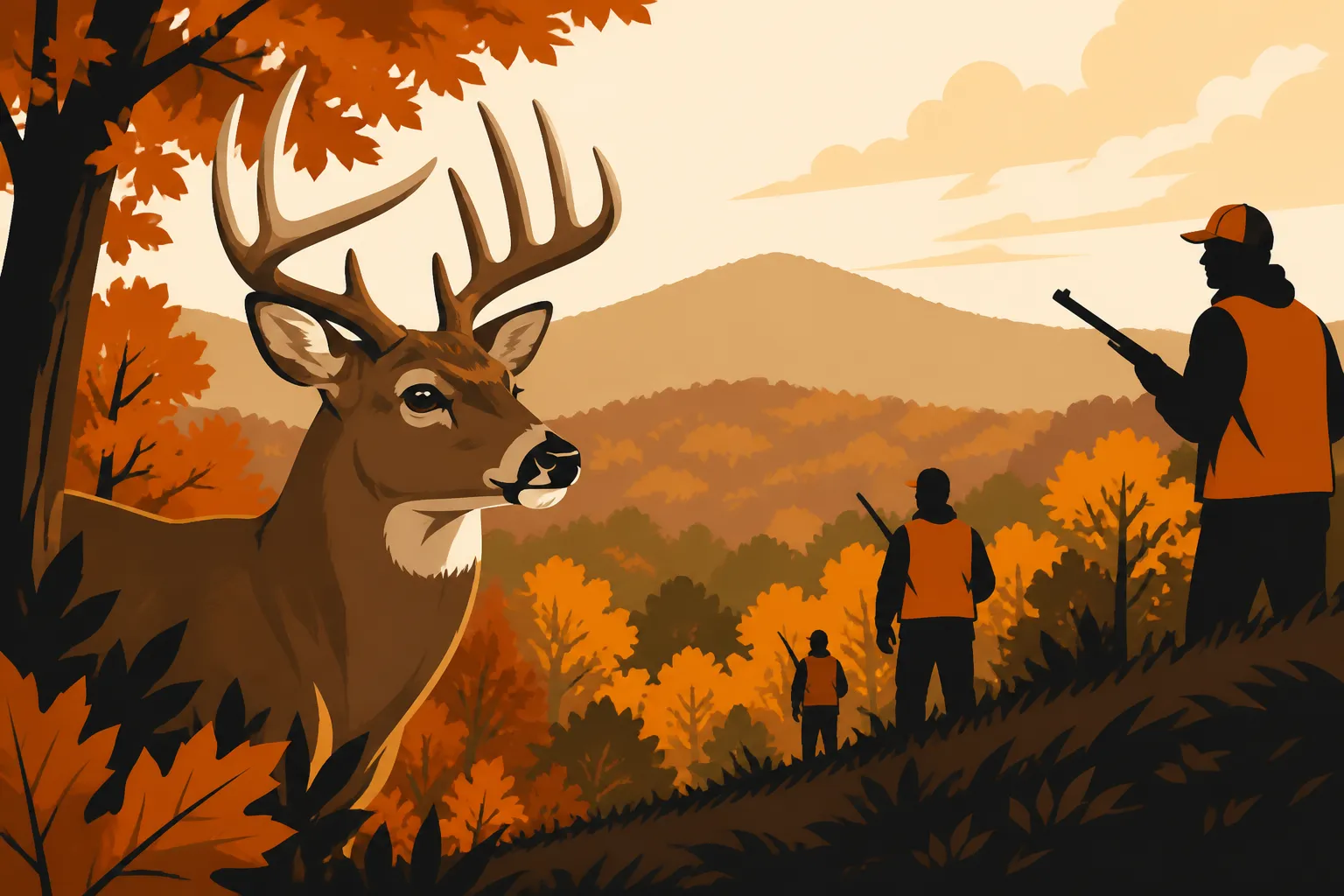
Before you even think about organizing a deer drive, safety must be your absolute top priority. This isn't just a suggestion; it's non-negotiable. Public land means other hunters, hikers, and even mushroom foragers could be present. Communication is key, as is ensuring everyone involved understands the drive's parameters, shooting lanes, and, most importantly, their safe zones of fire. Every participant, whether pushing or standing, needs to know the layout and the exact location of their teammates.
Never shoot at sound or movement alone. Positively identify your target and ensure a safe backdrop before taking a shot. Kentucky law requires specific amounts of blaze orange or blaze pink during gun seasons, which is crucial for visibility during a drive. Always review your group's plan thoroughly before stepping into the woods. A drive should never turn into a free-for-all; it’s a calculated, cooperative effort designed to gently nudge deer toward waiting, concealed hunters. When planning, discuss what constitutes an ethical shot and ensure no one feels pressured to take a risky one. It's always better to let a deer walk than to risk an unsafe shot or an injured animal due to poor planning.
Scouting and Planning Your Drive on Kentucky Public Land
A successful deer drive is less about luck and more about meticulous planning. You can't just wander into the woods and expect deer to cooperate. Understanding the terrain, knowing where deer want to go, and orchestrating your team effectively are all crucial steps that happen long before you ever step foot in the woods with your rifle.
Reading Topography and Identifying Escape Routes
Kentucky's landscape, particularly in the eastern coalfields, is a maze of ridges, hollows, and benches. Deer are masters of using these features to their advantage, and so should you. Start by pulling out detailed topographic maps or using a mapping application like GoHunt. Look for natural funnels: saddles between ridges, narrow creek bottoms, logging roads that cut through dense timber, or pinch points where two hollows converge. These are the places deer will naturally travel when pressured. Areas like the Cumberland Mountains or the Daniel Boone National Forest are prime examples where reading a ridge for Cumberland deer is essential for identifying these natural travel corridors.
Pay close attention to changes in elevation, thick cover, and potential bedding areas. Deer often bed on the downwind side of a ridge, or in a thicket just off a bench, where they can watch their backtrail and smell anything approaching from below. Your goal is to identify a block of cover, a hollow, or a finger ridge where deer are likely to be bedded, and then map out their most probable escape routes. Consider two or three potential routes they might take. This foresight allows you to position your standers effectively. Don't forget to look for areas where a field edge meets a wood line, as these can also be prime bedding and escape areas, particularly in Western Kentucky bottomland deer country.
Assembling Your Team and Assigning Roles
The size and composition of your team will dictate the scale and complexity of your drive. For public land, smaller, more agile groups are often better to minimize impact and maintain control. A successful drive can often be executed with just three or four hunters, sometimes even fewer depending on the terrain. This is why tactics like Deer Drives With Three or Four Hunters are so effective. Typically, you'll have two main roles: pushers and standers (or blockers).
Pushers are the ones who walk through the cover, steadily moving deer towards the standers. They need to be disciplined, maintaining their lane and pace, and making enough noise to encourage deer movement without sending them into a full-blown panic. Standers are positioned silently at predetermined escape routes or funnel points. Their job is to remain absolutely still, concealed, and ready for an ethical shot when deer approach. Assigning these roles based on individual strengths is key. Someone who knows the terrain well might be an excellent pusher, while a patient, steady shooter makes a great stander. Establish clear communication methods beforehand, whether it's two-way radios, specific hand signals, or pre-determined whistle blasts.
Understanding Wind and Thermals
In Kentucky's varied terrain, understanding wind and thermals isn't just helpful; it's absolutely critical for a successful drive. Wind direction dictates how deer will scent-check their surroundings, and thermals, the rising and falling air currents, can play a huge role, especially in hilly areas. Deer will almost always try to use the wind to their advantage, circling downwind of perceived threats.
When planning your drive, aim to have the wind blowing from the pushers towards the standers. This helps push the deer in the desired direction without immediately alerting them to the standers' presence. However, in steep terrain, thermals can override or complicate surface winds, especially in the mornings and evenings. As the sun rises, warm air pushes up the hollows and ridges; in the evening, cool air sinks. This means a deer might smell you from below even if the surface wind is favorable. Knowing the Wind and Thermals on a Kentucky Ridge is crucial. Using apps like GoHunt can provide real-time wind data and often show thermal predictions, allowing you to fine-tune your approach. Position your standers so the deer will approach them from downwind, or at least crosswind, minimizing the chance of being scented before they are in range.
Executing the Drive: Tactics for Success
With your plan in place and your team assigned, it's time to put boots on the ground. Execution is where theory meets reality, and a disciplined approach is essential. This phase requires constant awareness, clear communication, and adherence to the pre-established safety protocols.
The Pusher's Strategy: Slow, Steady, and Smart
The role of the pusher is not to run through the woods screaming. That will often cause deer to blow out of the block of cover at top speed, offering no shot opportunities to standers, or worse, scattering them in unpredictable directions. Instead, the pusher's strategy should be slow, steady, and smart. Think of yourself as a slow-moving, expanding front, steadily applying pressure. Walk at a consistent, measured pace, covering the designated area thoroughly. Kick brush, tap trees with a stick, or use a soft voice to create a consistent, low-level disturbance.
The goal is to gently displace deer from their beds and encourage them to walk, trot, or lightly bound towards the standers. Pay close attention to thickets, downed trees, and any dense cover where a deer might be bedded. Zig-zag slightly through these areas to ensure you're not walking past a hidden animal. In areas of very thick cover, like a Hunting a Clear-Cut Regrowth Edge, you might need to slow down even more, listening for subtle movements or the rustle of leaves that indicates a deer is slipping away. By staying calm and methodical, you increase the chances of deer moving predictably and offering a good shot to your blockers. Remember, you're not trying to chase them; you're just making their current bedding spot uncomfortable enough to seek new cover.
The Blocker's Position: Anticipation and Stealth
The stander's job is arguably more challenging, as it requires immense patience and discipline. Once positioned, a stander must become part of the landscape, remaining absolutely still and silent, eyes constantly scanning their assigned shooting lanes. Your approach to your stander position should be as quiet and stealthy as possible to avoid alerting any deer already moving in the area or nearby. When you're Posting a Drive Around a Hollow, for instance, it's critical to approach your designated spot silently and well before the pushers begin their movement.
Look for natural cover – a thick pine, a cluster of cedars, or a large oak – to break up your outline. Elevating yourself in a treestand, where legal and safe on public land, can also give you a significant advantage in visibility and scent control. Identify your primary shooting lanes, and clear any small twigs or branches that might deflect a bullet. Crucially, anticipate where the deer are most likely to emerge based on the topography and the direction of the push. Sometimes deer will try to slip out the sides rather than directly towards the standers. Be ready for deer to come in at a walk, a trot, or sometimes quickly, so be prepared to shoulder your rifle smoothly and quietly.
Communication During the Drive
Effective communication is the glue that holds a successful deer drive together and ensures safety. Before the drive begins, establish clear and concise communication protocols. Two-way radios are invaluable, but everyone must understand radio discipline – keep chatter to a minimum, use clear, specific language, and only transmit essential information. Avoid unnecessary chatter that can spook deer or tie up the channel.
Pre-determined signals are also vital. For example, a single whistle blast might indicate "I'm in position," while two blasts could mean "deer are moving." Always use extreme caution with any verbal commands or loud noises during the drive. The most important communication, however, might be the silent kind: knowing where your teammates are, understanding their assigned lanes, and trusting that everyone is adhering to the plan. If a pusher encounters an unexpected situation or needs to adjust their path, they should communicate that clearly and calmly to the standers. Safety calls are paramount: if a pusher sees another hunter or needs to stop the drive for any reason, a clear, pre-arranged signal (like "STOP, STOP, STOP!") should be used immediately.
Specific Public Land Scenarios and Adaptations
Kentucky's public lands are incredibly diverse, from the rugged mountains of the east to the rolling hills and bottomlands of the west. A deer drive that works perfectly in one area might be entirely ineffective in another. Adapting your tactics to the specific terrain and cover types you encounter is key to consistent success.
Driving Thickets and Regenerating Timber
Thickets and regenerating timber are deer magnets, offering unparalleled security cover and browse. These are often the toughest places to hunt with traditional stand setups because visibility is so limited. This makes them prime candidates for a deer drive. Think about areas like Hunting a Clear-Cut Regrowth Edge that has grown up for 5-10 years, providing dense cover. However, driving these areas presents unique challenges, primarily regarding safety and shot visibility.
When pushing through dense thickets, maintain close communication with your fellow pushers. Ensure everyone is walking a clear lane, knowing that visibility can be drastically reduced. Standers need to be positioned carefully, either on the very edge of the thicket with clear shooting lanes into more open timber, or at natural pinch points where deer will be forced out into a smaller opening. Expect deer to burst out quickly from these areas, so standers must be extra vigilant and ready to react. Blaze orange requirements are even more critical here. Sometimes, instead of a direct push, a subtle "bump" might be more effective – one or two pushers slowly walk the edge of a thicket to get deer moving towards standers positioned farther out.
Driving Hollows and Ridge Systems
Eastern Kentucky is defined by its dramatic hollows and ridge systems, and deer have mastered navigating this topography. These areas are fantastic for drives if you understand how deer move within them. Deer will often try to slip along the sides of a hollow or climb a finger ridge to escape pressure, using terrain to mask their movement. When trying to Hunting a Funnel Between Two Hollows, you can exploit these natural tendencies.
For hollow drives, pushers should start at the bottom or on one side, working their way up or across, always pushing towards a natural bottleneck or a waiting line of standers on an adjacent ridge or saddle. Standers should be positioned on benches, saddles, or strategic points along the ridge lines that offer commanding views of potential escape routes. Understanding thermals is paramount here; if you push deer up a hollow in the morning, the rising thermals can carry your scent ahead of them, spoiling the drive. Conversely, in the evening, sinking thermals can make pushing down a hollow more effective. A successful drive in this terrain often relies on anticipating that a deer will try to climb out of the hollow or slip over a low saddle to get to the next drainage.
Driving Public Land Adjacent to Private Holdings
One of the trickiest aspects of public land hunting in Kentucky is dealing with private land boundaries. Many public tracts are patchwork, bordering private properties, and deer are notoriously savvy about using these boundaries as safe havens. It's frustrating when you know deer are bedding just across the property line. Successfully driving these areas requires careful scouting and strict adherence to property rights. Tools like GoHunt are incredibly useful here, as they often have plat maps showing property lines, allowing you to clearly see where public land ends and private begins. This is invaluable information when Hunting Small Private Tracts in Kentucky or when hunting next to them.
Your drive plan must strictly respect all property lines. Pushers should never cross onto private land without explicit permission, and standers must be positioned so that any shot taken is clearly on public ground, with no risk of game falling on private land or shooting across boundaries. The strategy often involves pushing deer along the boundary line or into a public land pocket that's difficult for other hunters to access. This can be effective if deer are using the public/private interface as a security buffer. Always check for "Posted" signs and landowner permissions. The last thing you want is a confrontation with a landowner or a game warden over a perceived trespass. Always have a clear understanding of Kentucky Posted Land Rules.
Post-Drive Actions and Continuous Improvement
The drive doesn't end when the shot is fired, or even if no deer are harvested. There's still important work to be done, from ethical recovery to debriefing and learning from the experience. Every outing, successful or not, offers valuable lessons that can improve your future deer drives on Kentucky public land.
Tracking and Recovery
If a shot is taken, immediate and thorough tracking is essential. Even if you think it was a clean miss, always assume a hit and follow up. Mark the spot where the deer was last seen and the location of the shot. If the deer is visibly hit, take note of its direction of travel and any initial blood sign. Before moving, take a moment to collect your thoughts and orient yourself. If it's a good hit and the deer piles up, congratulations! If the blood trail is sparse or the hit seems marginal, it’s best to wait. Give the deer time, often an hour or more, especially if it's a gut shot or muscle hit.
Organize your team for a systematic grid search if the blood trail disappears. Spread out, walking in a line, scanning for any sign – blood, disturbed leaves, tracks, or even a tuft of hair. For tough trails, especially as darkness approaches, proper blood trailing after dark in Kentucky is a skill unto itself, requiring good headlamps and patience. If you've been working hard and are tired, sometimes it's best to call it a night and return fresh in the morning, as long as temperatures are cool enough to prevent meat spoilage. Never give up on a wounded animal; it’s our responsibility as ethical hunters to ensure a quick and humane recovery.
Debriefing and Learning from Each Drive
Whether you harvest a deer or not, a post-drive debriefing with your team is invaluable. This is where you analyze what worked, what didn't, and why. Was the pusher's pace too fast or too slow? Were the standers positioned correctly? Did the wind or thermals change unexpectedly? Did you miss any obvious escape routes? Did deer slip out the sides unnoticed?
Take notes. Use your mapping app, like the Scouting With the Kentucky Hunt Fish App, to mark the start and end points of the drive, where deer were seen, and where standers were located. This data builds a valuable knowledge base for future hunts. Perhaps the deer consistently broke to the left on a particular ridge. Next time, you might place an extra stander or adjust the pusher's path to account for that. Every drive, regardless of outcome, is a learning experience. The more you analyze and adapt, the more effective your team will become. This continuous improvement is what transforms a group of hunters into a well-oiled driving machine.
Respecting the Resource and Other Hunters
Hunting on public land is a privilege, and we all have a responsibility to be good stewards of the resource and respectful of our fellow hunters. Always pack out everything you pack in – and then some. Leave no trace of your presence behind, whether it's empty shell casings, food wrappers, or flagging tape. Maintaining clean public lands ensures they remain open and accessible for everyone.
Be mindful of other hunters you might encounter. A deer drive can be noisy, and while necessary, it can disrupt the still-hunting or stand hunting of others. If you see another hunter in the area you intend to drive, approach them respectfully, explain your intentions, and be prepared to adjust your plan or move to another area if necessary. Consider going deeper into less-traveled areas to find ground others walk past. This respectful approach helps foster a positive hunting community and reduces potential conflicts. We're all out there for the same reasons: to enjoy Kentucky's natural beauty and pursue its game. Let's make sure we do it responsibly and courteously, keeping in mind the Hunting Pressure on Kentucky Public Land and striving to minimize our impact.
Pusher vs. Blocker Roles and Responsibilities
| Feature | Pusher Role | Blocker/Stander Role |
|---|---|---|
| Primary Goal | Displace deer from cover, move them towards standers. | Remain concealed, anticipate deer movement, take ethical shot. |
| Movement | Slow, steady, deliberate walk; zig-zag through dense cover. | Still, silent, patient; minimal movement, only to shoulder firearm. |
| Noise Level | Consistent, low-level disturbance (footsteps, brush kicks, soft voice). | Absolute silence and stealth during approach and wait. |
| Positioning | Forms a line or crescent through cover, maintaining designated lane. | Concealed at natural funnels, escape routes, or edges of cover. |
| Awareness Focus | Deer sign, thickets, team positions (front and sides). | Shooting lanes, wind direction, approaching deer, team positions (behind and sides). |
| Communication | Clear, concise updates on deer movement, unexpected obstacles, safety concerns. | Acknowledge pushers' calls, signal "deer seen" silently if possible, or verbally if safe. |
| Safety Emphasis | Maintain line, know stander locations, never shoot towards standers. | Positive target identification, clear backdrop, safe zone of fire, never shoot at pushers. |
| Typical Gear | GPS/mapping app, rifle/bow, blaze orange, water, basic first aid. | GPS/mapping app, rifle/bow, blaze orange, small pack, stool/seat, rangefinder, binos. |
Disclaimer
The information provided in this guide is for educational and informational purposes only and should not be considered legal advice. Hunting regulations and laws in Kentucky can change frequently. It is the responsibility of every hunter to review and comply with all current Kentucky Department of Fish and Wildlife Resources (KDFWR) regulations and local ordinances before engaging in any hunting activities. Always prioritize safety, respect private property, and practice ethical hunting.